Key takeaways
- An offsite mention is any third-party page that names your brand, with or without a link. AI engines read text, so the unlinked ones still count.
- Ahrefs' study of about 75,000 brands found branded web mentions correlate with AI Overview visibility at roughly 0.664, versus about 0.218 for backlinks. That is correlation, not proof of cause.
- Not all mentions are equal. In Promptwatch Data for Sep 28 to Oct 4, 2026, ChatGPT drew most of its citations from product pages, landing pages, listicles, how-tos and comparisons. Reddit and social barely register there any more.
- The practical workflow is find, verify, prioritize, then ask. Only about one in five unlinked mentions deserves a personal pitch.
- Track mentions, citations and recommendations as three separate numbers. A mention without a citation is a different result from a cited page.
What an offsite mention actually is
An offsite mention is a page you do not control that names your brand. A blogger writes "we switched to Acme for invoicing." A listicle ranks you fourth. A forum thread compares you to a competitor. If the brand name is plain text with no <a href> attached, it is an unlinked mention.
For years, SEO teams treated those as a small to-do item: find them, email the editor, ask for a link. That still works. But AI search changed why they matter. Google's documentation says a crawlable link needs an <a> element with an href, and John Mueller has said a bare brand mention is not treated like a hyperlink for PageRank. Fine. A language model, though, does not need a link to learn that your brand belongs next to a topic. It reads the sentence.
So there are two questions now. Does the mention help traditional rankings? Mostly no, unless you convert it. Does it help AI engines associate you with a category? Often yes, depending on where it sits.
Why AI cares about pages that name you
The widely cited number here is the Ahrefs analysis of roughly 75,000 brands: branded web mentions correlated with AI Overview visibility at about 0.664, backlinks at about 0.218. I would treat that carefully. It is a correlation. Brands that get mentioned everywhere are also usually big, well known and well funded, and all of that drives visibility too. Several blogs repeat the figure secondhand, so if you plan to quote it, link the original Ahrefs study rather than a recap.
Two other claims floating around deserve skepticism. One vendor blog says 85% of brands mentioned in ChatGPT have no citation links. I could not verify that, so I would not build a pitch deck on it. The more defensible version is a distinction a Reddit thread on r/content_marketing makes well: a mention and a citation are separate events. An AI answer can name you without linking your site. Record them separately before calling anything a win.
That is the mechanism worth understanding. AI engines build answers from retrieved pages plus what the model already knows. Third-party pages feed both. If five respected sites describe you as "the best invoicing tool for freelancers," that phrase shows up in retrieval and shapes the model's sense of you. Your own site saying so is weaker evidence.
Which kinds of pages matter for ChatGPT
Promptwatch Data covers this directly. In which content types ChatGPT cites (Sep 28 to Oct 4, 2026), product pages were 22.4% of citations and landing pages 16.8%. Third-party roundup formats mattered too: listicles were 13.6%, how-tos 8.7%, comparisons 5.9%. Together listicles, how-tos and comparisons earned about 28% of citations.
For commercial prompts the picture is sharper. Product pages (26.0%), landing pages (20.6%), listicles (15.0%) and comparisons (7.9%) made up almost 70% of citations. The report's advice is to get listed in the "best of" roundups ChatGPT cites for your category.
For branded prompts, the ones that name your company, reviews rose to 5.6% of citations, more than three times their overall share. That is a strong hint about where unlinked mentions are worth the most: review sites and comparison pages that talk about you by name.
Reddit is no longer a safe bet for ChatGPT
A lot of offsite advice from 2025 said to seed Reddit threads. The data has moved. Promptwatch's data on Reddit citations shows reddit.com's share of ChatGPT citations fell from about 4% to 0.5% on August 14, 2026. In the October 2026 social media citation report, all seven tracked social platforms together made up just 0.46% of ChatGPT's citations (Sep 28 to Oct 4), with Reddit at 0.09%.
Google AI Overviews looks different. Social platforms were 12.2% of its citations, about 26 times ChatGPT's share. YouTube was 4.28%, Facebook 2.38%, Reddit 2.15%, Instagram 1.61% and LinkedIn 1.55%. Perplexity sat in between at 2.7%.
So "where do I want to be mentioned" depends on the engine:
| Engine | Mentions that tend to matter | Social share of citations (Sep 28 to Oct 4, 2026) |
|---|---|---|
| ChatGPT | Listicles, review sites, comparisons, product and landing pages | 0.46% |
| Google AI Overviews | Same, plus YouTube, Facebook, Reddit, Instagram | 12.2% |
| Perplexity | Mixed; LinkedIn and Reddit tie at 0.86% | 2.7% |
X barely shows up anywhere, topping out around 0.1% on Perplexity.
How to find pages that name you without linking
There are four realistic approaches. Use more than one, because each misses things the others catch.
Method 1: Google operators (free, an hour)
Start here. It costs nothing and teaches you what the web already says about you.
"Your Brand" -site:yourdomain.com -site:facebook.com -site:linkedin.com -site:x.com
The quotes force an exact match. The minus operators strip your own site and the big social networks, which flood results. Add variants for product names, founder names and common misspellings. Then filter by date using Tools, Any time, Past year, since fresh pages are easier to get edited and tend to be what retrieval picks up.
The weakness: Google shows you what ranks, not everything that exists, and you cannot easily separate linked from unlinked. You still have to open pages and check.
Method 2: Free alerts
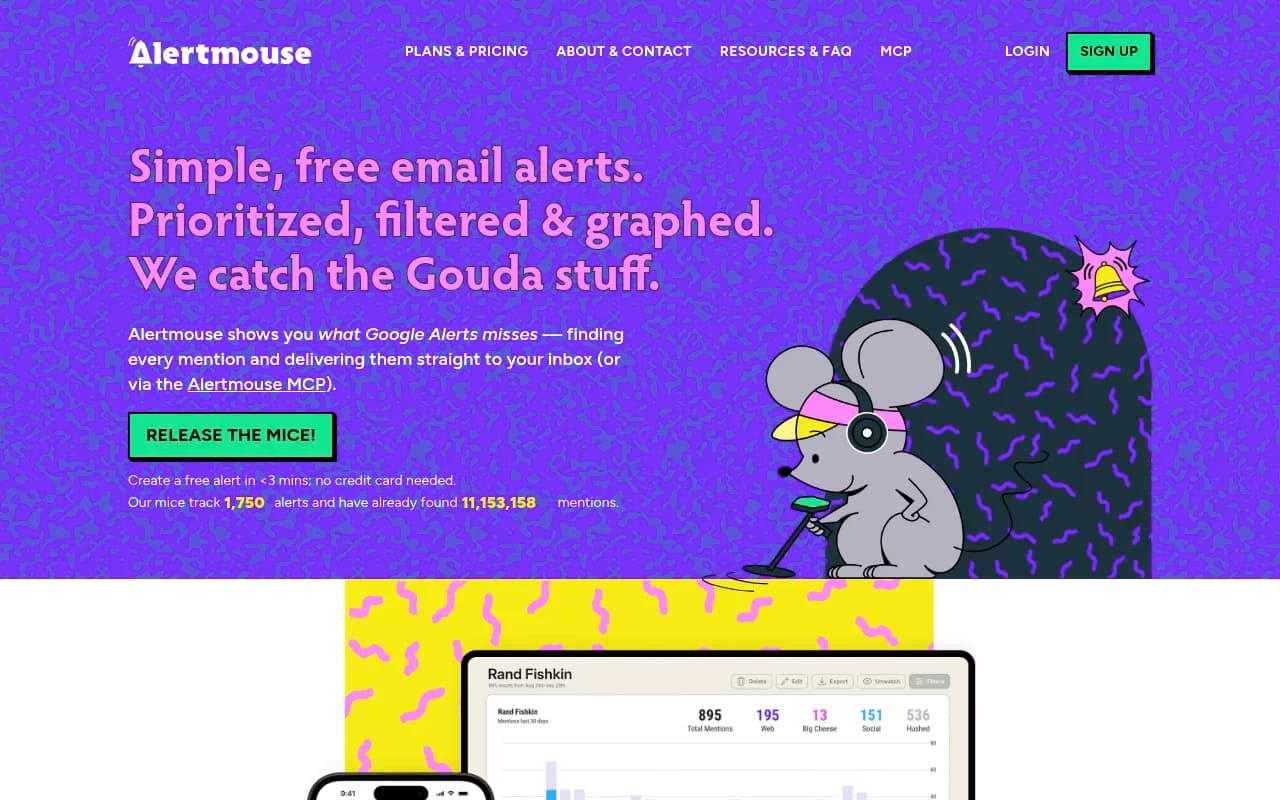
Google Alerts is the zero-budget option, and it is noisy. A few low-cost alert tools exist as upgrades. Alertmouse positions itself as a cheap Google Alerts replacement.
I did not verify pricing for any of these, so check the vendor pages before you commit.
Method 3: Continuous media and social monitoring
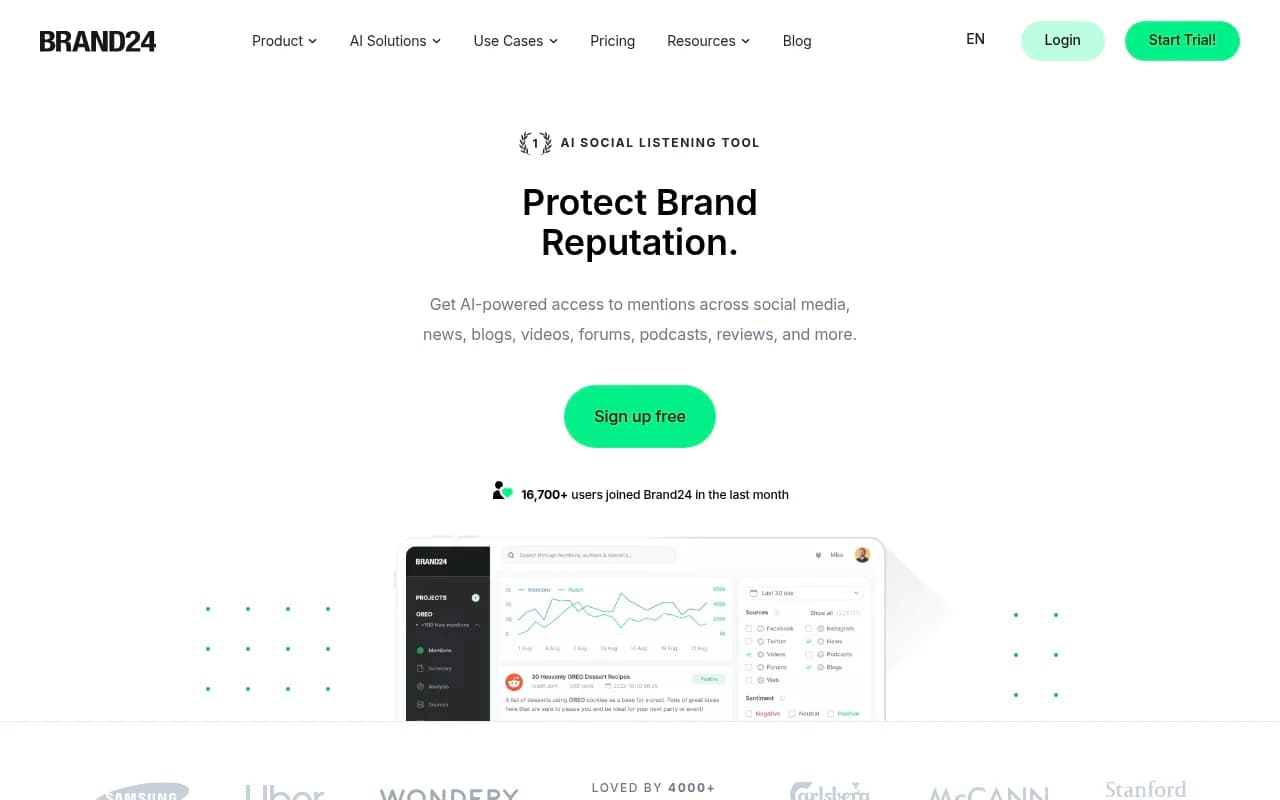
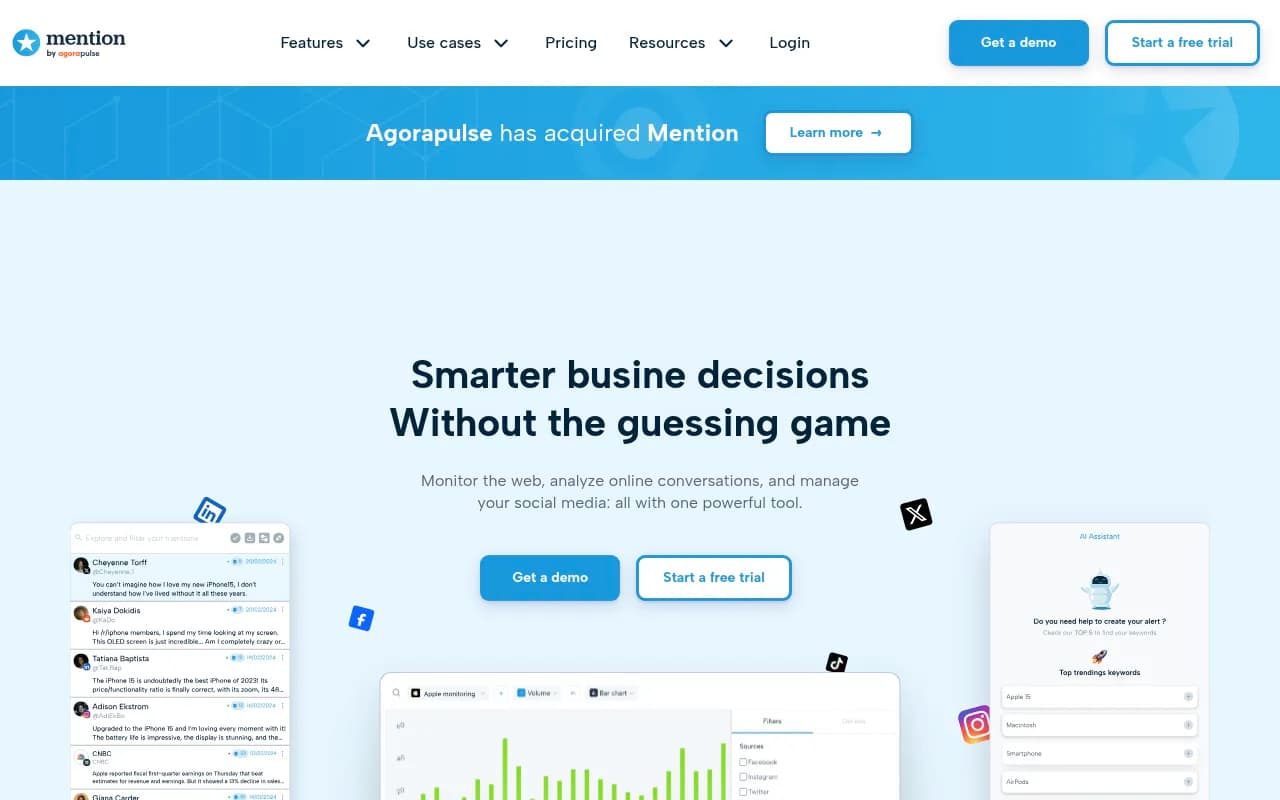
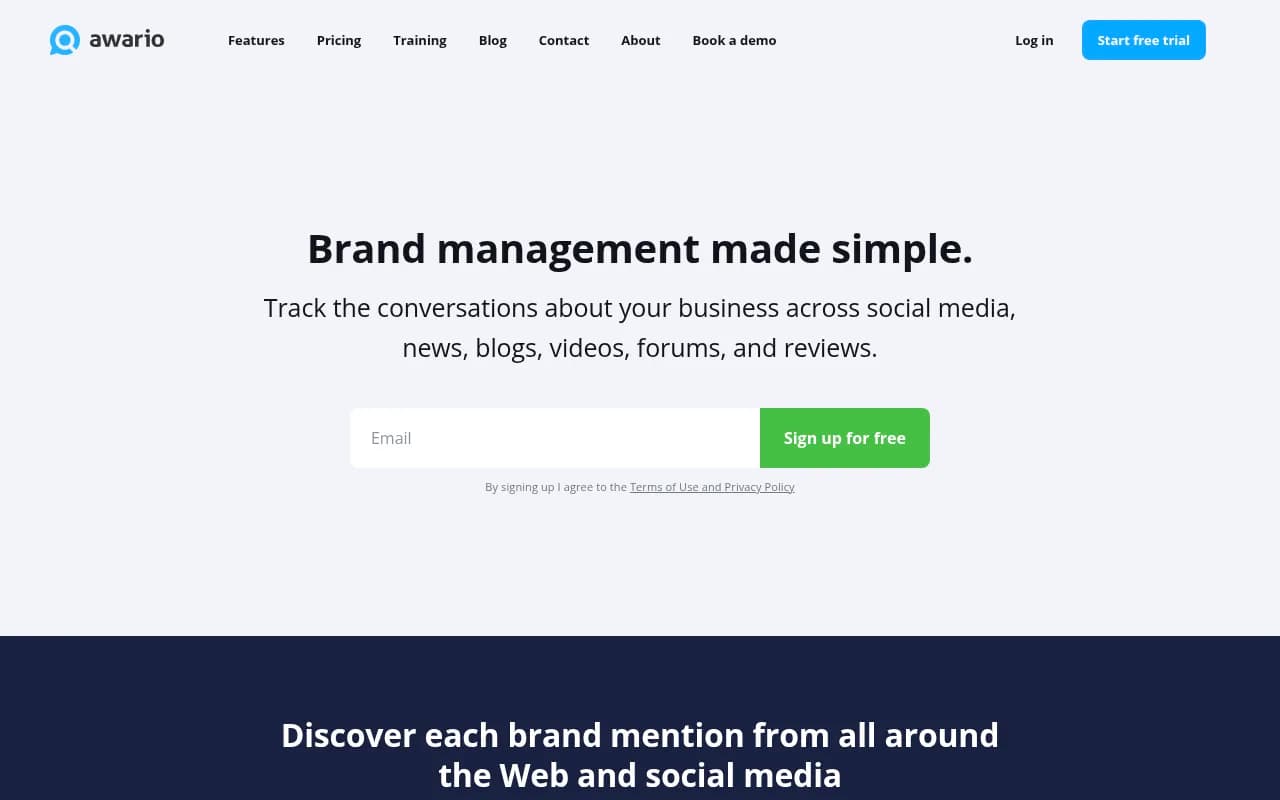
Dedicated listening tools crawl news, blogs, forums and social, then let you filter to mentions that carry no link to your domain. These suit teams that also care about PR and reputation, because a glowing review and an angry complaint both show up as "mentions" and need different responses.
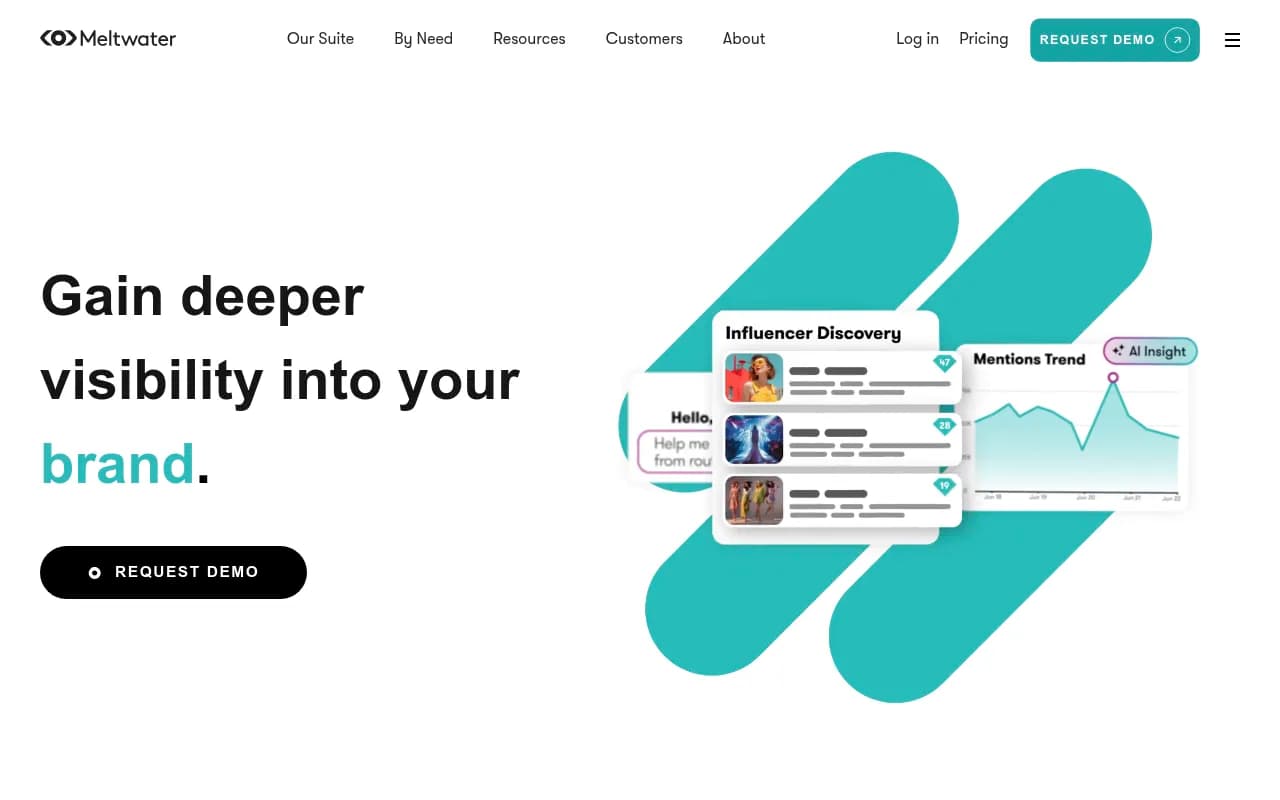
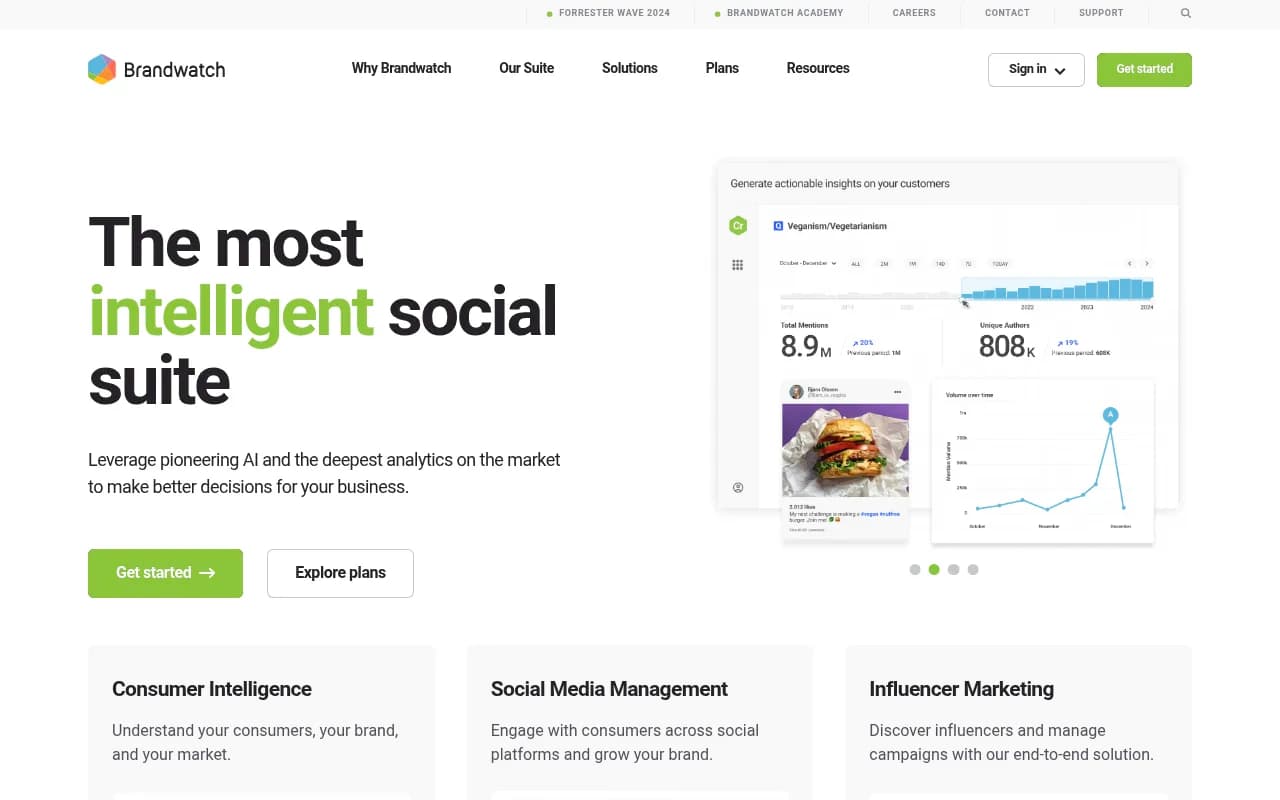
For enterprise-scale listening across social and news, Meltwater and Brandwatch sit at the heavy end.
Brandwatch Consumer Intelligence
If you already live in an SEO suite, Ahrefs Brand Radar and Semrush have mention monitoring bolted on, with the usual caveat that suites tend to give you broader but shallower AI-specific data.

Method 4: Start from the AI answers, not the web
This is the approach that changed how I think about the job. The classic method asks "who mentions me?" The AI-era method asks "which pages are the engines actually reading when they talk about me?" A mention on a page no engine retrieves is nice for PR and does little for AI visibility.
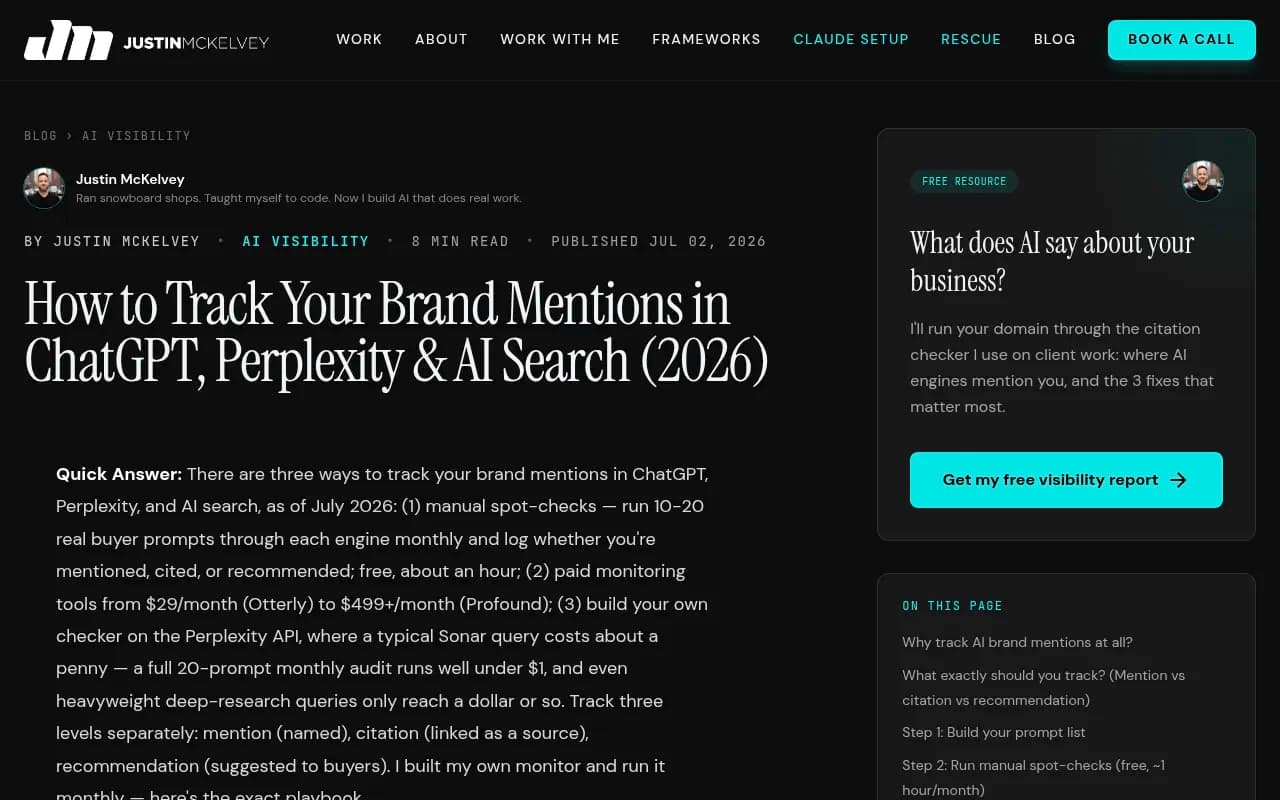
Justin McKelvey's guide to tracking brand mentions in AI describes the manual version well: run 10 to 20 real buyer prompts through each engine monthly and log whether you were mentioned, cited or recommended. Free, about an hour.
When you outgrow spreadsheets, a platform automates this. Promptwatch has an Offsite Mentions feature that finds third-party pages naming your brand or competitors without linking, and ranks them as opportunities. It sits next to citation tracking, so you can see which of those pages AI engines actually cite, not just which exist.

Other AI visibility tools cover parts of this, mostly the monitoring half:



Most of these tell you whether you were named. The useful question is what to do next, and whether it worked. For a broader list, the GEO software directory at bestgeosoftware.com is a decent place to compare.
Comparing the approaches
| Method | Cost | Finds AI-relevant pages? | Best for |
|---|---|---|---|
| Google operators | Free | Partly | First audit, tiny budgets |
| Google Alerts or low-cost alerts | Free to low | No | Ongoing awareness |
| Listening tools (Brand24, Mention, Awario) | Paid, check vendors | No | PR, reputation, social |
| Manual AI prompt checks | Free | Yes, but small sample | Baseline before buying anything |
| AI visibility platform with offsite mentions | Paid | Yes, tied to citations | Teams acting on AI visibility |
Triage: which mentions are worth chasing
Finding two hundred unlinked mentions feels productive. Pitching two hundred editors is a waste of everyone's time. The BrandMentions guide puts it at roughly one in five justifying a personal pitch, which matches my experience.
Score each mention on four things:
- Page type. Listicle, comparison, review or product roundup beats a passing aside in a news story. The Promptwatch content-type data tells you why.
- Recency and editability. A blog post from last month can be updated. A 2019 press piece will not be.
- Context and sentiment. Being named as a recommended option is worth far more than being named in a complaint, or in a list of ten tools with no description.
- Whether AI already cites it. If an engine is citing that page for prompts you care about, it jumps to the top of the list.
Also check what the mention says. Brand Narrative style analysis, which pulls out individual claims AI makes about you, is useful here, because a page that states something wrong about your pricing is a problem to fix, not just a link to reclaim. Promptwatch's Fact Check works on that for your own pages; for third-party pages you are doing it by hand or by pitch.
Turning an unlinked mention into a link
Outreach is the easy part to describe and the hard part to do well. A few things that work:
- Be specific. Give the exact URL you want linked and suggested anchor text. Making it a ten-second yes is most of the game.
- Offer something. A correction, a newer data point, a better page than the one they linked, or a short attribution paragraph the editor can paste in.
- Keep it short. Two or three sentences. Nobody wants to read your story.
- Follow up once, politely. Then let it go.
One thing to be honest about: some editors will say no, and some mentions are better left alone. A link request on a review that is lukewarm at best may draw attention to it. Use judgment.
A converted mention gives you three things at once: entity association for AI, a referral click for readers, and a traditional authority signal. That is why the old tactic still holds up. You just prioritize differently now.
Earning new mentions, not only reclaiming old ones
Reclamation only helps if there is something to reclaim. To get named more often:
- Get into the roundups. Find the listicles and comparisons that AI cites for your category prompts and pitch inclusion. This is the single most direct lever given the citation data.
- Collect reviews on trusted category sites. Branded prompts lean on reviews far more than other prompt types.
- Publish a plain-language brand FAQ on your own site, so there is a clean source for the facts about you.
- Do not neglect YouTube. For AI Overviews specifically, it was the top social source at 4.28% of citations in the Promptwatch data.
- Skip X for AI search. The numbers do not justify the effort.
Citation durability varies too. Promptwatch's content half-life report found landing pages and docs stayed cited longest among pages ChatGPT cited on July 6, 2026, while news lost half its pages within 36 days. A mention in a news story helps briefly. A mention on an evergreen comparison page can last.
Measuring whether it worked
Track three separate numbers, and do not collapse them:
- Mention: the engine names you.
- Citation: the engine links a page as a source, yours or someone else's.
- Recommendation: the engine suggests you to a buyer.
After you land a new mention or convert an old one, watch whether the page starts appearing in citations for your tracked prompts, and whether your visibility and share of voice move. Give it weeks, not days. Retrieval and indexing lag, and AI answers vary run to run.
If you want a no-cost starting point, Promptwatch offers a free AI visibility report that scans how ChatGPT, Gemini and Perplexity talk about your brand. For heavier tracking, pricing starts at $95/month on the Essential plan, and you can confirm current plans at promptwatch.com/pricing.
A simple 30-day plan
Week 1. Run Google operator searches and 15 real buyer prompts across ChatGPT, AI Overviews and Perplexity. Log mentions, citations and recommendations in a sheet.
Week 2. List every unlinked mention you found. Score them on page type, recency, context and whether AI cites the page. Keep the top 20%.
Week 3. Send personal link requests with exact URL and anchor text. In parallel, pitch inclusion to the top three roundups AI cites for your category.
Week 4. Re-run your prompts. Note which new pages appear. Set up ongoing alerts or an AI visibility platform so this stops being a one-off project.
The broader point is that mentions are now an input to AI answers, not a vanity metric. Find the ones on pages engines actually read, fix or convert the ones that matter, and ignore the rest. If you want a hand running that at scale, 1001 SEO Media does this kind of AI search and digital PR work for brands.