Key takeaways
- AI citation data reveals which prompts your competitors answer and you don't -- that gap is your content roadmap.
- The optimization loop has three steps: find gaps, create content engineered for AI citation, then track whether it works.
- Most tools stop at step one (monitoring). The ones worth using help you act on what you find.
- Content format matters as much as content quality -- structured, factually dense pages get cited more than long-form prose.
- Closing the loop with traffic attribution is what separates a real strategy from a vanity dashboard.
There's a version of this problem that a lot of marketing teams are running into right now: you have solid Google rankings, a decent blog, maybe even a well-known brand -- and yet when someone asks ChatGPT or Perplexity to recommend a tool in your category, your name doesn't come up. A competitor does. Sometimes a smaller one.
That's not a content quality problem. It's a content targeting problem. And AI citation data is what fixes it.
This guide walks through how to actually use citation data -- not just collect it -- to build a content roadmap that improves your visibility across AI search engines in 2026.
What AI citation data actually tells you
When an AI model answers a question, it pulls from sources it has indexed, crawled, or retrieved. The pages it cites are a signal: this content was structured clearly enough, authoritative enough, and specific enough that the model trusted it to answer this prompt.
Citation data, at its core, is a record of which pages got that trust -- and for which prompts.
The useful questions citation data can answer:
- Which prompts is my brand cited for? Which ones am I missing?
- Which competitors appear in prompts where I don't?
- Which of my pages are being cited, and which are being ignored?
- Which AI models cite me most? Which ones don't cite me at all?
- Are there prompt categories where no one in my space is well-cited -- meaning there's an open lane?
That last question is often the most valuable. It's not just about catching up to competitors. Sometimes the data shows a cluster of prompts that are getting asked frequently, where every AI response is thin or generic. That's a content opportunity with almost no competition.
Step one: map your citation gaps
Before you can build a roadmap, you need to know where you stand. This means running your brand and your competitors against a set of prompts that represent how your target customers actually search.
The prompts matter a lot here. Vague queries like "best marketing software" will give you noisy data. Specific, intent-rich prompts like "what tool should I use to track my brand in ChatGPT" will show you exactly where the gaps are.
Building your prompt set
Start with three categories:
- Category-level prompts: "What's the best [category] tool for [use case]?"
- Problem-level prompts: "How do I [solve specific problem]?"
- Comparison prompts: "What's the difference between [your brand] and [competitor]?"
For each prompt, you want to know: does an AI model cite your brand? If not, who does it cite? And what page on their site earned that citation?
Tools like Promptwatch run this analysis at scale -- tracking your visibility across ChatGPT, Perplexity, Claude, Gemini, and others simultaneously, so you can see the full picture rather than spot-checking one model at a time.

Reading the gap data
Once you have citation data across a prompt set, you're looking for patterns:
- Prompts where competitors are cited but you aren't -- these are your highest-priority gaps.
- Prompts where you're cited inconsistently (sometimes yes, sometimes no) -- these are optimization opportunities on existing content.
- Prompts where nobody is well-cited -- these are greenfield content opportunities.
The output of this analysis is essentially a prioritized list of content needs. That's your roadmap skeleton.
Step two: understand why competitors are getting cited
Knowing that a competitor ranks for a prompt is useful. Knowing why is what lets you actually compete.
When you look at the pages AI models cite, a few patterns emerge consistently in 2026:
Factual density
AI models favor pages that are specific. A page that says "our tool integrates with 47 platforms" will get cited over one that says "our tool integrates with many popular platforms." Vague content doesn't give a model anything to extract and attribute.
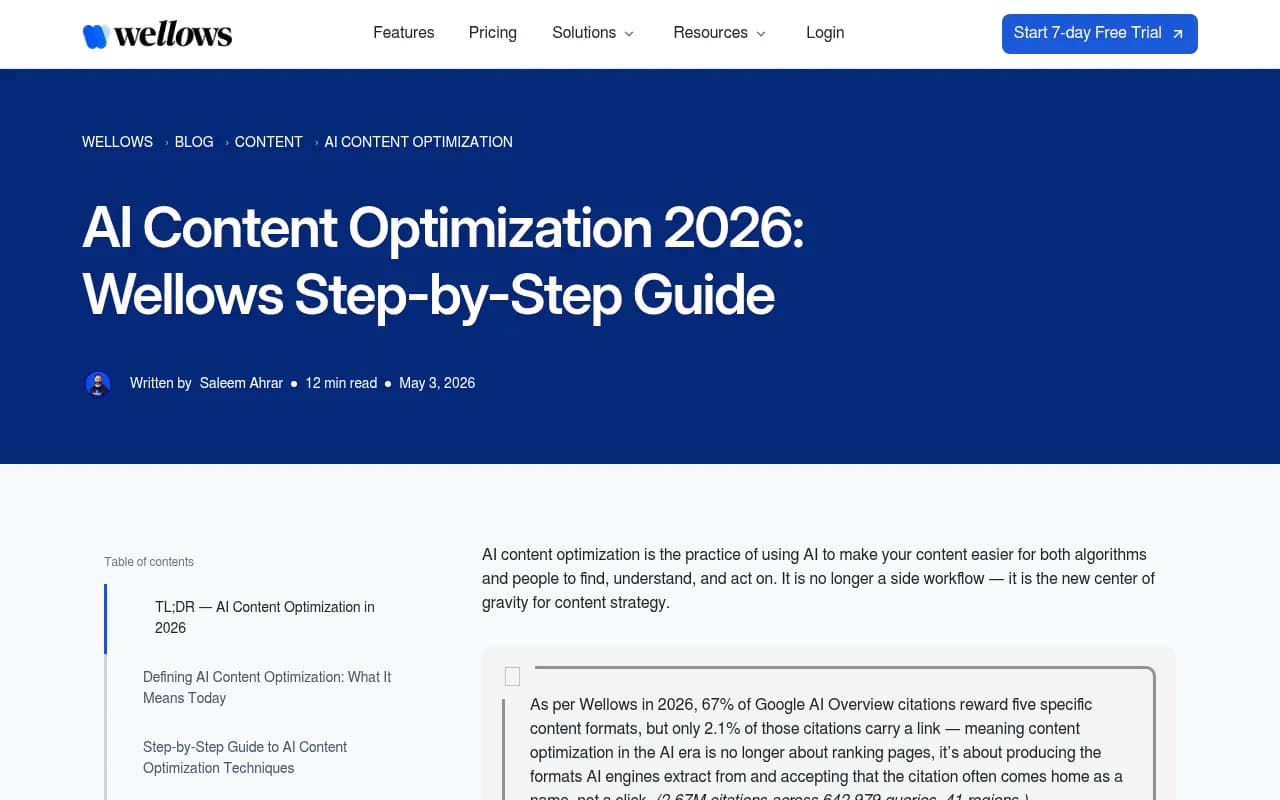
According to research from Wellows across 2.67 million citations and 642,979 queries, 67% of Google AI Overview citations reward five specific content formats -- and the common thread across all of them is specificity. Numbers, named entities, clear definitions.
Structured formatting
Headers, bullet points, tables, and clear Q&A structures make it easier for models to extract relevant sections. A wall of prose might be well-written, but a model trying to answer a specific question will prefer a page that has a clearly labeled section answering that exact question.
Schema markup helps too. FAQ schema, HowTo schema, and Article schema all give AI crawlers explicit signals about what your content covers and how to interpret it.
Source authority signals
AI models don't just look at content -- they look at who's linking to it, who's citing it on Reddit and YouTube, and whether the domain has a track record of being cited in similar contexts. A page on a domain that AI models have cited before has a head start.
Content freshness
Stale content gets deprioritized. If a page hasn't been updated in two years, a model answering a question about "best tools in 2026" is less likely to trust it. Regular updates -- even small ones that add new data points or update statistics -- signal that a page is maintained.
Step three: build content that's engineered to be cited
This is where most teams get stuck. They understand the gap. They know what the competitor's cited page looks like. But then they write a generic blog post and wonder why it doesn't get cited.
Content that gets cited by AI models in 2026 has a few specific characteristics:
It answers a specific prompt, not a broad topic
There's a difference between "a guide to email marketing" and "how to set up a drip campaign for SaaS free trial users." The second one answers a specific prompt that someone might actually type into Perplexity. Write for the prompt, not the topic.
It leads with the answer
AI models extract the most relevant section of a page, not the whole thing. If your answer to the key question is buried in paragraph seven after three paragraphs of context-setting, the model might not surface it. Put the direct answer first, then provide the supporting detail.
It includes named entities and specific claims
Your brand name, competitor names, product names, specific statistics, named methodologies -- these are all signals that help AI models understand what your content is about and attribute it correctly.
It's structured for extraction
Use headers that match the way people phrase questions. Use tables to compare options. Use numbered lists for processes. These formats make it easy for a model to pull a clean, citable excerpt.
Practical content types that earn citations
Based on what's getting cited across AI models in 2026:
- Comparison pages ("X vs Y: which is better for [use case]")
- Definition pages ("What is [concept]? A plain-English explanation")
- How-to guides with numbered steps
- Data-backed listicles ("The 7 best [category] tools, ranked by [specific criteria]")
- FAQ pages that directly answer common questions in your space
Step four: prioritize with prompt volume and difficulty data
Not all gaps are worth filling. Some prompts get asked thousands of times a month. Others are niche edge cases. And some prompts are dominated by a competitor with such strong citation authority that it would take months to displace them.
Good prompt intelligence tells you two things: how often a prompt is asked, and how hard it is to get cited for it. That combination lets you prioritize.
The highest-ROI targets are usually prompts with decent volume and low competition -- either because no one has written good content for them, or because the current cited sources are weak.
Promptwatch's prompt intelligence layer includes volume estimates and difficulty scores for each prompt, plus query fan-outs that show how one prompt branches into related sub-queries. That's useful because winning one prompt often means you're close to winning several adjacent ones.
Step five: track which pages are actually getting cited
Once you've published content, you need to know if it's working. This is where a lot of teams fall down -- they publish, then check their overall "AI visibility score" and call it done.
Page-level citation tracking is more useful. You want to know:
- Which specific pages are being cited by which models?
- Is the new content you published getting cited, or is it being ignored?
- Are there pages that used to get cited but have dropped off?
This kind of tracking also tells you when to update content. If a page was getting cited six months ago but isn't now, something changed -- either the content went stale, a competitor published something better, or the prompt landscape shifted.
Step six: close the loop with traffic attribution
Citation data tells you about visibility. Traffic attribution tells you whether that visibility is driving actual business outcomes.
The connection matters because AI citations don't always generate clicks. Wellows research found that only 2.1% of Google AI Overview citations carry a link -- meaning most of the value from being cited is brand awareness and influence, not direct traffic. But some citations do drive clicks, and you want to know which ones.
There are three ways to connect AI visibility to traffic:
- A JavaScript snippet that identifies AI referral traffic in your analytics
- Google Search Console integration to spot AI-driven organic traffic patterns
- Server log analysis to see which AI crawlers are hitting which pages
When you can see that a specific cited page is driving measurable traffic, you have a clear signal to invest more in that content type. When a highly cited page drives no traffic, that tells you something different about how that citation is being used.
The full optimization loop
Put it all together and the process looks like this:
| Step | What you're doing | What you're looking for |
|---|---|---|
| 1. Gap analysis | Run your brand and competitors against a prompt set | Prompts where competitors are cited and you aren't |
| 2. Competitor analysis | Examine the pages that earned citations | Format, structure, factual density, entity signals |
| 3. Content creation | Write content engineered for specific prompts | Direct answers, structured formatting, named entities |
| 4. Prioritization | Score prompts by volume and difficulty | High-volume, low-competition gaps first |
| 5. Page tracking | Monitor which pages get cited by which models | New content performance, drops in existing citations |
| 6. Traffic attribution | Connect citations to actual visits and conversions | Which citation types drive clicks vs. awareness only |
Then you repeat. The gap analysis in step one will look different in three months because your content has filled some gaps, competitors have responded, and new prompts have emerged. This isn't a one-time audit -- it's an ongoing cycle.
Tools that support the full loop
Most tools in this space handle one or two steps of the loop. Very few handle all six.
Promptwatch is one of the few platforms built around the full cycle -- gap analysis, content generation grounded in citation data, page-level tracking, and traffic attribution. It monitors across 10 AI models including ChatGPT, Claude, Perplexity, Gemini, Grok, and Google AI Overviews, and includes crawler logs that show which AI bots are hitting your pages and when.
For teams that want to handle content creation separately, a few other tools are worth knowing:
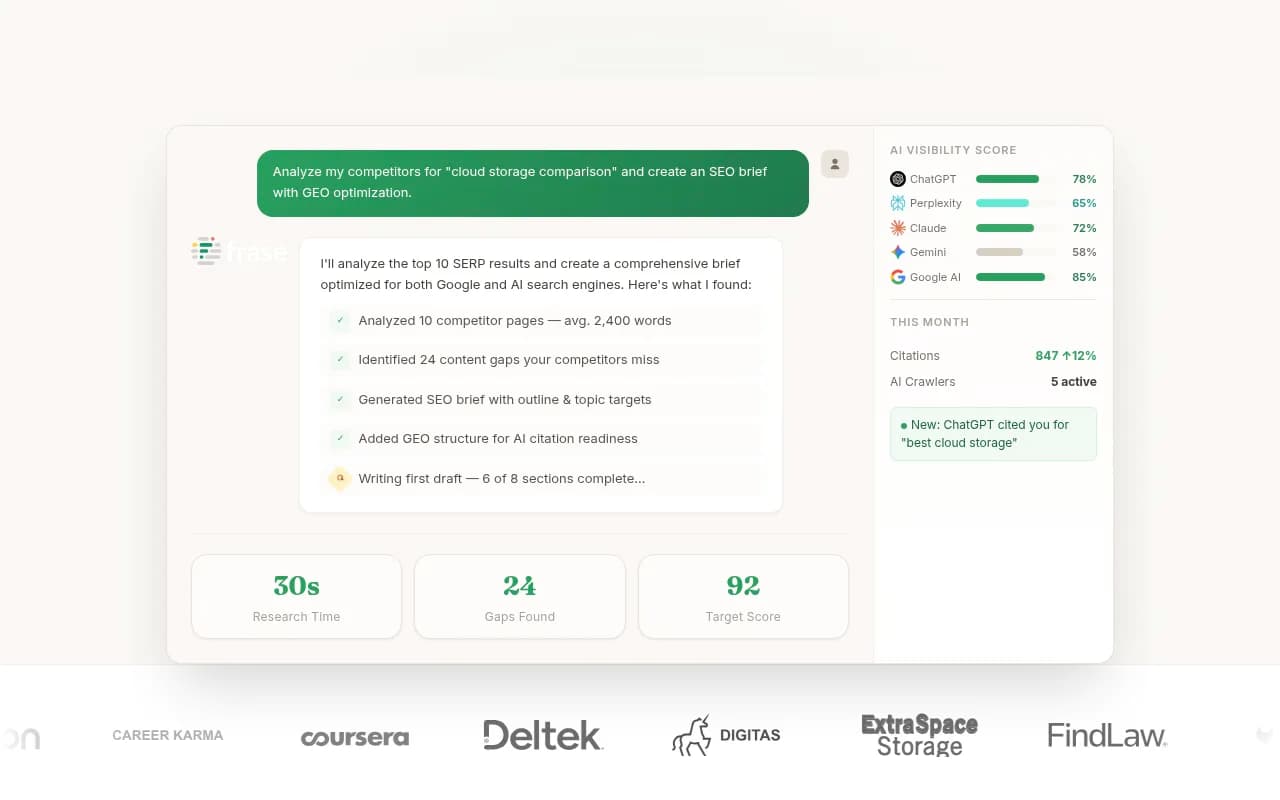
Frase is strong for content research and brief creation -- useful for the research phase before writing content targeted at specific prompts.
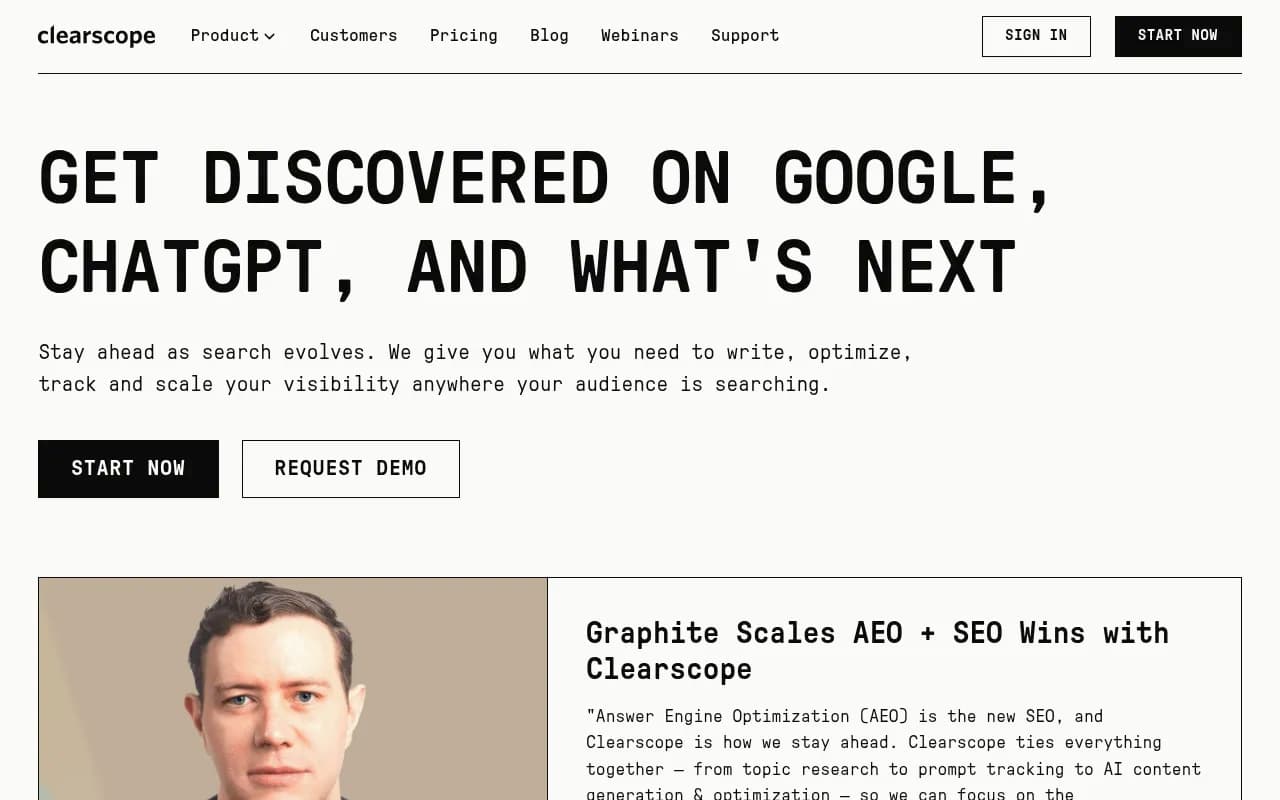
Clearscope helps optimize content for semantic completeness, which overlaps with what AI models look for in terms of entity coverage and topical depth.
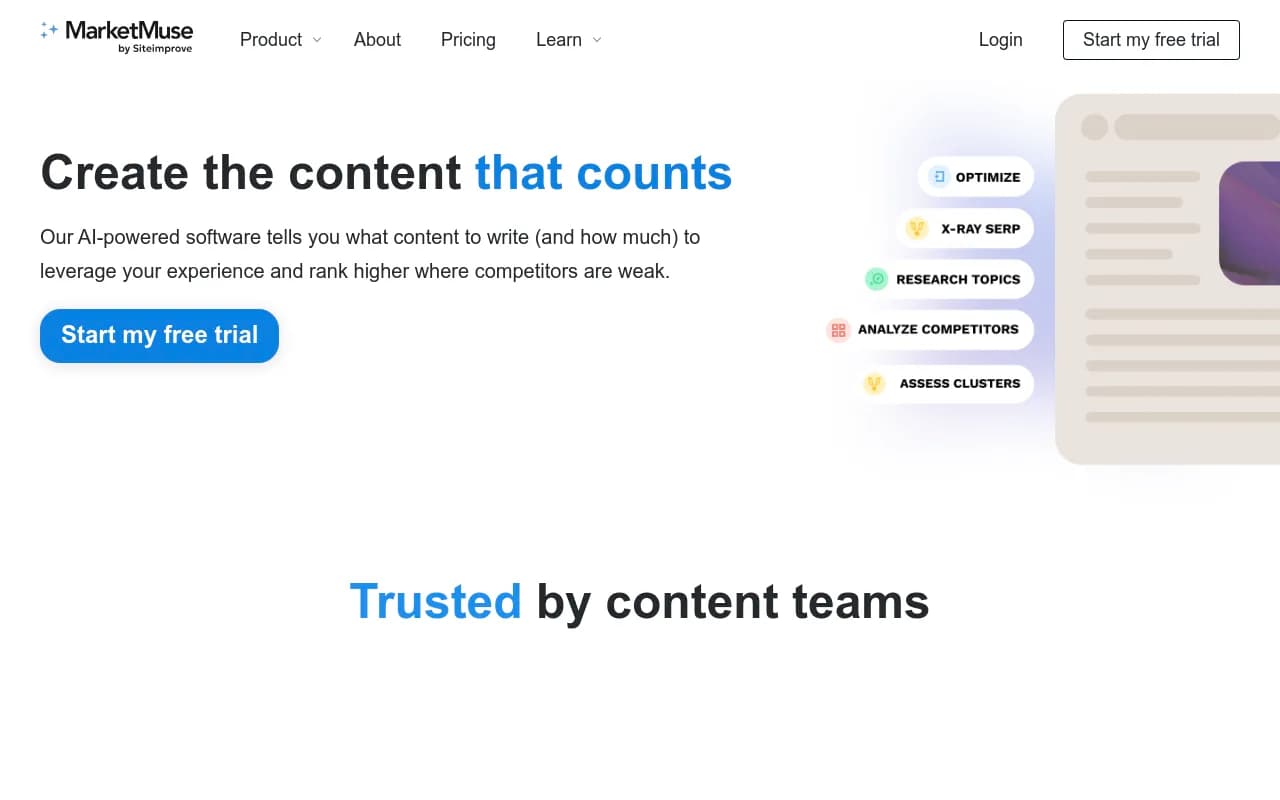
MarketMuse is good for content planning at scale -- identifying which topics you have authority in and where you have gaps, which maps reasonably well onto the AI citation gap analysis workflow.
For citation monitoring specifically, a few tools focus on that piece:

Otterly.AI is an affordable monitoring option for teams that are just starting to track AI visibility and want a simple dashboard before committing to a more complex platform.
Scrunch AI offers AI search visibility monitoring with a focus on brand tracking across models.

Profound tracks brand visibility across AI search engines with a strong feature set, though it skews toward monitoring rather than content optimization.
Common mistakes that break the loop
Treating AI SEO as a one-time project
The prompt landscape changes constantly. New prompts emerge, competitors publish new content, AI models update their training data and retrieval behavior. A gap analysis from six months ago is already partially obsolete. Build the loop into your regular content workflow, not as a quarterly audit.
Writing for topics instead of prompts
"A comprehensive guide to email marketing" is a topic. "How to write a re-engagement email for inactive SaaS users" is a prompt. The second one has a much clearer path to being cited in a specific AI response. The more specifically you can match content to how people actually phrase questions to AI models, the better.
Ignoring format in favor of length
Long content doesn't get cited more than short content. Well-structured content gets cited more than poorly structured content. A 600-word page with clear headers, a direct answer in the first paragraph, and a comparison table will often outperform a 3,000-word essay on the same topic.
Only tracking brand mentions, not page-level citations
Knowing that "your brand was mentioned 47 times this week" is less useful than knowing "this specific page on your site was cited 23 times for this specific prompt by Perplexity." The page-level data is what tells you what's working and what to do next.
Skipping the attribution step
If you're not connecting AI citations to traffic and conversions, you're flying blind on ROI. The attribution step is what lets you make the case internally that AI visibility work is worth the investment -- and it's what tells you which content types are actually moving the needle.
Where this is heading
A few trends worth watching for the rest of 2026:
AI models are getting better at identifying and preferring content that was written for humans, not for crawlers. The over-optimized, keyword-stuffed approach that worked in early GEO experiments is already losing effectiveness. Content that's genuinely useful and clearly written is pulling ahead.
Reddit and YouTube are increasingly influential in what AI models cite. Both platforms surface real user experiences and opinions that AI models treat as high-trust signals. Brands that participate authentically in those communities -- not just publish on their own domains -- are seeing citation benefits.
The llms.txt standard is gaining traction. Adding a plain-text file that tells AI crawlers which pages on your site are most authoritative is a low-effort technical signal that's worth implementing now.
And the gap between monitoring-only tools and optimization platforms is widening. Teams that are just watching their AI visibility score go up and down without acting on it are falling behind teams that are using citation data to drive a content creation cycle.
The data is only useful if it tells you what to do next. That's the whole point of the loop.