Key takeaways
- Start with the basics: Before chasing AI citations, audit your website's technical foundation -- AI crawlers need clean structure, fast load times, and accessible content to even consider citing you
- Find the content gaps: Use competitor analysis to identify which prompts they're getting cited for but you're not -- these gaps are your roadmap to AI visibility
- Build citation-worthy content: AI models cite authoritative, structured content that directly answers questions -- not marketing fluff or generic blog posts
- Track what matters: Monitor AI crawler logs, citation frequency, and prompt coverage to understand if your optimization efforts are working
- Measure real impact: Connect AI visibility to actual business outcomes through traffic attribution and conversion tracking
The brutal truth about AI visibility
Your brand doesn't exist in AI search. Not yet.
When someone asks ChatGPT, Perplexity, or Claude about your industry, your competitors get cited. You don't. The AI models pull from the same web you're on, but they've decided your content isn't worth mentioning.
This isn't a ranking problem. There's no page two to climb from. You're either cited or you're not. Binary. Zero or one.
The good news: AI visibility follows patterns. Brands that go from zero citations to consistent mentions follow a specific playbook. This guide walks through that exact strategy.
Why you're invisible (and why it's fixable)
AI models don't cite brands randomly. They follow clear signals:
Technical accessibility: Can AI crawlers actually read your site? If your pages are blocked by robots.txt, hidden behind JavaScript rendering, or buried in slow-loading frameworks, AI models never see your content. They cite what they can access.
Content structure: AI models prefer content that directly answers questions. Long-form guides with clear headings, bulleted lists, and factual claims get cited. Marketing pages with vague value propositions don't.
Authority signals: Citations come from sites that other authoritative sources link to and reference. If your domain has weak backlink profiles or no external validation, AI models treat your content as less credible.
Freshness and relevance: AI training data has cutoff dates, but live search models (Perplexity, ChatGPT with search, Google AI Overviews) prioritize recent content. Outdated pages lose citation potential.
The zero-to-one problem is usually a combination of these factors. Your site exists, but AI models have no reason to trust or cite it.
Step 1: Audit your technical foundation
Before creating new content, fix what's broken. AI crawlers behave differently than Googlebot -- they're more aggressive, less forgiving, and they don't wait for you to fix errors.
Check if AI crawlers can access your site
Most sites accidentally block AI crawlers. Check your robots.txt file:
User-agent: GPTBot
Disallow:

User-agent: Claude-Web
Disallow:

User-agent: PerplexityBot
Disallow:
If you see Disallow: / for these user agents, you're blocking AI crawlers entirely. Remove those rules.
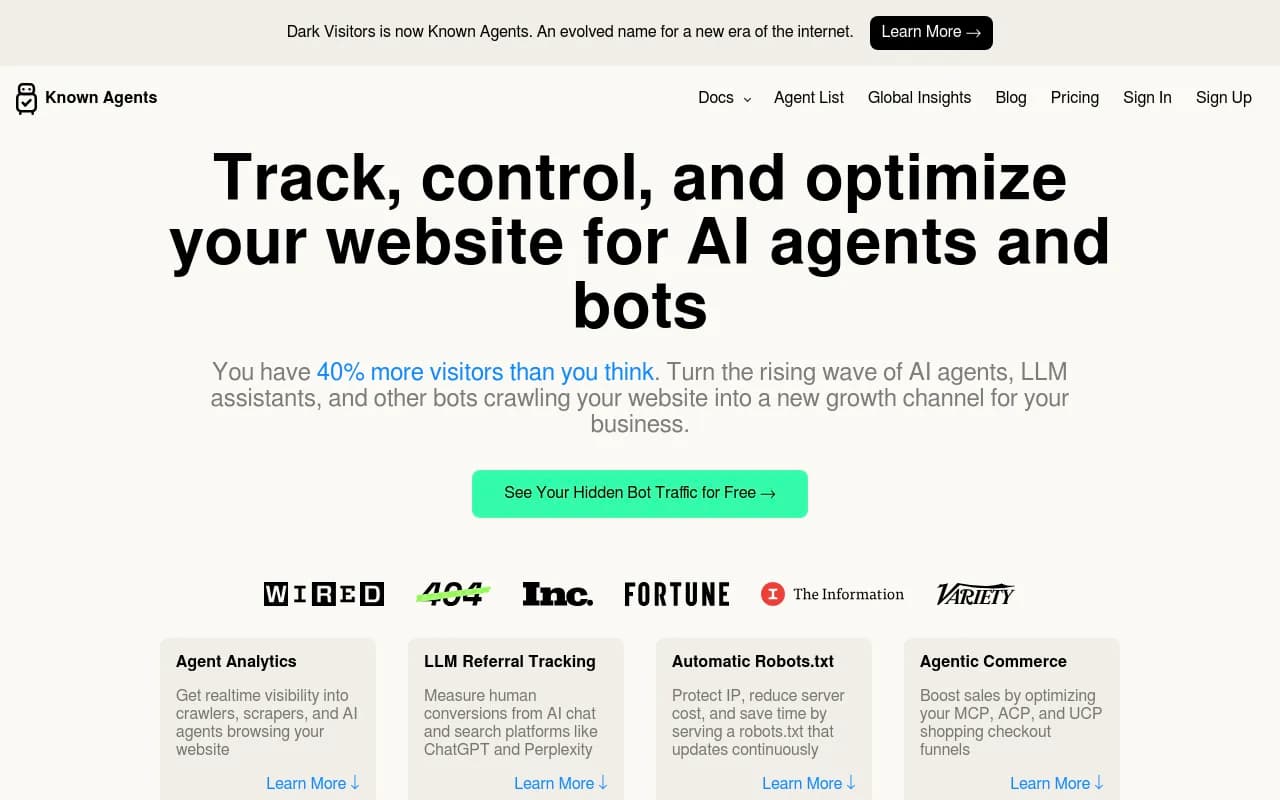
Next, check your server logs. AI crawlers should be hitting your site regularly. If they're not, you have a discoverability problem.
Fix JavaScript rendering issues
AI crawlers struggle with client-side rendered content. If your site relies on React, Vue, or Angular without server-side rendering, AI models may see blank pages.
Test this: disable JavaScript in your browser and load your key pages. If content disappears, AI crawlers see the same thing.
Solutions:
- Implement server-side rendering (SSR)
- Use static site generation (SSG) for content pages
- Add prerendering for critical pages
Optimize page speed
AI crawlers have limited patience. Pages that take 5+ seconds to load get abandoned. Run your key pages through PageSpeed Insights and fix:
- Large image files (compress and use WebP)
- Render-blocking JavaScript
- Slow server response times
- Missing browser caching
Structure your content for AI parsing
AI models prefer clean HTML structure:
- Use semantic HTML tags (
<article>,<section>,<h1>-<h6>) - Add schema markup (especially FAQ, HowTo, and Article schemas)
- Break long paragraphs into scannable chunks
- Use descriptive alt text on images
This isn't SEO theater. AI models parse structure to understand content hierarchy and extract factual claims.
Step 2: Find your content gaps
You can't fix visibility without knowing where you're invisible. The fastest path to citations is identifying prompts where competitors get mentioned but you don't.
Reverse-engineer competitor citations
Pick 3-5 direct competitors. Run their domains through an AI visibility tool and export:
- Which prompts they're cited in
- How often they appear
- What content gets cited
- Which AI models mention them
[tool:promptwatch]
Look for patterns. If three competitors get cited for "best project management tools for remote teams" but you don't, that's a gap. If they're mentioned in "how to track marketing ROI" and you're not, that's another.
Build a spreadsheet:
| Prompt | Competitor A | Competitor B | Competitor C | Your brand |
|---|---|---|---|---|
| Best project management tools | Cited | Cited | Not cited | Not cited |
| How to track marketing ROI | Cited | Cited | Cited | Not cited |
| Remote team collaboration tips | Not cited | Cited | Cited | Not cited |
Prioritize prompts where multiple competitors get cited but you don't. These are proven citation opportunities.
Analyze what content gets cited
Don't just track prompts -- study the actual pages AI models cite. Look at:
- Content format (guide, listicle, comparison, tutorial)
- Word count and depth
- Use of data, statistics, and examples
- Heading structure and scannability
- Presence of images, tables, or diagrams
AI models cite content that directly answers questions with evidence. If competitors get cited for in-depth guides and you only have short blog posts, you have a content depth problem.
Map gaps to business value
Not all citation opportunities matter equally. Prioritize prompts that:
- Align with your product or service
- Have high search volume (use prompt intelligence tools)
- Target decision-makers, not researchers
- Lead to conversions, not just awareness
A citation in "how to choose accounting software" is worth more than "history of accounting" if you sell accounting software.
Step 3: Create citation-worthy content
AI models don't cite marketing pages. They cite authoritative, structured content that answers specific questions.
Write for AI citation, not SEO ranking
Traditional SEO content optimization focuses on keyword density and backlinks. AI citation optimization is different:
Lead with direct answers: Start articles with clear, factual statements that answer the core question. AI models extract these as citations.
Example:
- Bad: "Choosing the right CRM can be challenging for growing businesses."
- Good: "A CRM costs between $12-$150 per user per month, depending on features like automation, integrations, and support."
Use question-answer formatting: Structure content around specific questions. Add FAQ schema to reinforce this.
Cite your own sources: AI models trust content that references data. Link to studies, reports, and authoritative sources.
Be specific, not vague: Replace generic claims with concrete numbers, examples, and comparisons.
Optimize content structure
AI models parse content hierarchically. Use:
- Clear H2 and H3 headings that match common prompts
- Bulleted lists for scannable information
- Tables for comparisons and feature lists
- Code blocks for technical instructions
- Blockquotes for key takeaways
Example structure for a guide on "how to track marketing ROI":
## What is marketing ROI?
[Direct definition]

## How to calculate marketing ROI
[Step-by-step process]

## Common mistakes in ROI tracking
[Bulleted list]

## Tools for measuring marketing ROI
[Comparison table]
This structure makes it easy for AI models to extract specific answers.
Build topical authority
AI models cite brands that demonstrate expertise across a topic, not just one article. If you want citations for "project management tips," you need:
- A comprehensive guide on project management
- Articles on specific methodologies (Agile, Waterfall, Kanban)
- Comparison content (tool A vs tool B)
- Use case examples (project management for remote teams)
Publish a cluster of related content, not isolated posts.
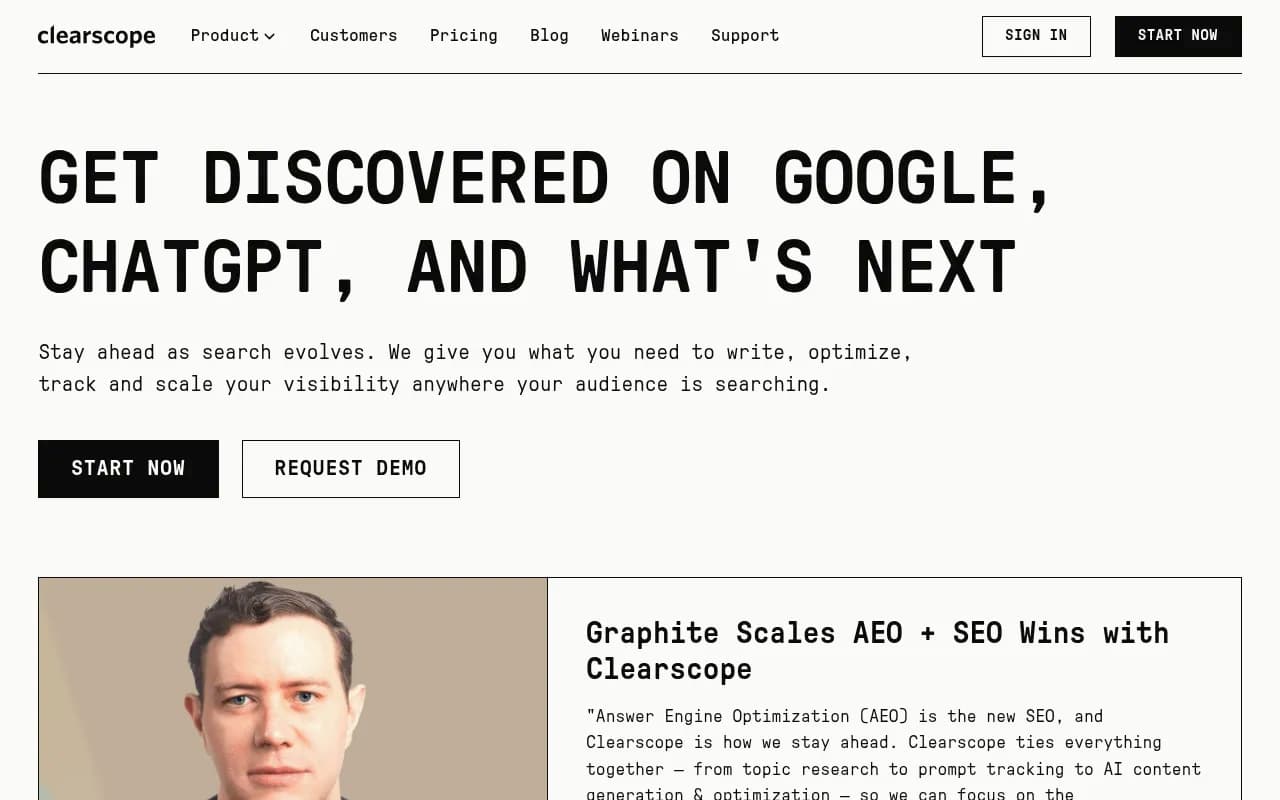
Use AI content generation strategically
AI writing tools can accelerate content creation, but don't publish raw AI output. AI models cite content that shows human expertise and original insights.
Use AI to:
- Generate outlines and structure
- Draft initial sections
- Suggest related topics
Then add:
- Original data or case studies
- Specific examples from your experience
- Unique perspectives or opinions
- Updated information AI models don't have
Step 4: Track AI crawler activity
Creating content isn't enough. You need to know if AI crawlers are actually reading it.
Monitor crawler logs
AI crawlers (GPTBot, Claude-Web, PerplexityBot, etc.) leave traces in your server logs. Track:
- Which pages they visit
- How often they return
- Errors they encounter (404s, 500s, timeouts)
- Crawl depth (do they only hit your homepage?)
If AI crawlers aren't visiting your new content, you have a discoverability problem. Solutions:
- Submit sitemaps directly to AI platforms (where possible)
- Build internal links from high-traffic pages
- Get external links from sites AI crawlers already visit
Set up citation tracking
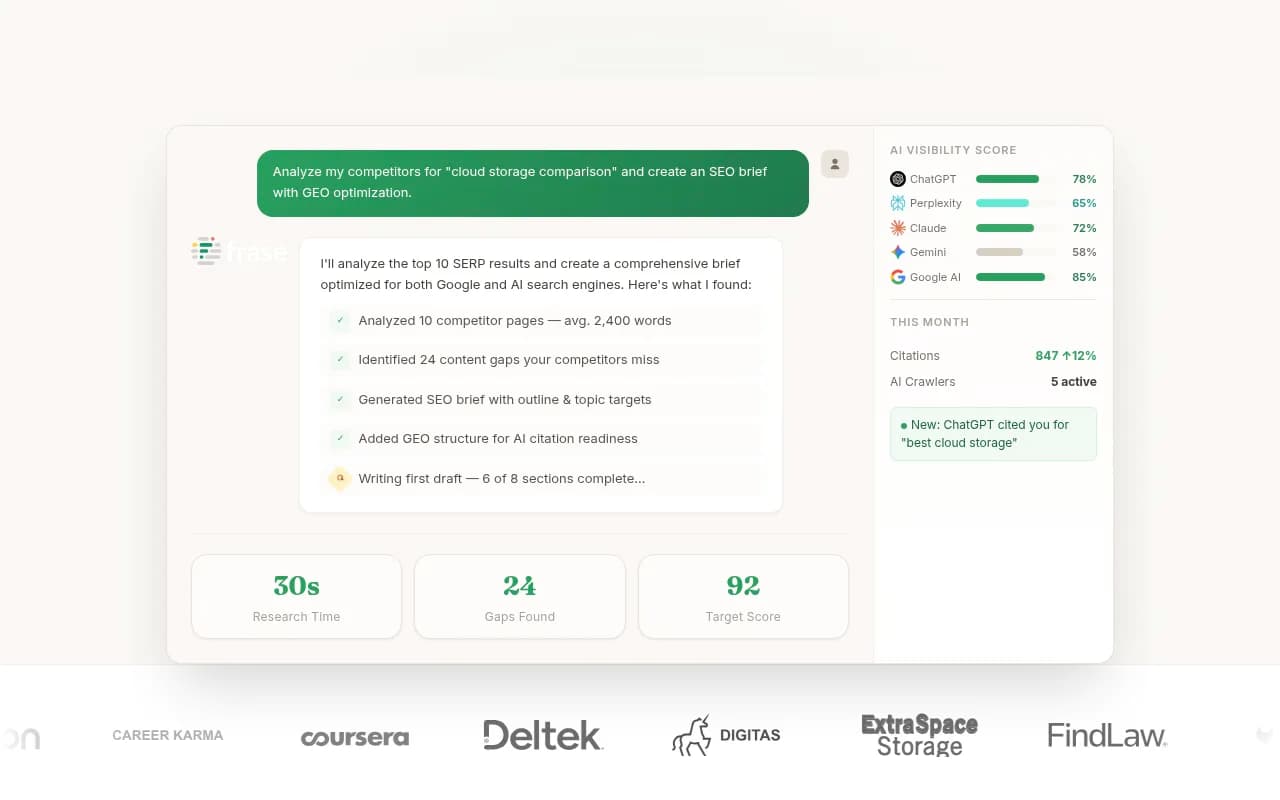
Once content is live, monitor if it's getting cited. Use an AI visibility platform to track:
- Citation frequency (how often your brand appears)
- Prompt coverage (which queries trigger citations)
- Position in responses (are you mentioned first or last?)
- Sentiment (positive, neutral, or negative mentions)

Track this weekly. Citation growth is slow -- expect 4-8 weeks before seeing meaningful changes.
Measure citation quality, not just quantity
Not all citations are equal. A citation in ChatGPT's first paragraph is worth more than a mention buried in a long response. Track:
- Prominence: Where in the response does your brand appear?
- Context: Are you cited as a recommendation or just mentioned?
- Co-citations: Which other brands are mentioned alongside yours?
If you're always cited after three competitors, you're visible but not preferred.
Step 5: Optimize based on data
AI visibility isn't set-it-and-forget-it. Use tracking data to refine your strategy.
Identify underperforming content
Some pages get crawled but never cited. Diagnose why:
- Is the content too shallow?
- Does it lack authoritative sources?
- Is the structure hard to parse?
- Is it outdated?
Update underperforming pages with:
- More detailed information
- Recent data and examples
- Better headings and structure
- Links to authoritative sources
Double down on what works
If certain content types or topics get cited consistently, create more of them. If your comparison articles get cited but your opinion pieces don't, shift your content mix.
Look for patterns:
- Which content formats get cited most?
- Which topics drive the most citations?
- Which AI models prefer your content?
Build on strengths instead of fixing weaknesses.
Test and iterate
AI citation optimization is experimental. Test:
- Different content structures (listicles vs guides)
- Varying content depth (1,500 words vs 3,000 words)
- Question-answer formats vs narrative formats
- Technical content vs beginner-friendly content
Publish, track, and refine.
Step 6: Connect visibility to business outcomes
Citations are vanity metrics if they don't drive traffic and conversions.
Set up traffic attribution
AI search engines send traffic differently than Google. Users may:
- Click citations directly (Perplexity, ChatGPT with search)
- Search your brand name after seeing it in AI responses
- Visit your site days or weeks later
Track this with:
- UTM parameters on cited links (where possible)
- Branded search volume increases
- Direct traffic spikes correlated with citation growth
- Referral traffic from AI platforms
Measure conversion impact
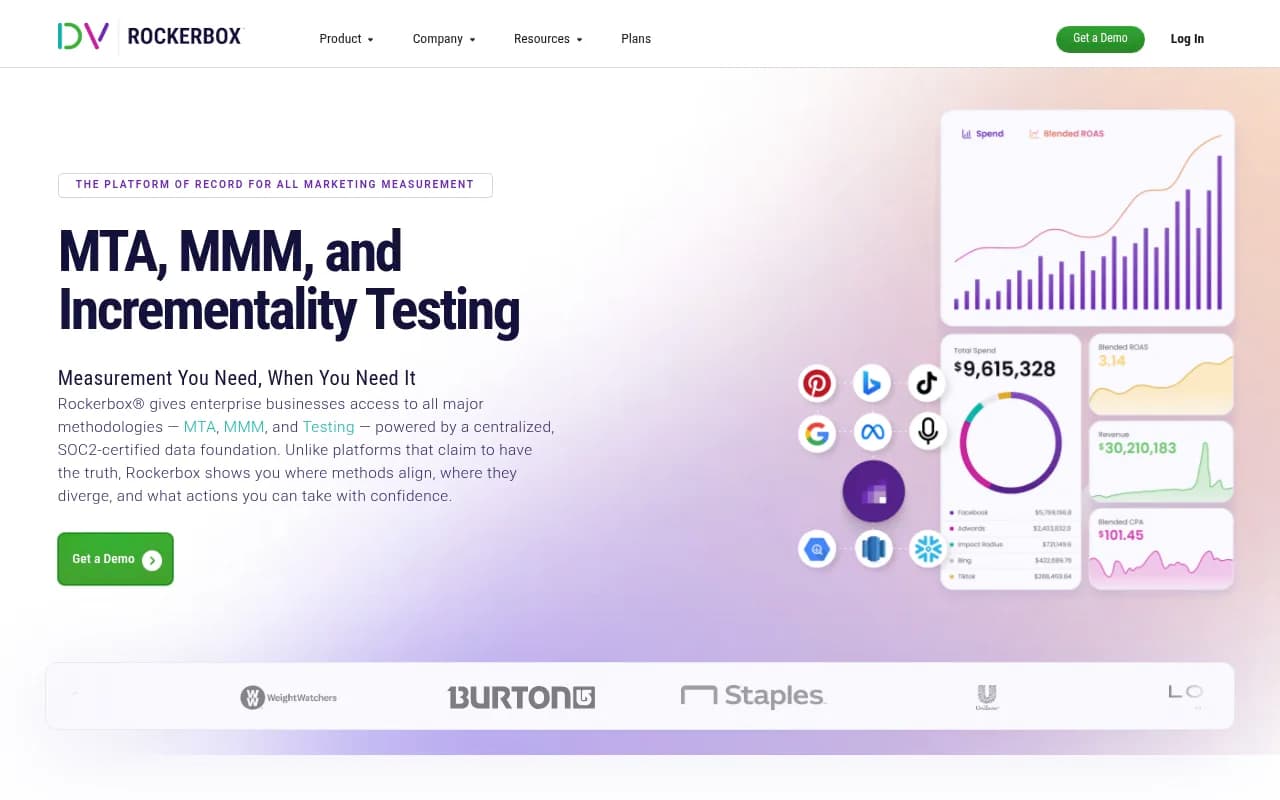
Connect AI visibility to pipeline:
- Do users from AI search convert at higher rates?
- Which prompts drive the most qualified traffic?
- How does AI-driven traffic compare to organic search?
Use this data to prioritize high-value prompts over high-volume ones.
Calculate ROI
AI visibility optimization costs time and resources. Measure:
- Content creation costs
- Tool subscriptions
- Traffic and conversion lift
- Revenue attributed to AI search
If you're spending $5,000/month on content but only generating $2,000 in attributed revenue, adjust your strategy.
Common mistakes that keep you at zero
Most brands fail at AI visibility because they:
Treat it like SEO: AI citation optimization is not keyword stuffing. AI models cite content that directly answers questions with authority.
Ignore technical issues: If AI crawlers can't access your site, no amount of content will help.
Create shallow content: 500-word blog posts don't get cited. AI models prefer comprehensive, detailed content.
Focus on vanity metrics: Citation counts mean nothing if they don't drive traffic and conversions.
Give up too early: AI visibility takes 2-3 months to show meaningful results. Most brands quit after 4 weeks.
Copy competitors exactly: AI models cite original, authoritative content. Rewriting competitor articles won't work.
The zero-to-one timeline
Expect this progression:
Weeks 1-2: Technical audit and fixes. Ensure AI crawlers can access your site.
Weeks 3-4: Competitor analysis and content gap identification. Build your citation roadmap.
Weeks 5-8: Content creation and publishing. Focus on high-priority gaps.
Weeks 9-12: First citations appear. Track which content works and why.
Weeks 13-16: Optimization and scaling. Double down on what works, fix what doesn't.
By month four, you should have consistent citations in at least 10-20 prompts. If not, revisit your content quality and technical foundation.
What to do next
Pick one competitor. Run their domain through an AI visibility tool. Export the prompts they're cited in. Find 5 gaps where they're mentioned but you're not.
Create one piece of content targeting the highest-value gap. Publish it. Track if AI crawlers visit it. Monitor for citations.
Repeat.
AI visibility is a grind, not a hack. But the brands that start now -- while most competitors are still ignoring AI search -- will own the citations that matter.