Key takeaways
- Meta AI has no Search Console equivalent. Google and Bing report AI impressions, but no first-party Meta report for AI citations turned up in our research, so you build the picture from crawler logs, prompt sampling, and referral traffic.
- Keep two things apart in every report: Meta's AI business assistant (an ads tool) and visibility in consumer Meta AI answers (brand mentions and citations). Clients confuse them constantly.
- Crawler activity is the one hard first-party Meta signal. Promptwatch Data shows Meta-WebIndexer rising from about 2.2% to 37.8% of tracked AI crawler requests between mid-July and Aug 9, 2026.
- Report each assistant separately. Citation behavior differs by engine, and Meta AI should not be assumed to behave like ChatGPT or Google.
- Be explicit about what you can't measure. A report that labels its blind spots earns more trust than one that invents numbers.
Why Meta AI needs its own report section
Most agency AI visibility reports in 2026 cover ChatGPT, Google AI Overviews, AI Mode, Perplexity, and Copilot. Meta AI usually gets a footnote, or nothing. That is understandable, because the data is thinner. But clients see Meta AI inside Facebook, Instagram, WhatsApp, and Messenger every day, and sooner or later one of them forwards a screenshot asking why a competitor got named.
The honest starting position is this: you can't measure Meta AI the way you measure Google. Google announced Search Console generative AI performance reports in June 2026, covering AI Overviews, AI Mode, and Discover AI features by page, country, device, and date. They carry impressions only, no clicks, CTR, or query data (Google's announcement). Bing launched an AI Performance report in public preview in February 2026 (Bing Webmaster blog). Neither covers Meta.
So the Meta section of your report is built from indirect evidence. That is fine, as long as you say so.
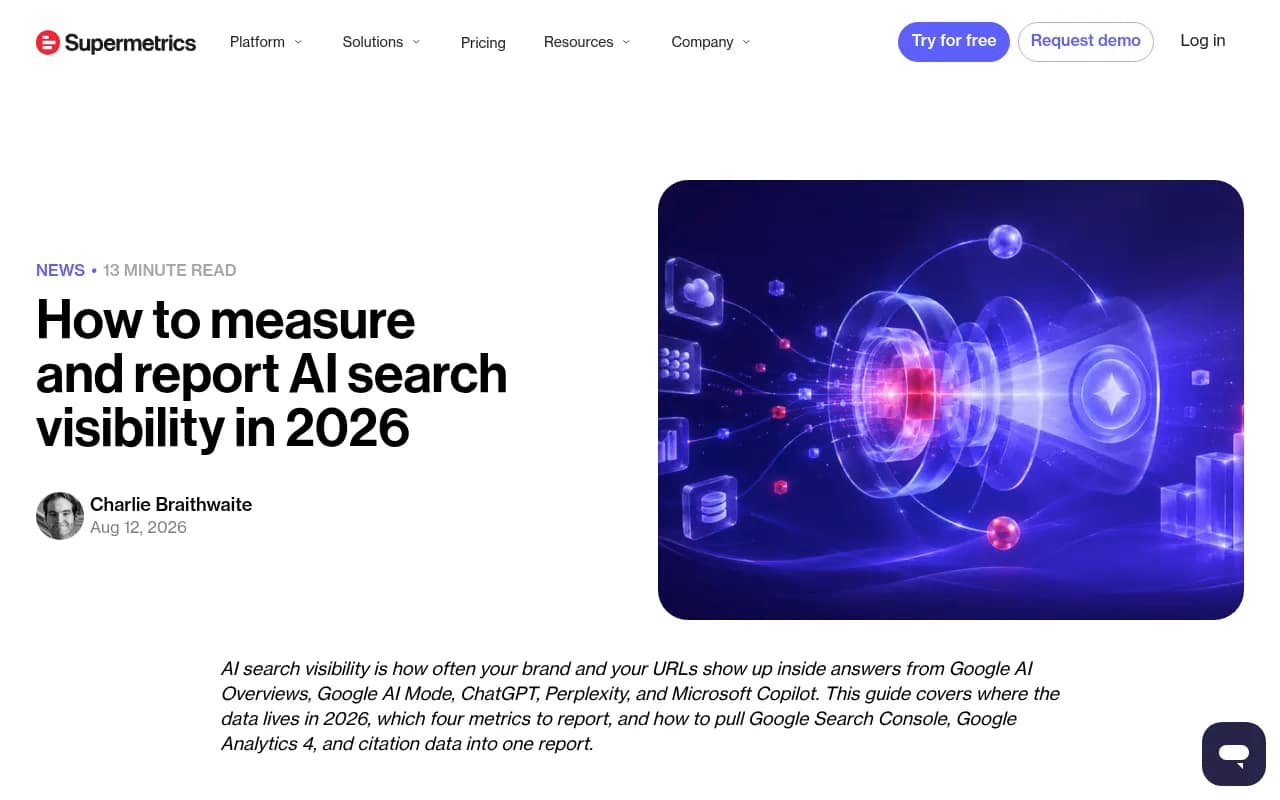
The Supermetrics walkthrough of measuring AI search visibility is a useful base for the overall report structure: four metrics, pulled from Search Console, GA4, and citation data. The template below extends that structure to cover Meta.
Two things called Meta AI, and why you must separate them
This is the pitfall that trips up most first drafts.
On May 20, 2026, Meta announced six AI advertising tools, including a Meta AI business assistant available globally to advertisers and agencies, natural-language audience targeting, and one-click Conversions API setup (as summarized by Common Thread Collective; that is a secondary source, so confirm details against Meta's own announcement). That assistant lives inside Ads Manager. It helps you analyze campaigns and build ads.
That is an ad-management tool. It has nothing to do with whether Meta AI, the consumer assistant, mentions your client's brand when a user asks for a recommendation.
Put them in separate sections of the report:
| Topic | What it is | Where the data comes from | Report section |
|---|---|---|---|
| Meta AI business assistant | Ads Manager helper for campaign analysis and setup | Ads Manager, paid media reporting | Paid social performance |
| Meta AI consumer answers | Assistant replies inside Facebook, Instagram, WhatsApp, Messenger | Prompt sampling, crawler logs, referrals | AI visibility |
| Meta crawler activity | Meta bots fetching your pages | Server or CDN logs | AI visibility, technical |
If you run paid social for the same client, you can mention the business assistant in that section. Don't let it bleed into the organic visibility story.
The metrics to put in the report
With limited first-party data, pick metrics you can defend. I'd use five for Meta and the other assistants.
Mention rate from a fixed prompt set
Take 20 to 50 prompts that represent how the client's buyers would ask for a recommendation. Run them on a schedule, record whether the brand is named, and report the percentage. The prompt set must stay fixed between reporting periods or trends mean nothing.
For Meta AI, this is largely manual or semi-manual today. Check whether your tracking tool supports it before you promise anything. Of the tools in our catalog, none were verified to track Meta AI specifically in this research, so ask vendors directly.
Position and prominence
When the brand is named, is it first, third, or buried? Record the order. A brand that appears in 40% of answers but always last has a different problem than one that appears in 10% of answers but always first.
Citation and link presence
Does the answer link to the client's site, or name the brand with no source? Mentions without links point to a content or crawlability issue. Mentions with links are the ones that can send traffic.
Competitor share of voice
Count how often named competitors appear across the same prompt set. Clients care about this more than any absolute number, because the screenshot that started the conversation was about a competitor.
Crawler activity
This is the only first-party Meta signal available. Promptwatch Data tracked Meta-WebIndexer at about 2.2% of verified AI crawler requests in mid-July 2026. It sat near 2% until July 17, spiked to roughly 23% between July 20 and 22, then climbed from August 5 to a peak of 37.8% on August 9 (Promptwatch's Meta-WebIndexer report). By then, more than one in three tracked AI crawler requests came from that one crawler.
Two caveats belong in your report. The share is Meta-WebIndexer requests divided by all tracked AI crawler requests, not total site traffic. And the surge lines up with reports that Meta is building its own search index, but that comes from an unconfirmed claim on X by @levelsio, not from Meta. Treat it as a reason to watch, not a fact to announce.
Where to get the data
Server and CDN logs
Check your logs and robots.txt for these Meta user agents: meta-webindexer, meta-externalagent, meta-externalfetcher, and FacebookBot. Count requests per week, note which pages are hit, and flag any 4xx or 5xx errors. If the client's robots.txt or firewall blocks them by accident, that is an easy win to report.
A sample log filter:
grep -iE "meta-webindexer|meta-externalagent|meta-externalfetcher|facebookbot" access.log | awk '{print $1, $7, $9}' | sort | uniq -c | sort -rn | head -50
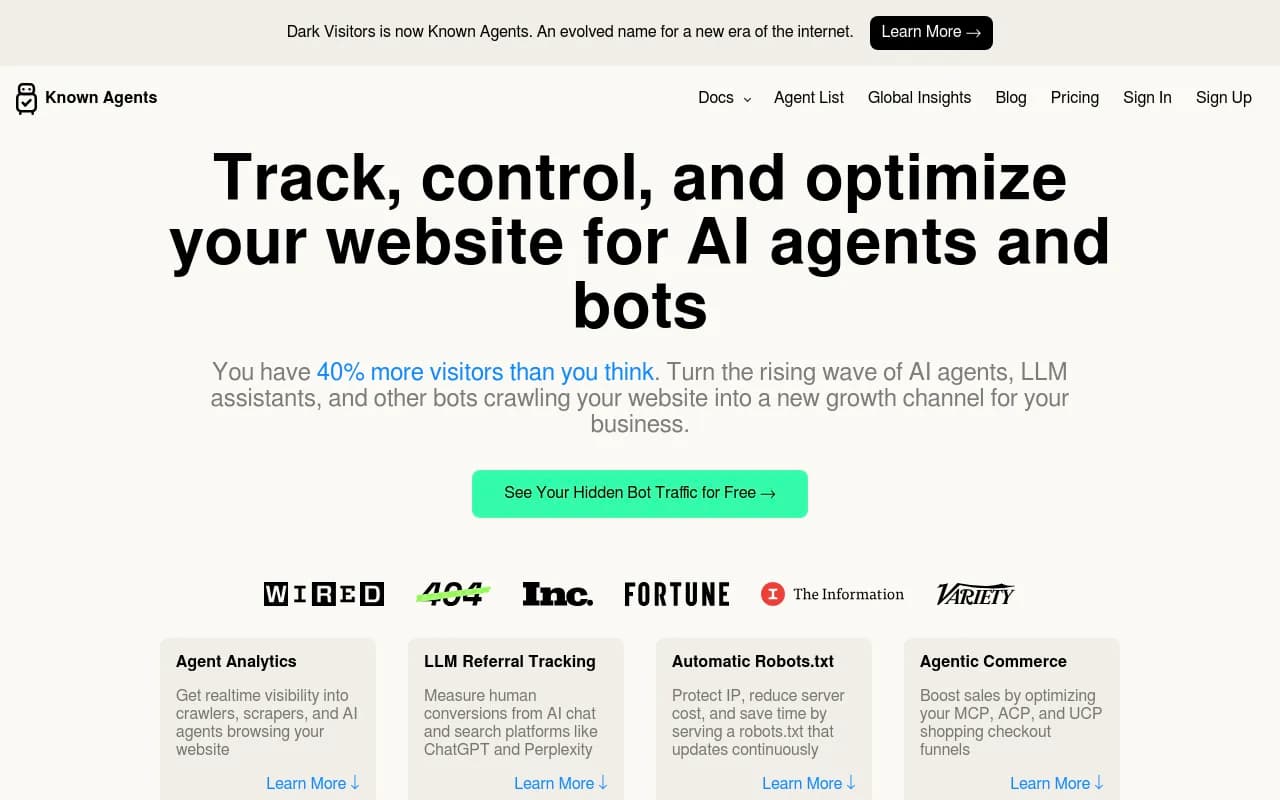
Spoofed user agents are common, so verify against Meta's published IP ranges when you can. Tools like Promptwatch do this verification for you with IP-verified crawler logs, and DarkVisitors is a lighter option for tracking agents and bots.

Prompt sampling
For Meta AI itself, you will be doing sampling. A person (or a script, within the platform's terms) asks the fixed prompt set, logs the answer, and records mentions. It is slow. Do it monthly, not weekly, and note the date, region, and account type used, because personalization affects results.
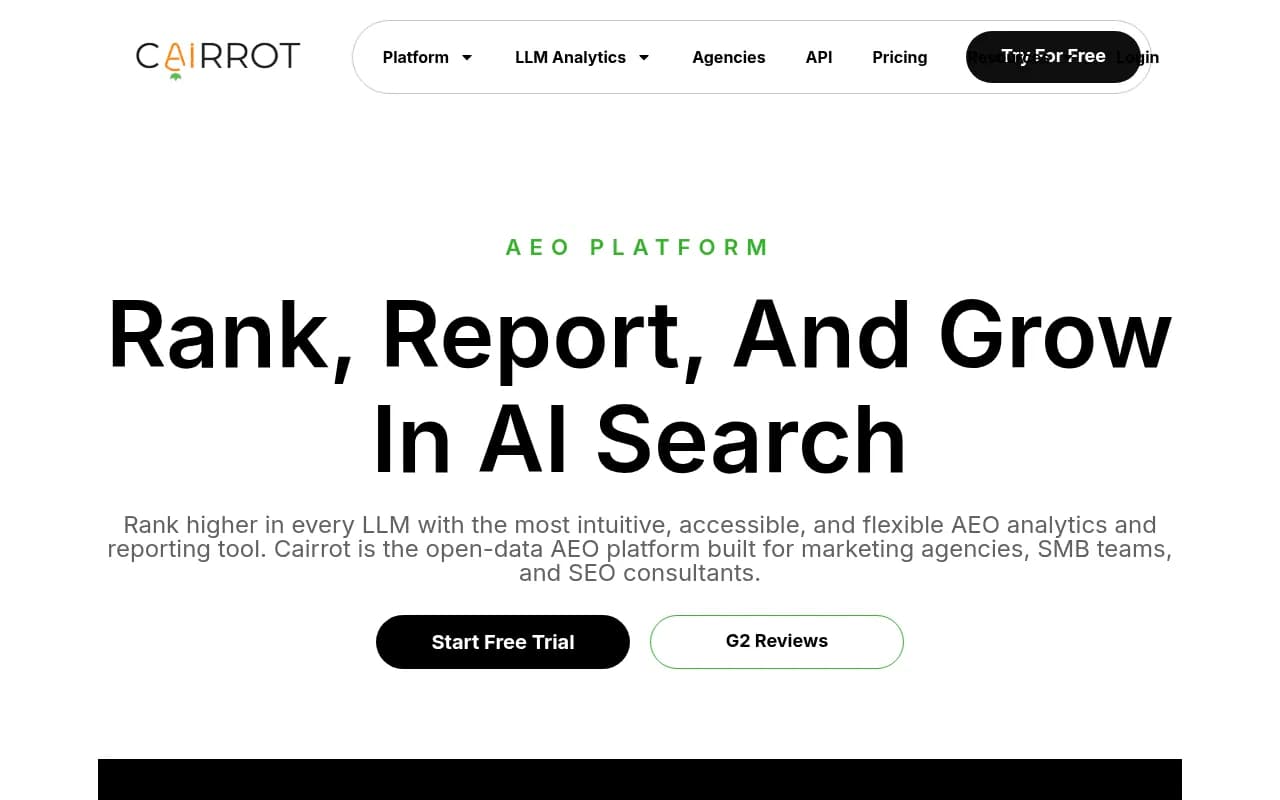
For the other assistants, use a tracker. Promptwatch monitors real user interfaces rather than just APIs, which matters because user-facing answers and citations can differ from API output. Other options in the catalog include Profound, Peec AI, Otterly.AI, and Cairrot (built for agencies).



Referral traffic
In GA4, look for referrals from Meta properties and any AI assistant domains. Meta AI traffic is likely to be small and mixed in with standard Facebook and Instagram referrals, so don't over-interpret it. Label it as "possible Meta AI influence" and report the trend, not a claim of attribution.
Google and Bing consoles
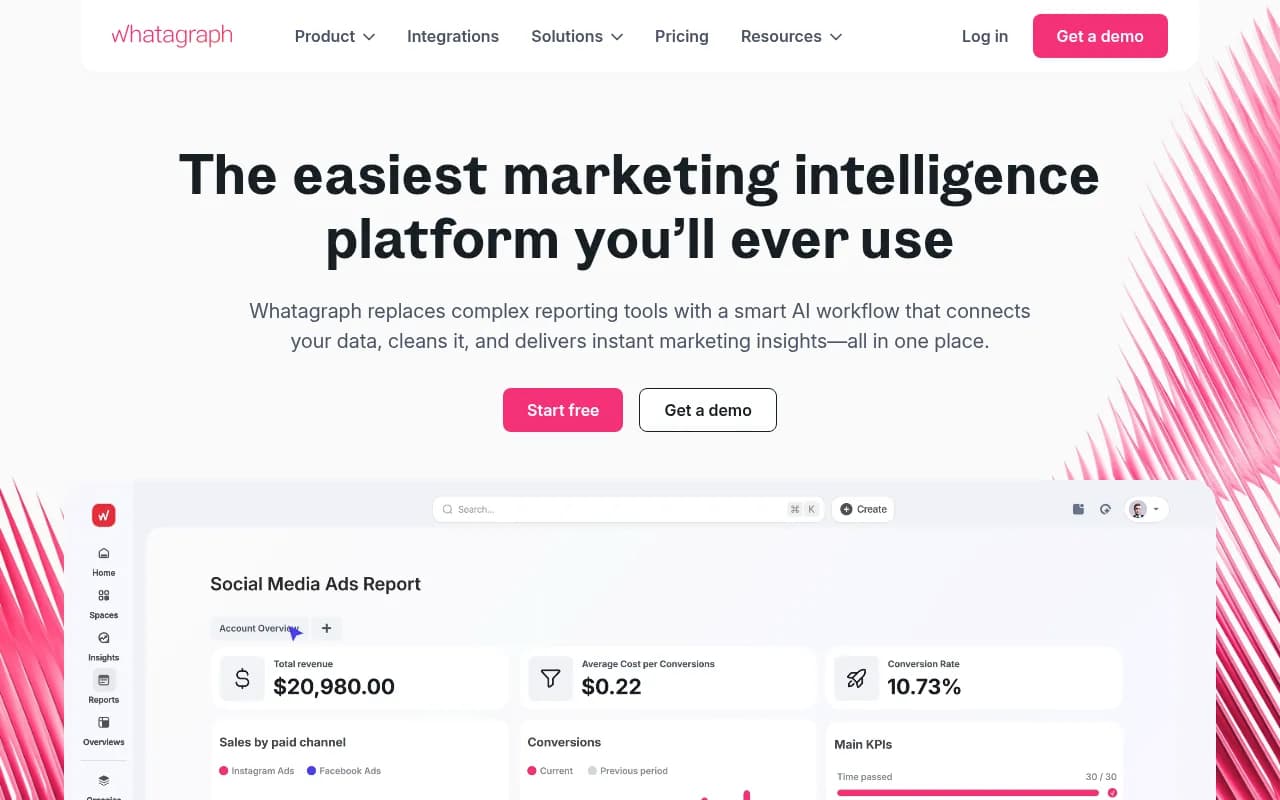
Pull the Search Console generative AI report and Bing's AI Performance report into the same document for the Google and Microsoft surfaces. This gives clients a contrast: hard impression data for two ecosystems, sampled data for Meta. A reporting tool such as Whatagraph can assemble these into one client-facing dashboard.
Comparing surfaces in one table
Clients want one view. Give them this, and be honest about the confidence column.
| Surface | First-party data | Main report metrics | Confidence |
|---|---|---|---|
| Google AI Overviews and AI Mode | Search Console impressions by page, country, device | Impressions, cited pages | High for impressions, none for clicks |
| Bing and Copilot | Bing AI Performance report | Citations, citation share | Medium to high |
| ChatGPT | None | Mention rate, citations, crawler logs | Medium (tracker-dependent) |
| Perplexity | None | Mention rate, citations | Medium |
| Meta AI | None found | Prompt sample, Meta crawler requests, referrals | Low |
One more thing worth knowing: citation behavior varies a lot by engine. Promptwatch's average sources per response data found ChatGPT citing about 5 sources per web-search answer, Google AI Overviews about 10, and Perplexity almost exactly 10 every day, while Copilot swung from under 2 to nearly 17 within weeks (Promptwatch Data). That report is from September 2025, so the figures may have moved, but the advice holds: measure each engine separately and don't assume one predicts another. Judge Copilot on monthly trends.
The report template
Here is the structure I'd hand a client. Keep it to two or three pages, with raw data in an appendix.
1. Executive summary
Three sentences. What changed this period, what it means, and what you recommend. Example: "Mention rate across our 30-prompt set rose from 18% to 24%. Meta crawler requests to the site doubled, with no errors. We recommend adding product comparison pages, since competitors are named most often on those prompts."
2. Scorecard
A single table with this period, last period, and change for each metric: mention rate, average position, link presence, competitor share of voice, and AI crawler requests. Split by assistant.
3. Meta AI and assistant section
- Prompt set used (list in appendix) and sampling date
- Mention rate and position per assistant
- Meta crawler activity: requests per week, top pages fetched, errors
- Referral traffic from Meta properties, labeled as indirect
- A plain-language limitations note
4. Crawler and access health
Which AI crawlers can reach the site and which are blocked. Promptwatch's AI crawler traffic data covers weekly verified requests from OpenAI, Anthropic, Google, Perplexity, and Mistral for June 8 to September 6, 2026. OpenAI's share was 79.8% in the week of August 31 to September 6, down from 94.8% in the week of June 8 to 14 (AI crawler traffic report). Compare the client's logs to that mix. If a provider is large in the benchmark but near zero in your client's logs, they are probably blocked for it. Also split training traffic from answer-time fetchers, since they mean different things.
5. Competitor snapshot
Who was named instead, on which prompts, and with what framing. Screenshots help here. This is the slide clients actually read.
6. Actions and next steps
Maximum five items, each tied to a metric. "Allow meta-webindexer in robots.txt" is an action. "Improve AI visibility" is not.
7. Appendix
Prompt list, methodology, date ranges, tool versions, and the caveats about each data source.
Wording the limitations without losing the client
This part matters more than the numbers. A few lines I'd use:
- "Meta does not currently provide a webmaster report for AI answer citations, so Meta AI results come from a sampled prompt set and are directional."
- "Crawler requests show Meta is reading the site. They do not prove the content is used in answers."
- "We've kept the prompt set unchanged since the baseline so period-over-period comparisons are valid."
Clients tolerate uncertainty fine. What they don't tolerate is finding out later that a number was softer than it looked.
Tools that help with each part
No single tool covers all of this, and none was verified for Meta AI tracking specifically. Match tools to jobs:
| Job | Options |
|---|---|
| Multi-engine prompt tracking and crawler logs | Promptwatch, Profound |
| Agency-friendly, lower-cost tracking | Peec AI, Otterly.AI, Cairrot, OpenLens |
| Dashboards and client reporting | Whatagraph |
| Automation of prompt sampling and exports | n8n, Zapier |
| Brand mention and social listening | Brand24, Meltwater |
Promptwatch is the one I'd look at first if the client wants more than a mention count, because it connects prompt tracking to crawler logs, visitor analytics, and content actions, so the report can end with a to-do list and a way to check whether it worked. For a wider comparison, the GEO software directory lists many more options.
A cadence that works
- Weekly: check crawler logs for Meta and other AI bots, flag errors. Automated if possible.
- Monthly: run the Meta AI prompt sample, update the scorecard, send the client report.
- Quarterly: revisit the prompt set (add new buyer questions, but archive the old baseline), review robots.txt and access rules, and reassess whether a tool now supports Meta AI directly.
If your agency is short on bandwidth for this kind of reporting, 1001 SEO Media runs AI search and GEO work for brands and can handle the measurement side too.
What to watch next
The real question is whether Meta ships webmaster tooling. Until it does, expect your Meta section to be the weakest in the report, and say so. If the crawler growth in Promptwatch's data turns out to reflect a real Meta search index, that section will matter much more by next year, and the clients whose logs you've been watching since August 2026 will already have a baseline.