Key takeaways
- Travel citations in AI answers are fragmented. In Promptwatch Data's ChatGPT travel report (Sep 28 to Oct 4, 2026), the 17 charted domains together earned only 4.18% of citations, and Booking.com was not among them.
- You rarely beat the giants head on. You win by being present and accurate in the sources AI reads: your own site, OTA listings, review platforms, guides, YouTube and Reddit.
- Google AI Overviews lean harder on social and video than ChatGPT does, so YouTube and community content matter more here.
- Structured data, specific answer-first pages and honest, current facts do most of the on-site work.
- Measure it. Track the prompts travelers actually use, see who gets cited, and fix gaps one page at a time.
Why the booking giants are not as unbeatable as they look
In classic search, Booking.com, Expedia and Tripadvisor own the head terms. Open a results page for "hotels in Lisbon" and you scroll a long way before a small property appears. So the instinct is to assume AI Overviews will be worse.
The data says otherwise, at least partly. Promptwatch Data's most cited sites in ChatGPT for travel prompts (Sep 28 to Oct 4, 2026, organic prompts) shows a scattered picture. Skyscanner leads at 0.78% of travel citations, Going.com sits at 0.52%, Tripadvisor at 0.49%, Kayak at 0.37%, Airbnb and Reddit at 0.27% each. Expedia is down at 0.13%, level with Lonely Planet and Time Out. Booking.com does not appear in the top 17 at all.
A caveat I want to be upfront about: that is ChatGPT data, not AI Overviews. Promptwatch has no travel-specific AI Overviews report, so treat it as a proxy for how AI engines handle travel sources, not a measurement of Google. Google's own behavior differs, and I come back to that below.
Still, the shape matters. The 17 charted domains add up to just 4.18% of travel citations. No single giant owns the answer. That is an opening.
How AI Overviews actually answer travel questions
An AI Overview is a synthesis. Google issues several searches behind the scenes (what Google calls query fan-out), reads the results, and writes a summary with a handful of linked sources. Your page needs to be one of the pages retrieved, and it needs to contain something worth quoting.
Two practical consequences:
- Travelers phrase prompts conversationally. "Where should I stay in Lisbon for nightlife?" and "Is the Algarve worth visiting in October?" are typical examples from cloro's hotel research. These are not keyword strings.
- AI Overviews do not appear on every query. Cloro's test found Google AI Overviews answered 52% of its travel prompts, while AI Mode and ChatGPT answered 100%. Treat that as one vendor's sample, not a universal rate. Overall frequency is climbing, though: one agency guide citing Semrush put AI Overviews at over 13% of all queries, double the January 2025 rate.
The queries most likely to trigger an Overview are the exploratory, advice-shaped ones. Transactional queries ("book hotel Rome July 12") still lean on hotel modules and ads, where the giants have a structural advantage. Do not fight there first.
Pick the fights you can win
Sort your target queries into three buckets.
| Query type | Example | Giants' strength | Your odds |
|---|---|---|---|
| Transactional, date-specific | Hotels in Paris 3 nights June | Very high | Low |
| Comparative and advice | Best area to stay in Lisbon for nightlife | Medium | Good |
| Experiential and niche | Is the Algarve worth visiting in October | Low | Very good |
| Branded and property-specific | Is [your hotel] good for families | Medium | High, if your data is clean |
The middle and bottom rows are where independents and destination experts get cited. They are also where travelers are earlier in the journey, which is where AI answers shape the shortlist.
Fix the on-site foundations
Answer the question in the first two sentences
AI systems lift passages. A page that opens with a paragraph of scene-setting is harder to quote than one that opens with the answer. For a neighborhood guide, start with "Alfama suits first-time visitors who want walkable sights; Bairro Alto suits nightlife." Then support it.
Use specific, checkable facts
Vague copy ("a stunning boutique escape") gives a model nothing to cite. Specifics do: distance to the station in minutes, room counts, check-in hours, pet policy, breakfast hours, seasonal closures. Product and landing pages are the most cited type in ChatGPT, at 22.4% of citations (Sep 28 to Oct 4, 2026, Promptwatch Data), which suggests commercial pages with concrete details are not dead weight.
Add structured data
Hotel, LodgingBusiness, HotelRoom, TouristAttraction, FAQPage and Review markup give crawlers an unambiguous version of your facts. One hotel agency guide claims Google's developer documentation treats lodging schema as the validation layer for AI Overviews and Hotel Ads. I could not verify that wording, and the guide is vendor marketing, so I would not lean on the claim. Schema is still cheap, correct and helpful for rich results. Validate it with Google's Rich Results Test and keep it consistent with the visible page.
Keep it fast and crawlable
If AI crawlers hit errors or blocked resources, you do not get read. Check robots.txt for AI user agents you actually want, keep key content in HTML rather than behind scripts, and keep the sitemap current. A crawler such as Screaming Frog handles the basic audit.
Win in the places AI reads, not just your own site
This is the part most hotel and tour sites skip. The Promptwatch travel report's own takeaways read like a to-do list:
- Keep listings on Skyscanner, Kayak, Airbnb and Expedia accurate.
- Collect reviews on Tripadvisor and Trustpilot, and aim for coverage by Which?.
- Get featured in guides like Lonely Planet and Time Out.
- Notice that deal sites such as Going.com out-cite Tripadvisor.
By source type, booking and search sites made up 2.42% of travel citations, more than half of the charted share. Reviews and advice sources (Tripadvisor, Trustpilot, Which?) added 0.86%, guides and reference 0.37%, Reddit 0.27% and tours 0.16%.
The lesson is slightly counterintuitive. The giants are not your enemy here. They are a distribution channel. A complete, accurate, well-reviewed listing on an OTA can be the page an AI answer cites, even if your own site is not. Cloro's FAQ says the same in plain language: hotels show up by being present, current and well-reviewed in the sources AI reads.
Reviews are the trust layer
A Google industry lead interviewed by Skift in January 2026 described the shift from keywords to intent and flagged the evolving role of reviews and trust signals in booking decisions. Respond to reviews, ask guests for specific ones (location, noise, breakfast, families), and keep the Google Business Profile current. Specific reviews are quotable. "Great stay!" is not.
YouTube and Reddit carry more weight in Google
The social picture splits by engine. From Sep 28 to Oct 4, 2026, ChatGPT drew just 0.46% of its citations from social platforms, while Google AI Overviews drew 12.2% (Promptwatch Data). Since you are targeting AI Overviews, that matters.
Reddit is a moving target. reddit.com's share of ChatGPT citations fell from about 4% to 0.5% on August 14, 2026, while AI Overviews and AI Mode declined more gradually (Promptwatch Data). Promptwatch's older AI Overviews source report had YouTube at about 4.1% of citations and Reddit at about 2.7%, though that page was dated September 2025 and may be stale, so check the live version.
Practical moves:
- Publish short YouTube walk-throughs of rooms, neighborhoods and day trips, with searchable titles, chapters and detailed descriptions.
- Answer real questions in destination subreddits as a person, with disclosure. Do not astroturf. Communities spot it fast and the damage lasts.
Build pages that match how travelers prompt
Start from prompts, not keywords. Write down 30 to 50 questions a traveler would actually ask about your destination and property type, then check which pages Google currently cites for them.
Good page formats for AI Overviews in travel:
- Neighborhood comparisons with a clear recommendation per traveler type
- Seasonal guides with real weather, crowd and closure notes ("Algarve in October")
- Honest "who this is not for" sections, which models quote because they read as credible
- FAQ blocks with direct answers and matching FAQ schema
- Itineraries with durations, costs and transport details
Keep time-sensitive content fresh. Promptwatch's half-life data on ChatGPT (pages cited on July 6, 2026, tracked 90 days) found news lost half its pages within 36 days, while landing pages and docs stayed cited longest (Promptwatch Data). Evergreen guides with visible update dates should outlast event-driven posts.
Watch out for misattribution
One hotel agency's write-up cites Wellows research finding Marriott earned 214 implicit AI mentions against only 10 explicit ones, meaning AI described its strengths while crediting others. That is a single vendor-reported figure, so hold it loosely. The underlying risk is real and common: if your facts are inconsistent across your site, OTAs and directories, models blend them and your property gets described wrongly or credited to a competitor.
Audit your name, address, amenities, star rating and policies across every major listing. Make them identical. A listings platform like Yext can help at scale for multi-property groups.
Measure what AI Overviews actually say
You cannot manage this by checking a few searches by hand. Results vary by location, language and day. You need a tracker that records the prompts, the answers, and which sources get cited.
Promptwatch is the option I would start with for travel brands, because it goes past tracking: it monitors the real Google AI Overviews and AI Mode interfaces by country, shows prompt volumes and query fan-outs, and flags content gaps so you know which page to write next. Its crawler logs show whether AI bots can actually read your pages, and its Reddit and YouTube citation reports cover the channels that matter for Google.

Other tools worth a look depending on budget and need:
| Tool | Strength for travel teams | Limitation to know |
|---|---|---|
| Promptwatch | Real AI Overviews tracking, content gaps, crawler logs, publishing agent | Larger feature set than a solo hotel may need |
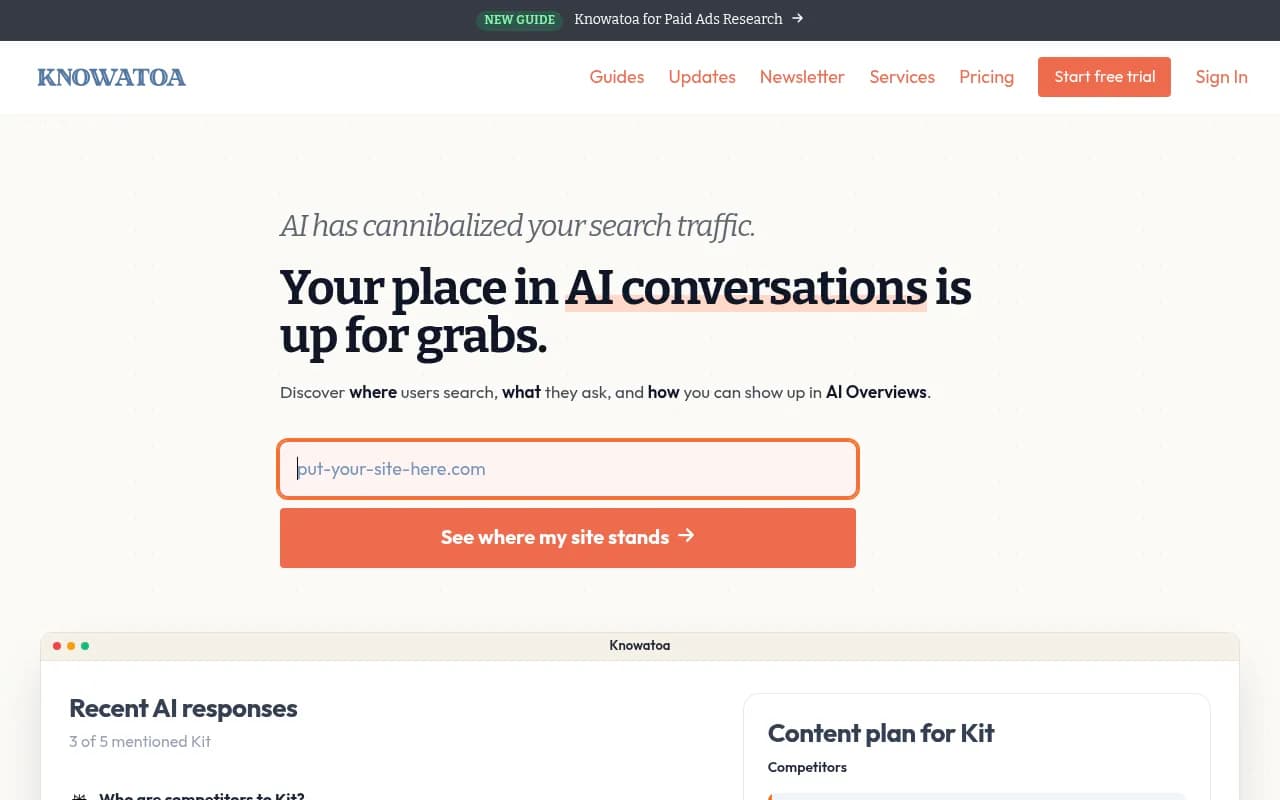
| Knowatoa | Focused AI Overviews and AI Mode monitoring | Monitoring only |
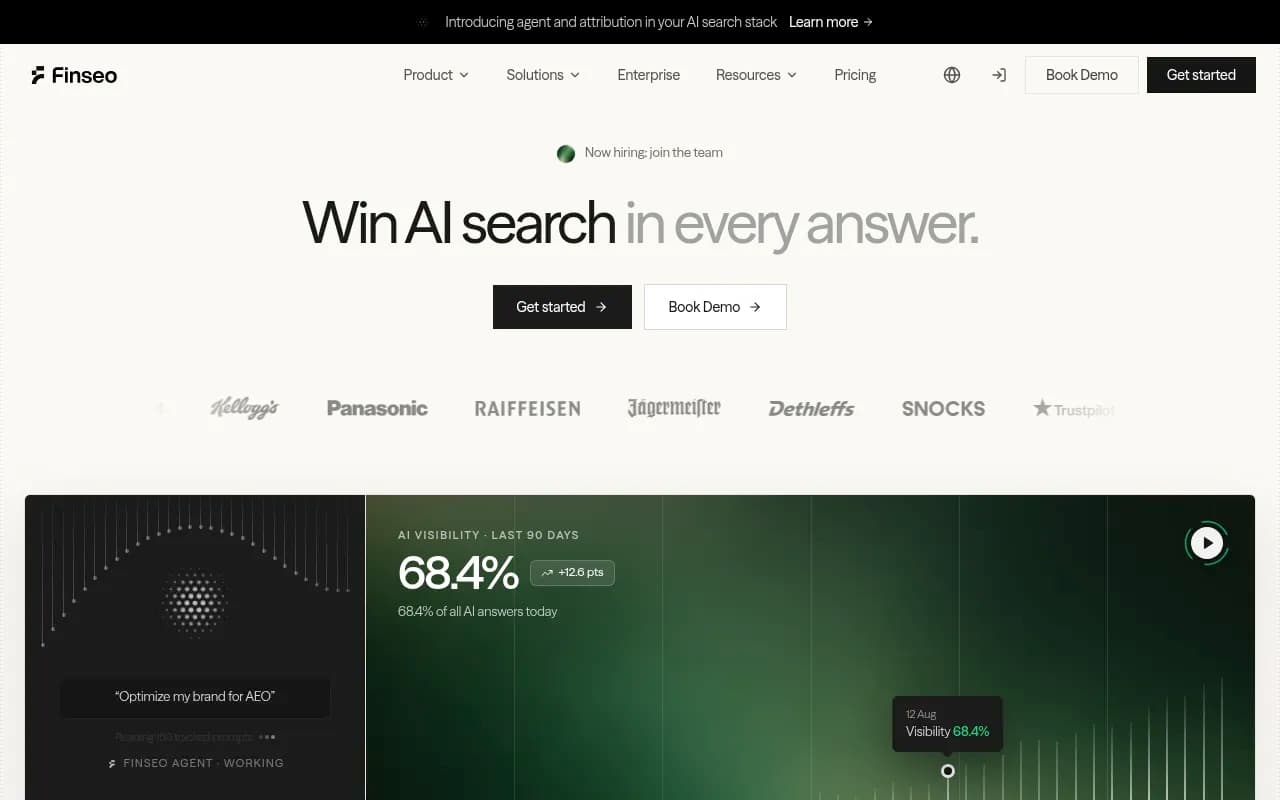
| Finseo | Google AI Mode and AI Overviews visibility tracker | Narrower scope |
| Thruuu | AI Overview monitoring for content teams | Content-team oriented |
| Semrush | Familiar suite with AI tracking added | Fixed prompt sets, shallower AI data |
For more options, the directories at bestgeosoftware.com and ai-rank-tools.com list GEO and AI rank trackers side by side.
A 90-day plan
Days 1 to 30: audit and fix
- List 40 traveler prompts across advice, comparison and branded intent.
- Record which sources AI Overviews cite for each, and where you appear.
- Fix factual inconsistencies across your site and every listing.
- Add or validate Hotel, LodgingBusiness, FAQPage and Review schema.
- Check that AI crawlers can reach your key pages.
Days 31 to 60: publish and distribute
- Write answer-first neighborhood, seasonal and "who it suits" pages.
- Film short YouTube videos for the top 10 prompts.
- Pitch two or three guides and local editorial outlets for inclusion.
- Start a review request routine that asks for specific details.
Days 61 to 90: measure and iterate
- Re-run your prompt set and compare citation share.
- Refresh pages that were retrieved but not cited.
- Double down on formats that earned citations. Drop the ones that did not.
What I would not bother with
Skip hunting for a single hack. There is no meta tag that gets you into an Overview. Skip stuffing pages with every possible location keyword. And do not spend your first quarter trying to outrank Booking.com on date-specific hotel searches. Those modules are built for the giants.
One gap in all of this, honestly: I found no public data on how often travel queries trigger AI Overviews, or on Booking.com and Expedia's AI Overview share specifically. Anyone quoting precise numbers on that is probably guessing. Run your own prompt set and let your own data decide.
Bottom line
The booking giants win when travelers search by dates and price. They are far weaker when travelers ask for advice, and the citation data shows AI answers drawing on a wide spread of sources. Be accurate everywhere you are listed, publish specific answer-first content, earn real reviews, show up on YouTube, and track the results prompt by prompt. Independent hotels and tour operators that do this get cited. The ones waiting for the giants to lose do not.