
Key Takeaways
- Fund shared SEO foundations first. Most GEO work runs on the same site, content and authority you already pay for, so it rarely needs a fully separate budget.
- Published starting points vary widely: 8-10% of revenue (Rise at Seven), a 75/25 SEO/GEO split (Simple SEO Group), and a reported 24% average of search or content budgets in a Fractl survey. Treat them as reference points, not rules.
- Spend most of the money on evergreen pages. Promptwatch Data shows product and landing pages earn 39% of ChatGPT citations, and they stay cited far longer than news.
- Buy tools in proportion to what you will act on. Monitoring that nobody reads is wasted spend.
- Set review checkpoints against qualified traffic, inquiries and pipeline, not just visibility scores.
Why GEO budgeting is awkward
GEO is not a clean line item. Part of it is technical SEO. Part is content. Part is PR and third-party mentions. Part is software. Vendors pitch separate AEO and GEO packages, leadership asks for "a presence in ChatGPT," and nobody agrees which team owns the number.
Markivis makes a point I agree with: all three disciplines compete for funding, but not every activity needs its own budget. The real question is which existing spend to protect, what AI search needs on top, and what can wait.

A caveat up front. I could not verify current agency retainer benchmarks or tool prices for this guide, so I give you a structure and ranges to test rather than invented price quotes. Confirm real prices with vendors before you commit.
Benchmarks you will hear, and how to read them
Three numbers circulate in 2027 planning conversations.
| Source | Starting point | What it actually tells you |
|---|---|---|
| Rise at Seven | 8-10% of revenue minimum for GEO (e.g. 8-10% on a 100m business is 624k-780k per year in their GBP example) | A large-brand, agency-led view. Heavy for most companies. |
| Simple SEO Group | About 75% SEO, 25% GEO of the combined budget, adjusted by industry | A sensible split for businesses with working organic traffic |
| Fractl survey (Aug 2026, 343 US marketers, as cited by Markivis) | 24% average of search or content budgets to AI visibility | What peers say they spend. Markivis warns it is not a recommendation. I did not verify the original source. |
The Rise at Seven figure is an agency's opinion at the aggressive end. The Fractl average describes behavior, not correctness. The 75/25 split is the most defensible default if Google still sends you meaningful leads.

My suggestion: pick a range, not a point. Something like 15-25% of your search and content budget for GEO, then move within it based on three things. Technical SEO debt pushes money back to the foundation. Heavy dependence on AI-influenced buying journeys (software, travel, healthcare research) pushes it up. Weak measurement pushes some of it into tooling.
Step 1: Audit what you already fund
Before adding a line, list the current spend and tag each item by whether it helps AI visibility too.
- Technical SEO and site health: helps both. AI crawlers need to reach and read your pages.
- Product, pricing and landing page content: helps both, and matters most for GEO (see below).
- Digital PR and link building: helps both, since AI answers lean on third-party sources.
- Reviews and listings: helps both, especially for branded prompts.
- Thin blog output at volume: often helps neither.
Most teams find 30-50% of their existing program already supports GEO. That portion does not need a new budget, only a new brief.
Step 2: Spend on content by what AI cites
Content is where most of the money should go, and the research on what gets cited is unusually concrete. Promptwatch Data's report on ChatGPT citations by content type (Sep 28 to Oct 4, 2026) breaks down shares of classified citations:
| Content type | Share of ChatGPT citations |
|---|---|
| Product pages | 22.4% |
| Landing pages | 16.8% |
| Listicles | 13.6% |
| How-to guides | 8.7% |
| Documentation | 7.5% |
| General articles | 6.1% |
| Comparisons | 5.9% |
| News | 5.7% |
| FAQ pages | 3.3% |
| Reviews | 1.7% |
Product and landing pages together take 39%. For commercial prompts like "best CRM for small businesses," product pages, landing pages, listicles and comparisons make up almost 70% of citations. For branded prompts, reviews carry more than three times their share across all prompts.
That suggests a rough allocation of your content budget:
- Core commercial pages (product, pricing, landing, comparison): the largest share. Keep specs, prices and positioning complete and factual.
- Listicles, how-tos and comparisons: a solid second tier, written per prompt intent rather than per keyword.
- Documentation and FAQs: cheap to maintain, but keep them public and crawlable.
- Reviews on trusted third-party sites: budget for collecting them, not just for your own testimonials.
- News and PR: a small, deliberate slice for short bursts of visibility.
Budget for refreshes, not just new pages
Promptwatch Data's content half-life report tracked every page ChatGPT cited on July 6, 2026 for 90 days. After 60 days ChatGPT still cited 69% of landing pages and 67% of docs. Comparisons held 63%. Product pages, reviews and how-tos sat around 55%, with half-lives of 74-77 days. News was the weak spot: half of news pages were gone after 36 days, and almost a quarter were never cited again after day 0.
The budget implication is straightforward. Evergreen assets pay back over months, so fund them and keep them accurate. Product pages need regular refreshes. News is rented attention. I would put a fixed share of the content budget, perhaps 20-30%, into updating existing pages rather than publishing new ones.
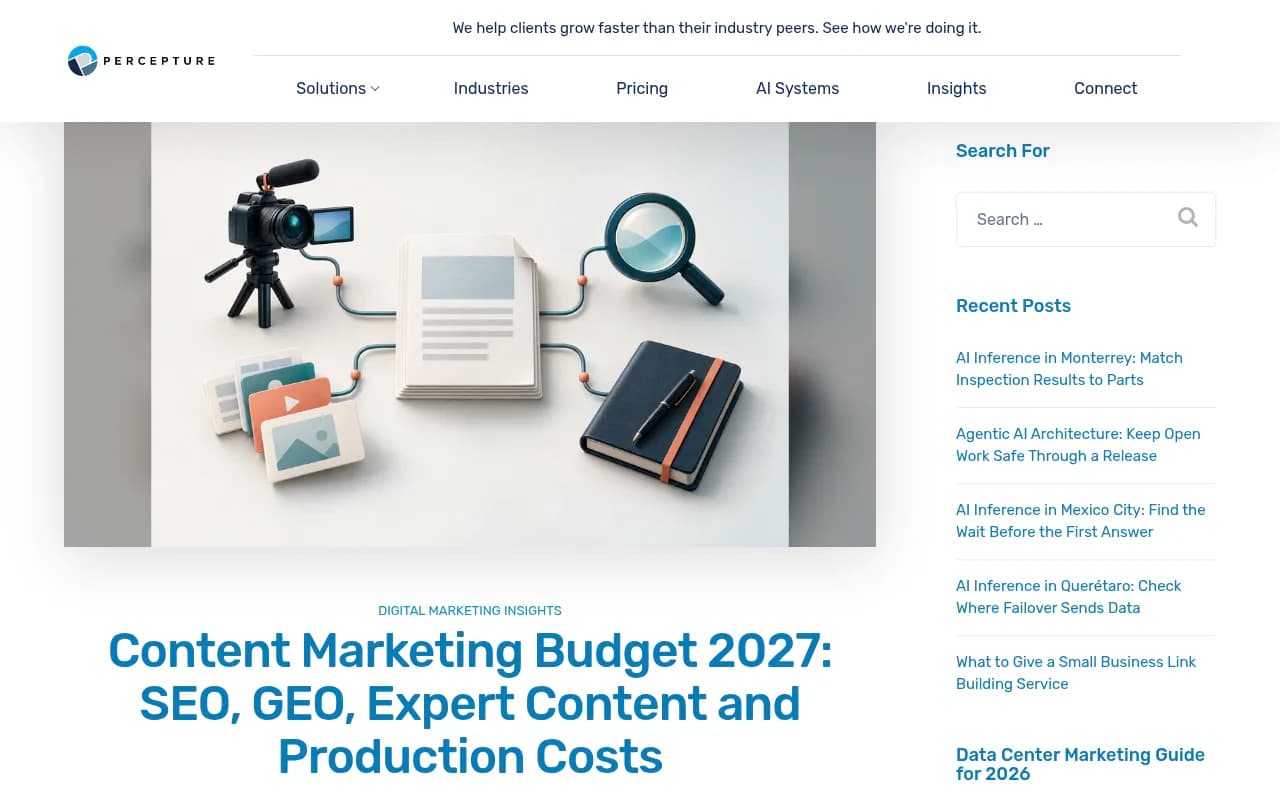
Percepture's content budget guide adds a useful framing: price the full life of an asset (expert time, review, design, CMS work, distribution, updates) and start from the buyer questions that stall a deal, not from an article count.
Step 3: Decide what to spend on tools
There are now hundreds of AI visibility tools, from free checkers to enterprise suites. Pay for software when the output will change a specific decision. A rough ladder:
- Free checks to establish a baseline. Promptwatch offers a free AI visibility report, and the tools catalog has others such as FalconRank and GEO Toolbox.
- Entry-level monitoring when you need trend data on a set of prompts.
- An end-to-end platform when you want to connect monitoring to content, crawler data and traffic.
- Enterprise suites when procurement, security and many markets drive the decision.
Monitoring-only tools
If you just need to know whether your brand shows up, there are several lower-cost options.


These answer "was my brand mentioned?" well enough. The gap is what happens next. You will still need people, or another tool, to turn findings into pages and fixes.
Platforms that connect monitoring to action
Promptwatch is the one I would put in the mid-to-large budget tier, because it covers the loop from tracking to publishing to measurement. It tracks the real interfaces of ChatGPT, Google AI Overviews, Gemini, Perplexity and others, shows which pages get cited, uses IP-verified AI crawler logs to tell an access problem from a content problem, and its Content Agent can write and publish pages to WordPress, Webflow or Framer. Visitor analytics then show whether AI sends traffic and conversions.

Pricing is published at promptwatch.com/pricing, so check it there. As of the plans listed: Essential is $95/month, Professional $245, Business $579, and agency plans run $199 to $799. The Content Agent starts at Business, so if automated publishing is the reason you are buying, budget for that tier. There is a 7-day free trial on monthly billing, and annual billing works out to 12 months for the price of 10. The research agent noticed a Black Friday 30% discount banner ending Nov 30, which may matter if you are budgeting right now.
Other enterprise-leaning options worth pricing against it:

See Promptwatch vs Profound for a direct comparison, or browse the GEO software directory at bestgeosoftware.com for the wider field.
Tools you may already own
If your SEO suite has added AI tracking, test it before buying something new.
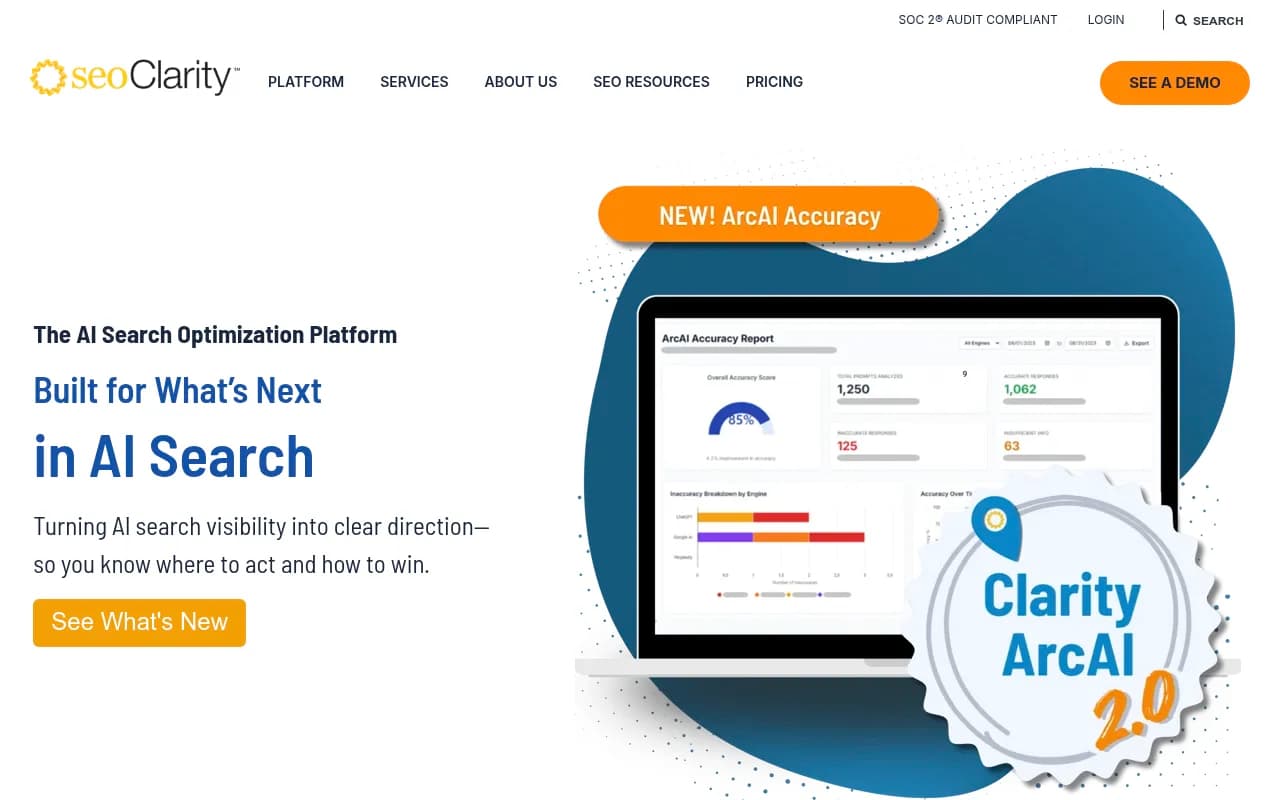
The trade-off is depth. Suites often use fixed prompt sets and offer thinner AI-specific data, so they work as a first layer rather than a full replacement.
Tool spend by company size
| Situation | Sensible tool approach |
|---|---|
| Small team, one site, unclear AI impact | Free checks, then one entry-level tracker |
| Mid-size B2B with active content program | One end-to-end platform plus existing SEO suite |
| Multi-market or regulated brand | Enterprise platform with security review, audit logs and SSO |
| Agency serving clients | Agency-tier plan with reporting and pitch reports |
A rule I use: keep tooling to roughly 10-20% of the GEO budget. If software is eating half of it, you are paying for dashboards and under-funding the work that moves the numbers.
Step 4: Decide on agency spend
I did not find reliable retainer benchmarks, so ask for three quotes and compare scope, not just price. A fair agency engagement should include:
- Senior people doing the work, not just account managers
- Technical SEO and AI crawler access fixes
- Content strategy and production tied to specific prompts
- Digital PR and third-party mentions
- Monthly reporting that shows traffic, leads and pipeline, not only visibility scores
- No long lock-in contracts
Agencies make sense when you lack in-house capacity or need a combined technical, content and PR program. 1001 SEO Media, which publishes this site, offers GEO and AI search services alongside technical SEO and content, so it is one of the options to price. Do the same diligence with any agency you shortlist, including us.
To keep agency spend honest, tie fees to a short list of commercially important prompts. Measure current visibility, agree targets, and review every quarter. For agency shortlists that already do AI visibility work, the catalog includes names such as Passionfruit Labs and Search Party, among others.
In-house, agency or hybrid
| Model | Best when | Watch out for |
|---|---|---|
| In-house with tools | You have writers, an SEO lead and engineering time | Capacity runs out; the tool becomes shelfware |
| Agency-led | Little internal capacity, need fast ramp-up | Dependence, vague reporting |
| Hybrid | Strategy in-house, production and PR outsourced | Needs a clear owner on your side |
Step 5: Put numbers in a worksheet
Here is a simple split for a company with an existing SEO program. Adjust to fit.
| Line | Share of GEO budget |
|---|---|
| Content creation and refresh (commercial pages first) | 40-50% |
| Technical fixes and crawler access | 10-15% |
| Digital PR, reviews and third-party mentions | 10-15% |
| Tools (monitoring, analytics, content platform) | 10-20% |
| Agency or contractor support | Varies, often replaces part of content and PR |
| Contingency | 5-10% |
The contingency matters. AI search shifts quickly. Promptwatch Data recorded reddit.com's share of ChatGPT citations falling from roughly 4% to 0.5% on August 14, 2026 (report). A plan that put all its money into one channel would have been caught out. Keep room to move.
Step 6: Prove it to leadership
Budgets survive review when they tie to business results. Track in layers:
- Visibility: how often and how prominently you appear for your priority prompts.
- Citations: whether AI points at your own pages, and which ones.
- Crawl access: whether AI bots can actually read the pages.
- Traffic and conversions from AI referrals. Note that ChatGPT stopped sending a referrer on October 8, 2026, so you may need UTM tagging to count it. See the Academy guide to attributing AI traffic.
- Pipeline and revenue influenced.
Real examples help in the pitch. Crisp reported 2x higher conversion rates from AI traffic than traditional channels (case study), and TreeHouse grew AI search to about 25% of organic conversions (case study). Your results will differ, but they show the metric to chase is conversions, not mentions.
If you want a ready structure, the 90-day GEO program is a decent template for sequencing the first quarter of spend.
Common mistakes
- Moving budget from working SEO to GEO before you know what AI sends you.
- Buying three monitoring tools and no content capacity.
- Publishing volume instead of fixing core product and landing pages.
- Funding news and PR when evergreen assets last longer.
- Giving GEO no owner, so nobody answers for the ROI.
- Reporting visibility scores to executives who care about pipeline.
A starting plan for 2027
If I had to set a budget tomorrow, I would do this: protect current SEO, carve out 15-25% of search and content spend for GEO, spend half of that on commercial pages and refreshes, add one platform that ties tracking to action, put a modest slice into PR and reviews, hold some in reserve, and review at 90 days against qualified traffic and inquiries. Check live tool prices on vendor pricing pages before you lock the numbers in.