Key takeaways
- AI search engines cite sources based on clarity, specificity, and topical authority -- not just domain age or backlink counts
- New domains should start with a tight prompt set targeting questions they can realistically win, not broad head terms
- Structured content (clear answers, FAQs, comparison pages) gets cited more often than generic long-form articles
- Building citations from third-party sources (Reddit, YouTube, industry directories) accelerates AI visibility faster than on-site content alone
- Tracking AI visibility requires different tools than traditional rank tracking -- prompts, not keywords, are the unit of measurement
Starting a new domain in 2026 means competing in two search ecosystems at once. There's traditional Google, which you already know is a slow burn. And then there's AI search -- ChatGPT, Perplexity, Claude, Gemini, Google AI Overviews -- which works completely differently and, for many queries, has already replaced the ten blue links.
The good news: AI search is not purely a domain authority game. A brand-new site with zero backlinks can get cited by ChatGPT within weeks if the content is structured correctly and answers the right questions. I've seen it happen. The bad news: most new sites approach this exactly wrong -- they publish generic content, track the wrong metrics, and wonder why nothing moves.
This guide is the playbook I'd follow if I were launching a new domain today and needed AI visibility fast.
Understand what AI search actually rewards
Before you write a single word, you need to understand how AI models decide what to cite. It's not PageRank. It's not even pure backlink authority, though that helps over time. What AI models reward is clarity and specificity.
When a user asks ChatGPT "what's the best project management tool for a 10-person remote team," the model looks for sources that directly answer that question -- with a clear recommendation, a reason, and enough context to be useful. Vague, hedged, "it depends" content rarely gets cited. Specific, opinionated, well-structured content does.
A few patterns that consistently get cited across AI models:
- Direct answers in the first paragraph (don't bury the lede)
- Comparison pages that put two or more options side by side
- FAQ sections with specific questions and tight answers
- Step-by-step guides with numbered lists
- Pages that name specific use cases, personas, or scenarios
This isn't a new idea -- it's basically what good content has always looked like. But AI search has made the penalty for vague content much steeper. If your page doesn't answer the question clearly, an AI model will just use someone else's page that does.
Start with a tight prompt set, not a keyword list
Traditional SEO starts with keyword research. AI search starts with prompt research. These are different things.
A keyword is "project management software." A prompt is "what project management tool should a 10-person remote startup use in 2026?" One is a topic. The other is a question a real person actually types into ChatGPT.
For a new domain, the temptation is to go after high-volume prompts immediately. Don't. You'll lose to established brands every time. Instead, build a prompt set around questions you can actually win -- niche scenarios, specific use cases, underserved comparisons.
How to build your initial prompt set
Start with customer language. What exact questions do your customers ask before they buy? Check your sales call recordings, support tickets, and any Reddit threads in your niche. These are your prompts.
Then cluster them. Group similar questions together -- "best X for Y" prompts, "how to do Z" prompts, "X vs Y" comparison prompts. Each cluster is a content opportunity.
Then prioritize ruthlessly. For a new domain, focus on:
- Long-tail prompts with specific constraints ("best email tool for solo consultants who hate subscriptions")
- Comparison prompts where the established players aren't clearly dominant
- "How to" prompts where a clear step-by-step answer doesn't yet exist
Tools like Promptwatch can show you prompt volumes and difficulty scores so you're not guessing which prompts are winnable.

Build content that AI models want to cite
Once you have your prompt set, you need content that directly answers each prompt cluster. Here's what that looks like in practice.
The anatomy of a citable page
Every page you publish should have:
- A clear, direct answer in the first 100 words -- don't make the AI model (or the reader) scroll to find out what you think
- Structured subheadings that match the sub-questions inside the main prompt
- A comparison table if you're covering multiple options
- A FAQ section at the bottom that handles the obvious follow-up questions
- Specific examples, numbers, or named scenarios -- not generic advice
The comparison table point is worth dwelling on. AI models love comparison tables because they're information-dense and easy to parse. If you're in a competitive category, a well-structured comparison page can get cited faster than almost any other content format.
Here's an example of what a comparison table might look like for a page targeting "best note-taking apps for researchers":
| Tool | Best for | Price | Offline access | AI features |
|---|---|---|---|---|
| Notion | Flexible databases | Free / $10mo | Partial | Yes |
| Obsidian | Local-first, linking | Free / $4mo | Full | Plugin-based |
| Roam Research | Bidirectional linking | $15/mo | No | Limited |
| Bear | Clean writing, Apple | $3/mo | Yes | No |
That table, embedded in a page that directly answers "what note-taking app should researchers use," is exactly what an AI model will pull from when answering that question.
Don't ignore FAQ schema
Adding FAQ schema markup to your pages is one of the highest-ROI technical moves for a new domain. It signals to AI crawlers exactly which questions your page answers. It's not magic, but it does help AI models parse your content faster and more accurately.
Build your off-site citation footprint
Here's something most new domain guides skip: AI models don't just cite your website. They cite the entire web's conversation about your brand and category. That includes Reddit threads, YouTube videos, industry directories, review sites, and third-party articles.
For a new domain, this means you need to build a presence beyond your own site from day one.
Reddit is disproportionately influential in AI search. ChatGPT, Perplexity, and others pull heavily from Reddit discussions when answering recommendation questions. Find the subreddits where your target customers hang out and participate genuinely -- answer questions, share your tool when it's relevant, and don't spam.
A single well-upvoted Reddit comment recommending your product can drive AI citations for months.
YouTube
YouTube content gets cited by AI models more than most people realize. A short, specific video answering a niche question in your category -- even with 200 views -- can end up cited in Perplexity responses. It doesn't need to go viral. It needs to be specific and findable.
Directories and review sites
Get listed on G2, Capterra, Product Hunt, and any niche directories in your category. These sites have high domain authority and AI models trust them as sources. A listing with a few genuine reviews is worth more for AI visibility than most people realize.
Guest content and press
A single article on a credible industry publication that mentions your brand and links to your site does two things: it builds a traditional backlink, and it creates a third-party source that AI models can cite when talking about your category.
Make your site technically readable by AI crawlers
AI models can't cite content they can't read. For a new domain, this means getting the technical basics right from the start.
Core technical requirements
- Clean HTML with proper heading hierarchy (H1, H2, H3 in logical order)
- Fast page load times -- AI crawlers deprioritize slow pages
- No JavaScript-rendered content that blocks crawlers (or ensure server-side rendering)
- An XML sitemap submitted to Google Search Console
- A robots.txt that doesn't accidentally block AI crawlers
That last point is easy to get wrong. Some robots.txt configurations block GPTBot (OpenAI's crawler), ClaudeBot (Anthropic), or PerplexityBot. Check yours. If you're blocking these crawlers, you're invisible to those AI models by definition.
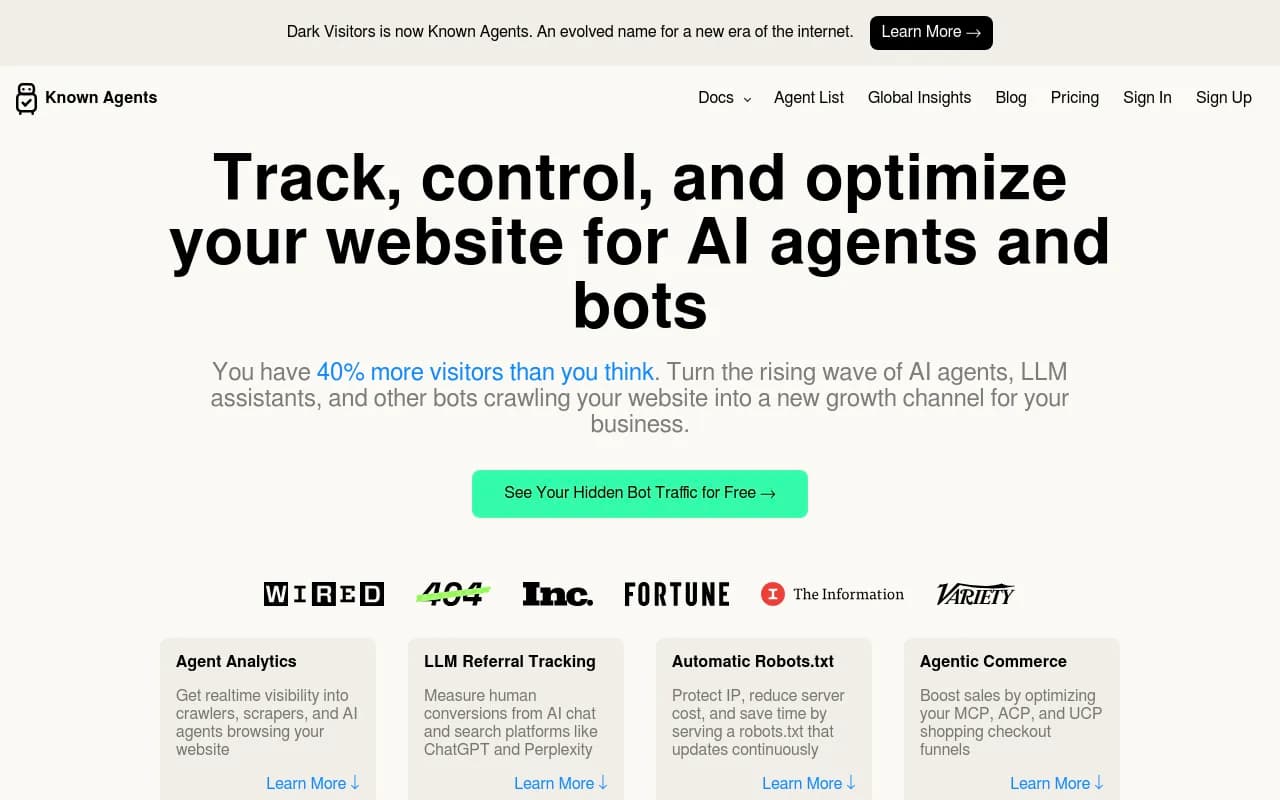
Tools like DarkVisitors can help you see which AI crawlers are hitting your site and whether any are being blocked.
Structured data
Beyond FAQ schema, consider adding:
- Article schema on blog posts
- Product schema if you're selling something
- HowTo schema on step-by-step guides
- Organization schema on your homepage
None of this is mandatory, but it helps AI models understand what each page is about and increases the chance of citation.
Track AI visibility from day one
Most new domain owners make the mistake of waiting until they have "enough content" to start tracking. Don't. Set up tracking on day one so you have a baseline and can see what's actually moving.
What to track
AI visibility tracking is different from rank tracking. You're not tracking position 1-10 on a SERP. You're tracking:
- Whether your brand or domain gets mentioned in AI responses to your target prompts
- Which specific pages are being cited and by which AI models
- How your mention rate compares to competitors
- Which prompts you're winning vs. losing
Tools for tracking AI visibility
There are several tools worth knowing about here, depending on your budget and needs.
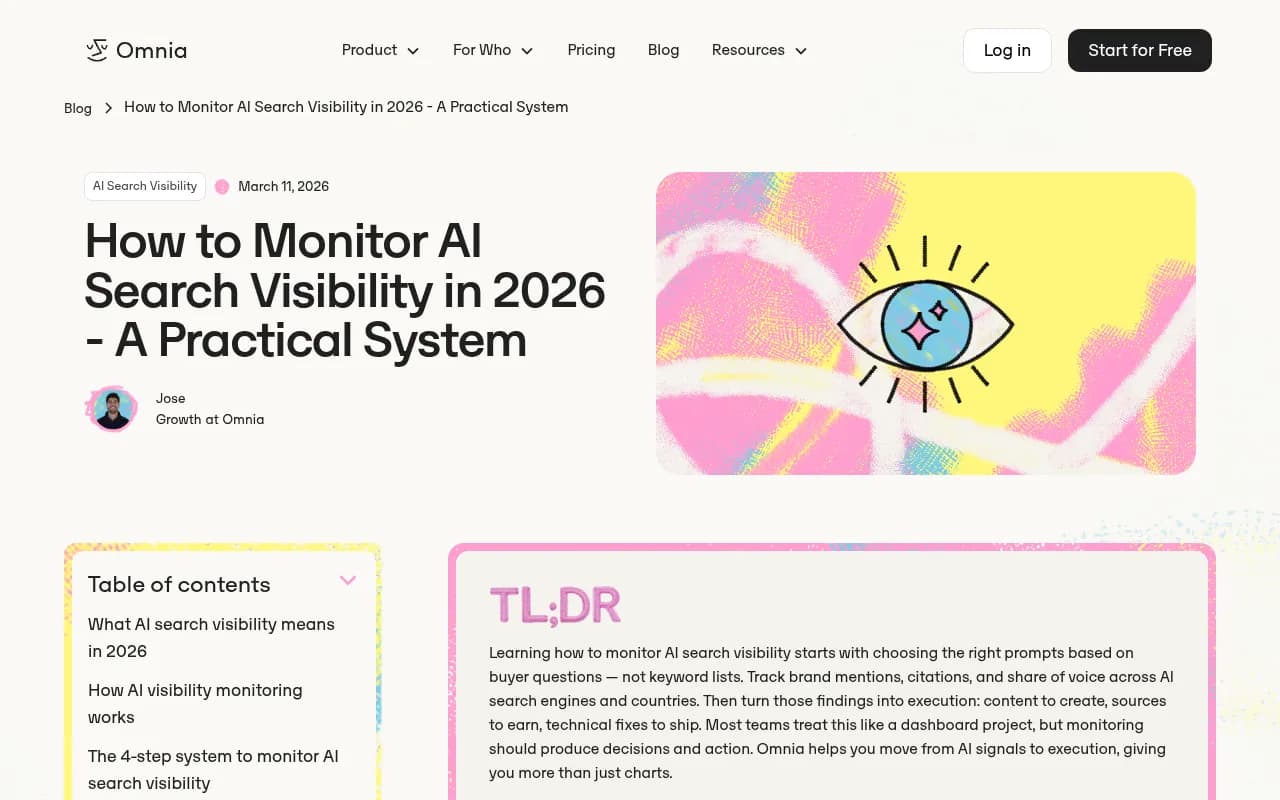
For a new domain on a tight budget, something like Otterly.AI or Peec AI gives you basic monitoring without a big monthly commitment.


For more depth -- especially if you want to understand why you're not showing up and what content to create -- Promptwatch goes further. It combines visibility tracking with answer gap analysis (showing you which prompts competitors rank for that you don't) and a content generation layer that produces articles designed to get cited. That full loop -- find gaps, create content, track results -- is what separates it from monitoring-only tools.
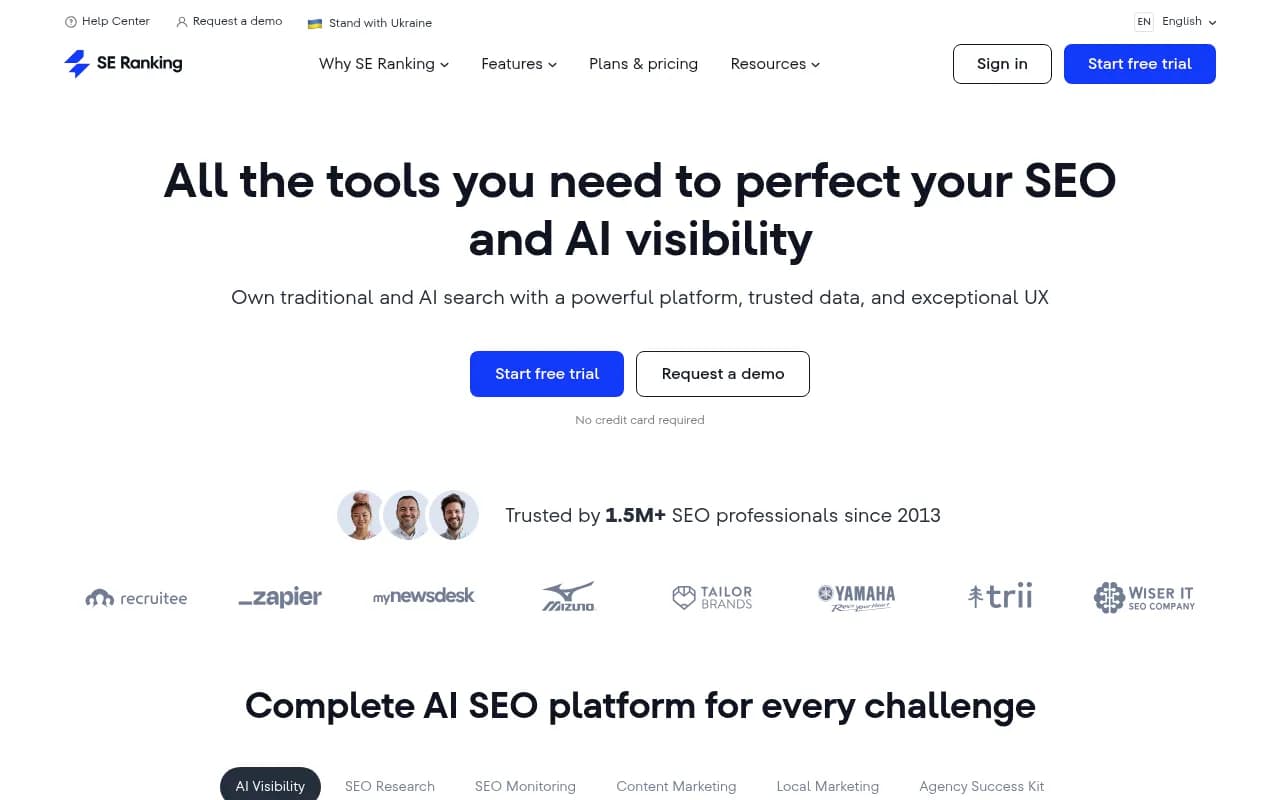
For teams that want solid monitoring with a familiar SEO interface, SE Ranking has added AI visibility tracking to its existing SEO suite.
The content velocity question
One thing new domains get wrong: they publish 3 pieces of content and then wait. AI visibility doesn't work that way. You need topical depth -- multiple pages covering different angles of the same topic -- before AI models start treating you as a reliable source on that topic.
A reasonable target for a new domain: 20-30 tightly focused pages in your core topic cluster within the first 90 days. That sounds like a lot, but most of these don't need to be 3,000-word epics. A 600-word page that directly answers one specific prompt, with a comparison table and a FAQ section, is more valuable than a 3,000-word generic overview.
Prioritize:
- One "hub" page per major topic cluster (comprehensive, 1,500+ words)
- Multiple "spoke" pages targeting specific prompts within that cluster (600-1,000 words each)
- Comparison pages for your top 5-10 competitive alternatives
This hub-and-spoke structure signals topical authority to both traditional search engines and AI models.
A realistic timeline
Here's what to expect if you execute this playbook consistently:
| Timeframe | What to expect |
|---|---|
| Weeks 1-4 | Set up tracking, publish first 10 pages, get listed in directories |
| Weeks 5-8 | First AI citations appear (usually Perplexity first, then others) |
| Weeks 9-12 | Visible in 20-30% of target prompts if content is well-structured |
| Months 4-6 | Consistent citations across multiple AI models for your core prompts |
| Months 6-12 | Competing with established players on mid-tail prompts |
Perplexity tends to cite new sources fastest because it actively crawls the web in real time. ChatGPT's knowledge cutoff means it takes longer to incorporate new domains, but its browsing mode and plugin ecosystem can surface your content sooner. Google AI Overviews follows Google's traditional crawl and index cycle.
What not to do
A few traps that new domains consistently fall into:
Chasing head terms immediately. "Best CRM software" is not a prompt you'll win in year one. Build authority on specific, niche prompts first and expand outward.
Publishing thin content at scale. AI-generated filler content that doesn't actually answer questions is worse than no content -- it signals low quality to AI models and can get your domain deprioritized.
Ignoring the off-site footprint. Your website alone is not enough. Reddit, YouTube, directories, and third-party mentions all feed into AI model training and retrieval.
Tracking the wrong metrics. Traditional SEO metrics (DA, keyword rankings) don't tell you whether you're being cited by AI models. Use tools built for AI visibility tracking from the start.
Not iterating. If a page isn't getting cited after 60 days, look at what competitors' pages look like for the same prompt and rewrite yours to be more specific and direct.
The bottom line
Building AI search visibility for a new domain in 2026 is genuinely achievable, even without years of domain authority. The models reward clarity, specificity, and topical depth -- things any new site can deliver if it's intentional about content structure.
Start with prompts you can win. Build content that directly answers those prompts. Establish a presence on the platforms AI models trust (Reddit, YouTube, directories). Track what's working from day one. Then iterate.
The domains that will own AI search in two years are the ones that started building systematically today.