Key takeaways
- AI search engines like ChatGPT, Perplexity, and Google AI Overviews now represent a separate visibility surface that traditional SEO tools don't measure -- if you're not tracking it, you're flying blind.
- Benchmarking your AI visibility against competitors requires a structured process: define your prompt universe, measure share of voice, identify content gaps, and track changes over time.
- The most common mistake brands make is treating this as a monitoring exercise. The goal is to find gaps and fix them -- not just watch competitors win.
- Purpose-built GEO platforms have moved well beyond basic tracking; the best ones now combine citation analysis, content gap identification, and AI-native content generation in a single workflow.
- This guide walks through the full framework, from setting up your baseline to closing the loop with traffic attribution.
Traditional SEO gave us a relatively clean benchmark: you either ranked on page one or you didn't. You could pull up a rank tracker, compare your position to a competitor's, and know exactly where you stood.
AI search doesn't work that way. There's no page one. There's no rank position. There's just a response -- and either your brand is cited in it, or it isn't. Either your content shaped the answer, or a competitor's did.
This is the core challenge of benchmarking AI search visibility in 2026. The good news: the methodology exists. The bad news: most teams are still using tools built for a different era, or worse, doing manual spot-checks and calling it a strategy.
Here's the framework that actually works.
Step 1: Define your prompt universe
Before you can benchmark anything, you need to know what you're measuring. In traditional SEO, this means a keyword list. In GEO, it means a prompt universe -- the set of questions, comparisons, and recommendations that your target customers are asking AI systems.
This is harder than it sounds, because AI prompts aren't just keywords. They're conversational, intent-driven, and often compound. "What's the best project management tool for remote teams?" is a different prompt from "Which project management software do most agencies use?" -- even though both might surface your competitors.
How to build your prompt universe
Start with four categories:
- Problem-aware prompts: "How do I [solve X problem]?" -- these are where buyers first encounter solutions
- Category prompts: "What are the best [category] tools?" -- classic share-of-voice territory
- Comparison prompts: "What's the difference between [Brand A] and [Brand B]?" -- high purchase intent
- Brand-specific prompts: "Tell me about [your brand]" -- reputation and accuracy checks
For a mid-sized SaaS company, you might start with 50-100 prompts. For an enterprise brand competing across multiple product lines, you'll want 300+. The key is that your prompt list should reflect how real customers actually talk to AI systems, not how your marketing team describes your product.
One practical approach: ask your sales team what questions prospects ask during discovery calls. Those questions, rephrased as AI prompts, are often the highest-value ones to track.
Step 2: Establish your baseline
Once you have a prompt universe, you need to know where you stand today. This is your baseline -- the starting point against which all future progress is measured.
The manual version of this is straightforward but tedious: open ChatGPT, Perplexity, Claude, and Gemini, run each prompt, and record whether your brand is mentioned, cited, or recommended. Do this across multiple AI models because they don't return identical answers. A brand that dominates Perplexity might be nearly invisible on Google AI Overviews.
What you're tracking for each prompt:
- Is your brand mentioned at all?
- Is your brand cited (with a link to your content)?
- Is your brand recommended as a top option?
- Which competitors appear in the same response?
- What sources does the AI cite to support its answer?
This last point matters more than most teams realize. AI systems don't invent answers -- they synthesize from sources they've indexed. If you can see which pages, Reddit threads, or publications are being cited, you know exactly where the authority is coming from.
For a small prompt set, manual testing works. For anything over 30-40 prompts across multiple AI models, you need automation.
Step 3: Calculate share of voice
Share of voice (SOV) is the core benchmark metric for AI search. It answers the question: across all the prompts that matter in your category, what percentage of responses include your brand vs. a competitor's?
The formula is simple:
AI Share of Voice = (Prompts where your brand appears / Total prompts tracked) × 100
But the real value comes from comparing this number against your competitors. If you appear in 30% of relevant prompts and your main competitor appears in 65%, that gap tells you something concrete. It's not a vague "we need to improve our AI visibility" -- it's a measurable deficit you can work to close.
Break SOV down by:
- AI model (ChatGPT vs. Perplexity vs. Gemini vs. Claude)
- Prompt category (problem-aware vs. comparison vs. brand-specific)
- Geographic market or language
- Persona (a CFO asking about your product gets different answers than a developer)
The persona dimension is often overlooked. AI systems tailor responses based on how a question is framed, and the same product can be invisible to one buyer type while dominating responses for another.
Step 4: Identify content gaps
This is where benchmarking stops being a reporting exercise and starts being useful.
Content gaps are the prompts where competitors appear but you don't. These aren't abstract opportunities -- they're specific questions that real buyers are asking AI systems, and your website currently has no good answer to them.
The gap analysis process:
- Take every prompt where a competitor is cited but you aren't
- Look at what content the AI is pulling from to cite that competitor
- Ask: does my website have content that answers this specific question?
- If not, that's a content gap. If yes, ask why the AI isn't citing it.
The second question -- why isn't the AI citing your existing content -- is often more valuable than finding new gaps. Common reasons include content that's too thin, structured poorly for AI extraction, outdated, or simply not authoritative enough on the specific sub-topic.
This is the analysis that separates GEO platforms from basic monitoring tools. Monitoring tells you that you're losing. Gap analysis tells you why, and what to do about it.
Promptwatch has built its Answer Gap Analysis specifically around this workflow -- it surfaces the exact prompts where competitors are visible and you're not, then connects those gaps to the content your site is missing.

Step 5: Audit how AI crawlers see your site
Before you can fix content gaps, you need to understand how AI systems are actually discovering and reading your website. This is different from traditional crawl analysis.
AI crawlers -- the bots that ChatGPT, Perplexity, Claude, and others send to index the web -- behave differently from Googlebot. They may visit pages at different frequencies, struggle with certain content structures, or encounter errors that prevent them from reading your content at all.
The questions to answer in this audit:
- Which of your pages are AI crawlers actually visiting?
- Are there pages with valuable content that crawlers never reach?
- Are crawlers encountering errors (404s, blocked by robots.txt, slow load times)?
- How often do AI crawlers return to your key pages?
Most teams have no visibility into this. Server logs contain the data, but parsing them for AI crawler activity requires specific tooling. This is one area where purpose-built GEO platforms have a real advantage over general SEO tools.
A few things worth checking manually right now:
- Your
robots.txtfile -- are you accidentally blocking AI crawlers? - Your
llms.txtfile -- have you created one? This is a relatively new standard that helps AI systems understand your site structure and content - Page load speed for your most important content pages -- slow pages get crawled less frequently
Step 6: Analyze competitor citation sources
When a competitor appears in an AI response, the AI is drawing from somewhere. Finding those sources is one of the most actionable parts of competitor benchmarking.
Run a sample of prompts where a competitor ranks well and examine the citations carefully. You're looking for patterns:
- Are they being cited from their own website? Which pages specifically?
- Are third-party publications (industry blogs, review sites, news outlets) driving their citations?
- Are Reddit threads or YouTube videos contributing to their AI visibility?
- Are they appearing in comparison content on other sites?
This tells you where the authority is actually coming from. If a competitor's AI visibility is largely driven by a handful of high-authority third-party mentions, that's a different problem to solve than if it's coming from their own well-structured content.
The Reddit and YouTube dimension is worth calling out specifically. AI systems increasingly pull from these platforms when answering recommendation and comparison questions. A competitor who has cultivated a strong presence in relevant subreddits or YouTube tutorials may be winning AI citations through channels that most SEO teams aren't even monitoring.
Step 7: Set up automated monitoring
A one-time benchmark is useful. An ongoing monitoring system is what actually moves the needle.
The goal is to track your key metrics on a regular cadence -- weekly for high-priority prompts, monthly for the broader set -- so you can see how your visibility changes as you publish new content, as competitors make moves, and as AI models update their knowledge.
What to monitor:
- Share of voice by prompt category and AI model
- New competitor appearances (prompts where a competitor just started appearing)
- Citation changes (pages that were being cited but have dropped off)
- AI crawler activity on your key pages
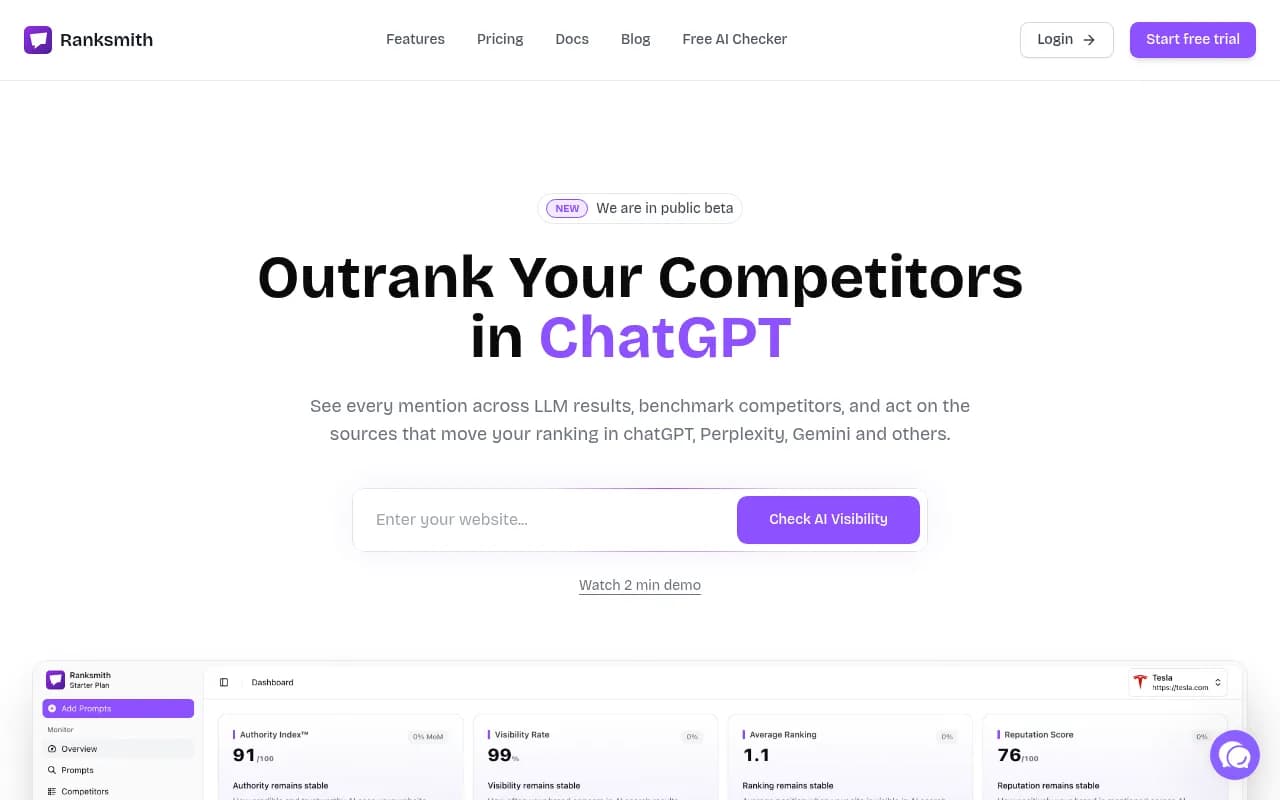
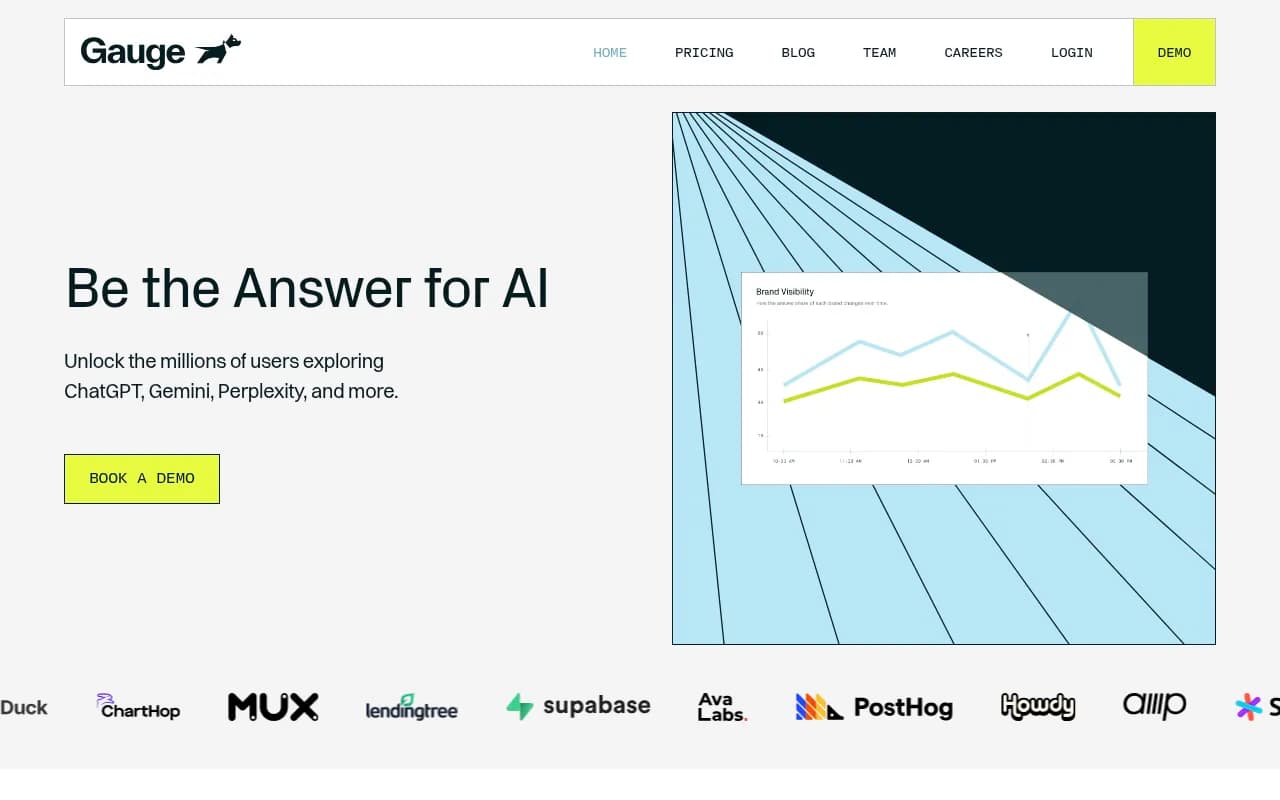
Several tools have emerged to handle this at scale. Here are some worth knowing:




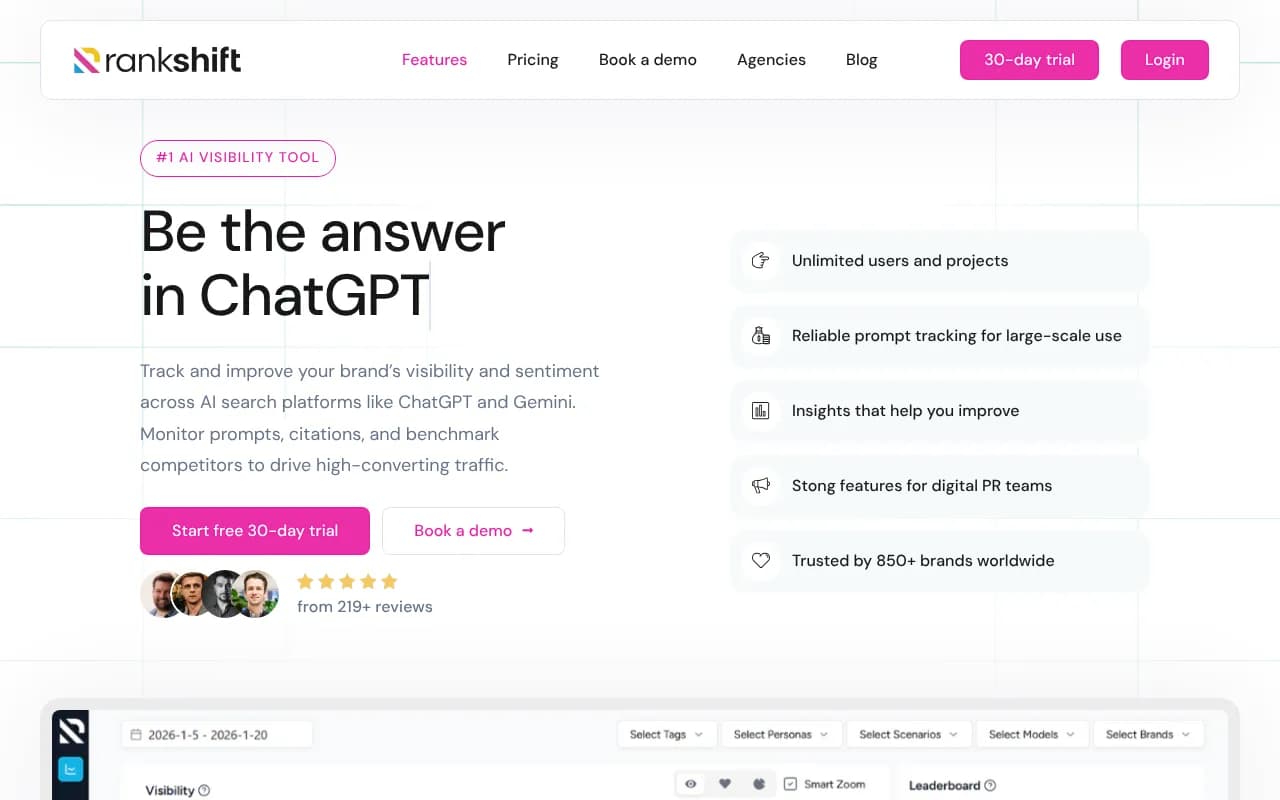
The right tool depends on your scale and what you need beyond monitoring. Some of these are strong on data collection but leave the "what do I do about it" question unanswered. Others are building toward a more complete optimization workflow.
Step 8: Create content that closes the gaps
Identifying gaps is only useful if you act on them. This is where most GEO programs stall -- teams produce a nice gap analysis report, share it with the content team, and then nothing happens because the content team is already stretched thin.
The content you need to close AI visibility gaps is different from traditional SEO content. It needs to:
- Directly answer the specific question the AI prompt is asking
- Be structured so AI systems can extract clear, citable passages
- Demonstrate authority on the specific sub-topic (not just the broad category)
- Be updated regularly, since AI systems favor fresh content
The format matters too. AI systems are good at extracting answers from well-structured content -- clear headings, concise paragraphs, specific claims with supporting evidence. Walls of text optimized for keyword density don't get cited.
For teams that want to move fast, AI-assisted content generation has become a practical option -- but only if the generation is grounded in real citation data and prompt analysis, not just generic topic prompts. Content written without knowing what the AI is actually looking for tends to miss the mark.
Step 9: Track results and close the attribution loop
The final step is connecting your AI visibility improvements to actual business outcomes. This is harder than it sounds because AI search often drives zero-click behavior -- a user gets their answer from ChatGPT and never visits your website.
But AI-driven traffic does exist, and it's growing. The attribution challenge is identifying it.
Three approaches:
- UTM tracking from AI referrals: Some AI platforms (Perplexity in particular) pass referral data. Set up proper UTM parameters and monitor your analytics for AI referral traffic.
- Server log analysis: AI-driven visits often come from specific user agents or referral patterns that show up in server logs before they appear in GA4.
- Google Search Console integration: GSC data can help you correlate content changes with organic traffic shifts, even when AI is the intermediary.
The goal is to build a feedback loop: you publish content to close a gap, your AI visibility score improves for those prompts, and you can see whether that visibility translates into traffic and pipeline. Without this loop, you're optimizing in the dark.
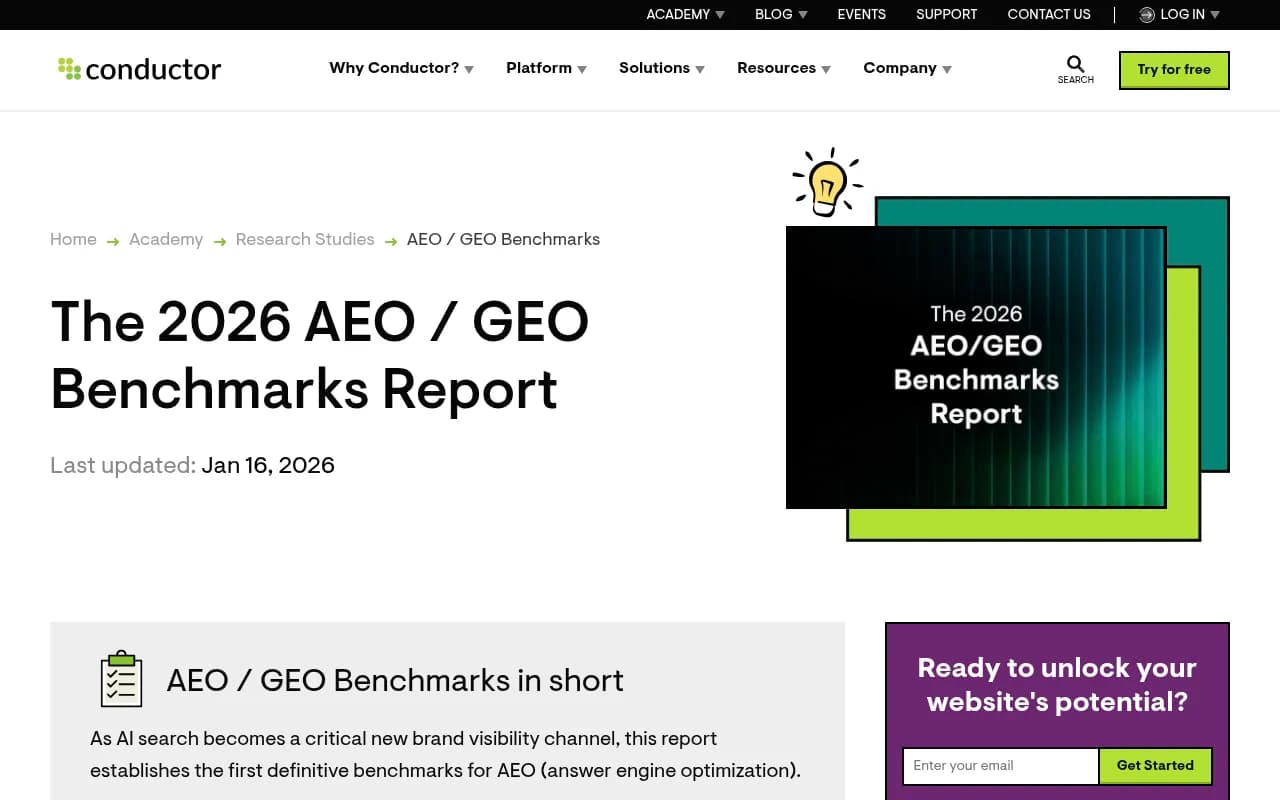
Tool comparison: GEO platforms for competitive benchmarking
Not all AI visibility tools are built for competitive benchmarking. Here's how the main options compare on the capabilities that matter most for this framework:
| Tool | Share of voice tracking | Competitor comparison | Content gap analysis | AI crawler logs | Content generation |
|---|---|---|---|---|---|
| Promptwatch | Yes | Yes (heatmaps) | Yes | Yes | Yes |
| Profound | Yes | Yes | Limited | No | No |
| AthenaHQ | Yes | Yes | Limited | No | No |
| Otterly.AI | Yes | Basic | No | No | No |
| Peec AI | Yes | Basic | No | No | No |
| Rankshift | Yes | Yes | No | No | No |
| SE Ranking | Yes | Limited | No | No | No |
The pattern is clear: most tools handle monitoring reasonably well, but the gap analysis and content generation capabilities that turn monitoring into action are much rarer.
A note on benchmarking frequency
One question that comes up constantly: how often should you run this analysis?
For your core prompt set (the 30-50 prompts most directly tied to purchase decisions in your category), weekly monitoring is worth it. AI model updates, competitor content changes, and new third-party publications can shift your visibility quickly.
For your broader prompt universe, monthly is usually sufficient. The goal is to catch meaningful trends, not react to every fluctuation.
For the full competitive audit -- the deep analysis of competitor citation sources, content gaps, and crawler behavior -- quarterly makes sense. This is the strategic review that informs your content roadmap.
The teams that win at GEO aren't necessarily the ones doing the most monitoring. They're the ones who have a clear process for turning what they find into content, and then tracking whether that content actually worked.
That cycle -- find gaps, create content, measure results -- is the whole game. Everything else is just infrastructure to support it.
Where to start if you're doing this for the first time
If this framework feels overwhelming, start small. Pick 20 prompts that represent your highest-value buyer questions. Run them manually across ChatGPT and Perplexity. Record which competitors appear and what sources they're citing. That's your baseline.
Then pick the two or three gaps where a competitor is consistently appearing and you're not. Look at what content they have (or what third-party sources are citing them). Write one piece of content that directly addresses those prompts.
Wait four to six weeks. Run the prompts again. See if anything changed.
This manual process won't scale, but it will teach you more about how AI search actually works than any amount of reading. Once you've seen it work once, the case for investing in proper tooling becomes obvious.
The brands that build this capability now -- while most competitors are still treating AI search as a curiosity -- will have a compounding advantage that gets harder to close over time.