Key takeaways
- Answer gap analysis shows you which prompts your competitors appear in but you don't -- it's the foundation of any serious GEO strategy
- Most GEO platforms only show you the gap; very few help you close it with content creation or optimization tools
- Platforms vary significantly in how they define "gaps" -- some compare you to competitors, others flag prompts where no brand dominates
- Prompt volume data and difficulty scoring are rare but critical for prioritizing which gaps to actually pursue
- One platform (Promptwatch) is the only one in this comparison rated as a "Leader" across all gap analysis categories, combining detection, prioritization, and content generation in a single workflow
Answer gap analysis sounds simple: find the questions AI models answer for your competitors but not for you. In practice, the difference between platforms is enormous. Some give you a list of prompts and call it done. Others show you competitor citations, prompt volumes, content recommendations, and even write the articles for you.
This breakdown covers 12 GEO platforms and exactly how each one handles the gap analysis workflow -- from detection through to action.
What answer gap analysis actually means in 2026
Before comparing tools, it's worth being precise about what we're measuring. A true answer gap analysis does three things:
- Identifies prompts where competitors appear in AI-generated responses but your brand doesn't
- Tells you why the gap exists (missing content, weak authority, wrong format)
- Helps you prioritize which gaps are worth closing based on volume and competitive difficulty
Most platforms do step one reasonably well. Step two is rare. Step three is even rarer. And the ability to actually generate content that closes the gap? That's where the field really thins out.
The stakes are real. AI-referred sessions jumped 527% between January and May 2025 according to Previsible's research, and AI search traffic converts at 14.2% compared to Google's 2.8%. If competitors are being cited in responses to high-intent prompts and you're not, that's not a data problem -- it's a revenue problem.
The 12 platforms compared
1. Promptwatch
Promptwatch is the most complete gap analysis implementation in this comparison. The Answer Gap Analysis feature shows you the specific prompts where competitors are visible but you're not -- not just a count, but the actual prompt text, which competitors appear, and what content on their sites is getting cited.
What separates it from the rest is what happens after the gap is identified. Promptwatch's built-in AI writing agent generates articles, listicles, and comparisons grounded in 880M+ citations analyzed. The content isn't generic -- it's engineered around the specific prompt, the persona asking it, and the citation patterns that got competitors cited in the first place. Prompt volume estimates and difficulty scores let you rank gaps by opportunity before you write a single word. Query fan-outs show how one prompt branches into sub-queries, so you understand the full content surface you need to cover.
It also has AI crawler logs showing which pages ChatGPT, Claude, and Perplexity are actually reading on your site -- which helps explain why certain gaps exist. That's a diagnostic capability most competitors don't have at all.

2. Profound
Profound has strong monitoring infrastructure and covers gap analysis reasonably well. It identifies prompts where competitors appear and you don't, and the interface is clean. Where it falls short is in the action layer -- Profound is primarily a tracking platform, so once you know the gap exists, you're on your own to figure out what to do about it. No content generation, no prompt volume scoring, no crawler diagnostics. It's a solid choice for enterprise teams with dedicated content resources who just need the data.

3. AthenaHQ
AthenaHQ tracks visibility across 8+ AI engines and surfaces competitive gaps at the brand level. The gap analysis is monitoring-focused: you can see where competitors appear and you don't, broken down by AI model. What's missing is the prioritization layer -- there's no prompt volume data or difficulty scoring, so you're left guessing which gaps matter most. No content generation either. Good for teams that want structured competitive visibility data without needing the platform to tell them what to do next.

4. Otterly.AI
Otterly.AI is one of the more affordable options in the market, and its gap analysis reflects that positioning. You can track brand mentions across AI models and spot where competitors appear in responses you don't. The interface is accessible, which makes it popular with smaller teams. But the feature set stops at detection -- no prompt prioritization, no content tools, no crawler logs. It's a reasonable starting point if budget is tight, but you'll outgrow it quickly once you want to act on the data.

5. Peec.ai
Peec.ai has solid multi-language support, which makes it genuinely useful for international brands. Its gap analysis identifies competitor visibility across AI models and surfaces prompts you're missing. The multi-region capability is a real differentiator here -- most platforms treat gap analysis as a single-market problem. Where Peec.ai is weaker is in the depth of each gap: there's limited explanation of why a gap exists, and no content generation to close it.

6. Scrunch AI
Scrunch AI focuses on AI search visibility monitoring with a clean competitive comparison layer. Gap analysis shows you which prompts competitors rank for and you don't, with some breakdown by AI model. The platform has been building out its feature set, but as of 2026 it remains primarily a monitoring tool. No content generation, limited prompt volume data. Works well as a visibility dashboard for teams that handle content strategy separately.
7. Search Party
Search Party is agency-oriented, which shapes how its gap analysis works. It's designed for managing multiple clients' AI visibility, and the gap reporting reflects that -- broad coverage, easy to present to clients. The limitation is depth: prompt metrics are limited, and there's no content gap analysis in the sense of identifying specific missing content. Better for reporting than for driving content decisions.
8. Semrush
Semrush added AI visibility tracking to its platform, and for existing Semrush users it's a convenient addition. The AI Overview tracking shows where your brand appears (or doesn't) in Google's AI-generated results. The gap analysis is more limited than dedicated GEO platforms -- it uses fixed prompt sets rather than custom prompt tracking, which means you're analyzing a predefined universe of queries rather than the specific prompts relevant to your business. No AI traffic attribution either.
9. Ahrefs Brand Radar
Ahrefs Brand Radar tracks brand mentions in AI search results and can surface gaps in a basic sense. Like Semrush, it uses fixed prompts, which limits how useful the gap analysis is for brands with niche audiences or specific competitive sets. There's no AI traffic attribution, no content generation, and no crawler log data. It's a useful addition to an existing Ahrefs workflow but not a standalone GEO solution.
10. Brandlight.ai
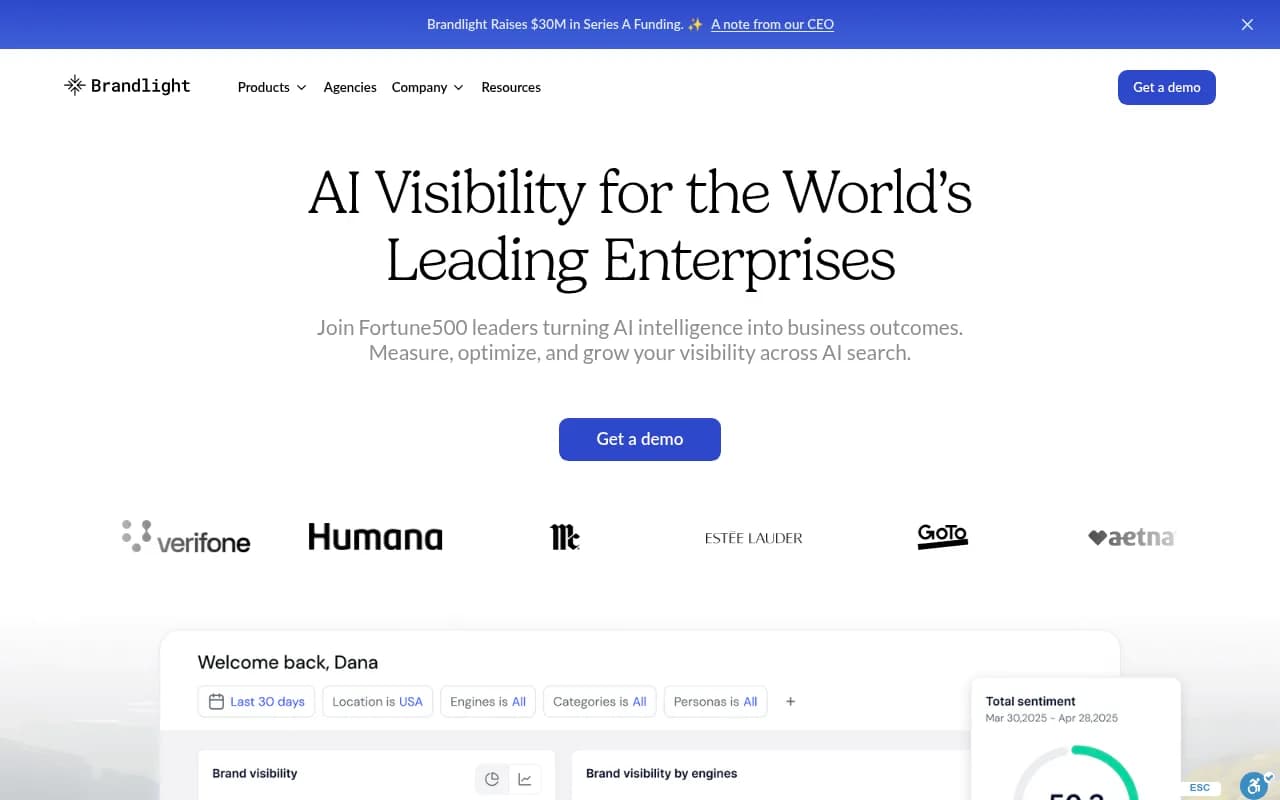
Brandlight.ai focuses on brand visibility tracking across AI models. Its gap analysis is primarily sentiment and presence-oriented -- it tells you whether your brand appears and how it's described, rather than surfacing specific content gaps. For reputation management use cases this is useful, but for content strategy it's limited. No prompt volume data, no content generation.
11. Bluefish
Bluefish is positioned at the enterprise end of the market, with Fortune 500 clients and a focus on brand visibility at scale. The gap analysis capability exists but is more reporting-oriented than action-oriented. The platform is strong on data visualization and executive dashboards, which matters for large organizations. For teams that need to drive content decisions from gap data, it requires significant manual work to translate insights into action.
12. Searchable
Searchable combines AI search visibility monitoring with some content tools. The gap analysis identifies where competitors are cited and you're not, and there are content optimization features in the platform. It's a more complete offering than pure monitoring tools, though the content generation capabilities are less developed than Promptwatch's. A reasonable mid-market option for teams that want monitoring and content tools in one place without enterprise pricing.
Feature-by-feature comparison
Here's how all 12 platforms stack up across the dimensions that matter most for answer gap analysis:
| Platform | Gap detection | Prompt volume & difficulty | Competitor citation detail | Content generation | Crawler logs | AI traffic attribution |
|---|---|---|---|---|---|---|
| Promptwatch | Yes -- custom prompts | Yes | Yes -- page-level | Yes -- AI writing agent | Yes | Yes |
| Profound | Yes -- custom prompts | No | Partial | No | No | No |
| AthenaHQ | Yes -- custom prompts | No | Partial | No | No | No |
| Otterly.AI | Basic | No | Basic | No | No | No |
| Peec.ai | Yes -- multi-language | No | Basic | No | No | No |
| Scrunch AI | Yes | No | Partial | No | No | No |
| Search Party | Partial | Limited | Basic | No | No | No |
| Semrush | Fixed prompts only | No | No | No | No | No |
| Ahrefs Brand Radar | Fixed prompts only | No | No | No | No | No |
| Brandlight.ai | Presence-only | No | No | No | No | No |
| Bluefish | Yes | No | Partial | No | No | No |
| Searchable | Yes | No | Partial | Partial | No | No |
The pattern is clear. Most platforms handle detection. Almost none handle prioritization or action.
What the gaps in gap analysis actually cost you
Here's the practical problem with monitoring-only tools: knowing you have a gap doesn't tell you which gap to fix first, or how to fix it.
Say you're running a B2B SaaS company and your gap analysis surfaces 200 prompts where competitors appear and you don't. Without prompt volume data, you have no idea if those are high-traffic queries or obscure long-tails. Without difficulty scoring, you don't know which ones are winnable. Without citation analysis, you don't know what kind of content gets cited. You end up either paralyzed by the data or guessing -- and guessing is expensive when you're commissioning content.
The platforms that add prompt volume estimates and difficulty scores (currently only Promptwatch in this comparison) turn a list of gaps into a prioritized backlog. That's the difference between a data dump and a content strategy.
The content generation layer matters too, but differently. It's not about replacing your writers -- it's about speed. When you know exactly which prompt you're targeting, which competitors are cited, and what citation patterns look like, generating a first draft that's actually engineered for AI citation is much faster than starting from scratch. The 880M+ citations Promptwatch has analyzed inform what that content should look like at a structural level.
How to evaluate gap analysis features when choosing a platform
A few questions worth asking any vendor before signing up:
Are prompts custom or fixed? Fixed prompt sets (like Semrush and Ahrefs use) are easier to implement but limit your analysis to a predefined universe. Custom prompt tracking lets you monitor the exact queries your customers are actually asking.
What does "gap" mean in their system? Some platforms flag any prompt where you don't appear. Others only flag prompts where a competitor appears. These are different things -- the first is about coverage, the second is about competitive position.
Can you see why the gap exists? Knowing you're missing from a response is step one. Understanding whether it's because you have no content on the topic, your content isn't structured correctly, or AI crawlers aren't reaching your pages is step two. Most platforms stop at step one.
Is there a path from gap to content? If the platform shows you a gap but has no tools to help you close it, you're paying for a problem statement without a solution. That's fine if you have a strong content team, but it's worth knowing upfront.
How fresh is the data? AI model behavior changes. A gap that existed last month may be closed, or new gaps may have opened. Platforms that run queries more frequently give you a more accurate picture.
The bottom line
Answer gap analysis is the most strategically important feature in GEO platforms, and it's also the most inconsistently implemented. The majority of tools in this comparison do the basic job of showing you where competitors appear and you don't. That's useful, but it's the starting line, not the finish line.
The platforms that add prompt volume data, difficulty scoring, citation-level detail, and content generation tools are the ones that turn gap analysis from a reporting exercise into an actual growth workflow. In 2026, with AI search traffic growing and competition for citations intensifying, the difference between knowing your gaps and closing them is the difference between a dashboard and a strategy.
For teams that want to run the full cycle -- find gaps, understand why they exist, prioritize by opportunity, generate content, and track whether it worked -- Promptwatch is the only platform in this comparison that covers all of it.
For teams with strong in-house content capabilities that just need reliable gap detection data, Profound and AthenaHQ are solid options. For international brands where multi-language gap analysis matters, Peec.ai is worth a look. And if you're already deep in the Semrush or Ahrefs ecosystem, their AI tracking features are a convenient addition -- just don't mistake them for a complete GEO solution.