Key takeaways
- All five tools cover the basics: brand mention tracking across ChatGPT, Perplexity, Claude, and Gemini. The differences show up in depth, not breadth.
- Trakkr.ai has the most data behind it (1.3M+ citations analyzed) and the most honest self-assessment of any vendor in this space.
- LLMrefs doubles as a research hub for the GEO category, which makes it useful even before you pay for anything.
- Hall AI and Ceyo AI are the cleanest entry points for teams that just want to start tracking without a steep learning curve.
- Promptmonitor sits in the middle: more structure than the lightest options, less depth than the heavier ones.
- If you outgrow any of these tools, Promptwatch is the logical next step -- it adds content gap analysis, AI writing, and crawler logs that none of the five tools here offer.
Why small teams are looking at lightweight AI visibility tools
Twelve months ago, most marketing teams had never heard of Generative Engine Optimization. Now it's a line item in quarterly planning. The problem is that the category's leading platforms -- Profound, Scrunch, AthenaHQ -- are priced for enterprise budgets and built for teams with dedicated analysts. A two-person content team at a SaaS startup doesn't need a six-figure contract. They need something that answers one question: "Is our brand showing up when people ask AI chatbots about our category?"
That's the gap these five tools are trying to fill. Hall AI, Trakkr.ai, Promptmonitor, LLMrefs, and Ceyo AI all sit in the lighter end of the market. They're faster to set up, cheaper to run, and less overwhelming to use. But "lightweight" doesn't mean they're all the same. Some are genuinely useful. Some are monitoring dashboards that show you a number without helping you do anything about it.
This guide breaks down what each tool actually does, where it falls short, and which type of team it suits best.
What these tools actually measure
Before comparing the five tools, it's worth being clear about what AI visibility tracking means in practice. These tools run queries against AI models (ChatGPT, Claude, Gemini, Perplexity) and check whether your brand appears in the response. The core metrics are:
- Mention rate: What percentage of relevant queries include your brand name?
- Position: Where in the response does your brand appear? First mention gets disproportionately more exposure than fifth.
- Sentiment: How does the AI describe your brand when it does mention you?
- Citations: Which URLs does the AI actually reference? This is different from mentions -- a model can mention your brand without citing your website.
The lightweight tools in this comparison mostly handle the first two well. Citation tracking and sentiment analysis are where they start to diverge. Keep that in mind as you read.
The five tools, one by one
Hall AI
Hall AI focuses on tracking how AI platforms cite and talk about your brand. The interface is clean and the setup is fast -- you define your brand, add some competitor names, and Hall starts running queries across the major models.
What works: the prompt library is sensible out of the box, so you're not starting from scratch. Hall surfaces which AI models mention you most and gives you a per-model breakdown rather than a single blended score. That matters because, as Trakkr's own research found, AI models agree on the top recommendation only 43.9% of the time -- so a blended score can hide a lot.
What's missing: there's no content gap analysis. Hall tells you where you're invisible but doesn't help you figure out why or what to do about it. It's a monitoring tool, not an optimization tool.
Best for: founders and small marketing teams who want a clean dashboard to check weekly without a lot of configuration overhead.

Trakkr.ai
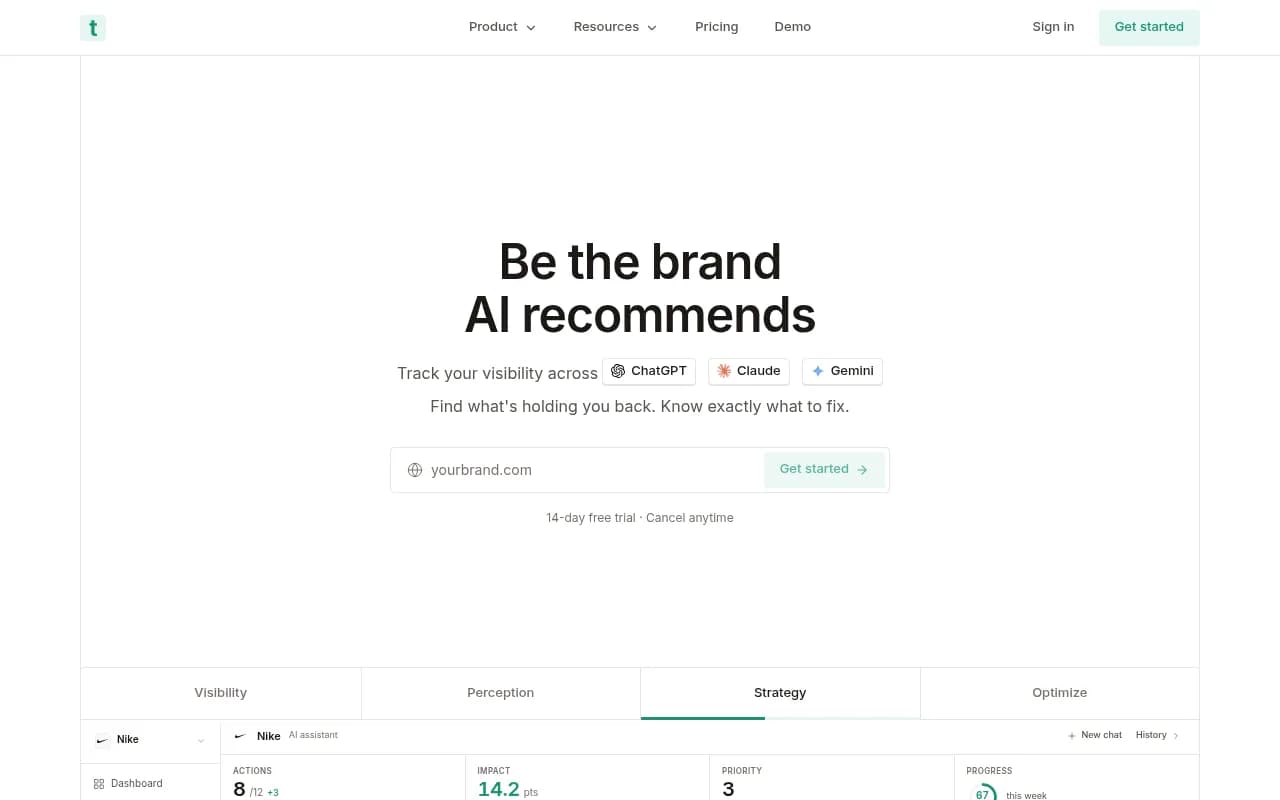
Trakkr is the most data-rich option in this group. The team publishes research studies based on their dataset (1.3M+ AI citations, 920K+ cross-model comparisons) and that research informs the product in ways you can actually feel. The Model Divergence Report, for instance, found near-zero consensus across all eight AI models when comparing brand recommendations -- which is why Trakkr pushes hard on multi-model coverage instead of letting you pick one or two.
The prompt-level data is genuinely useful. You can see which specific queries trigger your brand and which don't, rather than just getting an aggregate visibility score. Aggregate scores are comfortable but misleading -- a brand might have 66% visibility in awareness-stage prompts and 33% at the decision stage, and a blended number hides that gap entirely.
Trakkr also deserves credit for being unusually honest about its own limitations. Their comparison page acknowledges where competitors win and explains the trade-offs clearly. That's rare in a category where most vendors write comparison pages that read like press releases.
What's missing: content generation and optimization. Trakkr shows you the problem but doesn't help you fix it. No crawler logs, no AI writing tools.
Best for: teams that want serious data depth without enterprise pricing, and who are comfortable doing their own content work based on what the data surfaces.
Promptmonitor
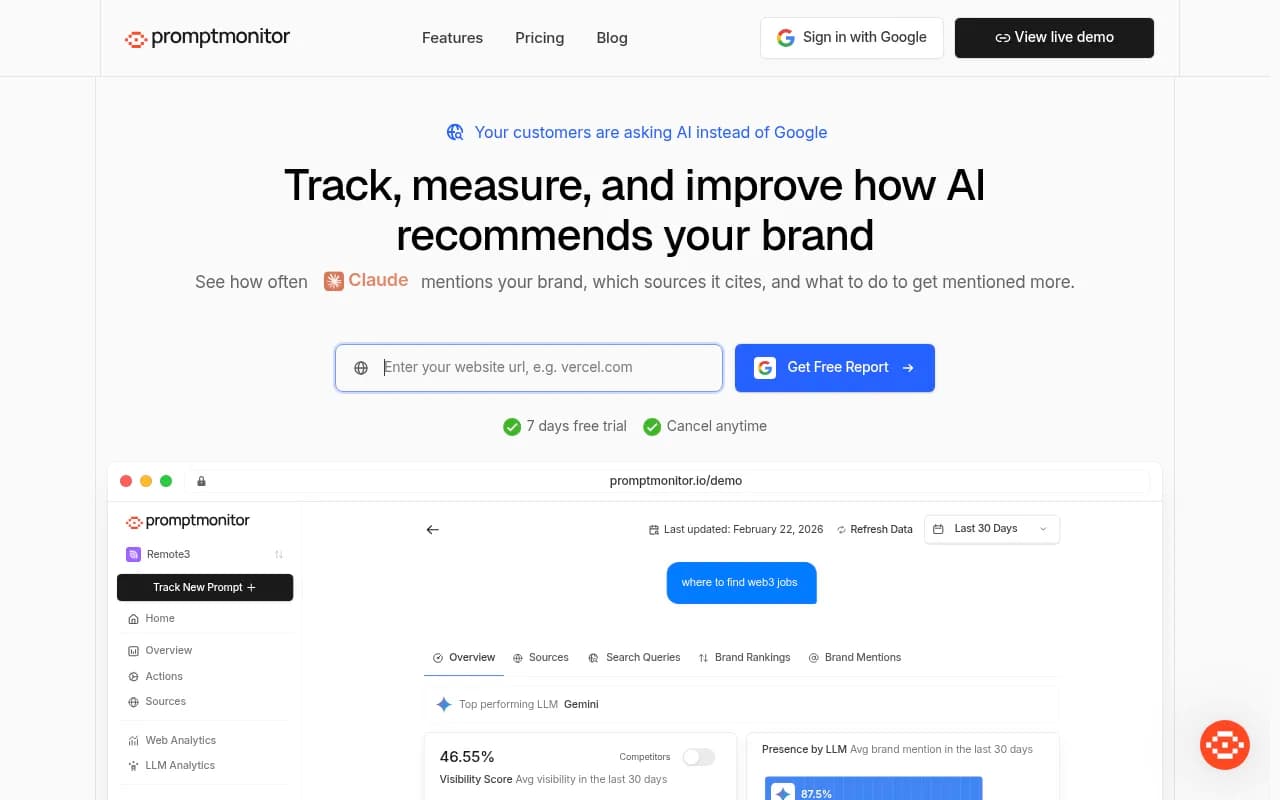
Promptmonitor sits in a middle position in this group. It tracks brand mentions across the main AI models and gives you a structured view of how your visibility changes over time. The setup is straightforward and the reporting is clean enough for a weekly check-in or a client update.
Where Promptmonitor differentiates slightly is in its monitoring structure -- you can organize prompts by topic or funnel stage, which helps if you want to separate awareness-stage visibility from decision-stage visibility. That's a meaningful distinction. A brand that shows up well when someone asks "what are the best project management tools?" might be invisible when someone asks "is [Brand X] worth the price?" Those are different problems with different solutions.
What's missing: depth on citations, no content tools, limited competitor intelligence compared to heavier platforms. It's a solid tracker but not much more than that.
Best for: content managers and small agencies who need structured reporting without complexity.
LLMrefs
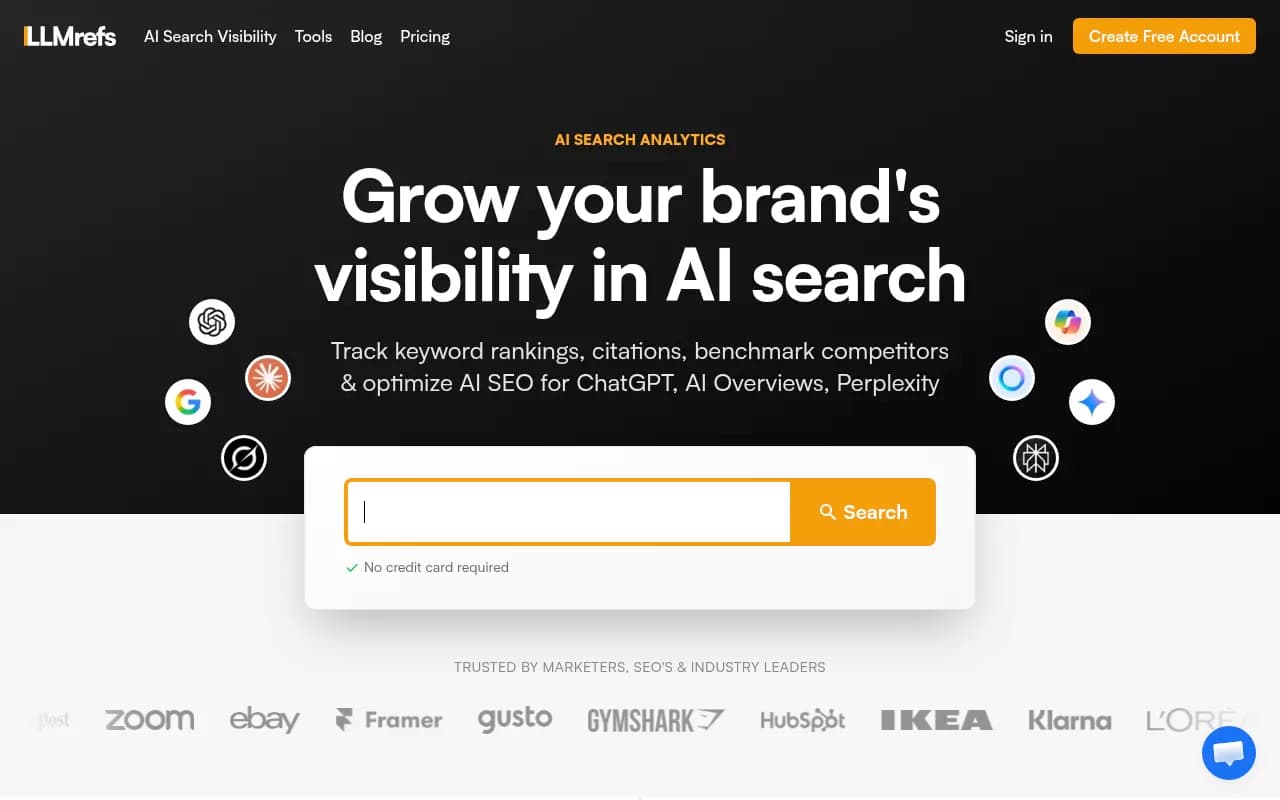
LLMrefs is a bit different from the others. It started as a directory of AI SEO tools (they maintain a list of 200+ AEO, GEO, and LLMO platforms) and has built a tracking product alongside that resource. The directory itself is genuinely useful -- if you're trying to understand the AI visibility landscape, LLMrefs is one of the better places to start.
The tracking product monitors your brand across ChatGPT, Perplexity, and other major models. The interface is functional rather than polished. Where LLMrefs earns its place in this comparison is in the research and context it provides around the data -- the blog and resource library help you understand what the numbers mean, not just what they are.
One honest note: the tracking product is less mature than Trakkr or Hall AI. If you're primarily looking for a monitoring tool, LLMrefs is a reasonable choice but not the strongest one. If you're also trying to learn the category and stay on top of new tools and research, the broader ecosystem around LLMrefs makes it worth bookmarking regardless.
Best for: SEOs and content strategists who want to track visibility and also stay educated on the GEO space as it evolves.
Ceyo AI
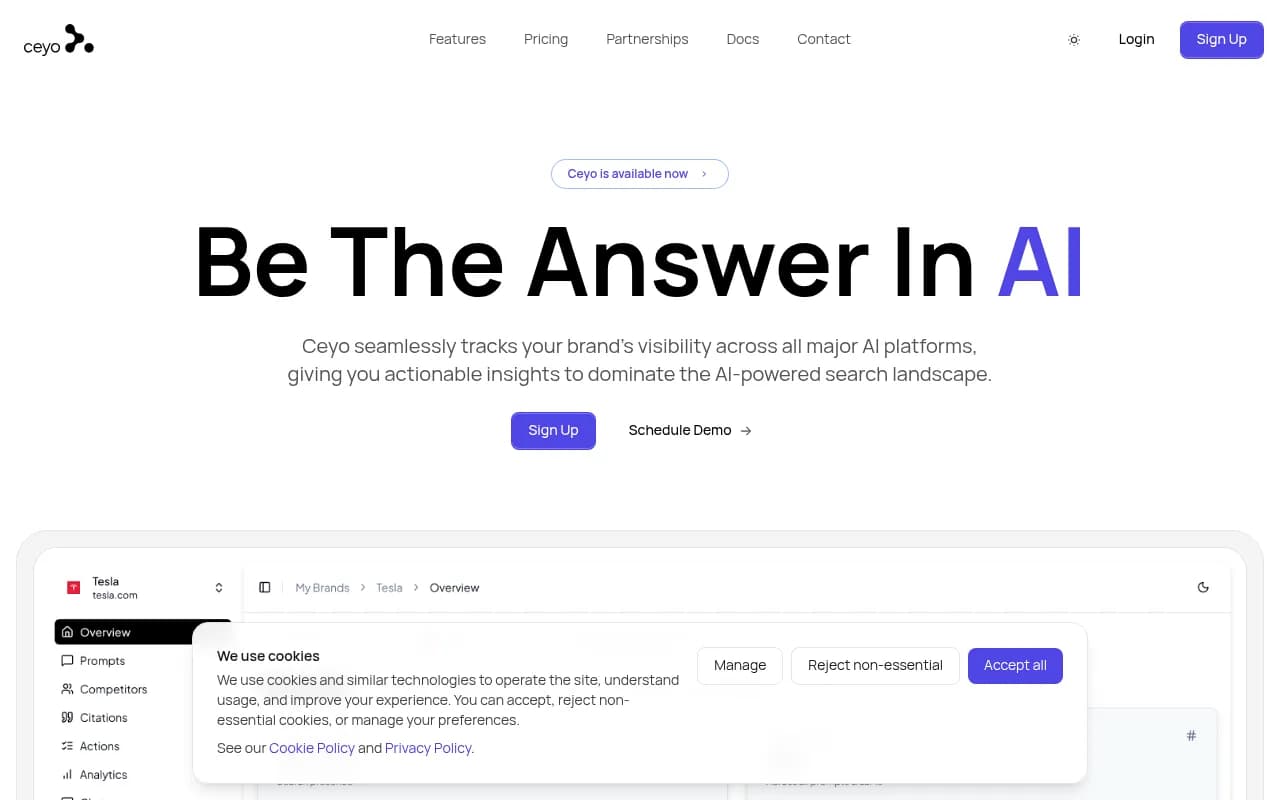
Ceyo AI monitors your brand's visibility across ChatGPT, Perplexity, Claude, and Gemini. It's one of the newer entrants in this group and the most minimal in terms of feature set -- which is either a strength or a weakness depending on what you need.
The case for Ceyo: it's fast to set up, easy to understand, and doesn't overwhelm you with options. For a team that has never tracked AI visibility before and wants to get a baseline reading quickly, Ceyo gets you there without a learning curve.
The case against: minimal feature set means you'll hit its ceiling quickly. There's no prompt-level granularity, no competitor heatmaps, no citation tracking. You get a visibility score and a trend line. That's enough to know whether things are moving in the right direction, but not enough to know why or what to do about it.
Best for: very early-stage teams or solo marketers who want a simple baseline tracker before committing to something more sophisticated.
Head-to-head comparison
| Feature | Hall AI | Trakkr.ai | Promptmonitor | LLMrefs | Ceyo AI |
|---|---|---|---|---|---|
| Models covered | 4+ | 8+ | 4+ | 4+ | 4 |
| Prompt-level data | Yes | Yes | Partial | Partial | No |
| Competitor tracking | Yes | Yes | Limited | Limited | No |
| Citation tracking | Limited | Yes | No | No | No |
| Sentiment analysis | Basic | Yes | No | No | No |
| Funnel-stage segmentation | No | Yes | Yes | No | No |
| Content gap analysis | No | No | No | No | No |
| AI content generation | No | No | No | No | No |
| Crawler logs | No | No | No | No | No |
| Best for | Founders, small teams | Data-focused marketers | Agencies, content managers | SEOs learning GEO | Solo marketers, early-stage |
| Pricing tier | Low | Mid | Low-Mid | Low | Low |
A few things jump out from this table. First, none of these tools offer content gap analysis or AI content generation. They're all monitoring tools -- they show you data but leave the "what do I do about it?" question unanswered. Second, Trakkr is the clear leader on data depth within this group. Third, Ceyo is the most stripped-down option, which makes it the easiest starting point but the fastest to outgrow.
The monitoring-only ceiling
This is the honest limitation of all five tools in this comparison. They're good at telling you where you stand. None of them help you improve.
That gap matters more than it sounds. Knowing you have 28% AI visibility in your category is useful for about five minutes. After that, you need to know: which prompts are you missing? What content would close those gaps? Which pages are AI crawlers actually reading on your site? What are competitors doing that you're not?
Those questions require a different class of tool. Promptwatch is the platform that closes that loop -- it runs the monitoring side but also includes answer gap analysis (showing you exactly which prompts competitors appear for that you don't), an AI writing agent that generates content engineered to get cited, and crawler logs that show you which pages AI bots are actually visiting. It's a meaningful step up in both price and capability.

The point isn't that the five tools in this comparison are bad. For a small team that's just starting to track AI visibility, Hall AI or Ceyo AI is a perfectly reasonable place to start. But go in knowing that you're buying a monitoring dashboard, not an optimization platform.
How to choose between the five
The right tool depends on what stage you're at and what you actually need from it.
If you've never tracked AI visibility before and want to get a number on the board quickly, start with Ceyo AI or Hall AI. Both are fast to set up and won't overwhelm you.
If you want real data depth and are willing to spend time understanding what the numbers mean, Trakkr.ai is the strongest option in this group. Their research is credible and the product reflects it.
If you're managing clients or need structured reporting by topic or funnel stage, Promptmonitor's organizational features make it the most practical choice for agency work.
If you're actively trying to learn the GEO category while tracking your brand, LLMrefs is worth using alongside whatever tracker you pick -- the resource library is genuinely good.
And if you find yourself hitting the ceiling of any of these tools -- wanting to know not just where you're invisible but what to do about it -- that's when it's worth looking at a platform with content optimization built in.
A note on model coverage
One thing worth watching as you evaluate any AI visibility tool: how many models does it actually query? The temptation is to track ChatGPT and call it done. But Trakkr's research found that AI models agree on the top recommendation only 43.9% of the time across pairwise comparisons, and near-zero consensus when all eight models are compared simultaneously.
That means a brand can look healthy in ChatGPT and be nearly invisible in Perplexity or Claude. If your tool only covers one or two models, you're getting a partial picture. Hall AI and Trakkr both cover more ground here than Ceyo AI, which is worth factoring in if multi-model coverage matters for your audience.
Bottom line
For small teams in 2026, the five tools in this comparison represent the accessible end of the AI visibility market. They're affordable, quick to set up, and good enough to answer the basic question of whether your brand is showing up in AI search results.
Trakkr.ai is the strongest overall option in this group on data quality. Hall AI is the cleanest entry point. Promptmonitor is the most structured for agency use. LLMrefs is the best companion resource for teams still learning the space. Ceyo AI is the simplest starting point for anyone who just wants a baseline.
What none of them do is help you act on what they find. If that's a gap you need filled, the tools that actually close the loop between monitoring and optimization are a different category entirely.