Key takeaways
- GetCito, Rankscale, Limy AI, and Meteoria are all legitimate entry points into GEO tracking, but each has a distinct focus and notable gaps
- None of the four offer content generation or answer gap analysis -- they're monitoring tools, not optimization platforms
- Rankscale has the broadest LLM coverage among the four; GetCito and Meteoria lean toward usability; Limy AI targets smaller teams with a lighter feature set
- Pricing across all four is competitive (most under $100/mo to start), which makes them appealing for teams that are just getting started with AI visibility
- If you outgrow these tools quickly, the gap between "monitoring" and "actually fixing your visibility" becomes the real problem to solve
The GEO platform market in 2026 is split into two camps. There are the full-stack platforms that track, analyze, and help you create content to improve your AI visibility. And then there are the monitoring tools -- dashboards that show you where you stand and leave the rest to you.
GetCito, Rankscale, Limy AI, and Meteoria all fall into that second camp. That's not a knock on them. For teams that are new to GEO, or that just need a clean dashboard to report on AI visibility without a big budget, these tools can do the job. But understanding exactly what each one does -- and where each one stops -- matters before you commit.
This guide compares all four honestly, based on what's publicly known about their features and positioning as of early 2026.
What these tools have in common
Before getting into the differences, it's worth noting what all four share:
- They're all primarily tracking tools. You set up prompts, they query AI models, and you see whether your brand appears.
- They're all aimed at smaller teams or companies that are earlier in their GEO journey.
- None of them have built-in content generation or content gap analysis at the level of more established platforms.
- All four are significantly cheaper than enterprise-tier GEO tools.
That shared profile means the comparison is really about which tool does the monitoring job best for your specific situation -- not about which one is a complete GEO solution.
GetCito
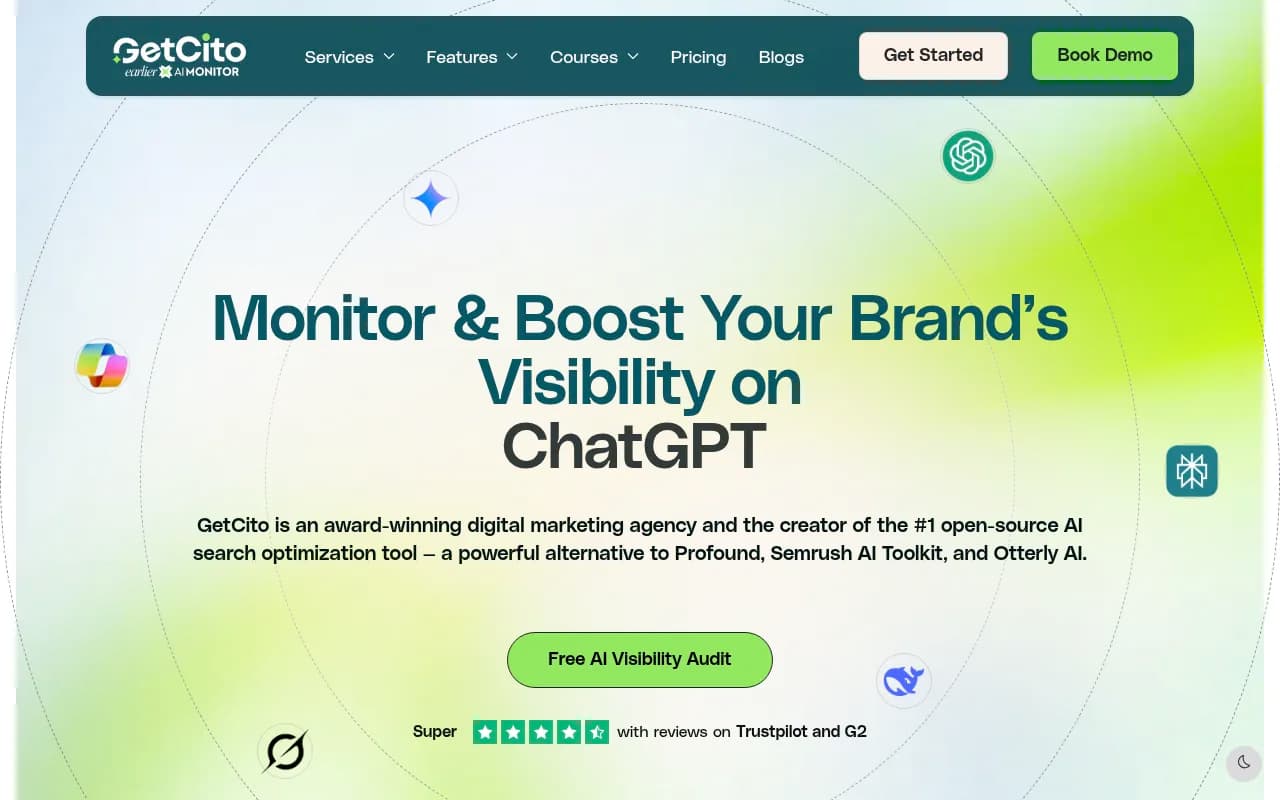
GetCito positions itself as an AI visibility tracking and optimization platform. The "optimization" label is a bit generous -- in practice, it's a solid tracking dashboard with a clean interface that makes it easy to see brand mention rates and citation frequency across a handful of AI models.
Where GetCito does reasonably well is in its setup experience. Teams can get prompts running quickly without a steep learning curve, and the reporting is clear enough to share with stakeholders who aren't deep in GEO. For a marketing manager who needs to show the CMO "here's how often we appear in ChatGPT vs our competitors," GetCito gets that job done.
The gaps are real, though. LLM coverage is limited compared to broader platforms. There's no crawler log access, no prompt volume data, and no built-in way to understand why you're not appearing for certain queries. You can see that you're invisible -- you just can't do much about it from within the tool.
Best for: Small marketing teams that want clean, shareable AI visibility reports without a complex setup.
Rankscale
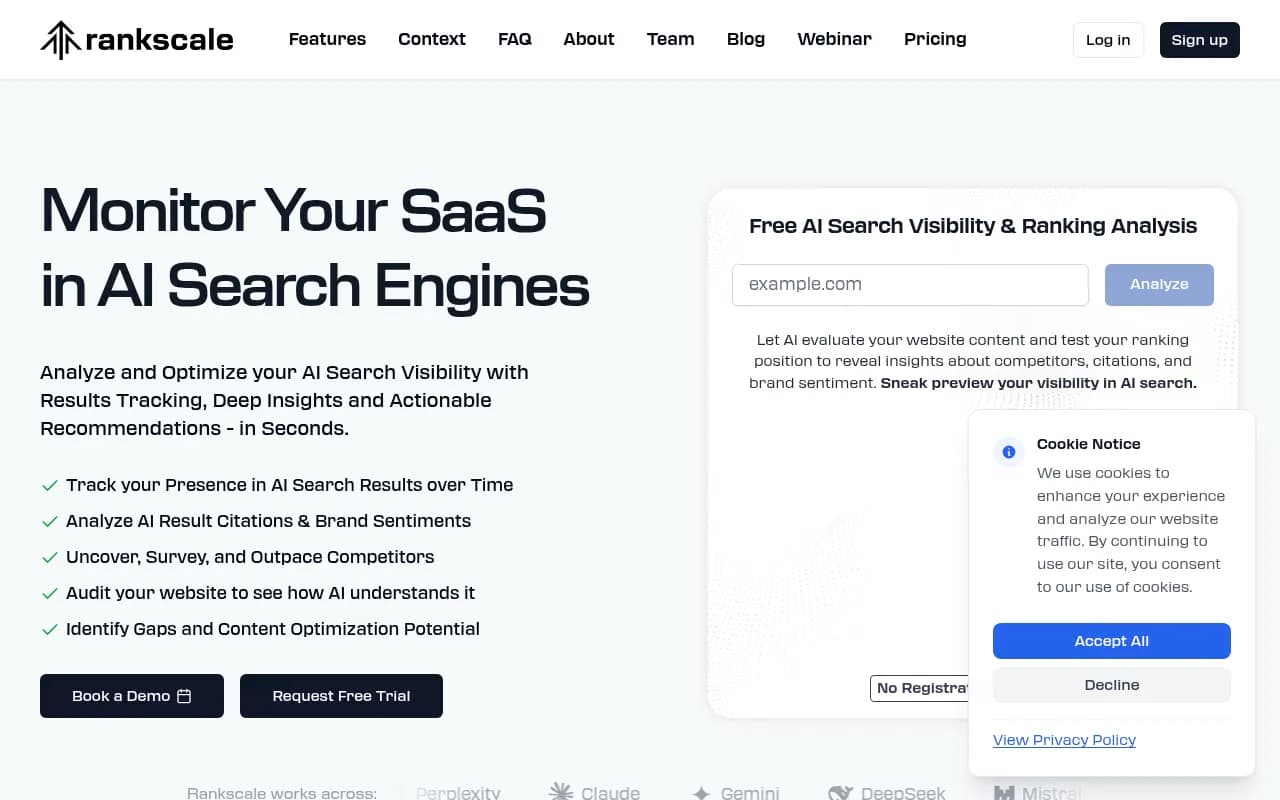
Rankscale (also marketed as Rankscale AI) is the most feature-complete of the four tools in this comparison, at least on the tracking side. It covers more LLMs than most tools in its price range, and it has a reasonable competitor benchmarking interface that lets you compare share of voice across models.
The pricing has been a point of friction for some teams. Several comparisons published in early 2026 specifically call out Rankscale as the tool people are looking for alternatives to -- not because it's bad, but because teams often feel they're paying for breadth of tracking without getting much help acting on the data.
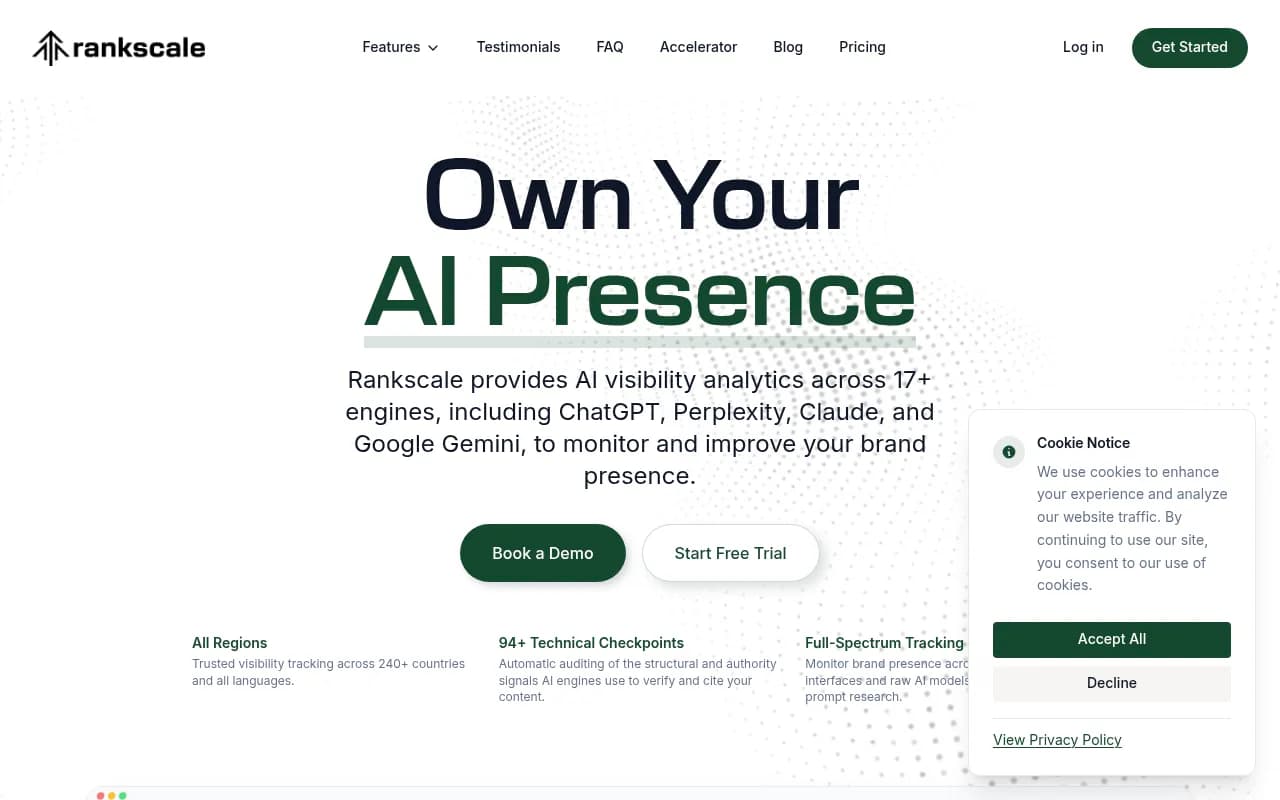
That said, if your primary need is tracking across a wide range of AI models and you want competitor benchmarking baked in, Rankscale is probably the strongest option in this group. It's more of a "serious monitoring tool" than GetCito or Limy AI, which lean lighter.
What it lacks: content optimization guidance, answer gap analysis, and any kind of traffic attribution. You'll know your visibility score -- you won't know what to do next.
Best for: Teams that need broad LLM coverage and competitor share-of-voice tracking, and have a separate content strategy process.
Limy AI
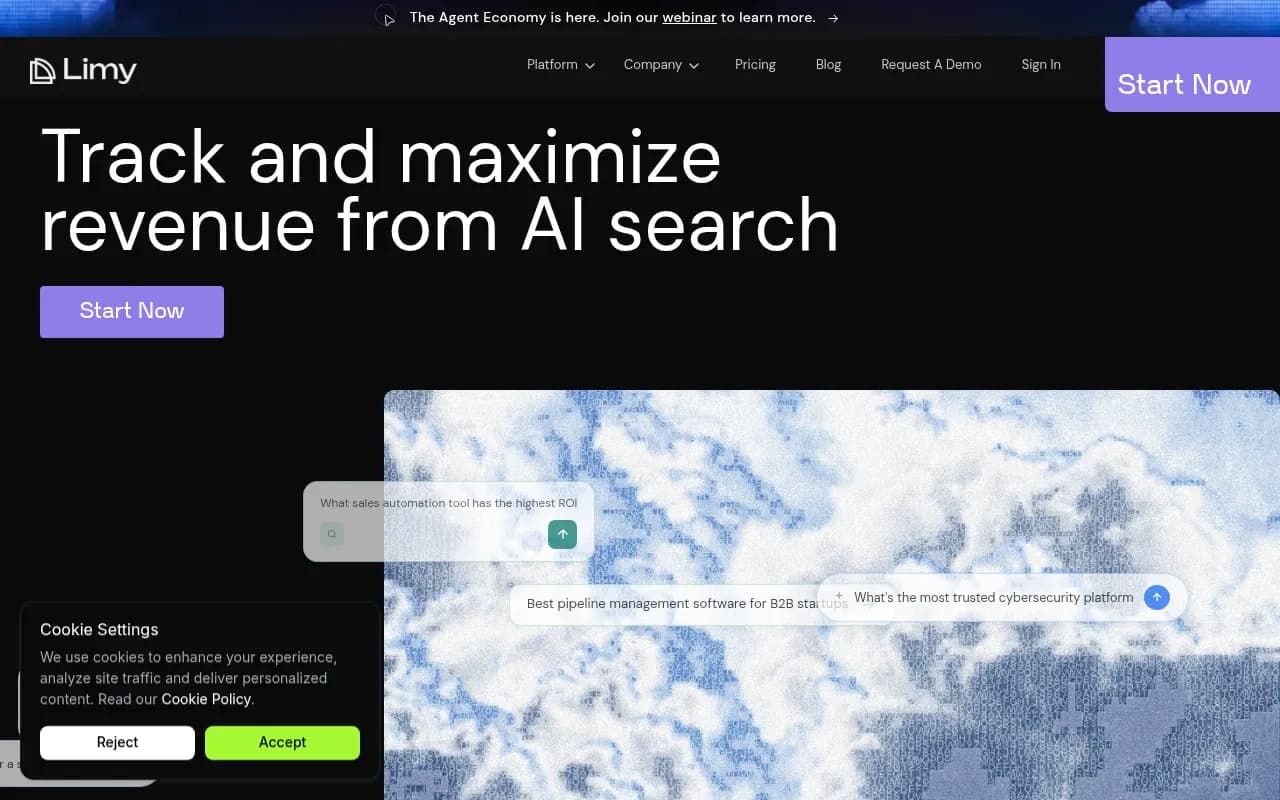
Limy AI is the lightest tool in this comparison. It tracks brand visibility in AI search engines and gives you a basic view of how often you're cited, but it doesn't go deep on any particular dimension. The interface is simple, the setup is fast, and the price point is low.
That simplicity is both its strength and its limitation. For a solo marketer or a very small team that just wants to know "are we showing up in AI search or not," Limy AI answers that question without overwhelming you with data. But if you need competitive intelligence, prompt-level breakdowns, or any kind of actionable insight beyond the raw mention data, you'll hit the ceiling quickly.
There's not much public information about Limy AI's LLM coverage or roadmap, which is worth keeping in mind if you're evaluating it for anything beyond basic tracking.
Best for: Solo marketers or very small teams doing their first AI visibility check, with minimal budget.
Meteoria
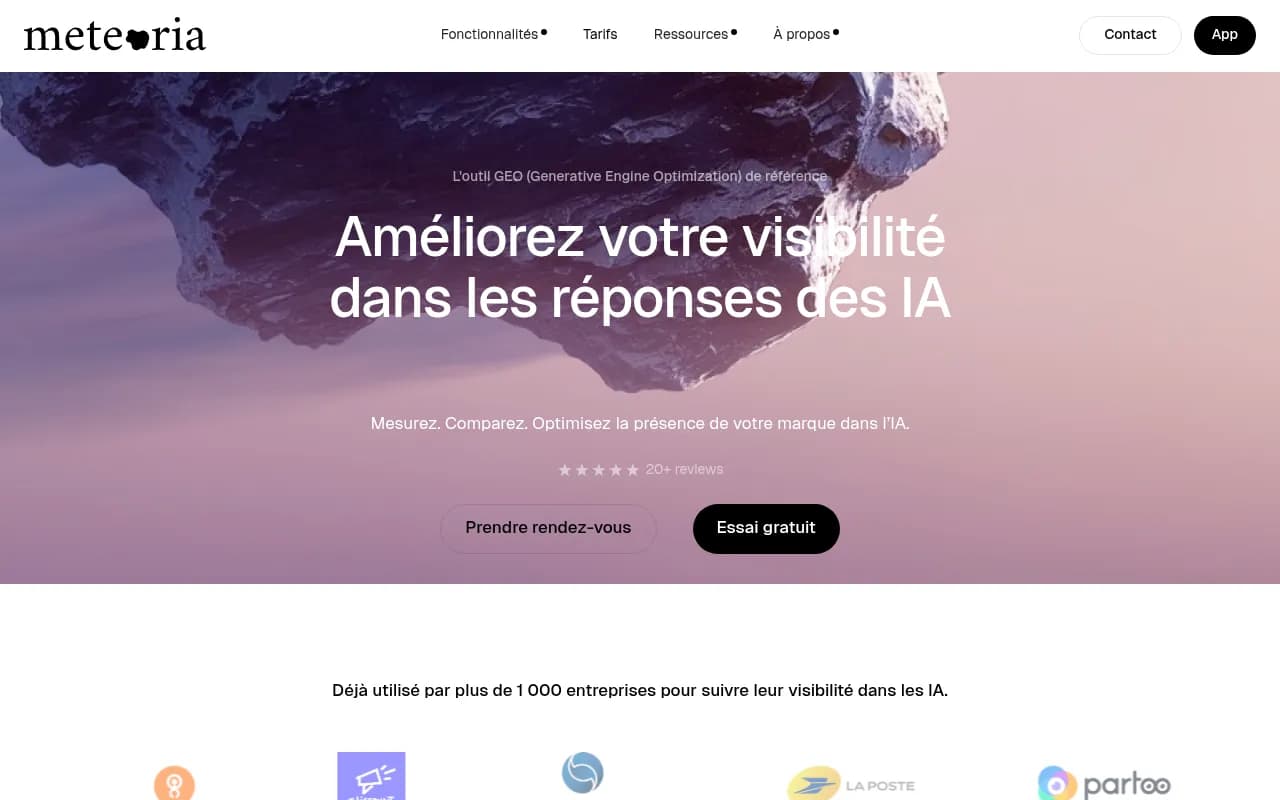
Meteoria sits somewhere between Limy AI's simplicity and Rankscale's depth. It tracks brand visibility across AI search engines with a focus on making the data accessible to non-technical users. The dashboard is clean, and it does a decent job of presenting share-of-voice data in a way that's easy to interpret.
One thing Meteoria does better than some of its peers in this group is the presentation layer -- the way data is visualized makes it easier to spot trends over time rather than just seeing a point-in-time snapshot. For teams that need to track progress across weeks or months, that's genuinely useful.
Like the others, Meteoria doesn't offer content recommendations, gap analysis, or traffic attribution. It's a visibility tracker, and it does that job competently.
Best for: Teams that want clean trend visualization and accessible reporting for AI visibility, without needing deep analytical features.
Side-by-side comparison
| Feature | GetCito | Rankscale | Limy AI | Meteoria |
|---|---|---|---|---|
| LLM coverage | Moderate | Broad | Limited | Moderate |
| Competitor benchmarking | Basic | Yes | No | Basic |
| Prompt volume data | No | Partial | No | No |
| Content gap analysis | No | No | No | No |
| Built-in content generation | No | No | No | No |
| AI crawler logs | No | No | No | No |
| Traffic attribution | No | No | No | No |
| Trend visualization | Basic | Moderate | Basic | Good |
| Setup complexity | Low | Medium | Very low | Low |
| Starting price | Low | Medium | Very low | Low |
| Best for | Clean reporting | Broad tracking | First-time users | Trend tracking |
What all four are missing
This is the part worth dwelling on, because it affects how useful these tools actually are for growing teams.
Monitoring your AI visibility is step one. But knowing you're invisible for a set of prompts doesn't tell you what to do about it. None of these four tools help you understand:
- Which specific topics or questions your competitors are visible for that you're not
- What content your site is missing that would improve your citation rate
- How AI crawlers are actually reading (or failing to read) your pages
- Whether your AI visibility improvements are translating into actual traffic or revenue
That gap between "seeing the problem" and "fixing the problem" is where most growing teams get stuck. They set up a monitoring tool, see that a competitor appears more often than they do, and then... have to figure out the rest themselves.
For teams that are early in their GEO work, that's often fine. You need to understand the problem before you can solve it, and these tools help with that. But if you're past the "we need to understand our AI visibility" stage and into the "we need to actually improve it" stage, you'll likely find yourself looking for something more.
Platforms like Promptwatch are built around that next step -- answer gap analysis that shows you exactly which prompts you're missing, plus built-in content generation grounded in citation data to help you fix those gaps. It's a different category of tool.

How to choose between these four
The honest answer is that the differences between GetCito, Limy AI, and Meteoria are relatively small. They're all doing roughly the same job at roughly the same level of depth. The main differentiators are interface preference and price.
Rankscale is the outlier -- it's more capable on the tracking side, especially for LLM coverage and competitor benchmarking, but it costs more and still doesn't bridge the gap to optimization.
Here's a simple decision framework:
- You're just starting out and have a tiny budget: Limy AI
- You want clean reports you can share with leadership: GetCito or Meteoria
- You need broad LLM coverage and competitor data: Rankscale
- You need to actually improve your AI visibility, not just track it: look beyond these four
The broader context: where the GEO market is heading
The GEO platform space has matured quickly. In 2024, just having a tool that could query ChatGPT and tell you if your brand appeared was novel. In 2026, that's table stakes.
What's separating the tools that teams stick with from the ones they churn off is the ability to close the loop -- to go from "here's your visibility score" to "here's what you should publish next" to "here's how your visibility changed after you published it."
The four tools in this comparison are honest, functional monitoring products. They're not trying to be something they're not. But growing teams tend to grow out of them, and knowing that upfront helps you plan for what comes next rather than being surprised when the monitoring data stops being enough.
If you're evaluating these tools for a team that's serious about GEO as a channel, treat them as a starting point -- useful for getting your bearings, but not the final destination.