Key takeaways
- Most GEO platforms track your own brand's AI visibility but offer only surface-level competitor data -- knowing what rivals are doing requires a tool built for competitive intelligence, not just self-monitoring.
- The features that matter most for competitor tracking are share-of-voice comparisons, citation source analysis, answer gap detection, and prompt-level competitor breakdowns.
- Pricing across GEO platforms ranges from free tiers to $500+/month for enterprise plans, with significant differences in what each tier actually includes for competitive analysis.
- A handful of platforms go beyond monitoring to help you act on competitor gaps -- generating content, tracking results, and closing the loop between visibility data and revenue.
- Choosing the right tool depends on whether you need basic competitor benchmarking, deep prompt-level intelligence, or a full optimization workflow.
The GEO tool market has exploded. Two years ago there were maybe a dozen platforms worth considering. Now there are well over 50, each claiming to help you "dominate AI search." But here's the thing most vendors won't say clearly: the majority of these tools are built to show you your own numbers. Competitor tracking is often an afterthought -- a basic share-of-voice chart that tells you a rival appears more often than you, without explaining why or what to do about it.
If you're trying to understand what competitors are doing in AI search -- which prompts they're winning, which sources are citing them, how their visibility has shifted -- you need to be much more selective about which platform you use.
This guide cuts through the noise. We'll look at what competitor tracking in GEO actually means, which platforms do it well, how pricing compares, and what to watch out for when evaluating tools.
What "competitor tracking" actually means in GEO
Traditional SEO competitor tracking is fairly well-defined: you look at keyword rankings, backlink profiles, and traffic estimates. GEO competitor tracking is messier because AI search responses are non-deterministic. Ask ChatGPT the same question twice and you might get different citations.
That said, there are a few things a good GEO platform should be able to show you about competitors:
- Which prompts a competitor appears in that you don't
- How often a competitor is cited vs. your brand (share of voice)
- Which sources (pages, Reddit threads, YouTube videos) are driving competitor citations
- How competitor visibility changes over time across different AI models
- Which AI models favor a competitor and which don't
Some platforms do all of this. Most do one or two things and call it "competitive intelligence."
The pricing landscape: what you're actually paying for
Before diving into specific tools, it's worth understanding the pricing tiers that have emerged across the GEO platform market in 2026.
| Tier | Typical price range | What you usually get |
|---|---|---|
| Free / freemium | $0 | 5-10 prompts, 1-2 AI models, no competitor data |
| Starter | $29-$99/mo | Basic brand monitoring, limited competitor benchmarking |
| Professional | $99-$299/mo | Multi-model tracking, share-of-voice, some competitor analysis |
| Business / Agency | $299-$600/mo | Full competitor tracking, content gap analysis, multiple sites |
| Enterprise | $1,000+/mo | Custom prompts, dedicated support, API access, white-label |
The gap between "starter" and "business" tiers is where most of the meaningful competitor features live. A $49/month plan will tell you if your brand is mentioned. A $299/month plan starts showing you what competitors are doing and why.
Tools with strong competitor tracking capabilities
Promptwatch
Promptwatch is one of the few platforms where competitor analysis is built into the core workflow rather than bolted on as a dashboard widget. The Answer Gap Analysis feature is specifically designed to show you which prompts competitors appear in that you don't -- not just a count, but the actual prompts, the actual responses, and what content your site is missing that would make AI models cite you instead.

The competitor heatmaps let you compare your AI visibility against rivals across individual LLMs -- so you can see that you're competitive on Perplexity but losing ground on ChatGPT, for example. Citation and source analysis goes a level deeper: you can see which specific pages, Reddit threads, and YouTube videos are driving competitor citations, which tells you where to publish and what to create.
Pricing: Essential at $99/mo (1 site, 50 prompts), Professional at $249/mo (2 sites, 150 prompts, crawler logs), Business at $579/mo (5 sites, 350 prompts). A free trial is available.
What makes this different from most competitors is the action loop: find the gaps, generate content to fill them (using the built-in AI writing agent), then track whether your visibility improves. Most tools stop at step one.
Profound
Profound has a solid reputation for enterprise-grade AI visibility tracking, with competitive benchmarking that covers multiple AI models. It's particularly strong for brands that need to monitor visibility at scale across a large prompt set.

The platform shows share-of-voice data and lets you track how competitor visibility shifts over time. Where it falls short compared to Promptwatch is on the action side -- Profound is primarily a monitoring and reporting tool. You get good data on what competitors are doing, but the platform doesn't help you create content to close those gaps.
Pricing is on the higher end for comparable feature sets, which makes it a better fit for enterprise teams with dedicated content resources who just need the intelligence layer.
AthenaHQ
AthenaHQ covers 8+ AI search engines and gives you competitive visibility comparisons across them. The interface is clean and the data is reliable for tracking how often competitors appear vs. your brand.

The limitation is similar to Profound: it's a monitoring-focused platform. You can see that a competitor is outperforming you on Gemini for a specific category of prompts, but the platform doesn't tell you what content changes would fix that, and it doesn't help you create that content.
Gauge
Gauge positions itself explicitly around competitive intelligence for AI search, which puts it in a different category from most monitoring tools. It's built for teams that want to understand the competitive landscape before deciding where to invest.
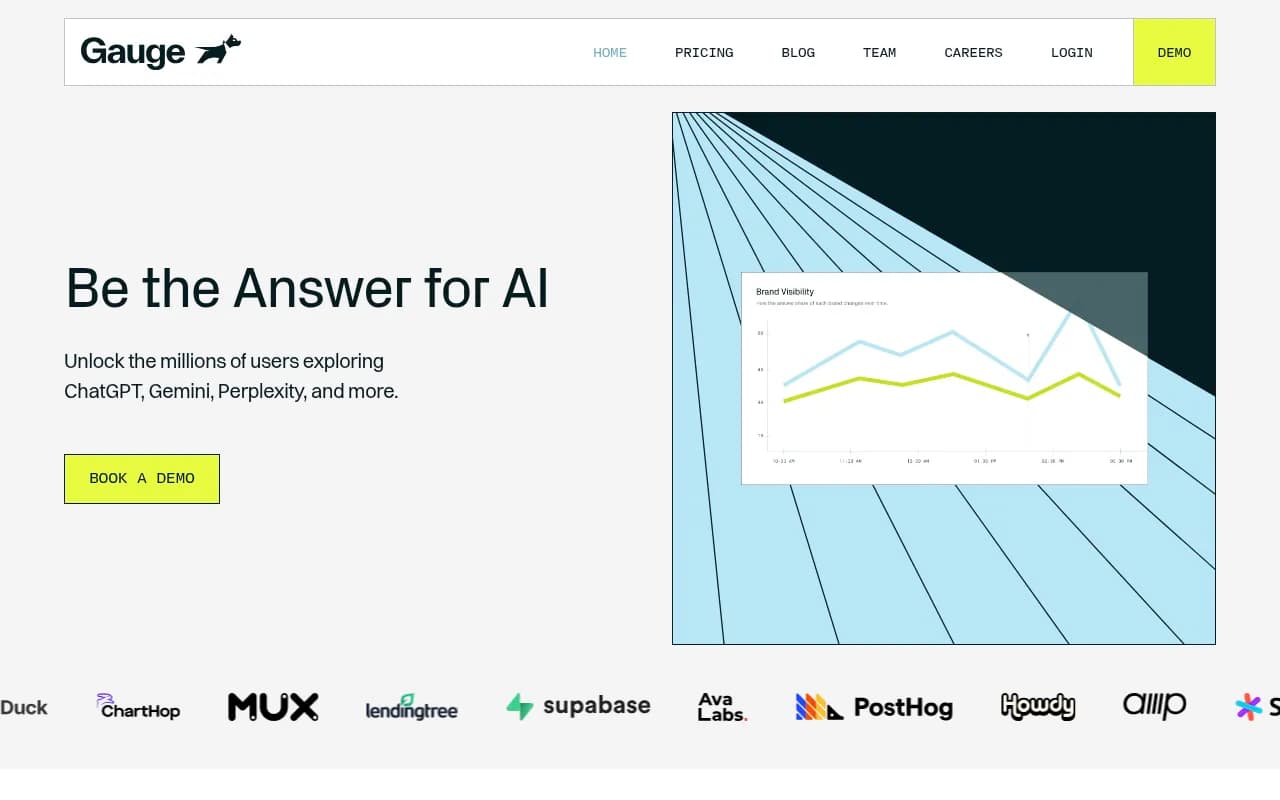
The platform covers platform coverage, prompt tracking depth, and citation analysis with a competitive lens. It's a good fit for teams doing strategic research rather than ongoing optimization.
Scrunch AI
Scrunch AI has a strong feature set for enterprise teams, with competitive tracking that includes share-of-voice and prompt-level analysis across major AI models.
The pricing is on the higher end, and like Profound, it's primarily a monitoring platform. The data quality is good, but the workflow stops at insight rather than action.
Otterly.AI
Otterly is one of the more affordable options in the market, which makes it popular for teams just getting started with GEO monitoring.

The competitor tracking is basic -- you can see how often your brand appears vs. competitors for tracked prompts, but there's no citation source analysis, no content gap detection, and no AI crawler data. It's fine for a high-level benchmark but won't tell you why a competitor is winning or what to do about it.
Peec AI
Peec AI offers multi-language AI visibility tracking with competitive benchmarking, which makes it useful for brands operating across multiple markets.

The competitive features are similar to Otterly -- share-of-voice comparisons and prompt-level visibility data -- but without the deeper citation analysis or content optimization capabilities. Good for monitoring, limited for optimization.
LLMrefs
LLMrefs centers its workflow on keywords you already track, automatically generating conversational prompts and aggregating results into share-of-voice and citation metrics. The competitive benchmarking shows how your brand stacks up against rivals for specific keyword clusters.
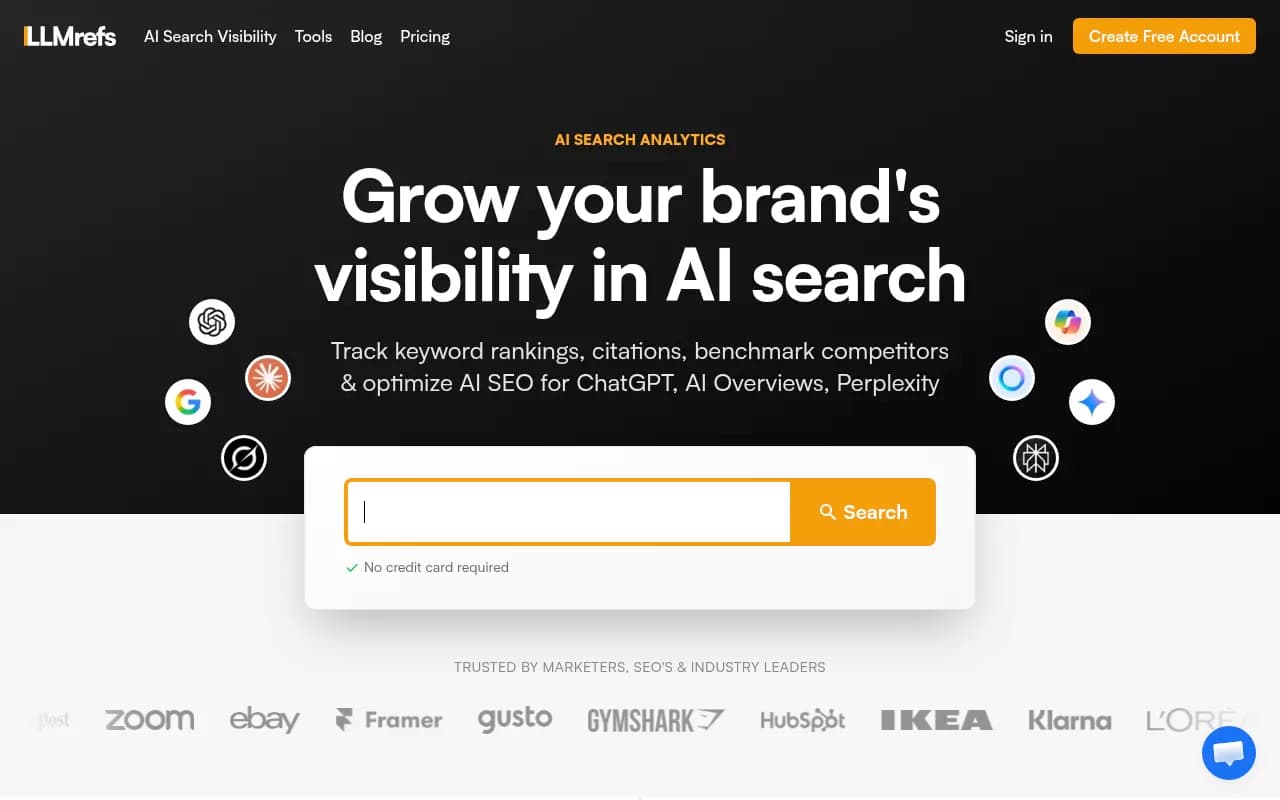
It's a solid mid-market option with a clean interface and reliable data. The competitive tracking is more keyword-centric than prompt-centric, which suits teams transitioning from traditional SEO workflows.
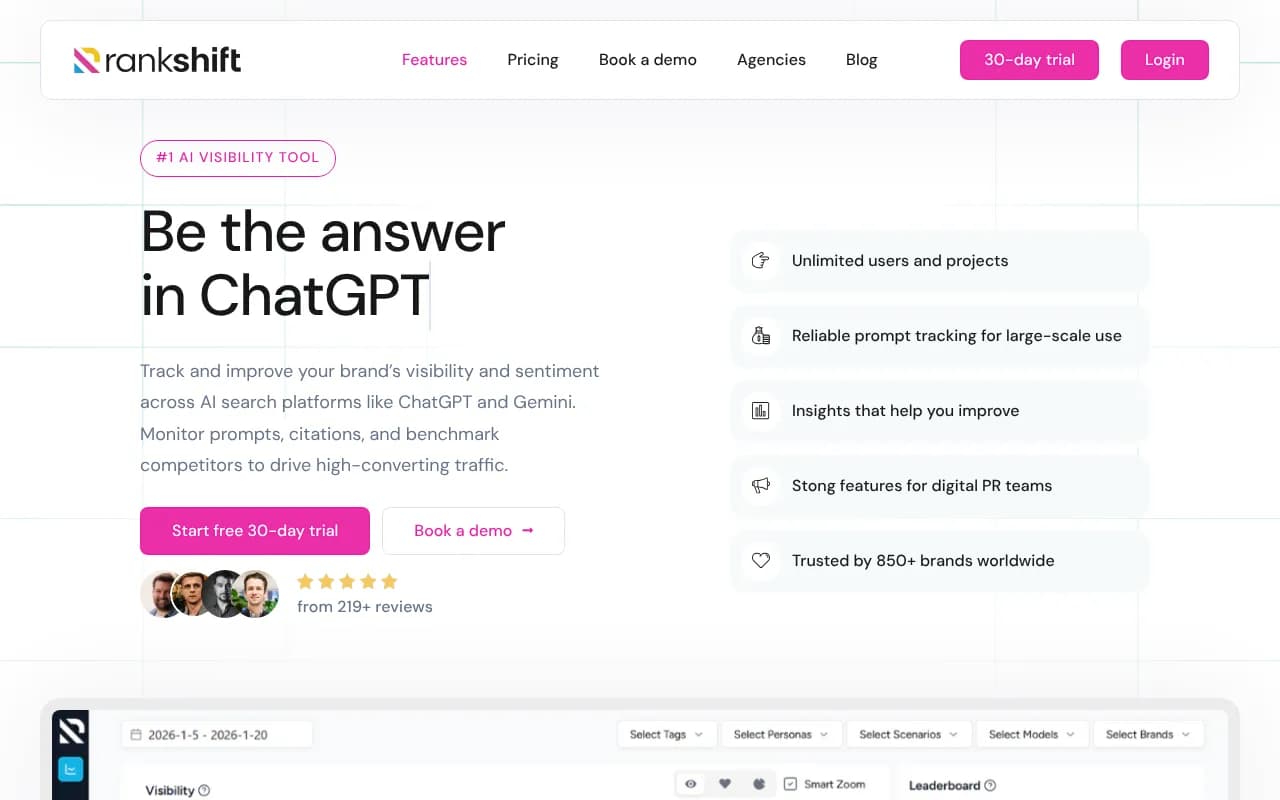
Rankshift
Rankshift is a focused LLM tracking tool that includes competitive visibility comparisons across major AI models. It's lighter-weight than enterprise platforms, which makes it accessible for smaller teams.
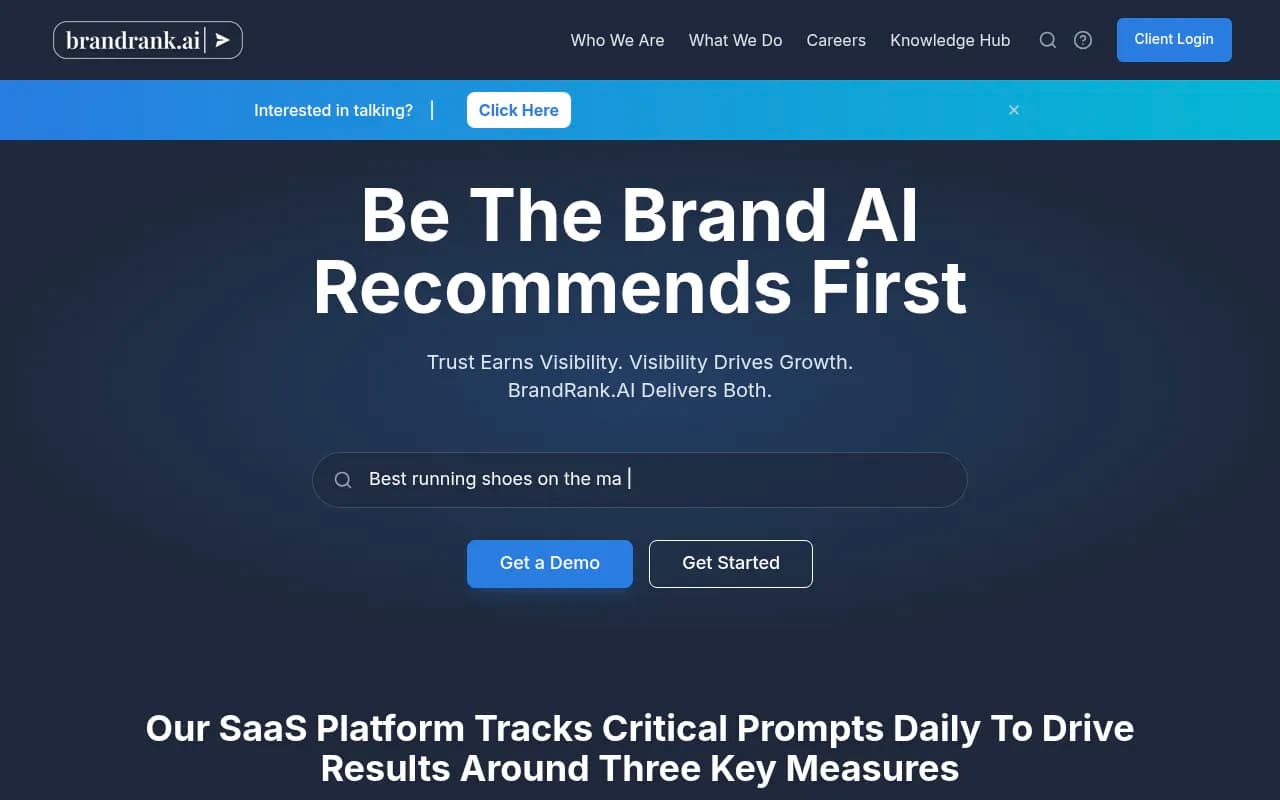
BrandRank.AI
BrandRank.AI tracks brand visibility across AI answer engines with competitive benchmarking built in. It's positioned for teams that want to understand brand perception in AI responses, not just citation frequency.
A direct feature comparison
Here's how the main platforms stack up on the features that matter most for competitor tracking:
| Platform | Competitor share-of-voice | Citation source analysis | Answer gap analysis | Content generation | AI crawler logs | Pricing (mid tier) |
|---|---|---|---|---|---|---|
| Promptwatch | Yes | Yes | Yes | Yes | Yes | $249/mo |
| Profound | Yes | Partial | No | No | No | $400+/mo |
| AthenaHQ | Yes | No | No | No | No | ~$300/mo |
| Scrunch AI | Yes | Partial | No | No | No | $400+/mo |
| Gauge | Yes | Yes | No | No | No | Custom |
| LLMrefs | Yes | Partial | No | No | No | ~$150/mo |
| Otterly.AI | Basic | No | No | No | No | ~$99/mo |
| Peec AI | Basic | No | No | No | No | ~$99/mo |
| Rankshift | Basic | No | No | No | No | ~$79/mo |
"Partial" in citation source analysis means the platform shows which domains are cited but not the specific pages, Reddit threads, or YouTube videos driving those citations.
What to look for when evaluating competitor tracking
Prompt-level granularity
Share-of-voice at the category level is a starting point, not an endpoint. You want to see which specific prompts a competitor is winning -- "best CRM for small business" vs. "CRM with Salesforce integration" are very different competitive situations. Platforms that only show aggregate visibility scores are hiding the information you actually need.
Citation source transparency
Knowing that a competitor is cited more often is less useful than knowing why. If a competitor is being cited because they have a detailed comparison page that you don't, or because they're active on a Reddit subreddit that AI models frequently reference, that's actionable. Platforms that show you the actual sources driving competitor citations are significantly more useful than those that just show frequency counts.
Multi-model breakdowns
A competitor might dominate on ChatGPT but be weak on Perplexity. If your platform only shows aggregate visibility across all models, you're missing the opportunity to target specific AI engines where you have a realistic chance of gaining ground. Look for tools that break down competitor performance by individual model.
Historical tracking
AI search visibility shifts quickly. A competitor's strong position today might reflect content they published three months ago. Platforms with longer historical data windows let you understand trends rather than just snapshots -- which is essential for separating signal from noise.
The gap between data and action
This is the biggest differentiator in the market right now. Most platforms show you that a competitor is outperforming you. Few platforms help you understand specifically what content you're missing and even fewer help you create it. If your team has strong content resources, a monitoring-only tool might be fine. If you need the platform to help close the loop, look for tools with built-in content gap analysis and content generation.
Pricing traps to avoid
A few patterns show up repeatedly when teams evaluate GEO platforms and later regret their choice:
Prompt limits that are too low. A 50-prompt plan sounds fine until you realize you need 200 prompts to cover your product categories and competitor comparisons. Always map your actual prompt needs before committing to a tier.
Competitor seats that cost extra. Some platforms charge per competitor tracked, which can push costs up significantly. A plan that looks like $149/month becomes $299/month once you add three competitors.
Refresh rates that don't match your needs. Weekly data refreshes are fine for strategic planning but useless if you're trying to respond to a competitor's content push in near real-time. Check how often the platform actually re-runs prompts and updates data.
No traffic attribution. Knowing your AI visibility score is improving is satisfying. Knowing it's driving actual revenue is what justifies the spend. Platforms that connect AI visibility to web traffic and conversions (via code snippets, GSC integration, or server log analysis) are worth paying more for.
Which tool fits which situation
If you're just starting out and want to understand the competitive landscape before committing to a platform, Otterly.AI or Peec AI give you a low-cost entry point. You won't get deep competitor intelligence, but you'll get a sense of where you stand.
If you're an in-house SEO or marketing team that needs to track competitors seriously and justify the investment to leadership, you need citation source analysis and prompt-level breakdowns. Promptwatch, LLMrefs, or Gauge are worth evaluating at this level.
If you're an agency managing multiple clients and need to show competitive progress over time, the multi-site capabilities and white-label options at the business and enterprise tiers matter. Promptwatch's Business plan ($579/mo for 5 sites) and agency/enterprise custom pricing are designed for this use case.
If you're enterprise and need compliance, API access, and custom reporting, Profound and Scrunch AI are the traditional choices -- but be prepared to pay for monitoring without the optimization workflow.
The bottom line
The GEO platform market is maturing fast, but there's still a wide gap between tools that monitor and tools that help you act. For competitor tracking specifically, the most valuable features -- citation source analysis, answer gap detection, prompt-level breakdowns by AI model -- are concentrated in a smaller number of platforms than the marketing materials would suggest.
Before signing up for any platform, ask the vendor to show you specifically how you'd find out which prompts a named competitor is winning that you're not, and what the platform does to help you close that gap. The answer to that question will tell you more than any feature checklist.
The tools that can answer it clearly are the ones worth paying for.