Key takeaways
- Most GEO monitoring tools are passive dashboards -- they show you data when you log in, but don't proactively alert you when something changes.
- A small number of platforms offer meaningful alerting: visibility score drops, new competitor citations, sentiment shifts, and crawler activity changes.
- The tools that go beyond alerts -- helping you diagnose why something changed and fix it -- are rare and significantly more valuable.
- Alert quality varies widely: some tools send weekly digest emails, others offer real-time Slack or webhook notifications tied to specific thresholds.
- If you're managing AI visibility for multiple brands or clients, the alerting and notification layer is often the difference between catching a problem early and finding out weeks later.
There's a pattern that plays out constantly in GEO right now. A brand's visibility in ChatGPT or Perplexity quietly drops 30% over two weeks. Nobody notices. The team is busy. The dashboard sits unvisited. Then someone asks why AI-referred traffic fell off a cliff, and the post-mortem begins.
The problem isn't that the data wasn't there. It's that nobody was watching, and the tool wasn't watching either.
This is the alerting problem in GEO platforms -- and it's more widespread than most vendors want to admit. The category has exploded in 2026, with dozens of tools competing for attention. But most of them are fundamentally passive: they collect data, render it in a dashboard, and wait for you to show up. That's fine for weekly reviews. It's not fine when a competitor suddenly starts dominating your most important prompts, or when an AI model starts citing a negative review about your brand.
This guide looks specifically at the alerting and notification capabilities across the major GEO platforms -- what they actually send, when they send it, and which tools treat alerts as a first-class feature rather than an afterthought.
Why alerts matter more in AI search than in traditional SEO
Traditional rank tracking has had alerts for years. You set a threshold -- say, drop more than 5 positions on a target keyword -- and the tool emails you. It's simple because the underlying data is relatively stable. Google rankings change gradually, and you usually have time to respond.
AI search visibility is different in a few important ways.
First, it's more volatile. LLM responses can shift based on model updates, new training data, changes in what sources the model trusts, or even prompt phrasing. A visibility score that looks healthy on Monday can look very different by Thursday after a model update rolls out.
Second, the stakes per prompt are higher. In traditional SEO, losing one keyword rarely tanks your traffic. In AI search, a handful of high-volume prompts often drive the majority of your AI-referred visits. If you drop out of the answer for "best [your category] tool" on ChatGPT, that's not a marginal loss.
Third, the competitive dynamics are faster. A competitor publishing one well-structured article can start getting cited across multiple AI models within days. If you're not watching, you won't know until the gap has already widened.
This is why the alerting layer of a GEO platform isn't a nice-to-have. It's the mechanism that makes the whole thing operational rather than just informational.
The alerting spectrum: from "basically nothing" to "genuinely useful"
Not all alerts are created equal. Here's how to think about the spectrum:
Digest emails -- The lowest tier. A weekly or daily summary of your visibility metrics, sent regardless of whether anything meaningful changed. These are better than nothing but don't help you respond quickly.
Threshold-based alerts -- You set a condition (e.g., visibility score drops below X, or a competitor's share of voice exceeds Y), and the tool notifies you when that condition is met. This is the standard in mature SEO tools and what most GEO platforms are slowly building toward.
Event-based alerts -- Notifications triggered by specific events: a new citation appears, a model starts citing a competitor for a prompt you previously owned, a crawler hits an error on your site. These are more precise and more actionable.
Anomaly detection -- The tool identifies unusual changes automatically, without you having to pre-configure thresholds. This requires more sophisticated data infrastructure and is rare in the GEO space currently.
Actionable alerts -- The rarest tier: the alert doesn't just tell you something changed, it tells you what to do about it. "Your visibility dropped for [prompt] because [competitor] published content covering [topic] -- here's the content gap you need to fill."
How the major GEO platforms handle alerts
Let's go through the main platforms and what their alerting actually looks like in practice.
Promptwatch
Promptwatch is one of the more complete platforms when it comes to closing the loop between "something changed" and "here's what to do." The alerting sits inside a broader system that includes Answer Gap Analysis (which shows you which prompts competitors rank for that you don't), AI crawler logs (real-time logs of when ChatGPT, Claude, Perplexity, and others crawl your site), and page-level citation tracking.
The crawler log feature is particularly relevant for alerts: you can see in real time when AI bots hit your pages, which pages they're reading, and whether they're encountering errors. That's a different kind of alert than a visibility score drop -- it's upstream data that helps you understand why your visibility is changing before it shows up in the metrics.
Promptwatch also tracks visibility across 10 AI models (ChatGPT, Perplexity, Claude, Gemini, Grok, DeepSeek, Copilot, Meta AI, Mistral, and Google AI Overviews), so alerts can be model-specific rather than just an aggregate score.

Profound
Profound is an enterprise-focused platform with solid monitoring depth. It covers multiple AI models and provides brand sentiment tracking alongside visibility scores. Alerting exists but is more oriented toward scheduled reporting than real-time event triggers. For large enterprise teams doing weekly or bi-weekly reviews, this works fine. For teams that need to catch changes within hours, it's less suited.

Otterly.AI
Otterly is positioned as an affordable entry point into AI visibility monitoring. It covers the major LLMs and provides a clean dashboard. Alert functionality is basic -- primarily email digests rather than threshold-based or event-based notifications. Good for smaller teams or solo marketers who check in regularly anyway.

Peec AI
Peec AI covers 10+ LLMs and has built out some recommendation logic on top of its monitoring data. Its alerting is more developed than many competitors, with notifications available for visibility changes and competitor movements. The multi-language and multi-region coverage is a genuine differentiator for international brands that need alerts across different markets.

AthenaHQ
AthenaHQ tracks visibility across 8+ AI engines and provides competitive benchmarking. The platform is monitoring-focused, and its alerting reflects that -- you'll get notified about changes, but the platform doesn't extend into content optimization or gap analysis. Alerts tell you what happened; figuring out why and what to do next is on you.

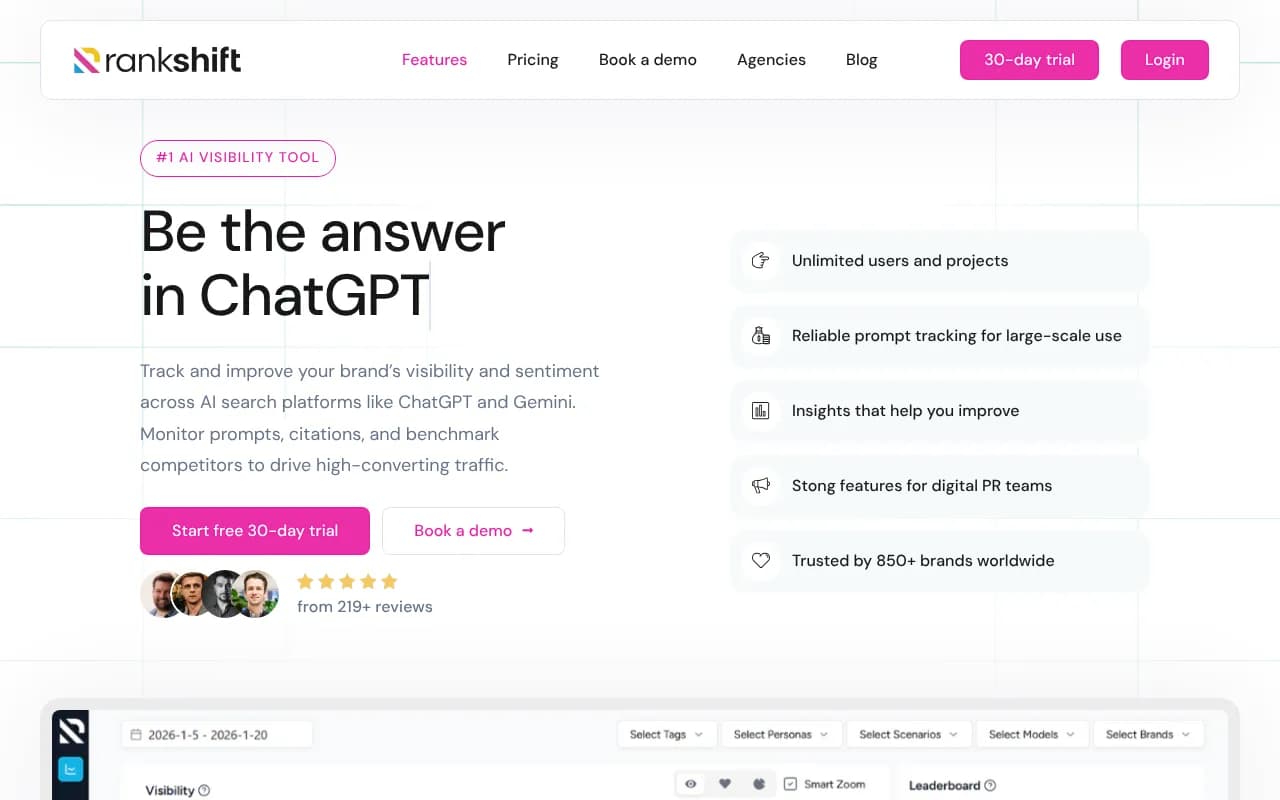
Rankshift
Rankshift is a newer entrant with a focus on LLM tracking and GEO. Its notification system is developing, with email alerts for significant visibility changes. Worth watching as the product matures, but currently lighter on alerting depth than the more established platforms.
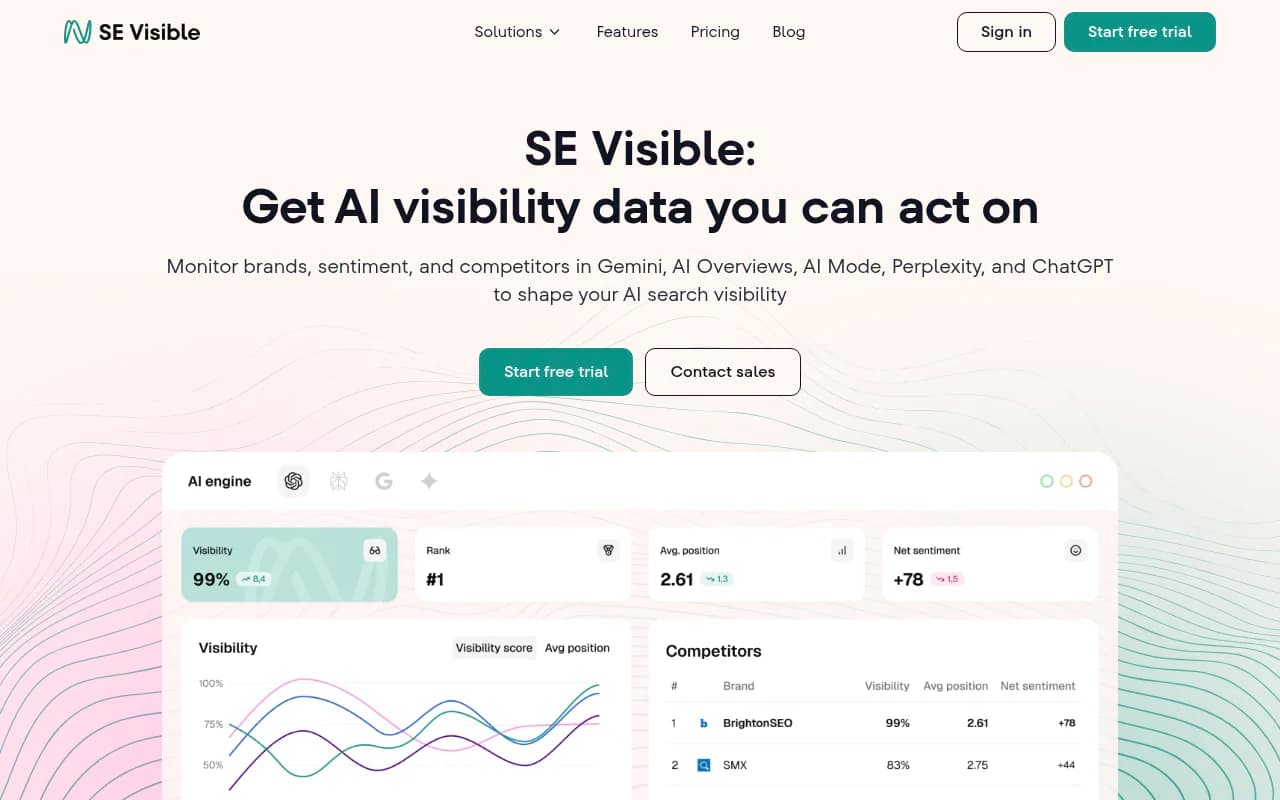
SE Visible
SE Visible (from SE Ranking) integrates AI visibility tracking into an existing SEO platform, which means it inherits some of SE Ranking's more mature alerting infrastructure. If you're already using SE Ranking for traditional SEO monitoring, the AI visibility alerts slot into the same workflow.
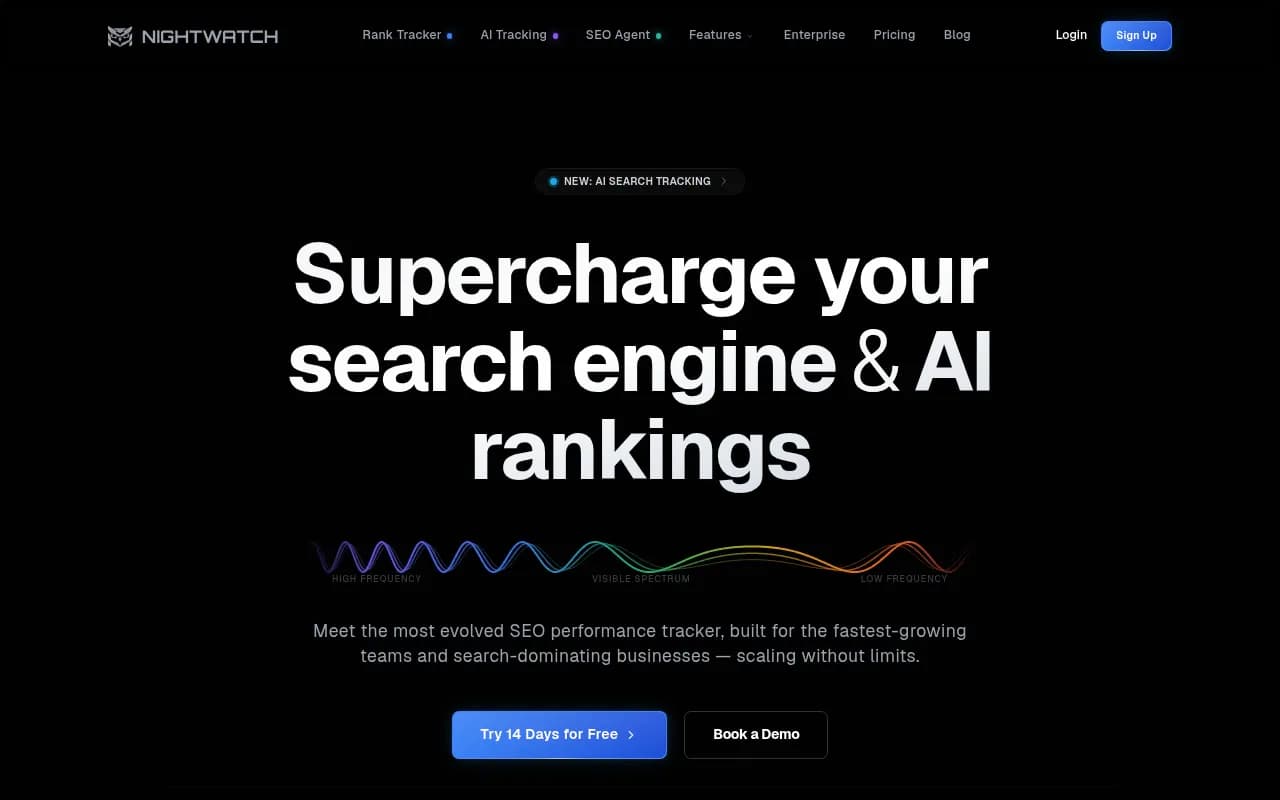
Nightwatch
Nightwatch added AI search monitoring to its core rank tracking product. The alerting is more developed on the traditional SEO side, but AI-specific alerts are available for visibility changes. A reasonable option if you want traditional and AI monitoring in one place without managing two separate tools.
Comparison table: alerting capabilities across GEO platforms
| Platform | Real-time alerts | Threshold-based | Event-based | Competitor alerts | Crawler/bot alerts | Content gap alerts |
|---|---|---|---|---|---|---|
| Promptwatch | Yes (crawler logs) | Yes | Yes | Yes | Yes | Yes |
| Profound | Partial | Yes | Partial | Yes | No | No |
| Otterly.AI | No | Digest only | No | Partial | No | No |
| Peec AI | Partial | Yes | Partial | Yes | No | No |
| AthenaHQ | No | Yes | No | Yes | No | No |
| Rankshift | No | Partial | No | Partial | No | No |
| SE Visible | Partial | Yes | No | Partial | No | No |
| Nightwatch | Partial | Yes | No | Partial | No | No |
"Partial" indicates the feature exists but with limited scope or configuration options.
What good alerts actually look like
It's worth being concrete about what you'd want a GEO alerting system to do. Here's a realistic wishlist:
Visibility drop alerts -- "Your visibility score for [prompt cluster] dropped 18% in the last 48 hours across ChatGPT and Perplexity." Threshold configurable by prompt, model, or overall score.
Competitor surge alerts -- "Competitor X is now cited in 67% of responses for [prompt], up from 31% last week. You are cited in 12%." This is the alert that should make you act immediately.
New citation alerts -- "Your page [URL] was cited in Perplexity responses for [prompt] for the first time." Positive signal worth knowing about.
Sentiment shift alerts -- "AI responses mentioning your brand have shifted from neutral to negative in the last 7 days. Primary driver: [topic]."
Crawler error alerts -- "Perplexity's crawler returned a 404 on [URL] 14 times in the last 24 hours." This is upstream of visibility -- fixing crawl errors can restore citations before they disappear from the metrics.
Content gap alerts -- "Competitors are being cited for [prompt] that you have no content addressing. Estimated monthly prompt volume: [X]."
Most platforms cover the first two. Very few cover the last three. The crawler error alert in particular is almost unique to platforms that have built out AI crawler log infrastructure.
Setting up a practical alerting workflow
Even if your chosen platform has limited native alerting, you can build a more responsive workflow with some additional setup.
Use webhook integrations where available. Some platforms (including Promptwatch) support API access or integrations that let you pipe data into Slack, Teams, or a custom dashboard. If your platform sends data to a webhook, you can build threshold-based alerts yourself using tools like Zapier or n8n.
Separate your monitoring cadence by prompt priority. Not every prompt needs real-time monitoring. Segment your tracked prompts into tiers: high-priority (check daily, alert on any change), medium-priority (weekly digest), and low-priority (monthly review). This prevents alert fatigue while keeping you responsive on what matters.
Pair AI visibility alerts with traffic data. A visibility drop that doesn't affect traffic might be a model quirk. A visibility drop that correlates with a traffic decline is a real problem. Connect your GEO platform's alerts to your analytics setup so you can quickly confirm whether a visibility change is translating into actual impact.
Monitor competitor content, not just competitor visibility. When a competitor's visibility surges, it's usually because they published something. Set up a basic content monitoring workflow (even a simple RSS feed or Google Alert) on your top competitors so you can see what they published when their AI visibility jumped.
The gap most platforms still haven't closed
Here's the honest state of the market in 2026: most GEO platforms have built decent monitoring. A smaller number have built decent alerting. Very few have built what comes after the alert -- the workflow that takes you from "something changed" to "here's what to do and here's the content that will fix it."
That last step is where the category is still immature. Getting an email that says your visibility dropped is useful. Getting an alert that says your visibility dropped, here's which competitor is now winning, here's the specific content gap on your site, and here's a draft article that addresses it -- that's a different product entirely.
The platforms that are building toward that full loop are the ones worth watching. The ones that stop at the dashboard are useful tools, but they leave the hard work to you.
If you're evaluating GEO platforms specifically for their alerting capabilities, the questions to ask are:
- Can I set custom thresholds, or are alerts only sent on the platform's schedule?
- Do alerts include competitor context, or just my own metrics?
- Is there any crawler/bot monitoring that gives me upstream signals?
- When I get an alert, does the platform help me understand why it happened?
- Can I route alerts to Slack, Teams, or a webhook?
The answers will tell you quickly whether a platform treats alerting as a core feature or an afterthought.
Bottom line
The GEO monitoring space has matured quickly, but alerting hasn't kept pace with monitoring. Most tools will show you a beautiful dashboard of your AI visibility -- and then wait for you to come back and look at it again next week.
The platforms that have invested in real alerting infrastructure (threshold-based, event-based, and especially crawler-level alerts) give you a meaningful operational advantage. You catch problems before they compound. You see competitor moves before the gap widens. You fix crawl errors before they become citation losses.
That's not a minor feature difference. In a category where visibility can shift significantly in days, the alerting layer is what separates a monitoring tool from an operational one.