Key takeaways
- Gauge ($599/mo Growth) is the execution-heavy option: 600 prompts run daily across 6 platforms, plus a content engine that publishes to your CMS. Best if you want tracking and content fixes in one place.
- LLM Pulse ($60–$365/mo) is the value pick: 5 standard models, unlimited seats on every plan, sentiment, and agency white-label at higher tiers. Weekly refresh by default, daily on request.
- Aiso ($19–$445/mo) is the cheapest entry point and leans on fan-out analysis and mention tracking across 3 models. No content generation.
- All three compete on fan-out analysis, the practice of tracking the hidden sub-queries AI models run before answering. This matters because most brand citations come from those branching searches, not the root prompt.
- Promptwatch covers fan-outs too, and adds crawler logs and visitor analytics that none of these three fully match. Worth a look if you want the "why" behind your visibility, not just the score.
Why fan-out tracking became a category
When you ask ChatGPT a question, it doesn't just answer. It quietly runs several web searches first, rewrites your prompt into shorter keyword-style queries, and pulls results from each of those searches before generating a response. Those hidden searches are called query fan-outs, and they've become the most contested feature in AI visibility tracking during 2026.
The reason is simple: most of your brand's citations in AI answers come from the fan-out queries, not the root prompt. A tool that only tracks "best CRM for startups" misses the six other searches ChatGPT ran to build its answer. You can be invisible on the prompt you typed and cited in three of the fan-outs.
Promptwatch's own fan-out research quantifies this behavior. Their ChatGPT query fan-outs report shows average fanouts per response fell from 2.15 in early December 2025 to about 1.84 by early March 2026, then returned in April at exactly 1.0 per response, with average query length collapsing from roughly 117 characters to about 53. ChatGPT now searches more like keyword typing than full sentences. Then in August, behavior changed again overnight: ChatGPT started using the site: operator at scale, jumping from 0.37% to 16.8% of all fanout queries in a single day, with searches per response nearly doubling from ~1.08 to ~1.83.
That last data point is the strongest argument for continuous fan-out monitoring rather than one-off audits. If a platform can change its entire search behavior in 24 hours, a quarterly report is historical fiction.
Aiso published its own benchmark of fan-out tracking across five competitors in June 2026, noting that one captured Profound dashboard showed a single prompt expanding into 83 fan-out variations and 163 captured queries. The fact that Gauge, LLM Pulse, and Aiso all market fan-out analysis as a headline feature tells you where the category thinks the value is.
What each tool actually is
Gauge
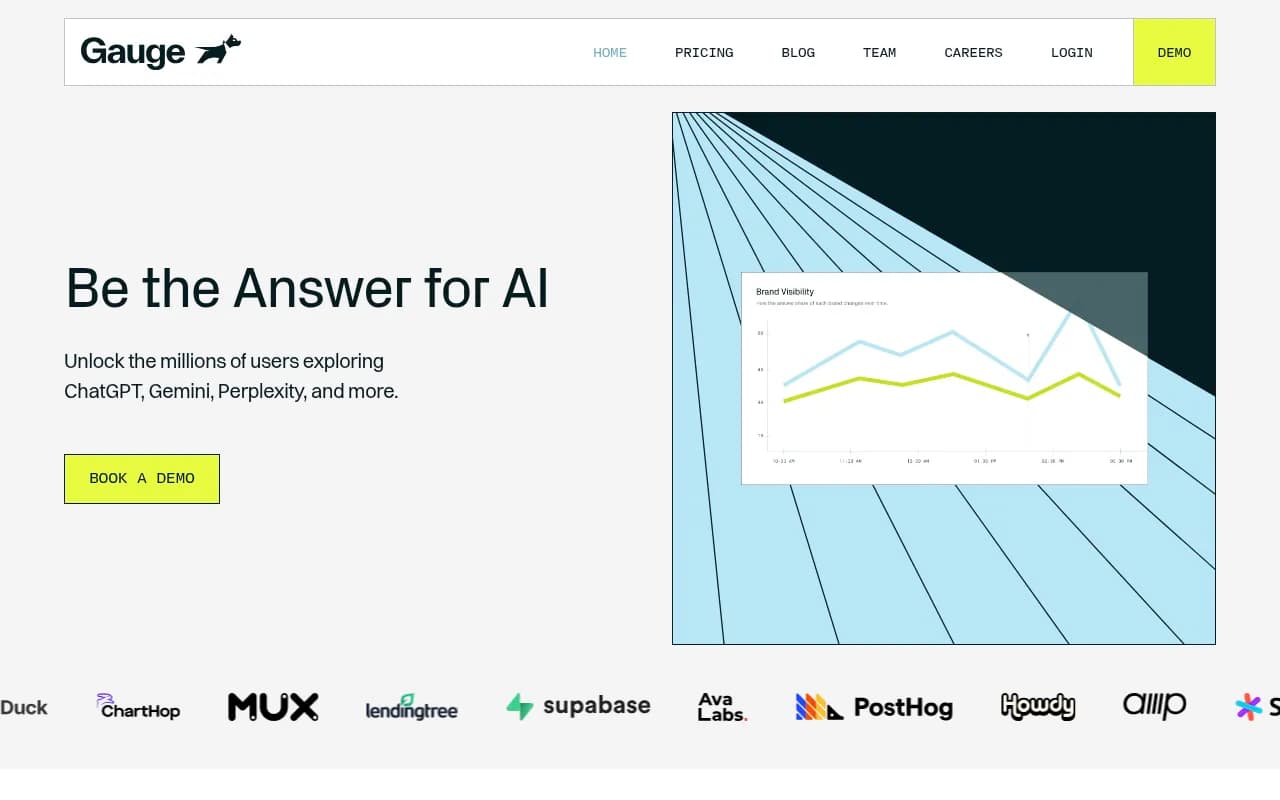
Gauge, founded in 2024 by Caelean Barnes and Evan Doyle through Y Combinator, positions itself as strategic competitive intelligence for AI visibility. Its Growth plan at $599/mo runs 600 tracked prompts daily across six platforms: ChatGPT, Google AI Overviews, Google AI Mode, Gemini, Perplexity, and Microsoft Copilot. That works out to roughly 108,000 tracked AI answers per month, which Gauge frames as about half a cent per answer.
Two things set Gauge apart from the other two. First, its data collection uses front-end scraping through anonymous, logged-out browser sessions rather than API calls, which Gauge argues reflects what a real user actually sees. Second, it's the only one of the three with a full content engine: 18 publish-ready articles per month on Growth, with direct CMS publishing to Webflow, Sanity, Framer, and GitHub.
Its fan-out dashboard is genuinely detailed. You get searches per answer, prompts covered, a top fan-out searches table sortable by search count or prompt count, a branded-only filter, and a "brand injection" metric that measures how often a model adds your tracked brand to a search when the original prompt didn't name it. There's also word-level analysis of how models rewrite prompts into searches, and per-model rewrite comparison.
Gauge also separates citation rate from mention rate, which matters more than it sounds. A brand can be referenced without being named, or named without being cited. Most tools conflate these.
Case studies cited on Gauge's site include PostHog growing LLM-referred traffic 41x and Vellum AI growing from 1.4% to 40.3% visibility over seven months.
LLM Pulse
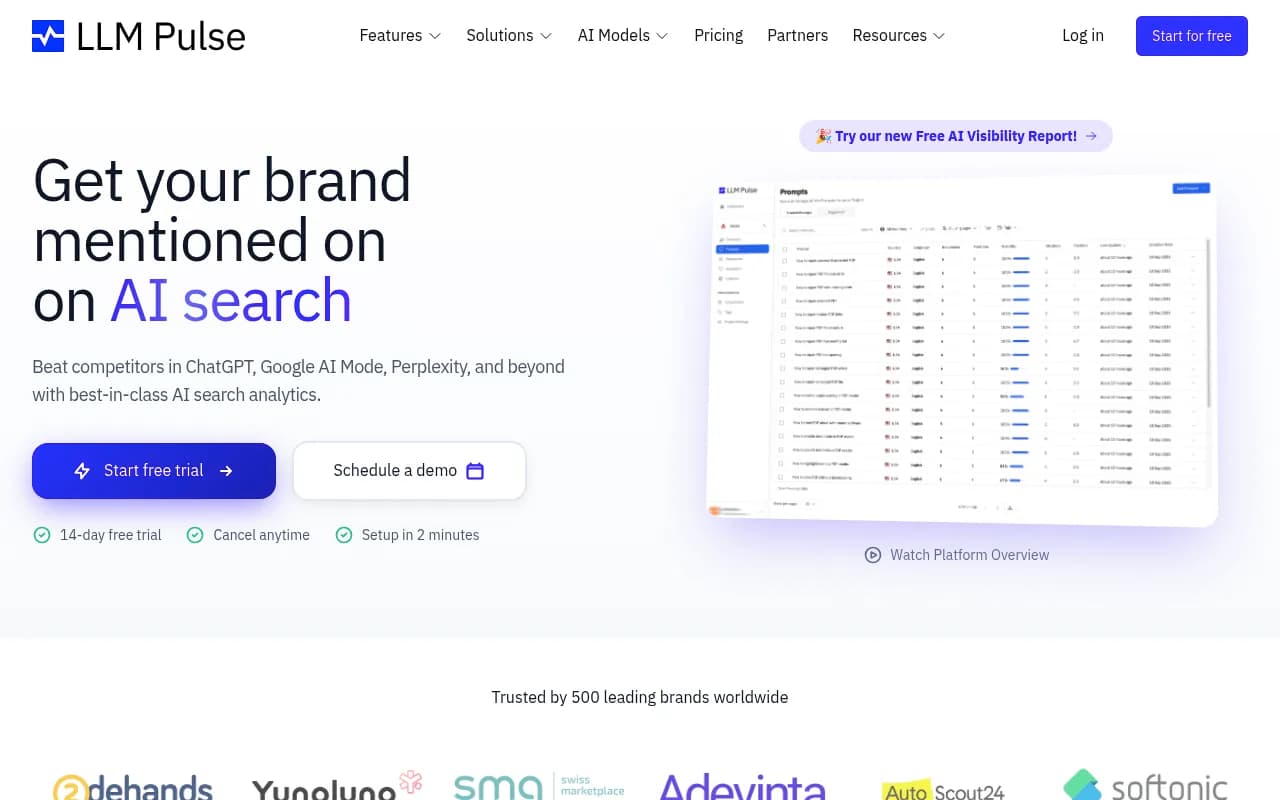
LLM Pulse, bootstrapped and founded in 2024, is the value option. Its pricing page currently shows Starter at $60/mo (50 prompts, 1 project), Growth at $121/mo (150 prompts, 2 projects), and Scale at $365/mo (450 prompts, 5 projects), with Enterprise custom. European pricing has been listed as €49/€99/€299 in the company's own materials, so the figures vary by currency display. All tiers include five standard models: ChatGPT, Perplexity, Gemini, Google AI Mode, and Google AI Overviews. Claude, Copilot, Grok, DeepSeek, and Alexa for Shopping are paid add-ons.
The standout features are query fan-out analysis, Brand Sentiment, and unlimited team seats on every plan. Growth adds sentiment, owned media tracking (YouTube, social, apps, Reddit), AI traffic analytics, and an agent. Scale adds ChatGPT Shopping and AI paid ads tracking, reputation monitoring, GEO testing, custom reports, API, a Looker Studio connector, and CLI. Enterprise adds white-label, embedded dashboards, SSO, and a dedicated account manager.
One honest caveat: standard plans run prompts weekly by default, not daily. Daily refresh is available on request. If you're comparing LLM Pulse against Gauge on price per prompt, factor in that Gauge runs daily by default. LLM Pulse's own comparison against Promptwatch acknowledges Promptwatch's broader model coverage and crawler log analysis while claiming the price advantage for itself, which is roughly fair.
Third-party reviews highlight LLM Pulse's citation sources analysis and GA4-linked AI traffic attribution as features many competitors lack, and its white-label reporting makes the economics work for agencies managing multiple client brands.
Aiso
Aiso, launched in May 2025 and bootstrapped under founder Ben Tannenbaum, is the cheapest way into this category. Starter is $19/mo for 50 tracked prompts across 3 AI models with daily tracking and unlimited users. Pro is $215/mo for 150 prompts and multi-country tracking. Advanced is $445/mo for 350 prompts plus Looker Studio. Enterprise is custom with API access and SSO. All tiers include a 7-day free trial and hosted MCP access.
Aiso's marketing leans on two things: fan-out analysis (surfacing the hidden Google and Bing sub-queries ChatGPT and Gemini run to build answers) and mention tracking across curated real prompts with cited sources ranked by priority. A third-party review describes Aiso's earlier positioning as grounded in real user conversation data from an opt-in panel, covering ChatGPT, Gemini, and Claude, though the current pricing page says "curated real prompts" without specifying which three models are included. Verify the model list directly before buying.
Aiso has no content generation. It positions itself as an intelligence layer, not an execution platform. It also offers an unusual proof-of-value pilot model: a lower upfront fee plus a success fee on qualified AI-attributed leads.
Side-by-side comparison
| Gauge | LLM Pulse | Aiso | |
|---|---|---|---|
| Starting price | $599/mo (Growth) | $60/mo (Starter) | $19/mo (Starter) |
| Prompts at entry tier | 600 | 50 | 50 |
| Platforms covered | 6 standard, +Claude/Grok via own API key | 5 standard, +5 as paid add-ons | 3 (models not fully specified on pricing page) |
| Refresh cadence | Daily by default | Weekly by default, daily on request | Daily on all tiers |
| Team seats | 10 on Growth | Unlimited on all plans | Unlimited on all plans |
| Fan-out analysis | Yes, with brand injection metric and word-level rewrite analysis | Yes | Yes, positioned as core differentiator |
| Sentiment | Yes | Yes (Growth+) | Not prominent |
| Content generation | Yes, 18 articles/mo with CMS publishing | GEO Writer (volume varies by tier) | No |
| White-label | No | Enterprise tier | No |
| Free trial | 7 days | 14 days | 7 days |
Price per answer, normalized
Sticker prices in this category are misleading because tools quote different prompt counts, model counts, and refresh frequencies. Normalizing to cost per tracked answer tells a different story than the pricing pages do.
Gauge's $599 Growth plan with 600 daily prompts across 6 platforms works out to roughly 108,000 answers per month, about half a cent each. Gauge's own blog compares this against Profound's Growth plan ($399/mo, 100 prompts, 3 engines, ~9,000 answers at 4.4 cents each) and claims to be roughly 8x cheaper per answer despite the higher sticker price.
Promptwatch's 2026 platform comparison applies the same math across the market and finds Promptwatch among the lowest cost-per-response platforms, with Essential at $95/mo covering 50 prompts and 6,000 responses across 9 models ($0.016 per response). The same table puts LLM Pulse's Starter at roughly $0.056 per response with weekly tracking.
Aiso's Starter at $19/mo for 50 prompts is the cheapest entry, but with only 3 models and no content execution, you're buying a narrower slice of the problem.
The honest summary: if you track a lot of prompts and care about frequency, Gauge's per-answer economics are hard to beat. If you track fewer prompts and want more seats and features per dollar, LLM Pulse wins. If you're testing the waters with a small brand, Aiso is the lowest-risk entry.
Where Promptwatch fits
All three of these tools are prompt and fan-out trackers at their core. Promptwatch, by contrast, is a full GEO platform that includes prompt tracking with volumes and difficulty scores, query fan-outs, and citation trends, but extends into territory none of these three cover completely: AI crawler logs showing when ChatGPTBot, ClaudeBot, and 400+ other bots actually hit your site and what errors they find, visitor analytics tracking real traffic and conversions from AI platforms, Reddit and YouTube citation tracking, ChatGPT Shopping and Ads Radar, and automated Content Agents that plan, publish, and prioritize optimization work for you.
Promptwatch is used by 1,840+ brands and agencies, is rated 4.7/5 on G2, and its dataset of 4.5B+ analyzed citations and prompts is what powers the fan-out research cited earlier in this guide. If your question is "was my brand mentioned," any of the four tools answers it. If your question is "how do I grow AI-driven revenue," that's the gap between a tracker and a platform.

Which one should you pick
Pick Gauge if you're a mid-market or enterprise brand that wants tracking and content execution in one platform, you track enough prompts to benefit from daily runs at scale, and you care about the difference between being cited and being mentioned. The $599 entry price is real, but the per-answer economics justify it at volume.
Pick LLM Pulse if you're an agency or a team with many stakeholders who need dashboard access, you want sentiment and owned-media tracking included, or you're price-sensitive and the weekly default refresh is acceptable. The unlimited seats and white-label options are genuinely unusual at these prices.
Pick Aiso if you're a smaller brand or a team new to AI visibility tracking that wants fan-out intelligence without a big commitment, or you're intrigued by the success-fee pilot model. Go in knowing you get 3 models and no content generation.
Consider Promptwatch if you want the full stack: fan-outs plus crawler logs plus AI traffic attribution plus automated content fixes, all grounded in the largest citation dataset in the category.
One last thing worth repeating: whatever you choose, re-run your fan-out analysis regularly. ChatGPT changed its search behavior overnight in August 2026, and it will do it again. A tool that only tells you where you stood last month is a rearview mirror, not a steering wheel.