Key takeaways
- Peec AI has no free plan. Starter is $95/mo for 50 prompts, 3 models (picked from 6) and 1 project, and extra models cost more.
- Free options come in two forms: hosted free tiers (Trendos, BrandAxis, Promptwatch's free Explore plan) and self-hosted open-source projects (Elmo, GEO/AEO Tracker, OneGlanse, Gego).
- Open-source is rarely free in practice. You pay for API or scraper calls, hosting, and your own maintenance time.
- Many open-source trackers started in 2026 and some have already gone quiet. Check commit recency before you build on one.
- Most price comparison pages are written by competing vendors and the numbers conflict. Confirm everything on the vendor's own pricing page.
Why people look for free Peec AI alternatives
Peec AI is a well-made tool with a clean dashboard. The complaint is the entry price. Self-serve tiers are Starter at $95/mo, Pro at $245/mo and Advanced at $495/mo, with roughly $80, $205 and $420 per month on annual billing. Starter caps you at 50 prompts, 3 models and 1 country.
If you are only starting a GEO program, that is a lot to commit before you know whether AI search matters for your category. So the real question is how to get a defensible baseline for little or nothing.

I will be upfront about one thing. I have not tested the open-source tools below. What follows comes from their repos, their makers' descriptions and third-party roundups, and several of those roundups are published by competitors who rank themselves first. Treat claims accordingly.
Do the prompt math before you switch
Peec Starter works out to 50 prompts x 3 models x daily refresh, which is 4,500 prompt-engine-days a month. Write down how many buying questions you actually need to track and on which engines. That number decides whether a free tier is enough.
This matters more than it looks. Promptwatch Data on average sources per response shows ChatGPT cites about 5 sources per web-search answer, while Google AI Overviews and Perplexity cite about 10. With so few citation slots, a small prompt cap samples a thin slice of the picture, so prompt selection matters more than volume.
Also look at how ChatGPT searches. Promptwatch's ChatGPT query fanout report shows average query length falling from about 117 characters in December to about 53 in April. Your tracked prompts should include short, keyword-style phrasing, not only long conversational questions.
Hosted tools with a free tier
Promptwatch
Promptwatch has a free Explore plan: 1 project, 10 prompts, ChatGPT only. That is small, but it comes from the same platform that tracks real UIs of ChatGPT, Google AI Overviews, Gemini, Perplexity and more on paid plans. Paid plans start at $95/mo (Essential, 50 prompts, all models) and include crawler logs, visitor analytics and a content gap analysis that Peec does not have. Confirm current terms at promptwatch.com/pricing.

Promptwatch also offers no-login free tools, such as the Free AI Visibility Report and the Agentic Readiness Check, which are a decent way to get a first reading before paying anything.
Trendos
In the Agenzy comparison, Trendos Free is the only fully free plan listed: 20 prompts and 600 answers a month. Paid plans are about $30 on yearly billing. It was only added to that comparison in September 2026, so I would treat it as new and verify it yourself.
BrandAxis
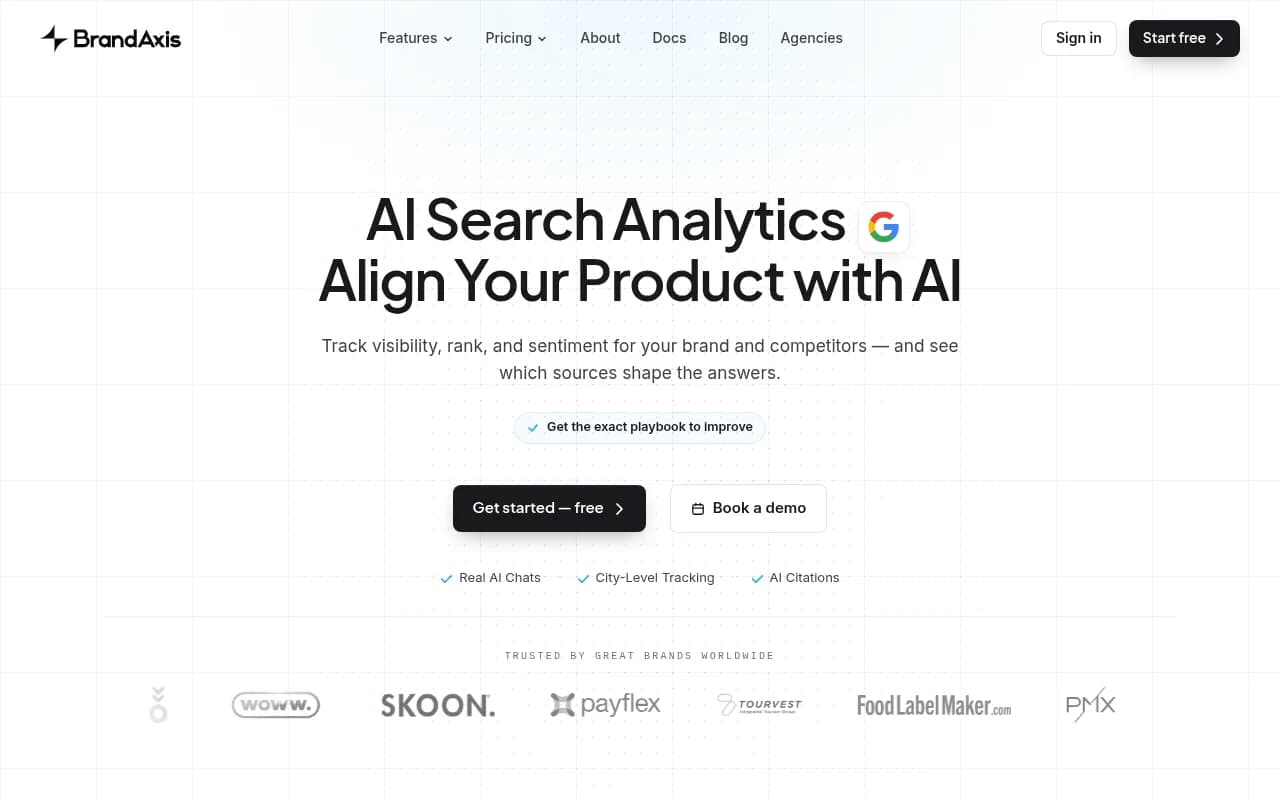
BrandAxis says it has a free plan and paid plans from $19/mo, with any 3 of 6 engines and daily refresh. That is the vendor's own claim, and its blog ranks BrandAxis first, so check the limits before relying on it.
Cheap paid tiers that work like free trials
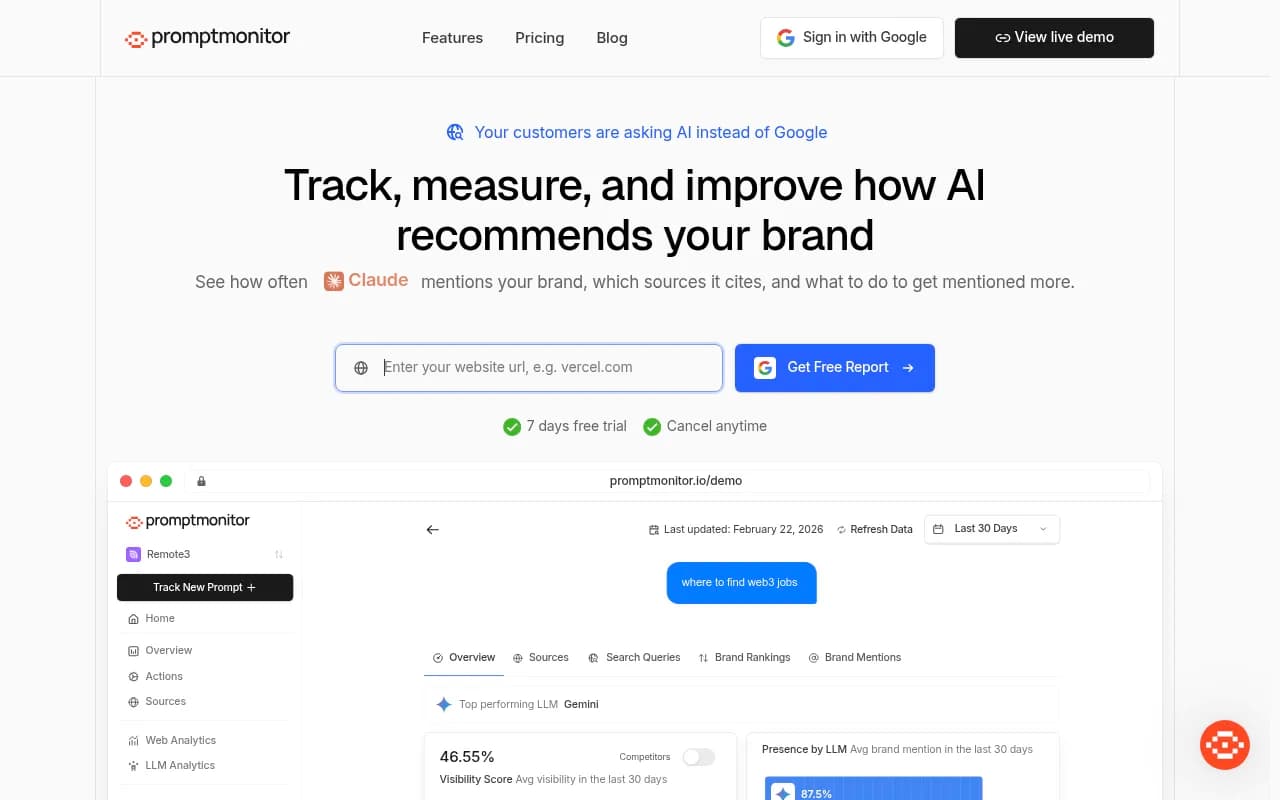
Otterly.AI's Lite plan is $29/mo ($25 annual) for 15 prompts across ChatGPT, AI Overviews, Perplexity and Copilot. It does not track Gemini or Google AI Mode. Promptmonitor is also pitched at about $29/mo.

AthenaHQ lists free credits, with Starter at $295/mo, so it is not really a budget option past the trial.

Open-source and self-hosted options
Elmo
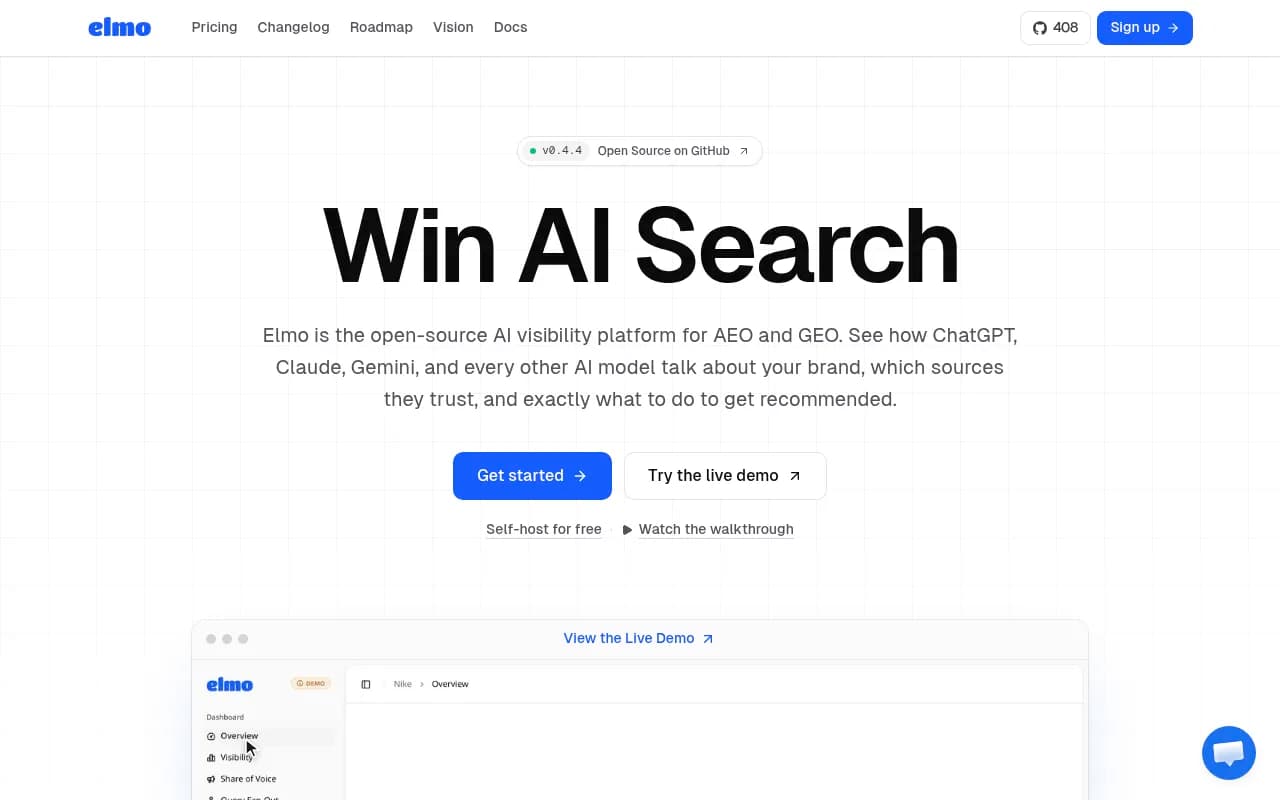
Elmo is MIT-licensed, self-hostable for free, with a hosted Elmo Cloud as the paid route. It claims coverage of ChatGPT, Google AI Mode, AI Overviews, Gemini, Perplexity, Copilot, Claude and any OpenRouter model. Caveat: Elmo publishes the open-source roundup that ranks it first.
GEO/AEO Tracker
This MIT-licensed project by danishashko covers ChatGPT, Perplexity, Gemini, Copilot and Google AI Mode. It scores 0 to 100 on mentions, position, frequency, citations and sentiment, and offers competitor battlecards. It runs in the browser with an optional Supabase of your own.
The catch is data collection. It uses Bright Data's AI Scraper API, so you pay per call. There is no plan cap, only your own spend. Elmo's table lists 295 stars and a single contributor, with a first commit in February 2026.
OneGlanse
OneGlanse drives the real web UIs of ChatGPT, Gemini, Perplexity, Claude and Google AI Overview with your own accounts from your machine or a VPN. That avoids API and scraper bills, and data lands in ClickHouse on your own infrastructure. Its maker argues UI answers differ from API answers, which fits what Promptwatch's data collection is built around.
The risks are my own inference, not verified findings: account bans, CAPTCHAs, and the need to babysit sessions. The maker positions it for developers and tinkerers, and I would too.
Gego
Gego is a GPL-3.0 self-hosted tracker with a CLI and dashboard. It schedules prompts against OpenAI, Anthropic, Google, Perplexity, or local models through Ollama, and records mentions and citations with little analysis layered on top. Good for raw logs, thin on insight.
GetCito and other repos
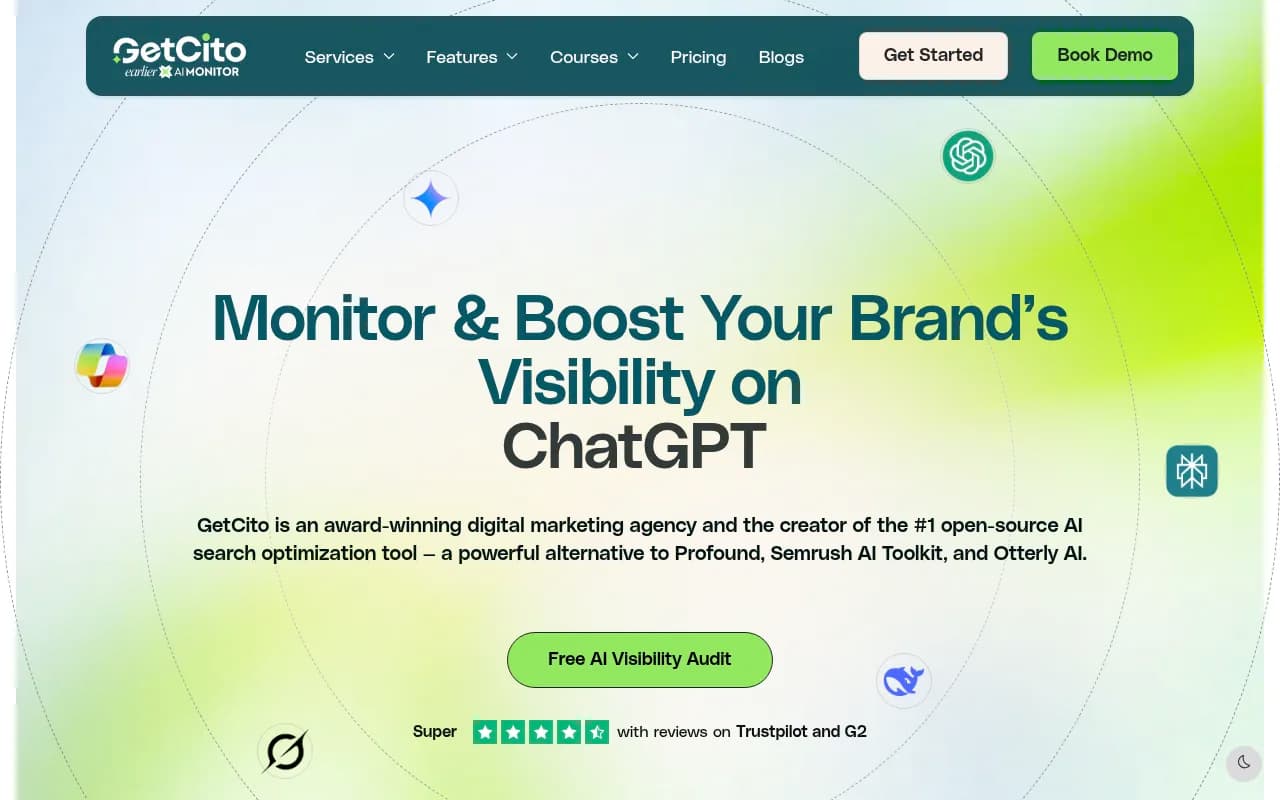
GetCito is an open-source AIO/AEO/GEO tool in TypeScript with 445 stars, last updated September 28, 2026. A hosted version is listed in our catalog as well.
The GitHub topic page for AI visibility tracking lists 26 repos. Worth a look: Citatra, rastmob/ai-visibility-tracker, and logwick, a self-hosted log analyzer that classifies GPTBot, ClaudeBot, ChatGPT-User and Perplexity bots without a JS tag. Two MCP servers (guzu-mcp, seoforgpt-mcp) also exist. I could not verify Genwolf AI.
GeoLook is self-host only and had no commits since August 2026, which I would read as a warning.
Comparison table
| Option | Type | Entry cost | Engines | Main catch |
|---|---|---|---|---|
| Peec AI Starter | Hosted, paid | $95/mo | 3 of 6 | Extra models cost extra |
| Promptwatch Explore | Hosted, free | $0 | ChatGPT only | 10 prompts |
| Trendos Free | Hosted, free | $0 | Not verified | 20 prompts, 600 answers/mo, new |
| BrandAxis | Hosted, free + paid | Free; $19/mo paid | Any 3 of 6 | Vendor-claimed limits |
| Otterly.AI Lite | Hosted, paid | $29/mo | 4 engines | No Gemini or AI Mode |
| Elmo | Open-source (MIT) | Free self-hosted | 7+ incl. OpenRouter | You host and maintain |
| GEO/AEO Tracker | Open-source (MIT) | Free + API spend | 5 | Bright Data costs, one developer |
| OneGlanse | Open-source | Free | 5 real UIs | Account and CAPTCHA risk |
| Gego | Open-source (GPL-3.0) | Free + API spend | OpenAI, Anthropic, Google, Perplexity, Ollama | Minimal analysis |
What free really costs
- API and scraper bills. Bright Data and LLM API calls add up fast with daily refreshes across several engines.
- Hosting and upkeep. Somebody has to run ClickHouse or Supabase and fix breakage when a model UI changes.
- Abandonment risk. GEO/AEO Tracker and Gego each logged 10 or fewer commits in the last 90 days. Check commit recency, contributors and releases first.
- Data differences. API answers can differ from what users see in the UI. Promptwatch's data is collected from real UIs for that reason, and OneGlanse takes the same approach on a small scale.
If your time is worth more than about $95 a month, a self-hosted tracker is probably not the bargain it looks like.
Which route to pick
- Just testing the waters: use a free report or a free tier, such as Promptwatch's free tools or Trendos, and track 10 to 20 prompts you care about.
- Developer with spare time and a tight budget: Elmo or OneGlanse. Budget for API or account friction.
- Small team that needs reporting this quarter: a $19 to $29 hosted plan like BrandAxis or Otterly, or a short trial of a paid platform.
- You need to act on the data, not just watch it: monitoring-only tools stop short. Promptwatch's paid plans add crawler logs, AI traffic attribution and a content agent to fix gaps. If you want to compare more options, the AI rank tracking directory lists many of them.
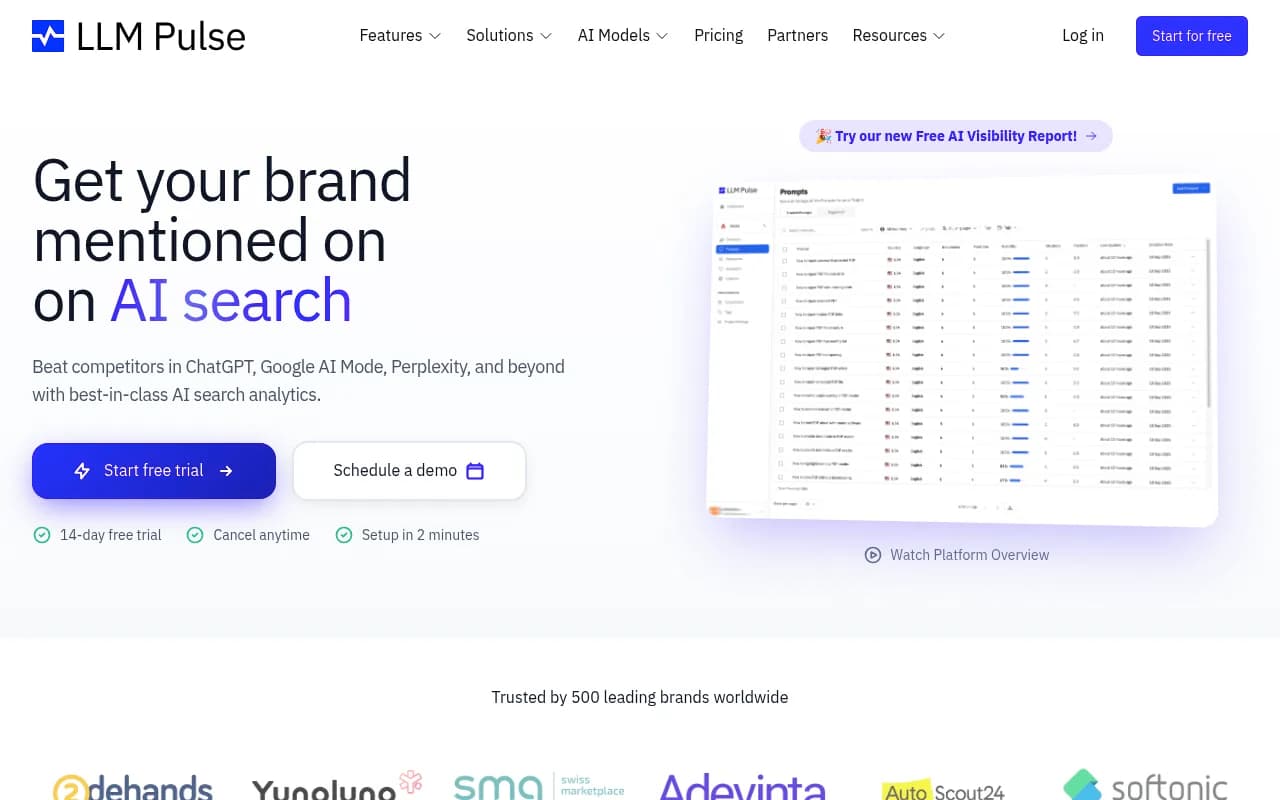
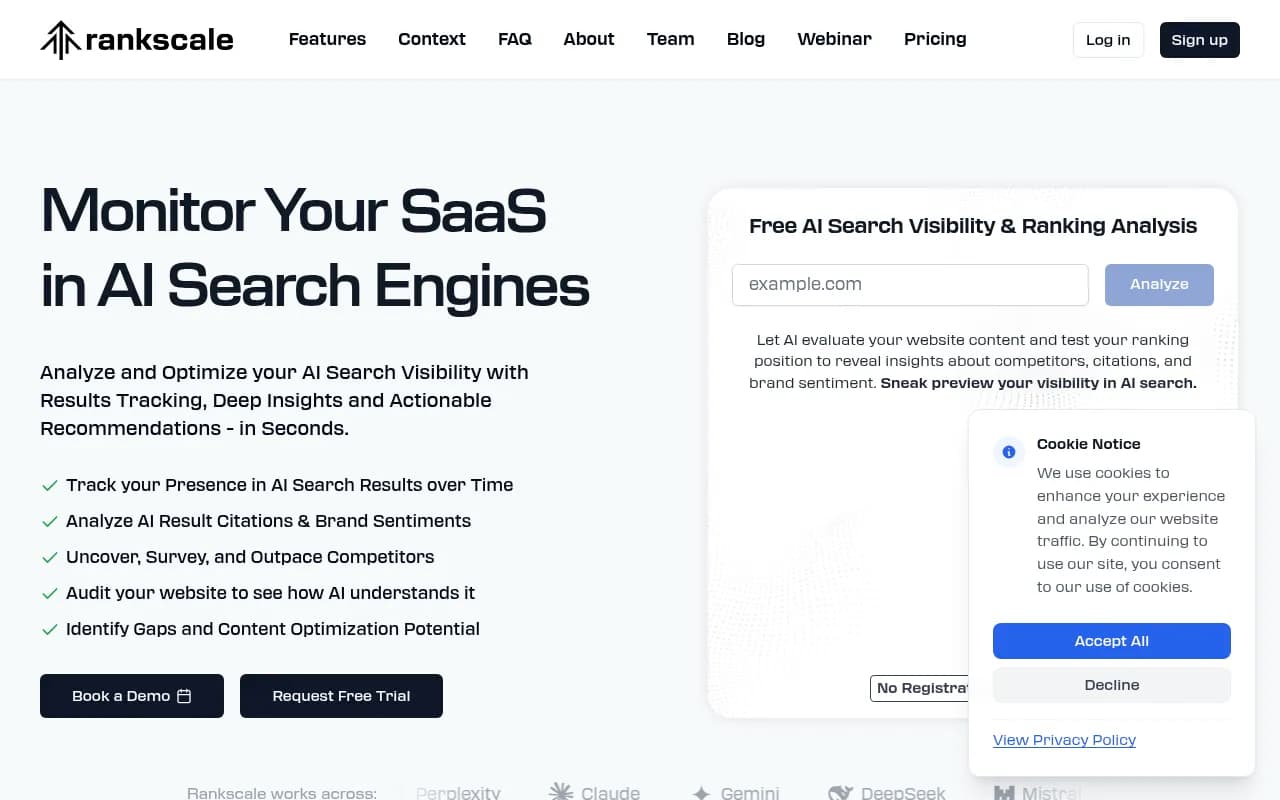
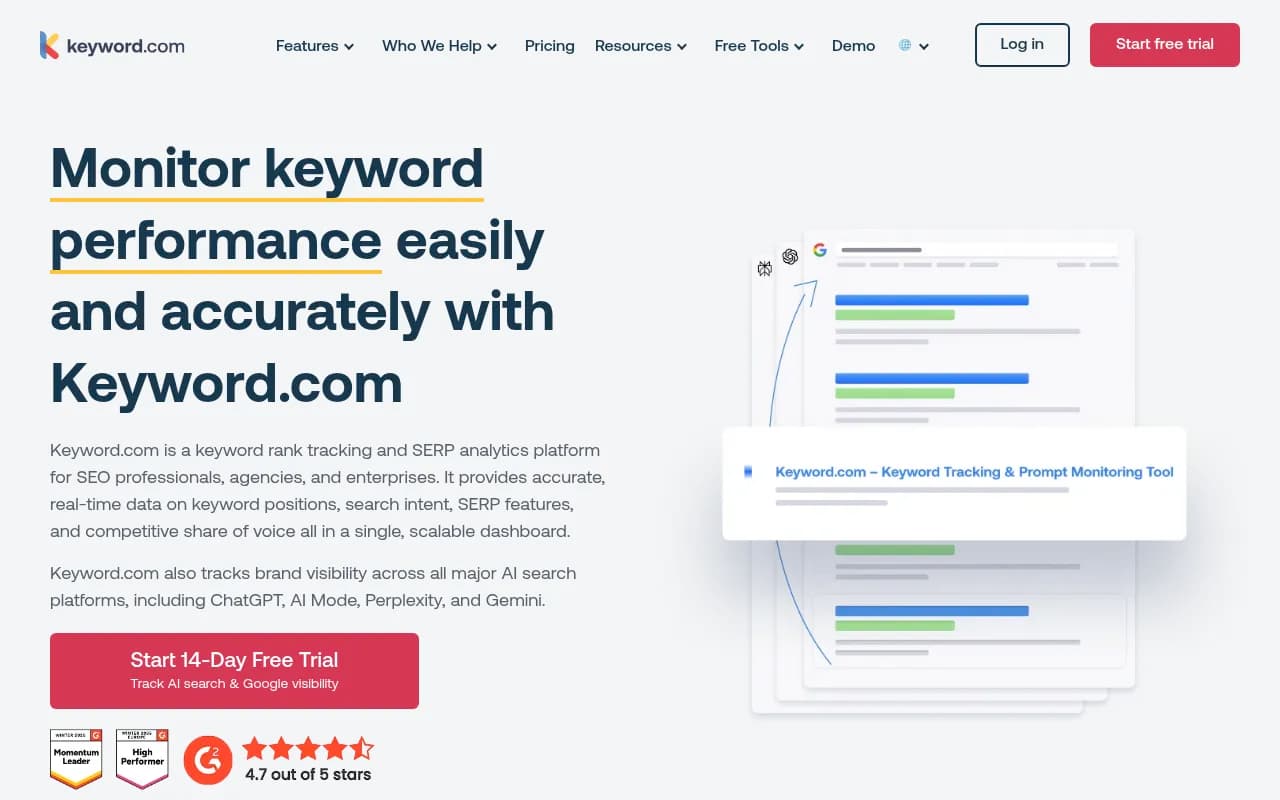
Three more tools in our catalog are worth a glance: LLM Pulse, Rankscale, and Keyword.com.
How to verify any tool before committing
Run your real buying questions, for example "alternatives to [competitor] for a 200-person SaaS company", on the engines you need. Open an answer that mentions a competitor and read the cited sources. Ask what happens when you exceed the prompt or model allowance. For open-source projects, read the issue tracker and check the last commit date.
Pricing caveat: I did not verify Profound, Scrunch or Ahrefs Brand Radar pricing from primary sources, and numbers conflict between roundups. Semrush AI Toolkit appears as $99/mo in one and $199/mo in another. Always check the vendor's live pricing page.
Bottom line
For most teams, a free tier plus a small, carefully chosen prompt set gives a useful baseline. Open-source is for people who enjoy running infrastructure. Whatever you choose, start from the questions your buyers ask, not from the tool's feature list.