Key takeaways
- Profound dropped its $99 and $399 self-serve plans in September 2026. It now sells a free trial or custom Enterprise, so "cheaper Profound alternative" mostly means any tool with a published price.
- Elmo and Ansvisor are MIT-licensed. Elmo is free to self-host and bills you directly for model API usage (BYOK). Ansvisor offers cloud or self-hosted. The software is free, but your time and API spend are not.
- The core mechanic (schedule prompts, store responses, build a dashboard) is something one developer can build in weeks. Data quality, engine coverage, crawler data and action workflows are what take longer.
- Open source suits technical teams that want to audit scoring and own their data. Paid tools suit teams with no engineering time to spare.
- For startups that want to fix gaps and not just watch them, a platform with content and crawler tooling, such as Promptwatch, is worth a look.
The real question: what are you buying?
Most AI visibility tools do the same basic thing. They run a set of prompts against ChatGPT, Perplexity, Gemini and friends, store the answers, and show you how often your brand appears and which sources get cited. One of the comparison write-ups in my research put it bluntly: a single developer can build that in weeks, which is why there are 40-plus tools in the category and why so many feel interchangeable.
That framing is useful for a build vs buy decision, because it forces you to separate the cheap part (the tracker loop) from the expensive parts (everything around it). So before you spin up Docker Compose or open a checkout page, decide which of these you actually need:
- A baseline: am I mentioned, and how do I compare to three competitors?
- Diagnosis: why am I missing, which pages get cited, are AI crawlers even reading my site?
- Action: what do I publish or fix this week, and did it work?
Open-source trackers are strong on the first. Paid platforms vary wildly on the second and third.
Why Profound changed the conversation
Profound is still the enterprise name in this space. According to its own newsroom and the coverage around it, it raised a $180M Series D at a $1.8B valuation in September 2026 and says it serves more than 1,000 enterprise brands. In the same window, it removed the $99 Starter and $399 Growth plans from its pricing page, according to pricing-diff tracking cited by Accessibility Checker.
If you are a five-person startup, that is awkward. The tool you shortlisted last quarter now means a sales call. Some of the older comparison posts still list the $99 and $399 tiers, so double-check any article that quotes them (including a few I used for research). Verify current pricing on each vendor's own site.

This is why the build option suddenly looks more attractive than it did a year ago. It is also why the middle tier of cheap paid tools has gotten crowded.
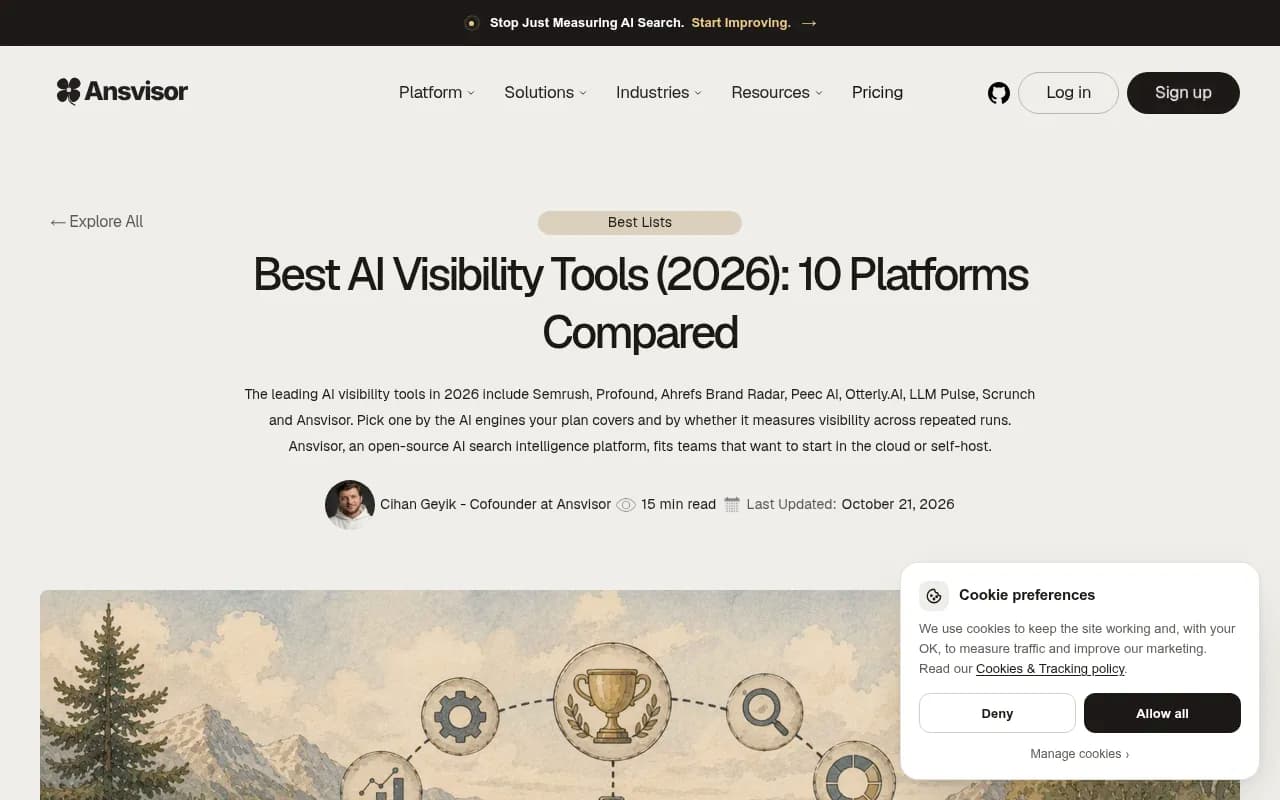
Note that the screenshot above is from a vendor-authored comparison (Ansvisor compares itself to competitors), so read its rankings with that in mind.
The open-source options
Elmo
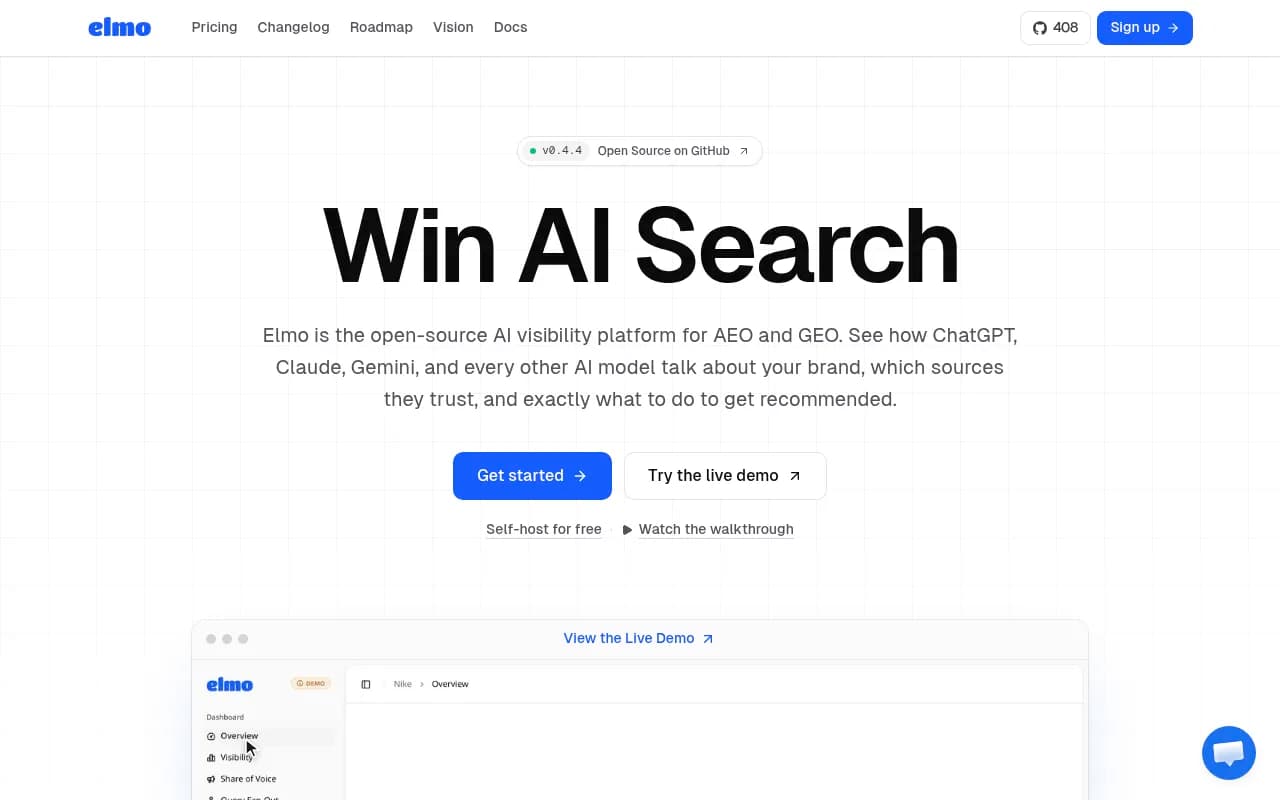
Elmo is an MIT-licensed, self-hosted AEO and AI visibility tracker. You deploy it with Docker Compose and keep your data in your own PostgreSQL database. The scoring code is public, which is the main reason technical teams pick it: you can read exactly how a mention or citation is counted instead of trusting a black box.
The GitHub page lists coverage for ChatGPT, Google AI Mode, Google AI Overviews, Gemini, Perplexity, Copilot, Claude, Grok, Mistral and more. It uses bring-your-own-keys, so you pay model providers directly for API usage. Cloud plans start at $29/mo according to the GitHub page, though the marketing site's pricing list showed higher tiers (Basic at $99/mo, Pro at $299/mo, Business at $649/mo), so check the current plan list before budgeting. Elmo says it is used by 200+ brands.
Ansvisor
Ansvisor describes itself as an open-source AI search intelligence platform, MIT-licensed, available as a cloud service or self-hosted. Per its own blog, it tracks ChatGPT, AI Overviews, AI Mode, Gemini, Perplexity and Copilot, with Claude tracking on Enterprise plans. On top of mentions and citations it adds prompt volumes, query fan-out, AI traffic analytics and a site audit, and it pushes toward prioritized tasks.
I found no independent pricing information for Ansvisor, and everything above is the vendor's own claim. Treat it as a promising option you need to test yourself.
One honest caution
A build-in-public thread on Reddit about an open-source tracker raised a warning about self-hosting that I could not read in full, so I won't pretend to summarize it. The general point stands, though: self-hosted means you own uptime, upgrades, API key rotation and breakage when an engine changes its interface.
What building or self-hosting really costs
The software license is $0. Everything else is not.
API spend
With BYOK tools you pay per prompt run. A monitor of 100 prompts across five engines, run daily, is 500 calls a day, 15,000 a month, before you add repeated runs to smooth out randomness. The cost depends on the model and whether the engine needs search tooling enabled. I did not find a reliable per-prompt figure in my research, so run a one-week pilot and extrapolate rather than trusting anyone's estimate, including mine.
API results are not the same as what users see
This is the pitfall that bites DIY setups most. Responses from a model API can differ from what a person sees in the consumer interface, in both the answer text and the citations. Tools that capture the real front end exist partly because of this gap. If you self-host and rely on API calls, treat your numbers as a useful trend line, not as ground truth about what customers see.
Noise and history
Promptwatch Data's average sources per response report shows why a tracker has to keep history. ChatGPT cites about 5 sources per web-search answer, Google AI Overviews about 10, and Perplexity almost exactly 10 every day. Copilot's average swung from under 2 to nearly 17 sources within a few weeks before settling at the low end. If your tool does not log citations per response over time, you cannot tell an engine change from a change in your own content. Promptwatch's advice from that report: measure AI Overviews and ChatGPT separately, judge Copilot on monthly trends rather than weekly snapshots, and use Perplexity as a stable test bench.
Your time
Budget a day or two to deploy, plus a few hours a month to maintain it. At startup salaries that is easily a few hundred dollars of monthly opportunity cost, which already rivals a paid entry plan. Self-hosting wins when someone on the team enjoys it or needs the data in their own warehouse.
The paid options for startups
Prices below come from the vendors' public pages as relayed in comparison articles, and several were last verified months ago. Confirm before buying.
| Tool | Entry price (as reported) | Notes | Best for |
|---|---|---|---|
| Otterly.AI | $29/mo (15 prompts) | Cheapest published multi-engine plan, some models cost extra | Smallest budgets |
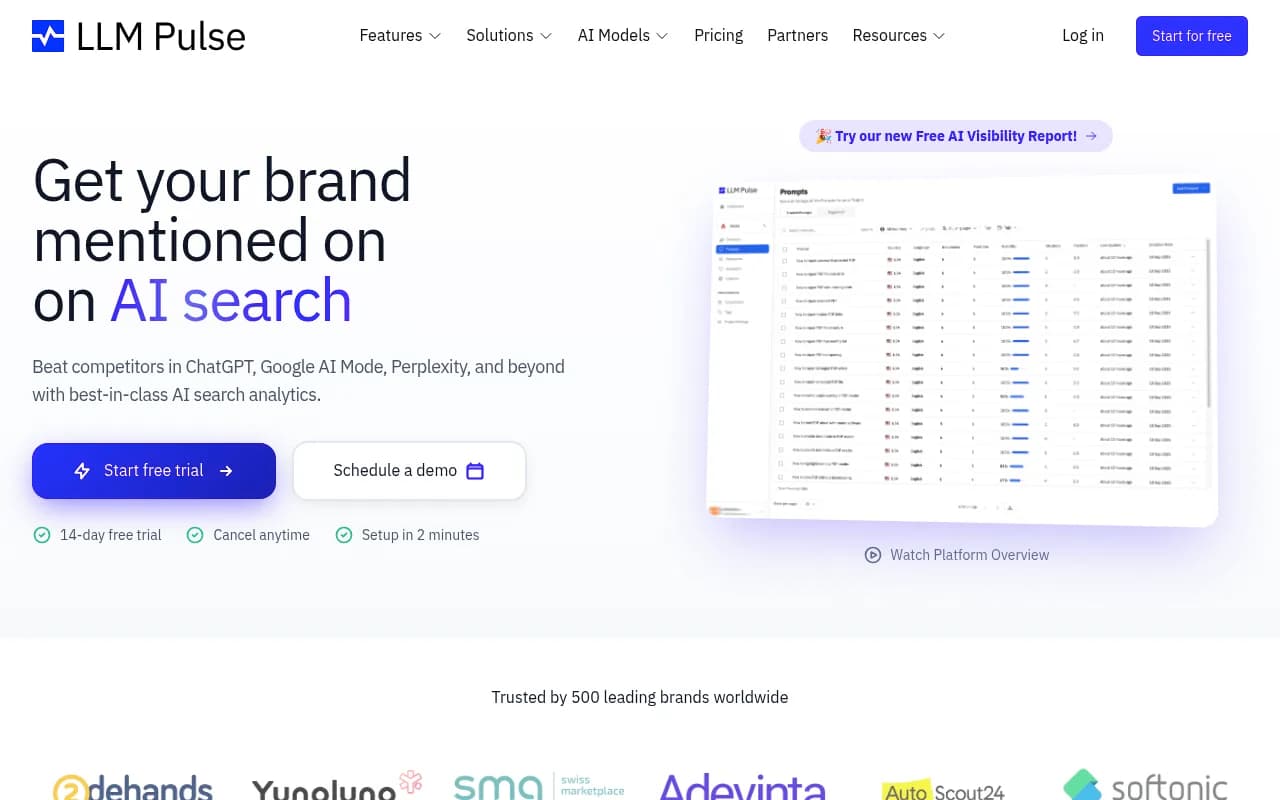
| LLM Pulse | EUR 49/mo | 10+ models, 14-day trial, weekly-cadence feel | Cost-focused startups |
| Peec AI | About EUR 85-95/mo | Unlimited seats, many languages | Agencies and marketing teams |
| Ahrefs Brand Radar | From $50/mo (checks-based) | Prompts drawn from real search data | Teams already on Ahrefs |
| Semrush AI Visibility Toolkit | From $99/mo per domain | Sits next to SEO data | Teams already on Semrush |
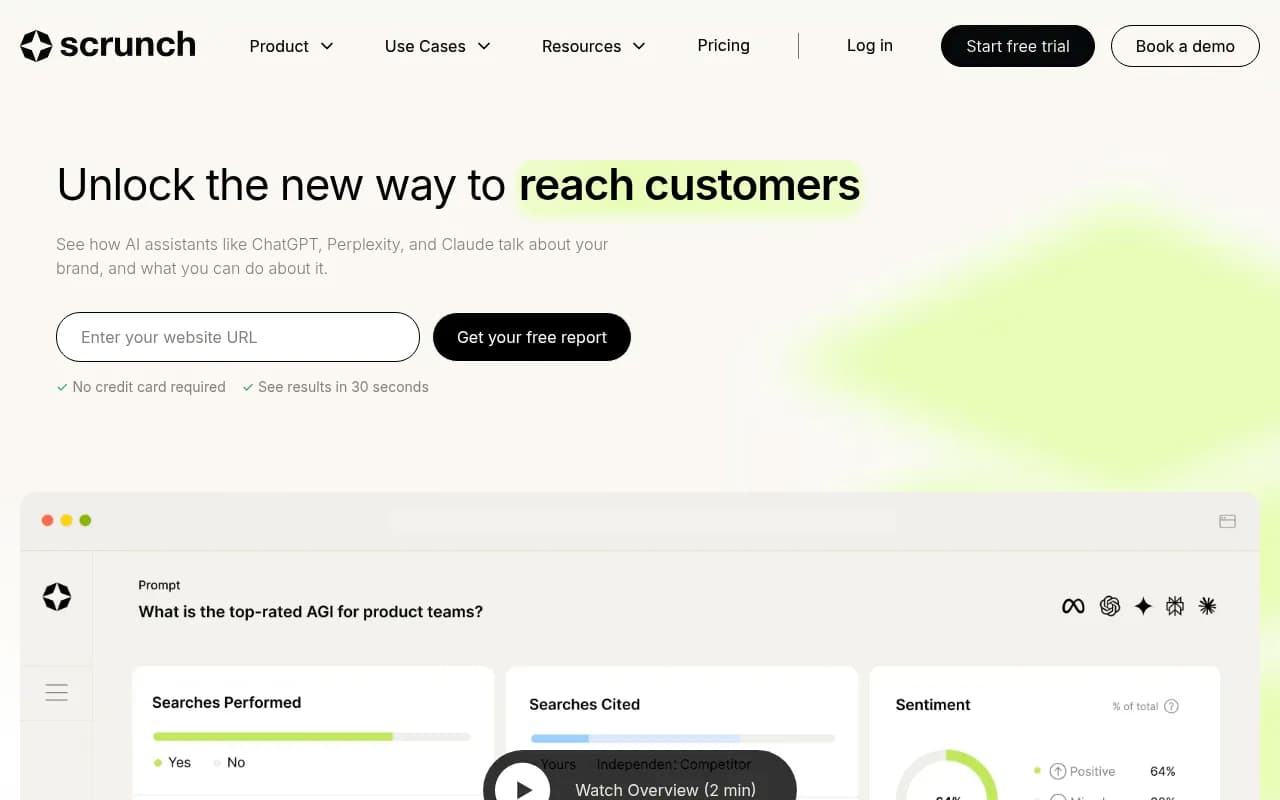
| Scrunch | $250/mo annual | 7-day trial | Larger content teams |
| AthenaHQ | Free tier, $295/mo Starter | Credit-based | Enterprise-style reporting |
| Promptwatch | Free Explore tier, Essential $95/mo | Tracking plus content, crawler logs, traffic | Teams that want to act on gaps |




A couple of these deserve a closer look.
Ahrefs Brand Radar is interesting because of where its data comes from. Per the Tim Soulo write-up, its 243M+ prompts come from real People Also Ask questions with search volume behind them, not made-up prompts. Most trackers, open-source ones included, run prompts you invent. That is fine for brand monitoring but weaker for finding demand.
Omnia and Rankshift are also worth a glance if you want a cheap, startup-oriented tool with a content action layer. Omnia starts around EUR 79/mo per its own blog.
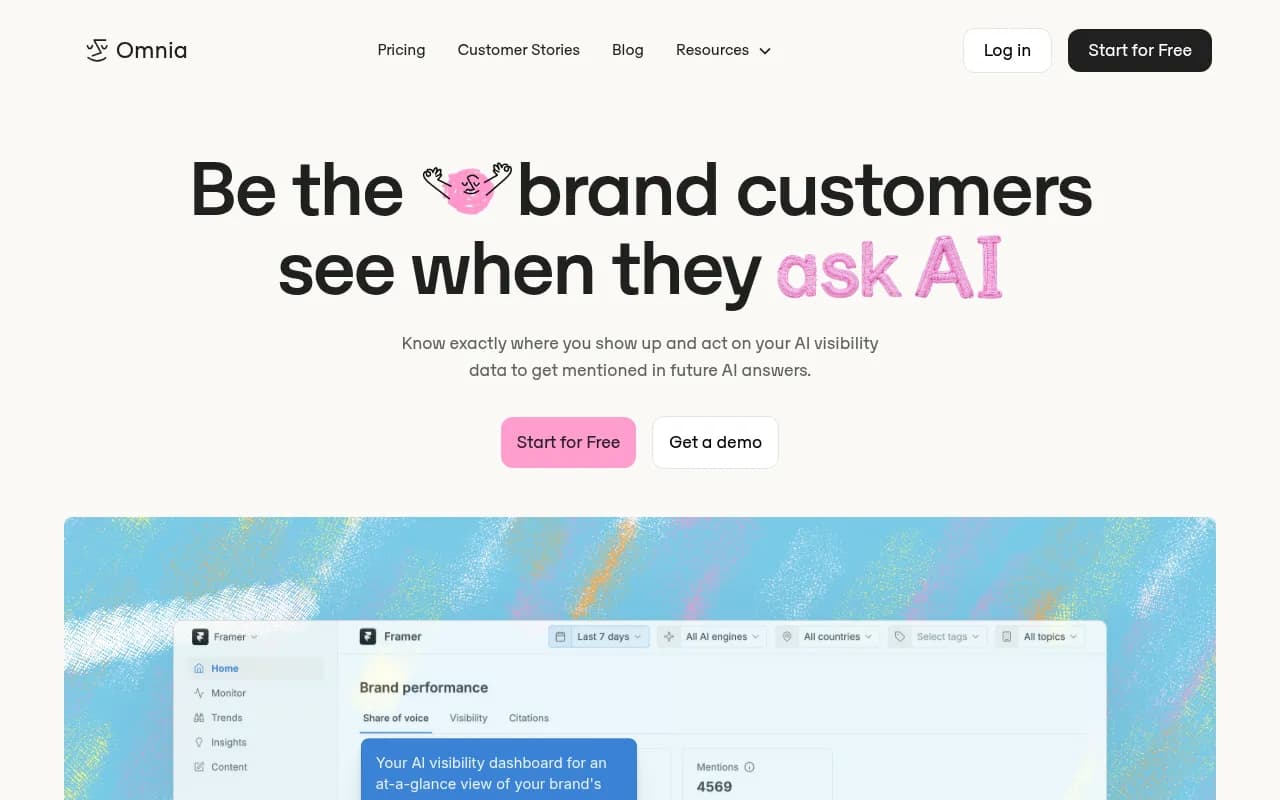
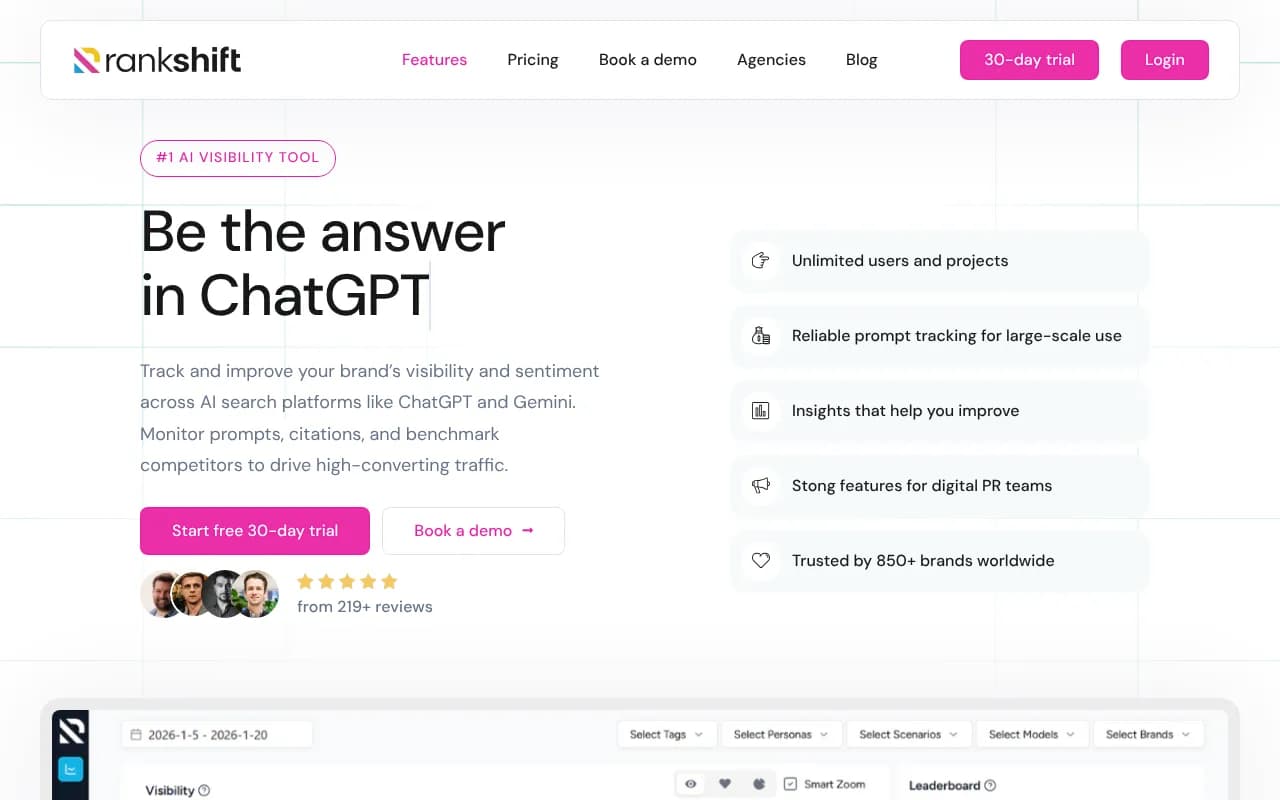

Again, that is a vendor comparing itself with competitors, so use it for the shortlist, not the verdict.
Where trackers stop and optimization begins
This is the gap that matters most for a startup with no dedicated SEO hire. A tracker tells you that you are absent from six prompts. It does not tell you why, and it does not write the page that fixes it.
What tends to separate platforms from trackers:
- AI crawler logs, to see whether GPTBot, ClaudeBot or PerplexityBot are reading your pages and hitting errors
- AI-referred traffic and conversion tracking, so you know whether visibility turns into revenue
- Content gap analysis tied to the prompts AI answers
- Content generation and CMS publishing, then tracking whether the new page gets cited
Promptwatch is the one I would point startups at when the goal is closing gaps rather than watching them. It tracks real UIs for ChatGPT, AI Overviews, AI Mode, Gemini, Perplexity, Copilot and others, adds IP-verified crawler logs and visitor analytics, and its Action Board and Content Agent turn gaps into drafts you can publish to WordPress, Webflow or Framer. The Essential plan at $95/mo includes 50 prompts and all models, and the Content Agent arrives on Business ($579/mo). Confirm details on promptwatch.com/pricing.

You can also look at the GEO software directory at bestgeosoftware.com or the AI rank tracker listings at ai-rank-tools.com for a wider shortlist.
Build vs buy: a decision framework
| Your situation | Lean toward | Why |
|---|---|---|
| Engineer on the team, data privacy matters, want to audit scoring | Self-host Elmo or Ansvisor | Public code, your own database, no per-seat pricing |
| Need a baseline this week, no dev time | Otterly.AI or LLM Pulse | Cheap, nothing to deploy |
| Already pay for Ahrefs or Semrush | Their AI add-ons | One less vendor, shared data |
| Agency with several clients | Peec AI or Promptwatch agency plans | Seats, white-label reporting |
| No writers, nobody to act on reports | A platform with content tooling | Reports do not move numbers on their own |
| Enterprise buyer, procurement involved | Profound or Promptwatch Enterprise | SSO, security reviews, breadth |
A hybrid that works
Plenty of technical teams will do both. Self-host Elmo for raw, auditable data on a few hundred brand and competitor prompts, and pay for a platform where it earns its keep, such as crawler logs and content workflows. The two do not conflict because the open-source side owns the data and the paid side owns the execution.
A practical way to decide in one week
- Write down 25 to 50 prompts your buyers actually ask. Include a few competitor comparisons.
- Run a free baseline first. Free checkers from several vendors, including Promptwatch's free AI Visibility Report, show how ChatGPT, Gemini and Perplexity describe you today.
- Deploy Elmo locally with Docker Compose, or start an Ansvisor cloud account, and run those prompts for a few days. Record API spend and how many hours you spent.
- Start one paid trial in parallel. Most offer 7 to 14 days.
- Compare: did the paid tool show you something the open-source one did not, such as crawler errors, traffic or a content gap? Did the open-source one cost less in real terms once your hours are counted?
- Pick based on who will act on the data. A cheap tool nobody reads is the most expensive option.
Mistakes I see teams make
The first is comparing prompt counts as if they were equivalent across products. A prompt tracked daily on four engines, one tracked weekly on one, and a credit-based check are not the same unit. Compare the exact workload.
The second is trusting one snapshot. Answer engines are probabilistic, and no tool can guarantee your brand gets recommended. Look at trends over weeks.
The third is assuming open source means free. It means you pay in different currencies.
The fourth is buying on the strength of a vendor's own comparison article. Most of the roundups in this space are written by a company that sells one of the tools listed. That includes the ones I drew from here, and it includes mine if you count the vendors I mention. Check pricing pages directly.
Bottom line
If you have an engineer who wants to own the pipeline, self-host Elmo or Ansvisor and enjoy the transparency. If you have no spare hours, a $29 to $99 paid tracker gets you a baseline faster than any Docker setup will. And if the real bottleneck is that nobody fixes what the report finds, spend the money on a platform that ships content and shows crawler and traffic data, because the tracker loop is the easy part.