Key takeaways
- Brand24, Mention, Meltwater, and Talkwalker are all strong social listening tools, but none were built with AI search visibility as a core use case.
- In 2026, AI engines like ChatGPT, Perplexity, and Gemini are increasingly where buying decisions get made — and traditional social listening tools largely miss this channel.
- Brand24 has made the most visible moves toward AI mention tracking, including a "Presence Score" and some AI-generated insights, but it still doesn't show you why you're being cited or not.
- For brands that want to track and improve their visibility inside AI search engines specifically, dedicated GEO platforms like Promptwatch cover what social listening tools leave out.
- The right answer for most teams in 2026 is probably both: a social listening tool for the web/social layer, and a dedicated AI visibility platform for the LLM layer.
Why this comparison matters in 2026
Social listening used to mean tracking Twitter, Reddit, and news sites. You'd set up keyword alerts, watch sentiment graphs, and respond to mentions before they blew up. That workflow still matters. But something significant has shifted.
People are now asking ChatGPT which project management tool to use. They're asking Perplexity which hotel to book. They're asking Gemini which software their industry recommends. And the answers those AI engines give — which brands they name, which they skip, which they describe positively or negatively — are shaping purchasing decisions at scale.
Traditional social listening tools weren't built for this. They crawl social platforms, news sites, forums, and blogs. They don't query ChatGPT and ask "what does this AI say about my brand?" That's a fundamentally different data source, and it requires a different kind of tool.
So the question for 2026 isn't just "which social listening tool is best?" It's "which of these tools actually covers the AI search layer, and how well?"
Let's go through each one honestly.
Brand24: the most AI-aware of the four
Brand24 has been the most aggressive of the traditional social listening tools in adapting to the AI era. It monitors mentions across 25 million+ sources — social media, news, blogs, podcasts, forums — and has added a layer of AI-powered analysis on top.
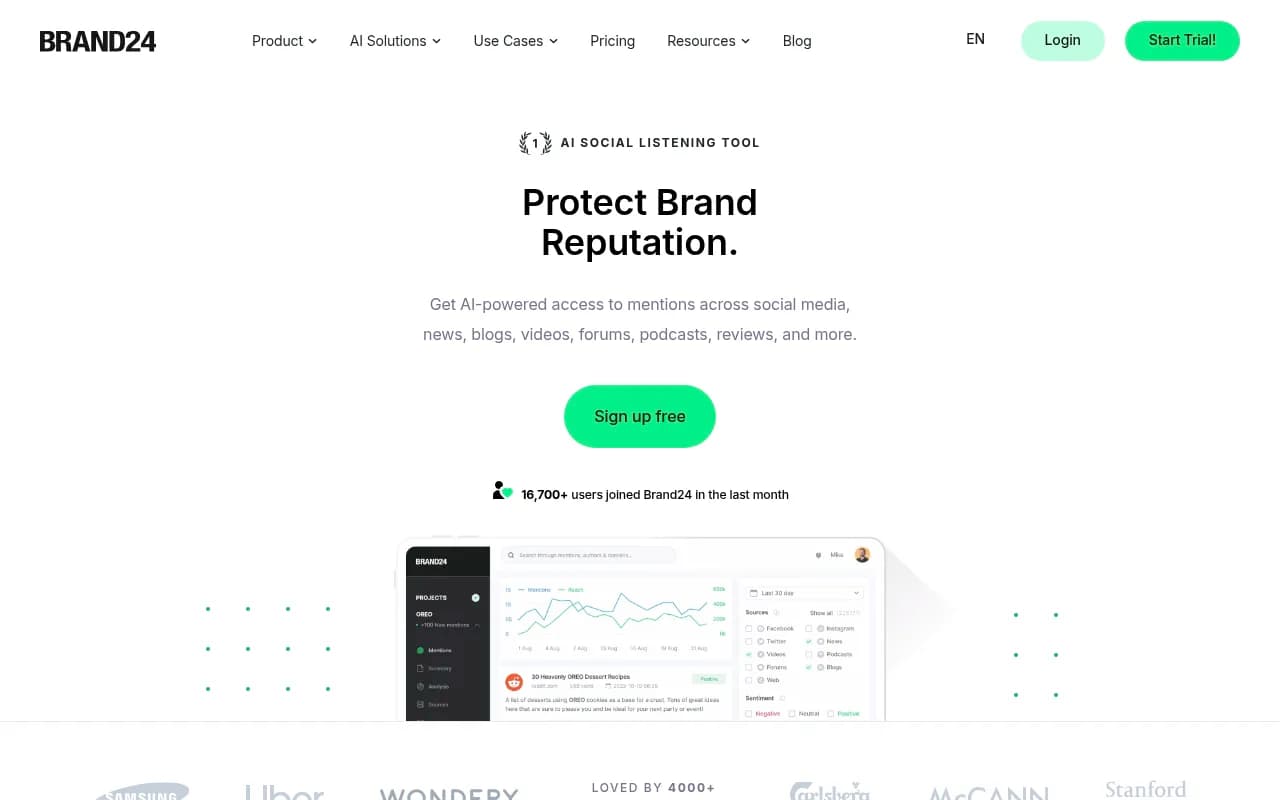
The standout feature for 2026 is the "Presence Score," which benchmarks your brand's online visibility against competitors and gives you a single number to track over time. That's useful. Brand24 also uses AI to summarize mention trends, detect anomalies, and surface insights you'd otherwise have to dig for manually.
On AI search mentions specifically: Brand24 has started tracking mentions within AI search engines, including Perplexity and OpenAI Search. This is genuinely new territory for a social listening tool, and it puts Brand24 ahead of Mention and arguably on par with Meltwater in this specific area.
What Brand24 doesn't do: it won't tell you why ChatGPT recommends a competitor instead of you, which prompts are driving AI citations, or how to fix your content to change that. It's monitoring, not optimization.
Pricing starts around $99/month for small teams, scaling up from there. It's the most accessible of the four tools for smaller brands.
Mention: solid fundamentals, limited AI search coverage
Mention is a clean, well-designed media monitoring tool that tracks brand mentions across social media, news, and the web in real time. It's particularly popular with marketing teams that want something simpler than Meltwater without the price tag.
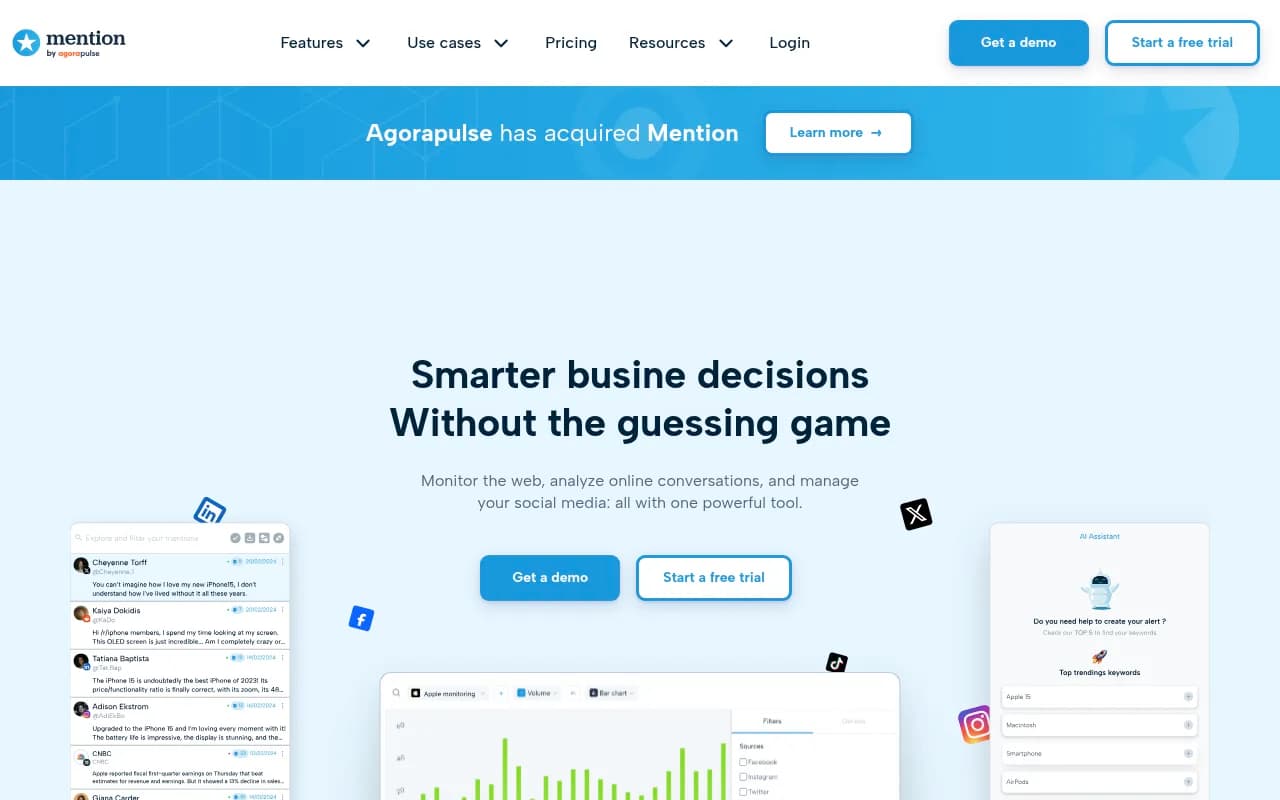
For traditional social listening, Mention does the job well. Boolean search, real-time alerts, sentiment analysis, competitor tracking — all solid. The interface is genuinely easier to use than most enterprise alternatives.
On AI search mentions: Mention has started incorporating some AI monitoring capabilities, but it's not a core focus. You're not going to get granular data on how Gemini or Claude describes your brand, which prompts surface your competitors, or how your AI visibility compares across different LLMs.
For a brand that primarily cares about social media and news coverage, Mention is a reasonable choice. For a brand that's worried about AI search visibility specifically, it's not the right tool.
Meltwater: enterprise power, but AI search is still an add-on
Meltwater is one of the most comprehensive media intelligence platforms available. It covers social listening, media monitoring, influencer tracking, PR analytics, and more — all in a single enterprise platform. Talkwalker was actually acquired by Meltwater in 2023, so in practice you're often looking at the same underlying infrastructure.
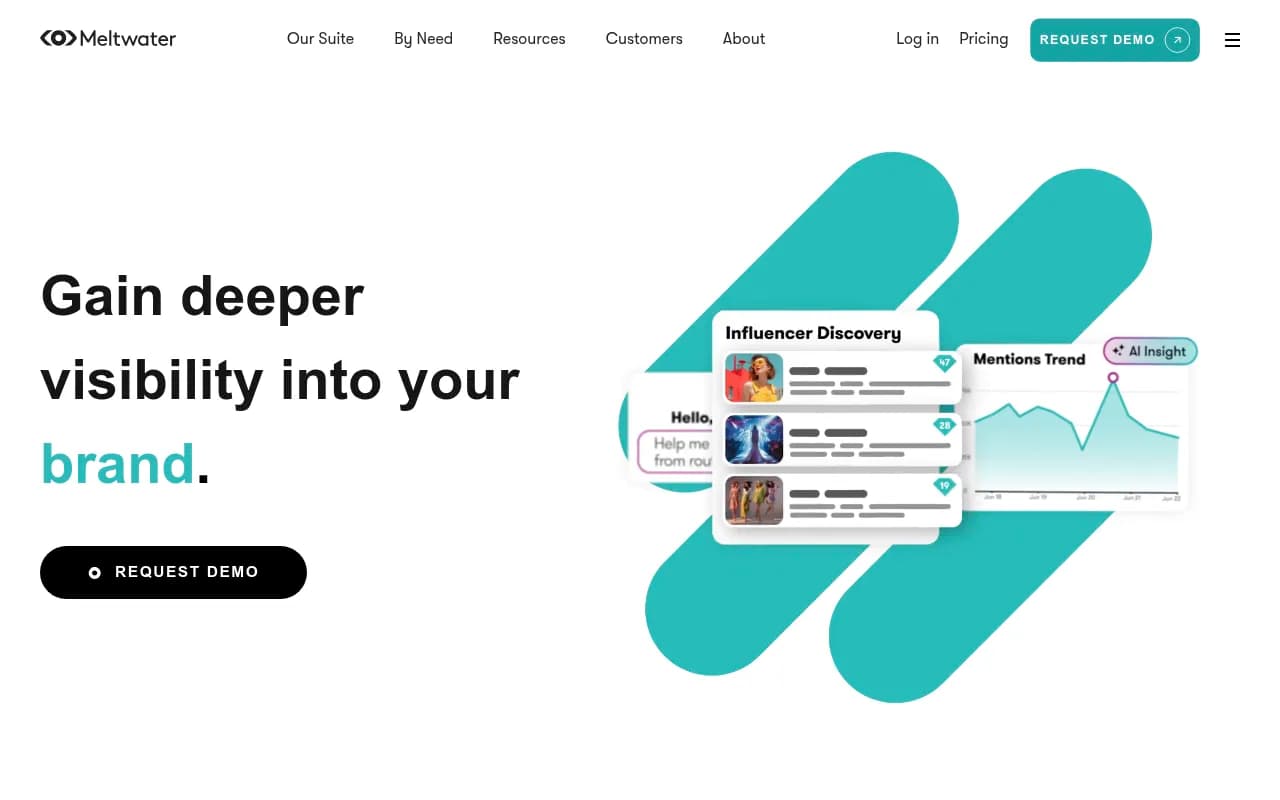
Meltwater has been incorporating AI features aggressively — AI-powered Boolean search assistance, prompt-driven query building, and AI-generated summaries of coverage trends. These are genuinely useful for large teams managing complex monitoring setups.
On AI search mentions: Meltwater monitors a very wide range of sources, and it has started extending coverage to AI-generated content and AI search results. But the depth here is still limited compared to dedicated GEO platforms. You can see that AI search engines are discussing certain topics, but you won't get the kind of prompt-level analysis, citation tracking, or content gap identification that purpose-built tools offer.
The other issue is price. Meltwater is enterprise-priced, typically starting at several thousand dollars per month. For a mid-sized brand trying to understand their AI search visibility, that's a lot to pay for a feature that's still being built out.
Talkwalker: consumer intelligence with AI ambitions
Talkwalker (now part of Meltwater) built its reputation on deep consumer intelligence — trend detection, visual listening, audience analysis. It's particularly strong for brands that care about cultural conversations and emerging topics, not just direct brand mentions.
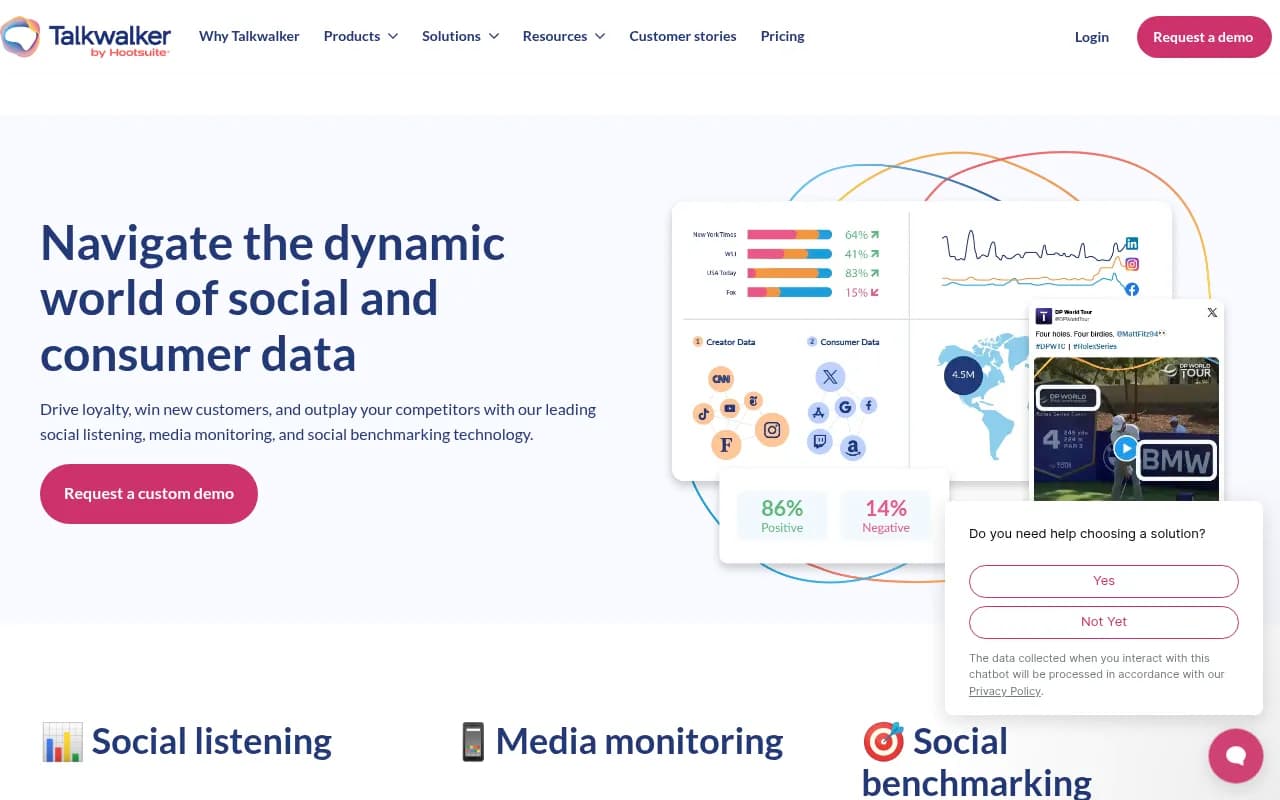
The AI features in Talkwalker are genuinely interesting. It uses AI to detect trending topics before they peak, identify influential voices, and surface insights from unstructured data at scale. For large brands doing strategic consumer research, this is valuable.
On AI search mentions: similar to Meltwater, Talkwalker has AI-powered features but isn't specifically designed to track how LLMs like ChatGPT or Claude discuss your brand. The tool is oriented toward social and media signals, not toward querying AI engines and analyzing their responses.
Head-to-head comparison
| Feature | Brand24 | Mention | Meltwater | Talkwalker |
|---|---|---|---|---|
| Social media monitoring | Yes | Yes | Yes | Yes |
| News & blog monitoring | Yes | Yes | Yes | Yes |
| AI search mention tracking | Partial | Limited | Partial | Partial |
| Sentiment analysis | Yes | Yes | Yes | Yes |
| Competitor benchmarking | Yes | Yes | Yes | Yes |
| Influencer identification | Yes | Basic | Yes | Yes |
| Real-time alerts | Yes | Yes | Yes | Yes |
| AI-powered insights | Yes | Basic | Yes | Yes |
| Prompt-level AI visibility | No | No | No | No |
| Content gap analysis for AI | No | No | No | No |
| LLM citation tracking | No | No | No | No |
| AI crawler logs | No | No | No | No |
| Starting price | ~$99/mo | ~$41/mo | Enterprise | Enterprise |
| Best for | SMBs, agencies | Small teams | Enterprise | Enterprise/research |
The pattern is clear. All four tools are strong at what they were built for. None of them were built to answer the question: "What does ChatGPT say about my brand, and how do I improve it?"
The gap these tools leave open
Here's the practical problem. When someone asks ChatGPT "what's the best CRM for a 50-person sales team?" and your brand doesn't appear in the answer, none of these four tools will tell you:
- Which specific prompts your competitors are being cited for
- What content on your site (or missing from your site) is causing the gap
- Which AI engines are citing you vs. ignoring you
- How your AI visibility has changed week over week
- What to write to get cited more often
That's not a criticism of Brand24 or Meltwater — they're doing what they were designed to do. It's just that AI search visibility is a new problem that requires a different kind of tool.
Promptwatch is built specifically around this. It monitors 10 AI models (ChatGPT, Perplexity, Claude, Gemini, Grok, DeepSeek, Copilot, Meta AI, Mistral, and Google AI Overviews), tracks which prompts surface your brand vs. competitors, and then — this is the part that matters — helps you do something about it. The Answer Gap Analysis shows you exactly which prompts competitors rank for that you don't. The built-in AI writing agent generates content designed to get cited. And page-level tracking shows whether the new content is actually moving the needle.

Most of the newer AI visibility tools in this space are monitoring-only. They show you the problem but leave you to figure out the fix. Promptwatch closes that loop.
Other dedicated AI visibility tools worth knowing
If you're specifically focused on AI search visibility rather than traditional social listening, there are several purpose-built options beyond Promptwatch:
For tracking AI citations and brand mentions in LLMs:



For tracking AI search visibility with SEO context:
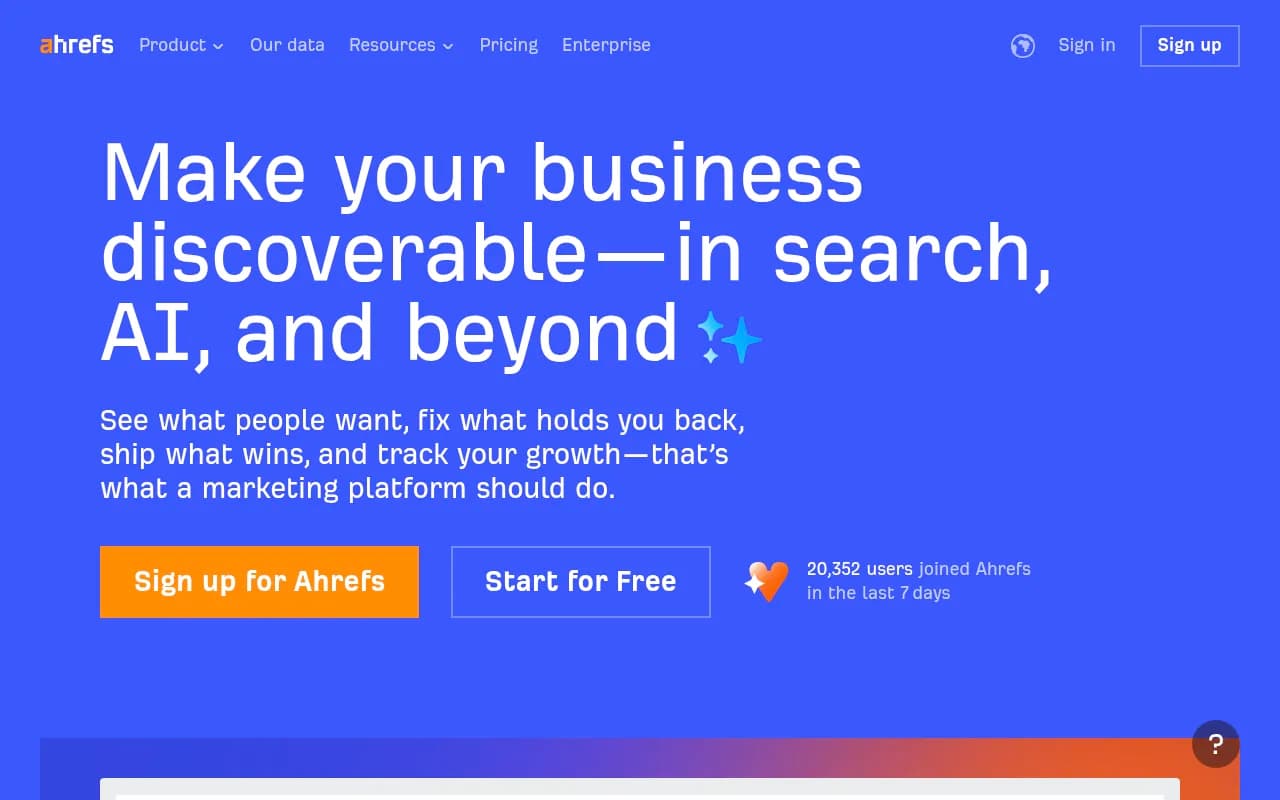
For smaller teams or tighter budgets:

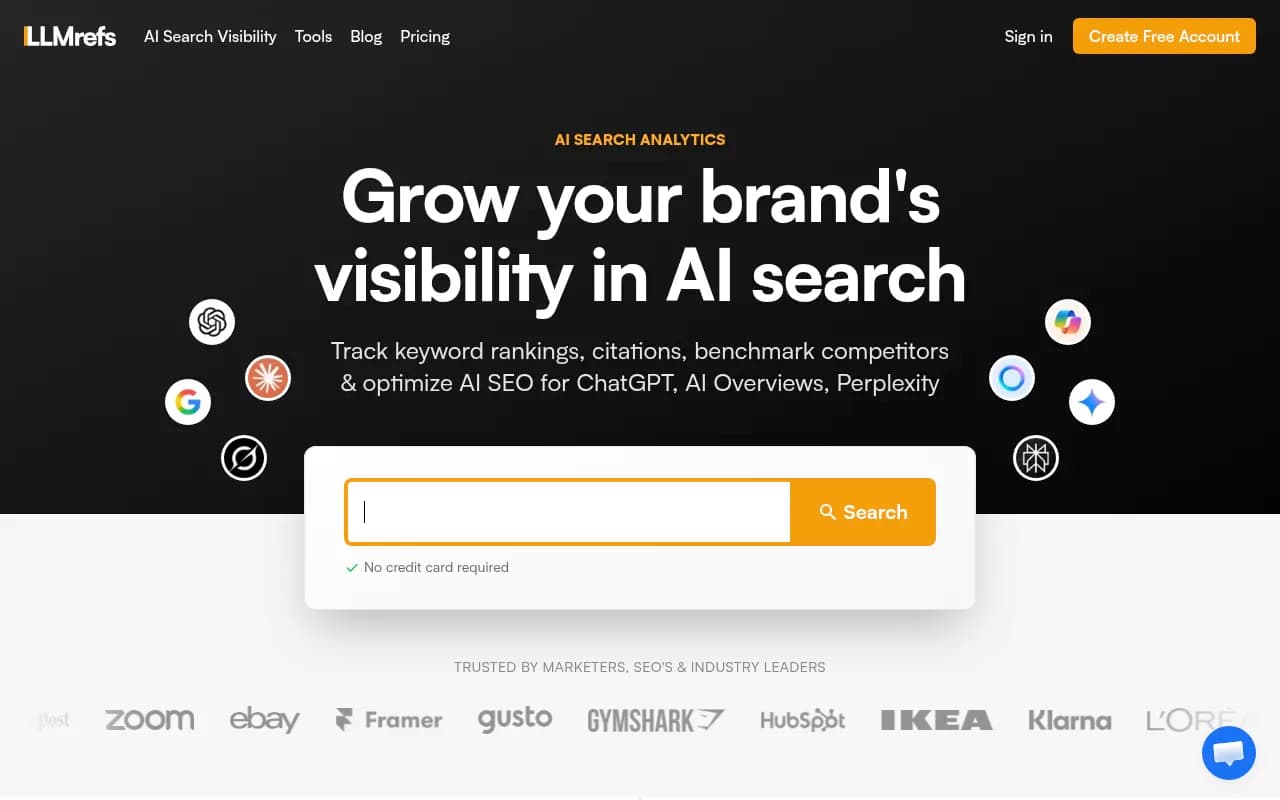
These tools approach the problem differently. Some focus on monitoring across many LLMs. Some integrate with existing SEO workflows. Some are built for agencies managing multiple clients. The right choice depends on your team size, budget, and whether you need optimization features or just tracking.
How to think about your tool stack in 2026
The honest answer is that most brands in 2026 probably need two layers of monitoring:
Layer 1 — Social and media listening: Brand24, Mention, Meltwater, or Talkwalker. These cover the traditional web — social platforms, news, forums, blogs, podcasts. This layer is still important. A Reddit thread going viral about your product matters. A negative news story matters. These tools catch that.
Layer 2 — AI search visibility: A dedicated GEO platform. This covers how AI engines describe your brand, which prompts surface you vs. competitors, and what content changes would improve your visibility. This layer is newer but increasingly important as more buying decisions start with an AI query rather than a Google search.
If your budget forces a choice, think about where your customers actually start their research. B2B software buyers are increasingly using ChatGPT and Perplexity to shortlist vendors. Consumer product buyers are asking Gemini for recommendations. If that's your audience, the AI search layer may be more valuable than the social layer right now.
If you have room for both, run them in parallel. The social listening tool catches reputation signals. The AI visibility tool catches the quieter, more consequential signal of whether AI engines are recommending you at all.
The bottom line
Brand24 is the most AI-aware of the four traditional tools and the most accessible for smaller teams. Mention is clean and simple but limited on AI search coverage. Meltwater and Talkwalker are powerful enterprise platforms with AI features, but AI search visibility is still an add-on rather than a core capability.
None of the four were designed to answer the question that matters most in 2026: "What do AI engines say about my brand, and how do I improve it?"
For that, you need a tool built specifically for AI search visibility. The social listening layer and the AI visibility layer are complementary — and in 2026, running only one of them means you're missing half the picture.