Key takeaways
- Most AI visibility tools only track what AI models say about your brand -- they have no visibility into whether AI crawlers can actually access your site
- Crawler log monitoring is rare: only a handful of platforms in 2026 surface real-time AI bot activity (which pages were crawled, errors encountered, crawl frequency)
- Searchable is a capable monitoring platform, but it lacks the crawler log depth and content optimization loop that more complete platforms offer
- Promptwatch is one of the few platforms that combines crawler log monitoring with gap analysis and AI content generation -- closing the loop from "what's broken" to "here's the fix"
- If you're evaluating Searchable alternatives, the key question to ask is: does this tool show me what AI bots are doing, or just what AI models are saying?
There's a gap in how most teams think about AI search visibility. They set up a monitoring tool, watch their brand mention scores, and assume that if the numbers look okay, they're fine. But there's a layer underneath all of that which most tools completely ignore: what are AI crawlers actually doing when they hit your site?
GPTBot, PerplexityBot, ClaudeBot, and Google's AI crawlers are visiting your pages right now. Some are getting blocked by your robots.txt. Some are hitting 404s. Some are crawling your pricing page 40 times a week and your best-performing blog post zero times. You won't see any of this in a standard AI visibility dashboard.
This guide is specifically for teams who want to go beyond brand mention tracking. If you're looking at Searchable alternatives and crawler log monitoring is a requirement, here's what the market actually looks like in 2026.
What "crawler log monitoring" actually means in the AI context
Traditional crawler log analysis has been around for years -- tools like Screaming Frog and JetOctopus parse your server logs to show you how Googlebot moves through your site. The same concept now applies to AI crawlers, but with a twist: the stakes are different.
When Googlebot misses a page, you might lose a ranking. When GPTBot misses a page, you lose the chance to be cited in ChatGPT answers -- potentially for months, because AI models don't re-crawl as frequently as search engines do.
Crawler log monitoring for AI means:
- Seeing which AI bots visited your site and when
- Knowing which specific pages they crawled (and which they skipped)
- Spotting crawl errors, blocked paths, or robots.txt conflicts
- Understanding crawl frequency -- how often each bot returns
- Tracking the timeline from "page crawled" to "page cited in AI responses"
That last point is the most valuable. If you can see that ClaudeBot crawled a page three weeks ago but it still hasn't appeared in any Claude citations, that's a signal worth investigating. Maybe the content doesn't answer the right questions. Maybe it's too thin. Maybe there's a competing source that's stronger.
Very few tools surface this data. Most stop at "your brand was mentioned X times this week."
Why Searchable falls short for crawler monitoring
Searchable is a solid AI visibility platform with decent monitoring coverage and some content optimization features. It tracks brand mentions across major AI engines, gives you share-of-voice data, and surfaces some competitive benchmarking.
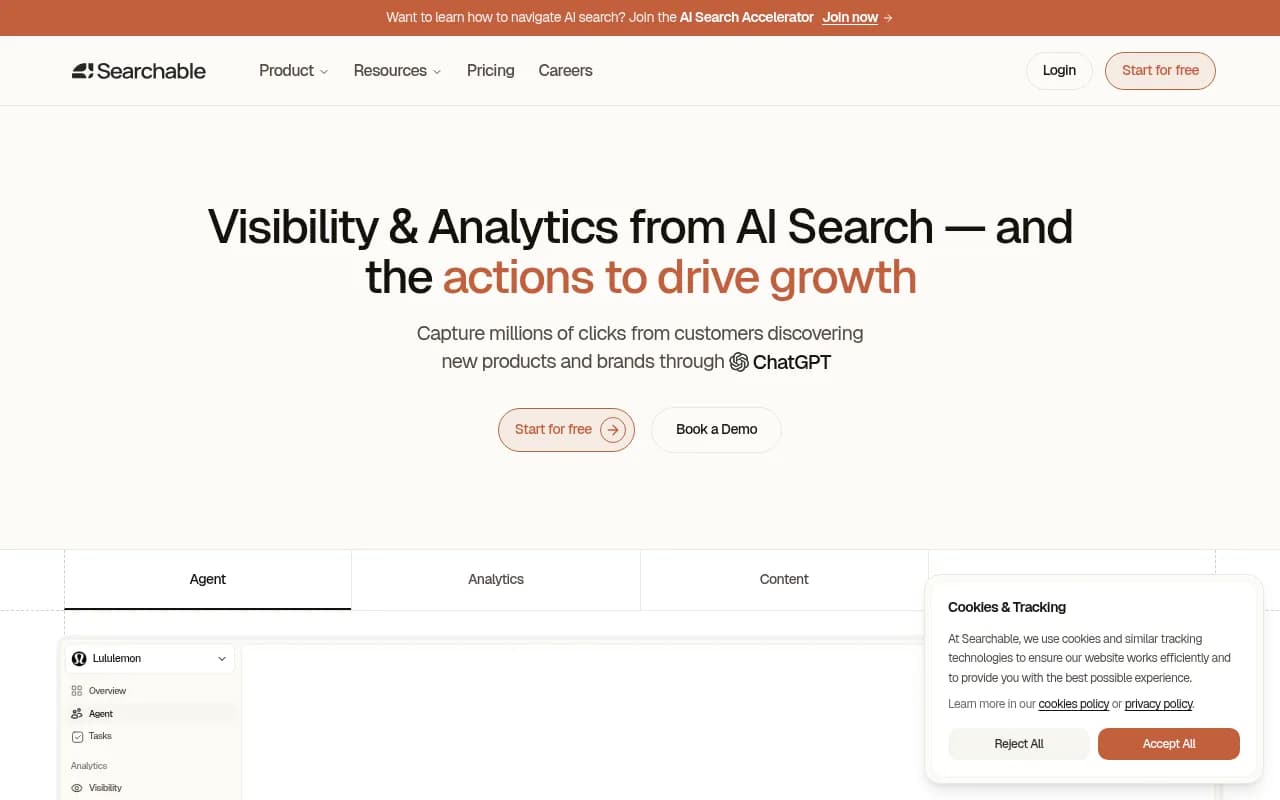
But crawler log monitoring isn't a core part of what Searchable does. You can see what AI models are saying about you, but you can't see what AI bots are doing on your site. That's a meaningful gap if your goal is to actually fix your AI visibility rather than just measure it.
This is the core limitation of most monitoring-only platforms: they show you the output (AI responses) without showing you the input (crawler behavior). You end up optimizing blind.
The tools that actually show you what AI bots are doing
Promptwatch
Promptwatch is the most complete option here, and the one most worth understanding in detail. Its AI Crawler Logs feature gives you real-time visibility into which AI crawlers are hitting your site, which pages they're reading, what errors they're encountering, and how often they return.

What makes this genuinely useful rather than just a data dump is the connection to everything else in the platform. When you see that GPTBot crawled a page but it hasn't generated any citations, you can immediately run a content gap analysis to see what's missing. Then you can use the built-in Content Agents to generate or improve the content. Then you track whether the next crawl leads to a citation.
That loop -- crawl data, gap analysis, content generation, citation tracking -- is what separates Promptwatch from tools that just show you logs. The logs are the starting point, not the end product.
Promptwatch also tracks 10 AI models (ChatGPT, Perplexity, Claude, Gemini, Google AI Overviews, Google AI Mode, Grok, DeepSeek, Copilot, and Meta/Llama), which matters because different bots behave differently. GPTBot and PerplexityBot have noticeably different crawl patterns, and knowing which one is ignoring your content helps you prioritize fixes.
Pricing starts at $249/month for the Professional plan, which includes crawler logs, page-level tracking, and prompt monitoring.
Scrunch AI
Scrunch AI has built a reputation specifically around AI crawler intelligence. According to research from Omnia's blog, Scrunch provides a real-time bot crawling feed that shows exactly when GPTBot, PerplexityBot, or other AI crawlers access your pages.
The crawler feed is genuinely useful for teams who want raw visibility into bot behavior. Where Scrunch is weaker is on the action side -- it's strong at showing you what's happening but lighter on helping you fix it. There's no content generation layer, and the gap analysis capabilities are more limited than Promptwatch's.
If your primary need is crawler monitoring and you have a separate content team handling optimization, Scrunch is worth evaluating. If you want the full loop in one platform, it falls short.
Profound
Profound is an enterprise-grade platform with strong monitoring capabilities and what it calls "Agent Analytics" -- which covers some of the crawler intelligence territory.

The platform is genuinely powerful for large teams, with deep prompt volume data, citation analysis, and competitive benchmarking. The Agent Analytics feature gives you some visibility into how AI agents interact with your content. But Profound is contact-sales pricing, which puts it out of reach for most mid-market teams, and the crawler log data isn't as granular as what Promptwatch surfaces.
Botify
Botify is worth mentioning here because it comes from the traditional technical SEO world and has been expanding into AI search territory. It has real log file analysis capabilities built in, and it's starting to surface AI crawler data alongside traditional search bot data.
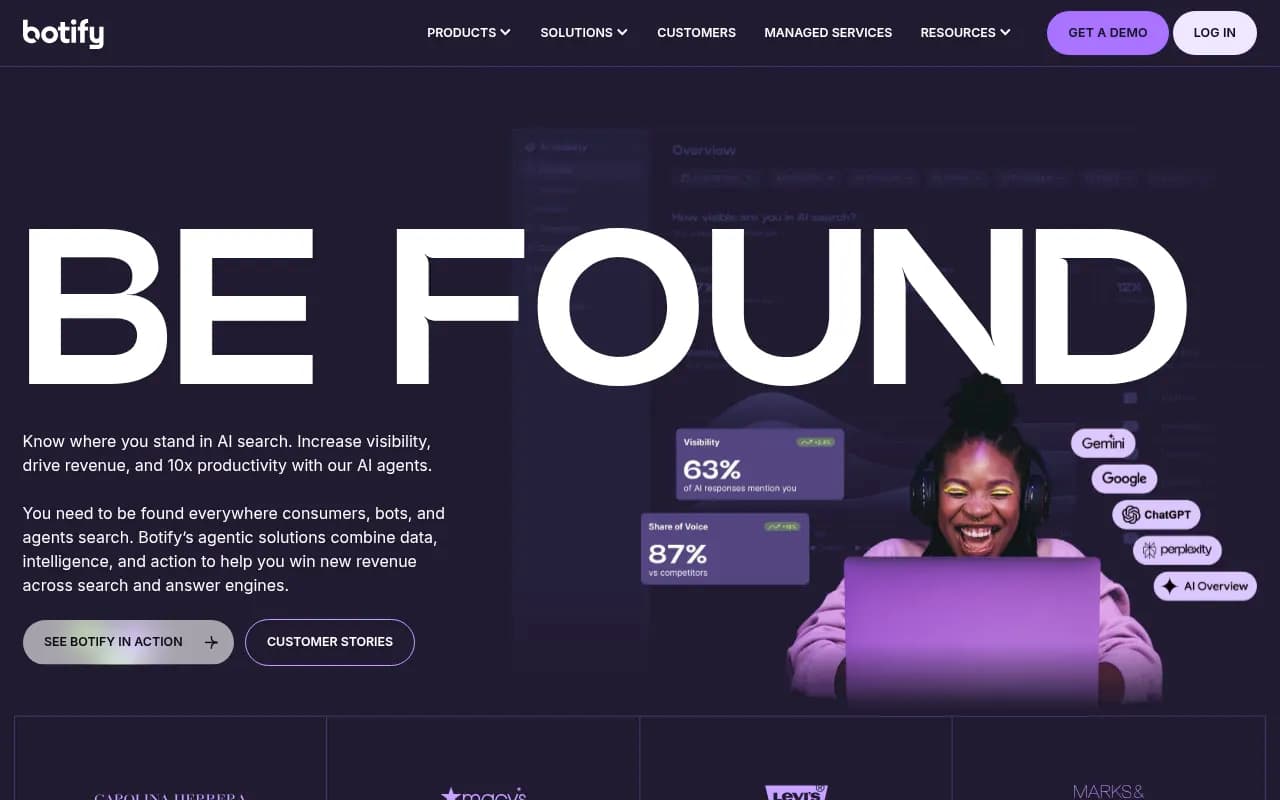
The limitation is that Botify is primarily a technical SEO platform that's adding AI features, not an AI visibility platform with technical SEO roots. If you're already a Botify customer and want to add AI crawler monitoring to your existing workflow, it's a reasonable path. If you're starting fresh with AI visibility as the primary goal, it's not the most direct route.
DarkVisitors
DarkVisitors takes a different angle -- it's focused on tracking AI agents and bots visiting your website, with a particular emphasis on helping you understand and control which bots you want to allow or block.
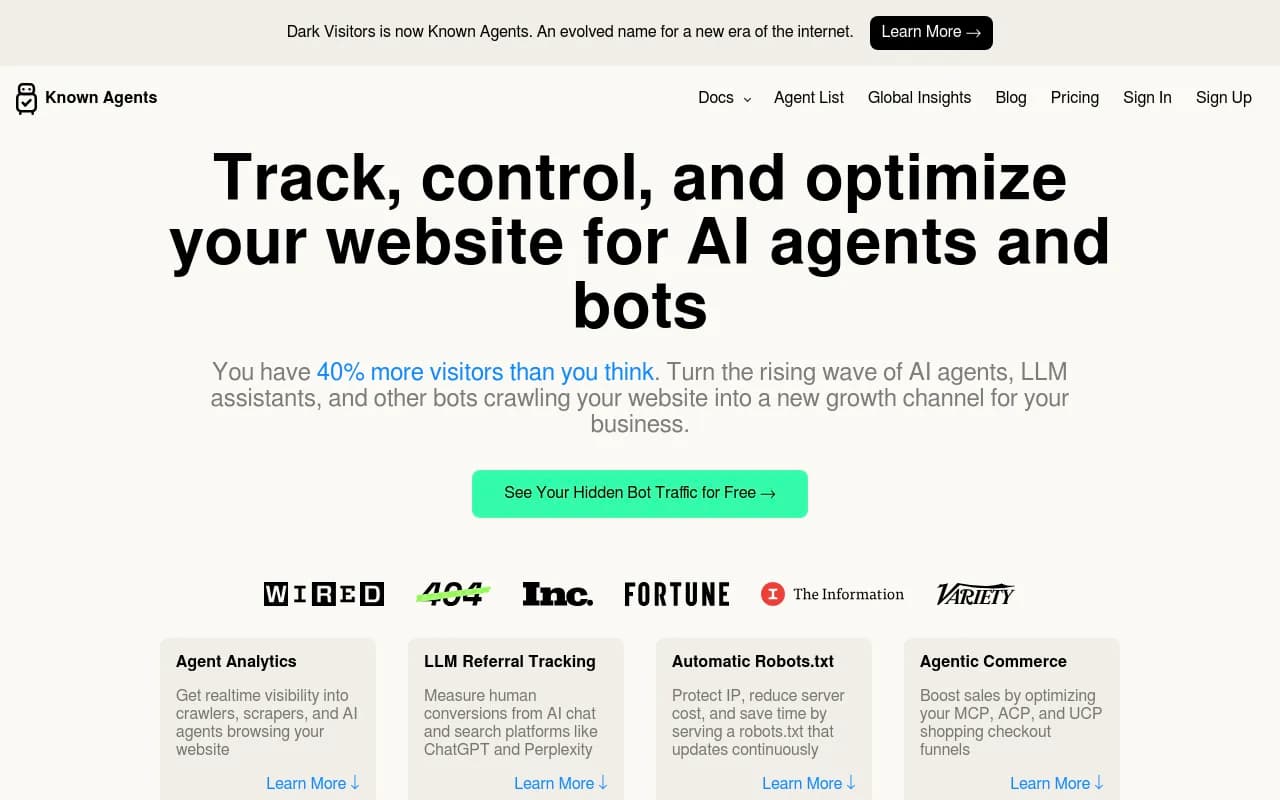
It's more of a defensive tool than an optimization tool. You can see which AI crawlers are hitting your site, get recommendations on robots.txt configurations, and understand the landscape of AI agents. What it doesn't do is connect that crawler data to your brand visibility scores or help you create content that improves your AI search presence.
For teams who are primarily worried about AI bots scraping their content without permission, DarkVisitors is useful. For teams trying to improve AI visibility, it's a supporting tool rather than a primary platform.
How the tools compare
Here's a direct comparison across the features that matter most for crawler log monitoring and AI visibility optimization:
| Tool | AI crawler logs | Real-time bot feed | Citation tracking | Content generation | Prompt volume data | Price |
|---|---|---|---|---|---|---|
| Promptwatch | Yes (detailed) | Yes | Yes (page-level) | Yes (AI Content Agents) | Yes | From $249/mo |
| Scrunch AI | Yes (real-time feed) | Yes | Yes | No | Limited | Contact sales |
| Profound | Partial (Agent Analytics) | No | Yes | No | Yes | Contact sales |
| Searchable | No | No | Yes | Limited | No | Custom |
| Botify | Yes (log analysis) | No | No | No | No | Enterprise |
| DarkVisitors | Yes (bot tracking) | Yes | No | No | No | Free + paid |
| AthenaHQ | No | No | Yes | No | No | From $295/mo |
| Otterly.AI | No | No | Yes | No | No | From $29/mo |
The table makes the gap obvious. Most tools in the AI visibility space -- including Searchable -- don't surface crawler log data at all. Of the ones that do, Promptwatch is the only one that connects crawler data to content optimization in a single workflow.
What to look for when evaluating alternatives
Bot-level granularity
Not all "crawler monitoring" is equal. Some tools tell you "AI bots visited your site this week." That's not useful. You want to know which bot, which pages, what time, what HTTP status codes, and how that compares to previous weeks. Ask vendors specifically what data fields they surface in their crawler logs.
The crawl-to-citation timeline
This is the metric most tools don't track but should. If you can see that a page was crawled on a specific date and then appeared in AI citations two weeks later, you start to understand how long the feedback loop is. That helps you set realistic expectations and prioritize which content improvements to make first.
Error detection
Crawler logs are most valuable when they surface problems: 404s, blocked paths, slow response times, robots.txt conflicts. A tool that just shows you successful crawls is missing half the picture. Look for platforms that flag errors and give you actionable recommendations.
Connection to content optimization
Raw crawler data is interesting. Crawler data connected to gap analysis and content generation is actually useful. The best tools in this space don't just show you what's happening -- they help you figure out what to do about it.
Multi-model coverage
GPTBot and PerplexityBot behave differently. Google's AI crawler has different patterns than ClaudeBot. A tool that lumps all AI crawlers together is losing nuance that matters. Look for platforms that break down crawler activity by specific bot.
The technical layer most teams skip
One thing worth saying directly: a lot of teams jump straight to monitoring their brand mentions without checking whether AI bots can even access their site properly. This is backwards.
If your robots.txt is blocking GPTBot, no amount of content optimization will help your ChatGPT visibility. If your llms.txt file is missing or malformed, you're leaving guidance on the table that AI models actively use. If your most important pages are loading slowly or returning errors when AI crawlers visit, you're invisible regardless of how good your content is.
The technical layer comes first. Crawler log monitoring is how you audit that layer. Then you move to content optimization. Then you track the results.
Most teams skip step one entirely because most tools don't surface it. That's the real gap Searchable alternatives need to fill.
Recommendations by use case
If you want the most complete platform with crawler logs, content generation, and citation tracking in one place, Promptwatch is the strongest option. The Professional plan at $249/month includes crawler logs alongside prompt monitoring, content agents, and page-level citation tracking.
If crawler monitoring is your only requirement and you have separate tools for content optimization, Scrunch AI is worth a look for its real-time bot feed specifically.
If you're an enterprise team with budget for contact-sales pricing and need deep prompt volume data alongside some agent analytics, Profound is a serious option.
If you're primarily trying to understand and control which AI bots access your site (rather than optimize for them), DarkVisitors fills that specific need well.
For most marketing and SEO teams who want to go from "what are AI bots doing on my site" to "how do I fix it" without switching between five different tools, the action loop that Promptwatch provides is the most direct path.
The market has matured enough in 2026 that "we track AI mentions" is table stakes. The real differentiator is whether a platform can tell you why you're invisible and help you do something about it.