Key takeaways
- Traditional reputation tools (review monitoring, social listening) are no longer enough -- AI engines like ChatGPT, Perplexity, and Gemini now shape brand perception for millions of users who never visit a review site.
- "LLM sentiment" is a real and measurable thing: AI models form consistent opinions about brands based on what they've been trained on and what they can retrieve, and those opinions directly influence purchase decisions.
- The tools that matter in 2026 split into two categories: legacy reputation platforms that have added AI monitoring as an afterthought, and purpose-built AI visibility platforms that were designed for this problem from the start.
- Monitoring alone isn't enough. The platforms that actually move the needle combine gap analysis, content creation, and citation tracking in one loop.
- For teams that want to go beyond dashboards and actually fix their AI visibility, Promptwatch is the most complete option currently available.
Why reputation management changed in 2026
For most of the last decade, managing your brand's reputation meant watching Google reviews, responding to Yelp complaints, and maybe running a social listening tool to catch Twitter fires early. That was the whole job.
Then something shifted. Users started asking ChatGPT "what's the best project management tool?" instead of Googling it. They asked Perplexity "is [brand] trustworthy?" instead of scrolling through review aggregators. And the AI engines answered -- confidently, without always citing sources, and at massive scale.
The problem is that AI models don't pull their opinions from a live database of reviews. They form them based on training data, retrieval-augmented content, and whatever pages their crawlers have indexed. If your brand has a lot of positive coverage in authoritative sources, you tend to get recommended. If you have thin content, outdated information, or mostly negative associations in the sources AI models trust, you get ignored or misrepresented.
This is what people mean by "LLM sentiment" -- the aggregate impression an AI model has formed about your brand, which may or may not match reality, and which influences every recommendation it makes.
The brands that figured this out early are already seeing the results. The ones still treating reputation management as a review-response workflow are going to find themselves invisible in the channel that's growing fastest.
The two types of tools you need to know about
Before diving into specific platforms, it helps to understand the landscape. There are roughly two categories of tools competing for this space right now.
Legacy reputation platforms with AI add-ons
These are the established players -- Birdeye, Brand24, Meltwater, Brandwatch, and similar tools that built their businesses around review management, social listening, and media monitoring. They're good at what they were built for. In 2025 and 2026, most of them added some form of AI mention tracking, usually the ability to run queries against ChatGPT or Perplexity and see whether your brand appears.
The limitation is that this AI monitoring is typically bolted on. You get a dashboard showing whether you were mentioned, but not much guidance on what to do about it. The core product is still oriented around reactive monitoring rather than proactive optimization.
Purpose-built AI visibility platforms
These tools were designed specifically to track and improve how brands appear in AI search engines. They tend to have deeper prompt tracking, more sophisticated citation analysis, and -- in the better ones -- actual content optimization capabilities that help you improve your visibility rather than just measure it.
The gap between these two categories is significant, and it matters a lot depending on what you're trying to accomplish.
Tools for traditional reputation management (still relevant)
If you're a local business, a consumer brand with high review volume, or a company where Google ratings directly drive foot traffic or conversions, you still need the traditional layer. Here's what's worth considering.
Birdeye
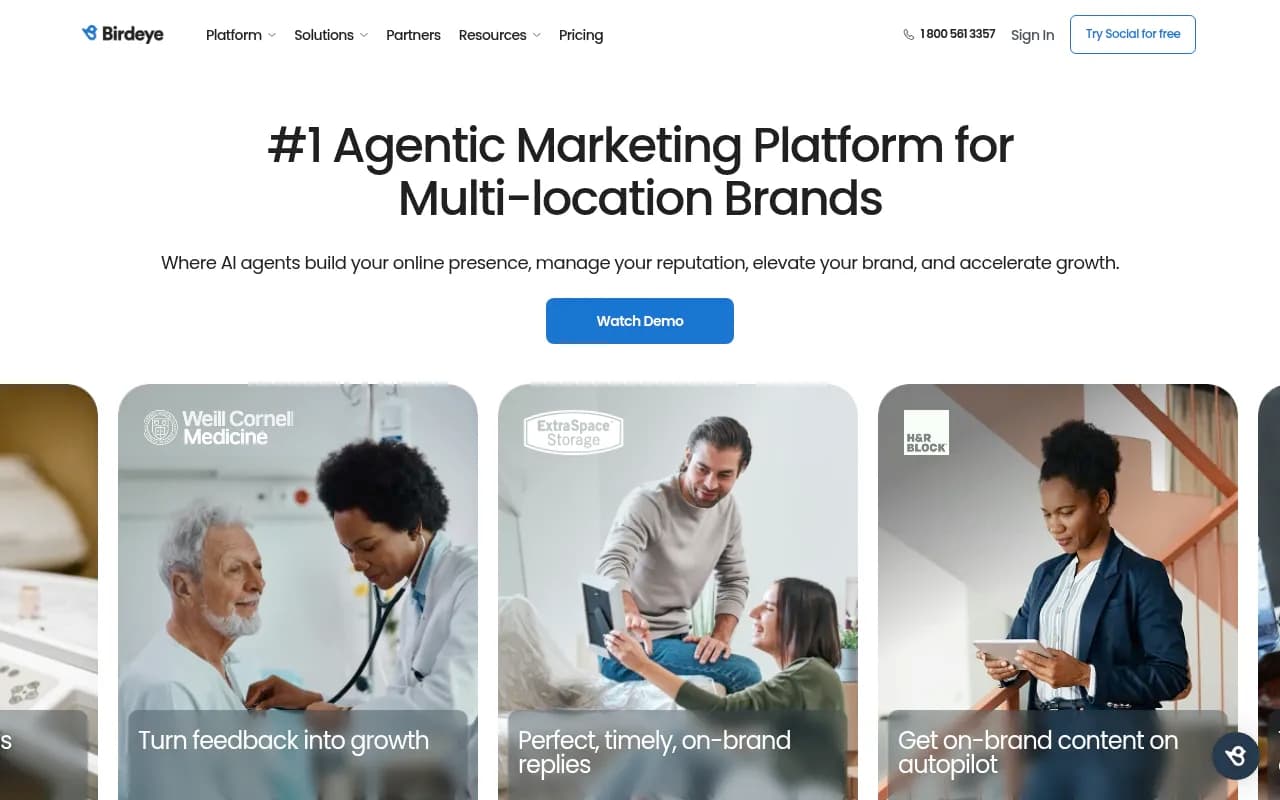
Birdeye is one of the most complete platforms for businesses that live and die by customer reviews. It handles review generation, response management, social listening, and customer surveys in one place. In 2026, it added AI mention monitoring, so you can see when ChatGPT or Perplexity references your brand in responses. It's not the deepest AI visibility tool, but for a multi-location business that primarily needs review management with some AI awareness layered on top, it works well.
Brand24
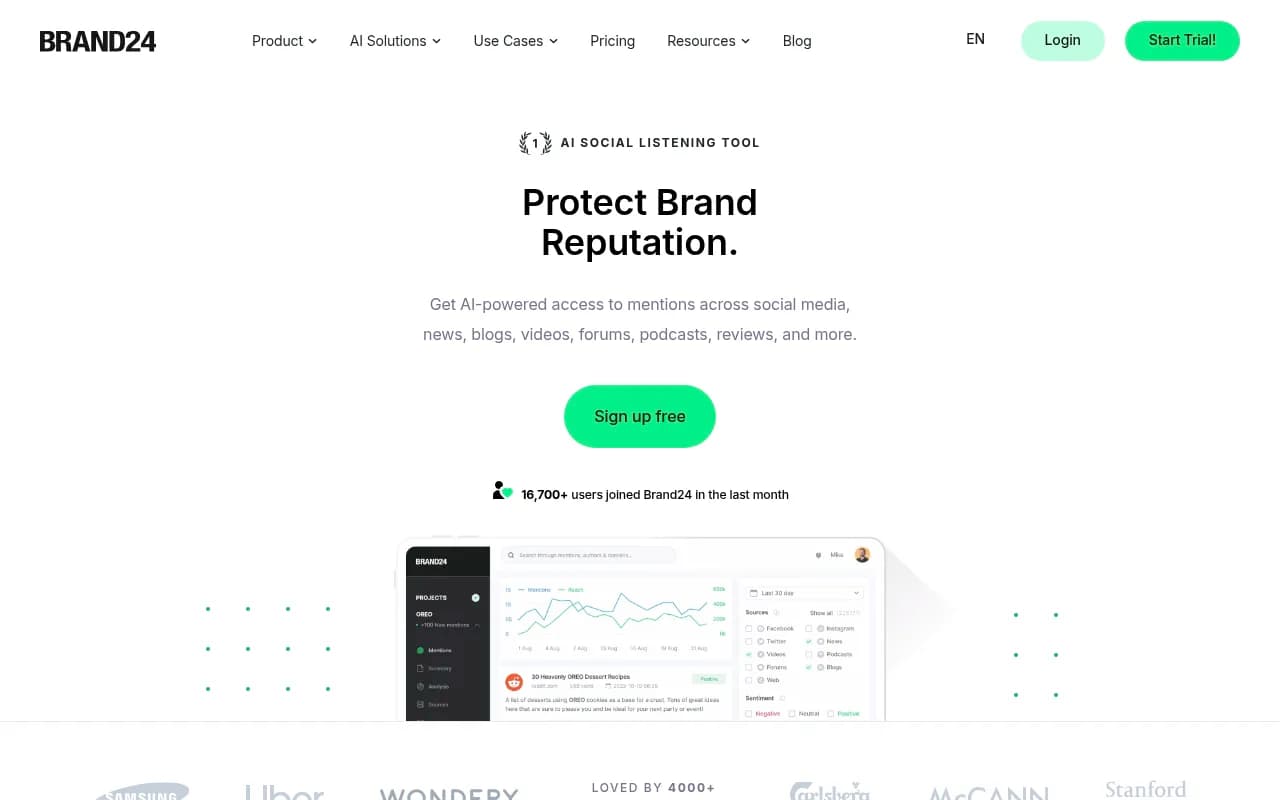
Brand24 monitors mentions across 25 million+ sources in real time -- news sites, blogs, forums, social media, podcasts, and now AI-generated responses. The sentiment analysis is solid, and the interface is straightforward enough that small teams can actually use it without a dedicated analyst. It's a good entry point if you want broad mention coverage without enterprise pricing.
Meltwater
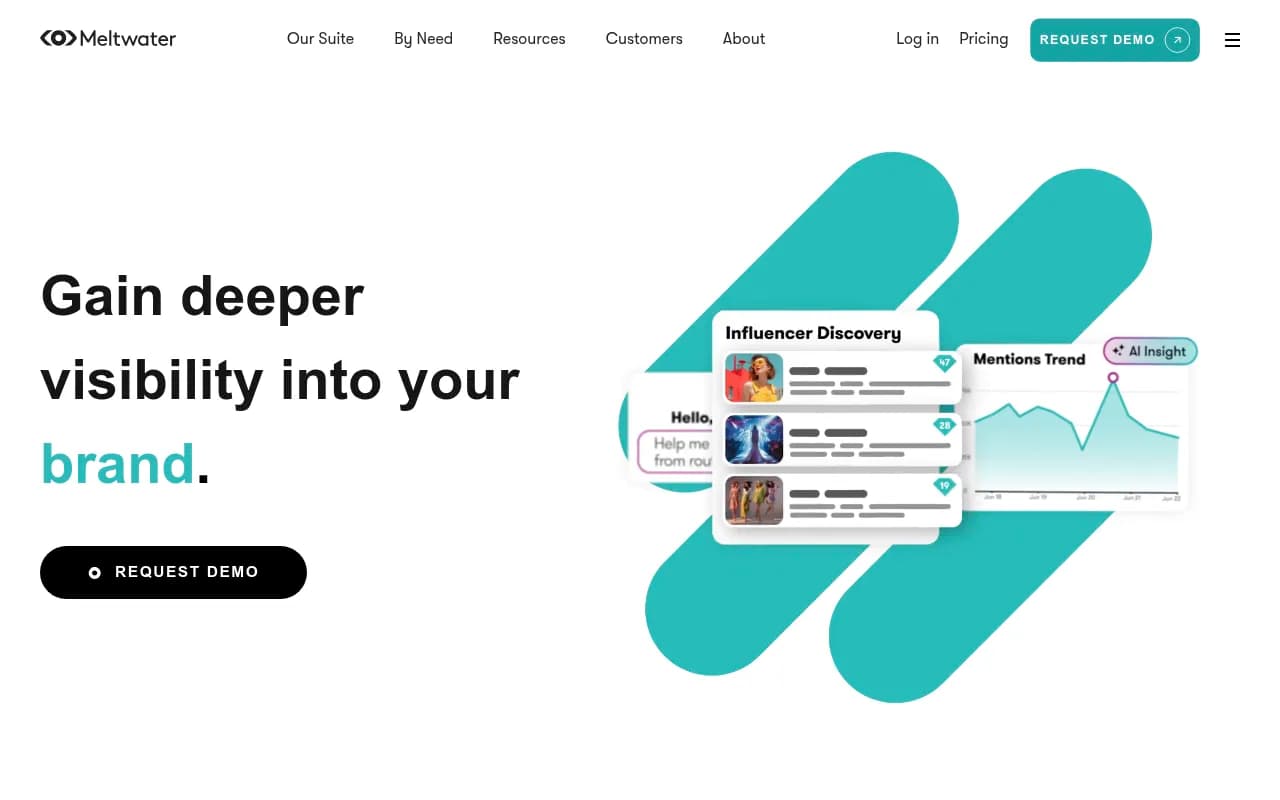
Meltwater is the enterprise option in this category. It covers media intelligence, social listening, influencer tracking, and consumer insights at a scale that smaller tools can't match. The AI monitoring capabilities are present but not the primary focus. If you're a large brand that needs comprehensive media coverage and already has a team to interpret the data, Meltwater makes sense. If you're primarily trying to improve your AI search visibility, it's probably not the right starting point.
Brandwatch consumer intelligence
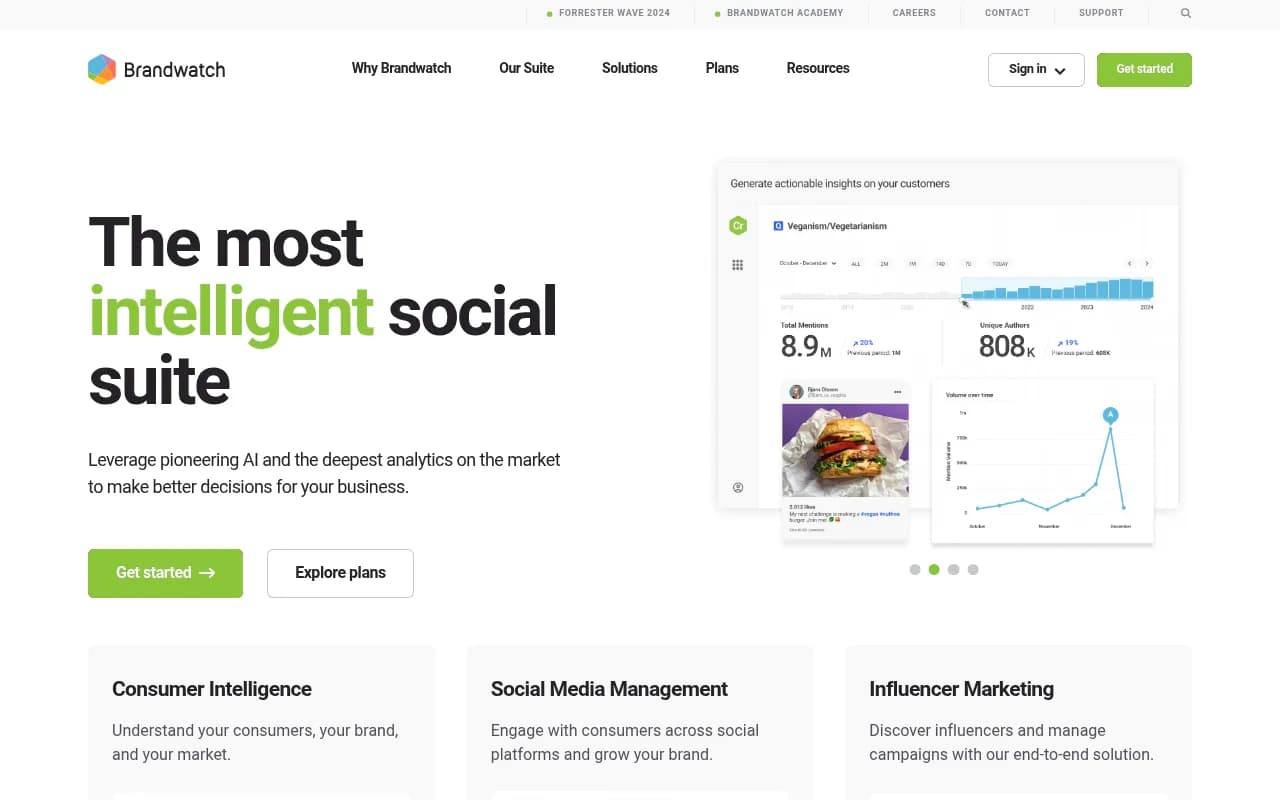
Brandwatch is particularly strong on the consumer intelligence side -- understanding what people actually think about your brand, not just where they mentioned it. The platform processes enormous volumes of social data and surfaces trends that would be invisible in smaller datasets. Like Meltwater, the AI search component is secondary to the core social listening product.
Brandwatch Consumer Intelligence
Tools built for AI search visibility
This is where the real action is in 2026. These platforms were designed to answer a specific question: how does your brand appear when someone asks an AI engine about your category?
Promptwatch
Promptwatch is the platform that comes up most often when teams are serious about AI visibility rather than just curious about it. It tracks how your brand appears across 10 AI models -- ChatGPT, Perplexity, Claude, Gemini, Google AI Overviews, Google AI Mode, Grok, DeepSeek, Meta AI, Copilot, and Mistral -- and it doesn't stop at showing you the data.
The part that separates it from most competitors is the action loop. Answer Gap Analysis shows you exactly which prompts your competitors are appearing for that you're not. The built-in writing agent then generates content designed to close those gaps -- articles, listicles, and comparisons grounded in citation data from 880 million+ analyzed citations. Then page-level tracking shows you whether the new content is actually getting cited, and traffic attribution connects that visibility to real revenue.
It also has AI crawler logs, which is a feature most competitors don't have at all. You can see which AI crawlers are hitting your site, which pages they're reading, and what errors they're encountering. That's genuinely useful for diagnosing why certain pages aren't getting cited.
For reputation management specifically, the competitor heatmaps are worth mentioning. You can see exactly how your brand's AI visibility compares to competitors across different models and prompt types -- which is a much more honest picture of your reputation in AI search than any single metric.
Promptwatch starts at $99/month for a single site with 50 prompts, which is reasonable for the depth of capability on offer.

Profound
Profound is the enterprise-tier option in this space. It has strong analytics, automation capabilities (Profound Agents), and integrations with tools like HubSpot. Walmart and Ramp are among its reported clients. The depth of analytics is impressive, and for Fortune 500 teams with dedicated analysts, it's a serious option.
The trade-off is price -- $499/month minimum with no free trial -- and the fact that it's primarily an analytics platform. It shows you what's happening in detail, but the content optimization and generation capabilities are less developed than Promptwatch's. If you need deep enterprise reporting and have budget, Profound is worth evaluating. If you need to actually move your AI visibility numbers, you may find yourself doing more manual work.

Otterly.AI
Otterly is the accessible entry point for teams that want AI visibility monitoring without a large budget or a steep learning curve. It covers brand metrics, hallucination detection, and basic share-of-voice tracking across major AI models. The interface is clean and the setup is fast.
The limitation is that it's monitoring-only. You see where you stand, but the platform doesn't help you figure out what to do about it. For a small team that just wants to know whether they're appearing in AI responses and roughly how often, Otterly is fine. For teams that want to improve their position, it's a starting point rather than a solution.

GetMint
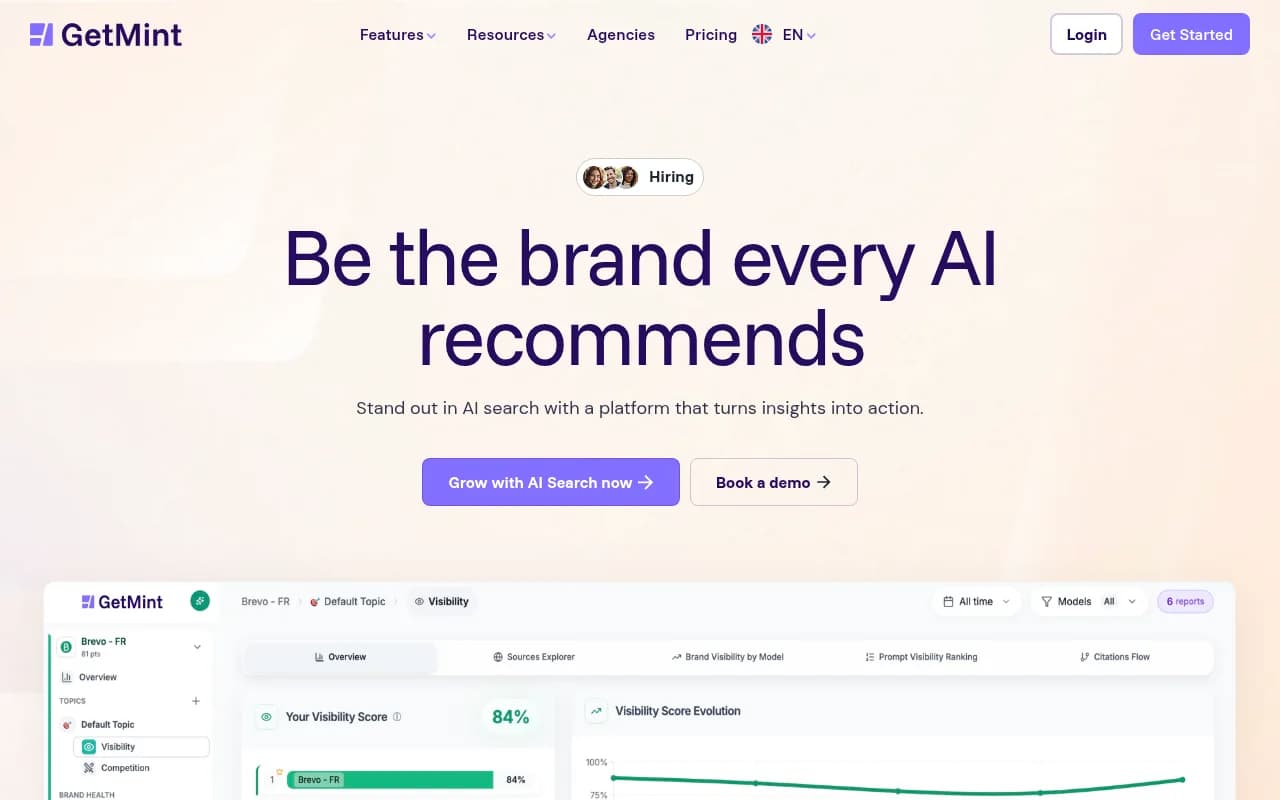
GetMint positions itself specifically around AI visibility and reputation management -- the intersection this guide is about. It tracks sentiment in AI responses, monitors for hallucinations (cases where an AI model says something factually wrong about your brand), and provides visibility scoring across models. It's a solid mid-tier option for brands that want more than Otterly but aren't ready for enterprise pricing.
Peec AI
Peec AI is worth noting for teams with international audiences. Its multi-language AI visibility tracking is more developed than most competitors, and it covers regional variations in AI responses that matter if your brand operates across different markets. The monitoring capabilities are solid; like Otterly, it's primarily a tracking tool rather than an optimization platform.

AthenaHQ
AthenaHQ covers 8+ AI search engines and has a clean interface for tracking brand visibility over time. It's monitoring-focused, which means it's good at showing you trends and competitive comparisons but doesn't have built-in content optimization. Teams that already have strong content capabilities and just need the tracking layer might find it fits well.

Rankscale
Rankscale focuses on AI search ranking and visibility, with prompt tracking and share-of-voice metrics. It's a newer entrant but has been building out its feature set quickly. Worth evaluating if you want a lightweight option that's specifically focused on AI ranking rather than the broader reputation management picture.
Comparison: which tool fits which situation
| Tool | Best for | AI models tracked | Content optimization | Crawler logs | Starting price |
|---|---|---|---|---|---|
| Promptwatch | Teams that want to monitor + fix AI visibility | 10+ | Yes (built-in AI writer) | Yes | $99/mo |
| Profound | Enterprise analytics and reporting | 6+ | Limited | No | $499/mo |
| Otterly.AI | Entry-level AI monitoring | 5+ | No | No | ~$49/mo |
| GetMint | AI reputation + hallucination tracking | 5+ | No | No | ~$79/mo |
| Peec AI | Multi-language / multi-region tracking | 5+ | No | No | ~$49/mo |
| AthenaHQ | Monitoring with competitive benchmarks | 8+ | No | No | Custom |
| Birdeye | Review management + basic AI monitoring | Limited | No | No | Custom |
| Brand24 | Broad mention monitoring + social | Limited | No | No | ~$99/mo |
| Meltwater | Enterprise media intelligence | Limited | No | No | Custom |
The hallucination problem: why sentiment monitoring matters more than you think
One thing that doesn't get enough attention in reputation management discussions is AI hallucination -- when an AI model confidently states something false about your brand.
This isn't rare. AI models have been documented claiming that companies have features they don't have, that products have been discontinued when they haven't, that executives said things they never said, and that brands have received awards or certifications that don't exist. For a brand with strong AI visibility, this is actually a bigger reputation risk than a bad Google review, because the AI presents the false information as fact with no mechanism for the brand to respond.
The tools that specifically track for hallucinations -- GetMint, Promptwatch, and a few others -- are doing something genuinely useful here. Knowing that ChatGPT is telling users your product doesn't support a feature it absolutely does support is actionable information. You can create content that corrects the record, which AI crawlers will eventually pick up and use to update their responses.
How to think about the monitoring-to-action gap
One practitioner described the experience of using monitoring-only tools as: "install a tool, stare at charts, feel more stressed, still don't know what to do next." That's an accurate description of what most AI visibility tools deliver.
The question worth asking before you buy anything is: do I need measurement, or do I need next actions?
If you're in early discovery mode -- trying to understand whether AI visibility is even a problem for your brand, or doing a competitive audit -- a monitoring tool is fine. Otterly, Peec, or even a free trial of something more advanced will tell you what you need to know.
If you've already established that your AI visibility is poor and you want to fix it, you need a platform that closes the loop between measurement and action. That means content gap analysis, content generation grounded in citation data, and tracking that shows whether your new content is actually getting cited. Promptwatch is the most complete option for this right now.
Practical setup: what a 2026 reputation stack looks like
For most brands, the right answer isn't one tool -- it's a lightweight stack that covers different layers of the reputation problem.
A reasonable setup for a mid-size brand:
- One AI visibility platform (Promptwatch if you want to optimize, Otterly if you just want to monitor) for tracking and improving how you appear in AI search
- One traditional reputation tool (Brand24 for most budgets, Birdeye if you're review-heavy) for monitoring mentions, reviews, and social sentiment
- A process for acting on what you find -- which means someone owns the content creation workflow, whether that's using Promptwatch's built-in writer or a separate content team
The brands that are winning in AI search right now aren't doing anything exotic. They're publishing clear, authoritative content that answers the questions AI models are being asked, getting that content indexed by AI crawlers, and tracking whether it's working. The tools just make that process faster and more systematic.
What to watch for in the rest of 2026
A few trends worth tracking as this space matures:
The line between "reputation management" and "AI SEO" is going to keep blurring. Right now they're treated as separate disciplines with separate tools. Within 12-18 months, most serious marketing teams will treat AI visibility as a core part of reputation management, not a separate workstream.
Hallucination tracking is going to become a standard feature rather than a differentiator. Right now only a handful of tools do it well. As AI-generated misinformation about brands becomes a more visible problem, expect every reputation platform to add some version of it.
Traffic attribution from AI search is still the unsolved problem. Most tools can tell you whether you're being cited; very few can tell you how many visitors that citation actually drove. Platforms that crack this -- Promptwatch has an approach using code snippets, GSC integration, and server log analysis -- will have a significant advantage.
The brands that invest in understanding this channel now, while it's still relatively new, are going to have a meaningful head start over those that wait until AI search is as competitive as traditional SEO already is.