Key Takeaways
- With thousands of SKUs, you cannot track every product by hand. Pick a platform that handles prompts at scale, product-level data, and multiple markets, then focuses on the pages and categories that earn revenue.
- Product pages are the main citation surface. In Promptwatch Data (Sep 28 to Oct 4, 2026), product pages were 22.4% of ChatGPT citations and landing pages 16.8%.
- Most published "best of" lists on this topic are written by vendors who rank themselves first. Treat them as feature checklists, not verdicts.
- Monitoring alone is not enough at catalog scale. Prefer platforms that also help you fix gaps, publish content, and show whether AI crawlers can read your site.
- Shopping-specific features (product cards, retailer benchmarking, feed accuracy) matter, but ChatGPT only attaches them to a small share of responses, so general citation visibility still carries most of the weight.
Why huge catalogs break normal AI visibility tracking
A brand with 40 products can track a few dozen prompts and call it a day. A retailer with 80,000 SKUs cannot. The prompt space is enormous: every category, every attribute ("waterproof hiking boots under $150 for wide feet"), every comparison, every persona, in every country.
Three problems show up quickly.
- Prompt coverage. You need to sample the long tail without paying for millions of responses. That means picking representative prompts per category and watching trends, not trying to measure everything.
- Product-level accuracy. AI answers get prices, availability, and specs wrong. At scale, the wrong data usually comes from a handful of stale templates or feeds, not from random errors.
- Execution. Finding 5,000 weak product pages is easy. Fixing them is the actual job.
That last point is where platforms split into two camps. Dashboards report a score. Optimization platforms help you change the thing that produced the score.
What the data says about where retail citations come from
Before comparing vendors, it helps to know what AI actually cites. Promptwatch Data's report on ChatGPT citation share by content type (Sep 28 to Oct 4, 2026) breaks it down:
| Content type | Share of ChatGPT citations |
|---|---|
| Product pages | 22.4% |
| Landing pages | 16.8% |
| Listicles | 13.6% |
| How-tos | 8.7% |
| Documentation | 7.5% |
| Articles | 6.1% |
| Comparisons | 5.9% |
| News | 5.7% |
| FAQ | 3.3% |
| Reviews | 1.7% |
For commercial prompts, product pages climb to 26.0% and landing pages to 20.6%. Those two plus listicles and comparisons make up almost 70% of commercial citations. For branded prompts, reviews jump to 5.6%, more than three times their overall share.
For a huge catalog, the takeaway is practical. Product page quality (specs, price, positioning, structured data) is your biggest lever. Category landing pages come second. Listicle and comparison presence matters for "best X" queries, and reviews matter when shoppers ask about your brand by name.
One more caution. Promptwatch's ChatGPT shopping usage data shows product cards and shopping recommendations appear on only a low single-digit percentage of web-search responses, and the rate jumps in steps, which suggests OpenAI keeps tuning it. Shopping features cluster on commercial and transactional prompts. So shopping-card tracking is worth having, but it should not be the only thing you buy.
What to look for in an enterprise platform
Here is the checklist I would use in a procurement review.
- Real interface data. Answers, citations, and shopping results in ChatGPT's actual UI can differ from API output. Ask how the vendor collects responses.
- Scale and cost per response. Check response limits, not just prompt limits. A 5,000-prompt plan that only allows 20,000 responses is a weekly check, not a daily one.
- Multi-market and local tracking. Retailers with stores need city and coordinate-level targeting for "near me" queries.
- Crawler visibility. If AI bots cannot read your product pages, nothing else matters. IP-verified crawler logs separate access problems from content problems.
- Traffic and conversion attribution. AI visibility is not revenue. You want to see what AI sends and whether it converts.
- Execution. Content generation, refresh suggestions, CMS publishing, prioritized to-do lists.
- Security. ISO 27001, SSO, audit logs, GDPR handling. Procurement will ask.
- Fit with your commerce stack. Shopify-native tools are great if you run Shopify. Less so if you run Salesforce Commerce Cloud or a custom headless stack.
Enterprise AI visibility platforms compared
| Platform | Best for | Catalog / SKU focus | Execution | Crawler logs |
|---|---|---|---|---|
| Promptwatch | End-to-end optimization at scale | Product pages, ChatGPT Shopping, topics and personas | Content Agent, Action Board, CMS publishing | Yes, IP-verified |
| Profound | Large enterprise monitoring | Shopping Analysis module | Some | Limited |
| Scrunch | Controlling how AI agents read your site | General + shopping | Agent-facing content delivery | Crawl diagnostics |
| Yotpo Discover | Reviews-heavy DTC and ecommerce | Native catalog sync | Automated agents | Not documented |
| Azoma | CPG brands on marketplace assistants | Marketplace-first | Yes | Not documented |
| Alhena AI | Brands wanting visibility plus onsite shopping AI | SKU-level, live feed sync | Yes | Not documented |
| Vizby | Shopify and Shopify Plus | Product and collection gaps | Shopify fixes | Not documented |
| Peec AI | Competitive monitoring | Shopping tracking per product | Recommendations | No |
Feature claims for most tools other than Promptwatch come from vendor pages and vendor-written listicles (Yotpo, Triple Whale, Vizby, SearchEye, Alhena, Era). Verify anything that matters in a demo.
The platforms
Promptwatch
Promptwatch is an end-to-end AI visibility platform, which is the main reason it suits large catalogs. Trackers tell you that a category page is missing from ChatGPT answers. Promptwatch also traces why and helps fix it.

For retail, the pieces that matter are these:
- Real-UI tracking of ChatGPT, Google AI Overviews, AI Mode, Gemini, Perplexity, Copilot, Amazon Alexa, and Meta AI, per country and language, with prompt volumes and difficulty so you can prioritize categories instead of guessing.
- ChatGPT Shopping insights and Amazon Alexa product results: which products AI recommends, which competitors it picks instead, and how your uploaded catalog performs (Business and Enterprise).
- AI crawler logs, IP-verified, showing which product pages bots read, where they hit errors, and the crawl-to-citation path per page. On a big catalog this is where you find out that faceted URLs or blocked paths are eating your crawl.
- Page Tracker, content gap analysis, and the Content Agent, which writes and publishes to WordPress, Webflow, or Framer, then tracks whether each page gets crawled, cited, and clicked.
- Local GEO/SEO targeting at exact coordinates for store-level "near me" queries (Business, Agency Scale, Enterprise).
- Brand Narrative and Fact Check, to catch AI repeating wrong claims about pricing or features and find the page it learned them from.
- Reddit, YouTube, LinkedIn, and Instagram citation tracking, plus Offsite Mentions for third-party pages that name you without linking.
- ISO/IEC 27001, GDPR, SSO and a white-label portal on Enterprise, 110+ MCP tools and a REST API for piping data into your own BI stack.
Plans run Essential $95/mo, Professional $245/mo, Business $579/mo (350 prompts, 42,000 responses, the Content Agent, state/city tracking, Shopping, Ads Radar), with tailored Enterprise pricing for custom prompt and crawler volumes. Confirm at promptwatch.com/pricing. For comparison, one competitor roundup in the research puts Profound and Evertune at roughly $2,000 to $5,000+ per month.
Honest caveat: Promptwatch is not a Shopify-native app and does not sync a live product feed in the way Yotpo Discover or Alhena claim to. If SKU-level feed sync is your top requirement, ask for a demo against your actual catalog. Start with the free AI visibility report or the 7-day trial.
Head-to-head pages: Promptwatch vs Profound, vs Scrunch, vs Peec.
Profound
Profound is the usual enterprise name. It documents coverage across 10+ engines, enterprise reporting, SOC 2 compliance, and prompt-demand intelligence. Its Shopping Analysis module covers product images, placement, and retailer benchmarking inside AI commerce conversations. Strong monitoring, higher price, and it leans toward reporting more than execution.

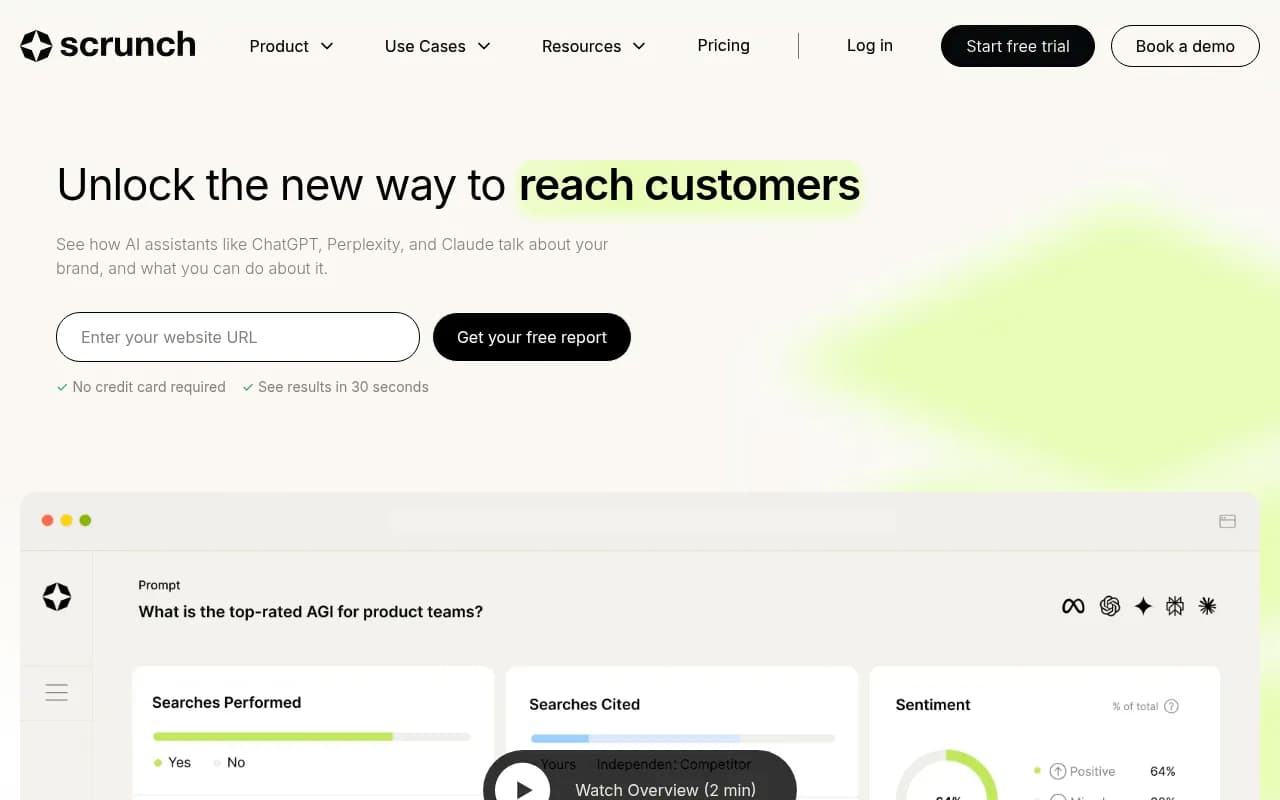
Scrunch
Scrunch pitches itself as an AI customer experience platform. Its angle is the agent side: crawl diagnostics and its Agent Experience Platform, which serves structured content to AI agents. SearchEye lists starter pricing of $250/month billed annually ($300 month to month) with custom enterprise plans, and flags a complex interface and a need for an internal team. Good fit for large brands managing many markets who want control over how agents read the site.
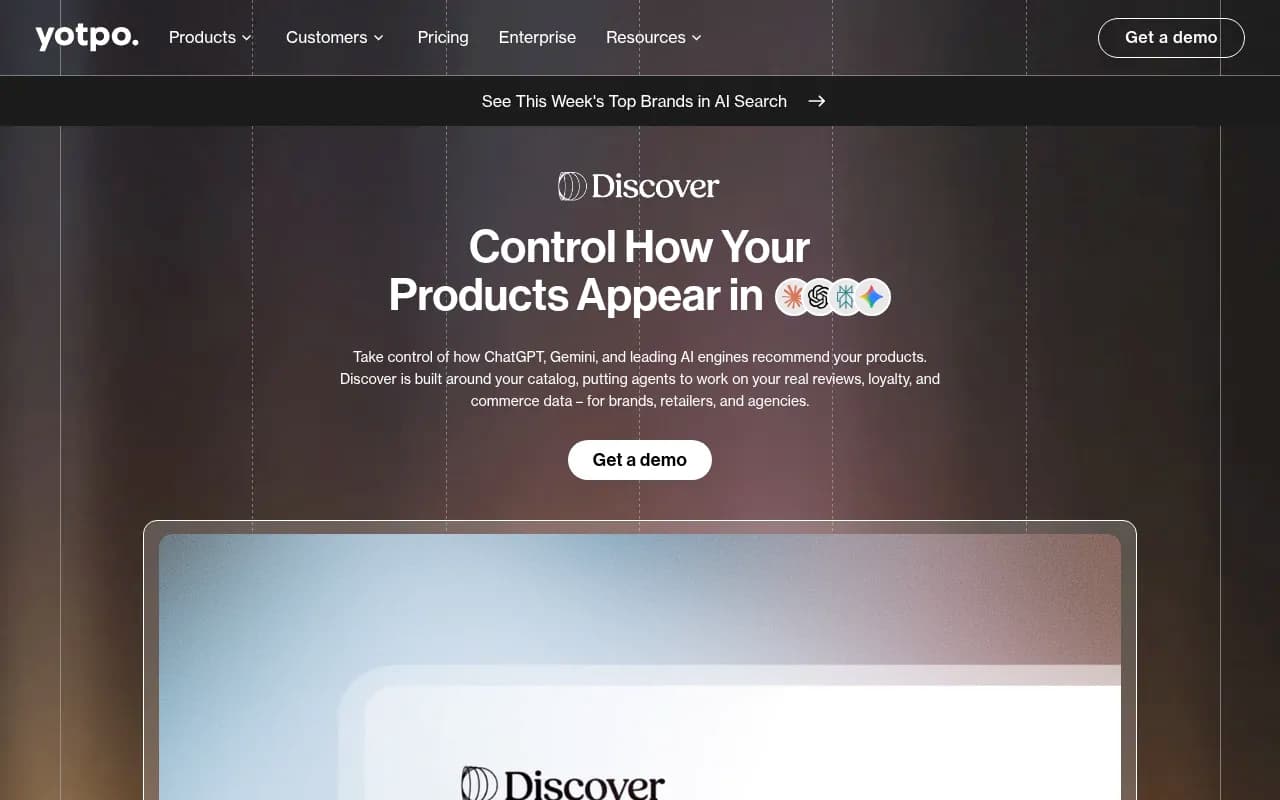
Yotpo Discover
Yotpo Discover is built for commerce, with native catalog sync, three automated agents, and reviews integration through Yotpo Reviews. That reviews tie is a real advantage given how branded prompts cite reviews. The obvious bias: the source ranking it first is Yotpo's own blog. It fits best if you already use Yotpo.
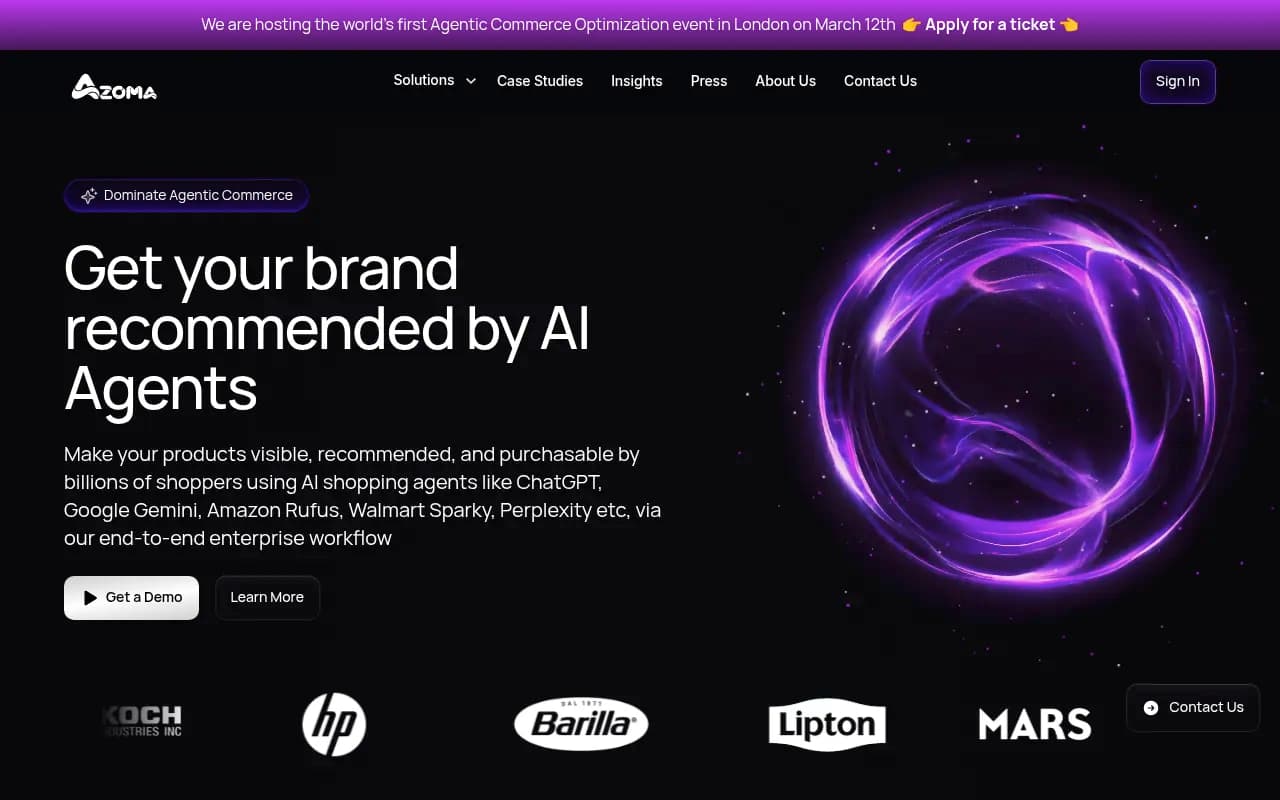
Azoma
Azoma focuses on enterprise AI shopping optimization for ChatGPT, Amazon's Rufus, and marketplace assistants. Yotpo's own review calls it excellent for marketplace-first CPG brands but less suited to driving visibility back to an owned storefront. If most of your revenue goes through Amazon or Walmart, look here.
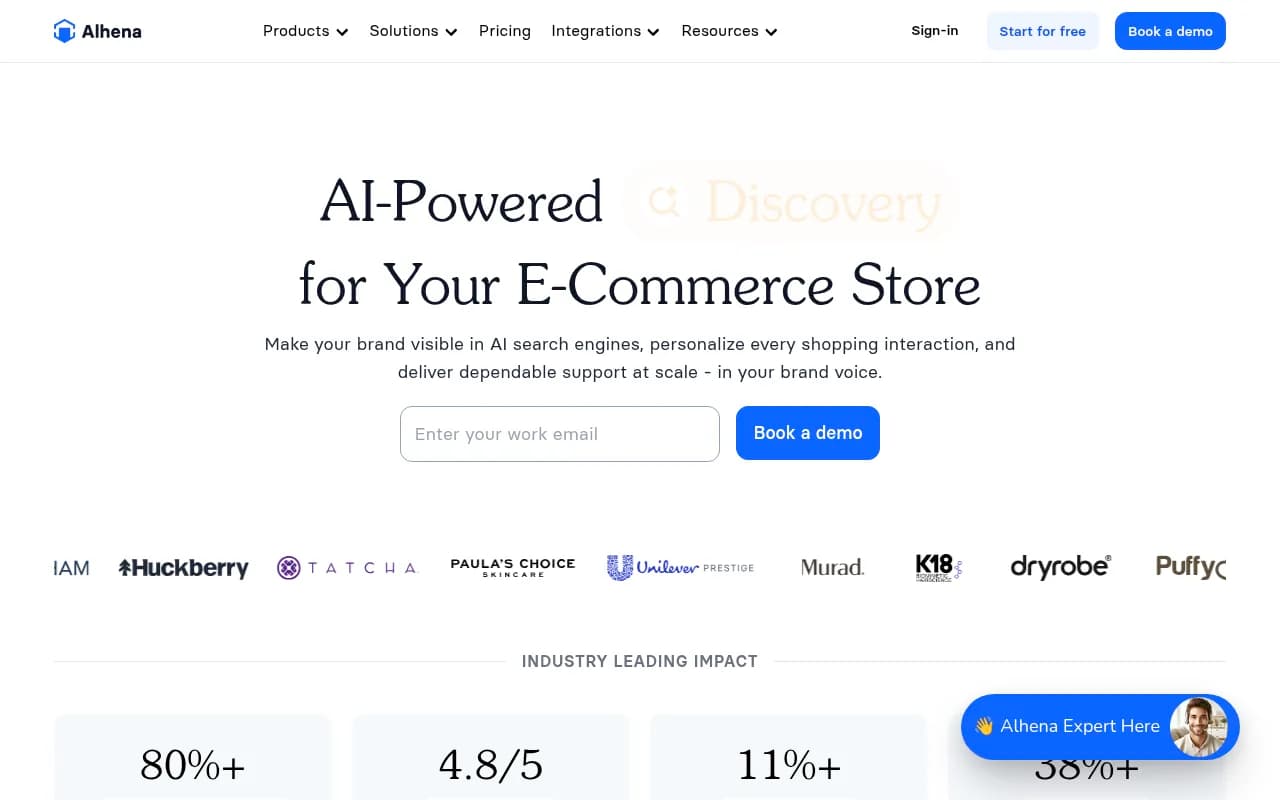
Alhena AI
Alhena combines SKU-level tracking, live catalog sync, and revenue attribution with conversational shopping and support agents. Its comparison page says it tracks four engines, which is narrower than some rivals. Choose it if you want onsite AI shopping and visibility in one vendor; skip it if you only want visibility.
Vizby
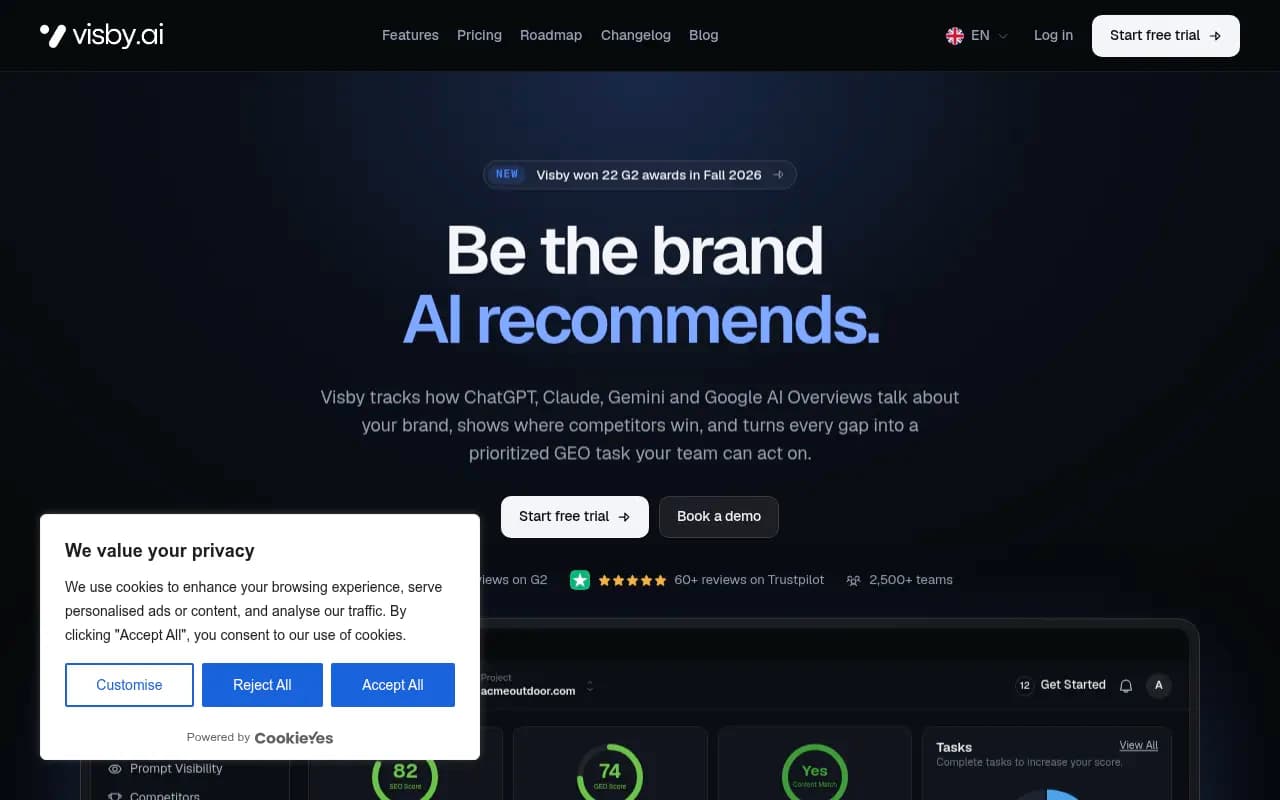
Vizby is Shopify-native. It tests shopper prompts, surfaces product and collection gaps, and connects findings to Shopify work such as structured data and FAQs. Its own guide says plainly that non-Shopify brands should look elsewhere.
Peec AI and Otterly.AI
Peec AI tracks individual products in shopping results, including win rate and price accuracy, and covers multiple languages. Otterly.AI has the lowest published entry price in one comparison. Both are monitoring-first, without crawler logs, visitor analytics, or content generation. Fine for a pilot, thin for a large enterprise rollout.


Adobe, BrightEdge, seoClarity and Botify
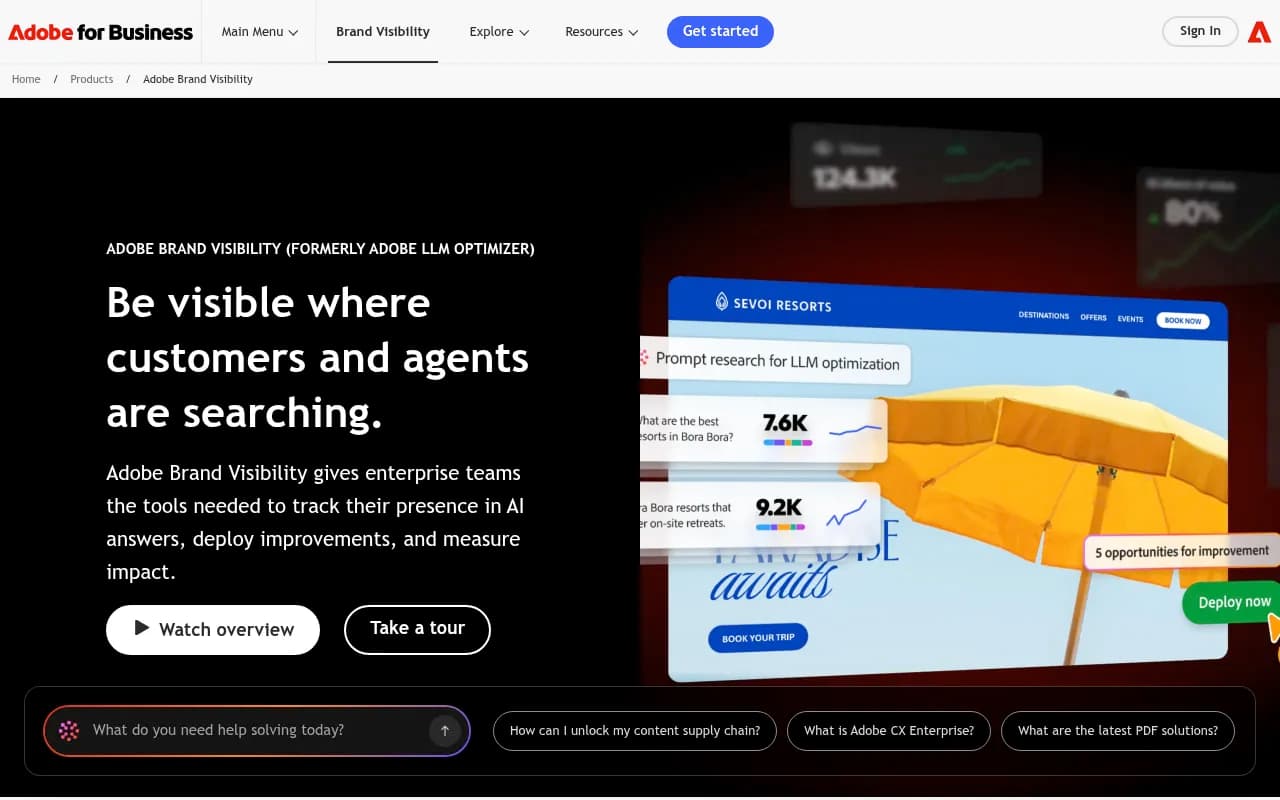
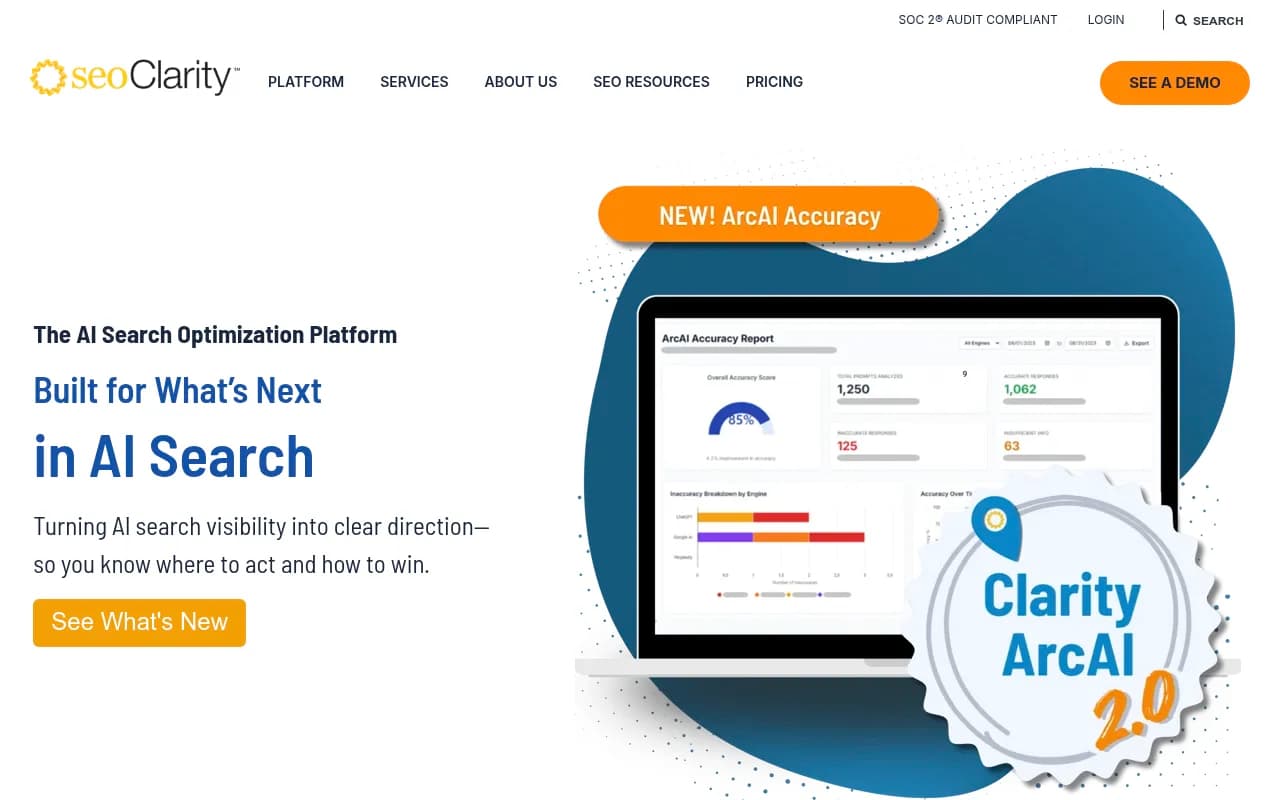
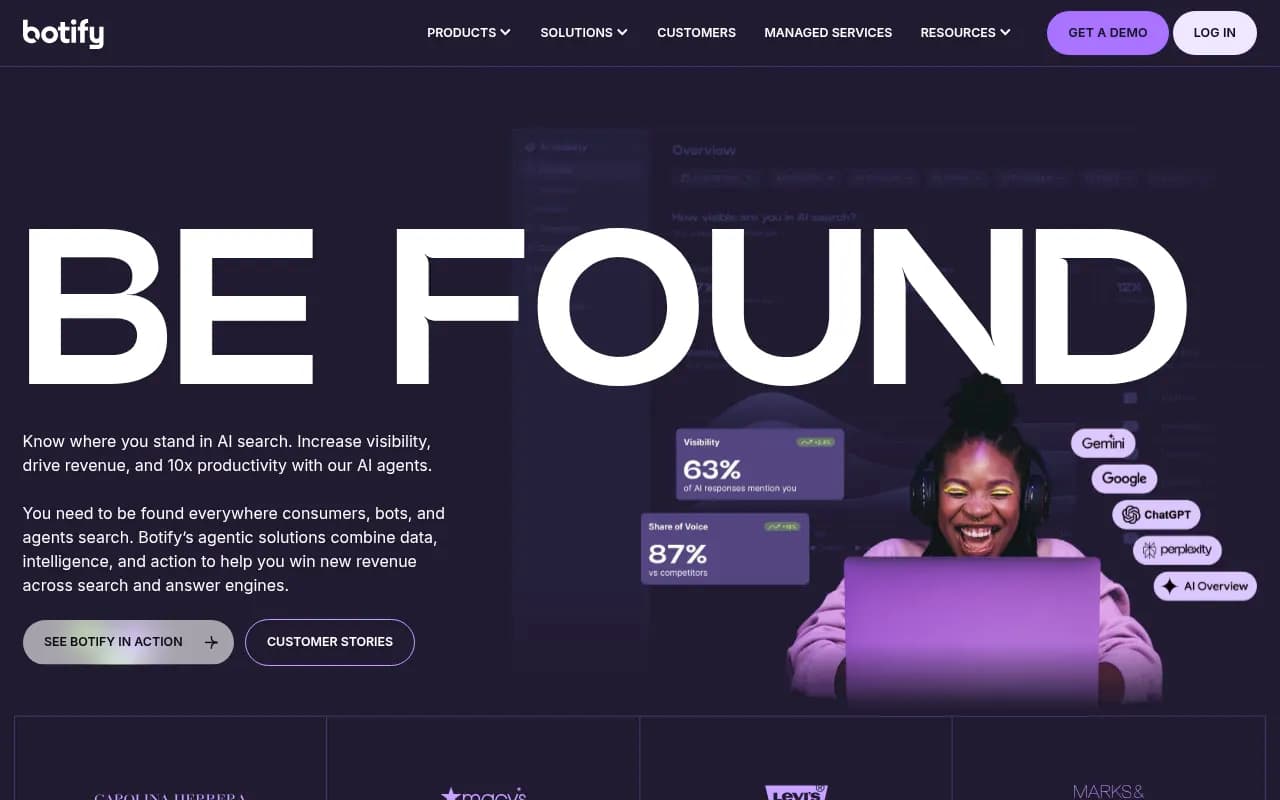
If you already run an enterprise SEO suite, check what it adds. Adobe Brand Visibility and LLM Optimizer sit inside Experience Cloud, BrightEdge has AI Catalyst, and seoClarity and Botify add AI tracking to large-site SEO workflows. These make sense for teams that want one vendor and one contract, though suites generally offer shallower AI-specific data than dedicated platforms.
A workable rollout for a 50,000+ SKU catalog
Do not start with the catalog. Start with revenue.
- Pick 8 to 15 categories that drive most margin. Build a prompt set per category covering commercial ("best X for Y"), comparison, and branded intent.
- Add personas and markets. A buyer in Germany asking in German gets different answers than a US shopper.
- Check crawler access first. Use the free Agentic Readiness Check or crawler logs to confirm AI bots reach product pages. Case in point: TreeHouse grew AI search to roughly 25% of organic conversions after fixing crawler access and publishing proprietary data.
- Audit product page templates, not individual pages. Complete Product schema, accurate price and availability, and a clean merchant feed are the basics Promptwatch's shopping data recommends.
- Fill listicle and comparison gaps for the commercial prompts where competitors dominate the citations.
- Measure traffic, not just mentions. Note that ChatGPT stopped sending a referrer on October 8, 2026, so tag links with utm_source=chatgpt.com or use a platform that counts those visits.
- Review monthly. Citation patterns shift. Promptwatch's half-life data found landing pages and docs stay cited longest while news loses half its pages within 36 days, so refresh cadence should differ by page type.
For more tools in this space, browse the GEO software directory or the AI rank tracking tools directory.
Screenshots from vendor guides
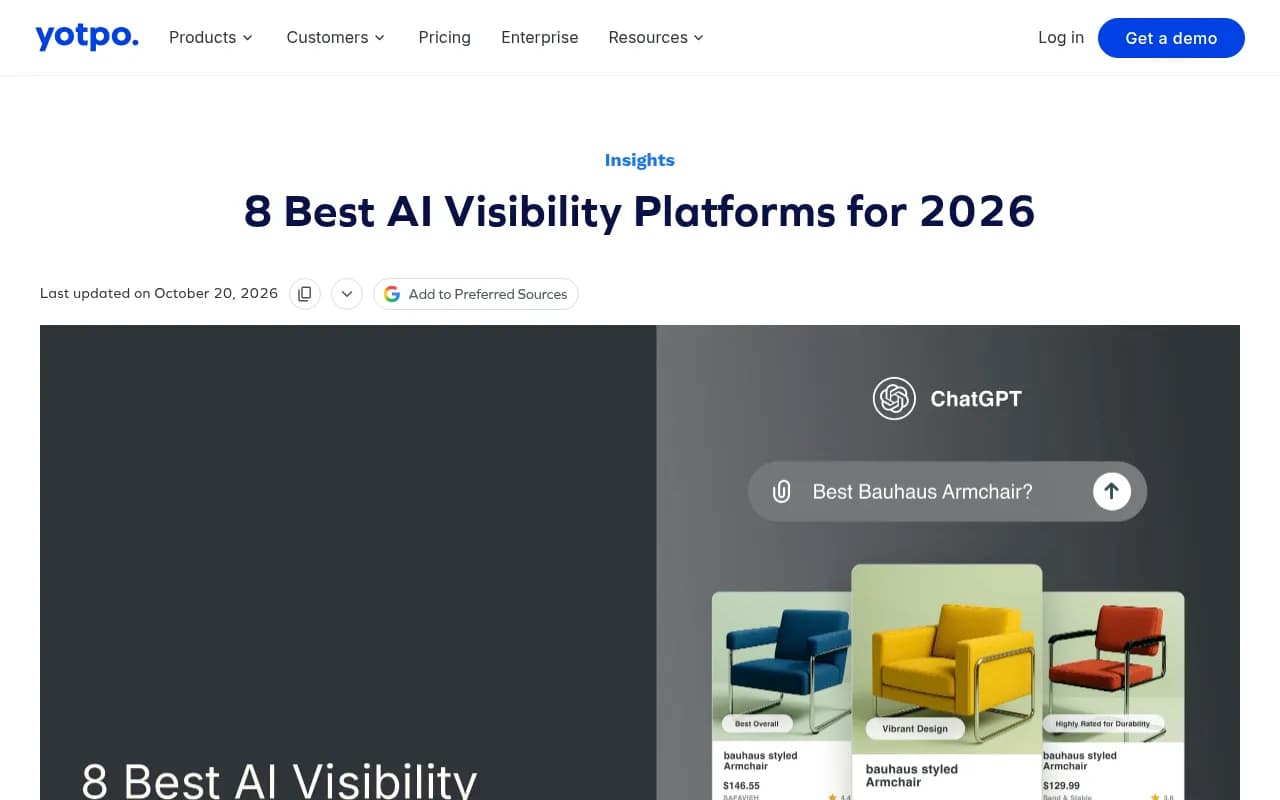
Vendor comparison pages are useful for seeing how each company frames the problem, and for spotting their bias.
Which one should you pick?
| If you are... | Look first at |
|---|---|
| An enterprise retailer wanting monitoring, execution, crawler logs, and attribution in one place | Promptwatch |
| A large brand that wants broad engine coverage and enterprise reporting | Profound |
| Focused on agent-facing site control across many markets | Scrunch |
| A Shopify or Shopify Plus brand | Vizby |
| Already on Yotpo Reviews | Yotpo Discover |
| A CPG brand selling mostly through marketplaces | Azoma |
| Wanting onsite shopping AI plus visibility | Alhena AI |
| Locked into Adobe or an enterprise SEO suite | Adobe LLM Optimizer, BrightEdge, seoClarity |
My blunt advice: run a two-week proof of concept with two vendors on the same 200 prompts and the same ten product categories. Compare response volume, citation accuracy, and whether the tool tells you what to do next. The one that gives you a ranked list of fixes you can actually ship wins at catalog scale.
If you want a team to run the program rather than buy software alone, 1001 SEO Media uses Promptwatch for GEO work and covers the content and technical side too.