Key takeaways
- Most AI visibility platforms are monitoring-only dashboards -- they show you citation counts but can't connect them to traffic or revenue.
- Traffic attribution is the missing layer: without it, you're optimizing for vanity metrics, not business outcomes.
- A handful of platforms (including Promptwatch, Profound, and Northbeam) have built genuine attribution capabilities into their AI visibility workflows.
- The tools that matter most in 2026 are those that complete the full loop: track visibility, identify gaps, generate content, and measure the revenue impact.
- For most marketing and SEO teams, the right stack is one primary AI visibility platform with attribution built in, not three separate tools duct-taped together.
Here's a problem that's becoming impossible to ignore: AI search now influences hundreds of billions in ecommerce decisions annually, yet most teams tracking their AI visibility have no idea whether any of it is actually driving revenue.
They can tell you their brand appeared in 47 ChatGPT responses last week. They cannot tell you whether a single person clicked through, bought something, or even saw the response. That gap -- between citation data and business outcomes -- is where most AI visibility tools fall short.
This guide focuses specifically on the platforms that have tried to close that gap. Not just trackers, but tools that connect AI appearances to actual traffic and, in some cases, to revenue. The list is honest: some do it well, some do it partially, and a few claim attribution capabilities that are thinner than they sound.
Why traffic attribution is so hard for AI search
Traditional web attribution is already messy. AI search makes it worse.
When someone asks ChatGPT a question and then visits your website, that session often shows up as direct traffic in Google Analytics. There's no referral string, no UTM parameter, no clean handoff. The visit just appears, disconnected from the AI interaction that caused it.
This is why most AI visibility tools don't bother with attribution -- it's genuinely difficult. The platforms that do it typically use one of three approaches:
- A JavaScript snippet on your site that detects AI referral patterns and attributes sessions accordingly
- Server log analysis that catches AI crawler activity and correlates it with traffic spikes
- Google Search Console integration that captures the small percentage of AI-driven clicks that do pass referral data (mainly Google AI Overviews)
None of these methods is perfect. But they're meaningfully better than nothing, and the gap between "we appeared in 40 AI responses" and "those appearances drove 312 sessions and $8,400 in revenue" is the difference between a reporting exercise and an actual optimization strategy.
The 10 platforms worth considering
1. Promptwatch
Promptwatch is the most complete option on this list for teams that want to go beyond monitoring. It covers 10 AI models (ChatGPT, Perplexity, Claude, Gemini, Google AI Overviews, Grok, DeepSeek, Copilot, Meta AI, and Mistral), and its attribution layer works through three methods: a JavaScript snippet, Google Search Console integration, and server log analysis. You can see which specific pages are being cited, by which models, and whether those citations are translating into measurable traffic.
What separates Promptwatch from most competitors is that attribution isn't bolted on as an afterthought -- it's part of a full optimization loop. The platform identifies which prompts your competitors appear for but you don't (Answer Gap Analysis), generates content designed to get cited (using data from 880M+ citations analyzed), and then tracks whether that content actually improves your visibility and drives traffic. Page-level tracking shows exactly which URLs are getting cited and how often.
The crawler logs feature is also genuinely useful for attribution context: you can see when AI crawlers like GPTBot and ClaudeBot visit your pages, which helps explain why visibility changes when it does.

Pricing runs from $99/month (Essential, 1 site, 50 prompts) to $579/month (Business, 5 sites, 350 prompts, 30 AI-generated articles). Agency and enterprise plans are available with custom pricing.
2. Profound
Profound has built one of the stronger enterprise-grade AI visibility platforms, with particular depth on prompt analytics. Their attribution approach leans on GSC integration and a tracking pixel, and they've invested heavily in prompt volume data -- their dataset reportedly covers 400M+ prompt insights across 10+ AI engines.

Where Profound shines is in the breadth of AI models covered and the quality of their competitive benchmarking. The revenue attribution side is functional but less granular than Promptwatch's page-level tracking. It's a strong choice for larger brands that need enterprise SLAs and deep prompt analytics, though the price point reflects that.
3. Northbeam
Northbeam isn't an AI visibility tool in the traditional sense -- it's a first-party attribution platform built for ecommerce. But it belongs on this list because it's one of the few platforms that has started capturing AI-driven traffic as a distinct channel, using server-side tracking that catches sessions traditional analytics tools miss.
If you're running an ecommerce brand and already using Northbeam for ad attribution, it's worth exploring how their AI channel tracking works. The limitation is that Northbeam doesn't help you understand why you're visible or invisible in AI responses -- it just measures the traffic. You'd need a separate tool for the optimization side.
4. Cometly
Cometly is primarily a marketing attribution platform, but it's made moves into AI traffic attribution that are worth noting. Their server-side tracking approach captures conversions that browser-based tools miss, and they've added AI referral detection to their channel breakdown.
The honest assessment: Cometly is better at measuring paid media than AI organic visibility. But for teams that want a single attribution platform that covers both, it's a reasonable option. Don't expect the prompt-level granularity you'd get from a dedicated AI visibility tool.
5. AthenaHQ
AthenaHQ tracks brand visibility across 8+ AI search engines with a clean interface and solid competitive benchmarking. Their attribution capabilities are more limited than Promptwatch or Profound -- the platform is primarily monitoring-focused -- but they do offer basic traffic correlation features.
The strength here is in the monitoring quality and the competitive share-of-voice data. If your main goal is understanding how you stack up against competitors in AI responses (rather than connecting that to revenue), AthenaHQ is a reasonable choice at a lower price point.
6. Scrunch AI
Scrunch AI has positioned itself as an enterprise AI visibility platform with a focus on brand safety and citation quality, not just citation volume. Their attribution layer connects to Google Analytics and GSC, giving you a reasonable picture of which AI-driven traffic is landing on which pages.
The platform is stronger on the monitoring and brand intelligence side than on content optimization. If you're a larger brand that cares about how AI models are describing you (sentiment, accuracy, brand safety) as much as how often, Scrunch AI is worth a look.
7. SE Ranking
SE Ranking has been a solid all-in-one SEO platform for years, and their AI visibility toolkit has matured into something genuinely useful. The attribution approach here is primarily GSC-based, which means it captures Google AI Overviews traffic reasonably well but has gaps for other AI models.
The value proposition is consolidation: if you're already using SE Ranking for traditional SEO, adding AI visibility tracking doesn't require a new tool or budget line. The trade-off is that the AI attribution depth is shallower than dedicated platforms.
8. Semrush
Semrush added AI visibility tracking to their platform and it's functional, but the attribution story is thin. Their approach uses fixed prompts rather than dynamic prompt discovery, which limits how useful the data is for optimization. You can see brand mentions in AI responses, but connecting those to traffic or revenue requires manual work.
For teams already deep in the Semrush ecosystem, the AI tracking features are a convenient addition. For teams building an AI visibility strategy from scratch, it's probably not the right foundation.
9. Airefs
Airefs is a more affordable option that covers the core AI visibility monitoring use case well. Their attribution capabilities are basic -- primarily GSC integration -- but the platform is well-designed and the pricing is accessible for smaller teams.
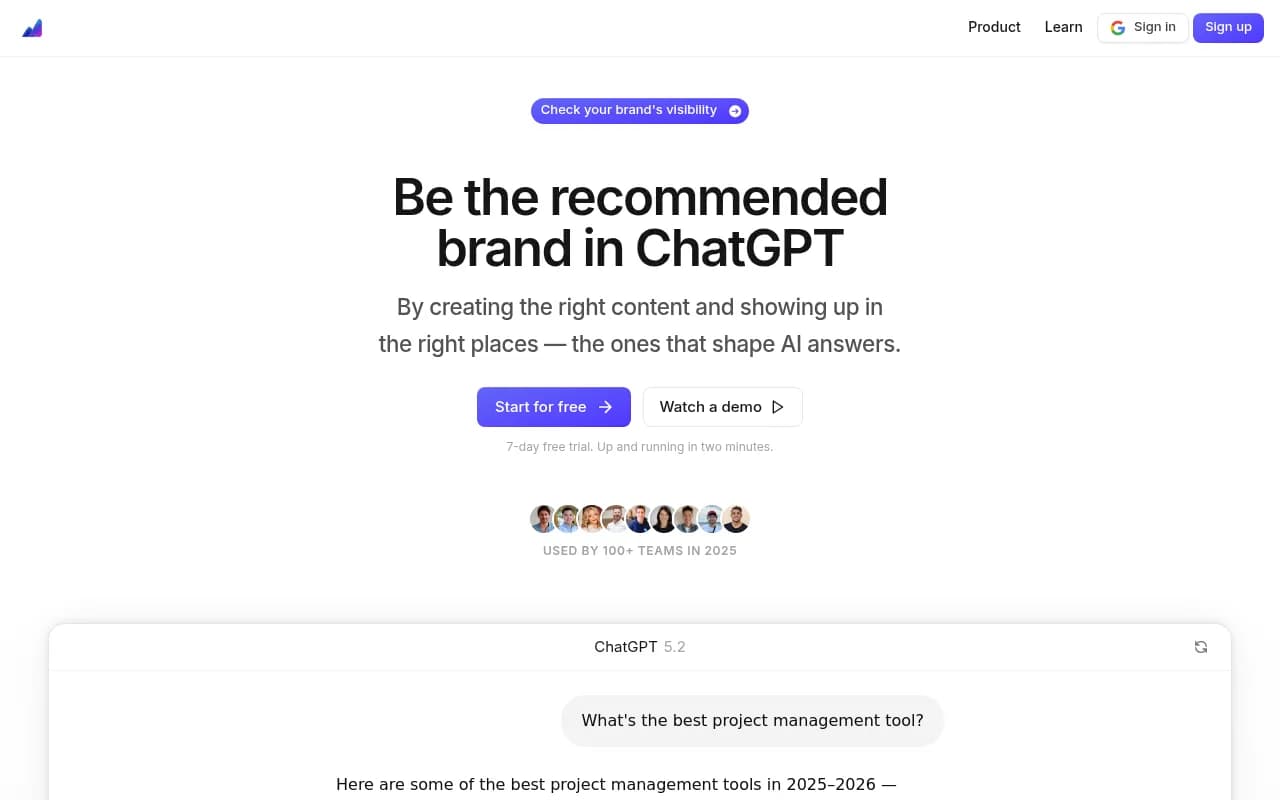
The honest positioning: Airefs is a good starting point if you're new to AI visibility tracking and want to understand the landscape before committing to a more expensive platform. Don't expect sophisticated revenue attribution.
10. Bear AI
Bear AI is a newer entrant that has made traffic attribution a central part of its pitch. The platform specifically focuses on converting AI search traffic into revenue, with tracking that identifies AI-referred sessions and connects them to conversion events.
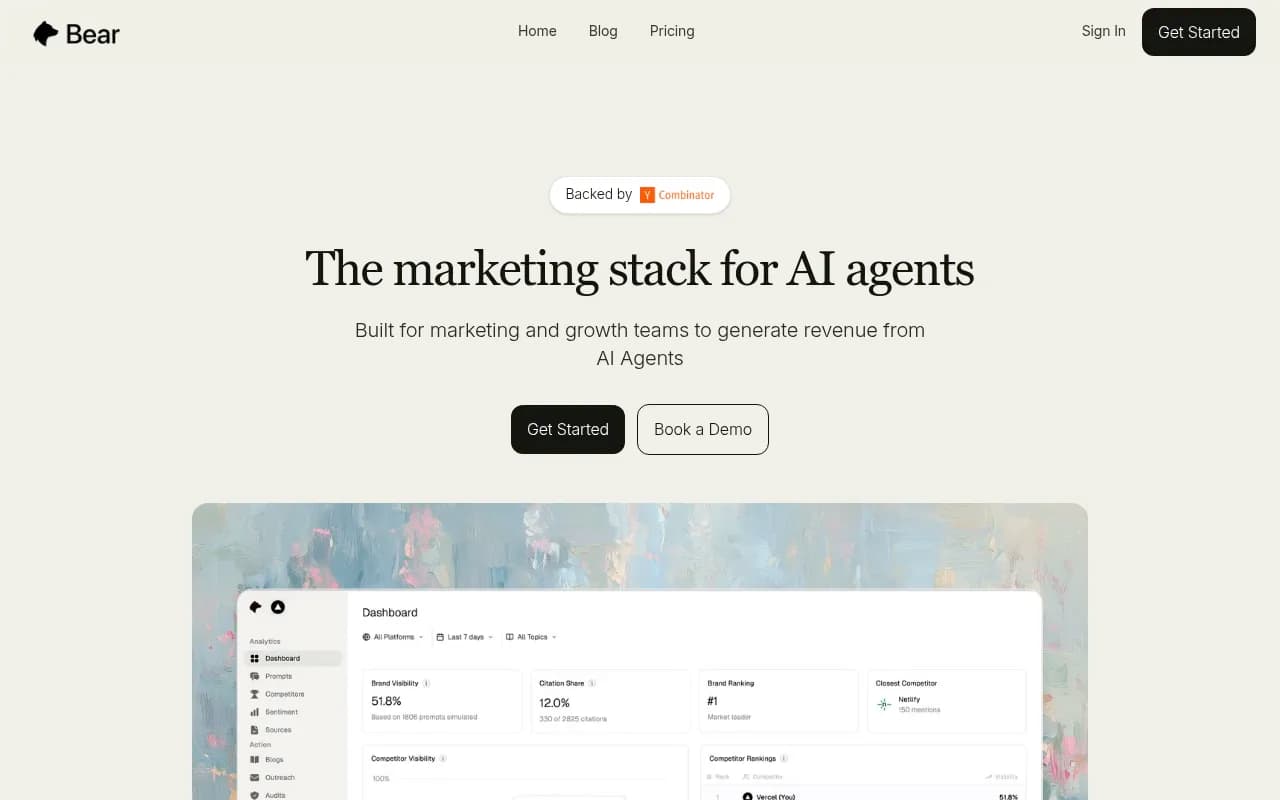
It's worth watching, though the platform is earlier-stage than others on this list. The attribution methodology is sound, but the prompt coverage and competitive intelligence features are less mature than Promptwatch or Profound.
How these platforms compare
| Platform | AI models covered | Traffic attribution method | Content optimization | Prompt gap analysis | Best for |
|---|---|---|---|---|---|
| Promptwatch | 10 | Snippet + GSC + server logs | Yes (AI writing agent) | Yes | Full optimization loop |
| Profound | 10+ | Pixel + GSC | Limited | Partial | Enterprise monitoring |
| Northbeam | N/A (attribution only) | Server-side | No | No | Ecommerce attribution |
| Cometly | N/A (attribution only) | Server-side | No | No | Paid + AI attribution |
| AthenaHQ | 8+ | Basic correlation | No | No | Competitive monitoring |
| Scrunch AI | Multiple | GA + GSC | No | No | Brand safety + monitoring |
| SE Ranking | Multiple | GSC-based | Limited | No | SEO + AI consolidation |
| Semrush | Multiple | GSC-based | Limited | No | Existing Semrush users |
| Airefs | Multiple | GSC-based | No | No | Budget-conscious teams |
| Bear AI | Multiple | Session tracking | No | No | AI traffic conversion |
What "closing the revenue loop" actually requires
A lot of platforms use the phrase "close the loop" in their marketing. In practice, closing the revenue loop from AI visibility requires four things working together:
Visibility tracking -- knowing when and where your brand or content appears in AI responses. This is table stakes; every platform on this list does it to some degree.
Traffic attribution -- connecting AI appearances to actual website sessions. This is where most platforms fall short. The challenge is that AI referral traffic often arrives without clear referral data, so you need either server-side tracking, a detection snippet, or GSC integration (which only covers Google's AI products).
Content gap identification -- understanding which prompts your competitors are winning that you're not. Without this, you're optimizing blind. You might improve visibility for prompts you're already winning while missing the ones that actually matter.
Revenue connection -- linking traffic to conversions and revenue. This is the hardest part, and most AI visibility tools don't attempt it. The platforms that do (Northbeam, Cometly, and to some extent Promptwatch's traffic attribution features) typically require some setup work to connect the dots.
Most teams in 2026 are operating with only the first piece. They know they're being cited; they don't know if it matters.
Practical recommendations
If you're a marketing or SEO team that wants to build a real AI visibility program with attribution:
Start with a platform that does visibility tracking and content optimization together. Monitoring without the ability to act on what you find is just reporting. Promptwatch's approach -- find gaps, generate content, track results -- is the right mental model regardless of which tool you use.
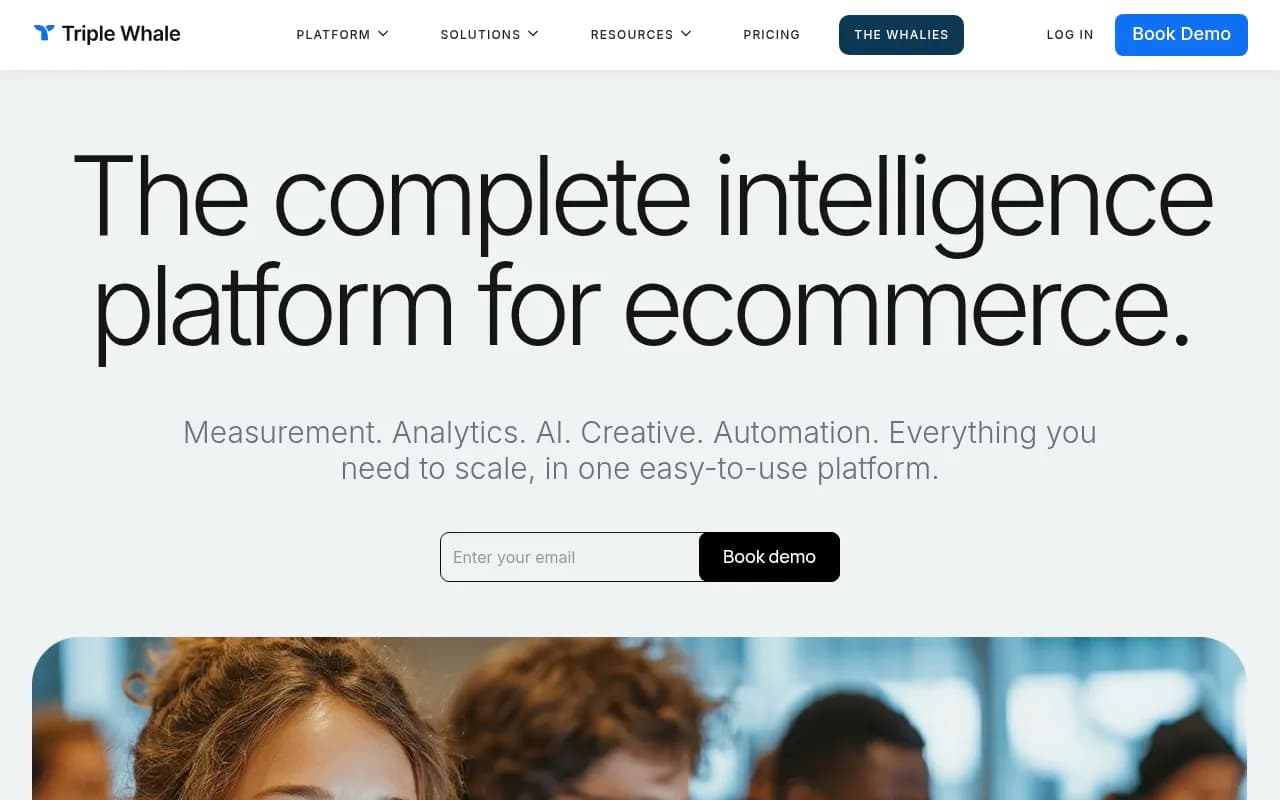
For ecommerce brands specifically, consider pairing an AI visibility platform with a dedicated attribution tool. Something like Promptwatch for the visibility and optimization side, and Northbeam or Triple Whale for the revenue attribution side, gives you coverage that neither tool provides alone.
Don't over-index on attribution methodology at the expense of prompt coverage. A tool that perfectly attributes traffic from two AI models is less useful than one that tracks ten models with reasonable attribution. The AI search landscape is too fragmented right now to bet everything on a single channel.
Finally, be skeptical of attribution numbers that look too clean. AI-driven traffic is genuinely hard to measure, and any platform claiming perfect attribution is oversimplifying. The goal is directional accuracy -- enough signal to know whether your AI visibility investments are working -- not precision to the decimal point.
The bottom line
The gap between "we appear in AI responses" and "that drives revenue" is real, and most platforms haven't closed it. The tools that come closest are the ones that treat attribution as a core feature rather than a checkbox -- and that connect it to an actual optimization workflow, not just a dashboard.
For most teams, Promptwatch is the strongest single platform for this in 2026: it covers the most AI models, has three attribution methods, and is the only platform in this category that also helps you create the content needed to improve visibility. For ecommerce brands with complex attribution needs, pairing it with a dedicated first-party attribution tool fills the remaining gaps.
The platforms that only monitor are useful for awareness. The platforms that monitor, optimize, and attribute are the ones that justify their budget.