Key takeaways
- B2B buyers increasingly use AI engines like ChatGPT, Perplexity, and Gemini to research vendors — if you're not visible there, you're losing deals before your site is ever visited.
- Traditional SEO tools (Ahrefs, Semrush, Surfer SEO) remain essential for organic search, but they don't track AI engine visibility at all.
- A complete B2B AI SEO stack in 2026 needs two layers: classic SEO tools for Google rankings and dedicated GEO/AI visibility tools for LLM citations.
- Ahrefs and Semrush lead in AI recommendation scores across ChatGPT, Claude, Gemini, and Perplexity — but neither tells you how to rank in those AI engines.
- Platforms like Promptwatch go beyond monitoring to help you find content gaps, generate AI-optimized content, and track what's actually working.
Why B2B SEO looks different in 2026
Here's something that's changed fast: your buyers aren't just Googling anymore. A procurement manager researching CRM platforms might ask ChatGPT "what's the best CRM for mid-market B2B teams?" before they ever type a query into Google. A VP of Marketing might ask Perplexity to compare your product against two competitors. A technical buyer might ask Claude to explain which platforms integrate with their existing stack.
If your brand doesn't appear in those answers, you're invisible at the exact moment intent is highest.
This is the core challenge for B2B SEO in 2026: you need to rank in two places simultaneously. Google still matters — organic traffic is real and valuable. But AI engines are now a meaningful discovery channel, especially for high-consideration B2B purchases where buyers want synthesized answers, not ten blue links.
The good news: the tools to tackle both layers exist. The bad news: most teams are still running a 2022 SEO stack and wondering why pipeline feels thin.
Let's fix that.
The two-layer B2B AI SEO stack
Before getting into specific tools, it helps to think about your stack in two layers:
Layer 1 — Traditional SEO: Keyword research, technical audits, backlink analysis, rank tracking, content optimization. These tools help you rank in Google and Bing. They're still essential.
Layer 2 — AI visibility (GEO): Tracking and optimizing how your brand appears in ChatGPT, Perplexity, Claude, Gemini, Google AI Overviews, and other LLM-powered engines. This is newer territory, and most traditional SEO tools don't cover it.
Most B2B teams have Layer 1 covered. Layer 2 is where the gaps are.
Layer 1: Traditional SEO tools that B2B teams actually use
Ahrefs — keyword research and backlink analysis
Ahrefs consistently scores highest in AI recommendation data. Trakkr.ai analyzed 450+ prompts across major AI platforms and gave Ahrefs a 94/100 score for B2B-specific SEO recommendations — the top result across ChatGPT, Claude, Gemini, and Perplexity.
For B2B teams, Ahrefs is most useful for:
- Mapping out the full keyword universe around your category (including long-tail, intent-heavy queries your buyers actually use)
- Competitive gap analysis — seeing exactly which keywords your competitors rank for that you don't
- Backlink prospecting for digital PR and link-building campaigns
- Site audits that surface technical issues before they become ranking problems
The credit-based pricing model can be annoying if you're running large-scale crawls regularly, and the learning curve is real for non-technical marketers. But for pure data quality, it's hard to beat.
Semrush — all-in-one platform for content and competitive intelligence
Semrush scored 92/100 in the same Trakkr.ai analysis and is the go-to choice for teams that want one platform covering keyword research, content optimization, technical SEO, and competitive monitoring. It's slightly more accessible than Ahrefs for marketers who aren't deeply technical.
For B2B specifically, Semrush's Topic Research and Content Marketing Toolkit are genuinely useful for mapping out content clusters around your buyers' pain points. The Position Tracking feature handles rank monitoring well, and the competitive analysis tools give you a clear picture of where you're losing share.
Starting at $129/month, it's not cheap — but for a full marketing team, the breadth of coverage usually justifies it.
Surfer SEO — content optimization that actually moves rankings
Surfer SEO is the tool most content teams reach for when they need to optimize a specific page. It analyzes top-ranking pages for your target keyword and gives you a content score based on word count, semantic terms, headings structure, and NLP signals.
For B2B content teams producing comparison pages, solution pages, and thought leadership articles, Surfer's Content Editor is practical and fast. You write in it, it scores in real time, and you can see exactly what's missing compared to pages that already rank.
Veza Digital, an SEO agency that works primarily with B2B SaaS companies, calls out Ahrefs + Surfer SEO + ChatGPT as their core stack — covering research, optimization, and drafting respectively. That's a reasonable starting point for most teams.
Screaming Frog — technical SEO audits
Technical SEO is unglamorous but it matters. Screaming Frog crawls your site and surfaces broken links, redirect chains, missing meta tags, duplicate content, and crawl budget issues. For B2B sites with large resource libraries, product pages, and documentation, these issues accumulate fast.
The free version handles sites up to 500 URLs. The paid version ($259/year) is one of the best value tools in SEO — it's been the industry standard crawler for years and it's still the most thorough option.
SE Ranking — solid all-rounder with AI visibility built in
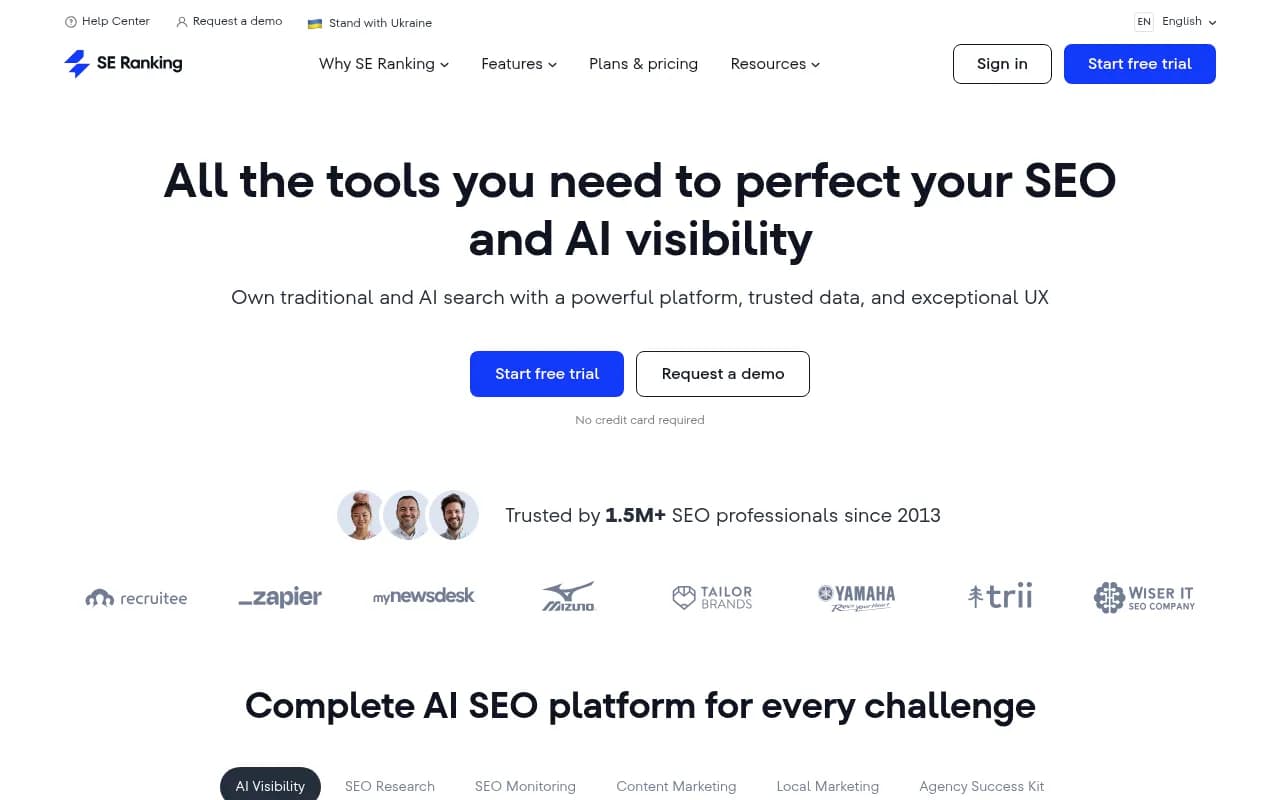
SE Ranking is worth calling out because it's one of the few traditional SEO platforms that has started building AI visibility tracking natively. Their SE Visible product tracks brand presence in AI search, which means you can manage both layers from one platform if you're on a tighter budget.
Layer 2: AI visibility tools for B2B brands
This is where most B2B teams have a blind spot. You can have perfect Google rankings and still be invisible when a buyer asks ChatGPT to recommend solutions in your category.
AI visibility tools track how often your brand is mentioned, cited, or recommended across LLMs — and the better ones help you understand why you're being cited (or not) and what to do about it.
What to look for in an AI visibility tool
| Feature | Why it matters for B2B |
|---|---|
| Multi-LLM coverage | Buyers use ChatGPT, Perplexity, Gemini, Claude — you need visibility across all of them |
| Prompt tracking | B2B buyers ask specific questions; you need to know which prompts you appear for |
| Competitor comparison | Knowing your share of voice vs. competitors is more actionable than raw mention counts |
| Content gap analysis | Tells you what content you're missing that would get you cited |
| AI traffic attribution | Connects AI visibility to actual website visits and pipeline |
| Crawler logs | Shows which AI crawlers are visiting your site and what they're reading |
Promptwatch — the most complete AI visibility platform for B2B
Promptwatch is the platform that covers all of the above. It monitors 10 AI models (ChatGPT, Perplexity, Claude, Gemini, Google AI Overviews, Grok, DeepSeek, Copilot, Meta AI, and Mistral), tracks over 1.1 billion citations and prompts, and — critically — doesn't just show you data. It helps you act on it.
The core workflow is built around three steps: find the gaps (Answer Gap Analysis shows you which prompts competitors appear for that you don't), create content that gets cited (a built-in AI writing agent generates articles grounded in real citation data), and track the results (page-level tracking shows which pages are being cited, by which models, and how often). That loop is what separates it from monitoring-only tools.
For B2B teams specifically, the prompt intelligence features are valuable — you get volume estimates and difficulty scores for each prompt, plus query fan-outs that show how one question branches into related sub-queries. That's useful for prioritizing which content to create first.

Profound — enterprise-grade AI search visibility
Profound positions itself as the enterprise option for B2B SaaS teams, with strong coverage across AI platforms and solid reporting. It's a capable monitoring tool with good competitive analysis features. The main limitation is that it's primarily a tracking platform — it shows you where you stand but doesn't generate content or close the optimization loop.

SE Visible — accessible entry point for smaller teams
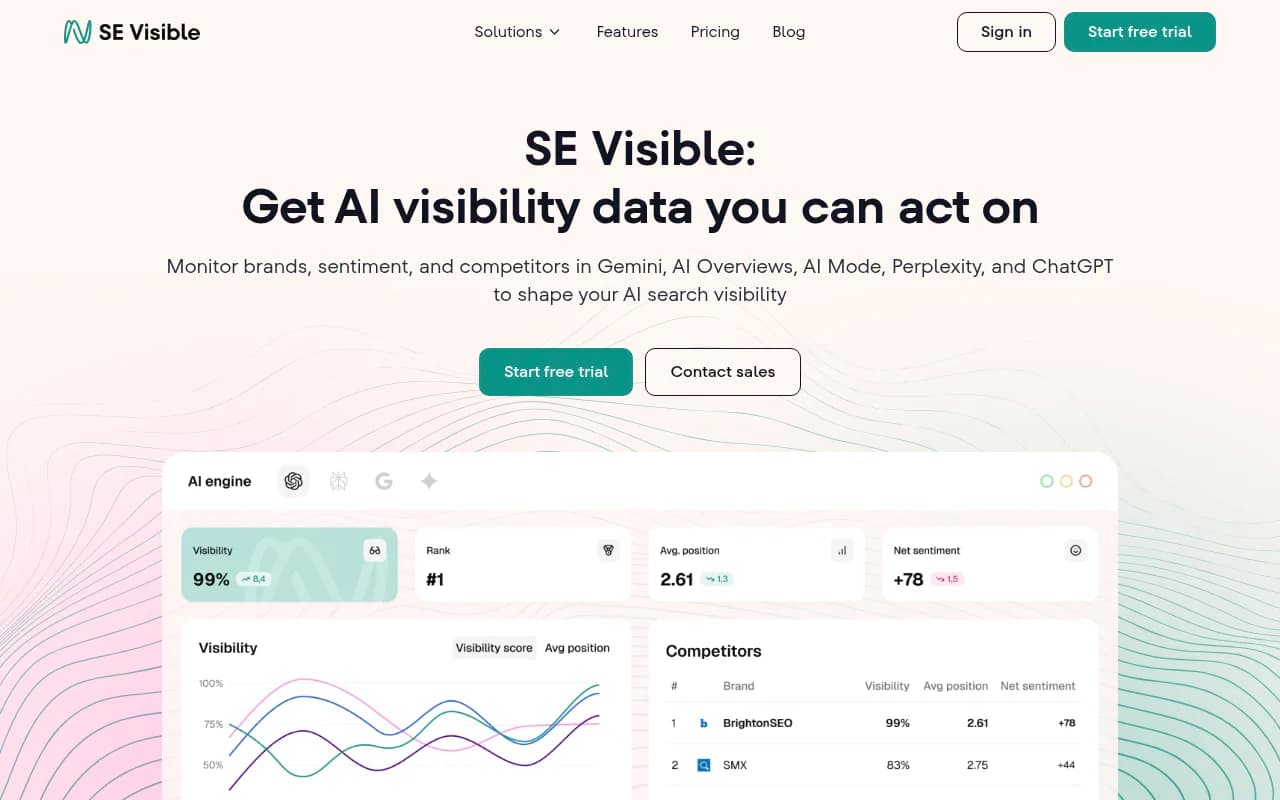
SE Visible (from SE Ranking) is a user-friendly option for teams that want AI visibility tracking without a separate platform. It covers the major LLMs and integrates with SE Ranking's broader SEO data. Good starting point if you're already on SE Ranking and want to add AI monitoring without a big budget jump.
Otterly.AI — affordable monitoring for early-stage teams
Otterly.AI is a lightweight AI visibility tracker that covers the main LLMs at a lower price point. It's monitoring-only — no content generation, no crawler logs, no traffic attribution — but if you're just starting to understand your AI visibility baseline, it's a reasonable first step.

AthenaHQ — multi-engine tracking with competitive heatmaps
AthenaHQ tracks brand visibility across 8+ AI search engines and includes competitive comparison features. Like most monitoring tools, it stops at showing you the data rather than helping you improve it, but the competitive heatmaps are useful for understanding where you're losing ground.

Full comparison: B2B AI SEO tools in 2026
| Tool | Category | AI engine coverage | Content generation | Crawler logs | Traffic attribution | Starting price |
|---|---|---|---|---|---|---|
| Ahrefs | Traditional SEO | None | No | No | No | $129/mo |
| Semrush | Traditional SEO | Limited | Via ContentShake | No | No | $129/mo |
| Surfer SEO | Content optimization | None | Yes (drafts) | No | No | $89/mo |
| Screaming Frog | Technical SEO | None | No | No | No | Free / $259/yr |
| Promptwatch | AI visibility + GEO | 10 models | Yes (full articles) | Yes | Yes | $99/mo |
| Profound | AI visibility | Multiple | No | No | No | Custom |
| SE Visible | AI visibility | Major LLMs | No | No | No | Included with SE Ranking |
| Otterly.AI | AI visibility | Major LLMs | No | No | No | Low |
| AthenaHQ | AI visibility | 8+ models | No | No | No | Custom |
How to build your B2B AI SEO stack in 2026
There's no single tool that covers everything well. The practical approach is to pick one strong tool from each layer and connect them through your content workflow.
A realistic stack for most B2B teams
Research and technical SEO: Ahrefs or Semrush. Ahrefs if your team is more technical and you prioritize backlink and keyword data. Semrush if you want more breadth and your team includes non-technical marketers.
Content optimization: Surfer SEO for on-page optimization of specific pages. Clearscope is a strong alternative if your team prefers its interface.
AI visibility: This is where you need a dedicated tool. Promptwatch covers the full loop from gap analysis to content generation to tracking. If budget is tight, SE Visible or Otterly.AI give you baseline monitoring.
Technical audits: Screaming Frog for crawl-level issues. Run it quarterly at minimum, monthly if your site changes frequently.
What to prioritize first
If you're starting from zero on AI visibility, the first thing to do is establish a baseline. Run your core category prompts through ChatGPT, Perplexity, and Gemini manually — "what are the best [your category] tools for [your ICP]?" — and see if you appear. If you don't, that's your starting point.
From there, a tool like Promptwatch can systematize this across hundreds of prompts and show you the gap between your visibility and your competitors'. The Answer Gap Analysis feature is particularly useful here — it shows you the specific prompts where competitors are being cited and you're not, which tells you exactly what content to create.
The content angle most B2B teams miss
Here's something worth saying directly: most B2B SEO content is written for Google's algorithm, not for how AI engines actually synthesize answers.
AI engines cite content that is specific, authoritative, and directly answers the question being asked. Generic "ultimate guides" with thin information don't get cited. Detailed comparison pages, specific use-case articles, and content that takes a clear position do.
For B2B teams, this means:
- Comparison pages ("X vs Y for [specific use case]") tend to get cited heavily
- Content that addresses specific buyer personas and their exact questions performs better than broad category content
- Data-backed claims and specific numbers give AI engines something concrete to cite
- FAQ-style content that directly answers common buyer questions is underrated
The research from Promptwatch's citation database (880M+ citations analyzed) consistently shows that specificity and directness are the strongest predictors of AI citation. That's a different optimization target than traditional SEO, where comprehensiveness and domain authority dominate.
Tracking what actually matters
One mistake B2B teams make with AI visibility is treating it as a vanity metric — "we appear in X% of responses" without connecting it to pipeline.
The tools that matter most are the ones that close the loop between AI mentions and actual business outcomes. That means tracking:
- Which AI-cited pages are driving traffic (via server logs, GSC integration, or UTM tracking)
- Whether AI-referred visitors convert at different rates than organic search visitors
- Which competitors are gaining AI visibility in your category and why
Promptwatch's traffic attribution features (code snippet, GSC integration, or server log analysis) are built specifically for this. Most monitoring-only tools don't touch it.
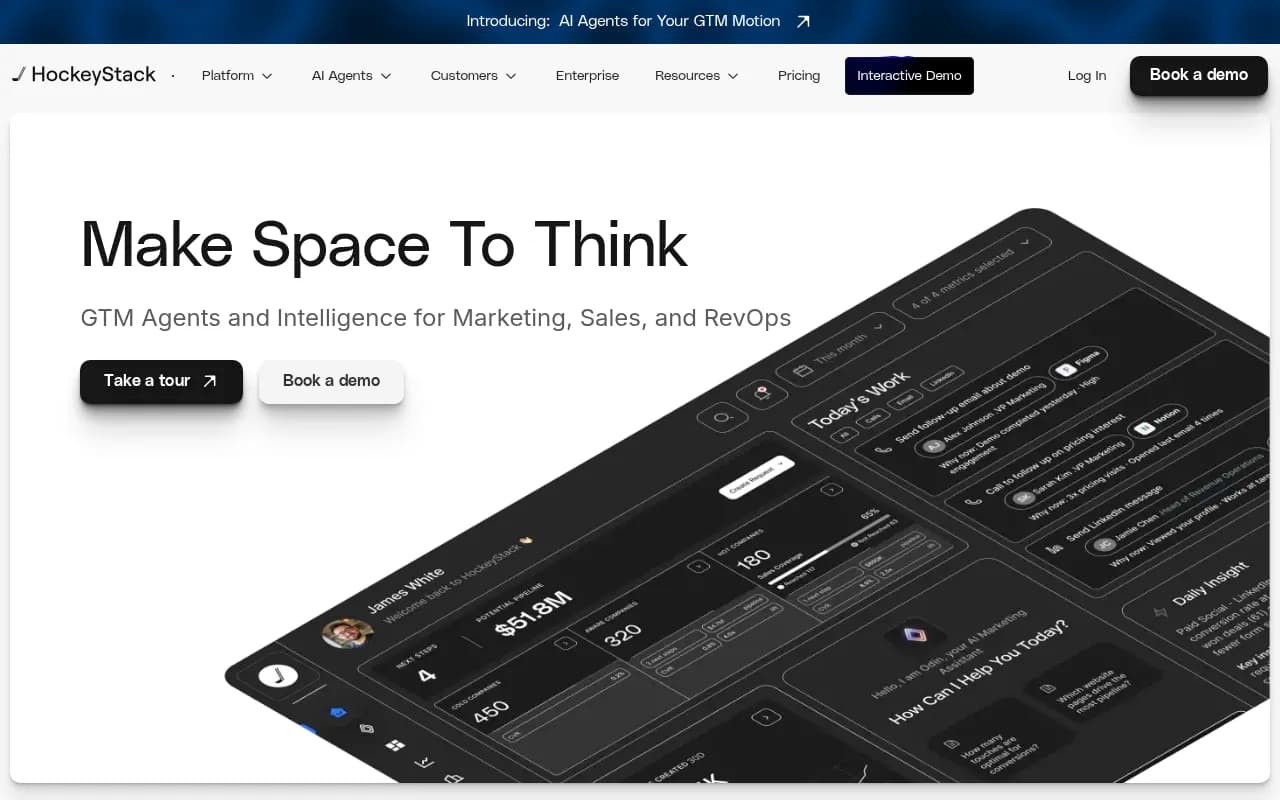
For broader B2B revenue attribution that connects marketing channels to pipeline, HockeyStack is worth looking at — it's built specifically for B2B revenue teams and handles multi-touch attribution across channels.
Final thoughts
The B2B buyer journey now runs through AI engines in a way it didn't two years ago. That's not a prediction anymore — it's what the data shows. Teams that build AI visibility into their SEO strategy now will have a meaningful advantage over those that treat it as a future problem.
The practical starting point: audit your current AI visibility manually, pick one AI visibility tool to systematize it, and make sure your content strategy is producing the kind of specific, authoritative content that AI engines actually cite. The tools exist. The question is whether you use them before your competitors do.