Key takeaways
- AEO (Answer Engine Optimization) tools help brands appear in AI-generated responses from ChatGPT, Perplexity, Google AI Overviews, Claude, and others -- but most tools stop at monitoring.
- The most important distinction in 2026 is between monitoring-only tools and platforms that help you act on what you find -- closing gaps with content, tracking citations, and attributing AI traffic to revenue.
- For teams that need the full loop (find gaps, create content, track results), Promptwatch is the most complete platform available.
- Budget-conscious teams or those just starting out have solid options in Otterly.AI, Peec AI, and Nightwatch.
- Enterprise brands with complex needs should look at Profound, Conductor, or Writesonic alongside Promptwatch.
Traditional search rankings still matter. But in 2026, a brand can sit at position #1 in Google and still be completely invisible to the millions of people asking ChatGPT, Perplexity, or Claude for recommendations. AI-generated answers don't send traffic to whoever ranks highest -- they cite whoever the model trusts most.
That's the problem AEO tools are designed to solve. But here's the thing: the category has exploded in the last 18 months, and a lot of what's being sold as "AEO software" is really just a dashboard that shows you where you're missing. That's useful, but it's not enough.
This guide cuts through the noise. I've looked at the major platforms, what they actually do, where they fall short, and which type of team each one is built for.
What AEO tools actually need to do in 2026
Before getting into specific platforms, it's worth being clear about what separates a useful AEO tool from an expensive vanity dashboard.
The core job is straightforward: you want to know when AI models mention your brand, when they don't, and what you can do about it. But that breaks down into several distinct capabilities:
Monitoring is the baseline. Any tool worth considering should track your brand mentions across the major AI models -- ChatGPT, Perplexity, Google AI Overviews, Claude, Gemini, at minimum. Ideally it covers Grok, DeepSeek, Copilot, and Meta AI too.
Prompt intelligence is where things get more interesting. Which questions are people actually asking AI models in your category? What's the search volume equivalent for a prompt like "best project management software for remote teams"? Which prompts are winnable vs. dominated by entrenched competitors? Without this, you're flying blind on what to optimize for.
Gap analysis is the next level. Not just "you're not mentioned here" but "here are the specific prompts where your competitors appear and you don't, and here's why." This is where most tools fall short.
Content generation is where the real differentiation happens in 2026. A handful of platforms have moved beyond tracking into actually helping you create the content that gets cited. This matters because the fix for most AI visibility gaps is content -- articles, comparisons, FAQs, and listicles that give AI models something to cite.
Traffic attribution closes the loop. Can you connect AI citations to actual website visits and revenue? This is still an emerging capability, but it's increasingly important for justifying AEO investment to stakeholders.
The tools, ranked by what they actually do
Promptwatch -- best for the full optimization loop
Promptwatch is the platform I'd recommend first for any team serious about AI visibility, and the reason is simple: it's the only tool in this category that genuinely closes the loop from discovery to optimization to attribution.
Most competitors show you a dashboard of where you're invisible. Promptwatch shows you the same thing, then helps you fix it. The Answer Gap Analysis identifies specific prompts where competitors appear and you don't -- not in vague terms, but with the actual questions, the competitor pages being cited, and the content angles that are missing from your site.
The built-in AI writing agent then generates articles, listicles, and comparison pages grounded in real citation data from over 880 million citations analyzed. This isn't generic content -- it's engineered around what AI models actually cite. The output is content that has a real shot at getting picked up by ChatGPT, Claude, and Perplexity.
On the monitoring side, Promptwatch covers 10 AI models (ChatGPT, Perplexity, Google AI Overviews, Google AI Mode, Claude, Gemini, Meta/Llama, DeepSeek, Grok, Mistral, Copilot), tracks prompt volumes and difficulty scores, and includes crawler logs that show you exactly which pages AI bots are reading on your site and how often. That last feature is rare -- most competitors don't offer it at all.
Reddit and YouTube tracking is another differentiator. These platforms heavily influence what AI models cite, and being able to surface relevant discussions is genuinely useful for content strategy.
Pricing starts at $99/month for the Essential tier (1 site, 50 prompts, 5 articles), $249/month for Professional (2 sites, 150 prompts, crawler logs, state/city tracking), and $579/month for Business (5 sites, 350 prompts, 30 articles). A free trial is available.

Profound -- strong enterprise monitoring
Profound is a solid platform for enterprise teams that need deep visibility data and don't mind paying for it. It covers the major AI models, offers good competitor benchmarking, and the interface is clean enough that non-technical stakeholders can actually use it.
Where it falls short is on the action side. Profound is primarily a monitoring and analytics platform. You can see where you're missing, but the path from insight to fix requires you to leave the platform and do the work elsewhere. For teams with dedicated content resources, that's fine. For teams that need the whole workflow in one place, it's a gap.

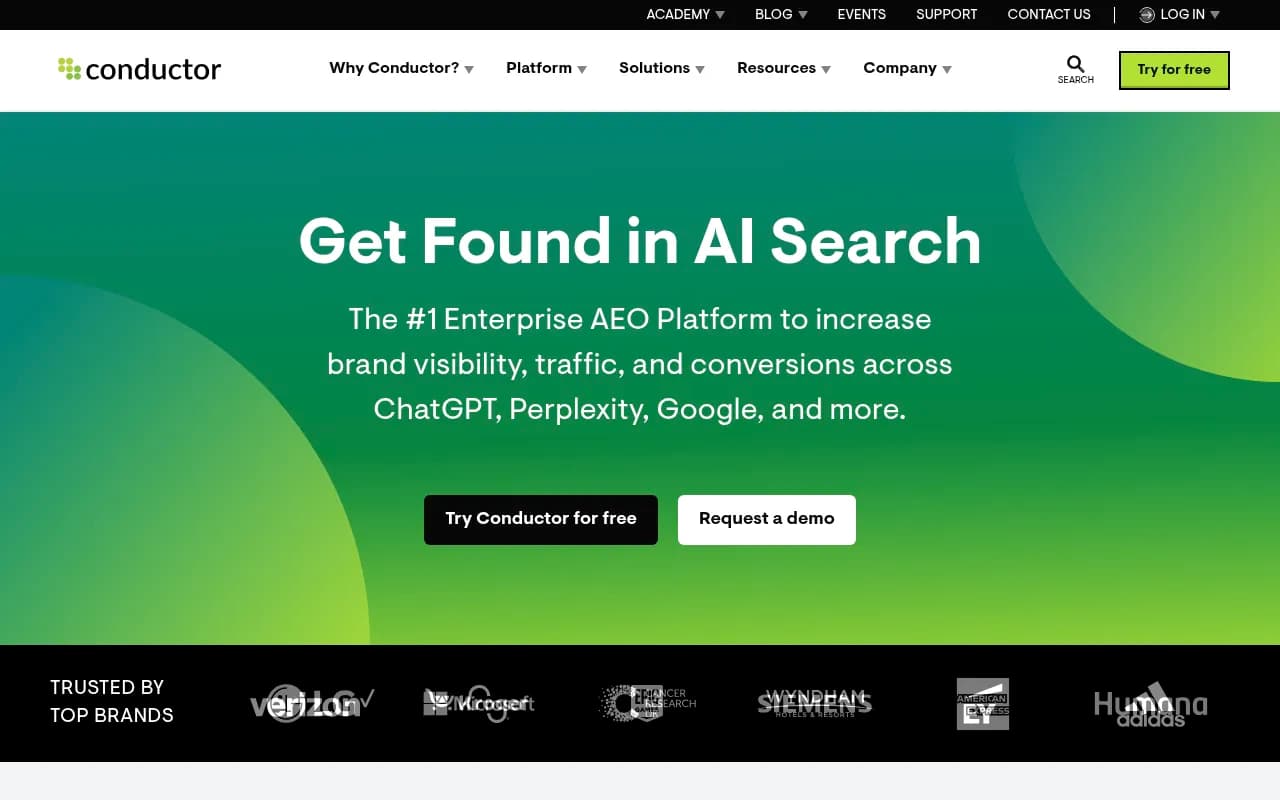
Conductor -- best for enterprise teams with existing SEO workflows
Conductor has been a serious enterprise SEO platform for years, and its AEO capabilities have matured considerably. The AI visibility tracking integrates well with its existing content and SEO tooling, which makes it a natural fit for large teams that are already using Conductor for traditional search.
The persona customization is genuinely useful -- you can configure how prompts are run to match different customer segments, which gives you more realistic visibility data than tools that run generic queries.
The downside is cost and complexity. Conductor is enterprise-priced and enterprise-scoped. If you're a mid-market brand or agency, it's probably more than you need.
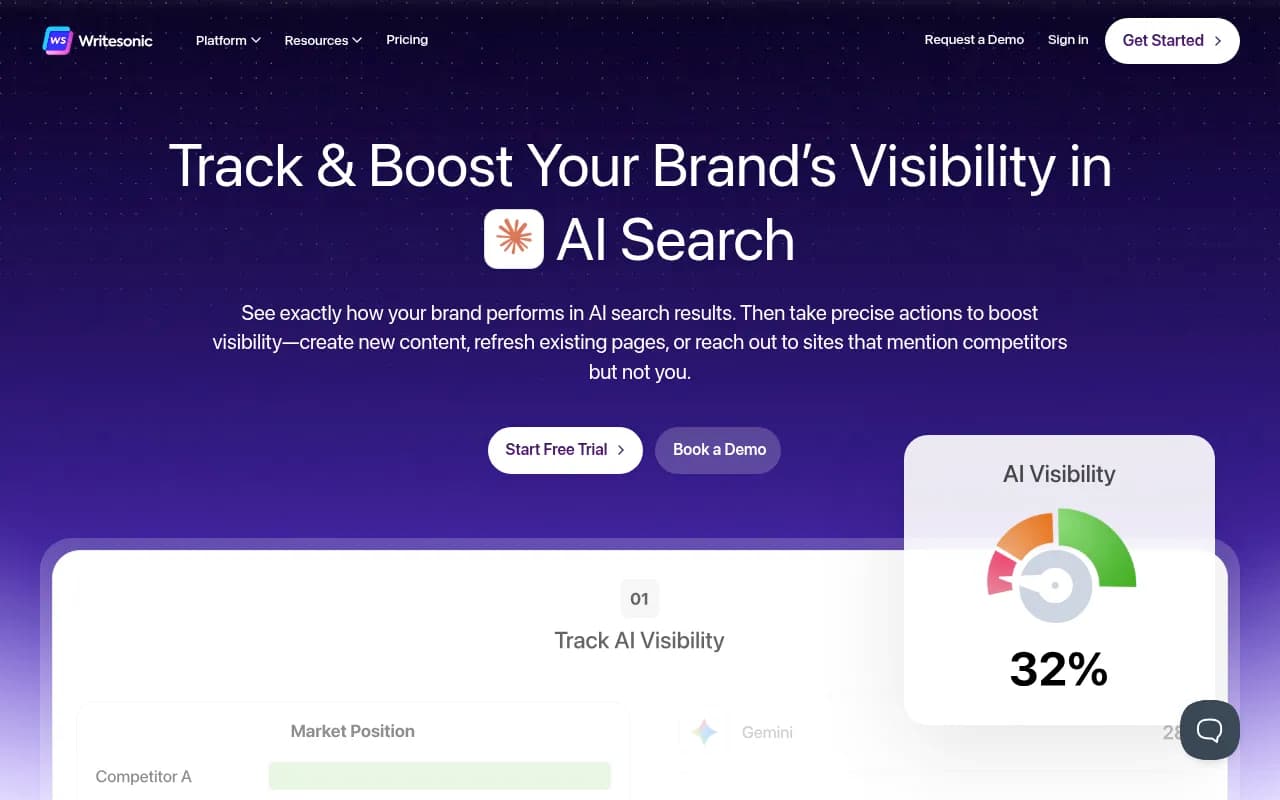
Writesonic -- best for content-heavy AEO workflows
Writesonic has evolved from an AI writing tool into a more complete GEO/AEO platform, and the combination works reasonably well. The visibility tracking covers ChatGPT, Google AI Mode, AI Overviews, Gemini, Perplexity, and Claude, and the in-platform content optimization workflow is genuinely useful.
What I like about Writesonic's approach is that the citation analysis informs the content creation directly -- you can see which sources AI models are citing in a given topic area and use that to shape what you write. At $199/month, it's positioned in the mid-market and is worth considering for content-focused teams.
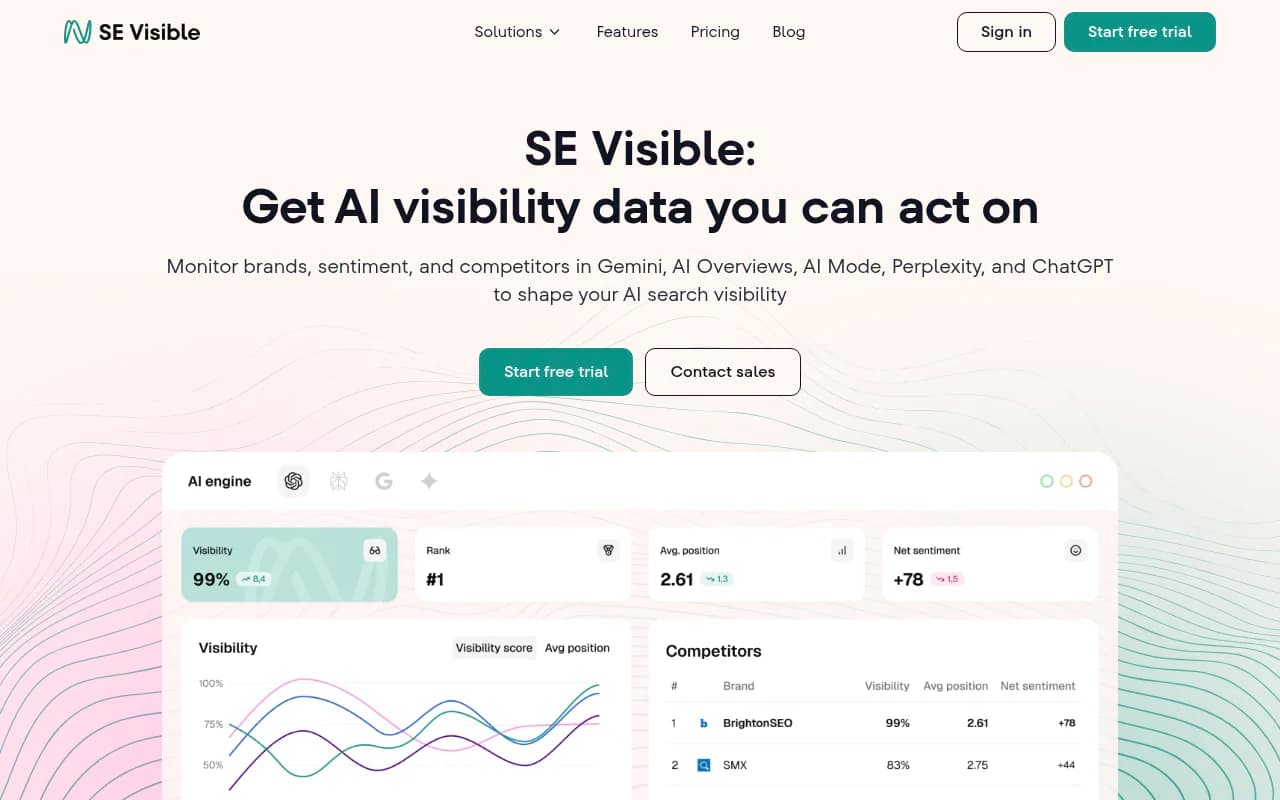
SE Visible -- best value for brand monitoring
SE Visible (from SE Ranking) offers a clean, accessible AEO monitoring experience at a price point ($99/month) that makes it accessible to smaller teams. It covers AI Overviews, AI Mode, Gemini, ChatGPT, and Perplexity, and the competitor insights and sentiment scoring are well-implemented.
It's a monitoring tool, not an optimization platform. But if you're at the stage where you just need to understand your AI visibility baseline before investing in a more complete solution, SE Visible is a sensible starting point.
Otterly.AI -- best for budget-conscious teams getting started
Otterly.AI is one of the more affordable options in the category and covers the basics well. Brand mention tracking, share of voice, competitor comparisons -- it does what it says. The interface is simple enough that you can be up and running quickly.
The limitations are real: no crawler logs, no content generation, no traffic attribution. It's a monitoring dashboard, and a decent one. But if you're serious about improving your AI visibility rather than just measuring it, you'll outgrow it.

Peec AI -- best for multi-language tracking
Peec AI's standout feature is multi-language and multi-region support, which is genuinely rare in this category. If you're running campaigns across multiple markets and need to track AI visibility in different languages, Peec AI is worth a serious look.
The core monitoring functionality is solid. Like Otterly.AI, it's primarily a tracking tool without deep content optimization capabilities, but the international coverage fills a gap that most competitors ignore.

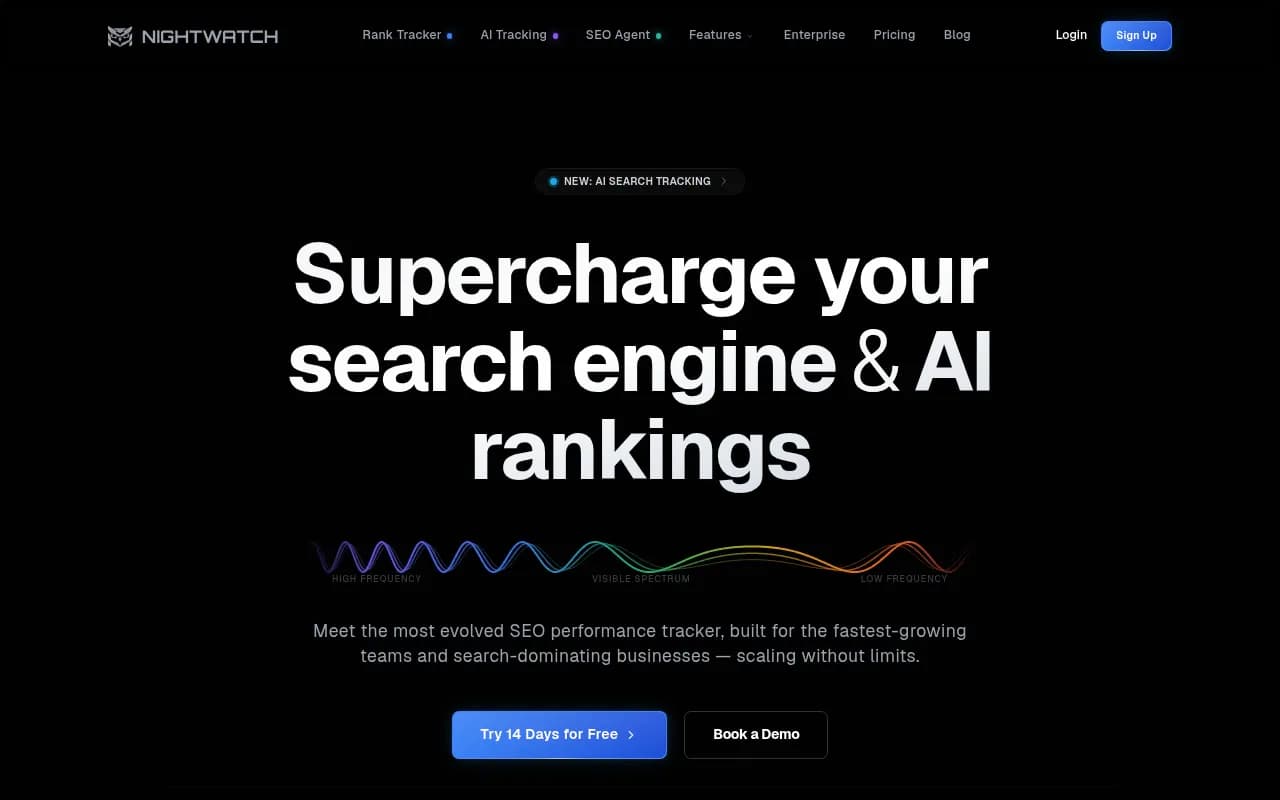
Nightwatch -- best for agencies combining SEO and AEO
Nightwatch has built a reputation in traditional rank tracking, and its AI visibility add-on extends that into AEO territory. The combination of classic SEO metrics and AI visibility data in one platform is genuinely useful for agencies managing both channels for clients.
The zip-code level tracking is a nice touch for local SEO work. At $39/month base plus $99 for the AI add-on, it's competitively priced for agencies with multiple clients.
AthenaHQ -- solid monitoring across 8+ AI engines
AthenaHQ covers a wide range of AI platforms and offers clean competitor benchmarking. It's a monitoring-focused tool, which means the same caveat applies as with Otterly.AI and Peec AI -- you'll see the problem clearly but need to solve it elsewhere.

Semrush -- best for teams already in the Semrush ecosystem
Semrush has added AI visibility tracking to its platform, which is convenient if you're already a subscriber. The integration with keyword research, site auditing, and content tools means you can work in one place.
The limitations are worth knowing: Semrush uses fixed prompt sets rather than letting you define your own, and there's no AI traffic attribution. For teams that need flexible prompt tracking or want to connect AI citations to revenue, that's a real constraint.
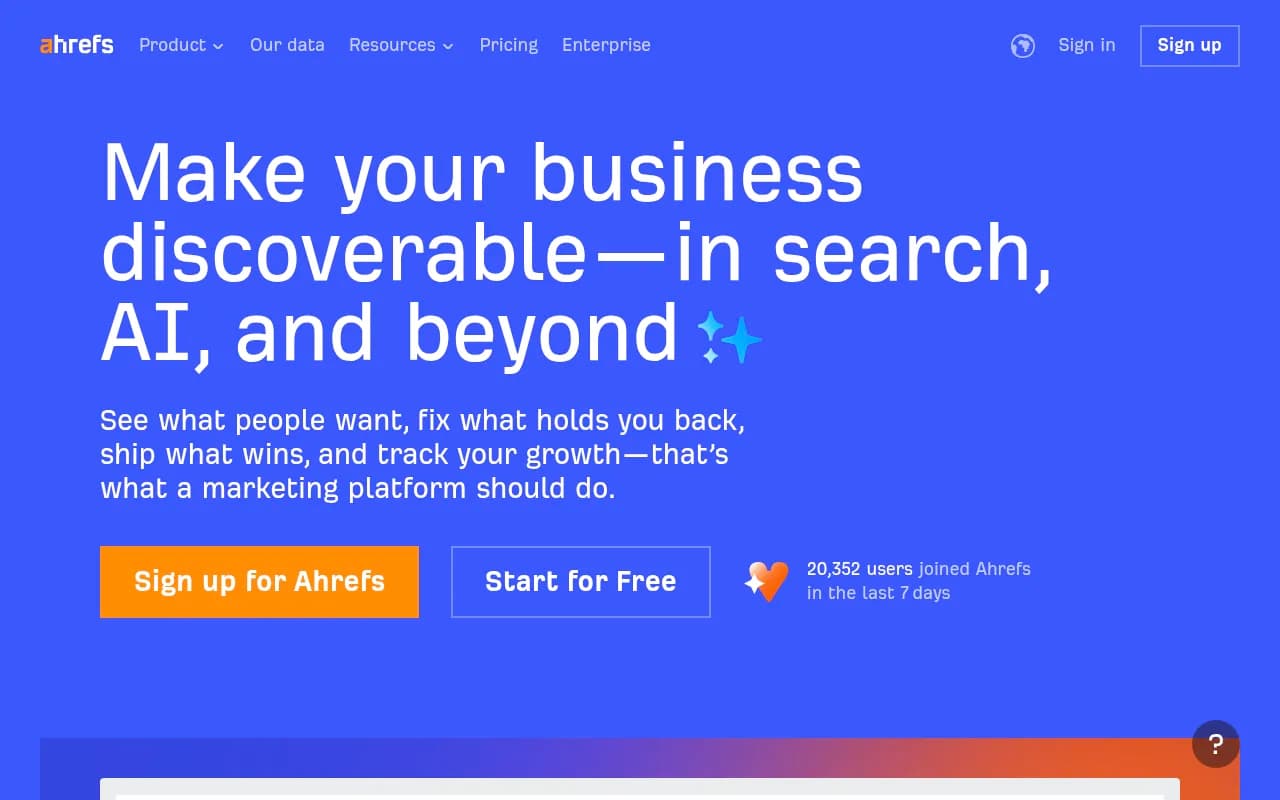
Ahrefs Brand Radar -- useful addition for Ahrefs users
Similar story to Semrush. Ahrefs Brand Radar is a useful addition to the Ahrefs suite for teams already subscribed, but it has fixed prompts and no AI traffic attribution. It's a starting point, not a complete AEO solution.
How the tools compare
Here's a direct comparison across the dimensions that matter most:
| Tool | AI models tracked | Prompt flexibility | Content generation | Crawler logs | Traffic attribution | Best for |
|---|---|---|---|---|---|---|
| Promptwatch | 10 (most complete) | Custom prompts | Yes (AI writing agent) | Yes | Yes (GSC, snippet, logs) | Full optimization loop |
| Profound | 6-8 | Custom | No | No | Limited | Enterprise monitoring |
| Conductor | 5-6 | Custom + personas | No | No | No | Enterprise SEO teams |
| Writesonic | 6 | Custom | Yes | No | No | Content-focused teams |
| SE Visible | 5 | Custom | No | No | No | Brand monitoring |
| Otterly.AI | 4-5 | Custom | No | No | No | Budget monitoring |
| Peec AI | 4-5 | Custom | No | No | No | Multi-language tracking |
| Nightwatch | 5 | Custom | No | No | No | Agencies (SEO + AEO) |
| AthenaHQ | 8+ | Custom | No | No | No | Multi-engine monitoring |
| Semrush | 3-4 | Fixed | No | No | No | Existing Semrush users |
| Ahrefs Brand Radar | 3-4 | Fixed | No | No | No | Existing Ahrefs users |
How to choose the right AEO tool for your situation
The honest answer is that the right tool depends on where you are in your AEO journey and what you actually need to do with the data.
If you're just starting out and want to understand your baseline AI visibility without a big budget commitment, Otterly.AI or SE Visible will get you oriented. Expect to outgrow them.
If you're an agency managing multiple clients across SEO and AI search, Nightwatch's combined approach is worth the price. Promptwatch's agency/enterprise tier is worth evaluating if you need content generation capabilities for clients.
If you're a marketing or SEO team at a mid-market or enterprise company that needs to actually move the needle on AI visibility -- not just report on it -- Promptwatch is the most complete option. The gap analysis, content generation, and attribution capabilities mean you can justify the investment with real traffic and revenue data.
If you're operating across multiple languages and markets, Peec AI's international coverage is worth the trade-off on other features, though pairing it with a content-generation tool is advisable.
If you're already deep in the Semrush or Ahrefs ecosystem, their AI tracking features are a reasonable starting point, but be clear about their limitations before assuming they'll cover your needs.
What most AEO tools are still missing
It's worth being honest about where the whole category is still immature.
Traffic attribution is genuinely hard. Connecting an AI citation to a website visit requires either a tracking snippet, server log analysis, or a Google Search Console integration -- and even then, the data is incomplete because many AI models don't pass referrer information reliably. Promptwatch has the most complete approach here, but it's still an evolving problem across the industry.
Content performance feedback loops are also underdeveloped. Most tools can tell you that you published a piece and that your visibility improved, but the causal link between specific content decisions and citation gains is still fuzzy. Expect this to improve as the category matures.
Real-time monitoring is another gap. Most platforms run queries on a schedule (daily or weekly) rather than continuously. For fast-moving topics or competitive categories, that lag matters.
The bottom line
The AEO tools market in 2026 is full of dashboards that show you problems. What's rarer -- and more valuable -- is a platform that helps you solve them.
If your goal is to understand your AI visibility baseline, any of the monitoring tools in this list will do the job. If your goal is to actually improve it, you need a platform with content gap analysis, content generation grounded in citation data, and the ability to track what's working. That's a shorter list, and Promptwatch sits at the top of it.