Key takeaways
- AI answer engines like ChatGPT, Perplexity, and Google AI Overviews now handle millions of local queries ("best plumber in Austin", "top dentist near downtown Chicago") -- and most local businesses aren't optimized for them at all
- Getting cited in AI search for local queries requires different signals than traditional local SEO: structured content, entity clarity, and prompt-level visibility matter more than star ratings alone
- Tools with city/region-level tracking (not just national-level) are essential -- otherwise you're flying blind on whether AI models actually recommend you in your market
- The gap between monitoring and optimization is where most local businesses lose: knowing you're not cited is step one, but you need content and entity fixes to actually change that
- A handful of tools in 2026 now support local-level AI visibility tracking, and the right choice depends heavily on your budget, the number of locations you manage, and whether you need content generation alongside tracking
Why local businesses have an AI search problem right now
Here's what's happening. Someone in Denver types "best HVAC company in Denver" into ChatGPT. Or they ask Perplexity "who are the top-rated family dentists near Capitol Hill Seattle." These aren't edge cases anymore -- they're everyday queries that used to go to Google Maps or a local search results page.
The problem is that AI answer engines don't pull from the same signals as Google's local pack. They're synthesizing information from web content, review platforms, Reddit threads, local directories, and whatever pages their crawlers have indexed. If your business doesn't have clear, well-structured content that establishes your location, your services, and your expertise, you simply won't appear in those answers.
A 2025 Ahrefs study found that only 12% of URLs cited by ChatGPT, Gemini, and Copilot also rank in Google's top 10 for the same prompt. That's a massive decoupling. Your Google rankings don't automatically translate to AI citations, and for local businesses competing in specific cities or regions, this gap is even more pronounced.
The good news is that the tools to address this are maturing fast. The bad news is that most of them were built for enterprise brands tracking national-level visibility. Finding the right fit for a local business -- or an agency managing 20 local clients -- takes some work.
What "local AEO" actually means
Answer Engine Optimization for local businesses is about making sure AI models can confidently answer questions like:
- "What's the best [service] in [city]?"
- "Who are the top [business type] near [neighborhood]?"
- "Is [business name] good? What do people say about them?"
- "Which [service provider] in [region] accepts [insurance/payment type]?"
To answer these, AI models need to find content that clearly establishes:
- What you do (specific services, not vague descriptions)
- Where you do it (city, neighborhood, region -- not just a zip code in your footer)
- Why you're credible (reviews, mentions, third-party citations)
- How you compare to alternatives in the same area
This is different from national AEO, where you're competing on topical authority at scale. Local AEO is about geographic entity clarity and being the most-cited, most-mentioned option for your specific market.
The signals AI models use for local queries
Before picking tools, it helps to understand what AI engines are actually looking at when they answer local queries. Based on how models like ChatGPT and Perplexity synthesize local information, the key signals include:
- Your website's location-specific pages (service area pages, city landing pages, location-specific FAQs)
- Google Business Profile data (which gets scraped and referenced)
- Review content on Google, Yelp, Tripadvisor, and niche directories
- Reddit and forum discussions mentioning your business or category in your city
- Local news mentions and press coverage
- Third-party listicles ("best [service] in [city]" articles from local publications)
- Structured data markup (LocalBusiness schema, service schema, FAQ schema)
The implication: local AEO isn't just about your website. It's about your entire digital footprint in a specific geography. Tools that only track your own site will miss half the picture.
What to look for in a local AEO tool
Not every AEO tool is built for local use cases. Here's what actually matters when you're a local business or an agency managing local clients:
City and region-level tracking. Can the tool track AI responses for queries with specific city or neighborhood modifiers? Many tools only track generic prompts. You need to know what ChatGPT says when someone in your city asks about your category.
Multi-location support. If you manage multiple locations or multiple local clients, you need a tool that can track each location separately without blowing up your budget.
Competitor visibility at the local level. Who else is getting cited in your city? Which competitors appear in AI answers for your target prompts? This is different from national competitor tracking.
Offsite citation tracking. Since AI models pull from Reddit, local directories, and third-party listicles, you need visibility into which external sources are influencing AI answers in your market.
Content gap analysis. Once you know you're not being cited, you need to know why and what to create to fix it. Tools that stop at monitoring leave you stuck.
Affordable entry points. Enterprise pricing doesn't work for a local plumbing company or a regional dental group. The tool needs to be accessible.
The best AEO tools for local businesses in 2026
Promptwatch -- best for local businesses that want to track and fix visibility
Promptwatch is the most complete option for local businesses that want to go beyond monitoring. Its city and state-level tracking (available on the Professional plan at $249/month) lets you track AI responses for location-specific prompts -- so you can see exactly what ChatGPT or Perplexity says when someone in your city searches for your category.
What separates it from most tools is the action loop: Answer Gap Analysis shows you which prompts competitors are getting cited for in your market but you're not, and Content Agents help you create the specific pages and content that fill those gaps. For a local business, that might mean generating a well-structured "best [service] in [city]" page that AI models can actually cite, or an FAQ page that directly answers the questions people are asking in your region.
The AI Crawler Logs feature is genuinely useful here too -- you can see when ChatGPT or Perplexity crawls your site, which pages they read, and whether those pages are moving from "crawled" to "cited." Most local businesses have no idea whether AI crawlers are even visiting their site.

Pricing starts at $99/month (Essential), with city/state-level tracking on the Professional plan at $249/month. For agencies managing multiple local clients, custom agency pricing is available.
Nightwatch -- best for agencies managing local SEO + AI visibility together
Nightwatch has been a solid local SEO tool for years, and its AI visibility add-on makes it genuinely useful for local AEO work. The standout feature is zip-code-level tracking, which lets you monitor AI responses at a granular geographic level that most tools don't support.
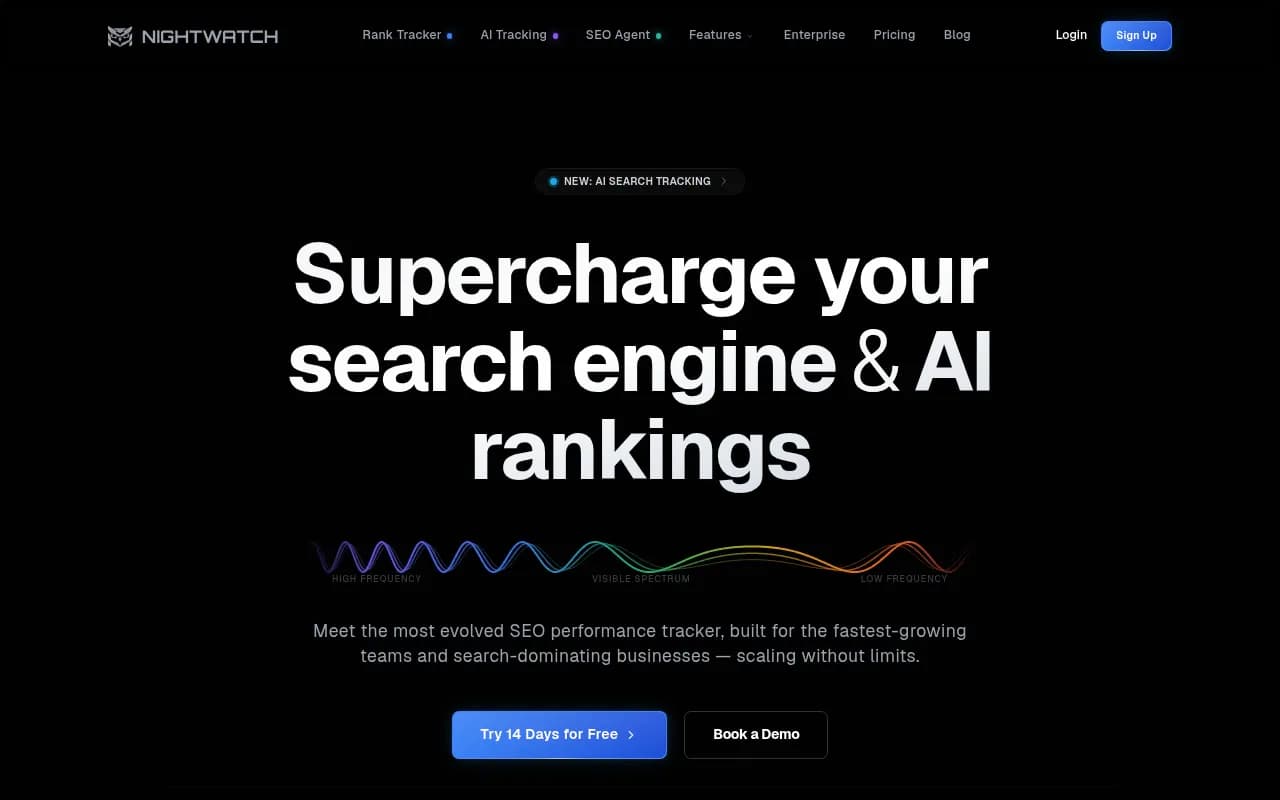
The base plan starts at $39/month, with the AI visibility add-on at $99/month. For agencies running local SEO campaigns alongside AI visibility tracking, having both in one platform reduces the tool sprawl significantly.
SE Visible -- best for understanding AI sentiment and brand positioning locally
SE Visible (from SE Ranking) tracks AI responses across Google AI Overviews, AI Mode, Gemini, ChatGPT, and Perplexity. Its sentiment scoring is useful for local businesses that want to understand not just whether they're cited, but how AI models describe them -- which matters a lot when someone asks "is [business name] good?"
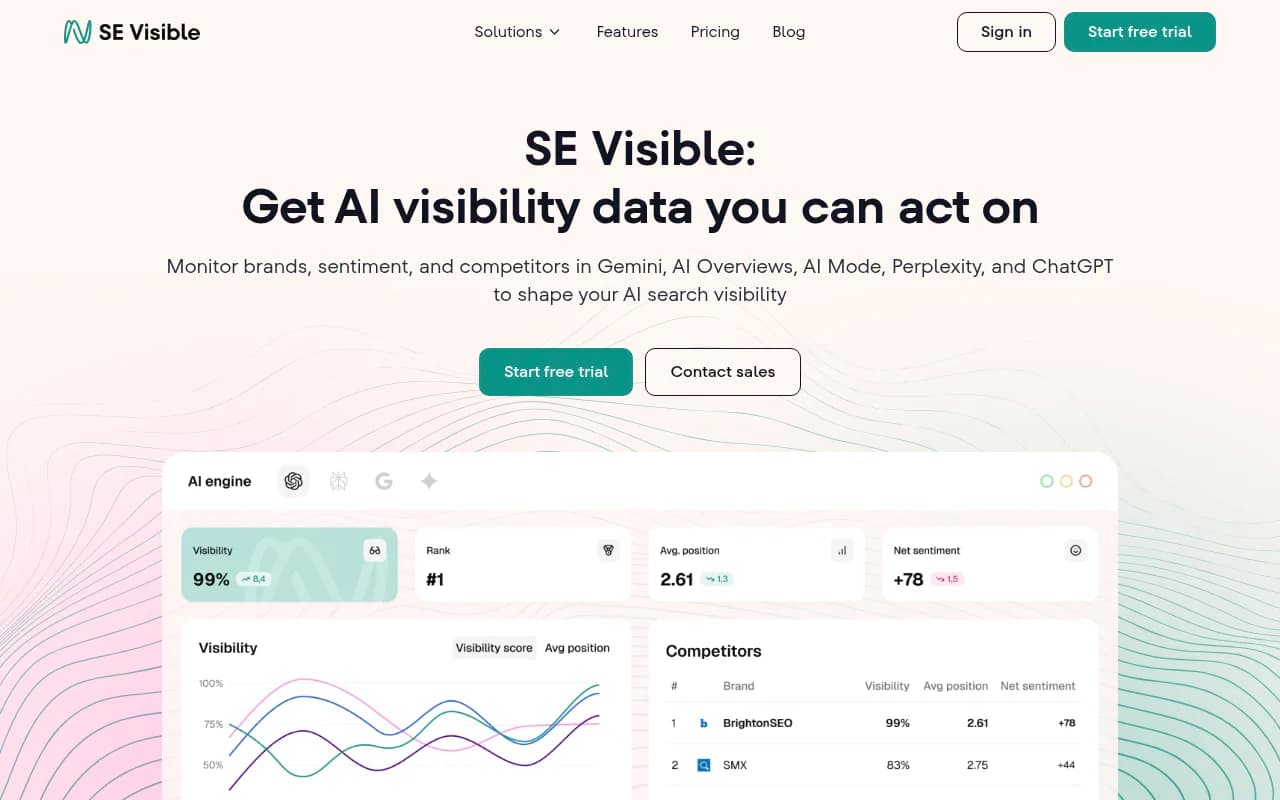
At $99/month, it's accessible for small businesses. The competitor intelligence features let you see which local competitors are appearing in AI answers and what sources are driving those citations.
Otterly.AI -- best budget option for solo operators and small local businesses
If you're a single-location business with a limited budget and you just want to start tracking whether you appear in AI answers for your key prompts, Otterly.AI is the most accessible entry point. It's monitoring-only -- no content generation, no gap analysis -- but it's affordable and easy to set up.

The limitation is that it won't tell you what to do when you're not appearing. But as a starting point for understanding your current AI visibility, it works.
Peec AI -- best for multi-language and multi-region local tracking
For businesses operating in multiple regions or countries -- a franchise network, a regional chain with locations in different markets -- Peec AI's multi-language tracking is worth considering. It handles AI visibility monitoring across different languages and regions, which most tools don't do well.

Rankscale -- best for tracking prompt-level visibility with difficulty scoring
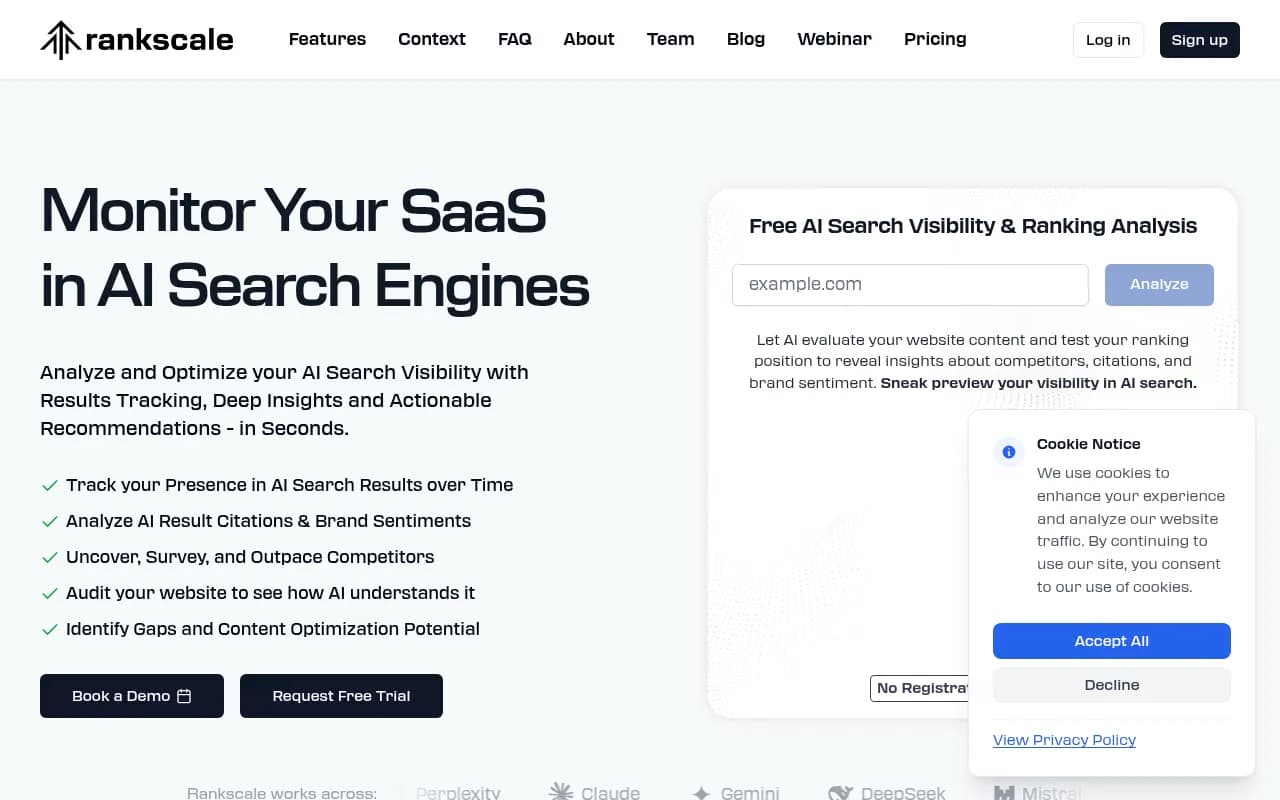
Rankscale includes prompt difficulty scoring and volume estimates, which helps local businesses prioritize which queries to target first. Instead of guessing whether "best dentist in Austin" or "affordable family dentist Austin" is worth optimizing for, you get data to make that call.
Tool comparison: local AEO features
| Tool | City/region tracking | Content generation | Competitor intel | Offsite citations | Best for | Starting price |
|---|---|---|---|---|---|---|
| Promptwatch | Yes (state/city on Pro+) | Yes (Content Agents) | Yes | Yes | Full action loop, agencies | $99/mo |
| Nightwatch | Yes (zip-code level) | No | Basic | No | Local SEO + AI combo | $39/mo + $99 add-on |
| SE Visible | Limited | No | Yes | No | Sentiment + brand positioning | $99/mo |
| Otterly.AI | Basic | No | Basic | No | Budget monitoring | Low |
| Peec AI | Yes (multi-language) | No | Basic | No | Multi-region/language | Varies |
| Rankscale | Yes | No | Yes | No | Prompt prioritization | Varies |
How to actually get cited in local AI answers: a practical approach
Tracking is step one. Here's what moves the needle for local businesses:
Build location-specific content that answers real questions
AI models cite pages that directly answer the questions being asked. For local businesses, that means creating pages like:
- "[Service] in [City]: What to expect, how to choose, and who we are"
- "Frequently asked questions about [service] in [neighborhood/region]"
- "[City] [service] guide: costs, options, and what locals should know"
These aren't keyword-stuffed landing pages. They're genuinely useful pages that establish your location, your expertise, and your relevance to local queries. AI models can extract and cite specific answers from well-structured content.
Get your LocalBusiness schema right
Structured data is one of the clearest signals you can send to AI crawlers. Make sure your LocalBusiness schema includes your exact service area (not just your address), your specific services, your hours, and your review aggregate. This helps AI models confidently place you in a geographic context.
Earn citations on the sources AI models actually pull from
Check which sources AI models cite when answering local queries in your category. Often it's a mix of Yelp, Google Business, local news sites, and "best of" listicles from local publications. Getting mentioned in those sources -- through PR, review generation, or outreach to local bloggers -- directly improves your AI citation rate.
Tools like Promptwatch's offsite citation analysis show you exactly which external sources are driving AI citations in your category, so you can focus your efforts there instead of guessing.
Monitor and iterate
AI model behavior changes. A page that gets cited today might not be cited in three months. Regular tracking -- at least monthly for key prompts -- lets you catch citation decay before it affects your business. The AI Crawler Logs in tools like Promptwatch show you when models are re-crawling your pages, which is an early signal of whether your content is staying relevant.
Common mistakes local businesses make with AEO
Tracking only generic prompts. "Best plumber" tells you nothing useful. "Best plumber in [your city]" tells you whether you're actually visible in your market. Always include location modifiers in your tracked prompts.
Ignoring offsite signals. Your website is only part of the picture. If the top "best [service] in [city]" listicle on a local publication doesn't mention you, that's a gap worth fixing -- and it's often easier to address than rewriting your own content.
Treating AI visibility as a one-time project. AI models update their training data and crawling behavior regularly. Local AI visibility is an ongoing maintenance task, not a one-time optimization.
Optimizing for the wrong AI models. Different AI engines have different citation behaviors. ChatGPT Shopping recommendations work differently from Perplexity's local answers, which work differently from Google AI Overviews. Know which models your customers actually use.
Not connecting visibility to revenue. If you can't tie AI citations to actual leads or calls, it's hard to justify the investment. Look for tools that offer traffic attribution alongside visibility tracking.
Getting started: a realistic roadmap for local businesses
If you're starting from scratch, here's a practical sequence:
-
Pick 10-20 prompts that represent how your customers actually search for your category in your city. Include variations with neighborhood names, service types, and intent modifiers ("affordable", "emergency", "best rated").
-
Set up tracking in a tool that supports city-level monitoring. Run those prompts across ChatGPT, Perplexity, and Google AI Overviews to get a baseline.
-
Audit your existing content against the gaps. Which questions are AI models answering that your site doesn't address? Which competitors are being cited and why?
-
Create or update 3-5 pages that directly address your highest-priority gaps. Focus on location-specific, question-answering content with proper schema markup.
-
Monitor monthly. Track whether your new content gets crawled, then cited. Adjust based on what's working.
The whole process is more manageable than it sounds. Most local businesses have 5-10 genuinely high-value prompts to target, and fixing those gaps doesn't require a massive content operation -- it requires focused, well-structured pages that AI models can actually use.
The local businesses that move on this now will have a real advantage. Most of their competitors are still thinking about Google rankings while their customers are already asking AI assistants for recommendations.