Key takeaways
- AI search responses are non-deterministic -- fewer than 1 in 1,000 prompt runs produce the same brand list, so "ranking" in the traditional sense doesn't apply
- Daily tracking is the minimum viable cadence for competitive categories; weekly is acceptable for lower-stakes niches
- Pages stale for 3+ months are 3x more likely to lose AI visibility, so tracking cadence should inform your content refresh schedule
- The metrics that matter are citation frequency, share of voice, and sentiment accuracy -- not a single "position"
- Brands earning both a mention and a citation in AI answers are up to 40% more likely to maintain ongoing visibility
Why traditional ranking checks don't translate to AI search
If you've been running weekly rank checks in Google Search Console and assuming the same logic applies to AI visibility, you're working with a broken mental model.
Traditional SEO rankings are deterministic. Type a query, get a result, check your position. The same query tomorrow returns roughly the same list. AI search doesn't work that way.
Searchable's research found that fewer than 1 in 1,000 prompt runs produce the same brand list. ChatGPT, Perplexity, Claude, and Gemini are probabilistic systems. They don't have a fixed "slot 1" for your category. They have a distribution -- your brand appears in some percentage of responses to a given prompt, and that percentage shifts based on what the model has crawled recently, how competitors' content has changed, and even subtle variations in how the question is phrased.
This has a direct implication for tracking frequency: a single data point is almost meaningless. What you actually need is a statistical picture built from many prompt runs over time.
As Rand Fishkin noted in a Near Media episode on AI visibility measurement: "You can track brand presence frequency with statistical rigor -- if you run prompts enough times, avoid assuming models are identical." That's the right frame. You're not checking a rank. You're measuring a probability.
The real cost of checking too infrequently
Here's what happens when teams check AI visibility monthly or "whenever someone asks":
A competitor publishes a well-structured comparison article in week one. AI crawlers index it within days. By week two, that article starts appearing as a citation in responses to prompts your brand used to own. By week three, your share of voice on those prompts has dropped 20-30%. You don't notice until your monthly check -- and by then, three weeks of buyer discovery has happened without you.
AirOps research found that brands earning both a mention and a citation in AI-generated answers are up to 40% more likely to maintain ongoing visibility. The flip side: once you lose that citation foothold, rebuilding it takes time. You can't just publish a page and expect AI models to pick it up overnight. Crawl cycles, content freshness signals, and re-indexing all take days to weeks.
The other risk is content staleness. Pages that haven't been updated in 3+ months are 3x more likely to lose AI visibility, according to AirOps 2026 data. If you're only checking monthly, you're probably not catching the staleness signal early enough to act before citations drop.
How often should you actually track?
The honest answer is: it depends on your category, your competitive intensity, and what you're tracking. Here's a practical breakdown.
Daily tracking: when it's worth it
Daily tracking makes sense if:
- You're in a category where AI search directly influences purchase decisions (software, financial products, travel, healthcare)
- You have active competitors publishing content regularly
- You've recently launched a content push and want to see how fast AI models pick it up
- You're tracking a specific high-value prompt where visibility directly correlates to pipeline
Daily tracking doesn't mean running 500 prompts every 24 hours. It means running your top 20-30 most commercially important prompts daily, and using that data to catch early signals of movement.
Weekly tracking: the baseline for most brands
For most marketing teams, weekly tracking across a broader prompt set (50-150 prompts) is the right default cadence. It gives you enough data points to distinguish a real trend from random model variance, without burning through your prompt budget or overwhelming your team with noise.
Weekly cadence also aligns well with content publishing cycles. If you publish new content on Tuesday, a Friday check tells you whether crawlers have picked it up. A check the following Monday tells you if it's starting to influence citations.
Monthly tracking: only for low-stakes monitoring
Monthly checks are fine for brand health monitoring in categories where AI search isn't yet a primary discovery channel. But if you're in B2B SaaS, e-commerce, or any category where Perplexity or ChatGPT are actively influencing buyer research, monthly is too slow. You'll always be reacting to problems rather than preventing them.
What to track at each cadence
Tracking frequency is only useful if you're measuring the right things. Here's what to focus on:
| Metric | What it tells you | Recommended cadence |
|---|---|---|
| Citation frequency | How often your brand appears in AI responses to a given prompt | Daily (top prompts), weekly (full set) |
| Share of voice | Your citations vs. competitors' across a prompt set | Weekly |
| Sentiment accuracy | Whether AI describes your brand correctly and positively | Weekly |
| Ghost citation rate | Times AI mentions you without linking to your site | Weekly |
| Platform coverage | Which AI engines cite you vs. ignore you | Weekly |
| Page-level citations | Which specific pages on your site are being cited | Weekly |
| AI crawler activity | When and how often AI bots are crawling your site | Daily (via logs) |
| Content freshness signals | Last-updated dates on pages being cited | Monthly audit |
The ghost citation rate is one that teams often ignore. It's when an AI model mentions your brand by name but doesn't cite your website as a source. That means you're getting brand awareness but no traffic -- and it also means a competitor's page is probably getting the citation credit instead.
The cadence trap: more data isn't always better
There's a temptation to track everything daily across every AI model. Resist it.
Running the same prompt 50 times a day across 10 models generates a lot of numbers, but it doesn't necessarily generate more insight. What you actually need is:
- Enough prompt runs per prompt to get a statistically meaningful frequency estimate (typically 10-20 runs per prompt per week)
- Consistent prompt phrasing so you're measuring the same thing over time
- Separation between models -- ChatGPT and Perplexity behave differently, so aggregate numbers can mask model-specific trends
The practical implication: a focused set of 50-100 well-chosen prompts, run consistently at weekly cadence with daily checks on your top 10-15, will give you more actionable data than a sprawling 500-prompt set checked sporadically.
Setting up your tracking infrastructure
Choose prompts that reflect real buyer behavior
Don't just track branded prompts ("what is [your brand]?"). Track the category-level and comparison prompts that buyers actually use: "best [category] tools for [use case]", "alternatives to [competitor]", "[category] for [industry]". These are the prompts where AI visibility directly influences purchase consideration.
Track across multiple models
ChatGPT, Perplexity, Google AI Overviews, Claude, and Gemini don't always agree. A brand that dominates ChatGPT responses might be invisible on Perplexity. Tracking only one model gives you a partial picture. At minimum, cover the two or three models your target audience actually uses.
Connect crawler logs to your tracking data
One of the most underused signals is AI crawler activity on your own site. When ChatGPT's crawler visits a page, that's often a leading indicator that the page is being considered for citation. If you can see crawler activity in your logs, you can often predict citation changes before they show up in your visibility scores.
Build a content refresh trigger into your workflow
Your tracking cadence should feed directly into content decisions. A practical rule: if a page's citation frequency drops more than 20% over two consecutive weekly checks, flag it for a content refresh. Don't wait for a quarterly content audit.
Tools worth knowing about
A number of platforms have built tracking infrastructure specifically for AI visibility. Here are some worth evaluating:
Promptwatch is one of the more complete options -- it tracks across 10 AI models, provides page-level citation data, and includes AI crawler logs that show you when bots hit your site and how that correlates with citation changes. The crawler log feature is particularly useful for the "leading indicator" use case described above.

For teams that want to track visibility across ChatGPT, Perplexity, Claude, and Gemini with a clean dashboard, several purpose-built tools have emerged:


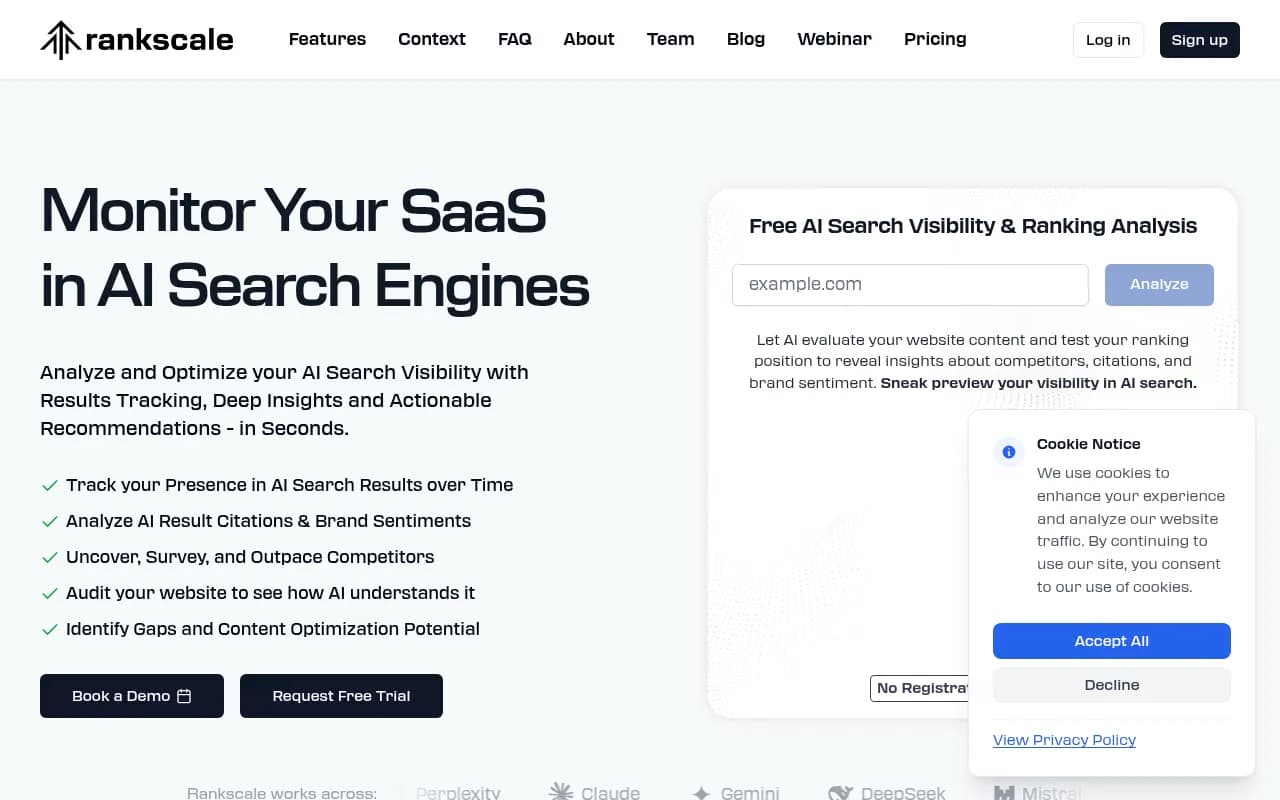
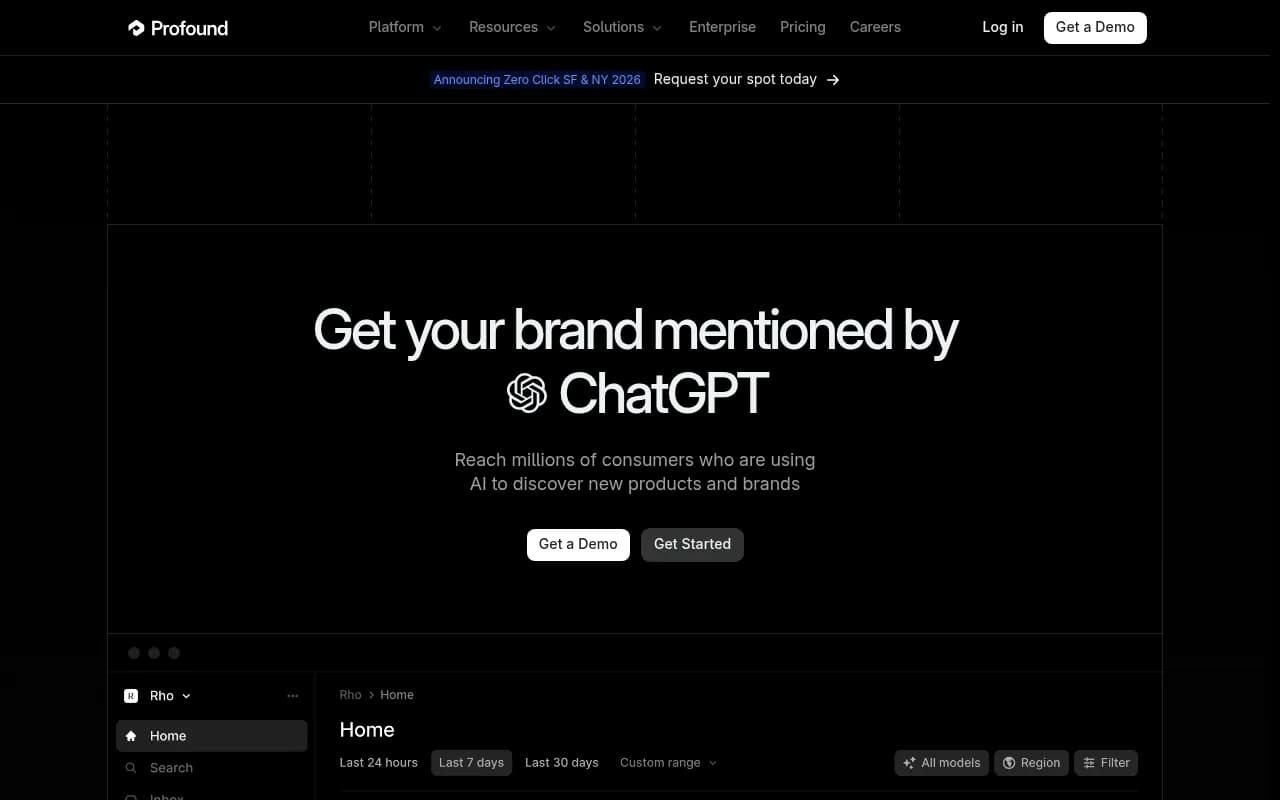
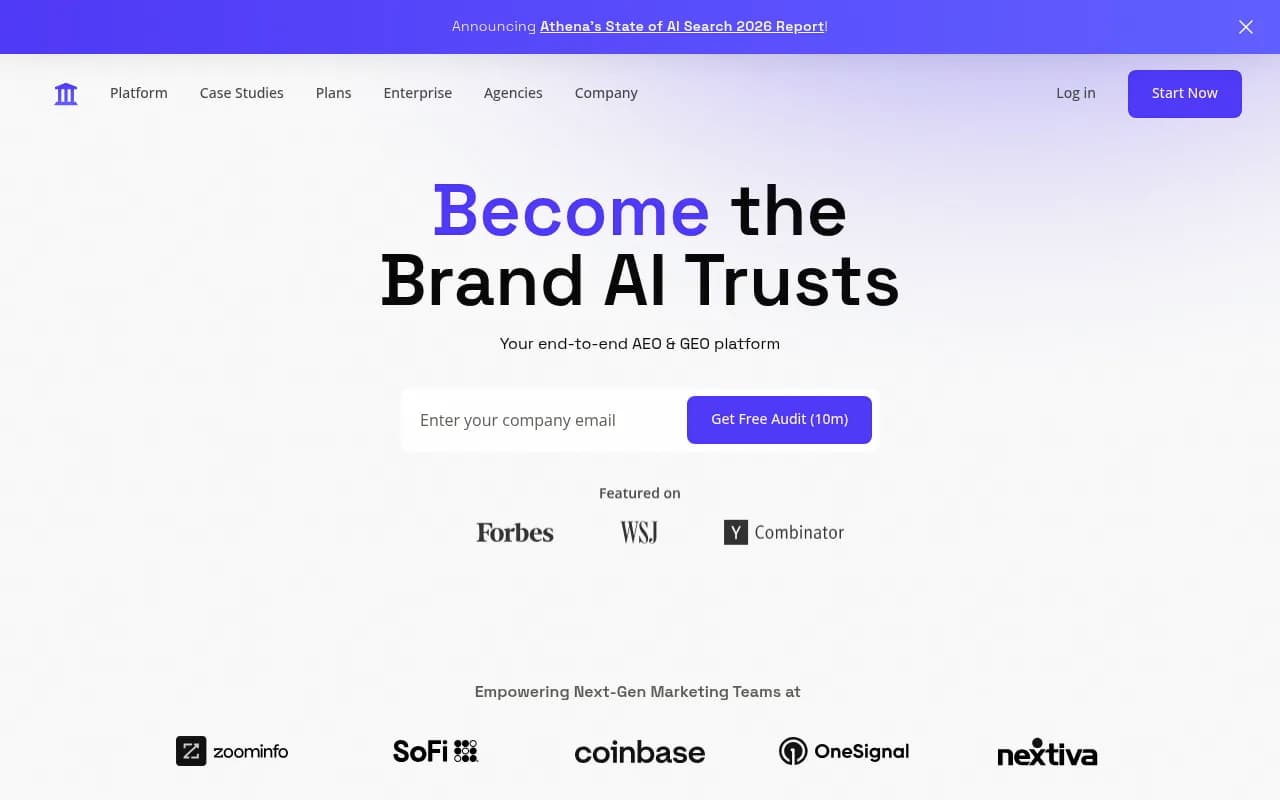
Most of these tools handle the core tracking loop well. Where they differ is in what happens after you see a drop. Monitoring-only platforms show you the problem. Platforms like Promptwatch go further by helping you identify which content gaps caused the drop and generating content to close them.
A practical weekly workflow
Here's what a functional AI visibility tracking workflow looks like in practice:
Monday: Review weekly citation frequency report. Flag any prompts where your brand's appearance rate dropped more than 15% vs. the prior week. Note which competitors gained share on those prompts.
Tuesday: Check AI crawler logs. Did any of your key pages get crawled in the past 7 days? If a page that used to get regular crawler visits has gone quiet, that's an early warning sign.
Wednesday: Review sentiment accuracy on flagged prompts. Is the AI describing your product correctly? Inaccurate descriptions often precede citation drops as models update their understanding of your brand.
Thursday: Check ghost citation rate. Are there prompts where you're mentioned but not cited? Those are candidates for content optimization -- the AI knows about you but isn't confident enough in your pages to link them.
Friday: Update your content refresh queue based on the week's data. Pages with declining citation rates get prioritized for updates.
This isn't a full-time job. With the right tooling, the Monday review takes 20-30 minutes. The rest is exception-handling.
When to escalate from weekly to daily
A few specific triggers should prompt you to shift to daily tracking temporarily:
- A major competitor just published a significant content push (comparison pages, category guides, etc.)
- You've published new content and want to track the crawl-to-citation timeline
- You've noticed a sudden drop in AI-referred traffic in your analytics
- A new AI model has launched or significantly updated its training data
- You're running a campaign and need to know if AI visibility is supporting it
Daily tracking during these windows gives you the resolution to understand what's happening and respond quickly. Once the situation stabilizes, you can drop back to weekly.
The connection between tracking cadence and content strategy
The most important thing tracking frequency buys you isn't just early warning. It's a feedback loop.
When you track weekly and act on what you see, you start to understand how long it takes AI models to pick up your content changes. For most brands, the timeline from publish to crawl is 3-10 days. From crawl to citation, add another 1-3 weeks. That means a content refresh you publish today might not show up in your citation data for 3-4 weeks.
Understanding that timeline changes how you prioritize. If you're seeing a citation drop now, the content that will fix it needs to be published this week, not next month.
It also changes how you think about content freshness. AI models appear to weight recently-updated content more heavily than stale pages. A page that was last updated 6 months ago is competing against a competitor's page updated last week. Regular tracking tells you which pages are at risk before the citation data confirms it.
The brands that are winning AI visibility in 2026 aren't the ones with the most content. They're the ones with the tightest feedback loop between tracking data and content action.