Key takeaways
- AI referral traffic converts at roughly 9x the rate of Google organic search, but most of it is misattributed as "Direct" or "(not set)" in GA4 by default.
- ChatGPT started appending
utm_source=chatgpt.comto citation links in mid-2025, making some attribution automatic -- but other platforms still don't do this. - You can set up a custom channel group in GA4 using regex filters to catch the AI traffic that does send referral data -- it takes about 20 minutes.
- Server-side tracking and log file analysis are the only reliable ways to capture the traffic that arrives with no referrer at all.
- Dedicated GEO platforms like Promptwatch go further by connecting AI citation data to actual traffic, so you can see which content is being cited and by which models.
Why this matters more than most marketers realize
Here's a number worth sitting with: ChatGPT referral traffic converts at 15.9%, according to a 2025 Seer Interactive study. Google organic search converts at 1.76%. That's nearly a 10x difference.
And yet, only 16% of brands systematically track AI search performance. The rest have no idea where this traffic is coming from, how much of it they're getting, or which pages are driving it.
Part of the problem is that AI traffic is genuinely hard to track. It doesn't behave like Google search traffic. Some AI platforms send clean referral data. Others strip it entirely. Some visits arrive looking like direct traffic. Some get swallowed by "(not set)" in GA4. The result is that your best-converting channel is probably hiding in your analytics right now, mislabeled as something else.
This guide walks through exactly how to find it, attribute it properly, and then connect it to the broader question of AI visibility -- because knowing a visitor came from Perplexity is useful, but knowing why Perplexity cited you (and how to get cited more often) is where the real value is.
How AI platforms send traffic -- and why attribution breaks
Before fixing your tracking, it helps to understand why the problem exists.
When someone clicks a link in a traditional Google search result, the browser sends a referrer header to your server. GA4 picks that up and logs it as organic search traffic. Clean and simple.
AI platforms are messier. Here's what actually happens depending on the platform:
ChatGPT started appending utm_source=chatgpt.com to outbound links in mid-2025. This means visits from ChatGPT citations now show up with UTM parameters in GA4 -- if you're looking for them. Before that change, and for any links where the parameter gets stripped, traffic showed up as direct or referral with no clear label.
Perplexity sends a referrer header (perplexity.ai), so it shows up in referral reports -- but it's lumped in with all other referral traffic unless you create a custom channel.
Google AI Overviews and AI Mode are trickier. Clicks from AI Overviews often arrive with the same referrer as regular Google search, making them nearly impossible to separate in GA4 without additional signals.
Claude and Gemini have inconsistent referrer behavior. Some visits arrive with a referrer, some don't. The ones that don't look like direct traffic.
Copilot and Grok are similar -- partial referrer data at best.
The net result: a meaningful chunk of your AI traffic is invisible in standard GA4 reports. Some of it is in "Direct," some in "Referral," some in "(not set)." The exact split depends on which platforms are citing you and how users are accessing those platforms (web vs. app vs. API).
Method 1: Custom channel groups in GA4 (the 20-minute fix)
This is the most accessible starting point. GA4 lets you create custom channel groups that use regex to match session sources and mediums. You can use this to pull AI traffic out of the referral bucket and give it its own labeled channel.
Step-by-step setup
- In GA4, go to Admin > Data Display > Channel Groups
- Click Create new channel group
- Name it something like "AI Search Traffic"
- Add a new channel called "AI Assistants" (or split by platform if you want granularity)
- Set the condition to match Session source using regex
Here's a regex pattern that covers the main AI platforms:
chatgpt\.com|perplexity\.ai|claude\.ai|gemini\.google\.com|copilot\.microsoft\.com|you\.com|phind\.com|grok\.x\.com|mistral\.ai
- Save the channel group
- Apply it to your reports under Reports > Acquisition > Traffic acquisition, then switch the channel group from "Default" to your new one
You'll start seeing AI traffic broken out from that point forward. GA4 doesn't backfill historical data with new channel groups, so the sooner you set this up, the more data you'll have.
What this catches -- and what it misses
This method works well for traffic that arrives with a referrer header from one of these domains. It catches Perplexity reliably. It catches ChatGPT visits that include the utm_source=chatgpt.com parameter. It misses anything that arrives as direct traffic with no referrer -- which, depending on your traffic mix, could be a significant portion.
It also requires manual updates as new AI platforms emerge. If a new AI assistant starts sending you traffic from a domain you haven't added to your regex, it'll slip through.
Method 2: UTM parameter tracking for ChatGPT
Since ChatGPT now appends utm_source=chatgpt.com to citation links, you can build a dedicated segment in GA4 specifically for this parameter.
In GA4, go to Explore > Blank exploration and add a segment with the condition:
- Session source exactly matches
chatgpt.com
Or filter your Traffic Acquisition report by source containing chatgpt.com.
This gives you a clean view of ChatGPT-referred sessions with full behavioral data: pages visited, session duration, conversions, and so on. It's the most reliable signal you have right now for a single AI platform.
The limitation is obvious: only ChatGPT does this consistently. You can't replicate it for Perplexity or Claude without those platforms making the same change.
Method 3: Server log analysis (catching the invisible traffic)
This is the most complete method, and also the most technical. Your web server logs every request that hits your site, including requests from AI crawlers and from users who arrive with no referrer. GA4 only sees what the JavaScript tracking snippet captures -- which means it misses server-side requests entirely.
By analyzing your server logs, you can:
- See which AI crawlers (GPTBot, ClaudeBot, PerplexityBot) are visiting your pages and how often
- Identify patterns in "direct" traffic that correlate with AI citation events
- Catch visits from AI apps that strip referrer headers
The process involves pulling your access logs (from your hosting provider, Cloudflare, or your CDN), filtering for known AI user agent strings, and analyzing the patterns. It's not a quick setup, but it gives you data that no client-side tool can provide.
If you're on a platform like Cloudflare, you can set up log forwarding to a data warehouse or analytics tool and build dashboards on top of it. Tools like Promptwatch include AI crawler log analysis as a feature, showing you which pages AI bots are reading, how often they return, and whether they're encountering errors -- which is useful context for understanding why certain pages get cited and others don't.

Method 4: Dedicated AI visibility and attribution platforms
GA4 custom channels are a good start, but they only show you traffic that already arrived. They don't tell you how visible you are across AI platforms, which prompts are triggering citations of your content, or why a competitor is getting cited instead of you.
That's where dedicated platforms come in. The market has grown quickly -- there are now dozens of tools positioning themselves as "GEO" or "AI visibility" platforms. They vary significantly in what they actually do.
Here's a comparison of the main approaches:
| Tool | Traffic attribution | Citation tracking | Content gap analysis | AI crawler logs | Content generation |
|---|---|---|---|---|---|
| Promptwatch | Yes (code snippet, GSC, server logs) | Yes (page-level, per model) | Yes | Yes | Yes |
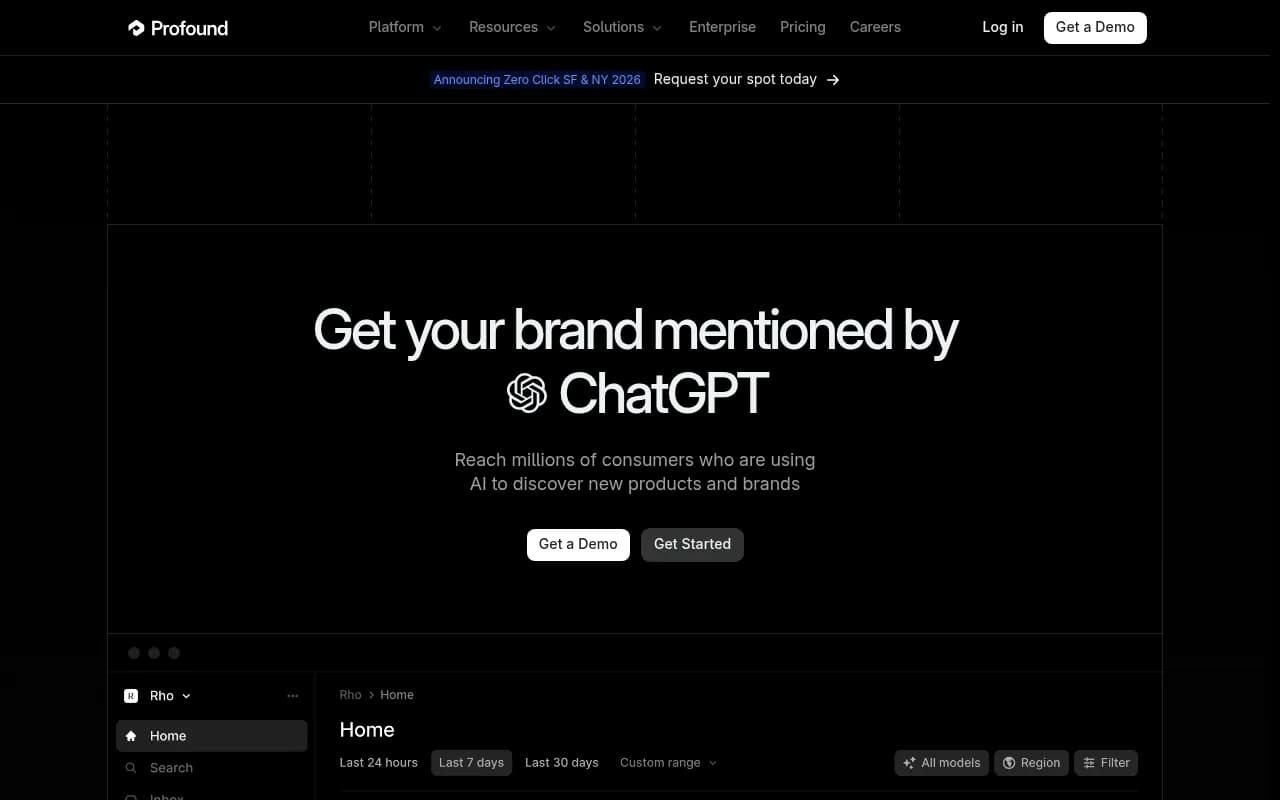
| Profound | Partial | Yes | Limited | No | No |
| Otterly.AI | No | Yes | No | No | No |
| Peec.ai | No | Yes | No | No | No |
| AthenaHQ | No | Yes | No | No | No |
| Semrush | Partial | Limited | No | No | No |
| Ahrefs Brand Radar | No | Limited | No | No | No |
Most of the monitoring-only tools stop at showing you citation data. That's useful, but it leaves you with a gap between "I know I'm not being cited" and "I know what to do about it." Promptwatch closes that loop by connecting citation data to traffic attribution and then providing content gap analysis and AI-optimized content generation to act on what you find.


Reading the data: what to look for once you have it
Once you have AI traffic properly attributed, the next question is what to do with it. Here are the metrics that actually matter.
Conversion rate by AI source
This is the most important number. AI-referred traffic converts at dramatically different rates depending on the platform and the intent behind the query. A visitor from Perplexity who clicked a citation in a product comparison answer is much closer to buying than someone who clicked a blog link from a general ChatGPT response.
Segment your conversions by AI source in GA4 and look for patterns. Which platforms send buyers? Which send researchers who never convert?
Pages being cited
Which pages on your site are actually getting cited by AI platforms? This is something GA4 alone can't tell you -- you need either a dedicated tracking tool or server log analysis. But it's critical information. If your homepage is getting cited but your product pages aren't, that's a content gap you can fix.
Landing page behavior
When AI-referred visitors land on your site, what do they do? High bounce rates from AI traffic might mean the page they landed on doesn't match what the AI told them they'd find. Low time-on-page might mean the content isn't structured in a way that works for someone who already got a summary from an AI.
Share of voice across prompts
This goes beyond traffic attribution into AI visibility monitoring. For the prompts that matter to your business, how often does your brand appear in AI responses compared to competitors? Tools like Promptwatch track this across 10 AI models, so you can see whether you're winning or losing visibility for specific queries.
The "dark traffic" problem: what you still can't see
Even with all of the above in place, there's a portion of AI-influenced traffic you probably can't attribute. Yotpo's research calls this "dark traffic" -- visits that are influenced by AI but arrive with no signal that connects them to an AI source.
This happens when:
- A user asks an AI assistant a question, gets an answer that mentions your brand, then searches for your brand name directly in Google
- A user copies a URL from an AI response and pastes it into their browser
- A user sees your brand cited in an AI app that strips referrer headers
The honest answer is that this traffic is largely unattributable with current tooling. What you can do is look for correlated signals: if your branded search volume in Google Search Console increases after you start appearing in AI responses for certain queries, that's a reasonable proxy for AI influence on brand awareness.
This is also why AI visibility monitoring matters even when you can't directly attribute traffic. Being cited by ChatGPT or Perplexity has downstream effects on branded search, direct traffic, and conversion rates that don't show up cleanly in any single attribution report.
Practical setup checklist
Here's a condensed action list to get your AI traffic attribution working:
In GA4 (do this today):
- Create a custom channel group with regex matching for major AI platforms
- Build an exploration segment for
utm_source=chatgpt.com - Set up a conversion event if you haven't already, so you can measure AI traffic quality
Server-side (if you have technical resources):
- Enable access log collection and export to a queryable format
- Filter for known AI user agent strings (GPTBot, ClaudeBot, PerplexityBot, PerplexityBot, Applebot-Extended)
- Build a dashboard to monitor crawl frequency by page
For ongoing monitoring:
- Pick a dedicated AI visibility tool that matches your scale and budget
- Track your citation share across the AI platforms your audience uses
- Connect citation data to traffic data to close the attribution loop
Tools worth knowing about
Beyond the big platforms, a few specialized tools are worth looking at depending on your use case.
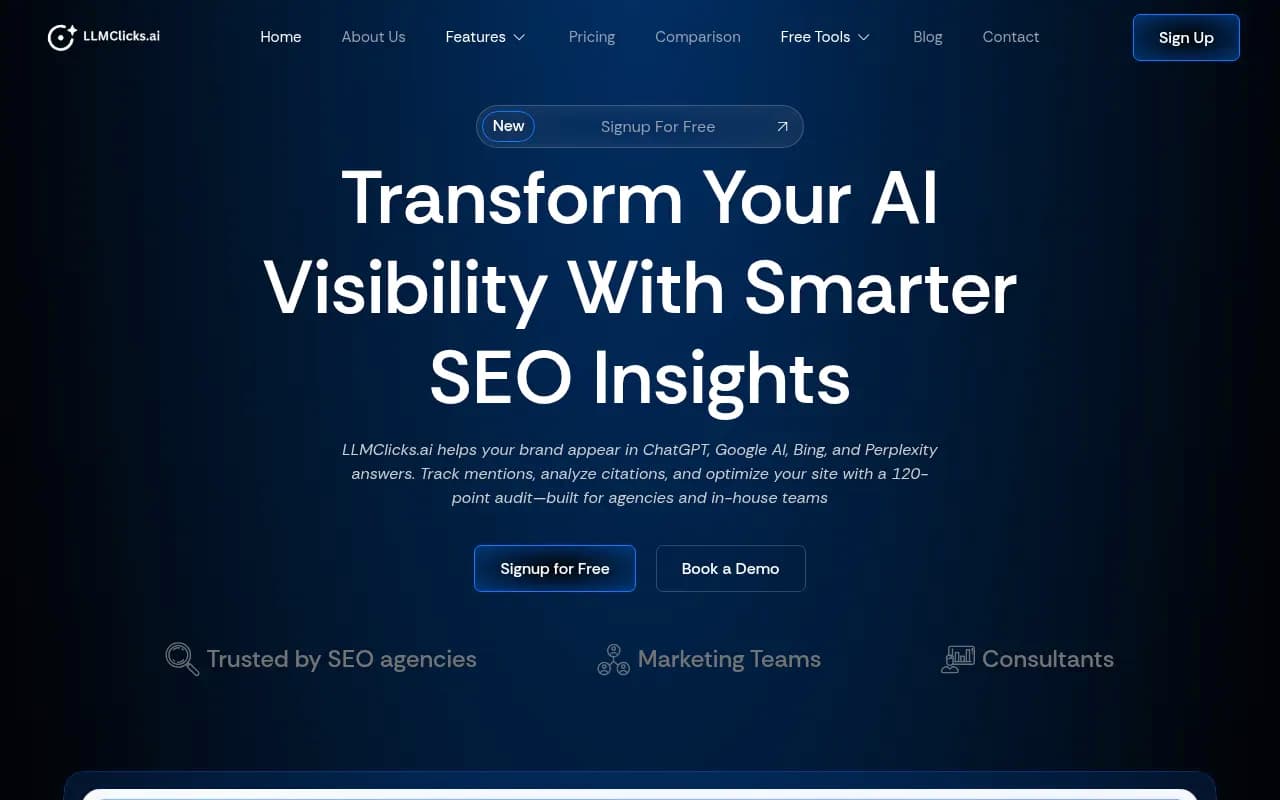
LLM Clicks is specifically built for citation tracking -- it shows you which AI platforms are linking to your content and how often those links get clicked.
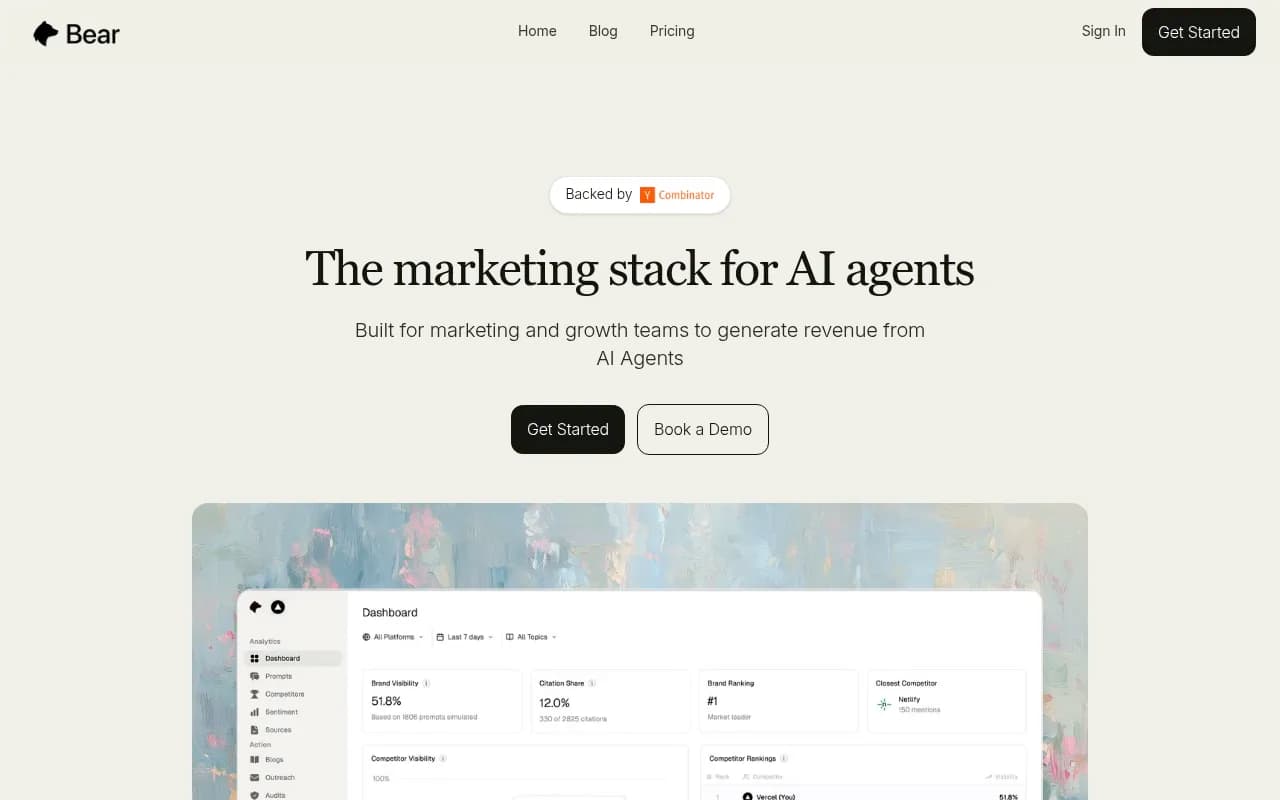
Bear AI focuses on converting AI search traffic into revenue, with attribution built into the core product.
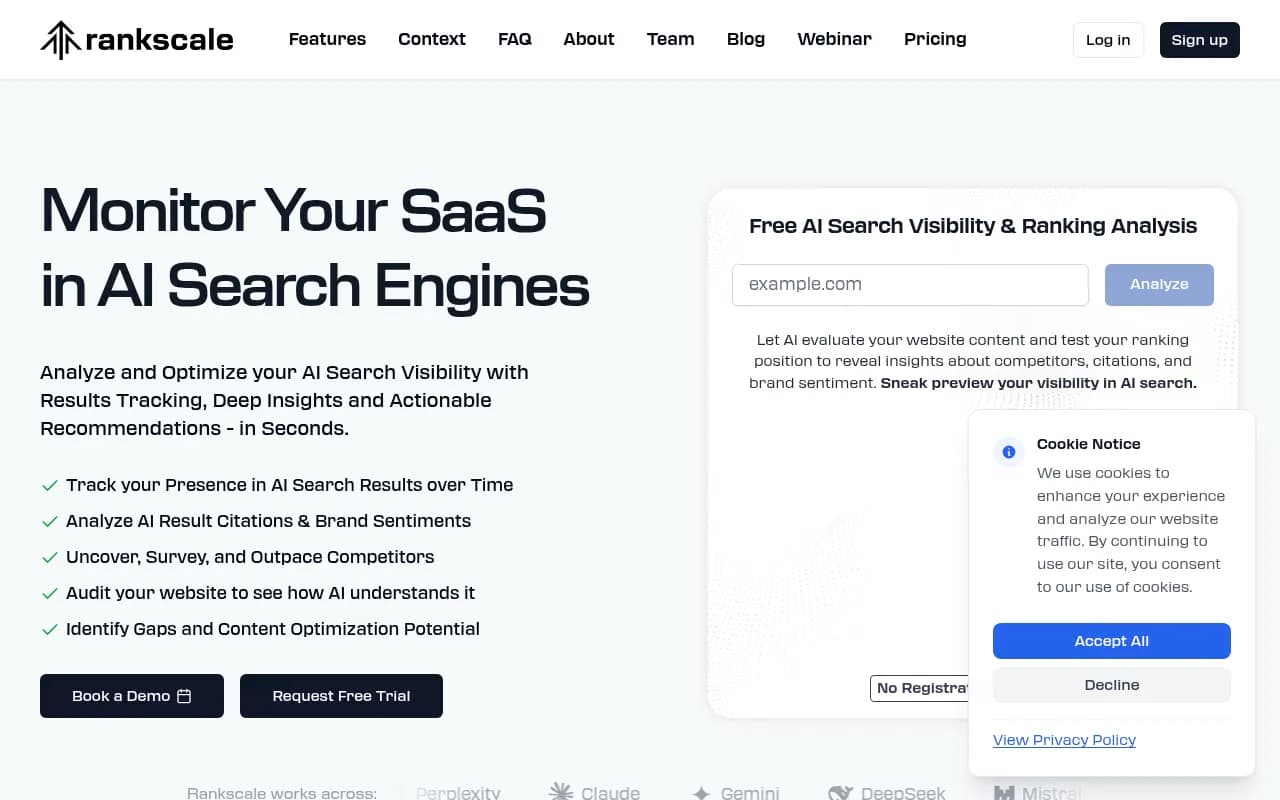
Rankscale tracks your AI search ranking across platforms, which is useful context for understanding why your traffic numbers look the way they do.
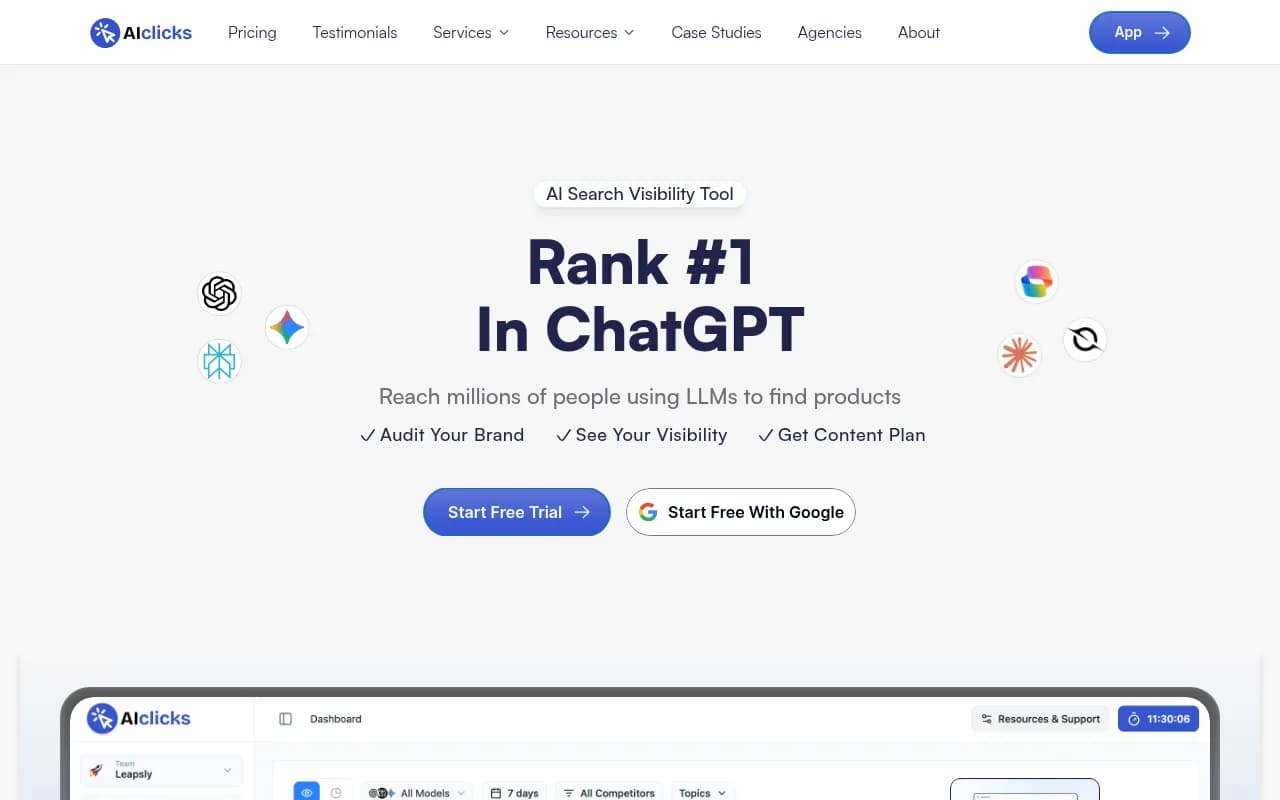
AIClicks tracks brand appearances in AI search results and connects them to click data.
Connecting attribution to optimization
Traffic attribution is the measurement layer. But measurement without action is just data collection.
The more useful question, once you know which AI platforms are sending you traffic, is: how do you get more of it? That means understanding which prompts trigger citations of your content, which competitors are being cited instead of you, and what content gaps you need to fill.
This is where the distinction between monitoring tools and optimization platforms matters. A tool that shows you citation counts is useful. A tool that shows you which specific prompts your competitors are winning that you're not -- and then helps you create content to close those gaps -- is what actually moves the needle.
Promptwatch's Answer Gap Analysis does exactly this: it identifies the prompts where competitors appear in AI responses but you don't, then its built-in writing agent generates content engineered to get cited. The traffic attribution layer (via code snippet, Google Search Console integration, or server log analysis) then shows you whether the new content is actually driving visits.
That full loop -- find gaps, create content, track results -- is what turns AI traffic attribution from a reporting exercise into a growth strategy.
A realistic picture of where things stand
AI search attribution is still messy. No single method catches everything. GA4 custom channels miss dark traffic. Server logs require technical resources. Dedicated platforms add cost. And the landscape keeps changing -- new AI platforms launch, existing ones change how they handle referrer data, and the signals you're tracking today might look different in six months.
The practical approach is to layer your methods. Start with the GA4 custom channel group because it's free and takes 20 minutes. Add UTM tracking for ChatGPT specifically. If you have the technical resources, set up server log analysis. And if AI visibility is a meaningful part of your growth strategy, invest in a dedicated platform that can track citations, identify gaps, and connect everything to actual traffic.
The brands that figure this out early will have a significant advantage. AI referral traffic is still small in absolute terms -- roughly 1% of total web traffic across most industries -- but it grew 527% year-over-year in early 2025. The attribution infrastructure you build now will matter a lot more in 12 months than it does today.