Key takeaways
- Being cited in an AI Overview delivers a 35% higher organic CTR and 91% higher paid CTR compared to uncited brands on the same query
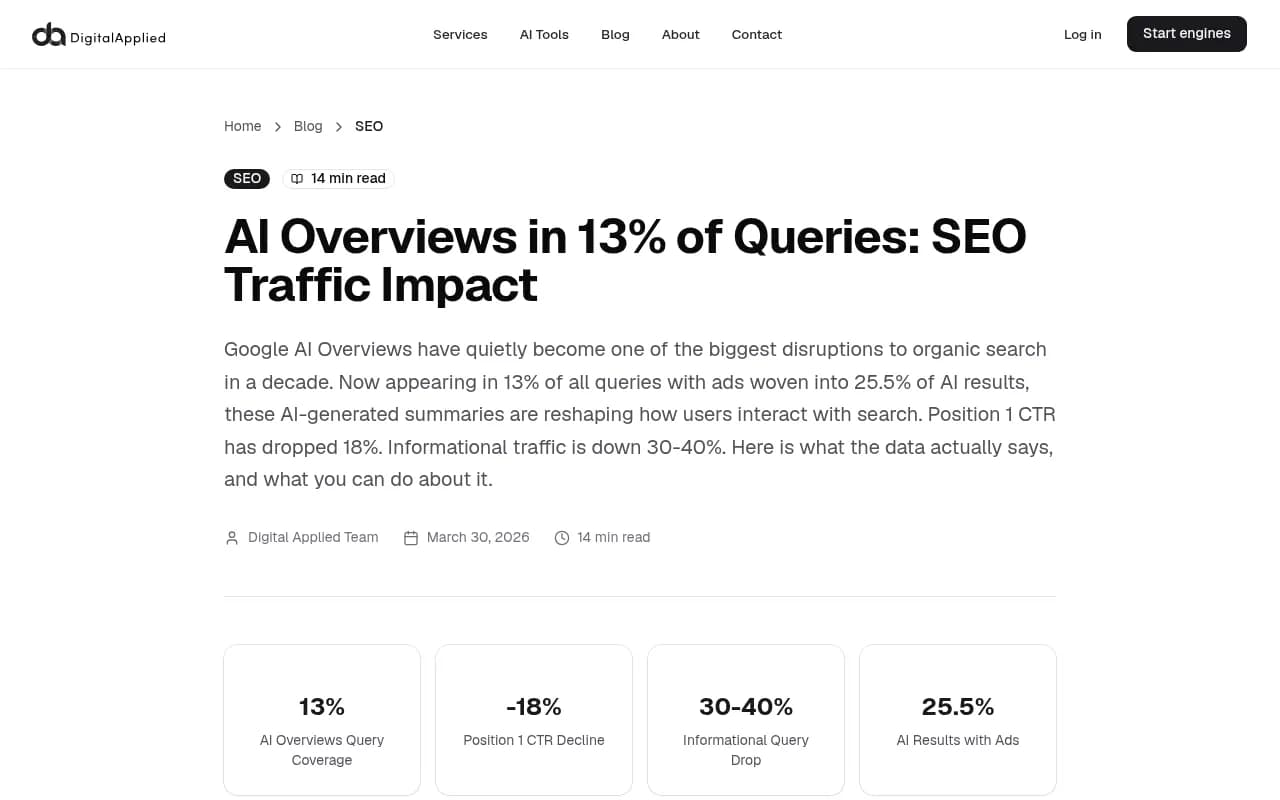
- AI Overviews now appear in 13% of all Google queries, and position 1 organic CTR has dropped 18% when they appear
- Perplexity drives the highest outbound click rate of any AI platform -- its citation-first design means citations there actually convert
- 83% of AI queries end on the SERP (zero-click), but the 17% that do click are often high-intent buyers
- Only 14% of marketing teams currently track AI visibility, which means most brands have no idea whether their citations are driving traffic or not
The CTR conversation in 2026 is messier than most people want to admit. You'll see headlines claiming AI search is destroying organic traffic, and you'll see other headlines claiming citations in AI Overviews are a goldmine. Both are true, depending on which citations you're talking about.
The data is real. The problem is that most coverage treats "AI citations" as a single category, when in practice there's a huge difference between a citation that sits in a collapsed AI Overview nobody reads and a citation that Perplexity surfaces to a user actively researching a purchase. One drives traffic. One doesn't.
Here's what the numbers actually show.
The baseline: AI search has fundamentally changed click behavior
Start with the uncomfortable number. According to data from GoodFirms, 58.5% of searches are now zero-click, and 83% of AI-assisted queries end on the SERP without a visit to any external site. That's not a small shift -- it's a structural change in how people use search.
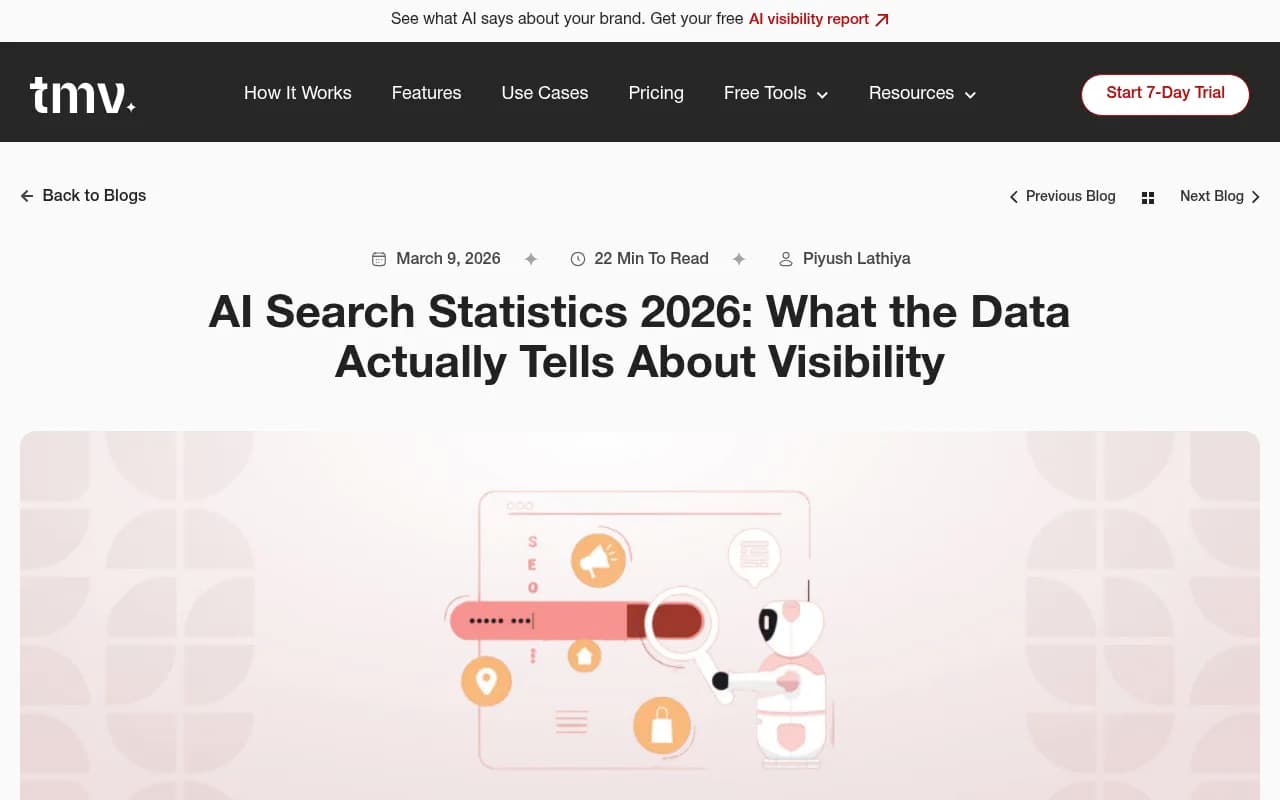
Websites are already reporting a 61% drop in click-through rates on queries where AI Overviews appear. For informational content -- definitions, how-to guides, explainers -- the decline is even steeper: 30-40% organic traffic drops are common.
This isn't evenly distributed. News content actually grew 103% from late 2024 through early 2026 in one tracked portfolio, while Google Discover grew 30% across the same period. The sites getting destroyed are the ones that built their traffic on informational queries that AI now answers directly. The sites doing fine are the ones that either rank for transactional queries or have become the sources AI cites.
That last part is the key insight. Being cited is not the same as being ignored.
What citation actually does to your CTR
The Digital Bloom's 2026 AI Citation Position and Revenue Report puts a specific number on it: brands cited in AI Overviews earn 35% higher organic CTR and 91% higher paid CTR compared to uncited brands competing for the same query.
That 91% paid CTR figure is worth sitting with. When a user sees your brand cited in an AI Overview and then sees your paid ad below it, they click at nearly double the rate. The citation functions as social proof -- the AI endorsed you, so the ad feels less like an ad.
On the organic side, citations within AI Overviews see an 80% boost in raw click-through rates, rising from 0.6% to 1.08% according to LinkedIn data from Daniel Israel's 2026 AI SEO statistics roundup. That sounds small in absolute terms, but at scale -- and across competitive queries -- it compounds quickly.
The mechanism makes sense. A user who sees your site cited in an AI response has already received a signal that you're a credible source. When they click through, they're not arriving skeptically. They're arriving with intent.
Not all AI citations are equal: platform-by-platform breakdown
This is where most coverage gets sloppy. Lumping ChatGPT, Perplexity, Google AI Overviews, and Claude into a single "AI search" bucket hides the fact that these platforms have completely different citation behaviors and outbound click rates.
Perplexity: the citation platform that actually sends traffic
Perplexity is citation-first by design. Its product is built around showing sources, and users arrive expecting to click through to them. According to Goodie's 2026 AI Search Traffic Report, Perplexity drives 7.3% of AI search traffic despite being a fraction of ChatGPT's user base. It "punches above its weight" specifically because its interface encourages outbound clicks.
Research and shopping queries on Perplexity produce the highest outbound click rates of any AI platform. If you're trying to drive actual traffic from AI citations, a Perplexity citation is worth more than a ChatGPT mention.

Google AI Overviews: high volume, variable click behavior
AI Overviews now appear in 13% of all Google queries globally, up from under 5% during the 2025 rollout. The trajectory suggests 20-25% coverage by end of 2026.
The CTR impact depends heavily on query type. For informational queries, AI Overviews suppress clicks significantly -- users get their answer and leave. For commercial and navigational queries, the picture is different. Being cited in an AI Overview on a "best X for Y" query often correlates with higher downstream clicks, because the user is in buying mode and wants to verify the recommendation.
Google is also showing ads in 25.5% of AI Overview results, up from 5.17% in early 2025. This creates a new dynamic: your organic citation and your paid ad can appear in the same AI-dominated SERP, and the combined effect on CTR is significant.
ChatGPT: high traffic volume, lower click-through
ChatGPT drives substantial referral traffic in absolute terms -- AI search traffic overall grew 527% year-over-year by some measures -- but Goodie's report notes that ChatGPT's market share is slipping relative to competitors. More importantly, ChatGPT's interface doesn't prioritize outbound links the way Perplexity does. Users often get an answer and stop.
Citations in ChatGPT matter for brand awareness and for influencing how the model talks about your brand in future responses. They matter less for direct click-through.
The zero-click problem and what it actually means
83% of AI queries ending on the SERP sounds catastrophic. But consider who the 17% are.
Users who click through from an AI response have already received a partial answer. They're clicking because they want more depth, want to verify something, or are ready to take action. That's a higher-intent visitor than someone who clicked a blue link because it was the first result.
The zero-click majority is largely made up of informational queries -- "what is X," "how does Y work," "define Z." These were never high-converting traffic anyway. The users who click through from AI responses are disproportionately in the research-to-purchase phase.
This is why the 35% organic CTR boost for cited brands matters. The clicks that remain are more valuable than the clicks that disappeared.
Which content types actually get cited (and clicked)
Not all content earns citations equally. Based on the research, a few patterns emerge:
Comparison and "best of" content gets cited frequently because AI models use it to answer product and service queries. When a user asks ChatGPT or Perplexity to recommend a tool, the model pulls from comparison articles and listicles it has indexed. These citations tend to drive clicks because the user wants to explore the options.
Original data and research gets cited because AI models prefer authoritative sources. A study with specific numbers -- like the 35% CTR boost figure -- is more likely to be cited than a generic overview. And when a user sees a data point attributed to your site, they often click to see the full context.
News and timely content saw 103% traffic growth in tracked portfolios. AI models surface recent content for current-events queries, and users click through to get the full story.
How-to and definitional content, by contrast, is getting absorbed. AI models answer these queries directly, and the citation (if it appears at all) rarely drives a click. If your traffic depends on "how to do X" content, the data suggests you need to pivot.
Why most brands are flying blind
Only 14% of marketing teams currently track AI visibility, according to GoodFirms. That means 86% of brands have no idea whether they're being cited, which platforms are citing them, or whether those citations are driving traffic.
This is a significant problem. You can't optimize what you don't measure. And the measurement challenge is real -- traditional Google Search Console doesn't show you AI Overview citations, and standard analytics can't distinguish AI referral traffic from other sources without specific setup.
The brands that are winning in AI search right now are the ones that have instrumented this properly. They know which prompts trigger their citations, which pages are being cited, and which citations convert to traffic. That data drives their content strategy.
Promptwatch is one platform built specifically for this -- it tracks citations across ChatGPT, Perplexity, Google AI Overviews, Claude, Gemini, and seven other AI models, and connects citation data to actual traffic through GSC integration and server log analysis. The point isn't just knowing you're cited; it's knowing whether the citation is doing anything.
Tools like [tool:goodie]
and [tool:llm-clicks]
also focus specifically on tracking AI-driven citation and click data, which is worth exploring if you want platform-specific visibility.
A comparison of AI platforms by citation click value
| Platform | Outbound click behavior | Best content type for citations | Traffic volume |
|---|---|---|---|
| Perplexity | High -- citation-first design | Research, shopping, comparisons | Growing fast |
| Google AI Overviews | Variable by query type | Commercial, navigational | Highest volume |
| ChatGPT | Lower -- answer-first design | Brand awareness, general queries | Largest user base |
| Claude | Moderate -- cites when asked | Technical, research content | Growing |
| Gemini | Moderate | Mixed | Significant |
| Grok | Lower | News, opinion | Smaller |
What this means for content strategy
The data points toward a few concrete shifts.
First, stop optimizing for informational queries that AI now answers completely. If a user can get a full answer from an AI Overview without clicking, your content isn't going to recover that traffic. Redirect that effort toward content that AI cites but doesn't fully replace -- comparisons, original research, product-specific guides.
Second, treat citation as a distribution channel, not just a ranking signal. A citation in Perplexity on a commercial query is a referral. Optimize for it the way you'd optimize for any referral source: make sure the landing page converts, make sure the content matches what the user expects after reading the AI's summary.
Third, measure the full loop. Traffic from AI citations behaves differently from traditional organic traffic. These visitors arrive with more context, tend to have higher intent, and convert at different rates. You need attribution that captures this -- whether that's a tracking snippet, GSC integration, or server log analysis.
Fourth, publish original data. The research cited in this guide -- the 35% CTR boost, the 13% query coverage, the 91% paid CTR lift -- all came from specific studies with specific numbers. AI models cite those numbers because they're concrete and attributable. Generic content doesn't get cited. Data does.
Tools worth knowing for AI citation tracking
If you're serious about understanding your AI citation performance, here are the tools that focus specifically on this:


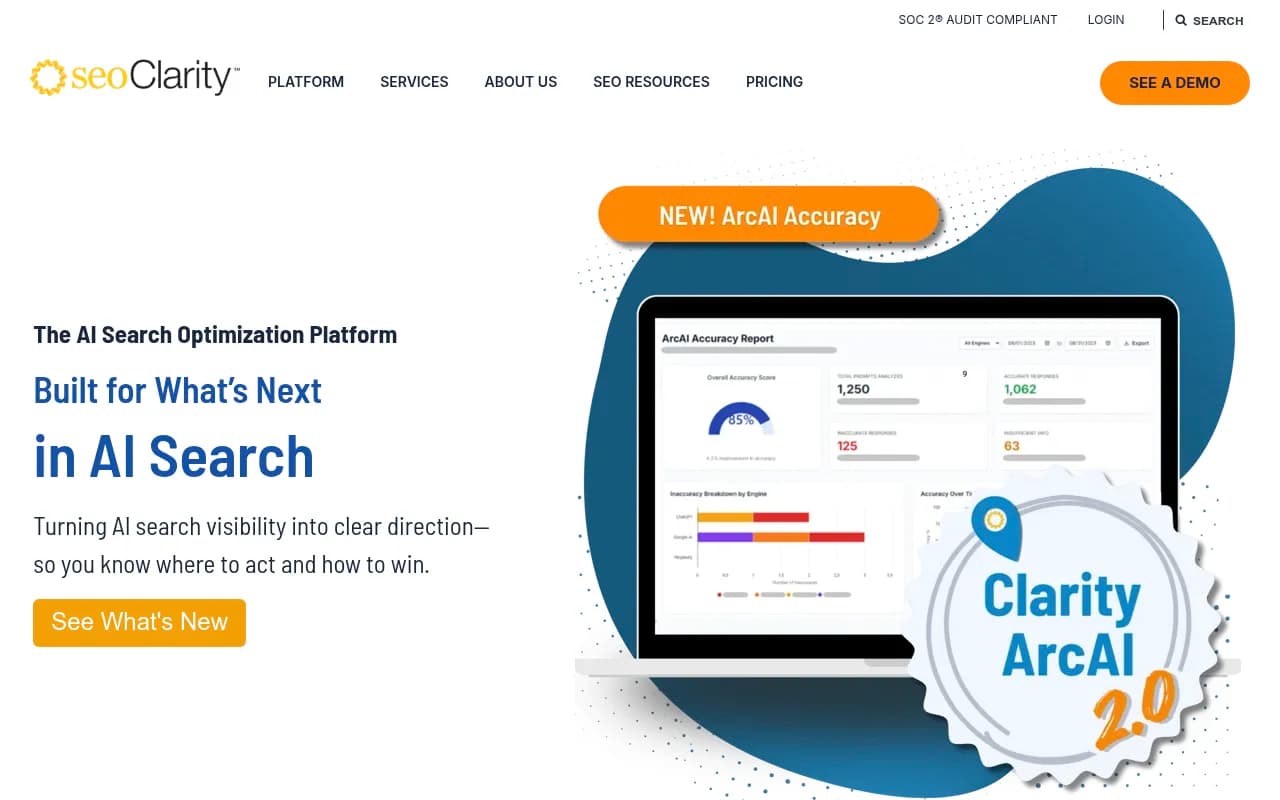
Each approaches the problem differently. Promptwatch covers the full loop from citation tracking to content gap analysis to traffic attribution. Peec AI and Otterly.AI are more focused on monitoring. seoClarity is enterprise-grade with deep SERP integration. Rankshift focuses specifically on LLM tracking for GEO.
The bottom line
AI citations are not a monolith. A citation in Perplexity on a commercial query drives real traffic. A citation in a collapsed AI Overview on an informational query probably doesn't. The brands that understand this distinction are already pulling ahead.
The 35% organic CTR boost for cited brands is real, but it's not automatic -- it accrues to brands that are cited on the right queries, on the right platforms, with content that gives users a reason to click through. Getting cited on a zero-click informational query is better than nothing (brand awareness has value), but it's not the same as earning a citation that converts.
The 14% of teams currently tracking AI visibility have a significant information advantage over the other 86%. That gap is going to matter more as AI search coverage expands toward the 20-25% of queries projected by end of 2026.
The measurement infrastructure exists. The question is whether your team is using it.