Key takeaways
- An AI citation audit answers one question for a client: which URLs and domains do AI engines cite for the prompts that matter, and where is the client missing?
- Use a fixed prompt set segmented by intent (commercial, informational, branded), run it across at least two engines, and repeat it on a schedule so you can show change over time.
- Report per engine. ChatGPT, Google AI Overviews and Perplexity cite very different mixes of sources, especially social platforms.
- Track position and description, not just presence. Almost half of ChatGPT responses cite 10 or more domains, so being listed somewhere in the pile tells you little.
- The audit is a sales tool and an operations tool. The deliverable is a ranked fix list that becomes a 90-day plan and then a retainer.
Why agencies need a repeatable audit, not a one-off check
Most agencies start the same way. Someone opens ChatGPT, types a category question, sees a competitor recommended, and screenshots it for a client call. It works once. Then the client asks the obvious follow-up: "Is that always the case?" And you have no answer, because ChatGPT gave a different answer the second time.
That is the problem a proper audit solves. It replaces anecdotes with a defined prompt set, a fixed method, and a log you can rerun next month. The Omnia guide to AI citation tracking suggests a minimal starting point: 20 prompts reflecting real buyer intent, across two engines, logging whether the site is cited and which competitor shows up instead. That is a fair baseline. This guide extends it into something you can sell, deliver, and repeat.
The commercial case is real too. Omnia points to G2's 2025 Buyer Behavior Report (1,169 B2B decision-makers), which reportedly ranks generative AI chatbots as the biggest single influence on vendor shortlists. I haven't checked the G2 PDF myself, so treat that as the vendor's reading of it. Still, clients are asking about this, and agencies that can show them a clear picture win the conversation.
The audit at a glance
Here is the whole process on one screen. Each step is covered below.
| Step | What you do | Output |
|---|---|---|
| 1. Scope | Pick client, competitors, markets, engines | Audit brief |
| 2. Prompt set | Build 30 to 100 prompts, tagged by intent | Prompt sheet |
| 3. Run | Execute across engines, ideally multiple times | Raw responses and citations |
| 4. Classify | Tag cited sources by type and content format | Source map |
| 5. Compare | Benchmark against 3 to 5 competitors | Share of voice and gap list |
| 6. Diagnose | Check crawl access, content, third-party sources | Root-cause notes |
| 7. Report | Per-engine summary plus ranked fixes | Client deck and 90-day plan |
Step 1: Scope the audit
Before touching a single prompt, agree on four things with the client.
- Who the client competes with in AI answers. This is often different from who they compete with in Google. A SaaS company may be up against review sites and comparison blogs as much as other vendors.
- Which engines matter. ChatGPT and Google AI Overviews are the usual starting pair. Add Perplexity, Gemini, Claude or Copilot depending on the audience. The My Web Audit workshop replay on selling these audits also covers how to choose which platforms to prioritize.
- Which markets and languages. Answers differ by country. Decide upfront so your results are comparable later.
- What success looks like. Cited more often, cited earlier, described more accurately, or driving visits. Pick one or two. Otherwise the report becomes a pile of charts.
Step 2: Build a prompt set that reflects real buyers
The prompt set is the audit. A weak one produces a flattering or misleading report.
Split prompts by intent
Segment into at least three groups: commercial ("best X for Y"), informational ("how do I do Z"), and branded ("is Client any good"). This matters because the citation mix changes by intent. In Promptwatch Data's analysis of ChatGPT citations from Sep 28 to Oct 4, 2026, product pages were 26.0% of citations on commercial prompts, versus 19.1% on informational ones, where how-tos and docs gain share. Branded prompts leaned on product pages (23.3%) and landing pages (22.8%), with reviews at 5.6%. If you lump all prompts together you will average away the differences that tell you what to fix.
Where to source prompts
- Client sales call recordings, support tickets and chat logs
- Search Console queries and People Also Ask questions, rewritten as natural questions
- Competitor comparison phrasing ("Client vs Competitor")
- Persona variants: a CFO and a developer ask the same category question very differently
Some agencies generate a first draft of the prompt list with an LLM such as Claude, then have the client prune it. The My Web Audit workshop shows this workflow. Keep a human in the loop, because LLM-generated prompts skew generic.
Size and hygiene
Thirty prompts is a floor for a quick audit. Fifty to a hundred is better for a retainer client. Write prompts without the client's brand name for the organic set, and keep a separate branded set. Freeze the list once approved, and version any changes so month-over-month comparisons stay honest.
Step 3: Run the prompts, and run them more than once
AI answers vary between runs. Promptwatch Data's report on unique domains per ChatGPT response (Sep 28 to Oct 4, 2026) found that 47.6% of cited responses name 10 or more domains, and for organic prompts it was 52.5%. With that many sources per answer, one run of one prompt tells you very little. Their own guidance for audits is to measure across many organic prompts, not lean on single ones.
For each prompt and engine, capture:
- Whether the client is mentioned, and whether its own domain is cited (these are different things)
- Position in the answer
- How the client is described, including sentiment and any errors
- Every cited URL and domain
- Which competitors appear in the same response
Manual versus tool-assisted
Manual runs work for a 20-prompt pitch audit and nothing else. Past that, you need a tracker that queries real interfaces on a schedule. Plenty of options exist, and the catalog is crowded. A few worth knowing by what they emphasise:
| Tool | Angle | Notes for agencies |
|---|---|---|
| Promptwatch | Tracking plus crawler logs, citation analysis and content actions | Agency plans with white-label reports and client portal |
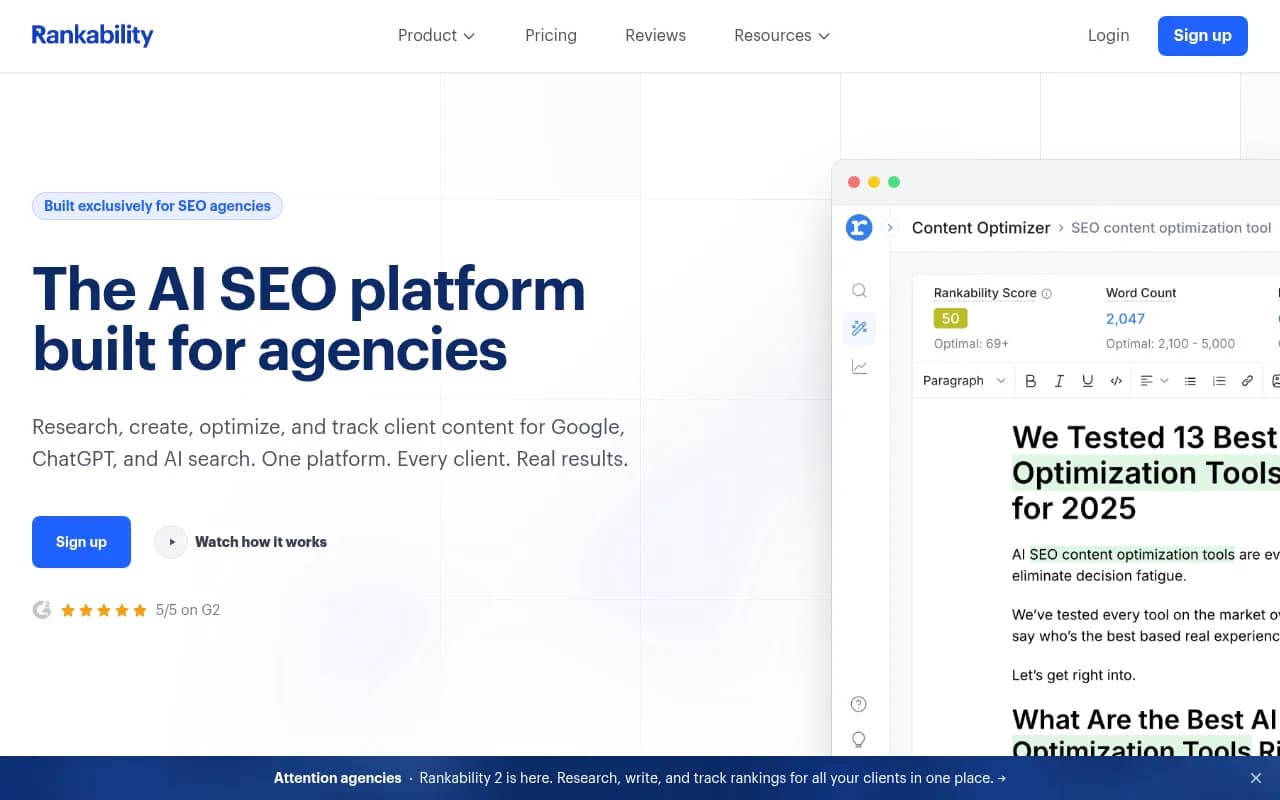
| Rankability | Agency-focused AI visibility analytics | Built around multi-client workflows |
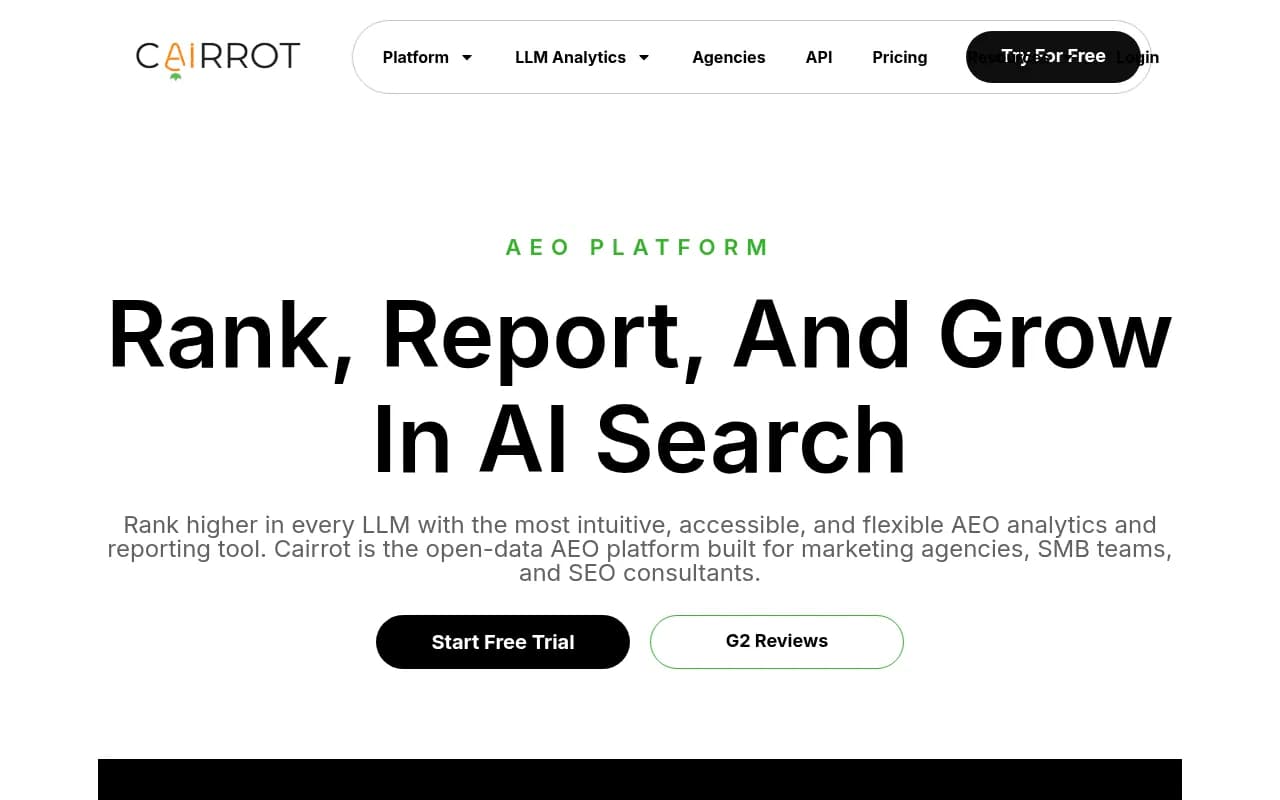
| Cairrot | LLM visibility tracking for marketing agencies | Agency-first positioning |
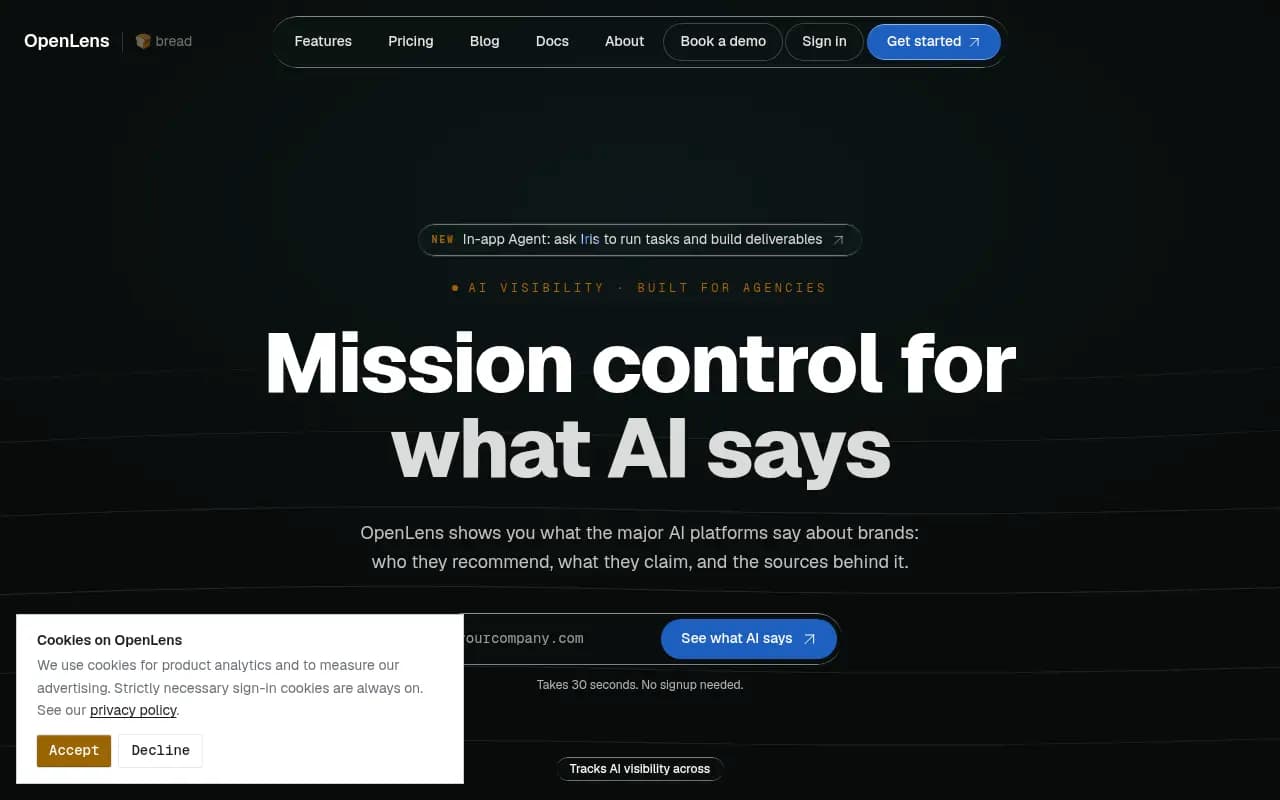
| OpenLens | AI visibility tracking built for agencies | Another agency-oriented option |
| Peec AI | Multi-language tracking | Useful for multi-market clients |
| Otterly.AI | Affordable monitoring | Lighter-weight tracking |
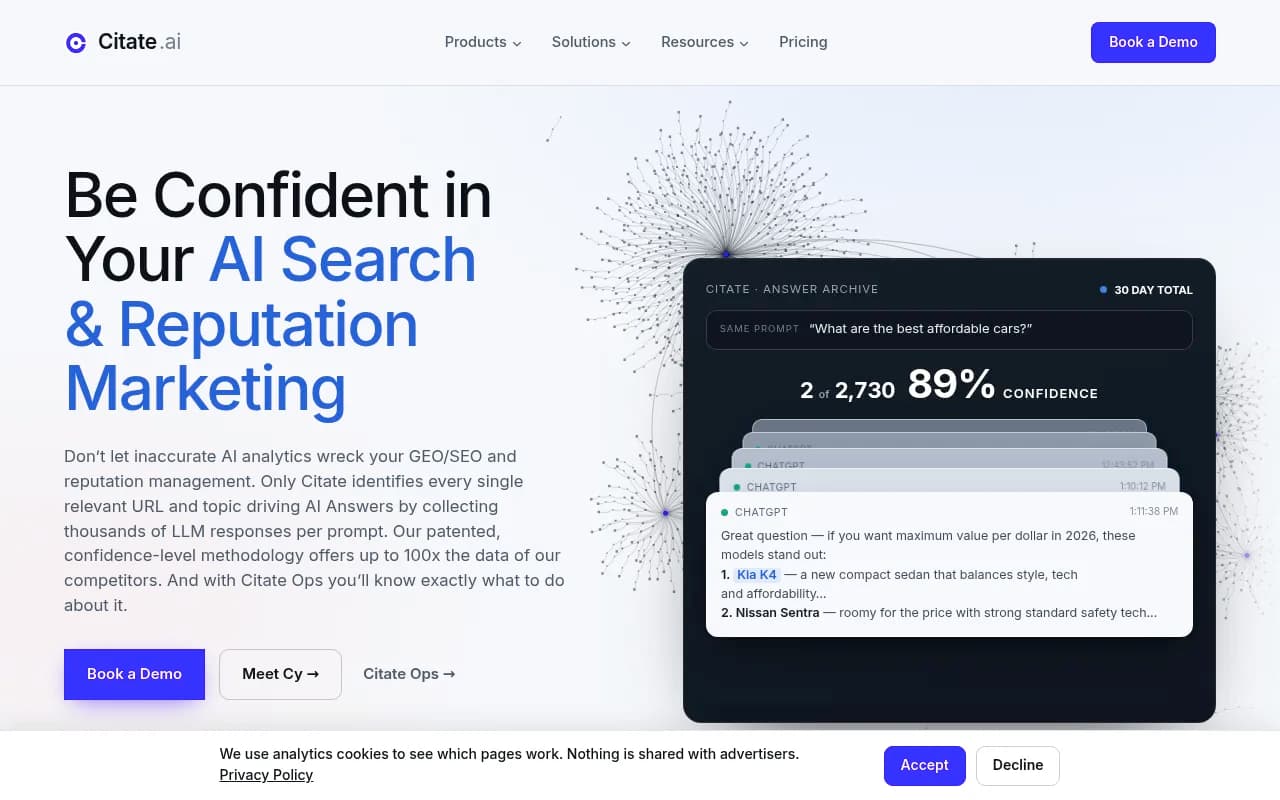
| Citate.ai | Citation tracking for brands and agencies | Citation-focused |
I haven't compared pricing for these, so check each vendor before committing. For the audit itself, the features that matter are: real-UI data rather than only API output, per-engine breakouts, exportable citation lists, and white-label reporting.
Promptwatch is the platform I'd look at first for agencies who want the audit to lead into execution, since it combines prompt tracking, citation analysis and a content workflow in one place.



If you want to browse more options, the GEO software directory lists a wider set of trackers.
Step 4: Classify what gets cited
This is where a citation audit beats a plain mention check. Take every cited URL and tag it twice: by source type (the client's own site, competitor site, review platform, forum, news, government, marketplace, social) and by content type (product page, landing page, listicle, comparison, how-to, docs, news, review, FAQ).
Then look for patterns.
- If competitors win mostly through listicles on third-party sites, the fix is outreach and digital PR, not more blog posts.
- If cited pages are mostly product and landing pages, your client's commercial pages need to be crawlable, specific and current.
- If a review site dominates branded prompts, the client's reputation work sits on that domain, not their own.
Content freshness changes priorities as well. Promptwatch Data's half-life study found that landing pages and docs stay cited for months while news pages lose half their citations in about five weeks. News-style content is a treadmill. Evergreen commercial pages are an asset.
Report social sources per engine
Don't copy old advice about Reddit into every client deck. In Promptwatch Data's October 2026 social citation report (Sep 28 to Oct 4), social platforms were just 0.46% of ChatGPT citations, versus 12.2% for Google AI Overviews, where YouTube led at 4.28%. Perplexity sat at 2.7%. ChatGPT's Reddit share collapsed in mid-August 2026. So a Reddit-heavy strategy may help in AI Overviews and do almost nothing in ChatGPT. Break findings out by engine.
Step 5: Benchmark against competitors
Clients care about relative position. For each engine and intent group, calculate:
- Mention rate: share of prompts where the client appears
- Citation rate: share where the client's own domain is cited
- Average position when mentioned
- Share of voice versus 3 to 5 named competitors
- Sentiment and accuracy of description
Read them together. A client with decent mention rate but a low citation rate is being talked about from third-party sources, so the content or crawlability of their own site is the likely issue. A late position points to a prominence problem. Low share of voice across the board is a coverage problem. That triage saves you from recommending "write more content" for every client.
On brand-specific prompts, Promptwatch Data shows ChatGPT answers are narrower: 5 domains was the most common count (14.9%), and only 21.3% cited 10 or more. Which means a few third-party domains shape the brand narrative. Identify them by name and put them in the report.
Step 6: Diagnose the why
Numbers show the gap. Diagnosis explains it. Run these checks before writing recommendations.
Crawl access and technical health
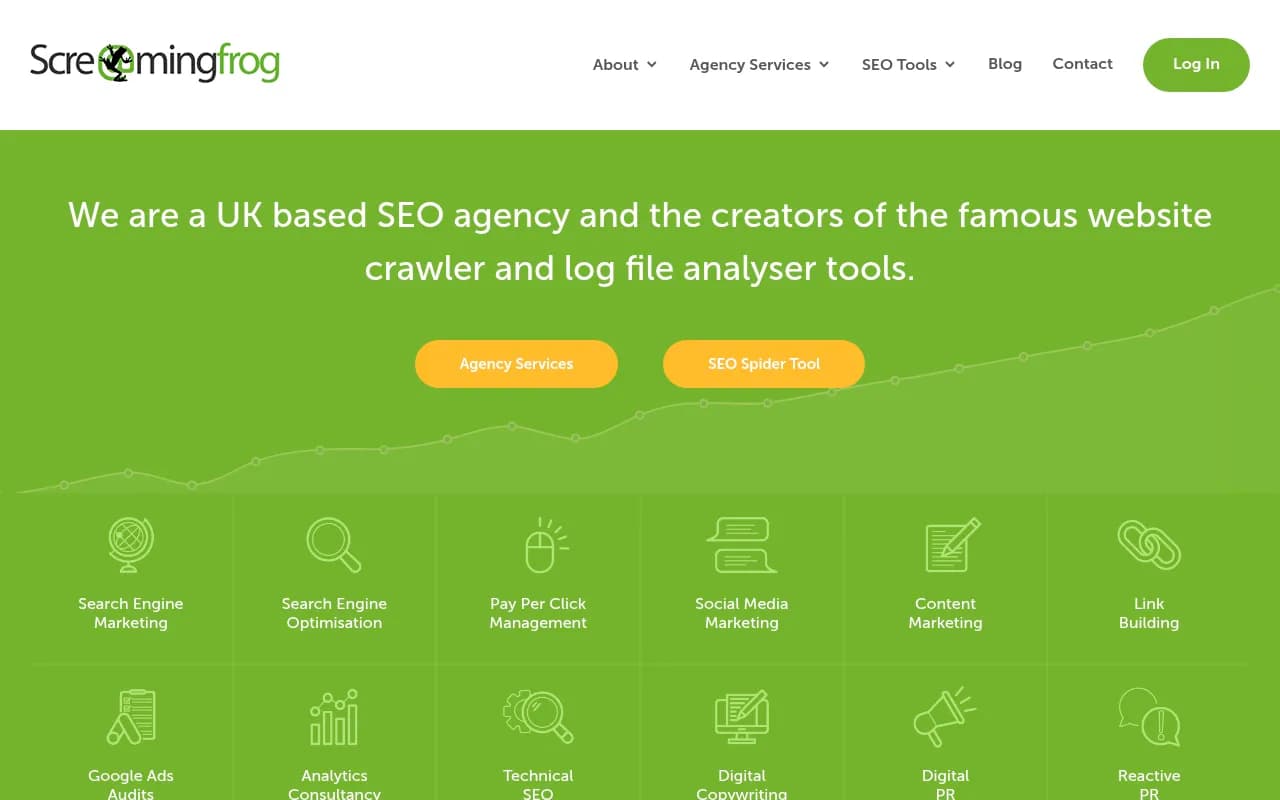
If AI crawlers can't read the client's pages, nothing else matters. Check robots.txt rules for AI bots, rendering issues, errors, and orphaned or missing sitemap pages. A crawler like Screaming Frog covers the standard technical sweep, and server logs show which AI user agents actually visit. Promptwatch also offers IP-verified AI crawler logs if you want that tied to citations.
Content match
Compare the client's cited-competitor pages with their own equivalents. Is the client's page specific, current, and answering the question directly? Does it contain proprietary data or a clear comparison? Often the winning competitor page is simply more concrete.
Off-site presence
List the third-party pages AI cites that name competitors but not the client. Those are your outreach and PR targets. This is where agencies with link building and digital PR capabilities have a natural edge over pure-play GEO software vendors.
Step 7: Package the report so clients act on it
The BotSee guide on agency AI visibility reporting puts cited sources as a core section of any client report, noting AI engines draw on certain domains such as publications, review sites, forums and brand content. I'd go further and structure the deliverable like this:
- One-page summary: three headline numbers per engine, one sentence each on what they mean
- Prompt-set methodology: how many prompts, which engines, when run, how many repeats
- Citation map: top cited domains and content types, client versus competitors
- Gap list: prompts where competitors are cited and the client is absent
- Diagnosis notes: technical, content, and off-site findings
- Ranked fix list with effort and expected impact
- 90-day plan with owners
Don't send raw exports. A client who sees 4,000 rows will hear "complicated" and move on. A ranked list of ten actions gets a yes.
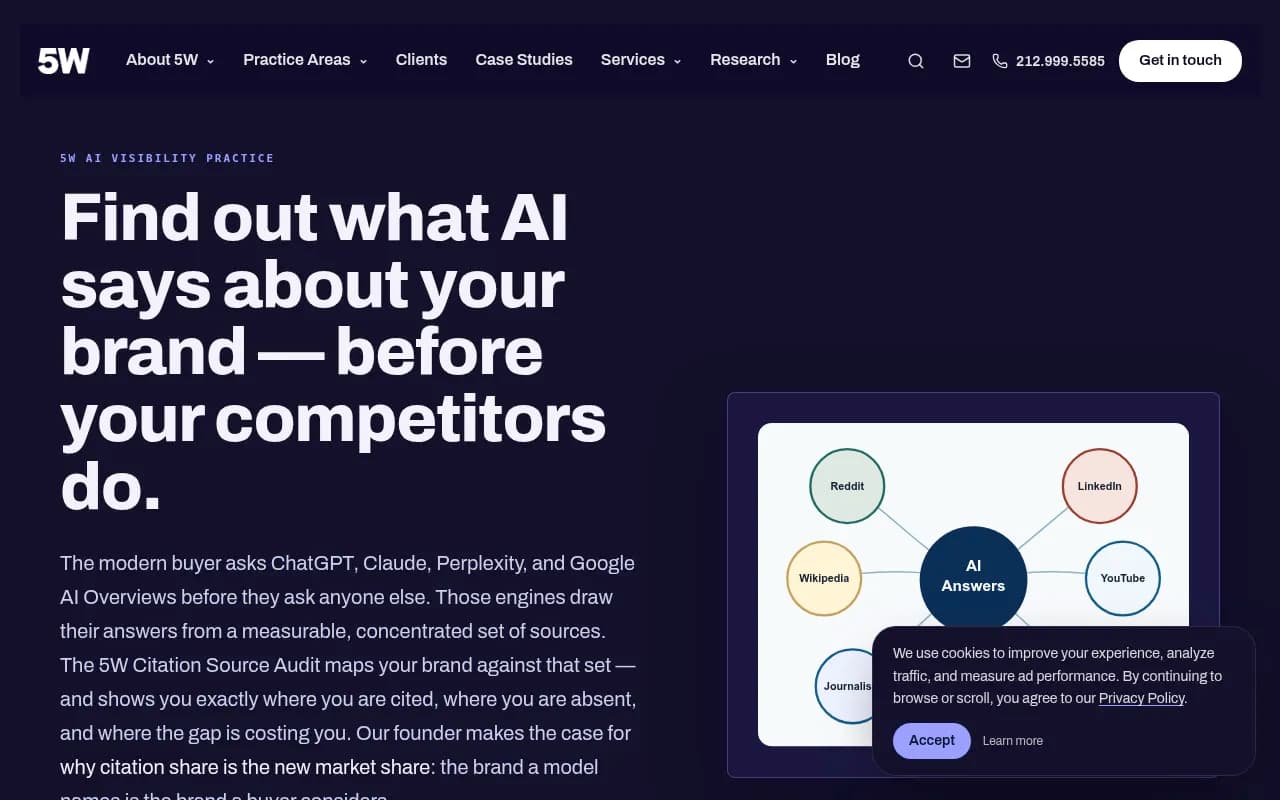
PR firms like 5W position this exact deliverable as a mapping of where a brand is cited, where it is absent, and where the gap costs business. That framing sells well to non-technical stakeholders.
Step 8: Turn the audit into recurring revenue
The workshop replay from My Web Audit's Cliff Almeida describes a model many agencies are converging on: a paid audit, then a 90-day action plan, then a monthly retainer. He reports that five emails to existing clients closed two paid audits. That is one agency's anecdote with a small sample, but the structure is sensible.
A practical way to price it:
- Audit: fixed fee, delivered in one to two weeks, or free for retainer clients as a quarterly check-in
- 90-day plan: project fee covering technical fixes, content updates, and a first round of outreach
- Retainer: monthly rerun of the prompt set, reporting, and ongoing content and PR work
Schedule the rerun monthly. Since AI answers move around, a trend line over three months is far more persuasive than a single snapshot. Where clients want the fixing handled, the retainer covers content refreshes, new pages for gap prompts, and off-site mentions.
If you'd rather hand off the execution layer, agencies like 1001 SEO Media combine technical SEO, content, and digital PR with GEO work, and use Promptwatch as their AI visibility platform.
A reusable checklist
Copy this into your project template.
- Confirm client, competitors, engines, markets
- Build and freeze a tagged prompt set (organic, commercial, informational, branded)
- Run each prompt multiple times per engine and log mentions, citations, position, description
- Tag every cited URL by source type and content type
- Calculate mention rate, citation rate, position and share of voice per engine
- Check AI crawler access, technical health, and content match
- List third-party domains shaping the narrative
- Produce summary, gap list, ranked fixes, 90-day plan
- Schedule the monthly rerun and keep the prompt set versioned
Common mistakes to avoid
- Reporting a single blended score across engines. It hides the differences that drive decisions.
- Counting a mention as a citation. They lead to different fixes.
- Changing the prompt set between months and then comparing trends.
- Presenting tracker output without diagnosis. Clients pay for the "so what."
- Treating one run as truth. Rerun, and report ranges where results swing.
Where to go from here
Start with one client and a 30-prompt set across two engines. Do the whole process end to end, including the report, before you productize it. The second audit will take half the time, and by the third you will have a template, a price, and a pitch. If you want to compare tooling for scale, the AI rank tracking tools directory is a reasonable next stop.