Key takeaways
- A citation gap means AI cites a competitor's page (or a third-party page that names them) for a prompt where your page is absent. Finding it takes a repeatable prompt set, not a single spot check.
- Almost half of ChatGPT responses cite 10 or more unique domains, so you are rarely competing for one slot. You are competing for a place in a crowded source list.
- Classify every cited competitor page by content type (product page, listicle, comparison, doc) and compare it to what you have for the same intent.
- Check the short sub-queries AI runs behind the scenes, not just the full prompt. Your page has to match one of those.
- Do it manually first to learn the pattern, then move to a tracker so you can repeat it weekly.
What a citation gap actually is
You rank on page one. Your page is better, by your own judgment. Yet when someone asks ChatGPT or Google's AI Overview the same question, your competitor's URL shows up in the sources and yours doesn't.
That is a citation gap. There are really two flavors, and they need different fixes:
- Direct gaps. The competitor's own page is cited and yours is not.
- Indirect gaps. A third-party page (a review site, a listicle, a Reddit thread) names the competitor and gets cited, while it ignores you.
A lot of teams only check for the first kind. The second kind is often bigger, and you can't fix it by editing your own site.
One more framing that helps: not every competitor in AI answers is a competitor you already know. Some brands are co-mentioned, the ones AI lists next to you for "best X for Y". Others are replacement competitors, the ones AI recommends instead of you. Those are the dangerous ones because they may never have appeared in your sales calls.
Step 1: Build a prompt set that reflects how buyers ask
A single prompt tells you almost nothing. Promptwatch Data found that for Sep 28 to Oct 4, 2026, 47.6% of ChatGPT responses with citations cited 10 or more different domains, and 66.1% cited at least 8. Only about 1% cited a single domain. Which sources show up shifts from prompt to prompt, so you need volume.
Start with 30 to 50 prompts split into three groups:
- Organic prompts with no brand named, like "best project management software for agencies". Here 52.5% of responses cited 10 or more domains in the same report.
- Competitor comparison prompts, like "[Competitor] vs [You]" and "[Competitor] alternatives".
- Brand prompts that name you, like "is [You] worth it". These cite fewer domains (5 is the most common count), and review sites and forums tend to shape the answer.
Pull wording from real sources: sales call transcripts, Search Console queries, People Also Ask, and support tickets. Buyers don't phrase things the way marketing does.
Step 2: Run the checks manually first
Before paying for anything, spend an hour doing it by hand. It teaches you what the output looks like.
ChatGPT
Open a fresh session with search enabled, paste the prompt, and open the sources panel. Write down every cited domain and URL, in order. Note whether your brand was mentioned in the text even without a citation. Repeat each prompt two or three times, because answers vary.
Google AI Overviews and AI Mode
Search the query logged out or in a clean profile. Expand the AI Overview and record the linked sources. Then switch to AI Mode and do the same. These two surfaces cite differently, so don't merge the results.
For a quick one-off test, a free checker like the AEO Engine tool described below runs a keyword and a URL or domain through the live query and reports whether your page was cited and which competitor domains were.
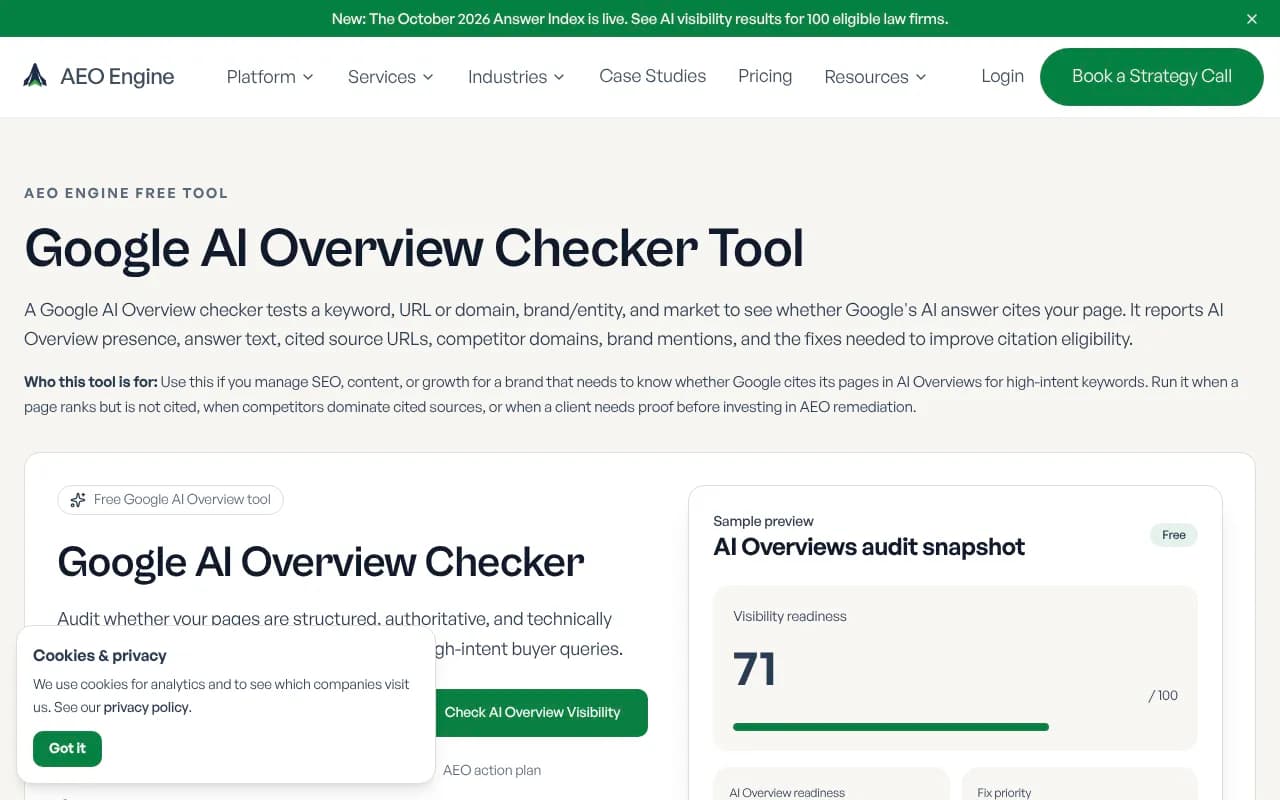
It asks for a business email, so treat it as a spot-check tool, not a monitoring system. The useful bit is the competitor domain list, which shows who Google trusted for that query.
Perplexity and others
Perplexity shows numbered sources directly under the answer, which makes logging easy. Claude, Gemini and Copilot are worth sampling for your top ten prompts.
A simple log
Use a spreadsheet with these columns:
Prompt | Engine | Date | Your URL cited? | Brand mentioned? | Cited competitor URLs | Content type | Notes
The "Content type" column is where the insight comes from, and it is the next step.
Step 3: Classify what got cited
Don't stop at "competitor X was cited." Ask what kind of page won. Promptwatch Data's content type report (Sep 28 to Oct 4, 2026) shows the baseline for ChatGPT:
| Content type | Share of all ChatGPT citations |
|---|---|
| Product pages | 22.4% |
| Landing pages | 16.8% |
| Listicles | 13.6% |
| How-tos | 8.7% |
| Docs | 7.5% |
| General articles | 6.1% |
| Comparisons | 5.9% |
| News | 5.7% |
For commercial prompts, product pages, landing pages, listicles and comparisons made up almost 70% of citations. For branded prompts, reviews were 5.6%, more than three times their overall share.
Now compare against your own site. If AI cites a competitor's comparison page for "X vs Y" and you have no comparison page, you don't have a content quality problem. You have a missing page. If it cites their listicle on a third-party site, you need to earn a place in that listicle.
Step 4: Check the sub-queries, not just the prompt
ChatGPT doesn't search for your exact prompt. It runs shorter web searches (fan-outs) and pulls pages that match those. Promptwatch's fan-out data tracked average query length falling from about 117 characters in December 2025 to roughly 53 characters in April 2026, so the sub-queries are getting terse and keyword-like. The report's own description still cites a range of "3-8+ searches per prompt" while its newer data shows about 1.0 per response in April, so treat the volume as variable and verify against your own sample.
What this means for a competitor check: run the short versions too. "[Competitor] pricing", "[category] alternatives", "[X] vs [Y]". If a competitor owns the page that matches those short queries, they get cited even when your long-form guide is better.
The free GEO Inspector Chrome extension from Promptwatch shows fan-outs and fetched versus cited sources inside ChatGPT, which saves a lot of guessing.
Step 5: Find the indirect gaps
Take every third-party domain that appears in your log and ask: does this page mention us?
- Listicles and "best of" pages that include competitors but not you
- Review platform profiles where competitors have far more reviews
- Forum or Reddit threads recommending a competitor
- Industry publications that quote the competitor
Two caveats on Reddit and social. Promptwatch Data shows reddit.com's share of ChatGPT citations fell from about 4% to 0.5% on August 14, 2026, and in the week of Sep 28 to Oct 4, ChatGPT drew 0.46% of citations from social platforms while Google AI Overviews drew 12.2%. So a Reddit gap matters much more for AI Overviews than for ChatGPT right now. Check each engine separately.
Also check by industry. In software prompts, for example, GitHub, Microsoft's docs and G2 lead ChatGPT citations, and documentation earns the largest share. If you sell software and your docs are thin, that is a gap category-wide.
Step 6: Diagnose why they win
Once you have the list of cited competitor pages, read them next to yours. The AEO Engine checker's FAQ names the usual suspects, and it matches what I see in practice. Google or ChatGPT may cite a competitor because their page:
- answers the query more directly, ideally in the first few lines
- has clearer evidence, like data, specs or named sources
- maps better to the entity (a clear product name, category and use case)
- has stronger third-party corroboration
- is simply a cleaner citation target, like a dedicated page versus your buried section
A few other checks are cheap and worth doing:
- Crawl access. Is your robots.txt blocking GPTBot, OAI-SearchBot, ClaudeBot or PerplexityBot? Does your CDN or firewall return errors to them? Server logs tell you whether AI crawlers visit at all.
- Freshness. Promptwatch's half-life data found news loses half its cited pages in about 5 weeks, while landing pages and docs hold for months. A stale news-style page is expected to fall out. A stale landing page is a red flag.
- Domain strength. Mid-authority sites (DR 46-75) earned almost half of ChatGPT citations in August 2026, while DR 91-100 fell to about 3%. A weaker domain than yours can win, so don't blame authority first.
Step 7: Move from spot checks to a tracker
Manual checking breaks down around 50 prompts across four engines. At that point you want a tool that runs prompts on a schedule, logs citations by URL, and shows competitor sources.
What to look for, in order of importance:
- Citation-level data (the actual URLs), not just "brand mentioned: yes/no"
- Real interface tracking, since user-facing answers can differ from API output
- Competitor and source-domain views
- Content type breakdown
- Crawler logs or analytics that show whether AI visits your pages
- A path to act on the gap, not just see it
Promptwatch covers most of that list. It tracks the real interfaces of ChatGPT, AI Overviews, AI Mode, Gemini, Perplexity and Copilot, classifies citations into content and source types, and its content gap analysis shows which prompts competitors win where you don't. IP-verified crawler logs show whether AI bots even reach the pages you care about.

Other tools worth a look, depending on your needs:




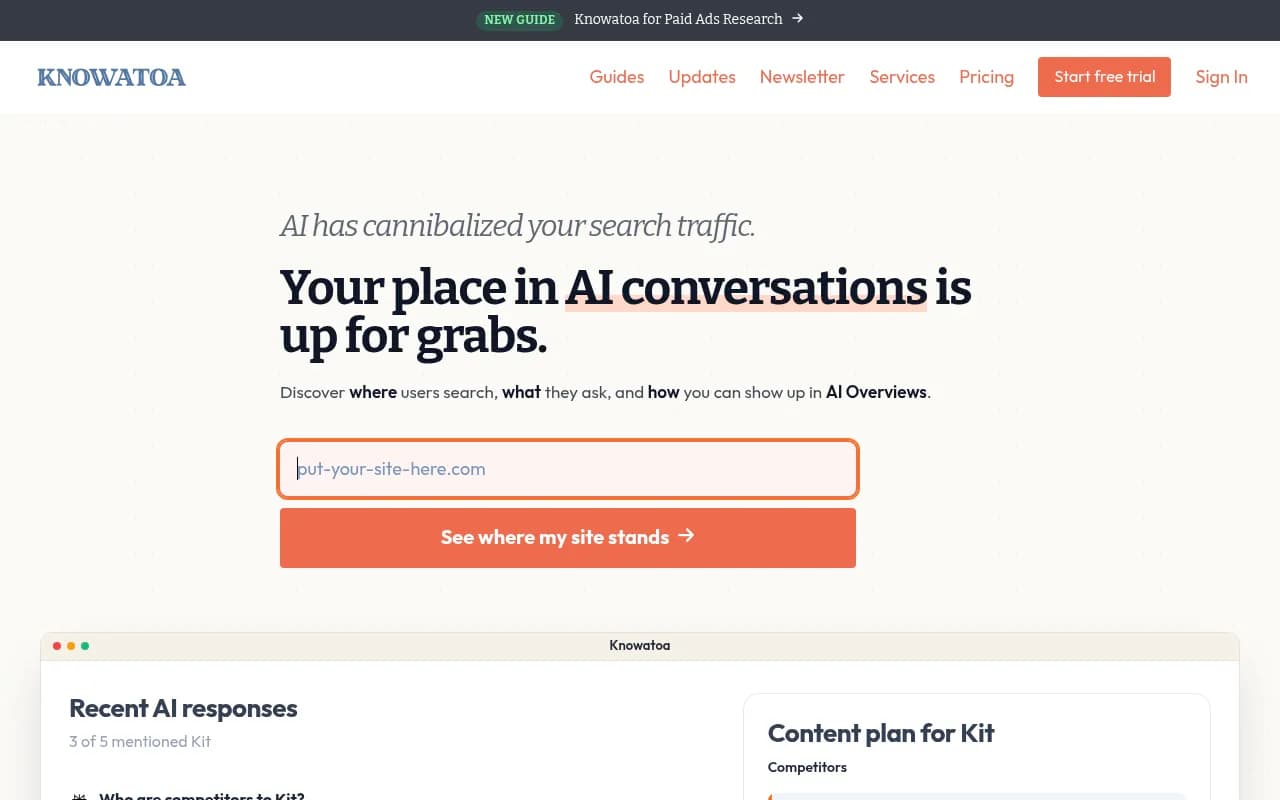
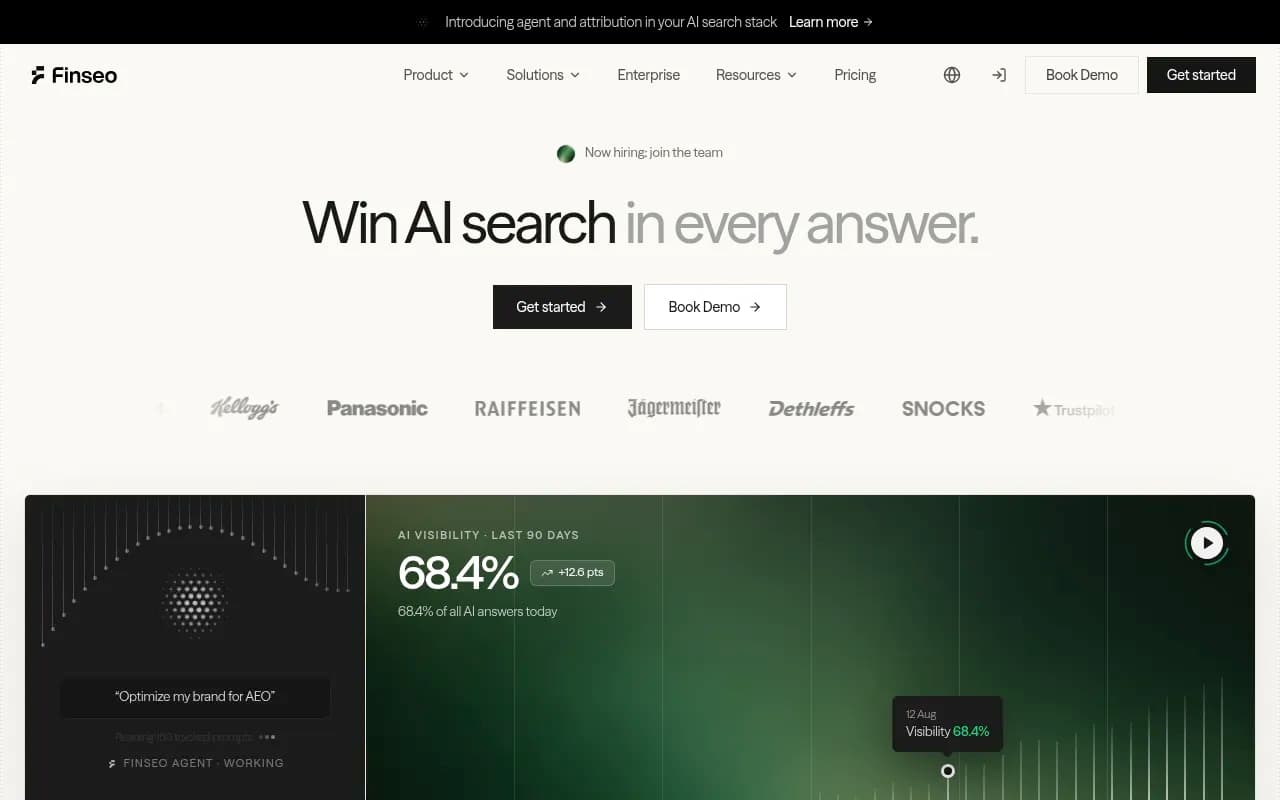
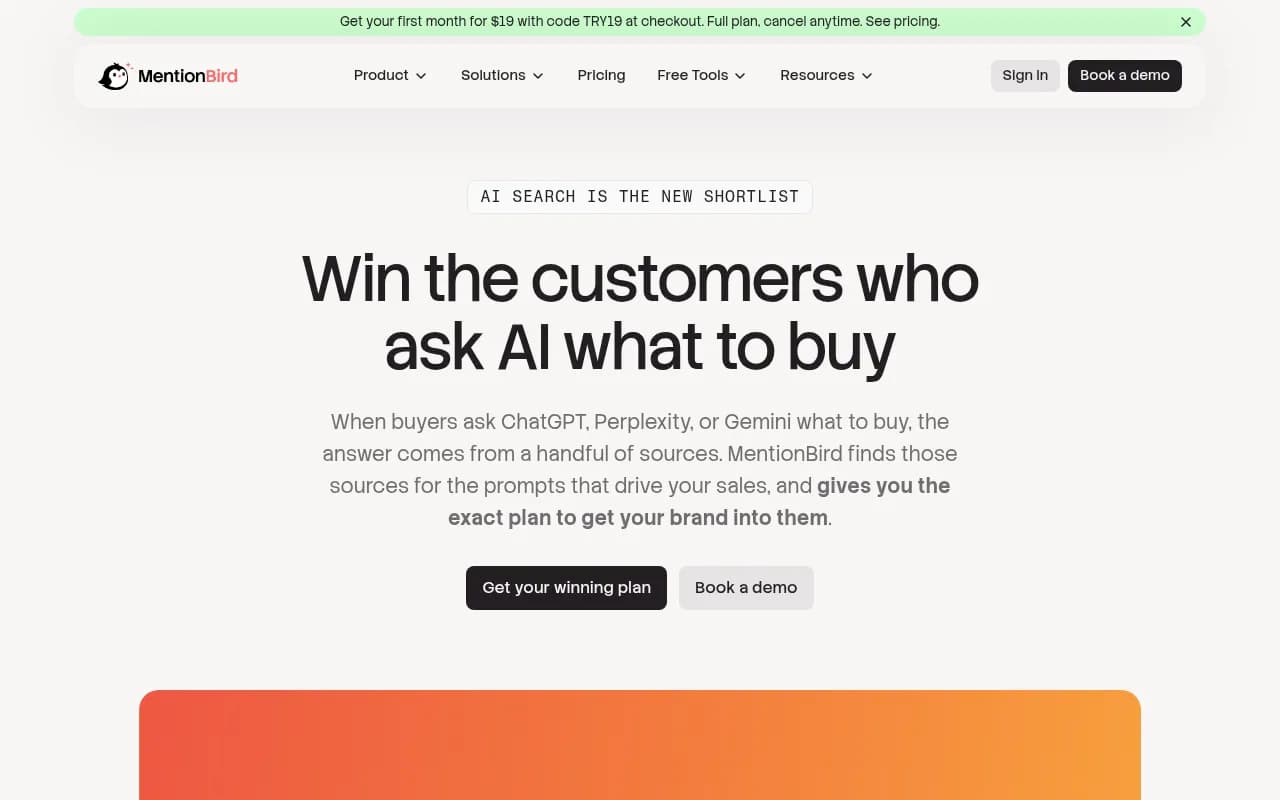
Here is how I would sort them:
| Need | Tool types to consider |
|---|---|
| Citation URLs, gaps, and acting on them | Promptwatch, Profound |
| Lightweight prompt tracking on a budget | Peec AI, Otterly.AI |
| Adding AI data to an existing SEO suite | Semrush One, Ahrefs Brand Radar |
| Google AI Overviews and AI Mode only | Knowatoa, Finseo |
| Which sources AI cites, simply | MentionBird |
Monitoring-only tools tell you the gap exists. They don't write the missing page or check whether it worked. If you want to compare more options, the GEO software directory and the AI rank tracking directory list them side by side.
Step 8: Prioritize the gaps
You will end up with a long list. Sort it into buckets:
| Bucket | Example | Who owns it |
|---|---|---|
| Missing page | No comparison or alternatives page where a competitor has one | Content |
| Weak page | You have the page, but the answer is buried or has no evidence | Content / SEO |
| Technical | Crawlers blocked, errors in logs, page not in sitemap | Dev / SEO |
| Third-party | Competitor listed in listicles and reviews, you aren't | PR / partnerships |
| Already working | Pages AI cites today, with a pattern you can copy | Content |
Start with the missing and technical buckets. They are the fastest to fix. Third-party work takes months, so start it in parallel instead of waiting.
That last bucket is underrated. Find your own pages that AI cites already, figure out what they share (a definition at the top, a table, a dataset), and reuse that structure on adjacent topics.
Step 9: Re-check on a schedule
AI citations move. The AEO Engine guidance suggests checking priority commercial queries weekly while you are actively improving pages and monthly once the pattern stabilizes. That is sensible. Keep the same prompt set so you can compare week over week, and add new prompts without deleting the old ones.
Watch for three signals:
- Your URL appearing in sources for a prompt where it was absent
- A competitor URL dropping out after you publish something stronger
- Cited-but-not-recommended: the AI cites your page but names a competitor in the answer. That is a framing problem, so look at your page's positioning and comparison language
Common mistakes
- Testing one prompt. One answer is noise.
- Merging engines. ChatGPT and AI Overviews cite very different sources.
- Ignoring third-party pages. If the indirect gap is where you lose, editing your blog won't help.
- Mistaking mentions for citations. Being named in the text without a linked source is a different problem from not appearing at all.
- Expecting exclusivity. On comparison prompts, your competitor's site will often be cited right next to yours. The goal is to be in the list and described well, not to be the only source.
A quick starting checklist
- Write 30 to 50 prompts across organic, comparison and brand intent.
- Run them in ChatGPT, AI Overviews, AI Mode and Perplexity, and log every cited URL.
- Tag each cited page by content type.
- Run the short sub-queries too.
- List third-party pages that cite competitors but not you.
- Check crawler access and page freshness.
- Pick the five biggest gaps and ship fixes.
- Re-run the same set in a week.
For wider context on what is being cited across AI search, the Promptwatch Data hub publishes regularly updated citation research you can use as a benchmark for your own numbers.