Key takeaways
- Setup time across AI brand monitoring tools ranges from zero (Ahrefs Brand Radar's discovery mode) to multiple weeks (enterprise suites like BrightEdge and seoClarity)
- Peec AI is the fastest full monitoring setup: under 10 minutes to configure, dashboard populated within 24 hours
- AthenaHQ sits in the middle with a guided 15-20 minute wizard that pulls in Google Search Console data automatically
- Enterprise platforms trade setup speed for depth, but that speed cost is real: teams can spend weeks in training before extracting value
- Fast setup isn't automatically better. A rushed prompt list with vague brand identifiers gives you noisy, unreliable data no matter how quick the onboarding felt
I've onboarded a handful of these tools myself, and the range in setup experience is bigger than most buying guides let on. Some platforms genuinely let you paste in a domain name and walk away with a coffee. Others hand you a Slack channel, a customer success manager, and a calendar invite for "kickoff week 1 of 3." Neither approach is wrong, but they solve different problems, and picking the wrong one for your team size is how you end up either drowning in unused enterprise seats or capped out on a tool that can't scale past ten prompts.
This guide ranks the major AI brand monitoring and visibility platforms by actual setup time, based on vendor documentation, customer reviews, and hands-on quickstart guides. I'm also flagging what "setup time" actually includes in each case, because a vendor claiming "10 minutes" and a vendor claiming "15-20 minutes" might be describing wildly different amounts of actual configuration work.
Why setup time actually matters here
AI answer engines are still moving fast underneath these tools. Promptwatch's own tracking of ChatGPT's query fanouts found that average fanouts per response dropped from 2.15 in early December to exactly 1.0 by April 2026, a much leaner search pattern than a few months earlier, and query length more than halved over the same period (see Promptwatch's data on ChatGPT query fanouts). Retrieval behavior on Microsoft Copilot has been even less stable, swinging from under 2 sources per response to nearly 17 within a few weeks per Promptwatch's average sources per response tracking. If the underlying platforms are moving that much, a monitoring setup that takes two weeks to configure risks being stale before it's even live. That's the actual argument for fast setup: not convenience, but relevance.
The counter-argument is just as real. A tool that takes 20 minutes to configure but only monitors ChatGPT's training-data recall, rather than live search behavior, is fast and also not telling you much. So treat setup time as one input, not the whole decision.
The setup time spectrum, ranked
| Tool | Setup time | What "setup" includes | Starting price |
|---|---|---|---|
| Ahrefs Brand Radar | Zero (discovery mode) | Type a brand name, get results instantly; ongoing tracking needs more config | ~$99/mo add-on |
| Peec AI | Under 10 minutes | Add prompts, add 3-4 competitors, dashboard live in 24 hours | 70 EUR/mo |
| Cognizo | Instant | Premade prompt set kicks off analysis immediately | $499/mo (Growth) |
| HubSpot AI Search Grader | Instant (free grade) | One-time check, no signup; paid AEO tier needs manual per-client config | Free / $50/mo |
| AthenaHQ | 15-20 minutes | Connect GSC/GA4, confirm brand profile, add competitors, generate prompt set | $295/mo |
| Profound | ~2 hours (self-serve) to a few days (guided) | Full prompt coverage plus onboarding-team support for paying accounts | Custom/enterprise |
| SE Ranking (SE Visible) | 4 steps, roughly 15-30 minutes | Domain entry, competitor list, prompt generation, schedule | ~$103-129/mo |
| Semrush AI Visibility Toolkit | Multi-step guided onboarding, often a full session | Tour, benchmark score, competitor research, prompt research, sentiment, tracking, site audit | $99/mo per domain |
| BrightEdge / seoClarity | Weeks | Module training, workflow configuration, team onboarding | $2,500-$3,000+/mo |
A quick note on the pricing column: several of these figures shift between sources and even between the vendor's own pages, so treat them as directional rather than exact at the moment you're reading this.
The fastest tier: zero to 10 minutes
Ahrefs Brand Radar
Ahrefs' own help documentation states it flatly: "There's no setup time, and you can search anything: brands, products, regions, and authors." You can search 100M+ backed prompts across six or seven AI platforms including AI Overviews, AI Mode, ChatGPT, Perplexity, Gemini, and Copilot without configuring anything first.
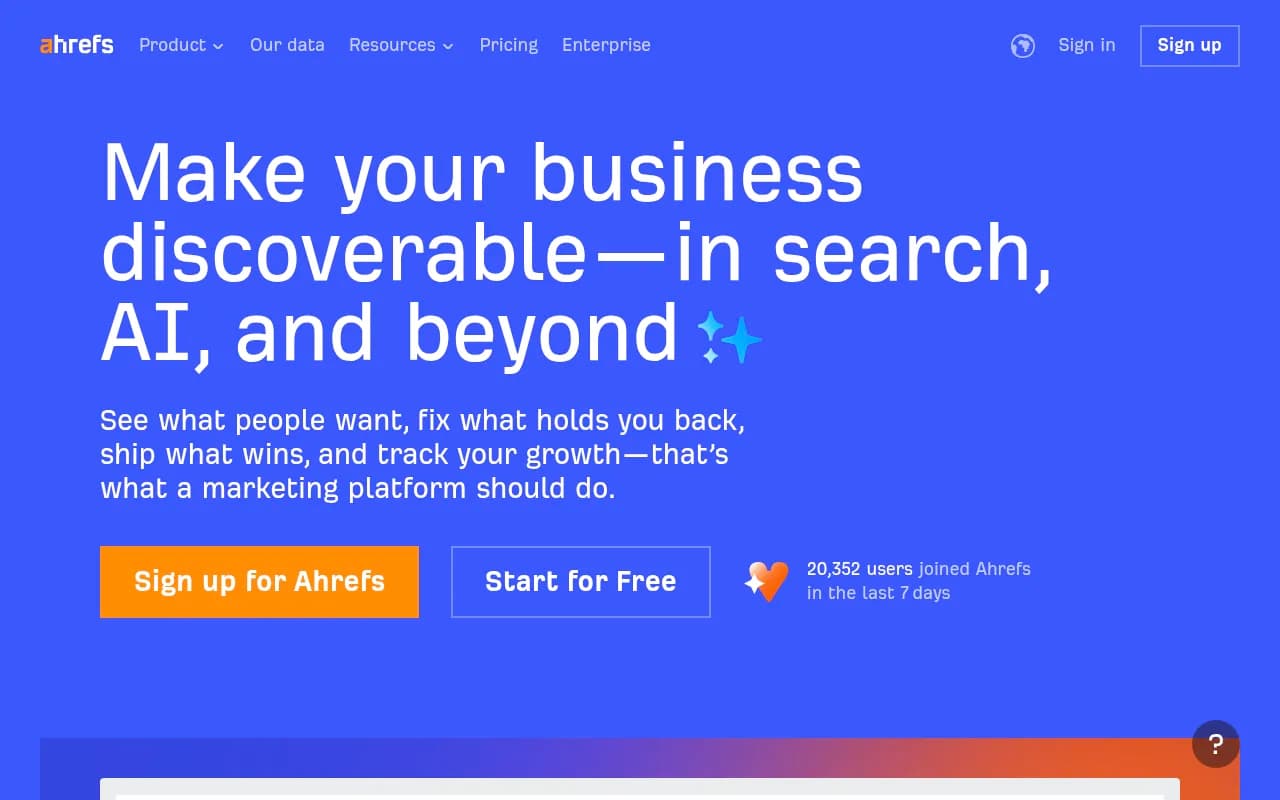
The catch is that "zero setup" describes the discovery/search feature, not ongoing custom prompt tracking. If you want Brand Radar watching a specific set of prompts over time rather than just answering ad hoc searches, that's a paid add-on tier with its own configuration step, and Claude tracking specifically requires custom prompts routed through the API, consuming extra credits per query.
Peec AI
Peec's official quickstart guide is refreshingly upfront: "It takes less than 10 minutes, and you'll have your first AI visibility insights within 24 hours." The three-step flow is add your first 10 prompts (Peec auto-suggests them from your website or Google Search Console keywords, rephrased conversationally), add 3-4 competitors, and wait for the dashboard to populate.
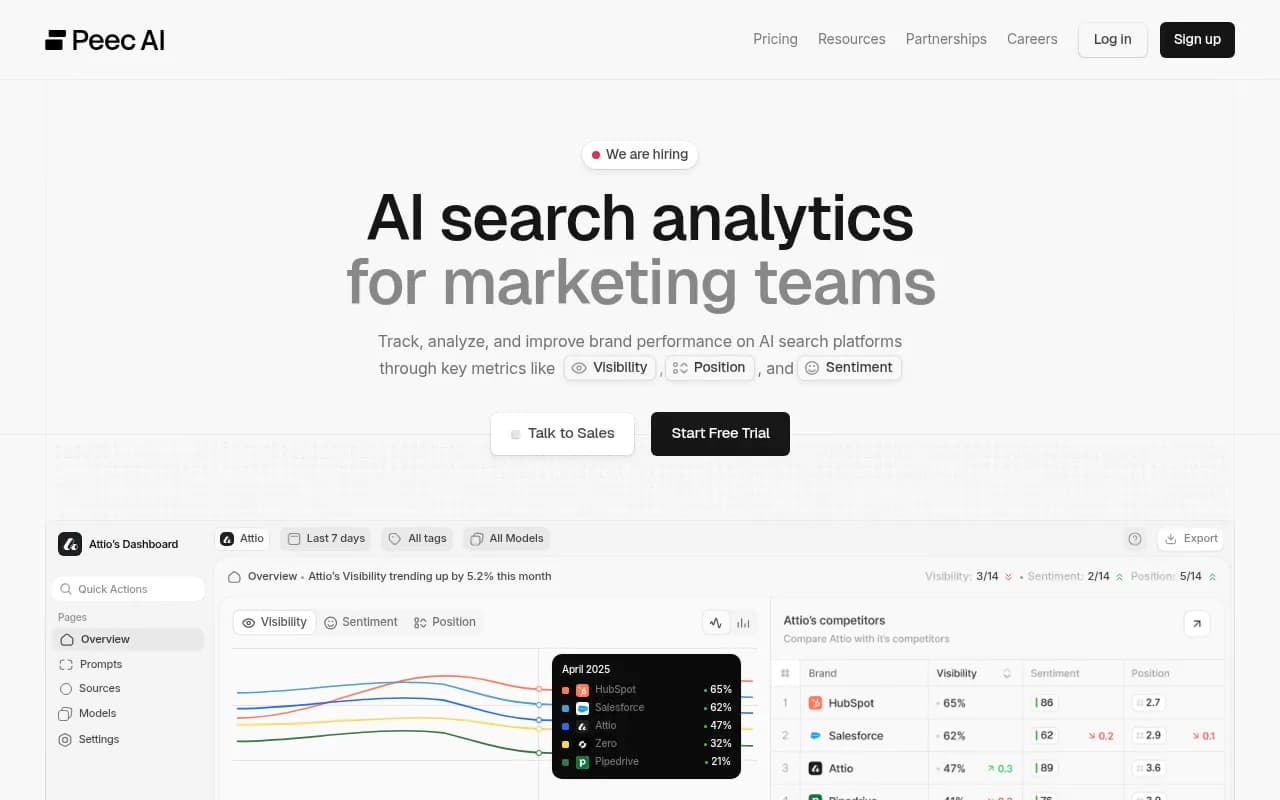
One setup detail that's easy to miss and genuinely matters: Peec's docs recommend using the shortest unique version of your brand name, not "hubspot.com" or a regional variant, because mismatched naming undercounts mentions. It's a two-minute fix during onboarding that saves you weeks of second-guessing your data later.
Cognizo
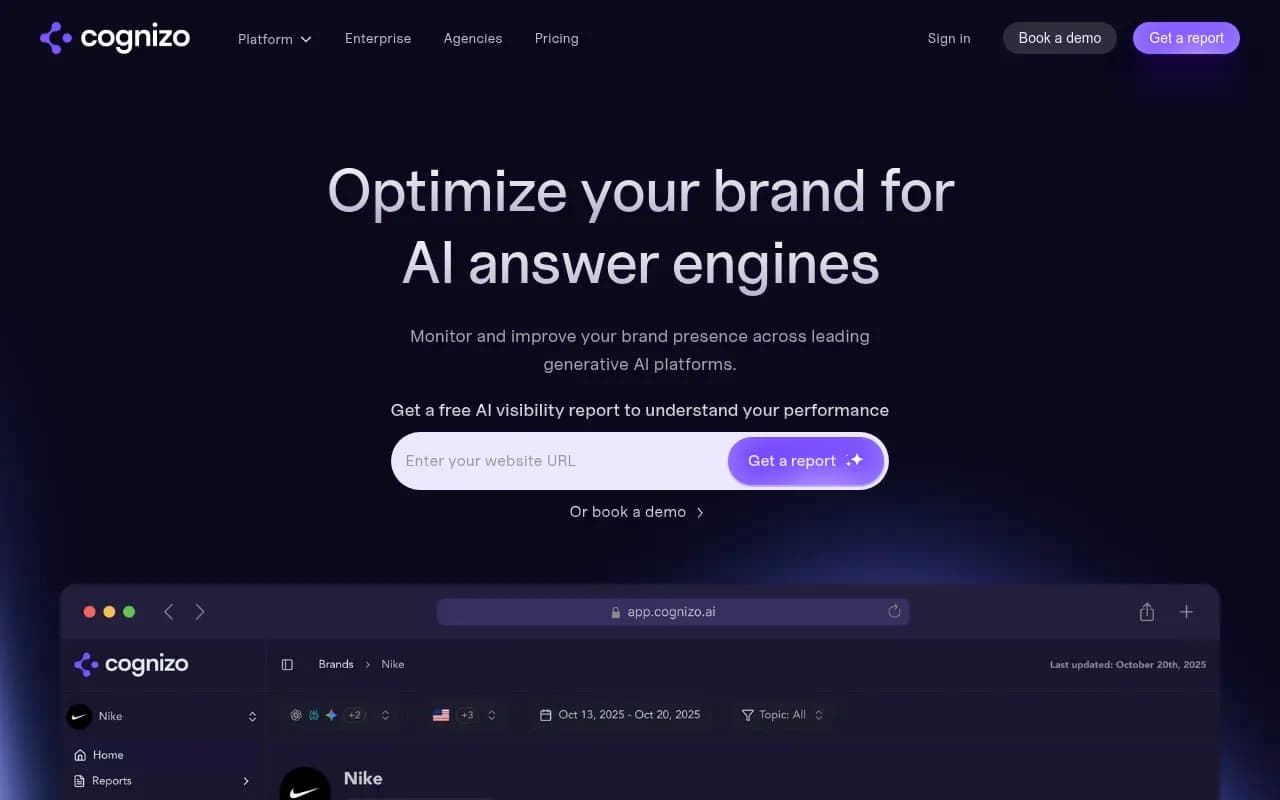
Cognizo's pricing FAQ says you'll get "a premade prompt set to start with" and analysis kicks off immediately. That's about as fast as it gets for a paid, full-featured platform. Worth noting the pricing has shifted meaningfully; current tiers run $499/month for Growth (8 articles, 150 prompts, choice of 5 platforms) up to $999/month for Pro, positioning it closer to a content-and-optimization tool than a pure tracker.
HubSpot AI Search Grader
The free version is instant and requires no signup: it checks how ChatGPT, Perplexity, and Gemini currently describe your brand based on training data. But an independent three-week hands-on review found the paid AEO tier actually requires more manual configuration per client than the marketing suggests, including several steps to configure AI platforms individually. Treat the "instant" claim as applying to the free grader only.
The middle tier: 15 minutes to a couple hours
AthenaHQ
AthenaHQ's own docs are the most precise of any tool here: "The activation flow takes about 15-20 minutes and is designed to be self-serve." The six-step flow (invite users, connect integrations, confirm brand profile, add competitors, generate 50-100 starter prompts, set schedule) is genuinely well-documented, and connecting Google Search Console is called out as the single most valuable step since it feeds prompt suggestions.
Initial results appear "within a few hours," which splits the difference between Peec's near-instant dashboard and the multi-day waits you see further up the price ladder.
Profound
A Statsig customer testimonial puts self-serve setup at "less than two hours" for full prompt coverage. Other reviewers describe a slower path when using Profound's guided onboarding team, with setup stretching to "a few days" including Slack-style collaboration channels. Both experiences seem accurate, they're just describing different onboarding paths for different account tiers.

One customer, CRS Credit API, reported a 20x increase in AI visibility and an 8% boost in weekly LLM-citation traffic after adoption, though that's a single case study and shouldn't be read as a typical result.
SE Ranking / SE Visible
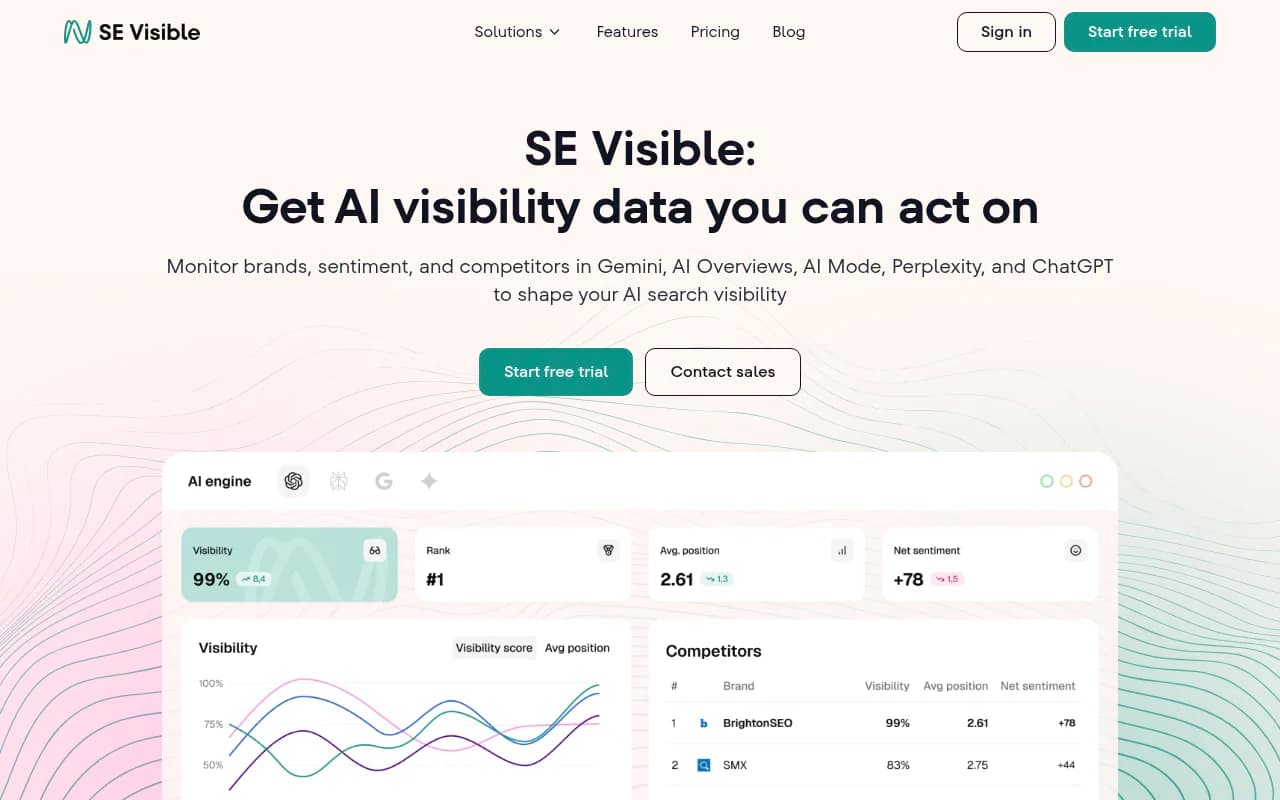
SE Ranking's help docs describe a four-step setup for their AI visibility module, and there's a genuinely useful free tool that gives an instant snapshot for a domain plus up to five competitors, five checks per day, no account required. Full paid setup runs a bit longer but still lands comfortably in the same-day tier.
Semrush AI Visibility Toolkit
Semrush's official onboarding path has seven distinct stages: tour, AI Visibility Score benchmark, competitor research, prompt research, brand sentiment reports, prompt tracking, and a site audit for AI-readiness. Semrush also runs live onboarding workshops led by their own team. This isn't a 10-minute setup by any measure, more a structured half-day-to-multi-session process depending on how deep you go.
The slow tier: multiple days to weeks
Enterprise suites like BrightEdge and seoClarity sit at the far end. Industry comparisons describe "a ramp of weeks, not days, before the platform pays back," and one review notes that a mid-sized brand evaluating BrightEdge mainly for AI citation tracking can spend weeks in onboarding and module training alone. BrightEdge itself claims 85% of new customers start using its generative AI features within the first 90 days of onboarding, which is a telling admission about how long the runway actually is.
These platforms aren't slow because the vendors are bad at onboarding. They're slow because the tools do more, more modules, more custom taxonomy, more integrations with existing enterprise SEO workflows, and that complexity has to get mapped to your specific org before it produces anything useful. If you're managing 50+ client accounts or hundreds of brand variants, that investment can be worth it. If you're a 12-person marketing team, it almost certainly isn't.
What fast setup can quietly cost you
Here's the part most "setup time" comparisons skip: speed and data quality pull against each other if you're not careful. A few specific failure modes show up repeatedly in expert reviews of these platforms.
Brand and competitor identifier ambiguity is the biggest one. Both AthenaHQ's and Peec's own documentation stress listing every name variation, abbreviation, and product line for your brand and your competitors. Skip that step to save five minutes, and every mention-count and share-of-voice number downstream will be quietly wrong.
Over-relying on branded prompts is another. Conductor's prompt-tracking guidance calls this out directly: branded prompts inflate perceived visibility because most brands already do fine on their own name. The real signal is in unbranded, pre-purchase prompts, and there's no pay-to-play lever in AI search the way there is with paid search ads, so that visibility has to be earned through content and citations, not budget.
SeoClarity's content team also warns against tracking too many hyper-specific long-tail prompts right out of the gate. It creates noisy, unscalable data and makes it hard to tell what's actually worth optimizing. A tool that lets you auto-generate 100 prompts in under a minute is convenient, but somebody still has to sanity-check that list before the analysis is worth trusting.
Matching setup time to your actual situation
If you're a solo operator or small team just trying to see how AI answers describe your brand, Ahrefs Brand Radar's zero-setup discovery mode or Peec AI's 10-minute flow will get you real signal today. Don't overthink it.
If you're a mid-market team that wants ongoing prompt tracking tied to existing Search Console and analytics data, AthenaHQ's 15-20 minute guided setup is a genuinely good middle ground, it's fast enough to try this week and thorough enough to trust for actual reporting.
If you're managing AI visibility across multiple brands, agencies, or dozens of client accounts, the slower enterprise setups start to make more sense, because the customization they force you through up front is what keeps the data usable at scale later.
And if what you actually need isn't just monitoring but a system that also tells you why a page isn't getting cited, and then does something about it, that's a different category of tool entirely. Promptwatch sits closer to that category: alongside prompt tracking with volume and difficulty scoring, it logs the actual AI crawler visits hitting your site (ChatGPTBot, ClaudeBot, PerplexityBot, and 400+ others), tracks citations across Reddit and YouTube most competitors ignore, and its Content Agents can draft and publish GEO-optimized pages straight to your CMS. Setup involves connecting a site and letting the crawler-log integration authenticate, comparable in effort to AthenaHQ's guided flow, but the output goes well past a dashboard of mention counts.

A quick note on what "live" tracking actually means
One thing worth checking before you commit to any tool on this list: whether it's reading live search results or just querying the model's training-data memory. HubSpot's free grader, for instance, pulls ChatGPT and Gemini answers from training data while Perplexity pulls from live search, a meaningful difference that changes how current your "visibility" reading actually is. Given how fast retrieval behavior is shifting, Promptwatch's tracking shows OpenAI's share of verified AI crawler requests fell from 94.8% in early June 2026 to 79.8% by early September, a real mix shift toward Anthropic, Google, Perplexity, and Mistral (see Promptwatch's AI crawler traffic data), a snapshot based on stale training data can miss which platforms actually matter to your buyers right now.
If you want to browse more options beyond this list, the GEO software directory at bestgeosoftware.com covers a wider set of platforms by feature set rather than setup time, which is a useful second filter once you've narrowed down on speed.
Bottom line
Setup time is a real, measurable difference between these tools, ranging from literally zero minutes to multiple weeks of onboarding. But it's a proxy for something else: how much configuration work the tool is asking you to do versus doing for you. Fast tools like Peec AI and Ahrefs Brand Radar get you data almost immediately because they make simplifying assumptions about your prompt set and brand identifiers. Slower tools like BrightEdge and Semrush's full toolkit ask more of you up front in exchange for more customization later. Neither is the correct default. Pick based on how much configuration your specific brand, competitor set, and reporting needs actually require, not on which vendor's onboarding page has the smallest number in it.