Key Takeaways
- Pricing advantage: Meteoria starts at €75/mo (~$80) for 25 prompts vs Gauge's $99/mo for 100 prompts -- Gauge offers better value at entry level
- Geographic focus: Meteoria is French-built with strong European market positioning; Gauge is US-focused with broader international reach
- LLM coverage: Both track 5+ major AI models (ChatGPT, Perplexity, Gemini, Google AI Overview), but Gauge adds Claude and Copilot to the mix
- Content generation: Gauge includes AI article generation in all paid plans (3-18 articles/mo); Meteoria focuses purely on monitoring and analysis
- User base scale: Meteoria claims 1,000+ companies; Gauge is newer with a smaller but growing customer base
- Action vs analysis: Gauge emphasizes actionable recommendations and content creation; Meteoria leans toward deep competitive analysis and sentiment tracking
Overview
Meteoria

Meteoria is a French Generative Engine Optimization platform that measures how brands appear in AI-generated responses. It tracks ChatGPT, Google AI Overview, Perplexity, Gemini, and Grok across hundreds of daily prompts. The platform emphasizes competitive benchmarking, citation source analysis, and sentiment evaluation. Meteoria has attracted 1,000+ companies since launch, with a strong presence in European markets. Pricing starts at €75/mo for 25 prompts.
Gauge
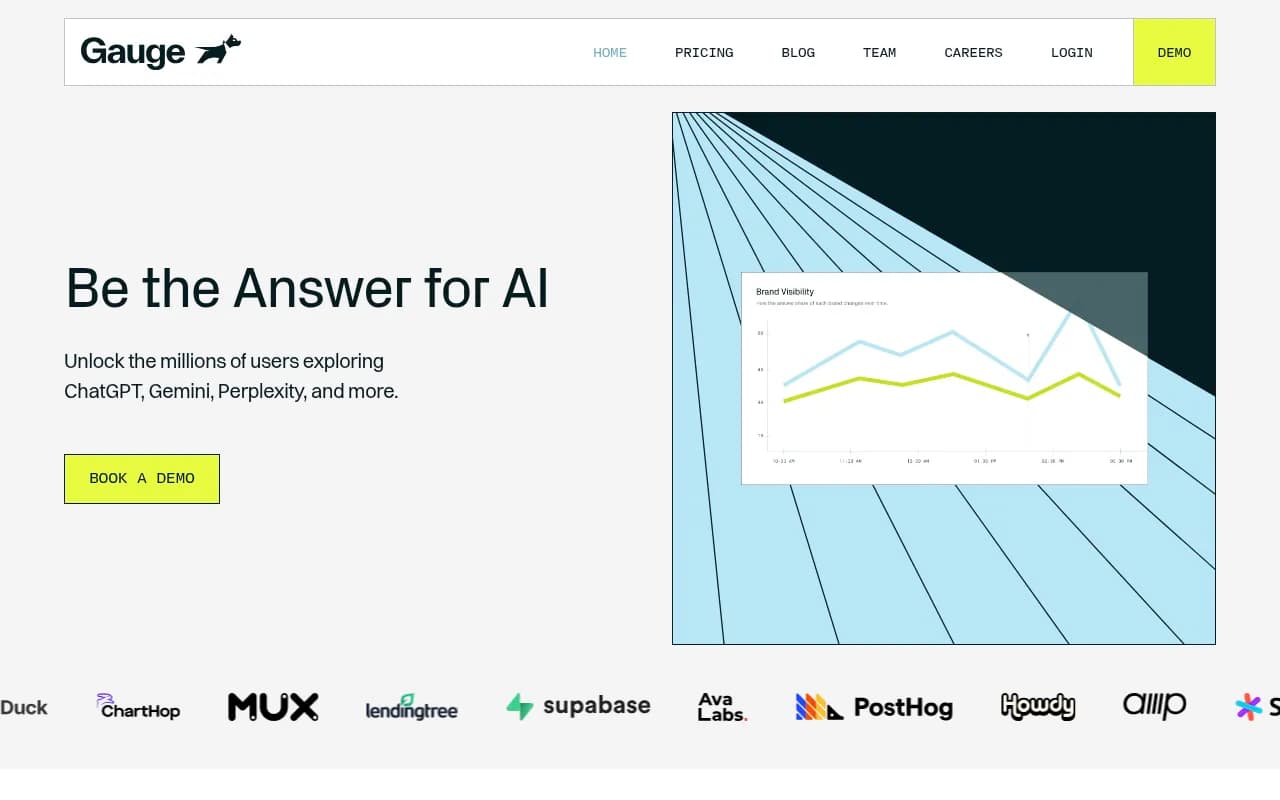
Gauge positions itself as a complete AI visibility toolkit that tracks, analyzes, and helps improve brand presence across AI search engines. It monitors ChatGPT, Claude, Gemini, Perplexity, Copilot, Google AI Mode, and AI Overviews. Beyond monitoring, Gauge includes content generation capabilities (3-18 AI-written articles per month depending on plan) and provides onsite/offsite optimization recommendations. The platform starts at $99/mo for 100 prompts on the Starter plan.
Side-by-Side Comparison
| Feature | Meteoria | Gauge |
|---|---|---|
| Starting price | €75/mo (~$80) | $99/mo |
| Entry-level prompts | 25 prompts/mo | 100 prompts/mo |
| Free trial | 7 days | Yes (freemium tier) |
| LLM coverage | ChatGPT, Perplexity, Gemini, Google AI Overview, Grok (5 models) | ChatGPT, Claude, Gemini, Perplexity, Copilot, AI Mode, AI Overviews (7+ models) |
| Content generation | ✗ No | ✓ 3-18 articles/mo |
| Competitor tracking | ✓ Yes | ✓ Yes |
| Citation analysis | ✓ Yes | ✓ Yes |
| Sentiment tracking | ✓ Explicit + implicit | Limited |
| Geographic targeting | Strong EU focus | Global, US-focused |
| Traffic analysis | ✓ Content/traffic compatibility | Basic |
| API access | Not specified | Not specified |
| Language support | French + English | English primary |
Pricing comparison
| Plan | Meteoria | Gauge |
|---|---|---|
| Free tier | 7-day trial | Freemium (limited) |
| Starter/Basic | €75/mo (25 prompts) | $99/mo (100 prompts, ChatGPT only, 3 articles) |
| Mid-tier | €175/mo (100 prompts) | $599/mo (600 prompts, all models, 18 articles) |
| Enterprise | €300+/mo (200+ prompts) | Custom pricing |
Meteoria's pricing is more granular with three clear tiers. Gauge has a bigger jump from Starter ($99) to Growth ($599), which might be a barrier for mid-sized teams. However, Gauge's Starter plan includes 4x more prompts than Meteoria's Basic, making it better value if you only need ChatGPT monitoring.
LLM coverage and monitoring depth
Meteoria tracks five AI models: ChatGPT, Google AI Overview, Perplexity, Gemini, and Grok. The platform runs hundreds of prompts daily and quantifies thousands of responses to calculate visibility rates, relative positioning, and citation sources. You can customize prompts by sector, product, persona, and geography.
Gauge monitors seven AI engines: ChatGPT, Claude, Gemini, Perplexity, Copilot, Google AI Mode, and AI Overviews. The broader coverage includes Claude (Anthropic's model) and Microsoft Copilot, which Meteoria doesn't track. Gauge's Starter plan only covers ChatGPT, though -- you need the Growth plan ($599/mo) for full multi-model access.
Verdict: Gauge has wider LLM coverage if you pay for Growth tier. Meteoria gives you all five models at every price point, which is more straightforward.
Competitive intelligence and benchmarking
Meteoria emphasizes competitive analysis. You can compare your visibility and positioning against competitors across all tracked LLMs, filtered by strategic criteria. The platform surfaces which sources AI models cite, helping you understand where to get mentioned. Sentiment analysis (both explicit and implicit) shows how AI models frame your brand vs competitors.
Gauge also tracks competitor mentions and provides benchmarking, but the focus is less on deep sentiment analysis and more on identifying content gaps. The "Understand" module shows what content is cited, what's missing, and how you stack up. Gauge then translates this into actionable recommendations -- specific onsite and offsite tactics to improve visibility.
Verdict: Meteoria wins for pure competitive intelligence depth. Gauge wins for turning that intelligence into a to-do list.
Content optimization and generation
This is where the platforms diverge sharply.
Meteoria does not include content generation. It analyzes your existing content and traffic to assess "compatibility with LLMs" and shows concrete results, but you're on your own for creating new content. The platform is built around measurement and comparison, not production.
Gauge includes AI-powered article generation in every paid plan: 3 articles/month on Starter, 18 articles/month on Growth. The content is designed to improve AI visibility based on the gaps Gauge identifies. You also get tools to audit existing pages and target high-value affiliates or social sources like Reddit.
Verdict: Gauge is the clear winner if you want an all-in-one platform that helps you create content, not just analyze it. Meteoria is monitoring-only.
User interface and reporting
Meteoria's interface leans French-first (the website is primarily in French, though English is supported). The dashboard emphasizes data visualization -- charts showing visibility trends, competitor heatmaps, and citation breakdowns. The design is clean but data-dense, aimed at marketing teams comfortable with analytics.
Gauge's interface is English-first with a more guided workflow. The three-step model (Track → Understand → Act) structures the user experience around taking action, not just consuming data. Reporting appears more narrative-driven, with clear recommendations rather than raw metrics.
Verdict: Depends on your team. If you want deep data exploration, Meteoria. If you want guided recommendations, Gauge.
Geographic and language support
Meteoria is a French company serving 1,000+ businesses, many in Europe. The platform supports geographic targeting for prompts, which is useful for brands operating in multiple regions. Language support includes French and English, with a clear focus on European markets.
Gauge is US-based with a global reach. The platform is English-primary, and the customer base skews toward North American companies. Geographic targeting is available but less emphasized in the marketing.
Verdict: Meteoria for European brands, especially French-speaking teams. Gauge for US and international English-speaking companies.
Integration and workflow
Neither platform lists extensive third-party integrations publicly. Meteoria mentions analyzing your content and traffic but doesn't specify how data is ingested (API, manual upload, etc.). Gauge similarly focuses on its standalone capabilities without highlighting integrations.
Both platforms appear designed as standalone tools rather than pieces of a larger martech stack. You'll likely export data manually for reporting or combine insights with other tools.
Verdict: Tie. Neither platform is built for deep integrations yet.
Customer support and onboarding
Meteoria offers a 7-day free trial and a booking link for demos. The website emphasizes that 1,000+ companies already use the platform, suggesting a self-serve onboarding model with support available.
Gauge also offers a free trial (freemium tier) and demo bookings. The "Book a Demo" CTA is prominent, and Gauge promises a "full deep dive" report on your current AI presence during the sales process. This suggests a more hands-on onboarding approach, especially for higher-tier plans.
Verdict: Gauge appears more consultative. Meteoria is more self-serve.
Pros and cons
Meteoria pros
- Lower entry price (€75/mo vs $99/mo)
- All LLMs available at every tier
- Strong competitive analysis and sentiment tracking
- 1,000+ company user base signals market validation
- European market focus with French language support
Meteoria cons
- No content generation or optimization tools
- Smaller prompt allowance at entry level (25 vs 100)
- Less emphasis on actionable recommendations
- Fewer LLMs tracked overall (5 vs 7)
Gauge pros
- 4x more prompts on entry plan (100 vs 25)
- Includes AI content generation (3-18 articles/mo)
- Broader LLM coverage (7 models including Claude and Copilot)
- Action-oriented workflow with clear recommendations
- Freemium tier for testing before committing
Gauge cons
- Higher mid-tier price ($599/mo vs €175/mo)
- Starter plan only covers ChatGPT (need Growth for all models)
- Newer platform with smaller user base
- Less depth on sentiment analysis
Who should pick which tool
Choose Meteoria if you:
- Operate primarily in European markets or need French language support
- Want deep competitive intelligence and sentiment analysis
- Already have a content creation process and just need monitoring
- Prefer all LLMs available at every price tier
- Have a smaller budget and can work with 25-100 prompts/month
Choose Gauge if you:
- Need an all-in-one platform that generates content, not just monitors
- Want broader LLM coverage including Claude and Copilot
- Prefer guided recommendations over raw data exploration
- Can afford the $599/mo Growth plan for full multi-model access
- Operate in US or international English-speaking markets
If you're also tracking how your brand shows up in AI search results and want to close the loop from monitoring to content creation to traffic attribution, Promptwatch offers a complementary approach with crawler logs, Reddit/YouTube tracking, and page-level citation analysis.

Final verdict
Gauge wins for teams that want a complete toolkit -- monitoring plus content generation plus actionable recommendations. The $99/mo Starter plan is solid value if you only need ChatGPT tracking, and the Growth plan ($599/mo) delivers the full experience with 600 prompts and 18 articles per month. The action-oriented workflow makes it easier to go from insight to execution.
Meteoria wins for teams that prioritize deep competitive analysis and already have content creation handled. The €75/mo entry point is cheaper, and you get all five LLMs from day one. The 1,000+ company user base and European market focus make it a safer bet for French-speaking teams or brands operating heavily in EU markets.
The core difference: Gauge is a do-it-for-me platform that generates content and tells you what to fix. Meteoria is a show-me-the-data platform that gives you the intelligence to make your own decisions. Pick based on whether you need a content engine or a competitive intelligence engine.