Key Takeaways
- Price difference is massive: Meteoria starts at €75/month for small teams, while Bluefish starts around $4,000/month for enterprise -- a 50x difference in entry price
- Target audience split: Meteoria serves SMBs, agencies, and mid-market brands; Bluefish exclusively targets Fortune 500 companies with dedicated marketing teams
- Geographic focus: Meteoria is French-built with strong European market support; Bluefish is US-focused with enterprise-grade infrastructure
- Feature depth vs accessibility: Bluefish offers deeper enterprise controls and custom audiences; Meteoria provides core GEO features at a fraction of the cost
- Contract structure: Meteoria offers monthly plans with a 7-day free trial; Bluefish requires annual contracts with custom quotes
- AI model coverage: Both track ChatGPT, Perplexity, and Gemini; Meteoria adds Grok, Bluefish focuses on "agentic commerce" capabilities
Overview
Meteoria
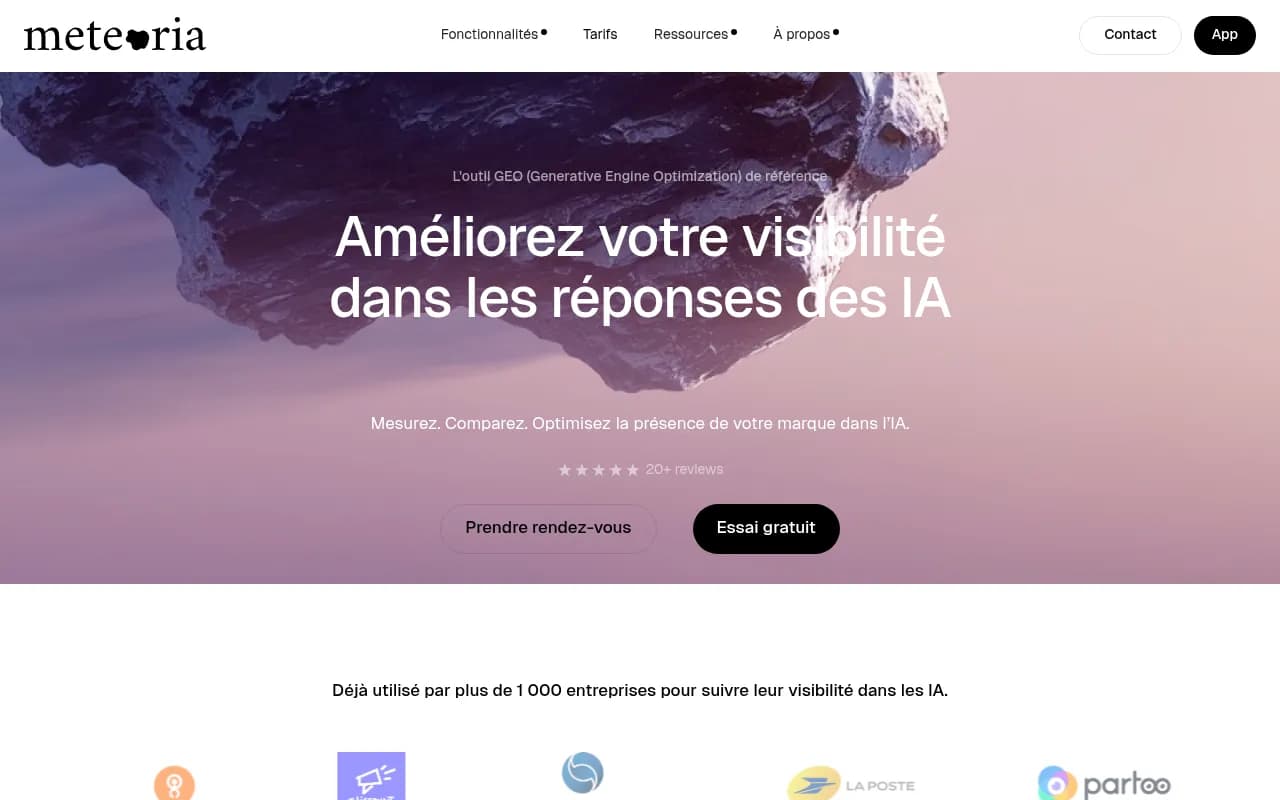
Meteoria is a French GEO platform launched to help brands measure and optimize their visibility in AI-generated responses. Built for marketing teams and agencies that need affordable AI search monitoring, it tracks hundreds of prompts daily across ChatGPT, Google AI Overview, Perplexity, Gemini, and Grok. The platform emphasizes three core functions: measure visibility, compare against competitors, and optimize content strategy. With pricing starting at €75/month and a 7-day free trial, it's positioned as an accessible entry point for companies exploring AI search optimization.
Bluefish
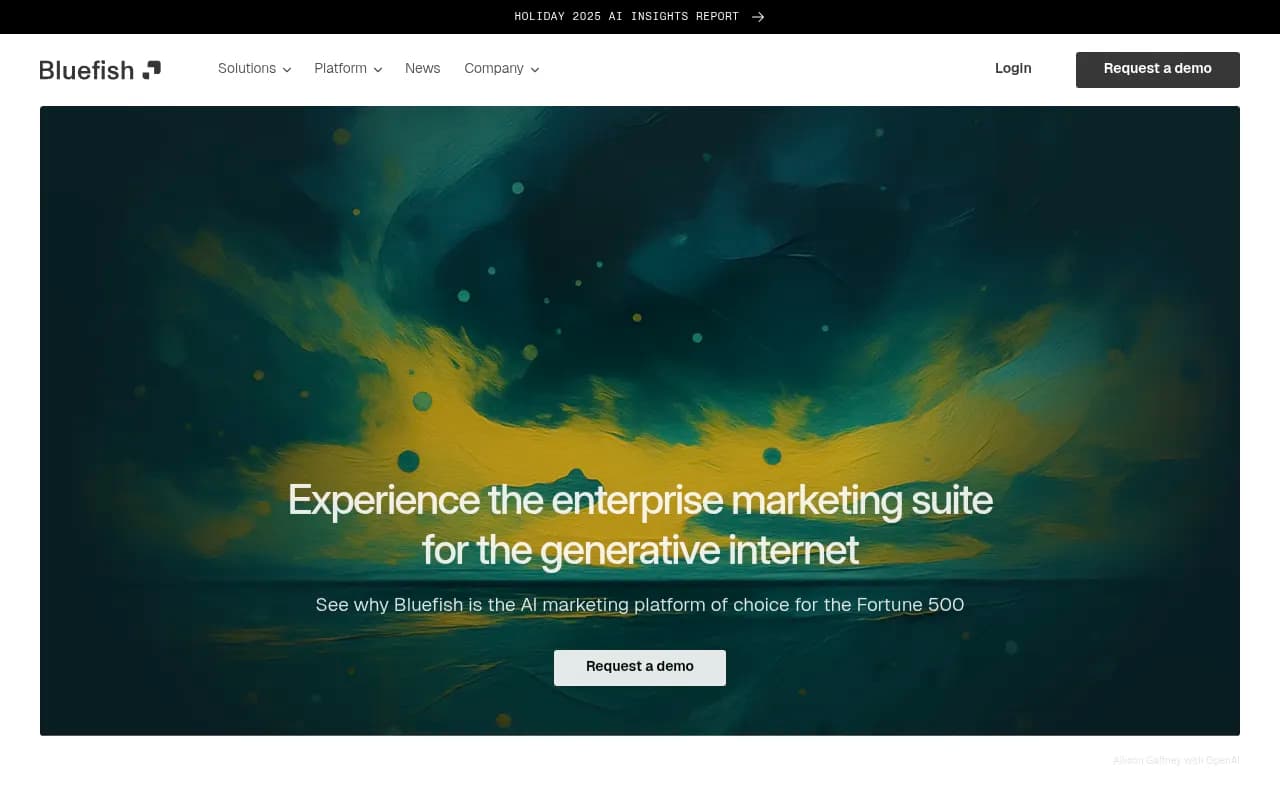
Bluefish positions itself as "the AI marketing platform of choice for the Fortune 500" -- an enterprise-grade solution for large brands managing AI presence at scale. The platform goes beyond basic monitoring to offer what it calls "authority, influence and control" across AI channels, including both AI search and agentic commerce. Bluefish emphasizes depth over breadth: custom audiences, tailored prompts, advanced performance tools, and enterprise infrastructure that passes infosec reviews. Pricing starts around $4,000/month with annual contracts, reflecting its focus on large marketing organizations with substantial budgets.
Side-by-Side Comparison
| Feature | Meteoria | Bluefish |
|---|---|---|
| Starting price | €75/mo (Basic plan) | ~$4,000/mo (custom quote) |
| Free trial | 7 days | Demo only |
| Contract type | Monthly, cancel anytime | Annual contracts |
| Target market | SMBs, agencies, mid-market | Fortune 500, enterprise only |
| Prompt tracking | 25-200+ prompts/plan | Custom volume (enterprise scale) |
| AI models covered | ChatGPT, Perplexity, Gemini, Grok, Google AI Overview | ChatGPT, Perplexity, Gemini, others |
| Geographic customization | Yes (strong EU support) | Yes (US-focused) |
| Competitor analysis | ✓ Included | ✓ Advanced segmentation |
| Source identification | ✓ Included | ✓ Deep analysis |
| Sentiment tracking | ✓ Explicit & implicit | ✓ Reputation monitoring |
| Traffic analysis | ✓ Content compatibility | ✓ ROI measurement (Collections) |
| Agentic commerce | ✗ Not mentioned | ✓ Core feature |
| Custom audiences | Limited | ✓ Enterprise-grade |
| Infosec compliance | Standard | ✓ Passes Fortune 500 reviews |
| Support level | Email, documentation | Dedicated account team |
Pricing: The 50x difference
The pricing gap between these platforms is the most striking difference.
Meteoria pricing
| Plan | Monthly Price | Prompts Tracked |
|---|---|---|
| Basic | €75 | 25 prompts |
| Pro | €175 | 100 prompts |
| Enterprise | €300+ | 200+ prompts |
Meteoria uses transparent tier pricing. You know exactly what you're paying and what you get. The Basic plan at €75/month (~$82) is designed for small teams testing AI visibility or agencies managing a handful of clients. Pro at €175/month works for mid-market brands tracking competitive landscapes. Enterprise pricing scales based on prompt volume but stays in the hundreds, not thousands.
Bluefish pricing
Bluefish doesn't publish pricing. Based on their enterprise positioning and "Fortune 500" focus, contracts start around $4,000/month and scale based on:
- Number of brands monitored
- Markets and geographies covered
- Custom feature requirements
- Data team integrations
Annual contracts are standard. You're not getting in the door without a sales conversation and likely a six-figure annual commitment.
Verdict
If you're a startup, agency, or mid-market brand, Meteoria's pricing is realistic. If you're a Fortune 500 company with a seven-figure marketing budget and need enterprise infrastructure, Bluefish's pricing reflects the level of service and control you're buying.
Feature depth: Monitoring vs enterprise control
Core monitoring capabilities
Both platforms handle the basics: track how often your brand appears in AI responses, monitor competitor mentions, identify citation sources, and measure sentiment. Meteoria calls this "Mesurer, Comparer, Optimiser" (Measure, Compare, Optimize). Bluefish frames it as "Track, optimize and measure across AI search and agentic commerce."
The difference is in execution depth. Meteoria gives you visibility and comparison tools that work well for most use cases. You can track hundreds of prompts, see where competitors are winning, and understand which sources AI models prefer. It's comprehensive without being overwhelming.
Bluefish adds layers of customization that matter at enterprise scale. Custom audiences let you segment by buyer personas, regions, or product lines in ways generic datasets can't match. Tailored prompts mean you're not stuck with off-the-shelf queries -- you can test the exact language your customers use. The platform emphasizes "how AI thinks" rather than just what it says, which translates to deeper analysis of recommendation patterns and influence factors.
Agentic commerce and advanced features
Bluefish's "agentic commerce" capability is a differentiator. As AI assistants start making purchase recommendations and facilitating transactions (think ChatGPT Shopping, Perplexity's shopping features), Bluefish tracks your brand's presence in these commerce flows. This matters if you're a retail brand or e-commerce company where AI-driven recommendations could directly impact revenue.
Meteoria doesn't explicitly mention agentic commerce tracking. It focuses on search visibility and brand presence in informational responses.
Bluefish also introduced "Collections" in February 2026 -- a feature that measures ROI of digital marketing campaigns specifically in the AI channel. This is about connecting AI visibility to actual business outcomes, not just tracking mentions.
Traffic and content analysis
Meteoria includes content compatibility analysis -- it looks at your existing content and traffic to understand how well your site aligns with what AI models want. This is practical for optimization: you can see which pages are working and which gaps exist.
Bluefish's approach is more about measurement frameworks and automation. The platform helps teams "focus on metrics that matter" with customizable dashboards and advanced performance tools. Less about telling you what to fix, more about giving you the infrastructure to measure what you care about.
Verdict
For core GEO monitoring, Meteoria delivers what most brands need. For enterprise teams managing multiple brands across markets with custom measurement requirements and commerce tracking, Bluefish's depth justifies the premium.
AI model coverage and geographic support
Models tracked
Meteoria explicitly lists: ChatGPT, Google AI Overview, Perplexity, Gemini, and Grok. That's five major models covering the most-used AI search interfaces in 2026.
Bluefish mentions ChatGPT, Perplexity, and Gemini but doesn't provide a complete list. Given their enterprise focus, they likely cover additional models on request.
Geographic and language support
Meteoria is French-built and emphasizes "zones géographiques" (geographic zones) in its feature set. The interface is in French, and the platform is designed with European markets in mind. If you're operating in France, Belgium, Switzerland, or other French-speaking markets, Meteoria speaks your language literally and figuratively.
Bluefish is US-focused with enterprise infrastructure. Their case studies and positioning target American Fortune 500 brands. They support multiple markets (it's a core pricing variable), but the platform is built from a US enterprise perspective.
Verdict
If you're in Europe or need French-language support, Meteoria is the obvious choice. If you're a US-based enterprise, Bluefish's infrastructure and market focus align better.
Who should choose Meteoria
Pick Meteoria if you:
- Run a small to mid-sized business or agency
- Need affordable AI visibility tracking without enterprise complexity
- Operate primarily in European or French-speaking markets
- Want to test GEO strategies with a low-risk 7-day trial
- Track 25-200 prompts and don't need custom audience segmentation
- Prefer monthly flexibility over annual contracts
- Need core monitoring, competitor analysis, and source identification without advanced commerce features
Meteoria is the practical choice for teams exploring AI search optimization or agencies managing multiple clients on reasonable budgets. The €75 entry point makes it accessible, and the feature set covers what most brands actually need.
Who should choose Bluefish
Pick Bluefish if you:
- Work at a Fortune 500 company with a substantial marketing budget
- Need enterprise-grade infrastructure that passes infosec reviews
- Manage multiple brands across markets with complex segmentation needs
- Care about agentic commerce and AI-driven purchase recommendations
- Want custom audiences, tailored prompts, and deep measurement frameworks
- Have a dedicated team that can leverage advanced analytics and automation
- Need to connect AI visibility to ROI and business outcomes
- Require white-glove support and dedicated account management
Bluefish is built for marketing organizations where AI visibility is a strategic priority backed by serious investment. If you're spending six figures annually on marketing tools and need enterprise control, the premium makes sense.
Alternatives worth considering
If neither Meteoria nor Bluefish quite fits, Promptwatch offers a middle ground between affordability and depth. Starting at $99/month, it provides core GEO monitoring plus capabilities both Meteoria and Bluefish lack: AI crawler logs (see exactly when ChatGPT, Claude, and Perplexity crawl your site), content gap analysis that shows which prompts competitors rank for but you don't, and a built-in AI writing agent that generates content optimized for AI citations. It's positioned between Meteoria's simplicity and Bluefish's enterprise complexity -- practical for teams that need more than basic monitoring but don't require Fortune 500 infrastructure.

Final verdict
Meteoria and Bluefish serve completely different markets, and the right choice is obvious once you know your budget and needs.
Choose Meteoria if you're a normal company with a normal marketing budget. The €75-€300/month pricing is realistic, the feature set covers core GEO needs, and the 7-day trial lets you test before committing. It's a solid platform for SMBs, agencies, and mid-market brands that need AI visibility tracking without enterprise overhead.
Choose Bluefish if you're a Fortune 500 brand where "enterprise-grade" isn't marketing speak -- it's a requirement. The $4,000+/month pricing reflects deep customization, advanced commerce tracking, and infrastructure that passes corporate infosec reviews. If your marketing team has the budget and sophistication to leverage these capabilities, Bluefish delivers control that cheaper platforms can't match.
The 50x price difference isn't arbitrary. These platforms target fundamentally different customers. Pick based on your actual budget and requirements, not aspirational positioning.