Key Takeaways
- Price difference is massive: Mentions.so starts at $99/mo with a free tier, while Limy AI starts at $449/mo with no free option -- that's 4.5x more expensive at entry level
- Mentions.so focuses on tracking and insights: Shows you what AI models say about your brand across 8+ LLMs with sentiment analysis and daily reports
- Limy AI emphasizes revenue attribution: Built around B2A (Business-to-Agent) optimization with step-by-step actions and direct revenue tracking from AI traffic
- Both cover the major models: ChatGPT, Claude, Gemini, Perplexity, Grok, DeepSeek, Meta AI, and Google AI Overviews
- Mentions.so has better entry point for small teams: Free tier lets you test before committing, annual billing saves 16%
- Limy AI targets enterprise buyers: Higher price reflects focus on revenue measurement and optimization workflows for larger marketing teams
Overview
Mentions.so
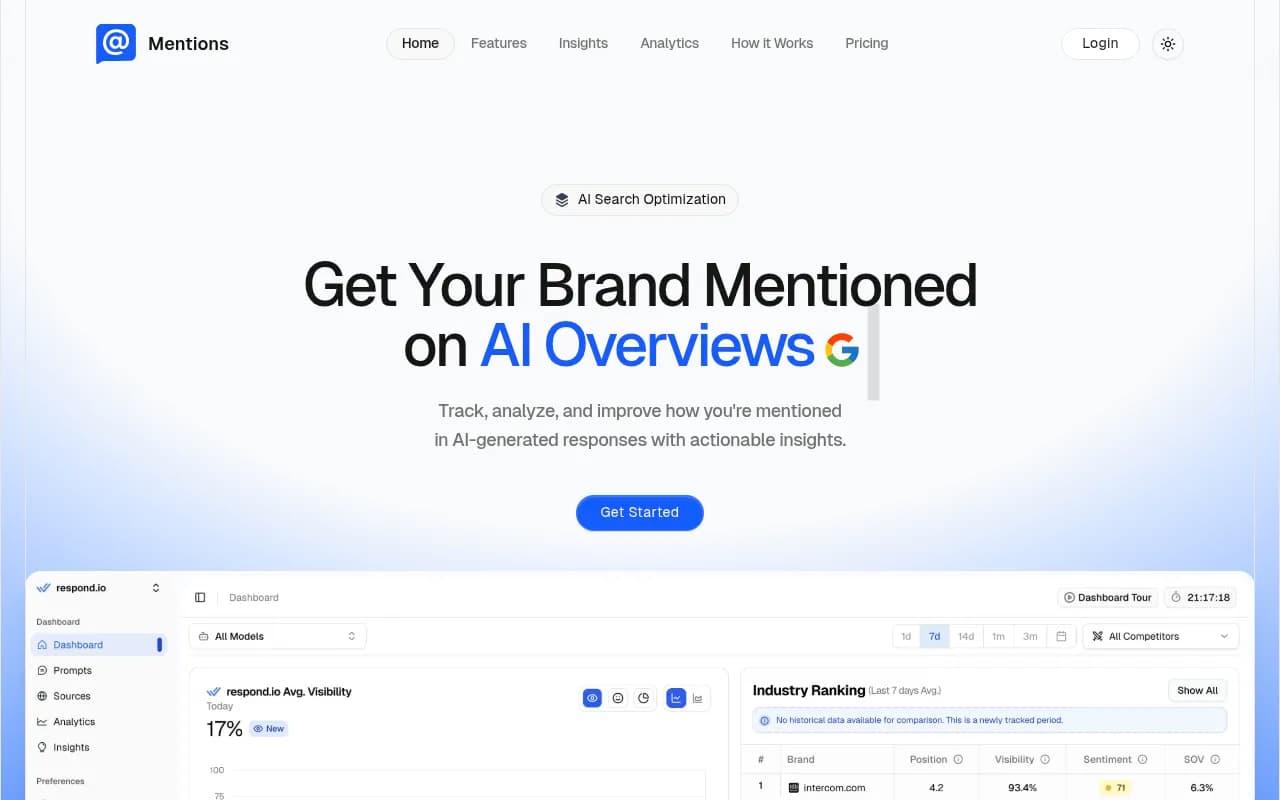
Mentions.so is an AI brand monitoring platform that tracks how your brand appears across major AI search engines. It monitors mentions in ChatGPT, Claude, Gemini, Perplexity, Grok, DeepSeek, Meta AI, and Google AI Overviews. The platform analyzes sentiment, compares your visibility against competitors, and delivers daily performance reports with actionable recommendations. You can use AI-suggested prompts or add custom ones to monitor specific queries relevant to your business. Over 100 brands use it to track real AI mentions and spot missed opportunities.
Limy AI
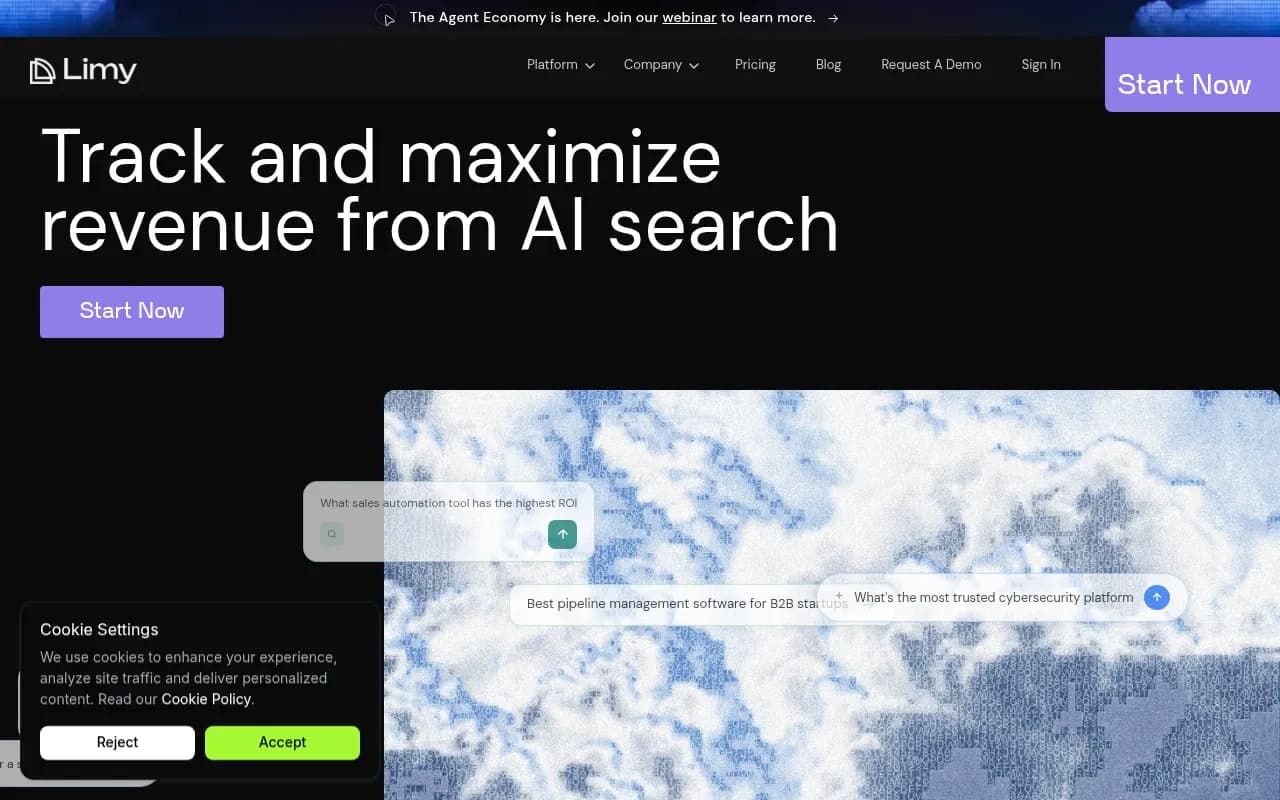
Limy AI positions itself as B2A (Business-to-Agent) optimization infrastructure. It goes beyond monitoring to help brands measure and improve how AI agents recommend their products. The platform tracks visibility across the same major AI models but emphasizes revenue attribution -- connecting AI mentions directly to traffic and conversions. Limy provides step-by-step optimization actions based on what it finds, with a focus on making AI visibility measurable and convertible for marketing teams.
If you're also looking to understand how AI models discover and cite your content in the first place, Promptwatch offers AI crawler logs and content gap analysis that complement either monitoring tool.

Side-by-Side Comparison
| Feature | Mentions.so | Limy AI |
|---|---|---|
| Starting price | $99/mo (Starter) | $449/mo |
| Free tier | Yes | No |
| AI models tracked | 8+ (ChatGPT, Claude, Gemini, Perplexity, Grok, DeepSeek, Meta AI, Google Overview) | 8+ (same coverage) |
| Sentiment analysis | ✓ Yes | ✓ Yes |
| Competitor comparison | ✓ Real-time visibility comparison | ✓ Competitive tracking |
| Revenue attribution | Traffic tracking | ✓ Direct revenue measurement |
| Optimization actions | Daily recommendations | ✓ Step-by-step optimization workflows |
| Custom prompts | ✓ Manual + AI-suggested | ✓ Custom prompt tracking |
| Annual discount | 16% off | Not specified |
| Target audience | SMBs, agencies, consultants | Enterprise marketing teams |
| Reporting | Daily performance reports | Revenue-focused analytics |
| Setup complexity | Simple 3-step process | More complex infrastructure setup |
Pricing comparison
| Plan | Mentions.so | Limy AI |
|---|---|---|
| Free tier | ✓ Available | ✗ None |
| Entry plan | $99/mo (Starter) | $449/mo (base plan) |
| Mid-tier | Pricing not fully disclosed | Not specified |
| Top tier | $599/mo (Agency) | Custom enterprise |
| Annual billing | 16% discount | Not specified |
The pricing gap is the most obvious difference. Mentions.so lets you start for free and scales up to $599/mo for agencies. Limy AI starts at $449/mo with no free trial mentioned on their site. If budget matters -- and it usually does -- Mentions.so wins on accessibility.
User interface and ease of use
Mentions.so uses a clean, dashboard-focused interface. The homepage shows a 3-step setup: add your brand domain, pick or customize prompts (with AI suggestions), and start receiving daily reports. The dashboard displays sentiment trends over time, competitor visibility percentages, and actual AI responses about your brand. It's designed for marketers who want to check in daily, see what changed, and act on recommendations without a steep learning curve.
Limy AI describes itself as "infrastructure" for B2A optimization, which hints at a more complex setup. The platform emphasizes revenue measurement and step-by-step optimization workflows. This suggests a heavier implementation process -- likely more configuration, more integrations, more onboarding time. The trade-off: if you need to connect AI visibility directly to revenue metrics and justify spend to executives, Limy's infrastructure approach might be worth the complexity.
For most teams, Mentions.so is faster to deploy. For enterprise teams with dedicated marketing ops, Limy AI's deeper integration might pay off.
AI model coverage
Both platforms track the same core AI models:
- OpenAI ChatGPT
- Anthropic Claude
- Google Gemini
- Google AI Overviews
- Perplexity AI
- xAI Grok
- DeepSeek
- Meta AI
This is table stakes in 2026. Any serious AI visibility tool needs to cover these models because they're where the search volume is. Neither platform has an edge here -- coverage is identical.
What differs is how they present the data. Mentions.so shows you what each model says about your brand with sentiment scoring and competitor comparisons. Limy AI focuses on how those mentions convert to revenue. Same data sources, different lenses.
Sentiment analysis and insights
Mentions.so breaks sentiment into three categories: Very Positive, Neutral, and Negative. The dashboard shows sentiment trends over time (Thu/Fri/Sat view in their screenshots) so you can spot when AI models start talking about you differently. Daily reports include specific recommendations like "Keyword 'digital marketing' performance is up by 12%" or "Mobile traffic saw a decrease of 5% this week." These are concrete, actionable insights you can hand to a content team.
Limy AI also does sentiment analysis but frames it around optimization actions. Instead of just showing you sentiment scores, it tells you what to do about them. The "step-by-step optimization actions" positioning suggests a more prescriptive approach -- here's the problem, here's how to fix it, here's how to measure if it worked.
If you want to see sentiment and figure out your own response, Mentions.so gives you the data cleanly. If you want the platform to tell you exactly what to optimize, Limy AI leans harder into that.
Competitor tracking
Mentions.so shows real-time competitor visibility comparisons. In their example screenshot, you see brands like Kajabi (67%), Thinkific (59%), Teachable (46%), Podia (50%), and Notion (28%) ranked by visibility percentage. This is useful for understanding your position in the market and identifying gaps. If a competitor is mentioned 67% of the time and you're at 28%, you know you have work to do.
Limy AI also tracks competitors but emphasizes how their visibility translates to revenue. The focus is less on "who's winning the mention game" and more on "who's converting AI traffic into dollars." This matters if your exec team cares more about ROI than raw mention counts.
Both approaches are valid. Mentions.so is better for competitive intelligence and positioning. Limy AI is better for tying competitive performance to business outcomes.
Revenue attribution and traffic tracking
This is where the platforms diverge most sharply.
Mentions.so includes traffic tracking -- you can see how much traffic you're getting from AI models and where it's coming from. The platform shows analytics on AI-driven visits, but it's not the core focus. The main value is understanding what AI says about you, not necessarily measuring every dollar that results.
Limy AI is built around revenue attribution. The entire platform is framed as "infrastructure to own the market in AI search" with an emphasis on making AI visibility "convertible and measurable." This means deeper integrations with your analytics stack, more complex tracking setups, and dashboards that connect AI mentions to actual revenue. If you need to prove ROI to a CFO, Limy's approach is designed for that conversation.
For most SMBs and agencies, Mentions.so's traffic tracking is enough. For enterprise teams with complex attribution models, Limy AI's revenue focus might justify the higher price.
Optimization and recommendations
Mentions.so delivers daily reports with "practical recommendations to boost your AI rankings." The platform analyzes how AI talks about your brand and gives you clear steps to rank higher. In practice, this means insights like "add more content around X keyword" or "your sentiment dropped on Y topic." It's helpful, but you still need to do the work.
Limy AI provides "step-by-step optimization actions" as a core feature. The platform doesn't just tell you what's wrong -- it walks you through fixing it. This is closer to a guided workflow than a report. The trade-off: more hand-holding means more platform lock-in and potentially less flexibility if you want to take the data elsewhere.
If your team is experienced with AI SEO and just needs visibility data, Mentions.so gives you room to operate. If you're newer to this space and want more guidance, Limy AI's prescriptive approach could be valuable.
Prompt management
Mentions.so offers two ways to add prompts: manually or via AI suggestions. The platform analyzes your domain and suggests relevant prompts like "How can I integrate a CRM system with my online course platform?" or "What are the top platforms for managing an online business with customizable design options?" You can accept, reject, or customize these. It's a nice balance between automation and control.
Limy AI also supports custom prompt tracking but doesn't emphasize the AI-suggestion feature as heavily. The focus is more on tracking the prompts that matter to your business rather than discovering new ones.
For teams that aren't sure which prompts to track, Mentions.so's AI suggestions are a real advantage. For teams that already know their target queries, both platforms work fine.
Target audience and use cases
Mentions.so is best for:
- Small to mid-sized businesses testing AI visibility for the first time (free tier removes risk)
- SEO consultants and agencies managing multiple clients (Agency plan at $599/mo)
- Marketing teams that want daily insights without heavy implementation
- Brands that care more about competitive positioning than revenue attribution
- Teams with limited budgets ($99/mo entry point)
Limy AI is best for:
- Enterprise marketing teams with dedicated budgets ($449/mo starting price)
- Businesses that need to prove ROI and connect AI visibility to revenue
- Companies with complex attribution models and analytics infrastructure
- Teams that want prescriptive, step-by-step optimization guidance
- Organizations where "infrastructure" and deep integrations are valued over quick setup
Pros and cons
Mentions.so pros
- Free tier lets you test before buying
- Significantly cheaper entry point ($99/mo vs $449/mo)
- Clean, easy-to-use dashboard with minimal learning curve
- AI-suggested prompts help you discover what to track
- 16% annual discount available
- Daily reports with specific, actionable insights
- Real-time competitor visibility comparisons
Mentions.so cons
- Less emphasis on revenue attribution compared to Limy AI
- Recommendations are helpful but not as prescriptive as step-by-step workflows
- Traffic tracking is included but not the core focus
- May lack depth for enterprise teams with complex needs
Limy AI pros
- Strong focus on revenue attribution and ROI measurement
- Step-by-step optimization actions guide you through fixes
- Built for enterprise teams with complex analytics requirements
- Emphasizes making AI visibility "convertible and measurable"
- B2A (Business-to-Agent) framing aligns with where the market is heading
Limy AI cons
- No free tier or trial mentioned -- $449/mo minimum commitment
- 4.5x more expensive than Mentions.so at entry level
- More complex setup ("infrastructure" suggests heavier implementation)
- Overkill for small teams or businesses just starting with AI visibility
- Less transparency on pricing tiers and what's included
Who should pick which tool
Pick Mentions.so if:
- You're new to AI visibility tracking and want to test the waters with a free tier
- Your budget is under $500/mo and you need a cost-effective solution
- You run an agency or consultancy managing multiple client brands
- You want daily insights and competitor comparisons without heavy setup
- Your team can act on recommendations without needing step-by-step workflows
- You care more about understanding what AI says about you than measuring every dollar of revenue impact
Pick Limy AI if:
- You have an enterprise budget and need to justify spend with revenue attribution
- Your exec team demands ROI measurement and you need to connect AI visibility to actual dollars
- You want prescriptive, guided optimization workflows rather than just insights
- You have the resources to implement a more complex "infrastructure" platform
- Your marketing ops team values deep integrations with existing analytics tools
- You're comfortable paying 4.5x more for revenue-focused features
Final verdict
For most businesses, Mentions.so is the smarter choice. The free tier removes risk, the $99/mo entry point is accessible, and the platform delivers the core value -- tracking what AI models say about your brand -- without unnecessary complexity. The AI-suggested prompts, daily reports, and competitor comparisons give you everything you need to improve your AI visibility. If you're an agency or consultant, the $599/mo Agency plan is still cheaper than Limy AI's starting price.
Limy AI makes sense for enterprise teams with dedicated budgets and a mandate to prove ROI. If you need to connect AI mentions directly to revenue, justify spend to a CFO, and want step-by-step optimization workflows, the $449/mo price tag might be worth it. But for everyone else, it's overkill.
The bottom line: Mentions.so gives you 80% of the value at 22% of the cost. Unless you have specific enterprise requirements around revenue attribution, start there.