Key Takeaways
- Gauge focuses purely on competitive intelligence and visibility tracking across AI engines, while Orchly combines AI visibility monitoring with full content automation and SEO optimization
- Orchly starts at $49/mo and includes content creation agents, making it cheaper for teams that need both monitoring and production. Gauge starts at $99/mo but only monitors ChatGPT on the Starter plan
- Gauge provides clearer competitive benchmarking and roadmaps for improving AI visibility, while Orchly emphasizes workflow automation with AI agents that write, refresh, and publish content
- Orchly covers traditional SEO alongside AI search (Google rankings, technical SEO, schema), while Gauge is laser-focused on AI engines only
- If you need strategic competitive analysis and clear action plans for AI visibility, Gauge is the better choice. If you want an all-in-one content ops platform that handles creation, optimization, and tracking, Orchly makes more sense
- Both platforms track ChatGPT, Claude, Gemini, and Perplexity, but neither offers the depth of citation analysis or crawler log visibility you'd get from a platform like Promptwatch
Overview
Gauge
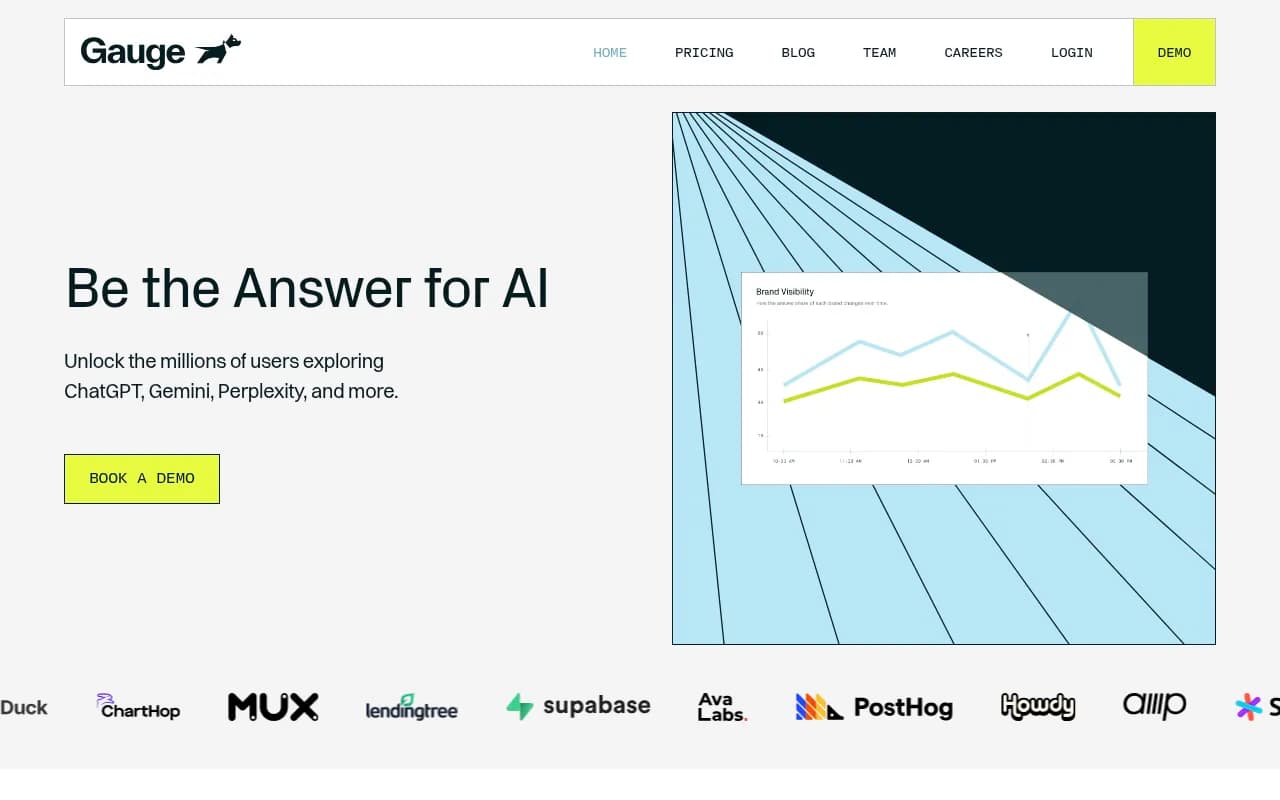
Gauge positions itself as a strategic competitive intelligence platform for AI visibility. The core pitch: track your brand against competitors across AI engines and get clear roadmaps to improve your presence in AI-powered search results. It monitors ChatGPT, Claude, Gemini, Perplexity, Copilot, AI Mode, and AI Overviews, analyzing what content gets cited, what's missing, and how you stack up against competitors. The platform emphasizes actionable recommendations -- both onsite and offsite -- to help you "own your category" in AI search.
Gauge's three-step workflow is straightforward: Track mentions across AI engines, Understand what content is cited and where gaps exist, and Act on clear recommendations to improve visibility. The interface appears clean and focused on competitive analysis rather than trying to be everything to everyone.
Orchly
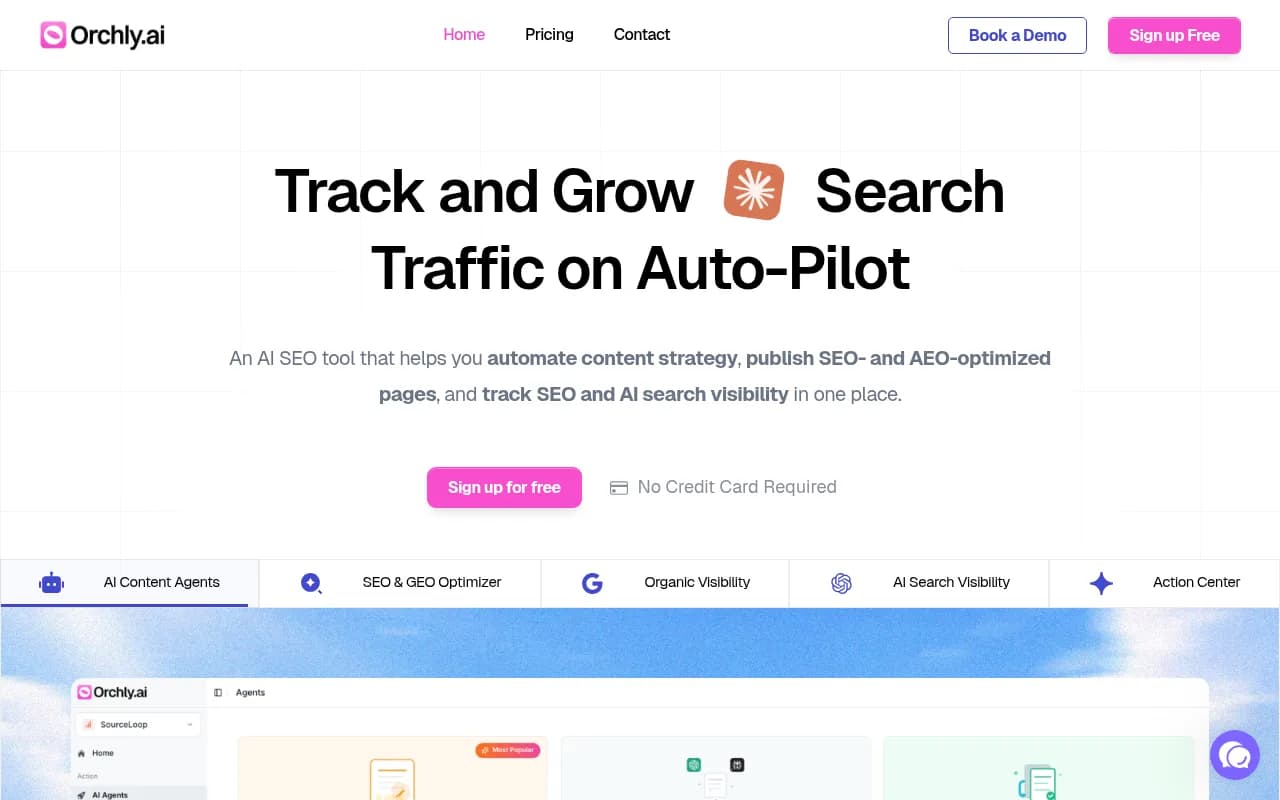
Orchly takes a different approach by combining AI visibility tracking with full content automation. It's pitched as an "AI SEO tool" that automates content strategy, publishes optimized pages, and tracks both SEO and AI search visibility in one platform. Beyond monitoring AI engines, Orchly includes AI content agents that write, refresh, and publish content, plus optimization tools that analyze 150+ factors for both Google and LLM search engines.
The platform covers Google organic rankings alongside AI search visibility (ChatGPT, Claude, Perplexity, Gemini), making it a hybrid SEO/GEO tool. Orchly emphasizes workflow automation -- AI agents handle repetitive content tasks, auto-schedule publishing, and apply structured data, links, and formatting automatically. It's designed for marketing teams that want to consolidate content operations and visibility tracking in one place.
Side-by-Side Comparison
| Feature | Gauge | Orchly |
|---|---|---|
| Starting price | $99/mo (Starter) | $49/mo (Essential) |
| Free trial | Yes | Yes |
| AI engines monitored | ChatGPT, Claude, Gemini, Perplexity, Copilot, AI Mode, AI Overviews | ChatGPT, Claude, Gemini, Perplexity |
| Google SEO tracking | No | Yes |
| Content generation | Limited (3-18 articles/mo depending on plan) | Yes (AI content agents) |
| Content optimization | Basic recommendations | 150+ factor analysis, structured data, auto-linking |
| Competitive benchmarking | Strong focus | Available |
| Reddit/social tracking | Mentioned in roadmap | Yes (Reddit discussions tracked) |
| Technical SEO tools | No | Yes (crawl issues, schema, indexing) |
| White-label reports | Not mentioned | Yes |
| API access | Not mentioned | Not mentioned |
| Annual discount | Not mentioned | 25% off |
Platform focus and positioning
Gauge is built around competitive intelligence. The entire platform revolves around understanding where you stand relative to competitors in AI search results and getting clear action plans to close the gap. When you look at their messaging -- "Strategic competitive intelligence for AI visibility" -- that's exactly what they deliver. The interface emphasizes competitor comparison, gap analysis, and strategic recommendations.
Orchly positions itself as a content operations platform that happens to include AI visibility tracking. The core value is automation: AI agents that handle content creation, optimization tools that apply 150+ factors automatically, and visibility tracking that covers both traditional SEO and AI search. It's designed for teams that want to consolidate multiple tools (content creation, SEO optimization, AI monitoring) into one workflow.
This fundamental difference shapes everything else. Gauge gives you intelligence and tells you what to do. Orchly gives you tools to actually do it.
AI engine coverage
Gauge monitors seven AI platforms: ChatGPT, Claude, Gemini, Perplexity, Copilot, AI Mode, and AI Overviews. That's comprehensive coverage of the major AI search engines. However, the Starter plan ($99/mo) only includes ChatGPT monitoring -- you need Growth ($599/mo) to access all models.
Orchly tracks four AI platforms: ChatGPT, Claude, Gemini, and Perplexity. Narrower coverage, but all plans include all four engines from the start. No tiered access.
Neither platform appears to monitor DeepSeek, Grok, or Mistral. If you need visibility into those engines or want deeper citation analysis showing exactly which pages and sources AI models reference, Promptwatch covers 10 AI models and provides citation-level tracking that neither Gauge nor Orchly offers.

Content creation and optimization
Gauge's approach
Gauge includes content generation as part of its action recommendations. The Starter plan includes 3 articles per month, Growth includes 18 articles. The platform identifies content gaps where your brand is invisible and can generate articles to fill those gaps. But content creation is secondary to the core competitive intelligence mission.
The optimization side focuses on recommendations: what to write, what to update, where to build links. You get the strategic direction, but you're largely executing it yourself or using other tools.
Orchly's approach
Orchly makes content automation central to the platform. It deploys "AI content agents" that write, refresh, and publish content with human oversight. The agents are trained on your data to avoid generic AI writing patterns. Content gets enriched automatically with structured data, internal and external links, NLP keywords, images, videos, and tables.
The optimization engine analyzes 150+ factors for both SEO and GEO (Generative Engine Optimization). It handles technical fixes like schema gaps, crawl issues, and indexing problems. The goal is end-to-end automation: identify opportunities, create content, optimize it, publish it, track results.
If you have a content team and just need strategic direction, Gauge's approach works. If you're a small team trying to scale content production, Orchly's automation is the point.
Competitive analysis and benchmarking
Gauge excels here. The platform is built around competitive comparison -- you can see exactly how your brand stacks up against competitors across AI engines, what content they're getting cited for that you're not, and where you have opportunities to outrank them. The "Understand" phase of their workflow specifically focuses on competitive gaps.
Orchly includes competitive benchmarking but it's not the main event. You can compare AI visibility in real time, but the emphasis is on your own content workflow rather than deep competitive intelligence.
If your primary question is "How do we beat [competitor] in AI search?", Gauge gives you better answers. If your question is "How do we produce more content that ranks?", Orchly is more useful.
Traditional SEO vs AI-only focus
Gauge is AI-only. It doesn't track Google organic rankings, doesn't provide traditional SEO recommendations, doesn't analyze backlinks or technical SEO issues. The entire platform is focused on AI search engines.
Orchly covers both. It tracks Google organic visibility alongside AI search, provides traditional SEO optimization (technical fixes, schema, internal linking), and includes tools for both SEO and GEO. The platform emphasizes that it optimizes content for "Google and LLM search engines."
This matters if you're still getting most of your traffic from traditional search. Orchly lets you manage both channels in one place. Gauge assumes you're either handling traditional SEO elsewhere or you're all-in on AI search.
Reddit and social source tracking
Both platforms recognize that Reddit discussions and social sources influence AI search results. Orchly explicitly tracks "Reddit discussions that shape AI search visibility" as part of its action recommendations. Gauge mentions social sources in their messaging but doesn't provide specific details on Reddit tracking depth.
Neither platform appears to offer YouTube insights or the kind of social source citation analysis you'd get from a dedicated GEO platform. If understanding which Reddit threads or YouTube videos AI models cite is critical to your strategy, that's a gap in both tools.
Pricing comparison
| Plan | Gauge | Orchly |
|---|---|---|
| Entry tier | Starter: $99/mo (100 prompts, ChatGPT only, 3 articles) | Essential: $49/mo |
| Mid tier | Growth: $599/mo (600 prompts, all models, 18 articles) | Pro: $125/mo |
| Enterprise | Custom pricing | Custom pricing |
| Annual discount | Not mentioned | 25% off |
| Free trial | Yes | Yes |
Orchly is significantly cheaper at the entry level -- $49/mo vs $99/mo. More importantly, Orchly's Essential plan includes all four AI engines, while Gauge's Starter plan only monitors ChatGPT. To get full AI engine coverage from Gauge, you need to jump to $599/mo.
The value equation depends on what you need. If you're a small team that needs both content creation and AI visibility tracking, Orchly at $49-125/mo is hard to beat. If you're focused on competitive intelligence and strategic planning, Gauge's higher price point might be justified by the depth of competitive analysis.
Neither platform publishes detailed feature breakdowns for each tier, so it's unclear what else changes between plans beyond prompt volume and article count.
User interface and experience
Based on available information, Gauge emphasizes a clean, focused interface built around their three-step workflow (Track, Understand, Act). The platform appears designed for strategic planning sessions -- pulling reports, analyzing competitor gaps, building roadmaps.
Orchly's interface centers on workflow automation and action centers. The platform is designed for daily use by content teams -- checking action items, deploying AI agents, publishing content, monitoring results. It's more of an operational dashboard than a strategic planning tool.
One review noted that Gauge's interface "felt quite basic when compared to more polished tools like Peec AI, Orchly.ai, or Profound." That suggests Orchly may have a more refined user experience, though this is one data point.
Reporting and white-label capabilities
Orchly explicitly offers white-label reports and audits that you can share with clients or stakeholders. This makes it suitable for agencies managing multiple clients.
Gauge doesn't mention white-label reporting in their public materials. The platform appears designed for in-house teams rather than agencies, though Enterprise plans may include custom reporting.
If you're an agency, Orchly's white-label capabilities are a clear advantage.
Integration and workflow
Neither platform provides detailed information about integrations with other tools. Orchly mentions auto-scheduling and publishing content, which suggests CMS integrations, but specifics aren't public. Gauge doesn't mention integrations in their marketing materials.
This is a gap in both platforms compared to more mature GEO tools that offer API access, Looker Studio integration, or direct connections to analytics platforms.
Pros and cons
Gauge pros
- Strong competitive benchmarking and gap analysis
- Clear action roadmaps for improving AI visibility
- Comprehensive AI engine coverage (7 platforms)
- Strategic focus makes it good for planning and decision-making
- Clean interface focused on competitive intelligence
Gauge cons
- Expensive to access all AI engines ($599/mo for Growth plan)
- Limited content creation capabilities
- No traditional SEO tracking
- Basic interface compared to competitors
- Starter plan only monitors ChatGPT
Orchly pros
- Much cheaper entry point ($49/mo vs $99/mo)
- Full content automation with AI agents
- Covers both traditional SEO and AI search
- 150+ factor optimization engine
- White-label reporting for agencies
- All AI engines included in all plans
- 25% discount on annual billing
Orchly cons
- Narrower AI engine coverage (4 platforms vs 7)
- Less emphasis on competitive intelligence
- Trying to do more means less depth in any one area
- Content automation quality depends on training and oversight
Who should choose Gauge
Gauge makes sense if you're a brand or in-house marketing team that needs strategic competitive intelligence for AI search. Pick Gauge if:
- Your primary goal is understanding where you stand vs competitors in AI search
- You need clear roadmaps and action plans more than execution tools
- You're willing to pay for depth of competitive analysis
- You already have content creation and SEO handled elsewhere
- You want a focused tool that does one thing well rather than trying to be everything
- You're making strategic decisions about AI search investment and need data to back them up
Gauge is the better choice for companies that think strategically about AI visibility and have the resources to execute on recommendations.
Who should choose Orchly
Orchly makes sense if you're a small marketing team or agency that needs to consolidate content operations and visibility tracking. Pick Orchly if:
- You need both content creation and AI visibility monitoring
- You want to automate repetitive content tasks
- You're tracking traditional SEO alongside AI search
- You need white-label reporting for clients
- Budget is a constraint and you want the most features per dollar
- You prefer an all-in-one platform over best-of-breed tools
- You're comfortable with AI-generated content (with human oversight)
Orchly is the better choice for teams that need to do more with less -- consolidating tools and automating workflows to scale content production.
Final verdict
These platforms serve different needs despite both tracking AI visibility. Gauge is a strategic intelligence tool. Orchly is an operational content platform.
If you're trying to outmaneuver competitors in AI search and need clear competitive insights, Gauge delivers. If you're trying to scale content production while tracking both SEO and AI visibility, Orchly gives you more tools for less money.
The pricing difference is significant. Orchly at $49-125/mo includes content automation, SEO tracking, and all AI engines. Gauge at $99/mo only monitors ChatGPT; full coverage costs $599/mo. That's a 5x difference for the mid-tier.
For most small to mid-size teams, Orchly's broader feature set and lower price point make it the practical choice. For larger brands with dedicated content teams who need deep competitive analysis, Gauge's strategic focus justifies the premium.
Neither platform offers the citation-level tracking or crawler log visibility that helps you understand exactly how AI models discover and use your content -- that's where a specialized GEO platform adds value on top of either tool.