Key Takeaways
- Gauge offers 600 prompts on its Growth plan ($599/mo) vs GetMint's Growth plan at €229/mo (~$250) -- but GetMint doesn't publicly specify prompt limits, making direct comparison difficult
- GetMint includes content distribution through 150K+ partner media outlets -- a unique feature Gauge doesn't offer
- Gauge provides keyword-based prompt tracking and more granular competitive analysis, while GetMint focuses on end-to-end workflow from monitoring to distribution
- Both platforms track the same core AI engines (ChatGPT, Perplexity, Gemini, etc.) but Gauge explicitly supports 7 models while GetMint claims "all LLMs"
- GetMint's pricing starts lower (€99 vs $99) but Gauge's Starter plan includes ChatGPT-only tracking, making it a true entry option for brands testing AI visibility
- Neither platform is open source; both require paid plans to access meaningful features
Overview
Gauge: Strategic competitive intelligence
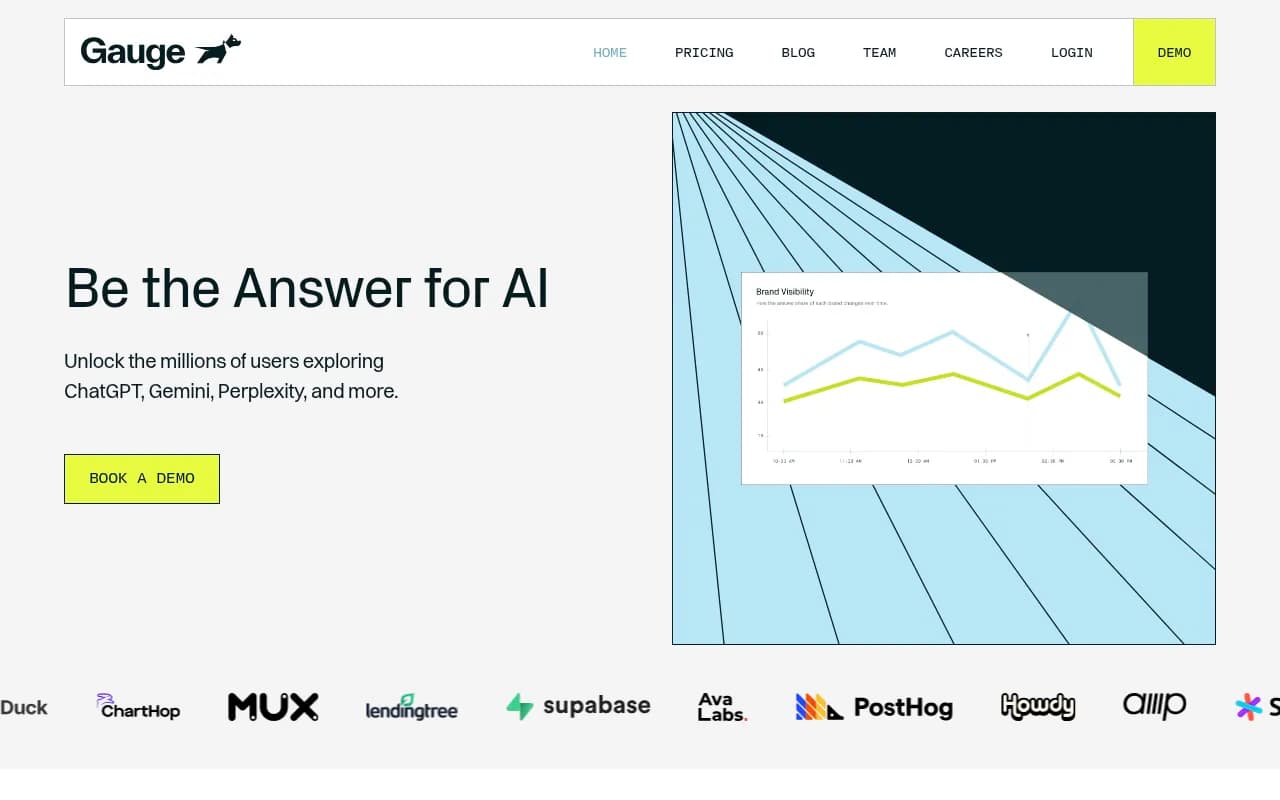
Gauge positions itself as a strategic competitive intelligence platform for AI visibility. The core pitch: track your brand against competitors across AI engines and get clear roadmaps to improve. Gauge monitors ChatGPT, Claude, Gemini, Perplexity, Copilot, AI Mode, and AI Overviews. The platform emphasizes three steps -- track mentions, understand gaps, and take action with onsite/offsite recommendations.
Gauge is used by brands like MotherDuck, Supabase, and Howdy. The platform offers a freemium model with a Starter tier at $99/mo (100 prompts, ChatGPT only, 3 articles), Growth at $599/mo (600 prompts, all models, 18 articles), and custom Enterprise pricing.
GetMint: End-to-end GEO platform
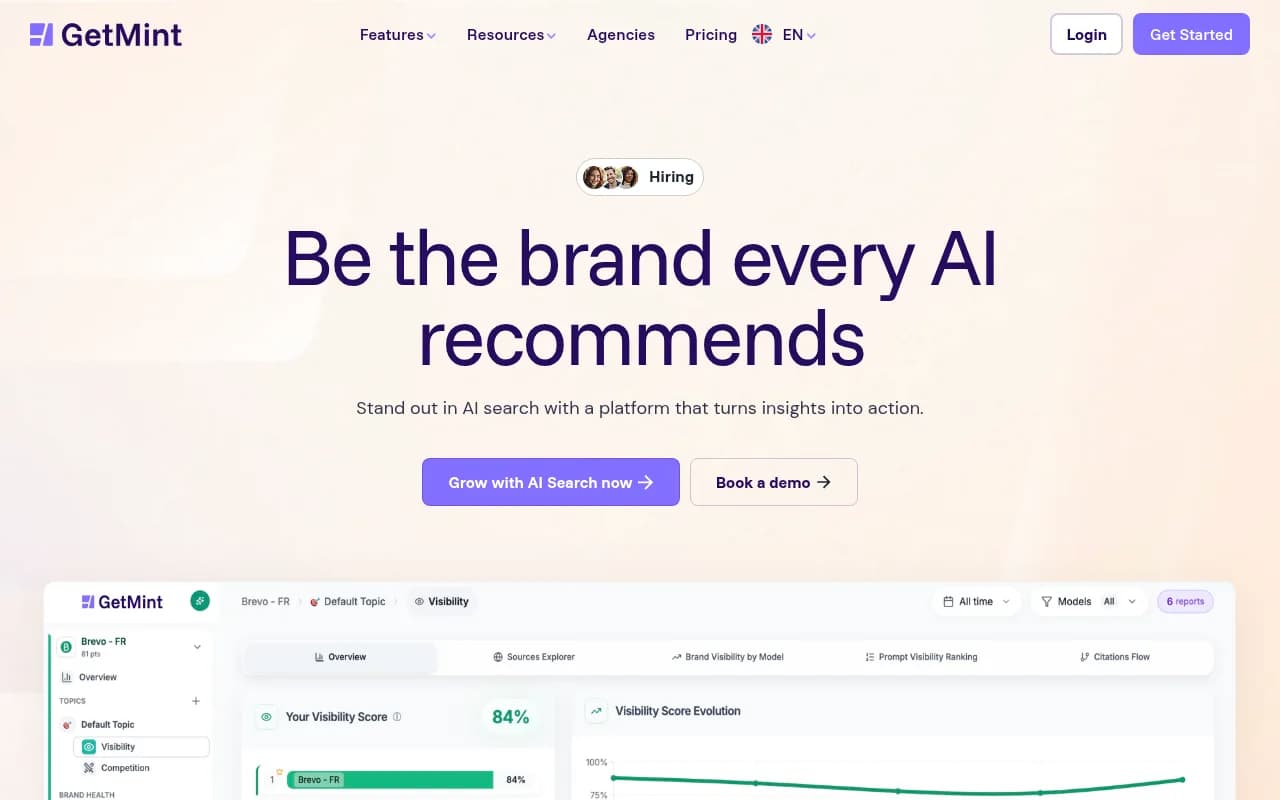
GetMint calls itself "the first platform for Generative Engine Optimization" and takes an end-to-end approach. Beyond monitoring, GetMint helps you create content, optimize it for AI search, and distribute it through a network of 150K+ partner media outlets. The idea: insights mean nothing if you can't act on them, so GetMint bundles content creation and distribution into the same platform.
GetMint is trusted by 200+ brands and agencies including JLL, Pretto, and Sopra Banking Software. Pricing starts at €99/mo (Starter), €229/mo (Growth), and €499/mo (Pro), with a free trial available. The platform works with "all LLMs" according to their site, though specific model coverage isn't detailed.
Side-by-Side Comparison
| Feature | Gauge | GetMint |
|---|---|---|
| Starting price | $99/mo (ChatGPT only) | €99/mo (~$108) |
| Mid-tier price | $599/mo | €229/mo (~$250) |
| Prompt limits | 100 (Starter), 600 (Growth) | Not publicly specified |
| AI models tracked | 7 (ChatGPT, Claude, Gemini, Perplexity, Copilot, AI Mode, AI Overviews) | "All LLMs" (specifics unclear) |
| Content creation | 3 articles (Starter), 18 articles (Growth) | Included (limits unclear) |
| Content distribution | No | Yes (150K+ partner outlets) |
| Competitive analysis | Yes (keyword-based prompt tracking) | Yes (position vs competitors) |
| Free trial | No (freemium model) | Yes |
| Citation tracking | Yes | Yes |
| Reddit/social tracking | Mentioned on site | Not mentioned |
| API access | Not mentioned | Not mentioned |
| Target audience | Brands, agencies | Brands, agencies |
Pricing breakdown
Here's how the plans stack up:
| Plan | Gauge | GetMint |
|---|---|---|
| Starter/Entry | $99/mo (100 prompts, ChatGPT only, 3 articles) | €99/mo (~$108, limits unclear) |
| Growth/Mid | $599/mo (600 prompts, all models, 18 articles) | €229/mo (~$250, limits unclear) |
| Pro/High | Enterprise (custom pricing) | €499/mo (~$545) |
| Enterprise | Custom | Custom (implied) |
Gauge's pricing is transparent about what you get at each tier. GetMint's pricing is lower at the Growth level but doesn't specify prompt limits or article quotas publicly, making it harder to compare apples-to-apples. If you're budget-conscious and need all AI models tracked, GetMint's €229/mo Growth plan looks attractive -- but you'll need to ask what the actual limits are.
Tracking and monitoring
Both platforms track your brand mentions across AI engines, but the implementation differs.
Gauge explicitly lists 7 AI models: ChatGPT, Claude, Gemini, Perplexity, Copilot, AI Mode, and AI Overviews. The Starter plan only tracks ChatGPT, which is a deliberate entry point for brands testing the waters. Growth and Enterprise plans unlock all models. Gauge emphasizes keyword-based prompt tracking, meaning you can monitor specific search terms and see how your brand performs for each one. This is useful for competitive intelligence -- you can track the same prompts your competitors are winning and see where you're invisible.
GetMint claims compatibility with "all LLMs" but doesn't break down which models are included or how coverage differs across plans. The site mentions ChatGPT, Gemini, and Perplexity in visuals, but the lack of specificity is a red flag. GetMint does offer real-time tracking and identifies authoritative sources being cited, which is table stakes for any GEO platform.
Verdict: Gauge wins on transparency and granularity. Knowing exactly which models you're tracking and having keyword-based prompt tracking gives you more control. GetMint's vague "all LLMs" claim needs clarification.
Content creation and optimization
This is where the platforms diverge most.
Gauge includes AI-generated content as part of its plans: 3 articles on Starter, 18 on Growth. The platform identifies content gaps -- prompts where competitors are visible but you're not -- and helps you create content to fill those gaps. Gauge also provides onsite and offsite recommendations, meaning it tells you what to publish on your own site and where to build external presence (affiliates, Reddit, etc.).
GetMint goes further by bundling content distribution. After you create or optimize content, GetMint can distribute it through a network of 150K+ partner media outlets. This is a unique angle -- most GEO platforms stop at telling you what to write, but GetMint helps you get that content in front of AI crawlers by placing it on high-authority external sites. The platform also includes content optimization tools to improve existing pages for AI search.
Verdict: GetMint wins if distribution matters to you. The 150K+ partner network is a differentiator that could save you months of outreach. Gauge is strong on content gap analysis but doesn't help with placement.
If you're also looking to track how your brand shows up in AI search results and close content gaps with data-driven optimization, Promptwatch covers that angle with 880M+ citations analyzed and built-in content generation tools.

Competitive analysis
Both platforms offer competitive benchmarking, but the depth varies.
Gauge emphasizes competitive intelligence throughout its messaging. The platform lets you track your brand against competitors across all monitored prompts, see what content is being cited for them vs you, and identify gaps where they're winning. Keyword-based prompt tracking means you can monitor the exact same queries your competitors are targeting. Gauge also surfaces social sources like Reddit where competitors are being mentioned, giving you offsite targets to pursue.
GetMint includes competitive positioning -- you can see where you rank against competitors in AI responses -- but the site doesn't detail how granular this gets. The focus is more on understanding your own gaps and taking action than on deep competitive teardowns. GetMint does identify authoritative sources being cited, which indirectly shows you where competitors are getting their visibility.
Verdict: Gauge is better for competitive intelligence. If your goal is to systematically outrank competitors in AI search, Gauge gives you more tools to dissect their strategy.
Ease of use and workflow
Gauge's workflow is straightforward: track, understand, act. The platform surfaces data on what's working and what's not, then gives you recommendations. The interface isn't shown in detail on the site, but the three-step framing suggests a guided experience. Gauge also offers a deep-dive report when you book a demo, which implies a consultative onboarding process.
GetMint emphasizes an "end-to-end platform" that turns insights into actions. The workflow includes monitoring, content creation, optimization, distribution, and measurement -- all in one place. This is more comprehensive but potentially more complex. GetMint's site mentions a "proven method" and step-by-step guidance, suggesting they've thought about user experience. The platform also offers a free trial, so you can test the interface before committing.
Verdict: Tie. Gauge is simpler if you just want monitoring and recommendations. GetMint is more comprehensive if you want a full GEO workflow under one roof. Try GetMint's free trial to see if the added complexity is worth it.
Integration and API
Neither platform publicly details API access or integrations. This is a gap for both -- if you want to pipe AI visibility data into your own dashboards or connect to other marketing tools, you'll need to ask during a demo. Most GEO platforms are still early-stage and haven't prioritized API access, but it's something to check if you have a complex tech stack.
Support and resources
Gauge offers demo calls and a deep-dive report on your current AI presence. The site mentions working with brands like MotherDuck and Supabase, suggesting they have experience with technical B2B companies. No public documentation or help center is visible.
GetMint has a resources section on their site and offers both demos and a free trial. The platform is trusted by 200+ brands, including large enterprises like JLL, which suggests they have mature support processes. GetMint also emphasizes a "proven method" and step-by-step guidance, implying more hand-holding.
Verdict: GetMint edges ahead with a free trial and more visible resources. Gauge requires a demo to get started, which is fine if you want a consultative approach but slower if you just want to test the platform.
Who should pick Gauge
- You want transparent pricing with clear prompt limits and article quotas
- Competitive intelligence is your top priority -- you need to track specific keywords and see exactly where competitors are winning
- You're starting with ChatGPT-only tracking and want a true entry-level option ($99/mo Starter plan)
- You prefer a focused platform that does monitoring and recommendations well, without bundling distribution
- You're a B2B SaaS company or technical brand (based on their customer logos)
Who should pick GetMint
- You need content distribution, not just creation -- the 150K+ partner network is a major time-saver
- You want an end-to-end GEO workflow in one platform (monitor, create, optimize, distribute, measure)
- You're budget-conscious at the Growth tier (€229/mo vs $599/mo) and don't need granular prompt limits spelled out
- You want to test the platform with a free trial before committing
- You're a brand or agency that values a "proven method" and guided onboarding
Final verdict
Gauge is the better choice for competitive intelligence and transparent pricing. If you need to systematically outrank competitors in AI search and want to know exactly what you're getting at each price point, Gauge delivers. The keyword-based prompt tracking and 600-prompt Growth plan give you room to scale.
GetMint is the better choice for end-to-end workflow and content distribution. If you want a platform that not only tells you what to write but also helps you place that content on high-authority sites, GetMint's 150K+ partner network is a unique advantage. The lower Growth pricing (€229 vs $599) is appealing, but the lack of public prompt limits is a transparency issue.
Both platforms are solid GEO tools. Gauge is more focused and competitive-intelligence-driven. GetMint is more comprehensive and action-oriented. Pick Gauge if you want depth on tracking and analysis. Pick GetMint if you want breadth across the entire GEO workflow.