Key Takeaways
- Gauge offers more AI models (7 vs 5) and includes Claude and AI Mode, which GeoGen lacks
- GeoGen uses a credits-based pricing system starting at €20/mo, while Gauge starts at $99/mo with fixed prompt limits
- Gauge provides 3 AI-generated articles on the Starter plan vs GeoGen's no content generation on entry tiers
- GeoGen's Micro plan (€20/mo) is the cheapest entry point, but it's extremely limited -- only 10 credits (roughly 10 prompts)
- Both platforms track ChatGPT, Gemini, Perplexity, and Copilot, but Gauge adds Claude and Google AI Mode coverage
- Gauge positions itself as more strategic with "clear roadmaps" and action-oriented recommendations, while GeoGen focuses on analytics and monitoring
Overview
Gauge
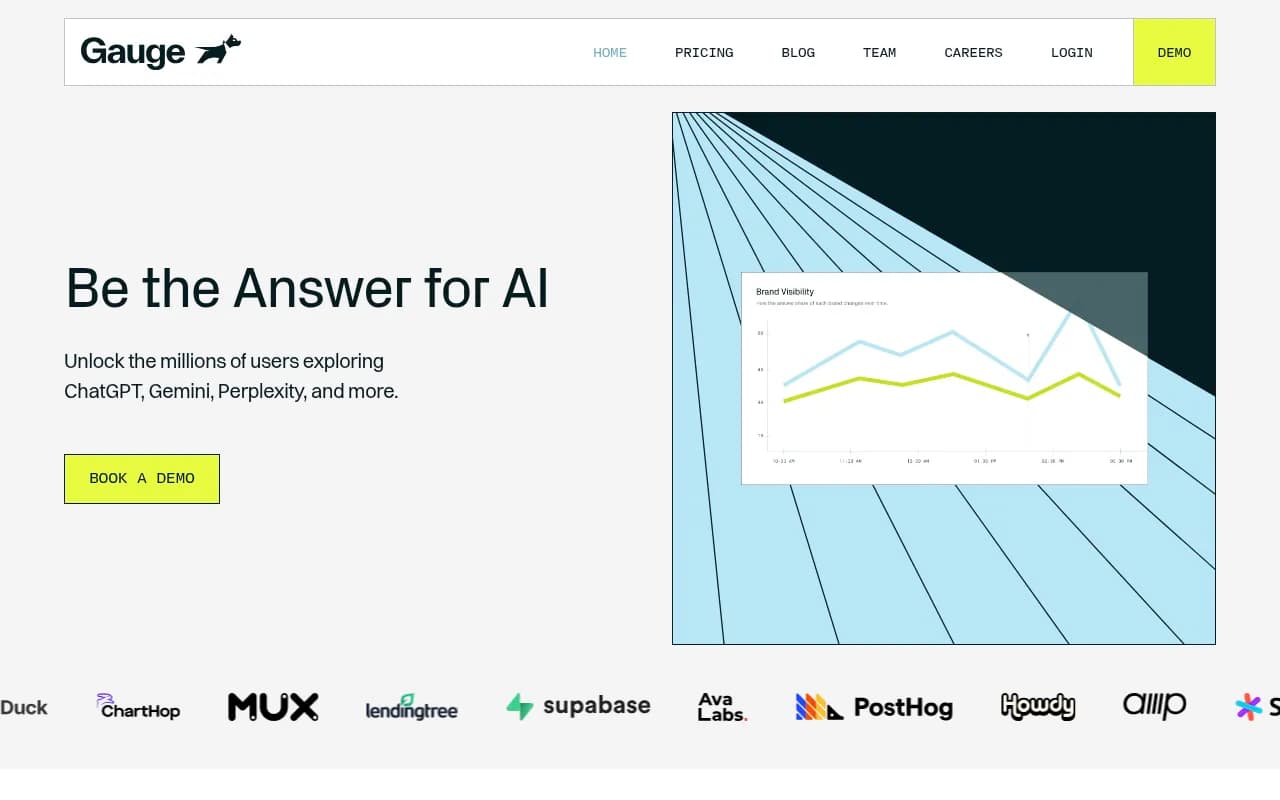
Gauge is a competitive intelligence platform for AI visibility that tracks your brand across major AI engines and provides strategic roadmaps for improvement. The platform monitors ChatGPT, Claude, Gemini, Perplexity, Copilot, AI Mode, and AI Overviews. Gauge emphasizes actionable insights -- not just showing you where you're mentioned, but telling you what to do about it. The platform includes content generation capabilities and positions itself as a complete toolkit for Generative Engine Optimization (GEO).
Gauge is used by companies like MotherDuck, Supabase, and Ava, and targets teams that want both monitoring and strategic guidance on improving AI search presence.
GeoGen
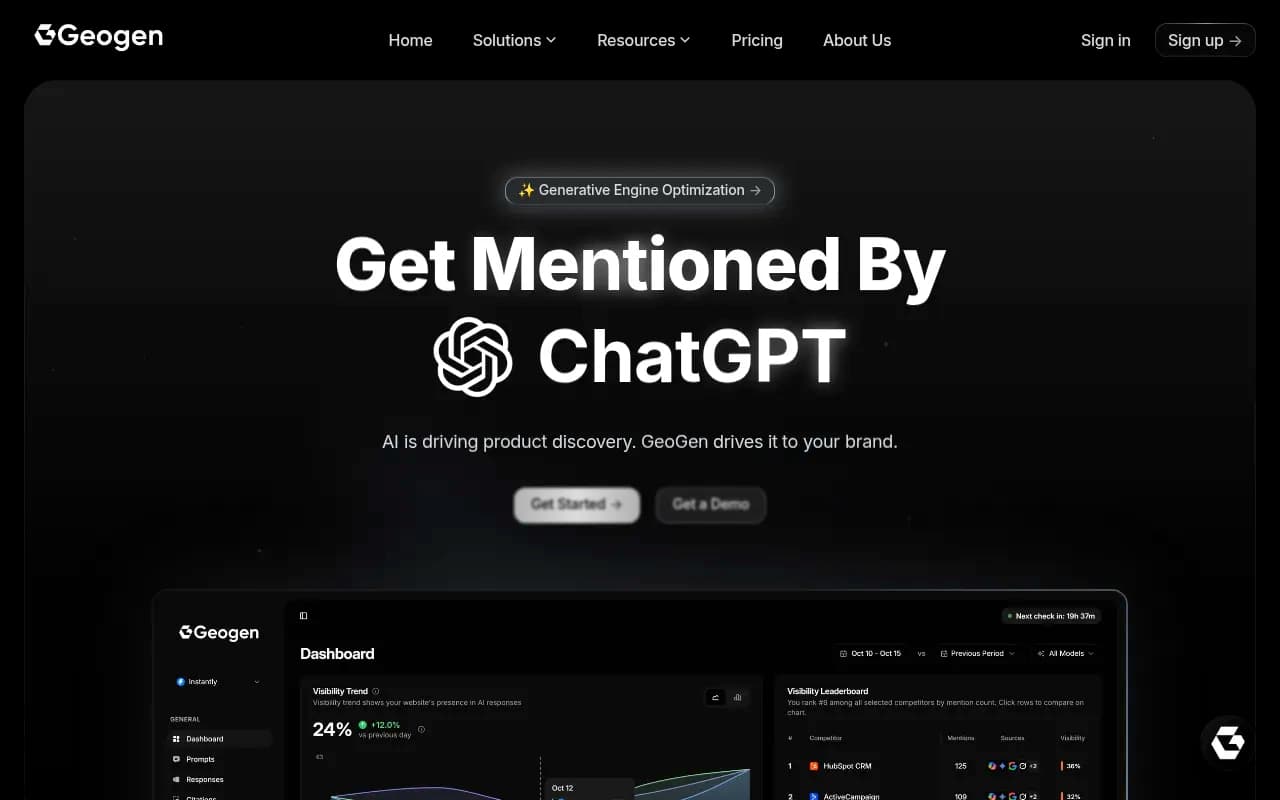
GeoGen is a GEO platform focused on monitoring and analyzing brand presence in AI-powered search engines. It tracks ChatGPT, Gemini, Perplexity, Grok, and Microsoft Copilot. The platform helps you see where your brand is mentioned, analyze citations, and compare your visibility against competitors. GeoGen uses a credits-based pricing model and positions itself as an analytics and improvement tool for AI visibility.
GeoGen is used by CloudBlast, GdprWise, ProxyScrape, and TextBroker. The platform targets brands that want to understand and optimize their presence in AI search results.
Side-by-side comparison
| Feature | Gauge | GeoGen |
|---|---|---|
| AI models tracked | 7 (ChatGPT, Claude, Gemini, Perplexity, Copilot, AI Mode, AI Overviews) | 5 (ChatGPT, Gemini, Perplexity, Grok, Copilot) |
| Starting price | $99/mo (Starter) | €20/mo (~$22/mo, Micro) |
| Entry-level prompts | 100 prompts/mo | 10 credits (~10 prompts) |
| Content generation | Yes (3 articles on Starter, 18 on Growth) | Not mentioned |
| Free tier | No (freemium model mentioned but details unclear) | No |
| Competitor tracking | Yes | Yes |
| Citation analysis | Yes | Yes |
| Strategic recommendations | Yes ("clear roadmaps") | Not emphasized |
| Pricing model | Fixed monthly tiers | Credits-based, annual billing |
| Mid-tier price | $599/mo (Growth: 600 prompts, all models, 18 articles) | €99/mo (Starter: 100 credits) |
| Top tier | Enterprise (custom) | €399/mo (Pro: 500 credits) |
| Claude tracking | ✓ | ✗ |
| Grok tracking | ✗ | ✓ |
AI model coverage
Gauge tracks seven AI engines: ChatGPT, Claude, Gemini, Perplexity, Copilot, Google AI Mode, and Google AI Overviews. This is one of the broadest coverage sets in the GEO space. The inclusion of Claude is notable -- Anthropic's model is increasingly used for research and product discovery, and most competitors don't track it yet. AI Mode and AI Overviews give you visibility into Google's AI search features, which is critical for organic search strategy.
GeoGen tracks five models: ChatGPT, Gemini, Perplexity, Grok, and Microsoft Copilot. The platform covers the major players but misses Claude and Google's AI Mode. GeoGen does include Grok (X's AI), which Gauge doesn't track. For most brands, Grok is lower priority than Claude, but if your audience is heavily on X, it's worth having.
Verdict: Gauge wins on breadth. Seven models beats five, and Claude + AI Mode are more strategically important than Grok for most use cases.
Pricing structure
Gauge uses a straightforward monthly subscription model:
- Starter: $99/mo -- 100 prompts, ChatGPT only, 3 AI-generated articles
- Growth: $599/mo -- 600 prompts, all 7 models, 18 articles
- Enterprise: Custom pricing
The Starter plan is ChatGPT-only, which is a significant limitation. You're paying $99/mo but only seeing one AI engine. The Growth plan at $599/mo unlocks all models and gives you 600 prompts plus 18 articles per month.
GeoGen uses a credits-based system with annual billing:
- Micro: €20/mo (~$22/mo) -- 10 credits
- Starter: €99/mo (~$108/mo) -- 100 credits
- Pro: €399/mo (~$435/mo) -- 500 credits
- Enterprise: Custom pricing
GeoGen's credits system is less transparent. It's not clear how many prompts one credit buys, or if different AI models cost different amounts of credits. The Micro plan at €20/mo is the cheapest entry point in this comparison, but 10 credits won't get you far -- that's roughly 10 prompts if it's 1:1, which is barely enough to test the platform.
Verdict: GeoGen is cheaper at the low end (€20 vs $99), but Gauge's pricing is more transparent. Gauge also includes content generation at every tier, which GeoGen doesn't mention. For serious use, Gauge's $599 Growth plan (600 prompts, all models, 18 articles) offers better value than GeoGen's €399 Pro plan (500 credits, unclear article generation).
Pricing comparison table
| Plan | Gauge | GeoGen |
|---|---|---|
| Entry tier | $99/mo (100 prompts, ChatGPT only, 3 articles) | €20/mo (~$22/mo, 10 credits) |
| Mid tier | $599/mo (600 prompts, all models, 18 articles) | €99/mo (~$108/mo, 100 credits) |
| Top tier | Enterprise (custom) | €399/mo (~$435/mo, 500 credits) |
| Billing | Monthly | Annual |
| Free trial | Freemium (details unclear) | Not mentioned |
Content generation and optimization
Gauge includes AI-generated content as part of every plan. The Starter plan gives you 3 articles per month, and the Growth plan gives you 18. These aren't generic blog posts -- Gauge positions them as strategic content designed to improve your AI visibility based on the gaps it identifies. The platform also provides "clear roadmaps" for onsite and offsite optimization, which suggests a more hands-on approach to helping you fix visibility problems.
GeoGen doesn't mention content generation in its feature set. The platform focuses on monitoring, analysis, and competitor comparison. You can see where you're invisible and what competitors are doing, but you're on your own for creating the content to close those gaps.
Verdict: Gauge wins here. Built-in content generation is a major differentiator. If you want a platform that not only shows you the problem but helps you solve it, Gauge is the better choice.
Worth noting that tools like Promptwatch also offer AI content generation grounded in citation data and prompt volumes, plus features like Answer Gap Analysis and crawler logs that go beyond what either Gauge or GeoGen provide. If you're looking for a more comprehensive action loop -- find gaps, generate content, track results -- Promptwatch is worth exploring.

Competitor analysis and benchmarking
Both platforms offer competitor tracking, but they approach it differently.
Gauge emphasizes "strategic competitive intelligence" in its tagline. The platform shows you how your brand stacks up against competitors and provides actionable recommendations for closing the gap. Gauge's messaging suggests a more strategic, roadmap-driven approach -- not just "here's where you rank" but "here's what you need to do to win."
GeoGen focuses on analytics and comparison. You can see competitor rankings, analyze what content is being cited, and understand where you're losing ground. The platform provides the data, but the strategic interpretation is left to you.
Verdict: Gauge positions itself as more strategic and action-oriented. GeoGen is more analytics-focused. If you want a platform that tells you what to do, Gauge is the better fit. If you prefer raw data and want to draw your own conclusions, GeoGen works.
User interface and ease of use
Gauge's website emphasizes a "complete toolkit" with a three-step process: Track, Understand, Act. The interface appears designed around this workflow, with clear sections for monitoring, analysis, and recommendations. The platform is used by well-known tech companies (MotherDuck, Supabase), which suggests it's polished enough for professional use.
GeoGen's website shows dashboard screenshots with charts and tables. The interface looks clean and data-focused. The platform is used by a mix of SaaS companies and agencies, which suggests it's accessible but may require more interpretation work from the user.
Neither platform has extensive public reviews or user feedback available, so it's hard to judge ease of use definitively. Both appear to be relatively new entrants in the GEO space.
Verdict: Tie. Both platforms look professional and usable. Gauge seems more guided, GeoGen seems more data-heavy. Your preference depends on whether you want hand-holding or raw analytics.
Integration and API access
Neither Gauge nor GeoGen provides detailed information about integrations or API access on their public websites. This is common for newer GEO platforms -- most are still building out their core feature sets and haven't prioritized third-party integrations yet.
If API access or integrations with tools like Google Analytics, Looker Studio, or marketing automation platforms are critical for your workflow, you'll need to ask both vendors directly.
Verdict: Tie. Neither platform advertises integrations or API access publicly.
Support and documentation
Gauge offers a "Book a Demo" option and emphasizes personalized onboarding. The platform's messaging suggests a more consultative approach -- they want to pull "an in-depth report on the current AI landscape for your brand" before you start. This is good if you want guidance, but it may mean a slower onboarding process.
GeoGen offers a "Get a Demo" option and a "Get Started" self-service signup. The platform seems more self-service-friendly, with the option to jump in and start using it immediately.
Verdict: Depends on your preference. Gauge is more consultative, GeoGen is more self-service. If you want hand-holding, pick Gauge. If you want to dive in on your own, pick GeoGen.
Pros and cons
Gauge pros
- Tracks 7 AI models including Claude and AI Mode
- Includes AI-generated content (3-18 articles/mo depending on plan)
- Strategic roadmaps and clear action recommendations
- Used by recognizable tech brands (MotherDuck, Supabase)
- Transparent pricing with fixed prompt limits
Gauge cons
- Starter plan is ChatGPT-only for $99/mo (expensive for one model)
- Growth plan at $599/mo is a big jump from Starter
- No Grok tracking
- Freemium tier mentioned but details unclear
GeoGen pros
- Cheapest entry point at €20/mo (Micro plan)
- Tracks Grok (X's AI engine)
- Credits-based system may offer more flexibility
- Clean, data-focused interface
- Self-service signup available
GeoGen cons
- Only tracks 5 AI models (missing Claude and AI Mode)
- Credits-based pricing is less transparent than fixed prompts
- No content generation mentioned
- Micro plan (€20/mo) is too limited for real use (10 credits)
- Annual billing required
Who should pick Gauge
Pick Gauge if you want a platform that not only tracks your AI visibility but actively helps you improve it. The built-in content generation and strategic roadmaps make Gauge a better choice for teams that need guidance, not just data. If you're willing to pay $599/mo for the Growth plan, you get 600 prompts, all 7 AI models, and 18 articles per month -- that's a complete GEO toolkit.
Gauge is also the better choice if Claude tracking matters to you. Anthropic's AI is increasingly used for research and product discovery, and Gauge is one of the few platforms that monitors it.
Avoid Gauge if you're on a tight budget and only want to test the waters. The Starter plan at $99/mo for ChatGPT-only is expensive for what you get, and the jump to $599/mo is steep.
Who should pick GeoGen
Pick GeoGen if you want a cheaper entry point and prefer a self-service, analytics-focused platform. The €20/mo Micro plan is the cheapest way to test a GEO platform, even if it's too limited for serious use. If you're comfortable interpreting data and building your own optimization strategy, GeoGen gives you the raw materials.
GeoGen is also the better choice if Grok tracking is important -- maybe your audience is heavily on X, or you're in a niche where Grok is gaining traction.
Avoid GeoGen if you want built-in content generation or strategic guidance. The platform is more "here's the data, figure it out" than "here's what you should do."
Final verdict
Gauge is the better platform for most teams. It tracks more AI models (7 vs 5), includes content generation at every tier, and provides strategic roadmaps for improvement. The Growth plan at $599/mo is expensive, but it's a complete GEO solution -- monitoring, analysis, content creation, and recommendations all in one.
GeoGen is cheaper at the entry level (€20/mo vs $99/mo), but the Micro plan is too limited to be useful, and the platform lacks content generation. GeoGen works if you're on a tight budget and comfortable doing your own optimization work, but Gauge offers better value for teams that want a full-service solution.
If you're serious about AI visibility and have the budget, Gauge is the clear winner. If you're just testing the waters or want the cheapest possible option, GeoGen's Micro plan is worth a look -- but be prepared to upgrade quickly if you want real results.