Key Takeaways
- Price gap is massive: LLM Pulse starts at €49/month for 40 prompts while Bluefish requires ~$4,000/month minimum with annual contracts -- an 80x difference that makes them serve completely different markets
- Target audience split: Bluefish is built exclusively for Fortune 500 marketing teams with enterprise infosec requirements; LLM Pulse targets SMBs, agencies, and mid-market brands who need quick setup without enterprise overhead
- Feature depth vs accessibility trade-off: Bluefish offers custom audiences, tailored prompt frameworks, and "understanding how AI thinks" -- but LLM Pulse gets you tracking in 2 minutes with a 14-day free trial and no sales calls
- Model coverage: Both track 10+ AI engines including ChatGPT, Perplexity, Gemini, and Google AI Mode, but Bluefish adds agentic commerce tracking that LLM Pulse doesn't cover
- Optimization approach: LLM Pulse provides AI-powered content recommendations in-platform; Bluefish focuses on workflow automation and custom measurement frameworks but requires more manual strategy work
- Bottom line: If you're a Fortune 500 brand with a six-figure marketing budget and complex multi-market needs, Bluefish is the obvious choice. Everyone else should start with LLM Pulse and only consider upgrading if they hit real limitations.
Overview
Bluefish: Enterprise AI marketing for the Fortune 500
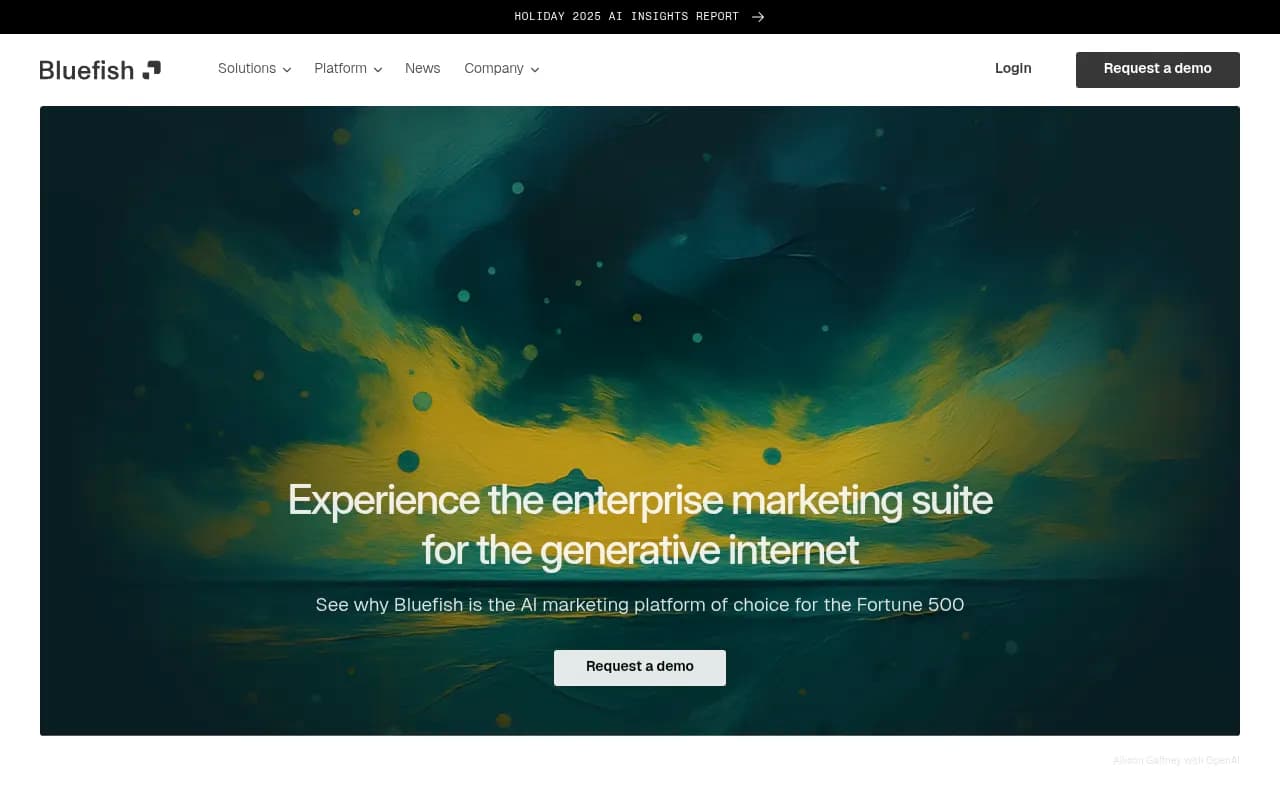
Bluefish positions itself as "the AI marketing platform of choice for the Fortune 500." It's an enterprise-grade system designed for large marketing teams who need deep control over brand presence across AI search engines and agentic commerce. The platform emphasizes going "beyond superficial metrics" with custom audiences, tailored prompts, and what they call understanding how AI "thinks." Pricing starts around $4,000/month with annual contracts and quote-based custom plans.
The platform passes enterprise infosec reviews and offers data segmentation capabilities that competitors can't match. It's built for brands operating across multiple markets with complex stakeholder structures.
LLM Pulse: Accessible AI visibility tracking
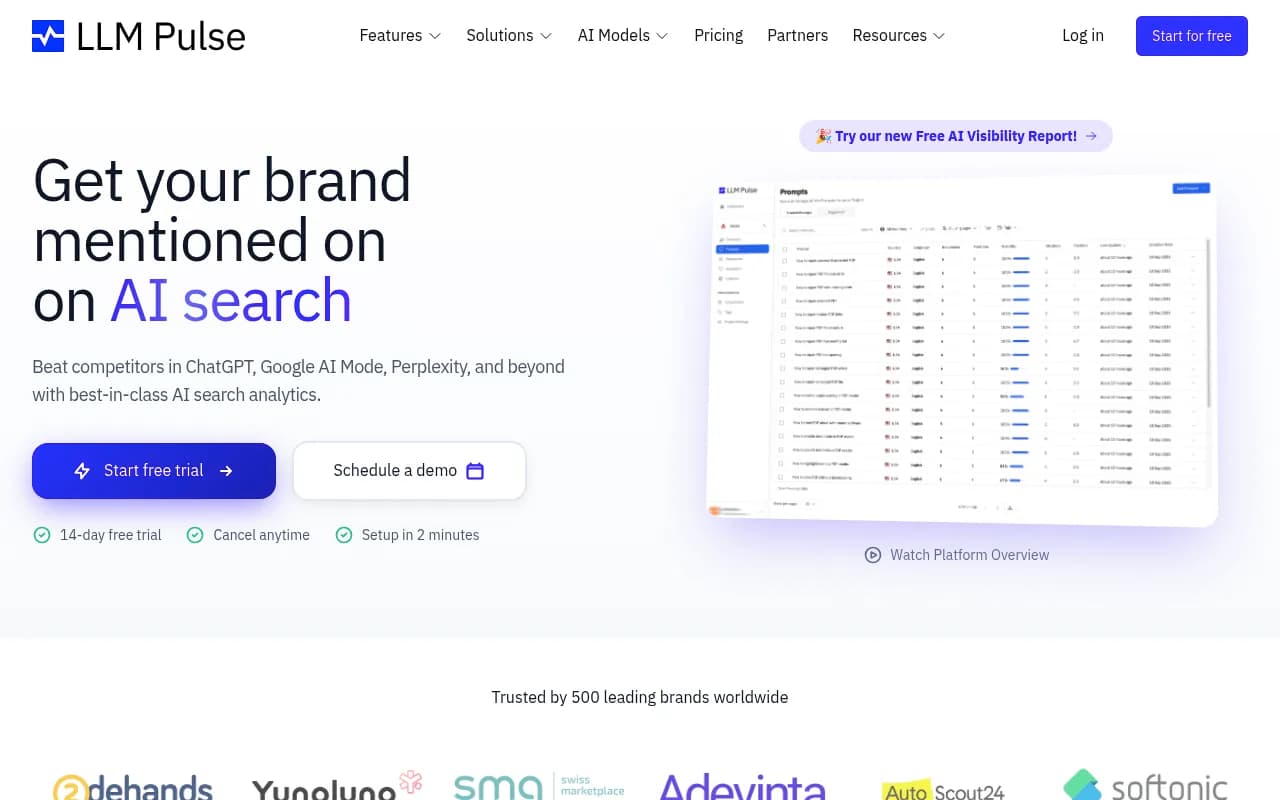
LLM Pulse takes a different approach -- get brands tracking their AI visibility in 2 minutes with transparent pricing starting at €49/month. The platform tracks 10+ AI models (ChatGPT, Perplexity, Gemini, Google AI Mode, DeepSeek, and more) and provides visibility scores, citation analysis, sentiment tracking, and AI-powered content recommendations.
With 500+ brands using it and a 14-day free trial, LLM Pulse focuses on accessibility. Setup is fast, pricing is clear, and you can cancel anytime. It's designed for teams who want to start monitoring AI visibility today without enterprise procurement cycles.
Side-by-Side Comparison
| Feature | Bluefish | LLM Pulse |
|---|---|---|
| Starting price | ~$4,000/mo | €49/mo (Starter) |
| Free trial | No (demo required) | 14 days |
| Contract terms | Annual contracts standard | Monthly, cancel anytime |
| Setup time | Weeks (enterprise onboarding) | 2 minutes |
| Target audience | Fortune 500 marketing teams | SMBs, agencies, mid-market |
| AI models tracked | 10+ (ChatGPT, Perplexity, Gemini, etc.) | 10+ (same core set) |
| Agentic commerce tracking | Yes | No |
| Custom audiences | Yes | No |
| Content recommendations | Manual workflow automation | AI-powered in-platform |
| Infosec compliance | Enterprise-grade (passes reviews) | Standard |
| Multi-language support | Yes (enterprise) | Yes |
| Data export/API | Custom enterprise features | Standard exports |
Pricing comparison
The pricing difference is the most striking aspect of this comparison.
| Plan | Bluefish | LLM Pulse |
|---|---|---|
| Entry tier | ~$4,000/mo (quote-based, annual contract) | €49/mo (40 prompts, monthly) |
| Mid tier | Custom quote (more brands/markets) | €99/mo (100 prompts) |
| Upper tier | Custom quote (full enterprise) | €299/mo (300 prompts) |
| Free trial | No (request demo) | 14 days, full access |
| Annual discount | Standard (required) | 17% savings |
| Cancellation | Contract terms apply | Cancel anytime |
Bluefish doesn't publish pricing because every deal is custom based on number of brands, markets, features, and contract length. The ~$4,000/month figure comes from market research and represents a minimum entry point for smaller enterprise accounts. Larger Fortune 500 deployments likely run significantly higher.
LLM Pulse's transparent pricing means you know exactly what you're paying. The Starter plan at €49/month (~$52) gets you 40 prompts tracked weekly across all AI models. Growth at €99/month covers 100 prompts. Scale at €299/month handles 300 prompts. All plans include the same core features -- just different prompt volumes.
Feature depth and control
Bluefish emphasizes "depth and control" as its core differentiator. The platform offers custom audience segmentation, tailored prompt frameworks, and what they describe as helping marketers understand how AI "thinks" rather than just tracking surface metrics.
In practice, this means Bluefish customers can define specific audience personas, create custom prompt sets that match their exact business questions, and get deeper into the mechanics of why AI models recommend certain brands. The platform's "advanced performance tools" help teams focus on metrics that matter to their specific business rather than generic dashboards.
LLM Pulse takes a more standardized approach. You track prompts, see visibility scores, analyze citations, and get content recommendations. The AI-powered optimization feature suggests specific content improvements based on what's working for competitors and what AI models are looking for. This is more accessible but less customizable.
For most teams, LLM Pulse's standardized approach is actually an advantage -- you get best-practice tracking without needing to architect a custom measurement framework. Bluefish's customization is only valuable if you have the team size and sophistication to use it.
AI model coverage and tracking
Both platforms track the same core set of AI models: ChatGPT, Perplexity, Gemini, Google AI Mode, Google AI Overviews, DeepSeek, Grok, Claude, Copilot, and Meta AI. LLM Pulse lists some models as "Enterprise" tier, suggesting they may not be available on lower plans.
Bluefish adds agentic commerce tracking -- monitoring how brands appear in AI-powered shopping recommendations and purchase flows. This is relevant for e-commerce brands and consumer products but less important for B2B or service businesses.
Both platforms provide weekly tracking cadence, historical data, and competitor benchmarking. LLM Pulse explicitly shows "detailed responses" so you can see the exact words AI uses to describe your brand. Bluefish's interface focuses more on aggregate metrics and trends.
Optimization and actionability
LLM Pulse's optimization workflow is straightforward: track prompts, analyze where you're missing citations, get AI-powered content recommendations, create or update content, see visibility improve. The platform tells you what content to create based on citation analysis and competitor gaps.
Bluefish describes its approach as "automate optimization workflows and tailor measurement frameworks." This is more abstract. The platform helps teams build custom processes and measurement systems but requires more strategic thinking from the user. It's less about "do this specific thing" and more about "here's the data to inform your strategy."
For teams new to AI visibility tracking, LLM Pulse's prescriptive recommendations are more helpful. For sophisticated enterprise teams with dedicated resources, Bluefish's flexibility to build custom workflows might be worth the complexity.
If you're also looking to track how AI crawlers interact with your website or need content generation capabilities built into the platform, Promptwatch offers those features alongside visibility tracking -- something neither Bluefish nor LLM Pulse currently provides.

Enterprise capabilities and compliance
Bluefish explicitly targets enterprise buyers and emphasizes that it "consistently passes infosec reviews with ease." The platform is built for organizations with strict security requirements, complex approval processes, and multi-stakeholder governance.
Data teams get more customization, segmentation, and optimization options. The platform handles multiple brands across multiple markets with different stakeholder access levels. Annual contracts and custom pricing reflect the enterprise sales model.
LLM Pulse doesn't position itself as an enterprise platform. It has standard security practices but isn't architected for Fortune 500 procurement requirements. The self-service model with monthly billing and instant cancellation is the opposite of enterprise software.
This isn't a weakness -- it's a different market. Most companies don't need enterprise-grade infosec reviews for an AI visibility tracker. They need to start monitoring, see results, and scale if it works.
User experience and learning curve
LLM Pulse wins on ease of use. "Setup in 2 minutes" is the promise, and the 14-day free trial means you can test it yourself without talking to anyone. The interface shows prompt tracking, visibility scores, citation analysis, and content recommendations in a straightforward dashboard.
Bluefish requires a demo request and enterprise onboarding. The learning curve is steeper because the platform offers more customization. Teams need to define their measurement frameworks, set up custom audiences, and configure workflows. This takes weeks, not minutes.
For a solo marketer or small team, LLM Pulse's simplicity is a huge advantage. For a Fortune 500 brand with a dedicated AI visibility team, Bluefish's depth might be worth the complexity.
Pros and cons
Bluefish pros
- Built specifically for Fortune 500 enterprise requirements
- Custom audiences and tailored prompt frameworks for sophisticated tracking
- Agentic commerce monitoring for e-commerce and consumer brands
- Passes enterprise infosec reviews consistently
- Deep data segmentation and customization for complex organizations
- Workflow automation for large teams
Bluefish cons
- Pricing starts around $4,000/month with annual contracts -- completely inaccessible for most companies
- Requires demo and enterprise sales process, no self-service option
- Weeks-long onboarding and setup time
- Steeper learning curve due to customization options
- Overkill for small teams or companies just starting with AI visibility
LLM Pulse pros
- Transparent pricing starting at €49/month with monthly billing
- 14-day free trial, no credit card required
- Setup in 2 minutes, start tracking immediately
- AI-powered content recommendations built into the platform
- 500+ brands already using it, proven for SMB and mid-market
- Cancel anytime, no long-term contracts
LLM Pulse cons
- No agentic commerce tracking
- Less customization for complex enterprise needs
- Doesn't position itself for Fortune 500 infosec requirements
- Prompt limits on lower tiers (40 prompts on Starter)
- Some AI models only available on Enterprise tier
Who should choose which platform
Choose Bluefish if:
- You're a Fortune 500 brand with a six-figure marketing budget
- You need to pass enterprise infosec reviews and procurement processes
- You're tracking multiple brands across multiple global markets
- You have a dedicated team to manage AI visibility and need custom workflows
- Agentic commerce tracking is critical for your e-commerce or consumer product business
- You need deep data segmentation and custom measurement frameworks
- Annual contracts and enterprise sales cycles are normal for your organization
Choose LLM Pulse if:
- You're an SMB, agency, or mid-market brand with a normal marketing budget
- You want to start tracking AI visibility this week, not next quarter
- You need transparent pricing and the ability to cancel if it doesn't work
- You want AI-powered content recommendations without building custom workflows
- You're tracking one brand or a small portfolio
- You value simplicity and fast setup over deep customization
- You're testing AI visibility tracking for the first time
Final verdict
These tools serve completely different markets and the choice is straightforward: if you're a Fortune 500 brand with enterprise requirements and budget, Bluefish is built for you. If you're literally anyone else, start with LLM Pulse.
The 80x price difference isn't just about features -- it's about target customer. Bluefish optimizes for enterprise buyers who need custom frameworks, infosec compliance, and multi-market complexity. LLM Pulse optimizes for getting brands tracking AI visibility quickly without enterprise overhead.
Most companies reading this comparison should choose LLM Pulse. The €49/month Starter plan gets you tracking across all major AI models with content recommendations. You can upgrade to Growth (€99/mo) or Scale (€299/mo) as you add more prompts. The 14-day free trial means you can test it risk-free.
Only consider Bluefish if you're actually a Fortune 500 brand with the budget and complexity that justifies enterprise software. The platform's depth is real, but it's overkill for 99% of companies.
One-liner summary: Bluefish is the right choice for Fortune 500 enterprises with $50k+ annual budgets and complex multi-market needs; LLM Pulse is the right choice for everyone else who wants to start tracking AI visibility today at a reasonable price.