Key takeaways
- GrackerAI is built for B2B SaaS teams, especially cybersecurity, DevTools and DevOps. It costs $99/mo (Individual) or $499/mo (Team), but self-serve plans track only 3 or 4 engines. All 10 engines require Enterprise.
- Promptwatch is the strongest pick if you want more than a dashboard: all models on every paid plan, crawler logs, AI traffic attribution and an agent that writes and publishes content, from $95/mo.
- Otterly.AI ($29/mo) and Elmo (free self-hosted, cloud from $29/mo) are the cheapest ways to start tracking.
- Peec AI suits agencies that want unlimited seats. AthenaHQ, Profound and Scrunch AI are the enterprise-leaning options.
- Goodie AI is the one to look at if you sell physical products and care about AI shopping surfaces.
Why people look for GrackerAI alternatives
GrackerAI has a clear pitch: a vertical-tuned AEO and GEO platform for B2B SaaS, with a CVE and threat-category prompt library and a built-in Content Engine. If you sell security software, that specialization is real. Its Capterra page shows 5.0 from 8 reviews.
Still, there are reasons to shop around. Some are simply the facts on its own pricing page. The tagline mentions 9 or 10 AI engines, but the $99 Individual plan covers ChatGPT, Google AI Mode and Google AI Overviews, and Team ($499) adds Perplexity and Copilot while dropping AI Overviews. Claude, Gemini, DeepSeek, Grok and Brave Leo only arrive on Enterprise. GrackerAI's own compare page also admits it has no crawler or agent analytics and no e-commerce coverage.
Then there is user feedback. The only critical roundup I found was written by TofuBofu, a competitor, so read it with salt. It summarizes five AppSumo reviews: citation intelligence got good marks, but one reviewer found a generated article unusable, a few hit stalled onboarding (the founder confirmed one stuck job), and support response times drew complaints. Five reviews is a small sample, and the founder replied publicly to each. I found no independent migration stories either way.
Pricing facts below come from vendor pages in late October and early November 2026. Confirm on each site before buying, since this category reprices constantly.
The alternatives
Promptwatch

Promptwatch is the closest thing to a full-stack answer to GrackerAI's gaps. Where GrackerAI limits engine coverage by plan, Promptwatch unlocks every model on every paid plan: ChatGPT, Google AI Overviews, AI Mode, Gemini, Perplexity, Copilot, Claude, Meta AI, DeepSeek, Mistral, Alexa and the coding agents Codex, Claude Code and OpenCode. It monitors the real interfaces, not just APIs, which matters because user-facing answers and citations differ from API output.
The two things GrackerAI says it lacks are exactly what Promptwatch is strong at. IP-verified AI crawler logs show which pages GPTBot, ClaudeBot, PerplexityBot and others actually read and where they hit errors. Visitor analytics attribute real traffic and conversions from AI platforms. Crisp reported 2x higher conversion from AI traffic than other channels, and TreeHouse (Pararius) grew AI search to roughly 25% of organic conversions after fixing crawler access.
On the content side, the Content Agent plans, writes and publishes to WordPress, Webflow or Framer against your visibility gaps, with a review inbox if you want a human approving everything. Then it tracks whether each page gets crawled, cited and clicked. The Action Board turns findings into a prioritized to-do list. Given the feedback about weak generated articles elsewhere, the grounding in citation and gap data is the part I would test hardest in a trial.
It also tracks Reddit, YouTube and LinkedIn citations, AI Shopping and Ads Radar, query fan-outs and prompt volumes. It is ISO/IEC 27001 certified, rated 4.7/5 on G2, and used by 1,840+ brands including Typeform and Fireflies. For B2B SaaS context, Promptwatch's software citation data (Sep 28 to Oct 4, 2026) shows GitHub, Microsoft's docs and G2 leading ChatGPT citations, with documentation and help centers earning the largest share. That is a useful reminder that vendor blog posts are not the only content AI trusts.
Pricing: Essential $95/mo (50 prompts), Professional $245/mo (150 prompts), Business $579/mo (350 prompts, Content Agent, local targeting), plus Agency and Enterprise tiers. 7-day trial on monthly plans. The automated Content Agent starts at Business, so the cheapest tier is mostly a tracker with article credits arriving at Professional.
Trade-off: it has no cybersecurity-specific prompt library like GrackerAI. You build your own monitors, though prompt suggestions from Search Console and People Also Ask help.
Best for: B2B SaaS teams that want monitoring, diagnosis and execution in one product, and anyone who needs crawler and traffic data.
AthenaHQ

AthenaHQ is a Y Combinator-backed platform from ex-Google Search and DeepMind engineers. Its edge over GrackerAI is breadth early: Starter tracks 11 models. It also has a free Essential tier with 300 credits, so you can test before paying, which corrects the old claim that there is no free option.
Starter is $295/mo with 3,600 credits, where one credit equals one AI response. That credit model means cost scales with usage, and API access and extra credits are billed on top. You get a content optimization agent, country-level support and GA4/GSC integration aimed at proving ROI. SSO, BI connectors and persona targeting are Enterprise-only. Goodie AI's marketing frames it as enterprise-gated, which is partly fair.
Best for: mid-market teams that want many engines and ROI reporting and can live with credit-based metering. It costs three times GrackerAI's entry plan.
Otterly.AI

Otterly is the budget monitor. Lite is $29/mo for 15 prompts, Standard is $189/mo for 100 prompts (with API, MCP and Agent Analytics), Premium is $489/mo for 400, and extra prompts cost $99 per 100. Every plan has unlimited seats, brands and competitors, with daily tracking.
The catch is engines: ChatGPT, AI Overviews, Perplexity and Copilot on every plan, with Claude, AI Mode and Gemini as paid add-ons. Its GEO and crawlability audits are handy (up to 10,000 a month on Premium). It does not write content for you, so you are still on the hook for execution. It is a Gartner Cool Vendor 2025 and a Semrush technology partner.
Best for: small brands, consultants and agencies who need cheap, reliable monitoring and already have a content process.
Peec AI

Peec AI is a clean analytics tracker with unlimited users and competitors. Starter is $95/mo (50 prompts, 3 models, 1 project), Pro is $245/mo (150 prompts, 2 projects) and Advanced is $495/mo (350 prompts, 5 projects, multi-country, Looker Studio). Self-serve plans pick 3 of 6 models, and the full set of up to 13 models is Enterprise only, so it has a similar engine-cap problem to GrackerAI's.
What you get that GrackerAI lacks: AI shopping and SKU-level tracking, an ads library, local GEO, prompt volume scores and a separate agency pricing page. What you do not get is a content engine. Check what happens when you exceed prompt allowances before committing.
Best for: agencies and marketing teams that want a focused tracker with seats that do not cost extra.
Profound

Profound is the enterprise heavyweight. It has Prompt Volumes, Agent Analytics and an AI Marketer that finds opportunities, drafts content and stages it in your CMS for approval. It reportedly covers up to 9 engines on Enterprise. Pricing is custom and sales-led; one review claims self-serve plans were dropped in September 2026, which I could not verify. The free trial reportedly covers 10 prompts on ChatGPT only.
Compared with GrackerAI, Profound has far more execution scope (social, paid, PR) but no published price and a much higher likely spend. I did not verify its pricing page directly.
Best for: large marketing teams with procurement processes and budget.
Writesonic
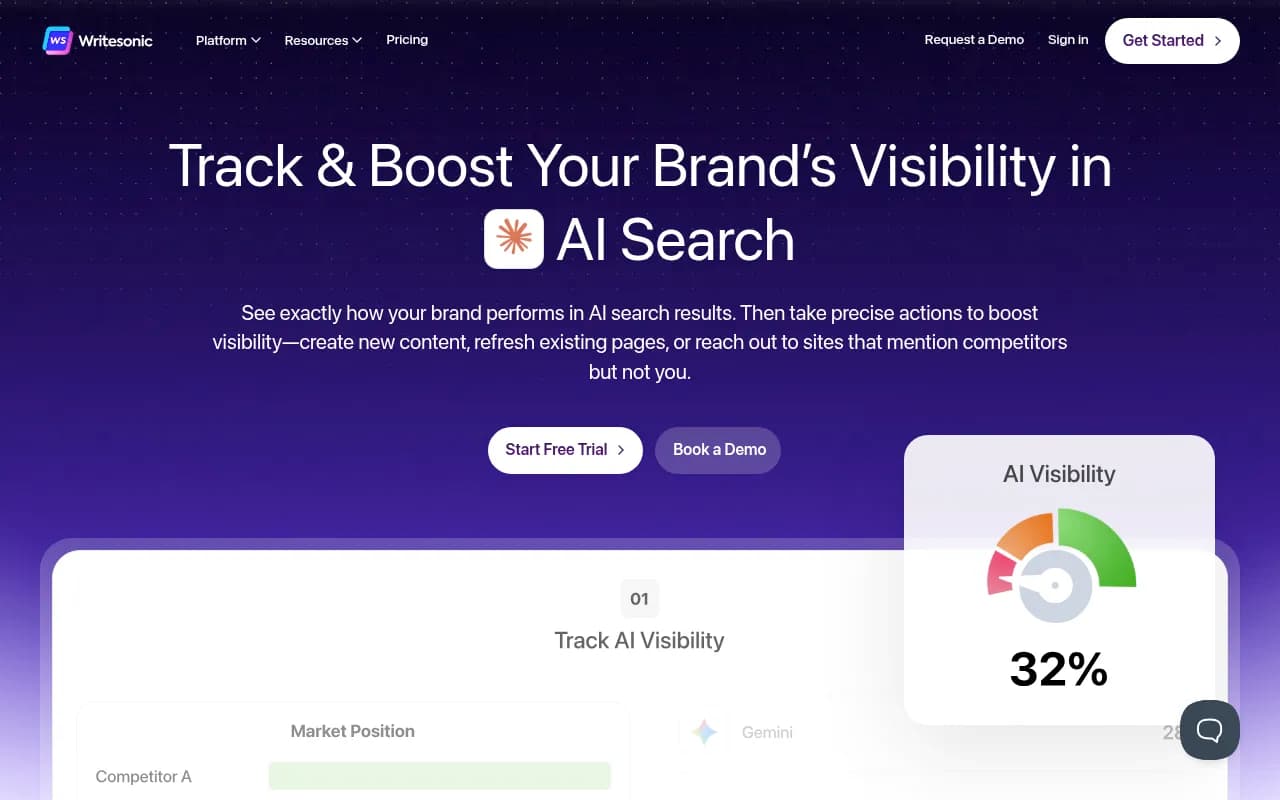
Wriesonic started as an AI writer and added GEO tracking. That makes it the most direct substitute for GrackerAI's Content Engine plus tracking combo. Starter is about $99/mo ($79 annual) for 50 prompts and 15 AI articles, Basic is $199/mo, and Growth is $399/mo for 200 prompts and 50 articles.
Limits: self-serve plans track only ChatGPT, Gemini and AI Overviews, and the Action Center is Enterprise-only. Article volume is higher than GrackerAI's 3 to 10 a month, but volume is not quality, so inspect samples.
Best for: content-heavy teams that care more about article output than diagnosis depth.
Scrunch AI
Scrunch leans toward optimization. Starter is $250/mo billed annually ($300 monthly) for 350 prompts, 3 personas, 5 page audits and 3 seats, covering 7 engines including Claude and Meta. Its AXP serves an AI-readable version of your site, and persona-based testing is a genuine differentiator. GrackerAI itself points to Scrunch for agent-traffic analytics.
Some sources describe it as a Sitecore company; verify before relying on that. The learning curve is steeper than simple trackers.
Best for: mid-market and enterprise teams that want persona testing and site-level fixes.
Elmo
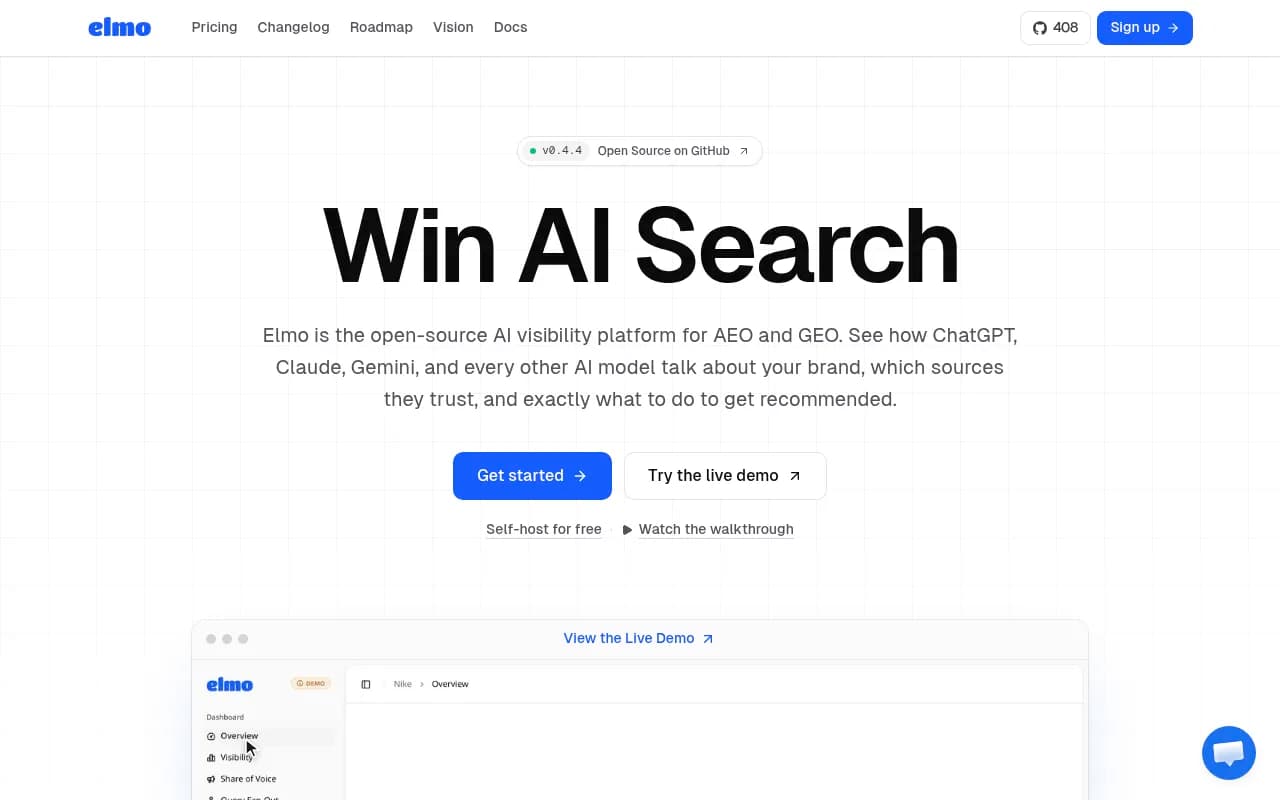
Elmo is open source (MIT, v0.7.7). Self-host free with Docker Compose for unlimited prompts and every model, or use the cloud from $29/mo (ChatGPT only, 50 prompts), $99/mo (4 platforms), $299/mo or $649/mo. All plans have unlimited seats plus API and MCP access. Elmo even publishes its own GrackerAI alternatives page, so expect bias there.
It scrapes real UIs for ChatGPT, AI Mode, AI Overviews, Copilot, Perplexity and Gemini, and uses APIs for other models. Self-hosting needs engineering time, and there is no content engine. The testimonials on its site are first-party.
Best for: technical teams that want data ownership and the lowest cost.
Goodie AI
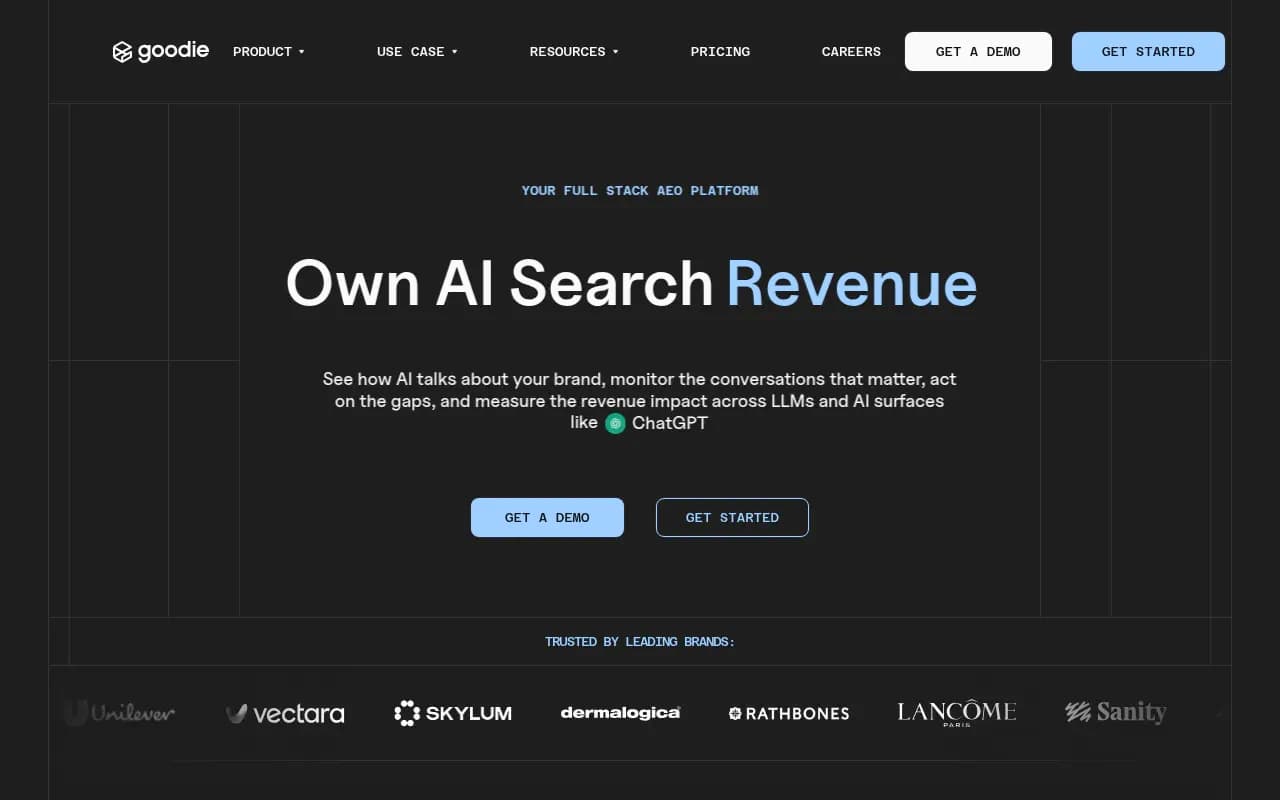
Goodie targets e-commerce and product-led brands, monitoring ChatGPT Shopping, Amazon Rufus, Google AI Mode and Perplexity Shopping, with an Agentic Commerce Optimizer and crawler analytics. Pricing is inconsistent across sources: $399/mo Core on the listing, $295 per Industry Lens. I did not verify it on Goodie's site.
For a pure B2B SaaS company it is probably the wrong tool. For anyone selling products, it covers precisely what GrackerAI says it does not.
Best for: retail and DTC brands focused on AI shopping.
Quick comparison
| Tool | Entry price | Engines on entry | Writes content |
|---|---|---|---|
| GrackerAI | $99/mo | 3 | Yes (3 articles) |
| Promptwatch | $95/mo | All | Yes (Professional and up) |
| AthenaHQ | Free / $295/mo | 5 / 11 | Optimization agent |
| Otterly.AI | $29/mo | 4 | No |
| Peec AI | $95/mo | 3 of 6 | No |
| Profound | Custom | Trial: ChatGPT | Yes |
| Writesonic | ~$99/mo | 3 | Yes (15 articles) |
| Scrunch AI | $250/mo annual | 7 | Partly |
| Elmo | Free / $29/mo | All (self-host) | No |
Which one should you pick?
Stay with GrackerAI if you sell cybersecurity or DevTools software and the vertical prompt library and CVE monitoring matter more than engine count. Run the 7-day trial and judge the articles yourself.
Pick Promptwatch if you want tracking tied to action and revenue: crawler logs, AI traffic, a content agent and the full engine list on any paid plan. Choose Otterly.AI or Elmo if budget is the main constraint, Peec AI for agencies, Writesonic if article volume is the priority, and AthenaHQ, Profound or Scrunch if you have enterprise budget. Whatever you choose, run the same 20 to 30 buyer-intent prompts through two trials and compare what each tool actually tells you to change.
For more options, the GEO software directory lists dozens of other platforms.