Key takeaways
- Missed social posts are rarely a motivation problem. Contentoo's 2026 survey of 203 content leaders found 45% name internal review and approvals as their biggest bottleneck, ahead of drafting or unclear briefs.
- The failure point has a name: the "silent handoff," where one person believes work is done and the next person doesn't know it's their turn. Quire's research on cross-team projects calls this the single biggest source of timeline slippage.
- 97% of content leaders say they know what good content looks like, yet 80% still publish work they know isn't good enough, according to Contentoo. That gap is process, not skill.
- Wrong file specs are a recurring, fixable cause: a designer hands off a vertical Reel when the brief needed a square LinkedIn post, and the scheduler has to rebuild the asset from scratch.
- Fixing this doesn't require a new philosophy. It requires a named owner, a shared definition of done, and a tool that makes handoffs visible instead of implied.
The post wasn't missed. It was lost in the handoff
Here's the scene almost every social team has lived through. The writer finishes the caption on Thursday and marks the doc "done." The designer assumes that means the brief is locked and starts building. By Monday, the scheduler opens the queue and finds a video in the wrong aspect ratio, a caption that was never updated after a last-minute product change, and a launch date that's now tomorrow.
Nobody did anything wrong individually. The work moved from three different people using three different mental models of "finished," and none of them checked.
Quire's research on cross-functional work calls this a silent handoff: a moment when work transfers from one person to another without an explicit acknowledgment that the transfer happened. The sender thinks it's done. The receiver either hasn't noticed or assumes it's still someone else's problem. On a status dashboard, the task looks fine. In reality it's just sitting in a gap nobody is watching.
This matches what Tallyfy has documented across hundreds of workflow implementations: teams don't stall during the actual work. They stall in the space between one person finishing and the next person starting, and most teams have zero visibility into that space. Deadlines get treated as individual promises instead of a chain of dependent handoffs, so when the chain breaks, everyone assumes someone else dropped it.
Why this got worse, not better, heading into 2026
A few things are compounding the problem right now.
Content demand keeps rising faster than headcount. Contentoo's 2026 State of Content Teams survey found 90% of teams say demand for content increased over the last year, but only 48% say headcount kept pace and only 46% say budget did. More posts, same number of people doing the handing off.
More stakeholders are touching each piece. 40% of content leaders in that same survey point to "too many stakeholders" as a direct cause of quality dropping, and 43% say they spend at least 40% of their week coordinating work instead of making it. That's nearly half the week lost to chasing status instead of producing it.
Documentation alone isn't fixing it either. 65% of teams in the Contentoo survey have a documented content workflow, but 76% of those same teams still publish substandard content anyway. A wiki page describing the ideal handoff doesn't stop someone from skipping a step when they're moving fast on a Friday afternoon.
And the tool stack is getting bigger, not smaller. HubSpot's 2026 Social Media Report, based on over 1,100 marketers, found 48% expect their social tool stack to grow in the coming year. Every extra tool is another seam where a handoff can go silent, unless the tools are actually built to pass work between roles cleanly.
Where the writer-to-designer-to-scheduler chain actually breaks
It helps to name the specific failure points instead of talking about "communication" in the abstract.
The brief is incomplete, so the designer guesses. 56% of content teams in Contentoo's survey cite poor or incomplete briefs as a major reason quality drops. If the brief doesn't specify platform, format, and the current version of the message, the designer fills in the blanks with assumptions, and some of those assumptions will be wrong.
The asset ships in the wrong spec. This is the most literal version of the handoff gap. A designer hands off a 1080x1920 vertical Reel export when the slot is actually a 1080x1080 LinkedIn post, and the scheduler has to rebuild it from scratch instead of just scheduling it. Platform specs genuinely differ enough to cause this: Instagram Feed wants 1080x1350, Stories and Reels want 1080x1920, LinkedIn wants 1080x1080 or 1920x1080. A scheduling tool's publisher will often catch the mismatch only at send time, which means the rejection happens right when there's no time left to fix it.
Caption limits trip up last-minute edits. Instagram caps at 2,200 characters with a soft five-hashtag best practice, TikTok shares that 2,200 limit with hashtags counted inside it, X is 280 weighted characters, Bluesky is 300. A caption written for LinkedIn and copy-pasted into X without adapting the opening line is a classic handoff failure, not a writing failure.
Approval sits in three different apps. One comment lives in Slack, one lives in email, one is a text message that says "actually wait, hold off." Nobody has a single place to check what the latest, approved version actually is, so the wrong version gets published.
Status is invisible until someone asks. When a founder or client asks "is this live yet" and the honest answer requires scrolling through three tools and two chat threads to find out, that's a sign the workflow has no single source of truth for where a post currently sits.
The four-question test for a real handoff
Quire proposes a simple test for whether a handoff is actually a handoff or just a vague hope that someone will pick things up. Before work moves from writer to designer, or designer to scheduler, it should be able to answer:
- Who is the named receiver? Not "design team," a specific person.
- What is the shared definition of done? Not "finished," but a checklist both sides agree on.
- Is there a timestamp marking when the handoff happened?
- Did the receiver explicitly acknowledge they have it?
If any of those four are missing, you have a silent handoff waiting to cost you a post.
Three templates that close most of the gap
You don't need a new methodology, just three artifacts that force the four questions above to get answered every time.
A one-page campaign brief with fixed fields: goal, audience, offer, core message, dates, a named owner and a named approver (two specific people, not two departments), a link to approved assets, and the campaign name. If the brief doesn't have all of these, it shouldn't move to design.
A channel matrix that lists the format and caption cap for every platform you post to, so the designer and scheduler are working off the same spec sheet instead of each guessing based on the last campaign they remember.
One UTM naming rule, applied consistently: lowercase, hyphenated, with a fixed pattern for utm_source, utm_medium, and utm_campaign. This sounds unrelated to handoffs until you've watched a scheduler have to chase down what the writer meant by a tracking link that doesn't match the brief.
What to automate and what to keep human
Not every part of this chain needs a person checking it manually. Automate link tagging, bulk scheduling, approval reminders, and weekly reporting. Keep the core message and the final pre-publish read-through human, because that's where brand voice and last-minute context actually matter.
AI-assisted drafting can help here too. 94% of social marketers already use AI somewhere in their workflow according to HubSpot's 2026 report, mostly for first drafts and repurposing rather than final copy. The catch: AI can speed up the writer's first pass, but it can't catch a silent handoff. That's a workflow design problem, not a content generation problem.
Tools that actually make handoffs a first-class step
A content calendar on its own doesn't fix any of this. What matters is whether the tool treats the move from writer to designer to scheduler as a trackable event with an owner and a status, not just a card that sits in a column until someone remembers to look at it.
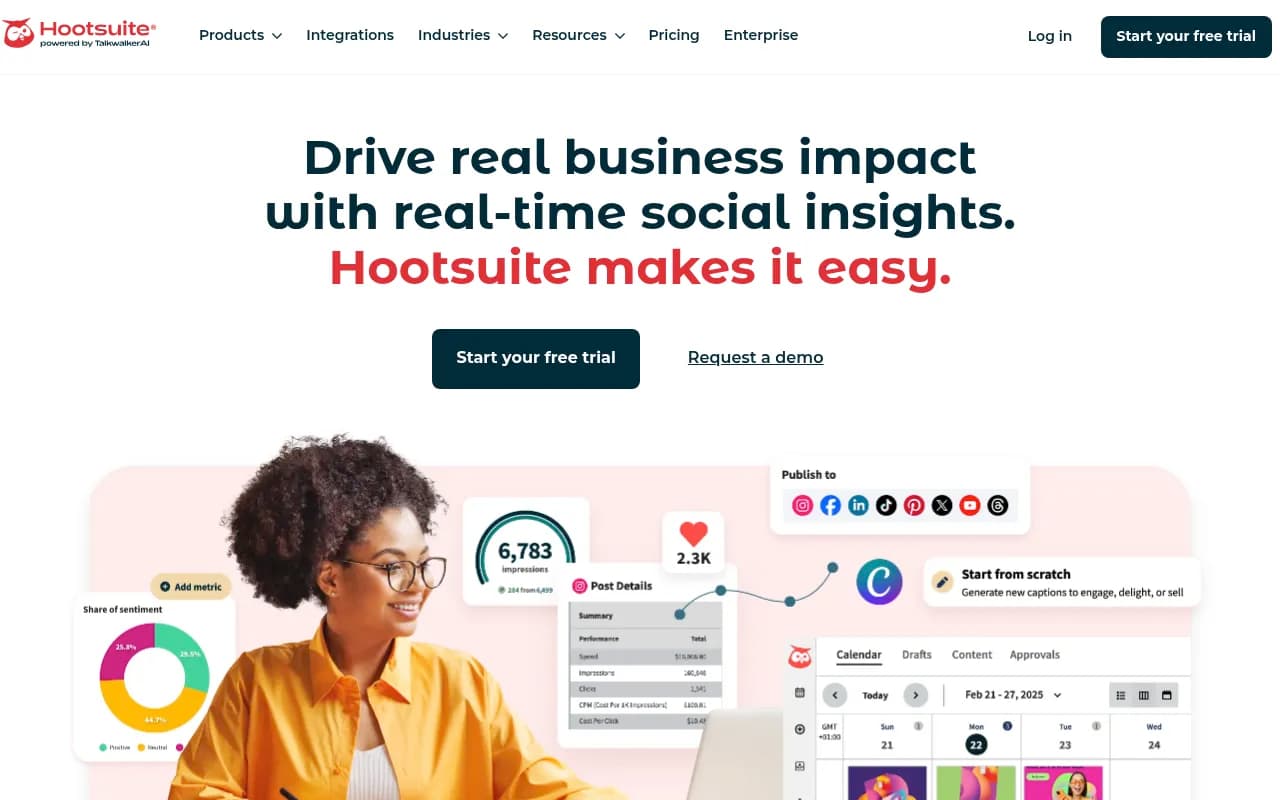
Hootsuite's approval chains work well for straightforward internal sign-off, junior drafts and a senior approves, but external reviewers need a paid seat to weigh in, which gets expensive once clients or legal are part of the loop.
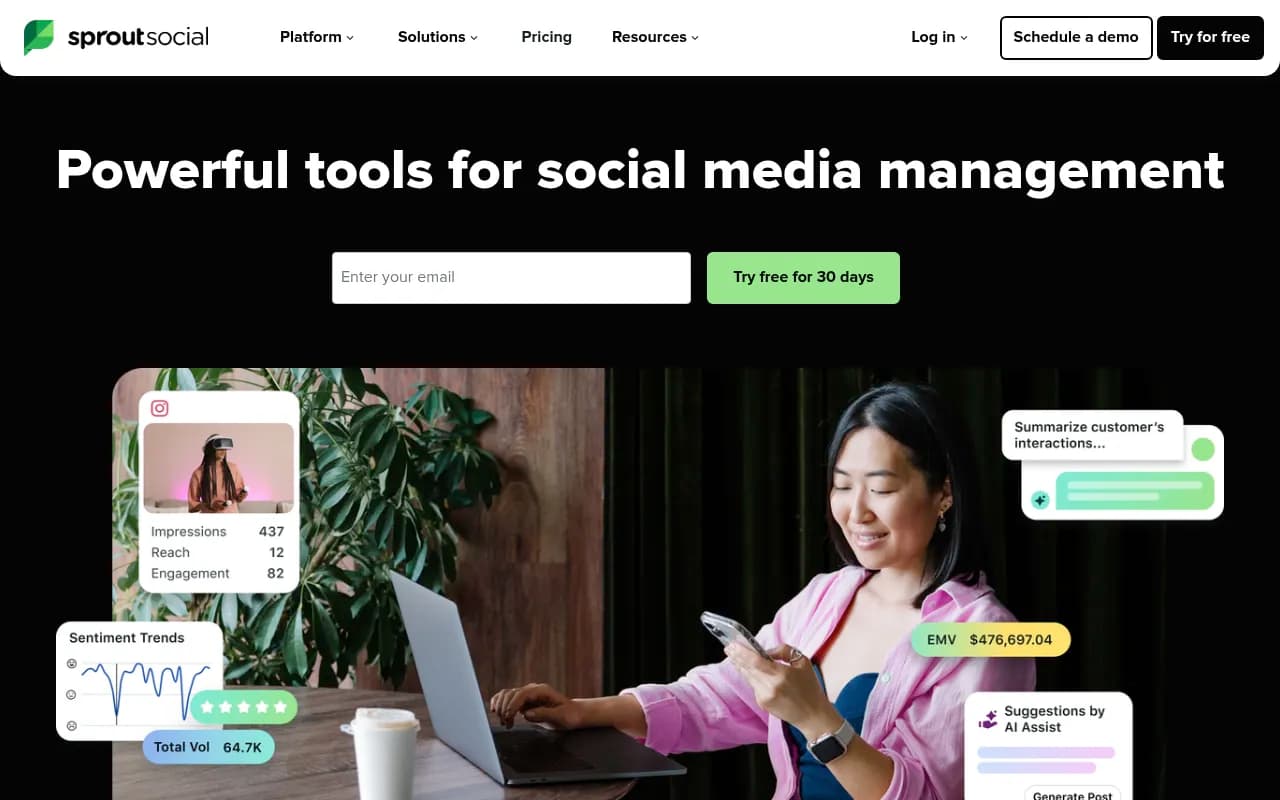
Sprout Social bundles solid approval workflows into a much larger listening and analytics suite. If you're already paying for that suite, the approval layer is a reasonable bonus. If you're a lean team, you're paying per-seat pricing for a lot of functionality you won't touch.
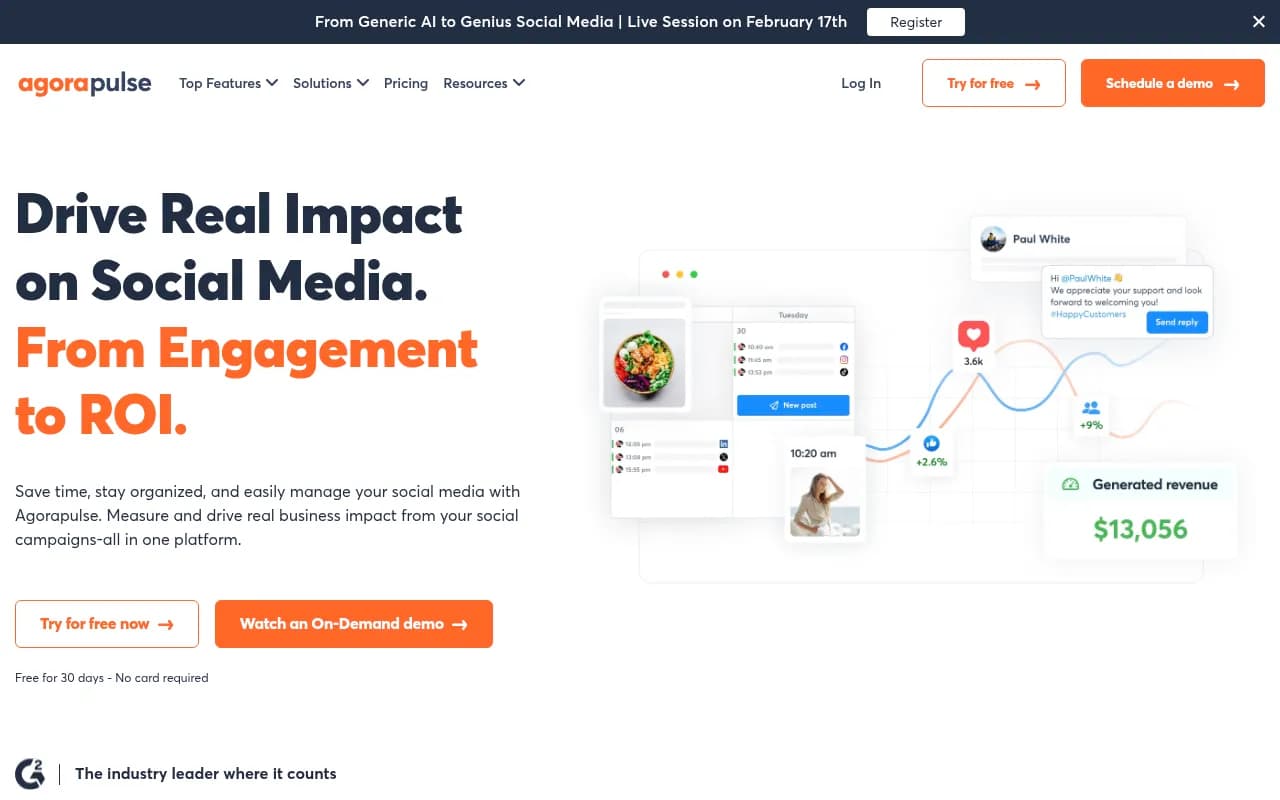
Agorapulse folds ROI tracking into the same all-in-one approach, useful if you want performance data flowing back into the next brief without a separate reporting tool.
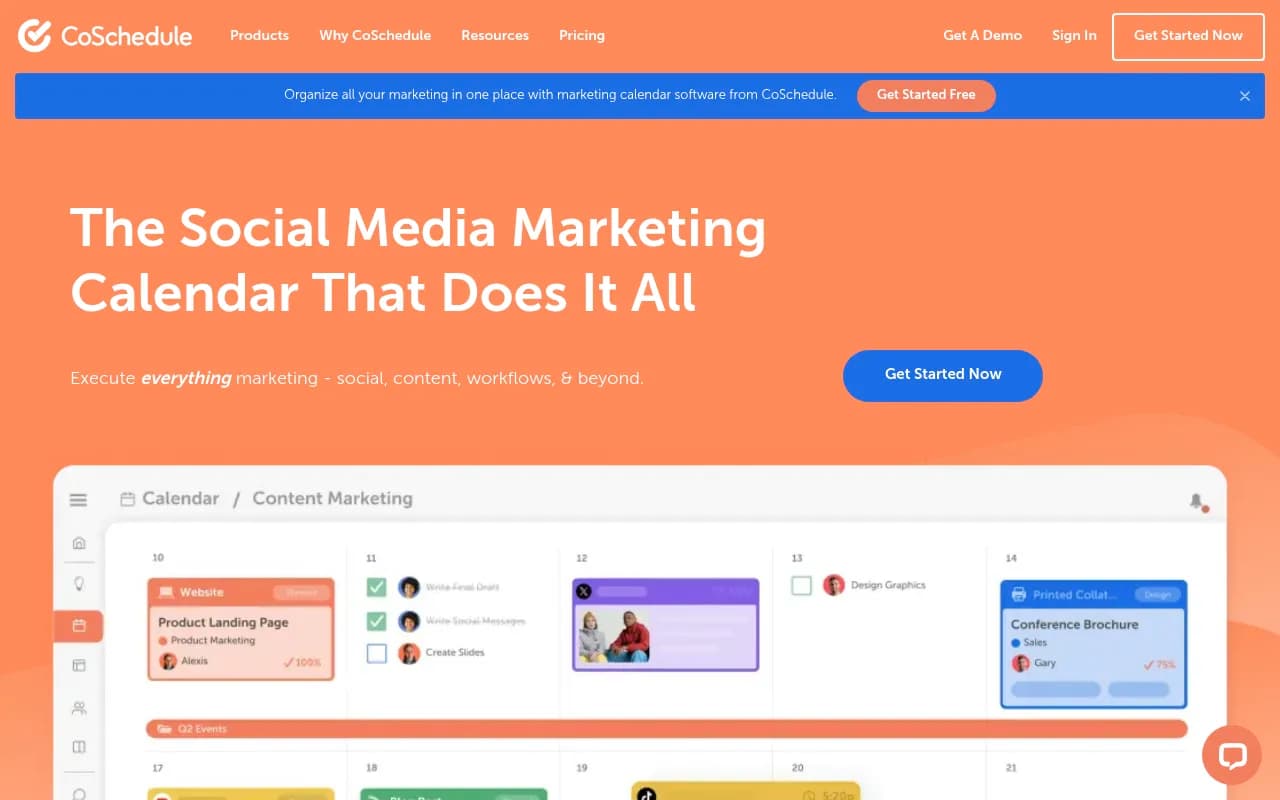
CoSchedule leans into the calendar-and-planning side of the chain, which helps if your main problem is visibility into what's coming up rather than approval routing itself.
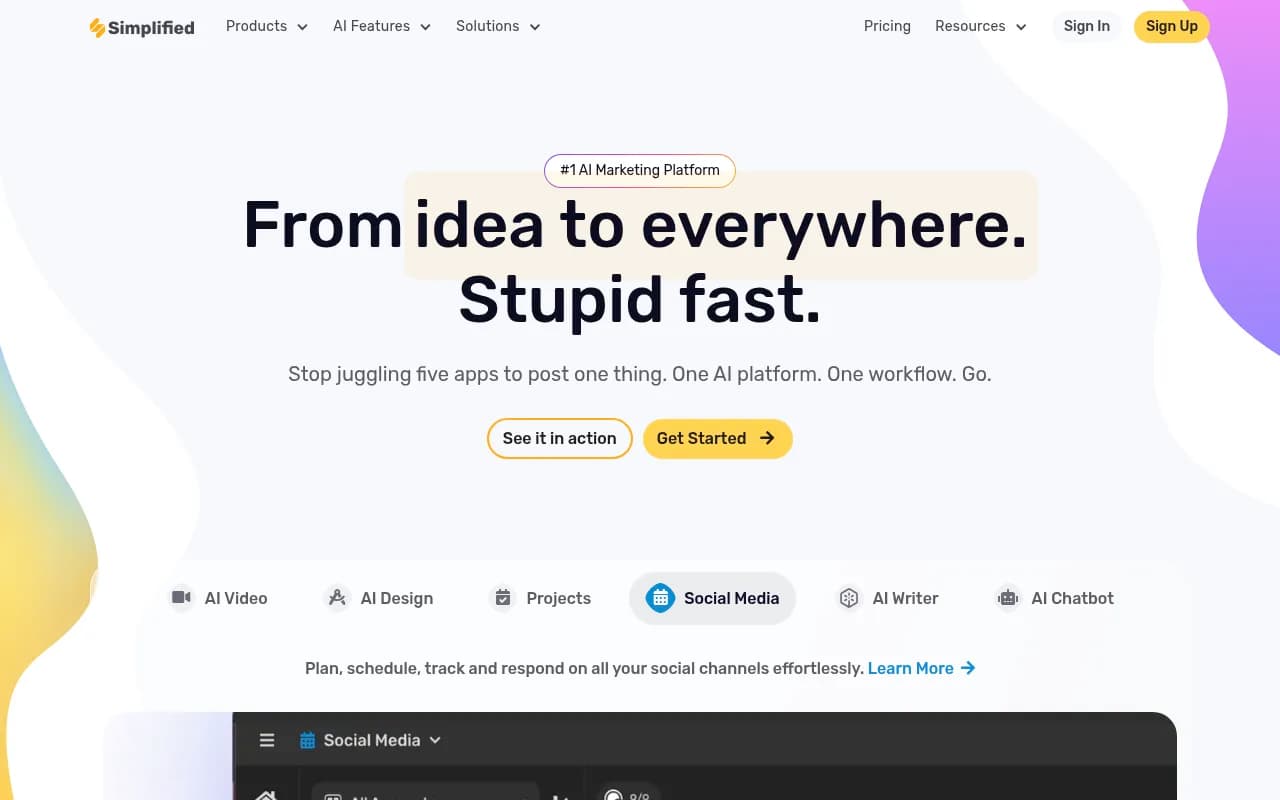
Simplified pairs content creation with scheduling in one place, which can shorten the writer-to-designer handoff since drafts and visuals live in the same workspace instead of two separate tools that need syncing.
For the brief-and-asset side of the chain specifically, a shared workspace tool like Airtable can hold the campaign brief, channel matrix, and asset links in one record that both the designer and scheduler can see and update, instead of a brief living in a doc that nobody revisits once design starts.
For the actual design handoff, generating assets in the right spec from the start avoids the rebuild-from-scratch problem entirely.

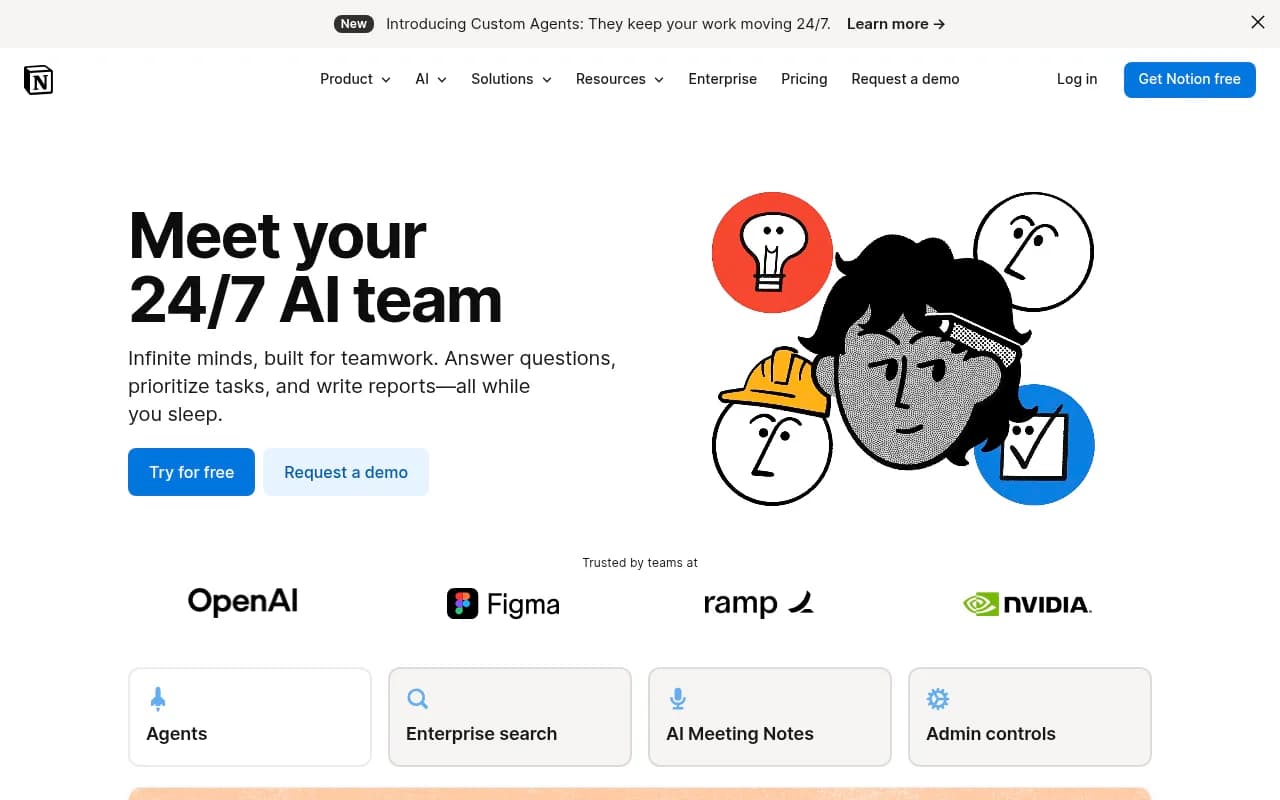
Notion AI can double as the shared source of truth for brief status and approval notes, which solves the "feedback is scattered across three apps" failure mode if your team commits to actually using it instead of defaulting back to Slack for the urgent stuff.
Quick comparison
| Tool | Best for | Approval workflow | Where it fits the chain |
|---|---|---|---|
| Hootsuite | Internal sign-off chains | Yes, paid seats for reviewers | Scheduler stage |
| Sprout Social | Teams already on the full suite | Yes, per-seat pricing | Scheduler + reporting |
| Agorapulse | ROI-driven teams | Yes | Scheduler + analytics |
| Simplified | Lean teams wanting fewer tools | Basic | Writer + designer + scheduler |
| Airtable | Brief and asset tracking | Via custom views | Writer-to-designer handoff |
| Canva AI | Format-correct asset generation | N/A | Designer stage |
| Notion AI | Centralized feedback and status | Via comments/status fields | Across all three roles |
Fixing the gap is a process change, not a tool purchase
Buying a new scheduler won't fix a silent handoff by itself. What fixes it is deciding, before the next campaign, who the named receiver is at each stage, what "done" actually means in writing, and where status lives so nobody has to ask. Pick one tool from the table above that fits your team size, build the three templates, and run the four-question test on your next handoff before you assume it went through.
If your team is already juggling a growing stack of tools and still missing posts, that's usually a sign the problem isn't which tool you're using, it's that no single tool, or person, owns the moment work changes hands. Start there.