Key takeaways
- ChatGPT Shopping trigger rates vary sharply by category and by prompt intent (organic vs. brand vs. comparison), so a single cross-category prompt list will give you misleading numbers
- Manual spot-checking fails because ChatGPT's shopping answers vary run to run on the exact same query; you need repeated sampling, not single checks
- OpenAI changes shopping and ad behavior in sudden steps, not gradual drift, which means a tracking setup built last quarter can go stale overnight
- Dedicated platforms like Profound and Promptwatch automate the sampling, normalization, and source-tracing that manual checking can't scale to
- Tracking should log every product named (not just yours), its position, format (carousel vs. text vs. citation), and the source behind it
Why checking ChatGPT Shopping by hand doesn't work past a handful of prompts
I tried this the old way first: a spreadsheet, a dozen prompts, and a recurring calendar reminder to type them into ChatGPT every Monday. It held up for about three weeks. Then OpenAI shipped a change, my numbers stopped matching reality, and I had no idea when exactly things shifted because I wasn't checking daily.
That's the core problem. ChatGPT's product recommendations aren't static. Promptwatch's data on ChatGPT shopping feature usage shows the rate at which shopping features (product cards, price comparisons, shopping recommendations) appear in web-search responses roughly doubled overnight in late May 2026, then fell back weeks later. That's not organic drift. OpenAI is actively tuning when shopping triggers, and it does so in steps, not gradual curves.
On top of that, the same prompt doesn't always return the same answer. Run "best running shoes for flat feet" five times in a row and you'll get different product mixes, different ordering, sometimes a carousel and sometimes just a text list. Siftly's research on tracking competitors in ChatGPT Shopping results flags this directly: single or manual spot-checks are statistically unreliable because of response variance. You need repeated sampling across each prompt to get a real share-of-voice number, which is exactly the kind of thing nobody does by hand across dozens of categories.
Then there's the category problem. ChatGPT Shopping performs especially well, per OpenAI's own announcement, in "detail-heavy categories like electronics, beauty, home and garden, kitchen and appliances, and sports and outdoor." Each of those categories pulls from a different mix of sources. Promptwatch's automotive-specific citation data from August 2026 found that 7 of the top 8 cited domains for car-buying prompts were marketplaces and review sites, not manufacturer pages, with Chevrolet.com the lone OEM site in the top 8. A tracking system built around one generic "best of" prompt set will completely miss that a category like automotive rewards marketplace presence while another category might reward your own product pages. You can see the full breakdown in ChatGPT's citation share by content type data, where product pages lead overall citations at 22.4% but climb to 26% specifically on commercial prompts.
What actually changed with ChatGPT Shopping in 2025-2026
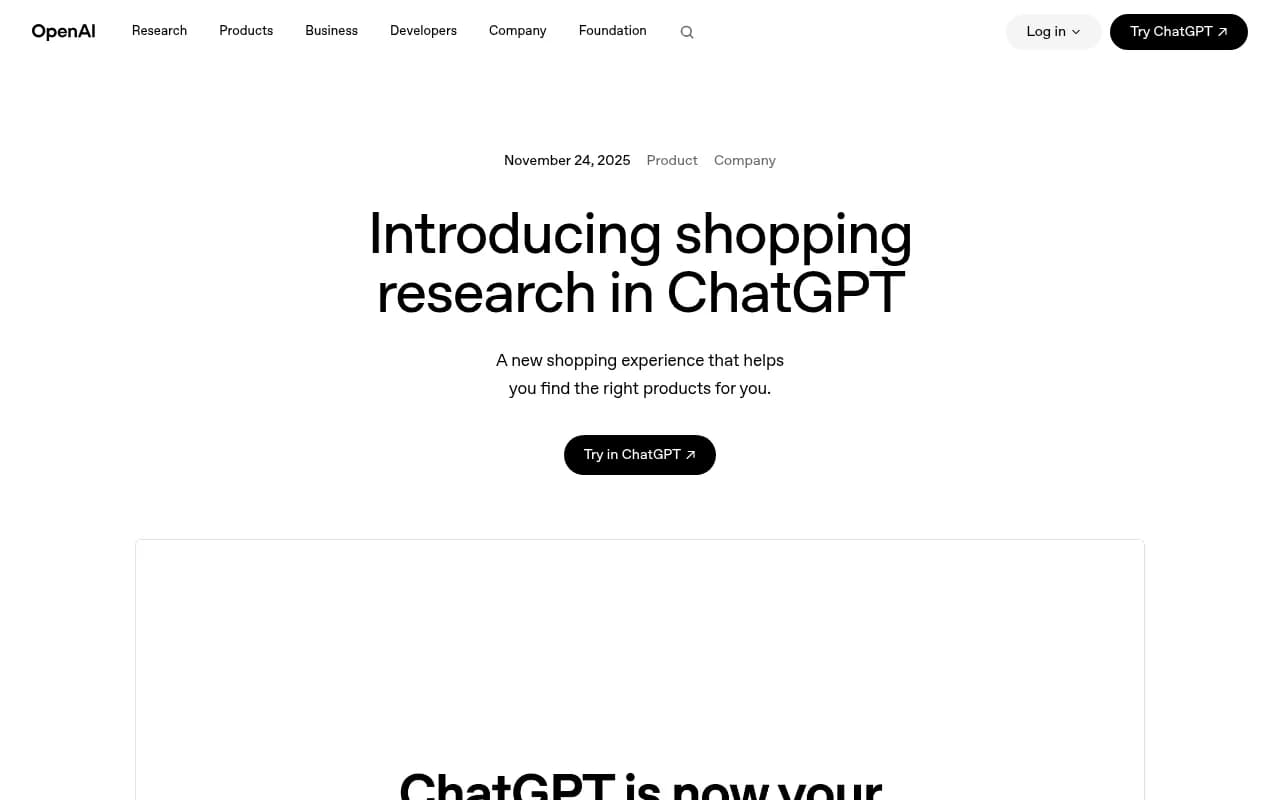
OpenAI's shopping research feature, rolled out to Free, Go, Plus, and Pro tiers starting November 24, 2025, turns a vague request into a multi-step process: ChatGPT asks clarifying questions, researches across the web, and returns a personalized buyer's guide with top products and tradeoffs. This sits alongside Instant Checkout, which launched earlier in September 2025 for Plus, Pro, and free US users with Shopify and Etsy integration.
Behind the scenes, ChatGPT doesn't run one search per shopping prompt. It fans out into multiple queries, and that fanout behavior itself keeps changing. Promptwatch's query fanout data shows average fanouts dropped from roughly 2.15 queries per response in December to exactly 1.0 by April 2026, a notably leaner search pattern. Then on August 8, 2026, ChatGPT started using the site: operator at scale, jumping from about 0.4% to 17% of all fanout queries overnight. If your tracking methodology assumes a certain search pattern, that kind of overnight shift can silently break it.
Ads complicate the picture further. ChatGPT served zero ads until May 27, 2026, then climbed to an average of 20.1% of web-search responses over the following 90 days, peaking near 44% on some days. Most of those ad-bearing responses (73.3%) come from organic, non-branded prompts, meaning category-level "best X" searches are exactly where competitors can now buy placement next to organic shopping results, per Promptwatch's ad tracking data.
The methodology that replaces manual checking
Across the research I pulled from Profound, Siftly, and GrowByData, the same approach keeps showing up, independent of which tool is doing the work:
- Build an intent-labeled prompt set per category. Separate organic/best-of prompts ("best cordless vacuum under $200") from brand-specific prompts ("is Dyson V15 good") and competitor-comparison prompts. Promptwatch's data on unique domains per response shows why this split matters: organic prompts cite 10+ domains 52.5% of the time, while brand-specific prompts narrow to just 21.3%. Lumping them together averages away the real signal.
- Run each prompt multiple times before trusting the result. One pass tells you almost nothing given response variance.
- Log every product named, not just your own, along with its position, whether it appeared as a carousel card, a citation, or a plain text mention, and which source it traces back to.
- Normalize product name variants before counting. "Brooks Ghost," "Brooks Ghost 17," and "Brooks Men's Ghost 17" are the same shoe, but ChatGPT writes them differently depending on the source it pulled from.
- Track what Profound calls the Shopping Mode Rate: the percentage of your tracked prompts that actually trigger the shopping interface versus returning a plain text answer. A category with a low rate isn't ready for shopping optimization yet, regardless of how your products are described.
- Re-baseline regularly. Given how often OpenAI changes trigger rates and search behavior in sudden steps, a setup that worked in March can be measuring the wrong thing by August.
Tools built specifically for this
A few platforms now have dedicated shopping-tracking features rather than generic prompt monitoring bolted onto AI visibility dashboards.
Profound has a purpose-built Shopping product that tracks Shopping Visibility, Attribute Accuracy (how AI describes your products), Shopper Sentiment, SKU-level analysis, and the Shopping Mode Rate concept mentioned above. It also maps a Merchant Layer showing which third-party retailers own checkout for your brand versus your own site.

Siftly's shopping module tracks product cards, competitor pricing, merchants, clicks, and revenue inside AI shopping results, and uses a weighted share-of-voice formula where carousel placements count 3x a citation and 2x a plain mention.
For broader AI visibility work that touches shopping-adjacent prompts (competitor comparisons, review-page citations, source tracing across categories), Promptwatch covers the monitoring layer with prompt volumes and difficulty scoring, query fan-out visibility, and citation trend analysis across ChatGPT, Gemini, Perplexity, and Google AI Overviews. It also tracks ChatGPT Shopping product recommendations and sponsored placements directly through its Ads Radar, which is useful once a category starts showing the ad-bearing responses described above. Where it goes further than a pure tracker is in closing the loop: its Content Agents and Content Gap Analysis can generate and publish the review-heavy, product-page content that Promptwatch's own data shows wins the most citations in commercial prompts, rather than just reporting that you're missing it.

Omnia focuses on AI-powered share of voice analytics across categories, which overlaps with the per-category benchmarking shopping tracking needs.
ZipTie offers deep analysis specifically aimed at AI search visibility diagnostics, useful as a lighter-weight complement when you don't need a full enterprise shopping suite.
Comparing the shopping-tracking options
| Tool | Shopping-specific features | Pricing (approx.) | Best for |
|---|---|---|---|
| Profound | Shopping Mode Rate, Attribute Accuracy, SKU-level analysis, Merchant Layer | Starter ~$99/mo, Growth ~$399/mo | Large catalogs needing SKU-level shopping data |
| Siftly | Carousel tracking, weighted share-of-voice, revenue correlation | Not publicly listed | Brands wanting revenue-linked shopping metrics |
| Promptwatch | Shopping/Ads Radar, citation trends, content gap analysis, automated content generation | Essential $95/mo, Professional $245/mo, Business $579/mo | Teams that want tracking and the fix in one platform |
| Omnia | AI share of voice analytics | AIclicks-style tiers reported from $59/mo | Category-level share of voice benchmarking |
| Manual spreadsheet | None; prone to response variance | Free, but costs your time | Under 10 prompts, occasional checks only |
Getting your products feed-ready before you track anything
Tracking only matters if your products can actually appear. OpenAI's discovery feed spec requires nine fields per product: item_id, title, description, url, brand, seller_name, image_url, availability, and price. Titles need to stay under 150 characters and descriptions under 5,000, in plain text. Shopify and Etsy merchants get synced automatically through Shopify's Global Catalog; everyone else applies through OpenAI's merchant form at chatgpt.com/merchants with company details, site URL, and catalog size.
The three gating requirements are a spec-compliant feed, crawler access for OAI-SearchBot, and an approved merchant application unless you're already on Shopify or Etsy. Getting these right matters more than any single tracking tool, because AI shopping placement is independent of organic SEO rank, per Profound's own documentation. A competitor with zero organic visibility can still win shopping cards through feed quality and merchant relationships alone.
Putting it together
If you're managing shopping visibility across more than two or three product categories, manual checking stops being a viable strategy almost immediately, not because it's tedious but because the underlying system is noisy and shifts in steps rather than trends. The fix isn't a smarter spreadsheet. It's sampling each prompt enough times to get a real signal, segmenting by intent and category, and logging competitors alongside your own products so you know whether a drop is your problem or a category-wide shift.
For teams that want the broader context, not just shopping cards but how your brand shows up across ChatGPT, Perplexity, Gemini, and AI Overviews generally, the GEO software directory at bestgeosoftware.com is a reasonable starting point for comparing platforms beyond the handful covered here.