Key takeaways
- Native schedulers (Instagram, Facebook, LinkedIn, TikTok, X) are free but each has different limits: TikTok tops out at 10 days ahead and desktop only, Instagram allows up to 75 days and 25 posts a day, LinkedIn stretches to 90 days.
- None of the native tools offer a cross-platform calendar, team approval routing, or bulk uploads. That gap is the entire reason third-party dashboards exist.
- Pricing models for dashboard tools vary wildly: Sprout Social and Hootsuite charge per seat (cost scales with headcount), Buffer charges per channel, and Planable charges per workspace. Model your cost against whichever number actually grows for your team.
- A controlled Hootsuite experiment found scheduled posts outperformed natively-posted content on engagement, debunking the old "scheduling tools get penalized" theory, though anecdotal pushback still floats around on Reddit.
- Approval workflows, the single most requested team feature, are often locked behind higher-priced tiers on Sprout and Hootsuite but included from the entry tier on Planable and Buffer Team.
Why this decision matters more than it used to
Five years ago, most small teams just logged into each platform and hit publish manually. That's basically unthinkable now if you're running more than two or three channels. Most businesses post to five or more networks, and each format has its own quirks, aspect ratios, caption limits, and approval needs. The question isn't "should we schedule," it's "where do we schedule from."
There are two camps. One says: use each platform's built-in scheduler, it's free and it's exactly what the platform wants you to use. The other says: centralize everything in a single dashboard so your whole team can see, plan, and approve content in one place. Both have real tradeoffs, and the right answer depends less on budget and more on how many people touch your content before it goes live.
Native schedulers: what you actually get per platform
Here's the thing people underestimate: native scheduling isn't one consistent experience. It's five different tools with five different rulebooks, and they change without much warning.
| Platform | Scheduling window | Daily limit | Notes |
|---|---|---|---|
| Instagram (via Meta Business Suite) | Up to 75 days ahead | Up to 25 posts/day | Native in-app scheduling was removed; must go through Business Suite |
| Facebook (Business Suite) | Meta states 75 days, many users see a practical 30-day cap | Not specified | Mobile app caps at 30 days ahead |
| 10 minutes to 90 days ahead | Single post at a time | No bulk upload, no cross-platform view | |
| TikTok (TikTok Studio, desktop only) | 15 minutes to 10 days ahead | Not specified | No mobile scheduling at all |
| X/Twitter | Desktop only | No bulk scheduling | Basic analytics only, no team features |
Notice the pattern. Every single native tool is built to serve one brand on one channel, for one person sitting down at a desktop. None of them give you a calendar that shows what's going out on Instagram next to what's going out on LinkedIn the same week. None of them let a second person approve a post before it ships. If you're a solo creator posting to one or two networks, that's fine, even preferable, since it's free and it's exactly where the platform wants you. If you're a team of three or more juggling five channels, it starts falling apart fast.
Does scheduling hurt your reach? (the myth that won't die)
This comes up constantly: does a platform's algorithm punish content posted through a third-party tool versus posted natively? Hootsuite ran a real experiment on a business account, comparing scheduled posts against manually-posted ones, and found the scheduled posts actually outperformed native posts on most metrics, including engagement rate. Other agencies have reported similar results when comparing reach side by side. That said, you'll still find people on Reddit swearing native posting performs better for them. I'd treat this as mostly settled by controlled testing, with the caveat that platform algorithms shift often enough that nobody should treat any single test as gospel forever.
The single dashboard approach
The pitch for a unified dashboard is simple: one calendar, one approval flow, one place to see what's going out everywhere. The best tools combine publishing, team approval routing, AI-assisted send-time optimization, content calendars, asset libraries, and cross-network analytics.
Where this gets interesting is pricing, because the three major dashboard tools charge completely differently, and the difference matters more than any feature comparison.
Sprout Social
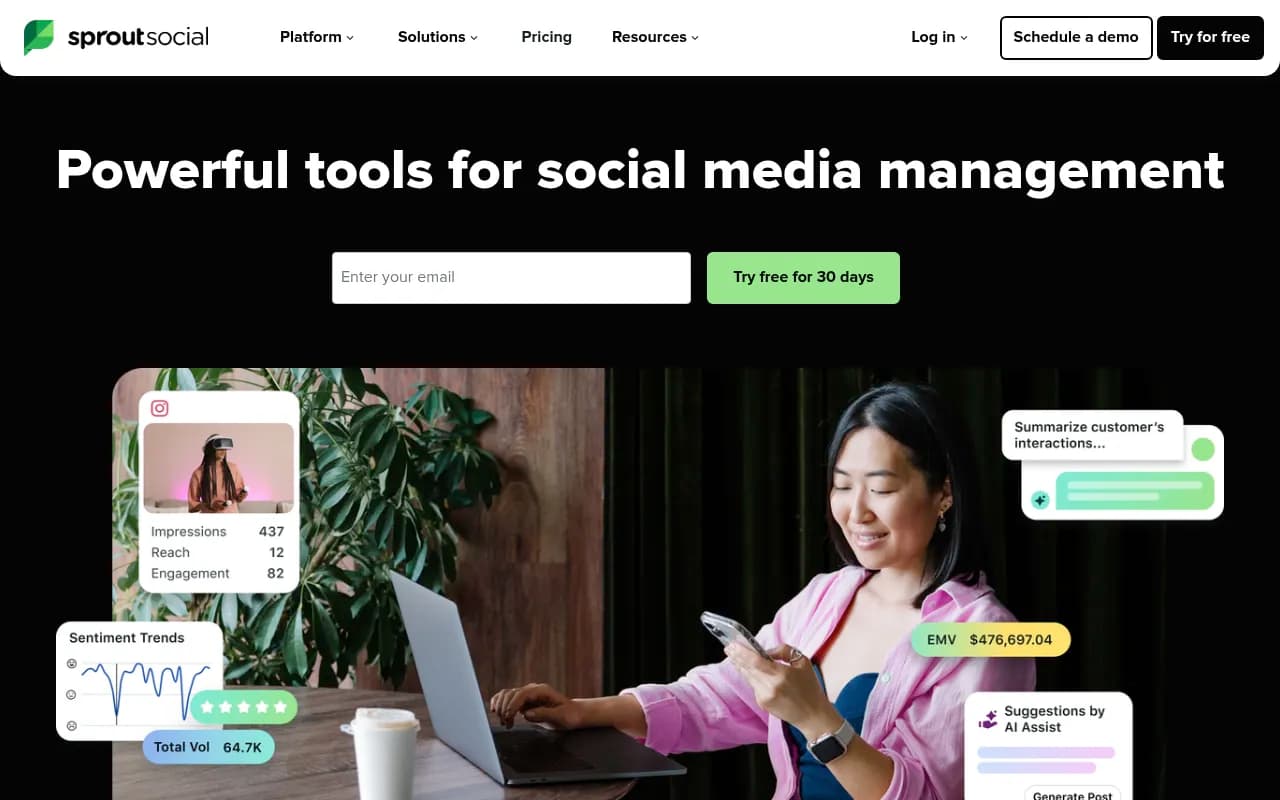
Sprout Social is priced per seat. Essentials starts at $79/seat/month annually, Standard jumps to $199/seat/month but notably excludes approval workflows and bulk scheduling, Professional at $299/seat/month is where bulk CSV scheduling and approvals actually unlock, and Advanced at $399/seat/month adds sentiment analysis and external approvals that don't require stakeholders to log in. Run the math on a 10-person team at Professional and you're at roughly $36,000 a year. That's the catch with per-seat pricing: it scales directly with headcount, which is painful if your content team is growing.
Hootsuite
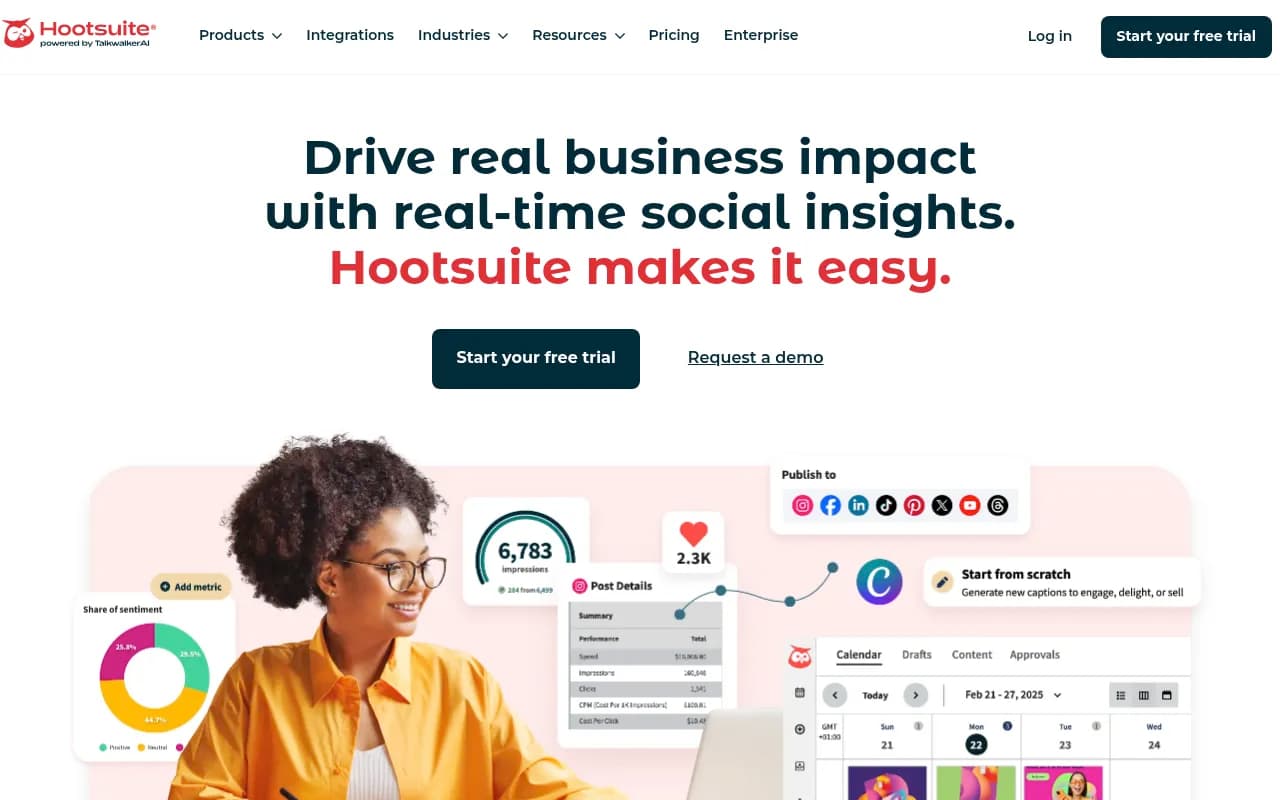
Also per seat. Standard is $99/user/month with unlimited scheduling but, again, no approval workflows or bulk scheduling. Those features don't show up until Advanced at $399/user/month, which also adds bulk scheduling up to 350 posts at once and custom user permissions. A 5-person team on Advanced lands just under $24,000 a year. If approvals matter to you, you're paying for the top tier either way.
Buffer, Planable, and the per-channel/per-workspace alternatives
Buffer flips the model: it charges per channel, not per seat, which means adding more people to your team costs nothing extra. Team plans start at $10/channel/month with unlimited team members included from the start, plus approval workflows and custom permissions right out of the gate. For a team with lots of people but a modest number of accounts, this is usually cheaper than per-seat pricing.
Planable goes a third direction: pricing by workspace. Each workspace covers one client, brand, or location, with unlimited users inside it. Basic is $33/workspace/month for 60 posts and unlimited users, which is a strong deal for agencies managing several clients, since you're not paying per person on the team.
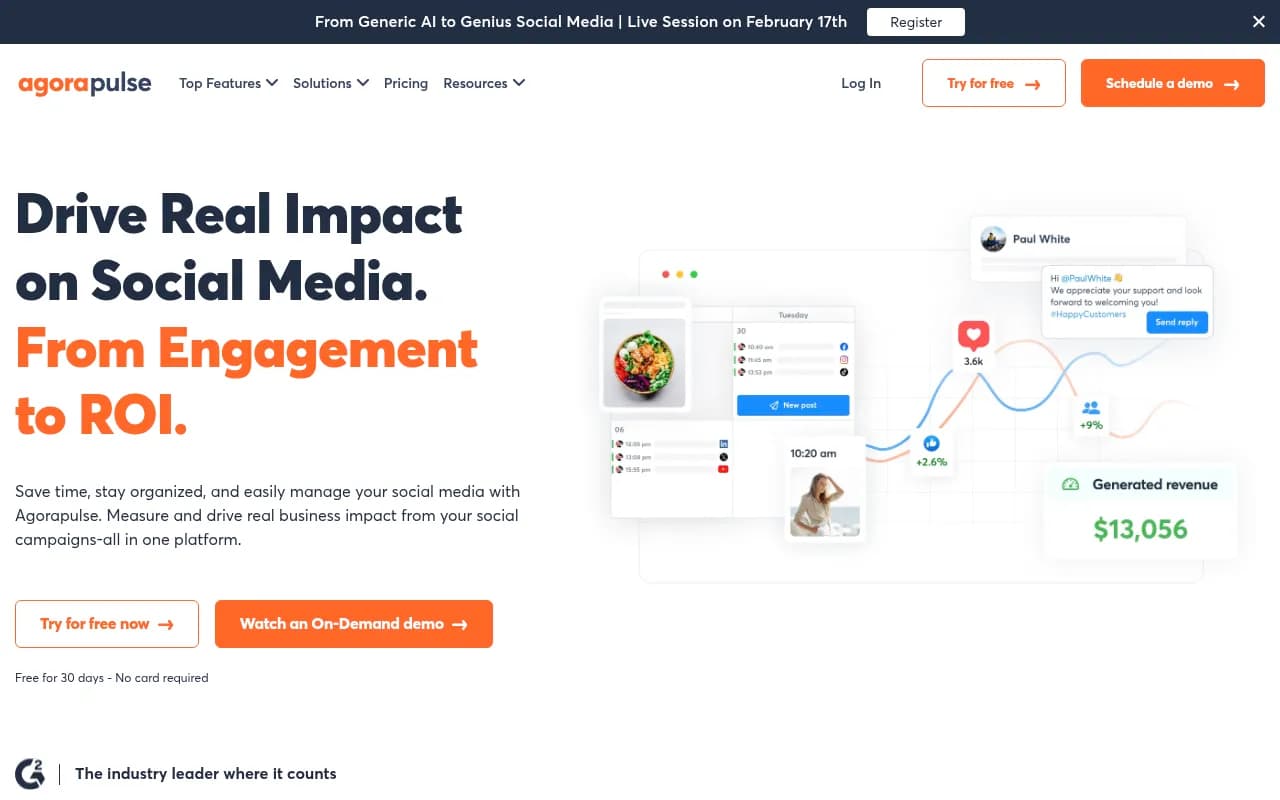
Agorapulse and similar all-in-one tools sit in the same category: unified inbox, ROI tracking, and team collaboration built in from the start, which is worth a look if you want listening and publishing combined.
Where AI fits into scheduling now
2026 added another layer: tools that don't just schedule but draft the content too. Platforms like [tool:coschedule-marketing-suite] fold calendar planning and content creation together, while newer AI-native options like [tool:predis-ai] generate captions and creative alongside the scheduling queue, and [tool:simplified] bundles design, writing, and publishing in one subscription. If your bottleneck is writing posts rather than scheduling them, this is the category to look at rather than a pure scheduler.
Comparison table: picking your model
| Approach | Cost | Team collaboration | Cross-platform calendar | Best for |
|---|---|---|---|---|
| Native schedulers (Instagram, LinkedIn, etc.) | Free | None | None | Solo creators, 1-2 channels |
| Per-seat dashboard (Sprout Social, Hootsuite) | $79-$399/seat/month | Strong, but approvals often gated to top tiers | Yes | Larger teams needing deep analytics/listening |
| Per-channel dashboard (Buffer) | $5-$12/channel/month | Unlimited seats included | Yes | Large teams, fewer accounts |
| Per-workspace dashboard (Planable) | $33+/workspace/month | Unlimited users per workspace | Yes | Agencies, multi-brand, multi-location |
How to actually decide
Start by counting two things: how many people need to touch content before it publishes, and how many accounts you're running. If it's one person and two channels, native scheduling is genuinely fine and free, don't overthink it. The moment a second person needs to approve a post, or you're running more than three accounts across different platforms, the math shifts toward a dashboard.
From there, figure out which number actually grows for you. If your headcount is going to climb but your channel count stays flat, per-seat pricing from Sprout Social or Hootsoiute will punish you over time, go per-channel with Buffer instead. If you're an agency adding new clients every quarter, per-workspace pricing from Planable scales more predictably than either. And if approvals are your main pain point, don't assume they're included, check the tier. Sprout doesn't unlock approval workflows until Professional, Hootsuite not until Advanced.
One more practical note: don't let the "third-party tools get penalized" rumor factor into your decision. The actual test data doesn't support it, and the real cost of native-only scheduling isn't algorithmic, it's the hours your team loses manually cross-checking five separate calendars that don't talk to each other. For teams that have outgrown that, the broader directory of software tools at surferstack.com is worth a browse if you want to compare scheduling platforms against adjacent categories like content creation or analytics before committing to one stack.