Key takeaways
- ChatGPT Shopping visibility isn't stable. OpenAI appears to toggle shopping-feature visibility on and off for categories, so a single snapshot tells you almost nothing. You need a weekly cadence to see the pattern.
- Track 5-10 non-branded, buyer-intent prompts per category, log which brands show up in product cards, and separate commercial prompts from branded ones. The behavior is different for each.
- Most product cards (87.3% in one large sample) are sourced from ChatGPT's web crawl, not merchant feeds, so your weekly report has to check technical visibility (structured data, crawlability) alongside the actual card results.
- Pair AI visibility data with downstream signals. Roughly 80% of people who research a purchase through AI still go check a retailer directly before buying, so a shopping report that only measures "did we appear" is missing half the story.
- You can build this with a spreadsheet and a Tuesday-morning ritual, or automate it with Zapier/n8n plus a dedicated AI visibility tool like Promptwatch. Both are covered below.
Why a weekly cadence, not a one-off audit
I get why people want to check this once and move on. It's tempting. You run a few prompts, screenshot the product cards, email it to the client, done.
The problem is that ChatGPT Shopping doesn't behave like a static search index. Promptwatch's data on shopping-feature usage shows the rate at which product cards and price comparisons appear in ChatGPT web responses moves in sharp steps rather than drifting gradually, including one stretch where it roughly doubled overnight in late May 2026 before falling back weeks later (promptwatch.com/data/chatgpt-shopping-usage). That's not organic growth. That looks like OpenAI flipping a switch for certain categories, testing something, or rolling out a feature region by region.
If you only check once, you might catch a window where shopping cards are everywhere, or a window where they're almost nowhere, and draw the wrong conclusion either way. A weekly log is the only way to tell signal from noise.
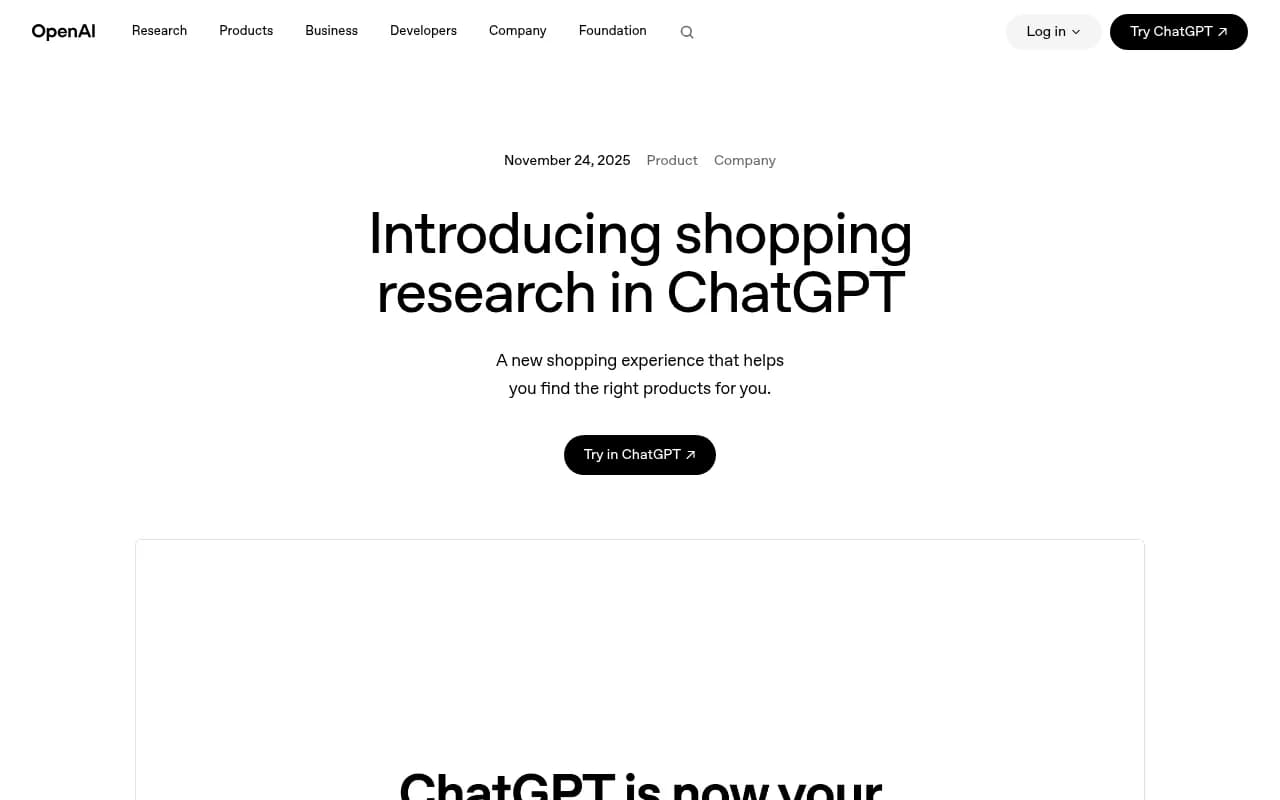
There's also a product reason to keep checking. OpenAI overhauled its shopping experience in March 2026, retiring the original Instant Checkout flow (launched with Etsy and Shopify in September 2025) because it didn't give OpenAI the flexibility it wanted with merchant onboarding, product data accuracy, and multi-item carts. The replacement, built on an expanded Agentic Commerce Protocol, leans into richer visual browsing, image-based lookalike search, and side-by-side comparison tables, and it lets merchants like Target, Sephora, and Nordstrom share product feeds directly while keeping their own checkout. Walmart launched an in-chat shopping experience the same day. None of this is settled. A report that assumes last quarter's mechanics are still true will mislead whoever reads it.
What to actually measure each week
A good weekly report has four layers. Skip any one of them and the report turns into a vanity screenshot collection.
1. Prompt coverage and shopping-feature trigger rate
Pick a fixed list of 5-10 category-level, non-branded prompts ("best noise-canceling earbuds under $150", "quietest cordless stick vacuum for an apartment") rather than prompts naming your own brand. Branded prompts tell you whether ChatGPT knows your name. Category prompts tell you whether ChatGPT thinks of you when a stranger asks for a recommendation, which is the harder and more valuable test.
For each prompt, log: did a shopping feature (product cards, comparison table, price info) appear at all? Shopping features only have a chance to show up when the response includes web search and citations, so a prompt with zero citations is a dead end, not a failure specific to your brand. Note that separately.
2. Which brands and products fill the cards
For every prompt that does return shopping cards, record every brand that appears, their position, and whatever detail is visible (price, review count, any "GPT tag" or promotional badge). One large third-party sample of 812,190 product cards found the median card count per prompt was around four, and cards with a GPT tag, higher review counts, or promotional pricing consistently outranked the rest (Profound, June 2026 analysis). If you keep losing the top slot to a competitor with more reviews, that's an actionable line in your report, not just a data point.
3. Why you did or didn't appear
This is the layer most reports skip, and it's the one that actually helps a team or client decide what to do. Two technical checks matter most:
- Structured data visibility. View the actual page source (not the browser's rendered DOM) for your product pages and confirm the
application/ld+jsonProduct/Offer schema is present in the raw HTML. If it only appears after JavaScript runs, crawlers that don't execute JS never see it, and your product silently disappears from consideration even though everything looks fine to a human visitor. - Content type mix. ChatGPT's citations for commercial, "best X for Y" style prompts skew heavily toward product pages (26%), landing pages (20.6%), listicles (15%), and comparison pages (7.9%), which together make up about 70% of what gets cited for that prompt type. If your own product pages are thin or your listicle coverage from third-party sites is weak, that's where to focus content work.
4. Downstream impact
Shopping visibility without traffic or revenue attached is a trivia fact, not a business metric. Pull whatever referral and conversion data you have for AI-driven traffic (UTM-tagged links, server logs showing known AI user agents, or a dedicated AI traffic analytics feature) and put it next to the visibility numbers. Remember that most people still validate an AI-assisted purchase decision by visiting a retailer directly, so a dip in direct AI-to-checkout traffic doesn't necessarily mean AI isn't influencing the sale.
A simple report template
Here's a structure that works whether you're sending this to your own team or a client who pays you to watch this.
| Section | What goes in it |
|---|---|
| Headline | One sentence: visibility went up, down, or flat, and why, in plain language |
| Prompt-by-prompt table | Prompt, shopping feature triggered (Y/N), your brand's position if present, top 3 competing brands |
| Week-over-week trend | A simple line or bar showing trigger rate and your share of cards over the last 4-6 weeks |
| Technical findings | Structured data issues, crawl errors, any new merchant feed or Agentic Commerce Protocol eligibility changes |
| Content gaps | Which commercial/comparison content types are missing or thin, tied to the citation mix data above |
| Downstream impact | Referral traffic and conversions attributed to AI platforms, compared to last week |
| Action items | 2-4 specific, assignable tasks, not generic advice |
Keep the headline and action items short. Everyone skims a weekly report; the detail tables are there for whoever wants to dig in, not for the first read.
Doing it manually with a spreadsheet
This is the cheapest path and honestly fine for a small brand or a single client account. Set up a Google Sheet with one tab per week. Each Tuesday morning, run your fixed prompt list in ChatGPT (ideally logged out or in a fresh session to avoid your own memory/personalization skewing results), paste in the brands and positions you see, and note any schema or crawl issues you spotted that week.
To cut down on the manual summarizing, a documented pattern that's worked for a lot of marketers: export your raw notes into a Google Sheet, then feed that sheet to ChatGPT with a prompt like "summarize this week's data into a short report, highlight wins, flag anything that dropped more than 10%, and suggest two next actions." Zapier has pre-built templates for connecting Google Sheets to ChatGPT this way, which turns a 30-minute manual write-up into a five-minute review.
For a bit more orchestration, like pulling data from multiple sources (Search Console, your CRM, a crawler log) before the summary step, n8n gives you more flexibility than Zapier's linear templates, at the cost of a steeper setup.
Automating it with dedicated AI visibility tools
Once you're tracking more than a handful of prompts, or you're doing this for multiple clients, a spreadsheet starts to creak. This is where purpose-built platforms earn their keep, because they run the prompts on a schedule, store historical data automatically, and surface the "why" behind a change instead of just the "what."
Promptwatch is the one I'd point most teams to for this specific use case, because shopping tracking in ChatGPT is only half the picture. Its ChatGPT Shopping and Ads Radar tracks product recommendations and sponsored placements directly, its crawler logs show whether ChatGPTBot and other AI crawlers are actually reading your product pages (which answers the structured-data question above without guesswork), and its prompt intelligence gives you search volume and difficulty scores for the category prompts you're tracking, so you're not picking prompts blind. It also tracks Reddit and YouTube citations, which matters for shopping specifically since Reddit threads show up constantly as a source in shopping-mode results even though its overall citation share in ChatGPT dropped sharply elsewhere.

A few other tools worth knowing about if you're building a shopping-specific or e-commerce-focused report:
| Tool | Focus | Notable for weekly shopping reports |
|---|---|---|
| Promptwatch | Full-stack AI visibility and GEO | Crawler logs, prompt volume/difficulty, Reddit/YouTube citations, shopping and ads tracking, automated content fixes |
| Profound | AI search visibility monitoring | Published detailed public research on ChatGPT Shopping's card mechanics; useful benchmark data even if you don't buy it |
| Azoma | Enterprise AI shopping optimization | Built specifically for ChatGPT, Amazon Rufus, and similar shopping assistants |
| Yotpo Discover | E-commerce product discovery | Built around product feed optimization for AI shopping surfaces |
| Scrunch / Otterly.AI / Peec.ai | Prompt tracking | Good for basic "did we get mentioned" checks, lighter on crawler and shopping-specific data |
If you want a wider comparison before picking one, the GEO software directory at bestgeosoftware.com lists most of the platforms above side by side.
Putting the report in front of your team or client
However you generate the data, the delivery matters almost as much as the content. A few things I've seen work:
- Send it the same day and time every week. Consistency builds the habit of people actually opening it.
- Lead with the one sentence that matters, then let people drill down. Nobody wants to parse a raw table before they know if the news is good or bad.
- Flag genuine step changes loudly. If shopping-feature visibility for your category doubled or halved compared to last week, say so at the top, because that's usually a platform-level change (like the ones OpenAI rolled out in March 2026), not something your team did or didn't do.
- Tie every action item to a specific page, prompt, or technical fix. "Improve AI visibility" is not an action item. "Add Product schema to the raw HTML of the top 10 category pages, verified via view-source" is.
The report itself is the easy part once you've run it a few times. The real value comes from noticing, week over week, which of your actions actually move the needle, and being honest enough to cut the ones that don't.