Key takeaways
- Multi-brand pricing varies wildly: some tools charge per domain (Semrush, Ahrefs Brand Radar), some bundle brands into agency tiers (Peec AI, Rank Prompt, Promptwatch), and a few price purely by prompt volume regardless of client count (Traqer).
- Monitoring-only tools tell you whether a brand got mentioned. Platforms like Promptwatch go further, showing why (crawler logs), where (citation and offsite tracking), and then generating content to fix the gaps.
- Don't run one global prompt list across every brand. Competitors, terminology, and even which AI engine matters most can differ brand to brand and market to market.
- Track at least three AI engines per brand (ChatGPT, Perplexity, Google AI Overviews at minimum) since visibility on one doesn't predict visibility on another.
- Agencies running 10+ client brands should budget for white-label reporting and per-client workspaces, not just prompt volume, when comparing tools.
If you're running marketing for more than one brand, or managing a roster of clients at an agency, tracking brand mentions in ChatGPT, Gemini, Perplexity, and Google's AI surfaces has quietly become as routine as rank tracking used to be. The problem is that most prompt trackers were built with a single brand in mind. Multi-brand setups expose the cracks fast: per-domain pricing that multiplies out of control, prompt sets that don't flex across markets, and reporting that was never meant to be handed to a client.
This guide walks through what actually matters when you're tracking AI visibility for several brands at once, and compares the tools that handle it well.
What a prompt tracker actually needs to do for multi-brand teams
A prompt tracker, in its simplest form, runs a list of questions through AI models and records whether and how your brand shows up. For a single brand this is straightforward. For multiple brands, a few extra requirements show up fast:
- Separate workspaces or projects per brand, so prompt sets, competitors, and reports don't bleed into each other
- Pricing that doesn't punish you for adding a fifth or tenth brand
- Coverage across several AI engines, because a brand visible on Perplexity can be invisible on ChatGPT thanks to different training data and retrieval behavior
- White-label or client-ready reporting if you're an agency
- A way to turn findings into action, rather than a dashboard full of numbers nobody has time to interpret
Aleyda Solis's prompt library guidance is blunt about the most common mistake here: using a vendor's default prompt set for every brand. A default list built around generic category terms won't reflect a specific brand's products, audience, or competitors, and it definitely won't translate across markets. If you manage brands in different countries, the same prompt that works in the US can mislead you in the UK or Germany, because competitors, currencies, and trusted sources differ by market.
How pricing actually works across brands
This is where most teams get surprised. Several well-known platforms price per domain or per brand, which sounds fine until you do the math across a client roster.
| Tool | Starting price | How multi-brand pricing works | Best fit |
|---|---|---|---|
| Promptwatch | $95/mo (Essential) | Sites/projects scale by tier (1 site Essential, 2 Professional, 5 Business); dedicated agency tiers with unlimited projects and prompts | Agencies and teams wanting monitoring plus content execution |
| Profound | $99/mo (Starter) | Per-brand subscriptions; Enterprise tier explicitly supports multiple companies | Agencies willing to negotiate custom enterprise pricing at scale |
| Peec AI | ~$85-95/mo per brand, or agency plans from €205/mo | Agency plans include unlimited client seats and multiple sub-brands per account | Agencies wanting unlimited seats without per-user fees |
| Otterly.AI | $29/mo (Lite) | Agency Partner program adds unlimited client workspaces and consolidated billing | Budget-conscious agencies needing basic coverage |
| Semrush AI Visibility Toolkit | $99/mo per domain | Each additional domain and each additional seat costs another $99/mo | Teams already inside the Semrush ecosystem with few brands |
| Ahrefs Brand Radar | $199/mo per platform or $699/mo for all platforms | Priced per domain, so costs multiply fast across brands | Single-brand teams already on Ahrefs |
| Rank Prompt | $149/mo (Agency) | Flat fee covers up to 500 brands on Agency tier, 1,000 on Agency Plus | Agencies with a large number of smaller client brands |
| Traqer | $25/mo | Priced by prompt/topic volume only; adding a client doesn't raise the price unless prompts increase | Agencies that want pricing untethered from client count |
The math gets ugly quickly with per-domain pricing. One analysis of Profound's agency economics found that a boutique agency running a Growth subscription per client brand hits roughly $48,000 a year at 10 clients, at which point negotiating a custom enterprise deal becomes the only sane option. Semrush follows a similar pattern: five client domains on the AI Visibility Toolkit runs close to $495/month before you've added extra seats or prompts.
Traqer takes the opposite approach, pricing purely by prompt or topic volume so that adding a tenth client doesn't change your bill unless you're also adding prompts. It's a useful model to understand even if you don't end up choosing the tool, because it reframes the question agencies should be asking vendors: are we paying for brands, or for the actual tracking volume we need?
The tools worth evaluating
Promptwatch
Promptwatch is built around a different premise than most trackers on this list: instead of just telling you a brand got mentioned, it explains why (through AI crawler logs showing exactly when ChatGPTBot, ClaudeBot, PerplexityBot and 400+ other bots visited your pages), where (citation analytics covering Reddit, YouTube, and offsite mentions even without a link back), and what to do about it (Content Agents that write and publish GEO-optimized content directly to your CMS).
For multi-brand teams specifically, Promptwatch's own positioning calls it out as a fit for agencies managing AI Search across multiple client brands, with per-site tiers that scale from 1 site on Essential ($95/mo) up to 5 sites on Business ($579/mo), plus dedicated agency plans with unlimited projects and prompts starting at $199/mo. It's used by over 1,840 brands and agencies, including names like Monks, Yelp, and Duolingo, and rates 4.7/5 on G2.

What separates it from the pure trackers below is the action layer. Peec AI and Otterly.AI will tell you your visibility score dropped. Promptwatch's Unified Actions turns that into a prioritized to-do list, and its content gap analysis can generate a brief, complete with search results, internal linking suggestions, and a visibility coverage score, before a human ever opens a doc. For a team managing content across five brands, that execution layer matters as much as the tracking does.
Profound
Profound has raised serious money ($96M Series C in early 2026 at a $1B valuation) and its Enterprise tier explicitly supports multiple companies under one account, with SSO, SOC2, and dedicated support. Its Agency Mode adds per-client workspaces and "pitch environments" so sales teams can show prospects a live AI visibility audit before signing a contract. The catch is cost: Semrush's own comparison pegs the effective agency minimum around $498/month, and per-brand Growth subscriptions add up fast across a client roster.

Peec AI
Peec AI's agency plans are worth a close look if seat count is your bottleneck. Every plan, including the entry Essential tier at €205/mo, includes unlimited client seats with no per-user fee, which is unusual in this category. Its FAQ confirms direct sub-brand support: you can set up and monitor multiple sub-brands within a single account, each getting its own visibility tracking. The tradeoff is that extra AI models beyond the included three cost €30-140/month per model per tier, so a lean Starter plan can balloon once you add Claude, Grok, or DeepSeek tracking.

Otterly.AI
Otterly is the budget option that still covers the basics well: ChatGPT, Google AI Overviews, Perplexity, and Microsoft Copilot come included at every tier, with unlimited team members. Its Agency Partner program bumps prompt caps, unlocks unlimited client workspaces, and consolidates invoicing across clients into one bill, which simplifies finance for small agencies. Gemini, Claude, and Google AI Mode are paid add-ons though, so check which engines your brands actually need visibility on before assuming the base price covers everything.

Rank Prompt
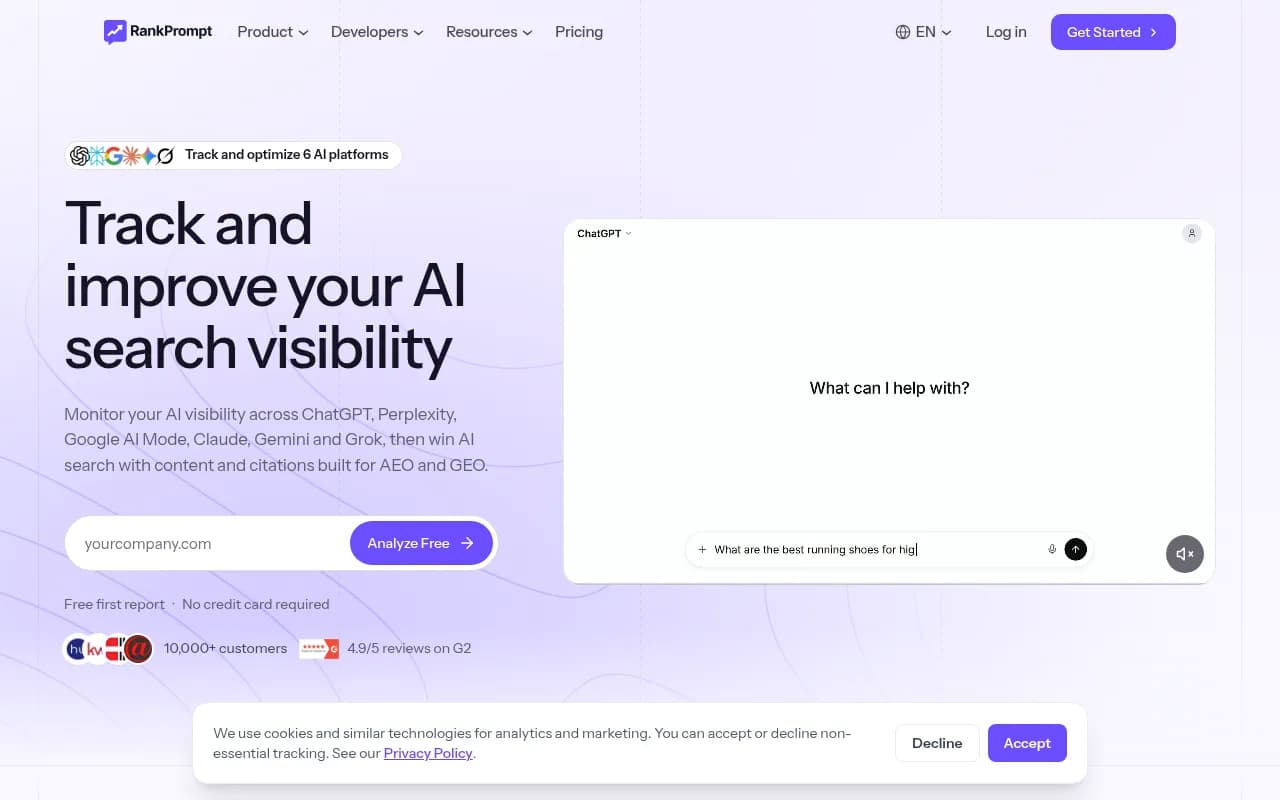
Rank Prompt leans hard into the agency use case with flat-fee plans: $149/mo covers up to 500 brands with white-label reports and a client portal, and $299/mo stretches to 1,000 brands with a full agency dashboard hosted on your own domain. If you're running a high volume of smaller client accounts rather than a handful of large ones, this flat structure avoids the per-domain math problem entirely.
SE Visible (SE Ranking)
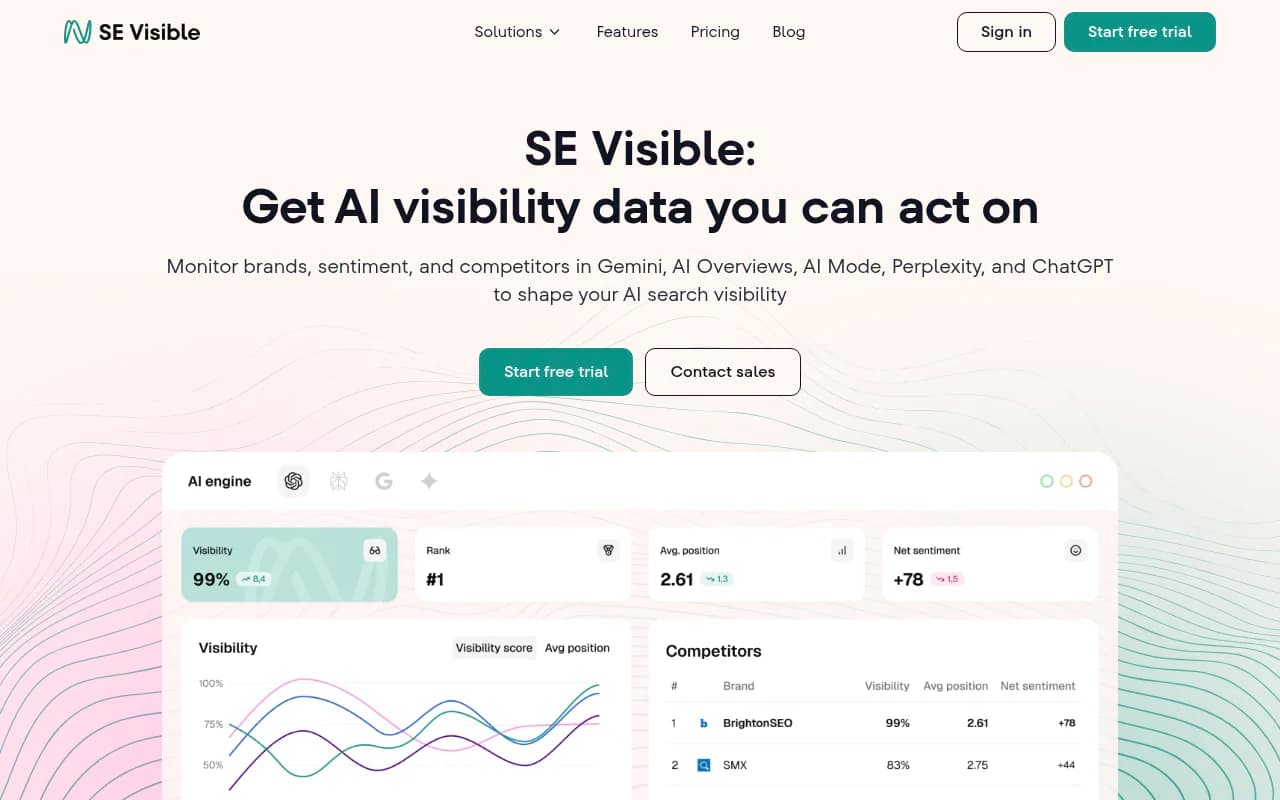
SE Visible gets flagged in several agency comparisons for having multi-brand support built into every tier, starting around $189/month, which is lower than most comparable agency-oriented platforms. It's a reasonable middle ground if your team already uses SE Ranking's broader SEO toolset and wants AI visibility folded into the same login.
Scrunch AI and Ahrefs Brand Radar
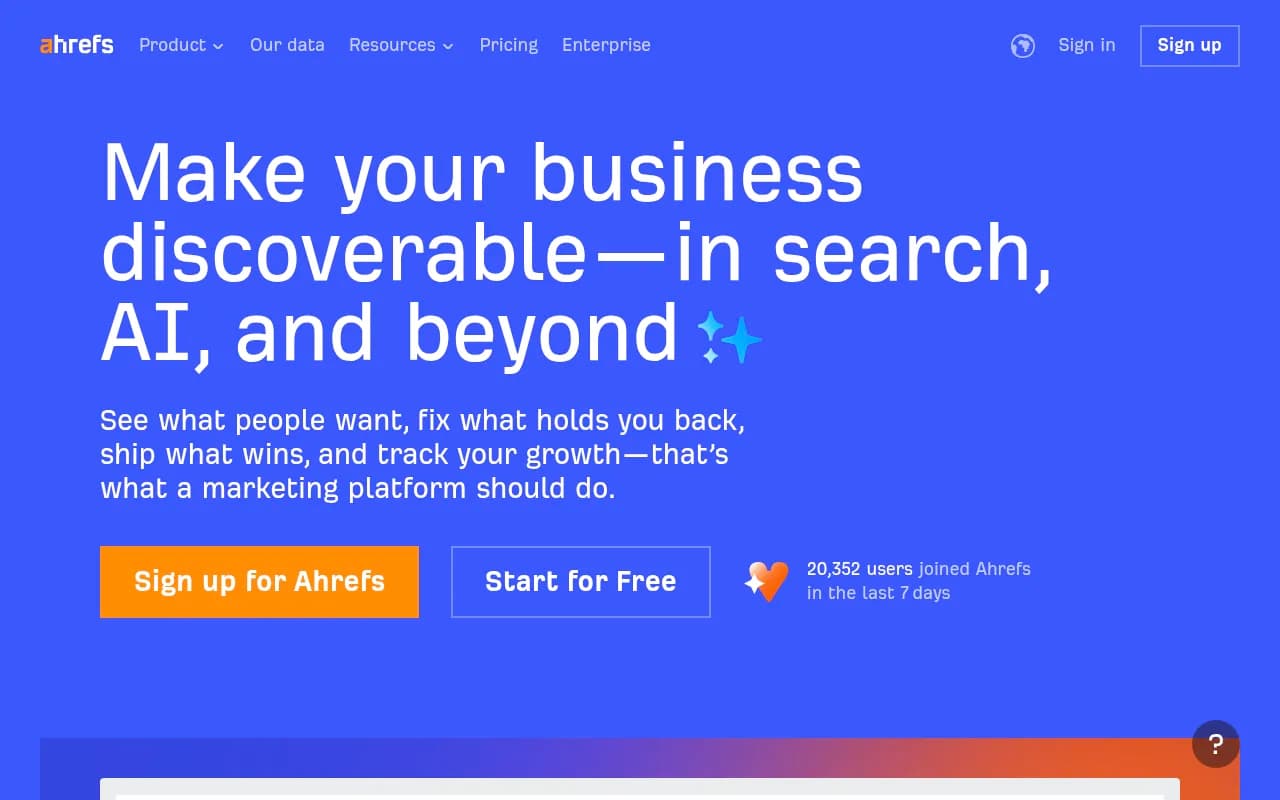
Both are worth naming, with caveats. Scrunch starts around $250-300/month and is oriented more toward in-house brand teams than agencies managing several clients, so verify per-brand pricing before standardizing on it across a roster. Ahrefs Brand Radar was free during its beta across all Ahrefs plans but has signaled it's moving to paid add-on pricing of $199/month per platform or $699/month for the full bundle, stacked on top of base Ahrefs plans. Reviewers have also flagged that Brand Radar's prompts are largely keyword-derived rather than pulled from real AI conversations, and most engines only refresh monthly.
Pitfalls specific to multi-brand tracking
A few mistakes show up repeatedly when teams scale a prompt tracker from one brand to several, and they're worth calling out directly.
Don't blend platforms into one score. A brand can rank visible on Perplexity and be completely absent from ChatGPT, since each pulls from different data sources and retrieval logic. Reporting a single blended "AI visibility %" across brands hides which engine actually needs the work.
Don't treat individual prompts like stable keyword rankings. Traqer's critique of the category is fair: repeated queries to the same LLM produce different responses run to run, so tracking a single prompt's "position" the way you'd track a Google ranking is methodologically shaky. Tracking topic clusters and watching for patterns across a group of related prompts is more defensible, and it also means deleting a low-performing prompt to inflate your average isn't quietly gaming the numbers.
Don't reuse one prompt library across every brand or market. Competitors, terminology, and trust signals shift by country and language, so a prompt set that's representative for your US brand can actively mislead you for the same brand's UK or German presence.
Don't track fewer than three engines. Visiblie's analysis of what hurts AI visibility recommends a minimum of ChatGPT, Perplexity, and Gemini, precisely because visibility varies that much between them.
And don't collect a prompt you can't act on. If a tracked prompt's result doesn't help you diagnose a problem, prioritize a fix, or validate a change, it's probably just noise in the dashboard.
A quick checklist before you commit
Before signing a contract across a multi-brand or multi-client setup, run the tool through these questions, adapted from how agencies evaluate Profound internally:
- Does pricing scale by brand, by prompt volume, or by seat, and which model actually fits how your roster grows?
- Are prompts sourced from real AI conversations, or inferred from keyword data?
- Does the tool stop at monitoring, or does it also help you produce the content that closes the gap?
- Can you get clean, white-label exports if you need to hand reports to a client or a CMO?
- Does it cover the engines your specific audience actually uses, not just the big three?
If your evaluation keeps circling back to "this tells us we're invisible but not why," that's usually the signal to look at platforms with crawler log analysis and content generation built in rather than a pure tracker. For teams exploring the wider category, the GEO software directory at bestgeosoftware.com and the AI rank tracking directory at ai-rank-tools.com are both useful starting points for comparing additional options beyond what's covered here.
For marketing leaders specifically wrestling with how to get AI-cited content built and published across several brands rather than just measured, it's also worth reading how 1001 SEO Media approaches this as a combined technical SEO and GEO engagement, since tracking and content production tend to be more effective handled together than split across two vendors.