Key takeaways
- AI Overviews and traditional organic rankings are two different signals that happen to live on the same SERP. Merging them into one report only works if you keep them labeled separately.
- Google AI Overviews cite about 10 sources per answer on average, while ChatGPT cites roughly 5, which changes how you should interpret a "top 3" result across engines (Promptwatch's data on sources per response).
- A common and serious reporting mistake: some rank trackers record an AI Overview citation as a flat "#1" ranking, even when the same page sits at #5 or #10 in the organic results underneath it. Treat citation presence and organic position as separate columns, not one blended metric.
- Google itself started shipping dedicated AI performance reports inside Search Console in June 2026, but the rollout is still partial, so third-party tools still matter for complete coverage.
- Tools like Keyword.com, SE Ranking, Semrush, and Ahrefs Brand Radar now bolt AI tracking onto classic rank tracking, while specialized platforms like Promptwatch go further by connecting citation data to crawler logs and content production.
Why you can't just add an "AI Overview column" to your old spreadsheet
For about fifteen years, rank tracking meant one number per keyword per day: position 1 through 100, maybe with a little flag for featured snippets. Then Google started stitching together AI-generated answers above the blue links, and that one clean number stopped telling the whole story.
Here's the thing that trips up a lot of SEO teams: an AI Overview isn't a position in the index. It's a citation layer sitting on top of the index. Your page can rank #1 organically and be completely absent from the AI Overview answering that exact same query. It can also show up inside an AI Overview while ranking #7 organically, because Google's generative layer pulled from a paragraph deep in your content that happens to answer the question well, regardless of your overall page authority for that keyword.
This is the trap Semrush's own documentation flags directly: in Position Tracking, when your domain is cited inside an AI Overview, the tool logs it as a #1 ranking, no matter where the page sits in the organic results below. If you're not using the SERP-features toggle to separate the two, your "combined" report is quietly lying to you about where you actually stand.
The practitioners writing about this in 2026 keep repeating some version of the same line: AI Overviews are a citation layer, not a ranking position. I'd go further. I think the instinct to want "one number" is understandable, everyone wants a tidy KPI, but it's the wrong goal here. The right goal is one report with two clearly labeled metrics that you can view together or apart.
What actually differs between the two tracking workflows
Before building a combined report, it helps to understand why the underlying data behaves so differently.
Citation inventory size
Traditional organic SERPs give you ten blue link slots. AI Overviews cite roughly 10 sources per answer too, and that number has stayed fairly stable over time, according to Promptwatch's data on average sources per response. ChatGPT, by contrast, cites only around 5 sources per web-search answer, roughly half the inventory. Perplexity sits close to 10 with very little variance, while Microsoft Copilot has swung wildly, from under 2 to nearly 17 citations in a matter of weeks, suggesting Google's AI Overview behavior is comparatively settled next to some competitors.
That matters for reporting because "share of voice" math looks completely different depending on the denominator. A 1-in-10 citation in an AI Overview is a meaningful slice. A 1-in-5 citation in ChatGPT is an even bigger one, but the contested slots are scarcer.
No fixed position, no deterministic rank
AI Overviews, and especially Google's conversational AI Mode, don't hand back a ranked list the way a traditional SERP does. AI Mode has no public API for rank tracking at all, which means any tool claiming to "track your AI Mode rank" is really sampling presence across repeated checks and inferring a trend, not reading a true position. The same query can surface an AI Overview for one user and skip it entirely for another, depending on device, location, and search history. Rank trackers typically run clean queries with no personalization baked in, which is part of why your tracked numbers drift from what an actual logged-in user sees.
Keyword-based tracking misses what the AI actually searched for
This is the part most legacy rank trackers get wrong by design. ChatGPT doesn't run your target keyword verbatim, it fans a single prompt out into several separate web searches, anywhere from 3 to 8+ per response historically, though Promptwatch's query fan-out data shows this settled closer to around 1 search per response by spring 2026 before jumping again in August when ChatGPT started using the site: operator at scale, pushing that figure back up and roughly doubling searches-per-response overnight. Average query length also dropped from around 117 characters to about 53 characters over the same stretch, meaning the internal queries increasingly look like short keyword fragments rather than full questions. If your rank tracker is still only checking the literal keyword you typed into it, you're monitoring the wrong query entirely for a growing share of AI search traffic.
Domain authority isn't the whole story anymore
Traditional rank tracking trains you to think of authority as a straight line: higher DR, higher rank. AI citations don't follow that line as cleanly. Promptwatch's citation-share-by-domain-rank data from August 2026 found mid-authority domains (DR 46-75) capturing nearly half of all ChatGPT citations, while the very top tier, DR 91-100, actually fell from about 7% of citations early in the month to roughly 3% by August 14, ending the month behind even DR 0-15 sites. If your combined report only tracks position and domain authority, you'll miss why a mid-tier competitor keeps showing up in AI answers where you don't.
Building the combined report: a practical structure
The goal is one dashboard, two parallel tracks that share the same keyword list and the same time axis, but never get averaged into a single meaningless blend.
Step 1: Pick a shared keyword/prompt list
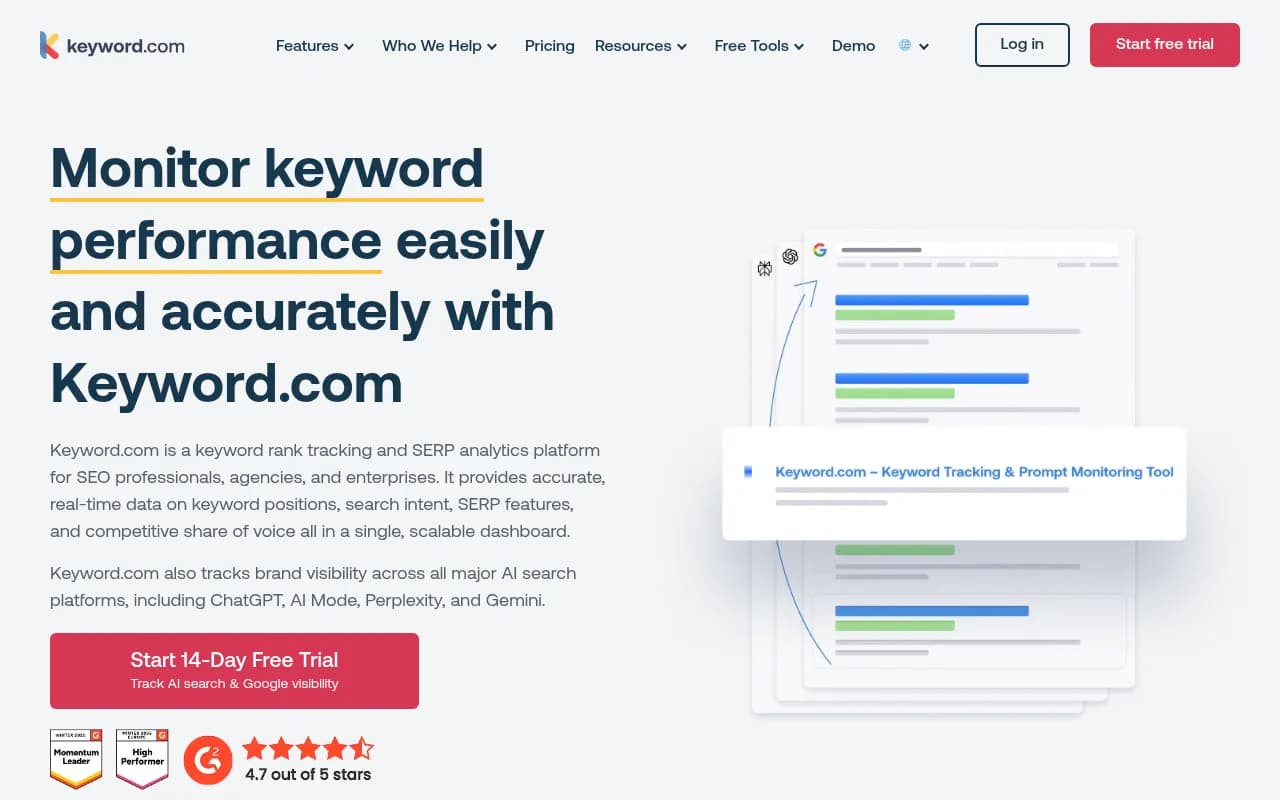
Start from your existing tracked keyword set, then expand it. Traditional rank tracking tools monitor exact-match keywords. AI tracking needs to cover the conversational variants and sub-queries that actually trigger an AI Overview or get fanned out by ChatGPT. Tools like Keyword.com now support AI mode tracking natively, letting you keep one keyword list that feeds both the classic SERP view and the AI-presence view.
Step 2: Track organic position and AI citation presence as separate fields
For every tracked query, log at minimum:
- Organic position (the traditional 1-100 rank)
- Whether an AI Overview appeared at all for that query (presence is not guaranteed)
- Whether your domain was cited inside it, and at which position within the citation list if the tool exposes that
- The exact URL that got cited, since it's frequently not your top-ranking page
Authoritas built one of the first Looker Studio templates doing exactly this, pairing an "AIO Success Rate" (keywords ranking in AI Overviews divided by total keywords where an AI Overview appeared) against a parallel organic performance score, then summing both into a single Combined Ranking Performance Score for a top-line view, while keeping the underlying metrics separate and filterable. Their own example calls out Reddit as a domain that performs well organically but inconsistently inside AI Overviews for the same keyword set, exactly the kind of divergence a blended single-number report would hide.
Step 3: Add a content-type lens
Content format shifted meaningfully in mid-2026. In July, Google AI Overviews' most-cited format flipped from listicles to product pages, which ended the month at 17.9% share versus 16.2% for listicles, continuing a trend that saw product-page citations nearly double since January. If you're reporting rank and citation data without also tagging the content type of the cited page, you'll miss that a product page update, not a blog refresh, might be what's moving your AI visibility.
Step 4: Pull in Search Console, carefully
Google launched dedicated Search Generative AI performance reports inside Search Console in June 2026, exposing impressions, cited pages, countries, devices, and date-based breakdowns for AI Overviews, AI Mode, and generative Discover features. It's a genuinely useful first-party signal, but as of launch it was only rolled out to a subset of sites for testing, so don't build your entire combined report around it yet. GSC also still can't filter AI Mode out from overall Search stats cleanly in every view, and it only shows your own site, with zero competitor context, which is exactly where a dedicated tracker earns its keep.
Comparing the tools that actually do this
Here's how the main options stack up if you're trying to replace a spreadsheet with something that tracks both workflows in one place.
| Tool | Combines organic + AI tracking? | AI engines covered | Starting price | Best for |
|---|---|---|---|---|
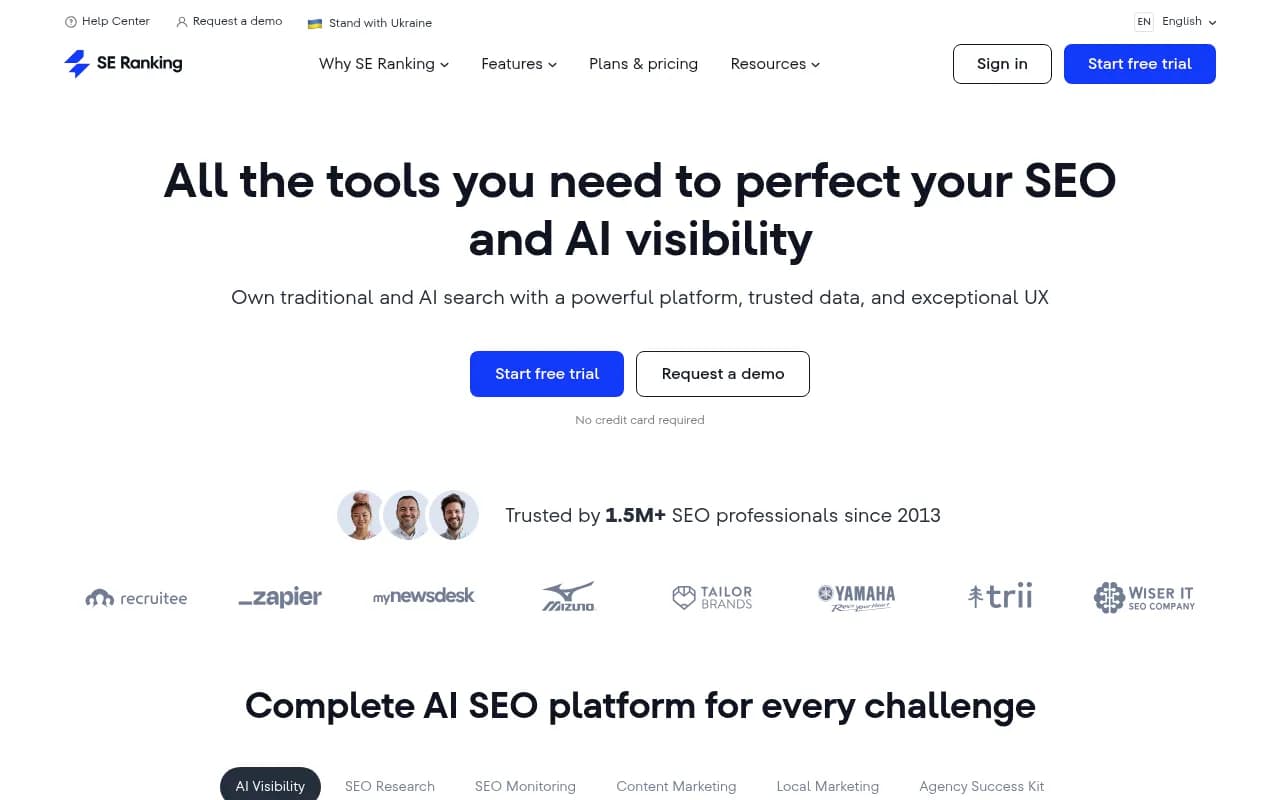
| SE Ranking | Yes, native | AI Overviews, AI Mode, ChatGPT, others | ~$103/mo (Core) | Teams wanting AI tracking bundled into an existing SEO suite |
| Semrush | Yes, via Position Tracking toggle | AI Overviews (Position Tracking); separate AI Visibility Toolkit for ChatGPT/Gemini/Perplexity | ~$99/mo (AI Visibility Toolkit, standalone) | Agencies already on Semrush who need the SERP-features toggle |
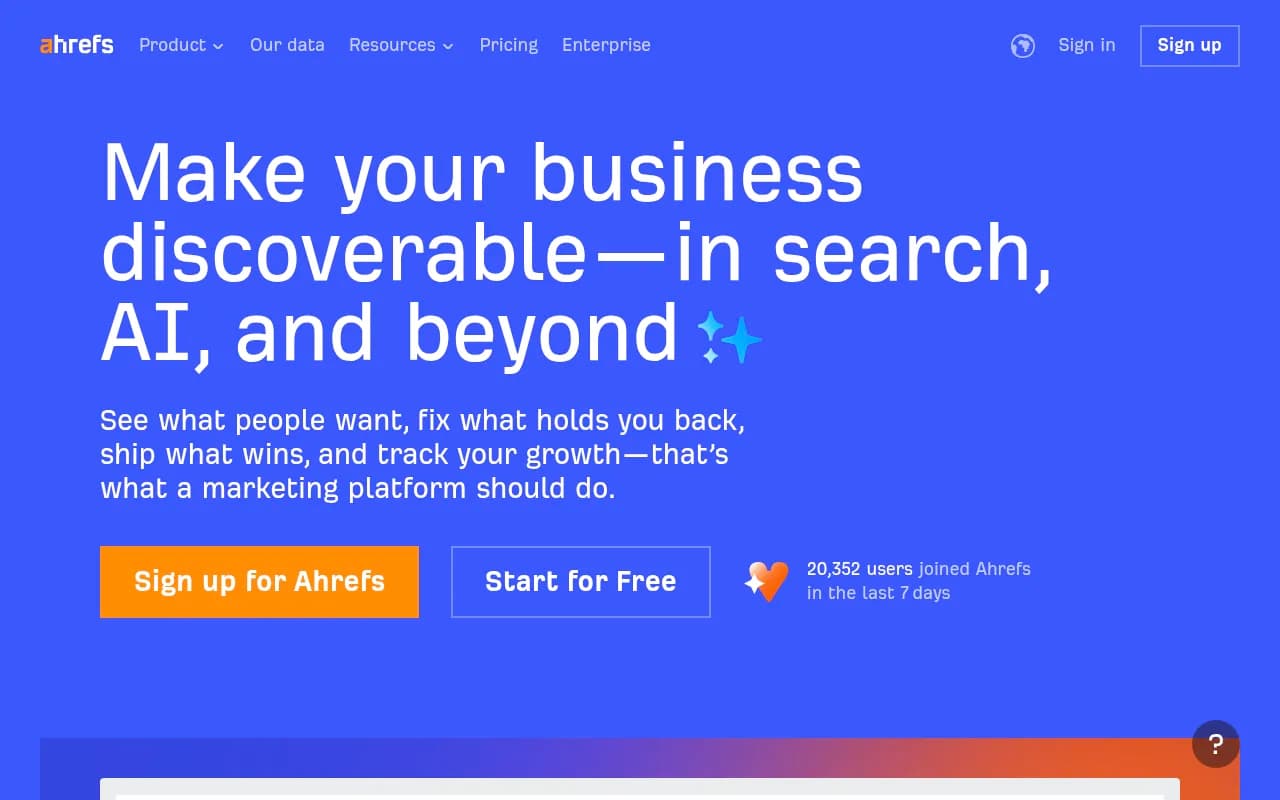
| Ahrefs Brand Radar | Partially, separate module | AI Overviews, AI Mode, Gemini, others (priced per engine) | $50/mo (existing customers) up to $699/mo (all engines) | Ahrefs users who want citation tracking without switching platforms |
| Otterly.AI | AI-focused, not organic | ChatGPT, AI Overviews, Perplexity, Copilot (Gemini/Claude extra) | $29/mo (Lite) | Lean teams tracking AI presence specifically, with a free Looker Studio connector |
| Keyword.com | Yes, native | AI Mode plus traditional SERPs | Contact for pricing | Teams wanting one keyword list driving both workflows |
| Promptwatch | AI-first, pairs with your existing rank tracker | ChatGPT, Gemini, Claude, Perplexity, Grok, AI Overviews, AI Mode, and more | $95/mo (Essential) | Teams that want citation data turned directly into content fixes, not just a dashboard |

Where a dedicated GEO platform earns its place in the stack
Most of the tools above are rank trackers that bolted on an AI module, which is fine for a dashboard but doesn't tell you why a competitor is winning citations you're not. If your combined report is showing a gap, say, you rank #3 organically but never get cited in the AI Overview for the same query, you need something that explains the "why": which pages AI crawlers are actually reading, which content type is winning that query's citations, and what to publish to close the gap.
That's the piece Promptwatch adds to the picture. It monitors ChatGPT, Gemini, Claude, Perplexity, Grok, and Google's AI Overviews and AI Mode directly through the live interfaces, not just API approximations, and layers in crawler logs so you can see exactly when AI bots visited a page and whether they hit an error before a citation ever happened. It's not trying to replace your traditional rank tracker; it's meant to run alongside it and feed the AI half of the combined report with data that explains movement instead of just logging it.

If you're evaluating the wider category of AI visibility tools to pair with your rank tracker, the GEO software directory at bestgeosoftware.com is a reasonable place to browse what else is out there before committing.
A few practical warnings before you ship the report
Don't average citation presence into your average position metric. It will make your numbers look better than reality in months where AI Overviews simply appear less often, and worse in months where they appear more, regardless of whether your actual visibility changed.
Don't assume your top-ranking page is the page getting cited. Tools that extract the exact cited URL consistently find mismatches between the organically top-ranked page and the one AI pulls into its answer. If your combined report only tracks the keyword, not the URL, you'll optimize the wrong page.
Don't treat a single AI Overview check as a rank. Because AI Overview presence varies by device, location, and personalization, a one-time snapshot is closer to a coin flip than a measurement. Track the trend across repeated checks over weeks, the same way you'd treat any noisy signal, rather than reacting to a single day's result.
Finally, keep revisiting your keyword list against actual query fan-out behavior. ChatGPT and AI Overviews are both expanding and contracting how many searches they run per answer as the models evolve, most recently with ChatGPT's jump to site:-operator-driven fanouts in August 2026. A keyword list frozen from early 2026 is already missing query patterns these engines are using today.
If building and maintaining all of this in-house sounds like more than your team has bandwidth for, that's also the kind of problem an agency specializing in both technical SEO and GEO, like 1001 SEO Media, is built to take off your plate, from setting up the tracking infrastructure to acting on what it finds.