Key takeaways
- Most AI visibility tools are monitoring dashboards -- they show you where you're invisible but give you no path to fix it.
- The core problem is the "action gap": data without direction. You see your brand isn't showing up in ChatGPT or Perplexity, but the tool doesn't tell you why or what to create.
- A small number of platforms in 2026 have moved beyond tracking into optimization -- gap analysis, content generation, and traffic attribution in one loop.
- The tools that can actually tell you what to do next combine prompt intelligence, citation analysis, and content creation capabilities.
- If you're evaluating tools, the right question isn't "does it track AI mentions?" -- it's "does it tell me what to do after I see the data?"
The dashboard problem nobody talks about
There's a pattern that plays out constantly in marketing teams right now. Someone installs an AI visibility tool, gets access to a dashboard full of charts, stares at it for a while, and then... keeps doing the same things they were doing before. The data is there. The stress is higher. The clarity is the same.
One marketer put it plainly in a Reddit thread: "it's super easy to get stuck in this loop: install a tool → stare at charts → feel more stressed → still don't know what to do next."
That's not a user problem. That's a product design problem. And it's the defining issue with the current generation of AI visibility tools.
The category exploded fast. ChatGPT hit 100 million users in two months, Perplexity grew from a niche research tool to a mainstream search alternative, and suddenly every brand needed to know: are we showing up in AI answers? A wave of tools rushed to answer that question. Most of them answered it well. What they didn't answer was the follow-up: so what do I do about it?
Why tracking AI mentions is harder than it looks
Before getting into which tools actually help, it's worth being honest about the technical reality here. AI responses aren't static. Ask ChatGPT the same question twice and you might get two different answers with different sources cited. The responses vary by model version, by user location, by how the question is phrased, by the time of day.
This is a real limitation. Some tools in the market are selling certainty they can't actually deliver -- claiming to track "your brand's presence across all AI models" in ways that don't account for how probabilistic these systems are. The honest answer is that any AI visibility tool is working with samples and approximations, not exhaustive real-time monitoring. The better tools are transparent about this. The worse ones aren't.
That said, sampled data is still useful data. You don't need to capture every AI response to identify patterns -- which prompts your competitors appear in, which topics your site is never cited for, which AI models seem to favor your domain. The question is what you do with those patterns.
The action gap: what it actually costs you
Here's the thing about monitoring-only tools: they're not useless. Knowing you have a visibility problem is better than not knowing. But there's a real cost to stopping there.
Every day your competitors' content gets indexed and cited by AI models while yours doesn't, the gap widens. AI models learn citation patterns -- they tend to cite sources that have already been cited. If a competitor has established itself as the go-to source for a category of questions, displacing them gets harder over time, not easier.
The action gap -- the space between "I can see I'm invisible" and "I know what to create to fix it" -- is where most teams are stuck right now. They have dashboards. They have scores. They don't have a content brief.
How to tell a monitoring tool from an optimization platform
When evaluating any AI visibility tool, there are a few questions worth asking:
Does it show you which specific prompts you're losing? Not just a visibility score, but the actual questions where competitors appear and you don't. This is the difference between "your AI visibility is 34%" and "here are 47 prompts where Competitor X is cited and you're not."
Does it tell you why you're not appearing? The most useful tools connect your absence to something actionable -- missing content, thin coverage of a topic, no authoritative page on a subject the AI keeps getting asked about.
Does it help you create the content to fix it? This is where most tools stop. A handful go further and generate content briefs or full articles based on the gap analysis -- content that's actually engineered to get cited, not just generic SEO filler.
Can you connect visibility to revenue? Seeing your AI citation score go up is satisfying. Knowing it drove 400 more visitors who converted is what gets budget approved.
The tools that can actually tell you what to do next
Promptwatch
Promptwatch is the clearest example of a platform built around the full optimization loop rather than just monitoring. The core workflow is: find gaps, create content, track results.
The Answer Gap Analysis shows you exactly which prompts competitors are visible for that you're not -- not as a vague score but as specific questions with prompt volume data attached. You can see which topics your site is missing coverage on and why AI models aren't citing you.
From there, the built-in AI writing agent generates content grounded in citation data from over 880 million citations analyzed. It's not producing generic articles -- it's producing content calibrated to the specific questions AI models are being asked, with competitor analysis and persona targeting built in.
The traffic attribution side closes the loop: a code snippet, Google Search Console integration, or server log analysis connects your AI visibility improvements to actual site traffic and conversions. The AI Crawler Logs feature is particularly useful -- it shows you in real time which pages ChatGPT, Claude, and Perplexity are actually crawling, and flags errors that might be preventing your content from being discovered.

Profound
Profound has a strong feature set for brands that want serious monitoring depth. It covers multiple AI models and gives good competitive benchmarking. The pricing is higher than most alternatives, and it doesn't have the content generation capabilities that Promptwatch does, but if you're a larger brand that wants detailed analytics and can handle the content creation side separately, it's worth a look.

AthenaHQ
AthenaHQ covers 8+ AI search engines and does a solid job of tracking brand visibility and competitive positioning. It's more monitoring-focused -- the optimization side is limited compared to platforms that include content generation -- but the tracking itself is well-built.

Ranksmith
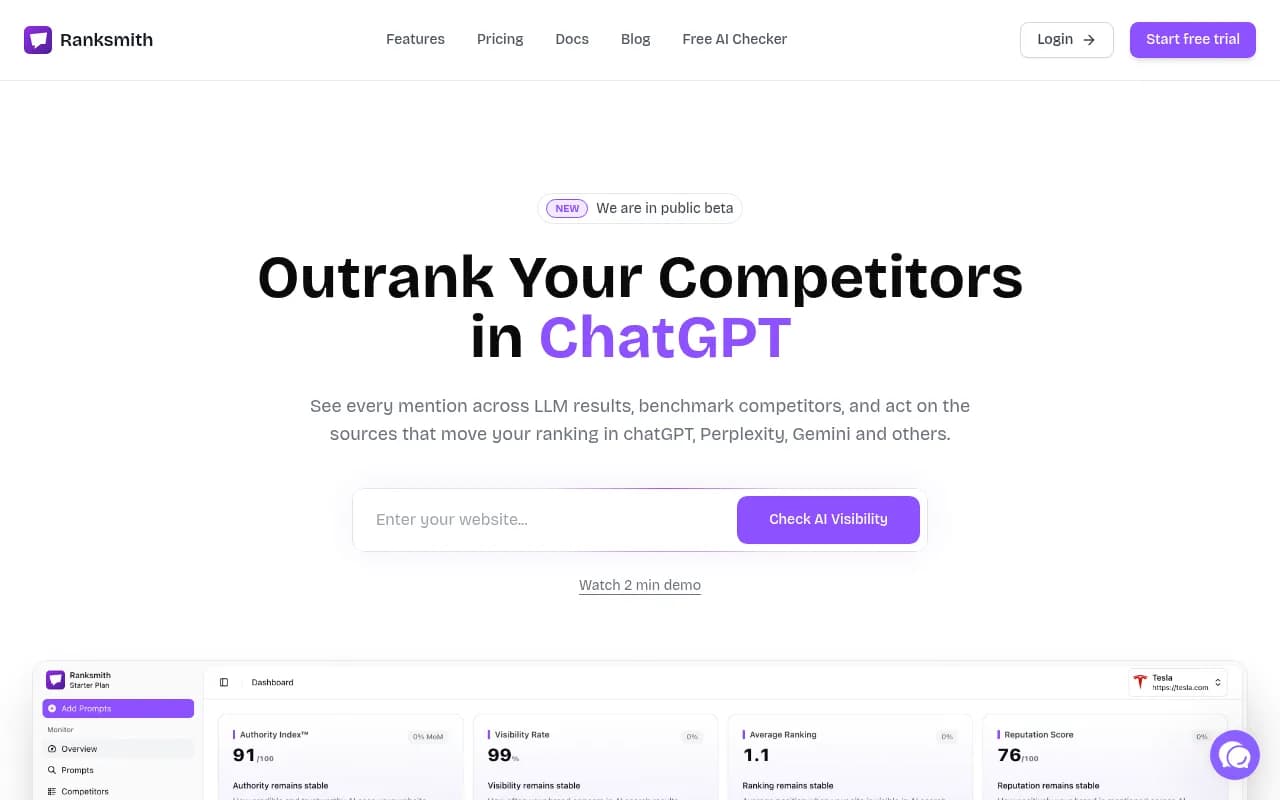
Ranksmith positions itself around actionable insights rather than just raw data, which puts it closer to the optimization end of the spectrum. It's worth evaluating if you want something that tries to translate visibility data into recommendations.
Otterly.AI
Otterly.AI is one of the more affordable monitoring options and is genuinely useful for teams that just need to start tracking AI visibility without a big budget. The limitation is that it stays in monitoring territory -- no content gap analysis, no content generation, no traffic attribution. Good for awareness, not for optimization.

Peec AI
Peec AI handles multi-language tracking well, which makes it relevant for international brands. Like Otterly, it's primarily a monitoring tool, but the language coverage is a real differentiator for teams operating across markets.

Relixir
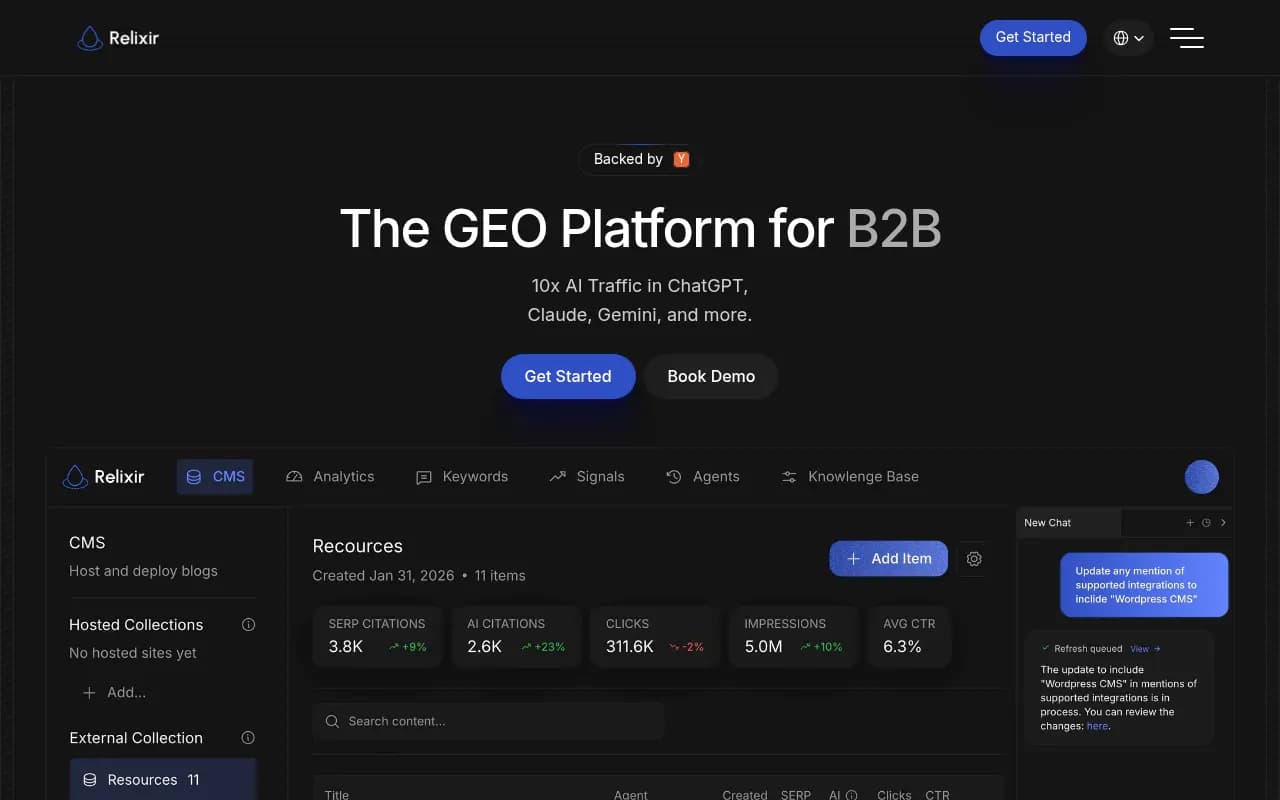
Relixir takes an interesting approach with its AI-native CMS and autonomous content optimization. It's one of the more aggressive "action-oriented" platforms in the market and worth watching, particularly for teams that want automated content workflows.
Whitebox
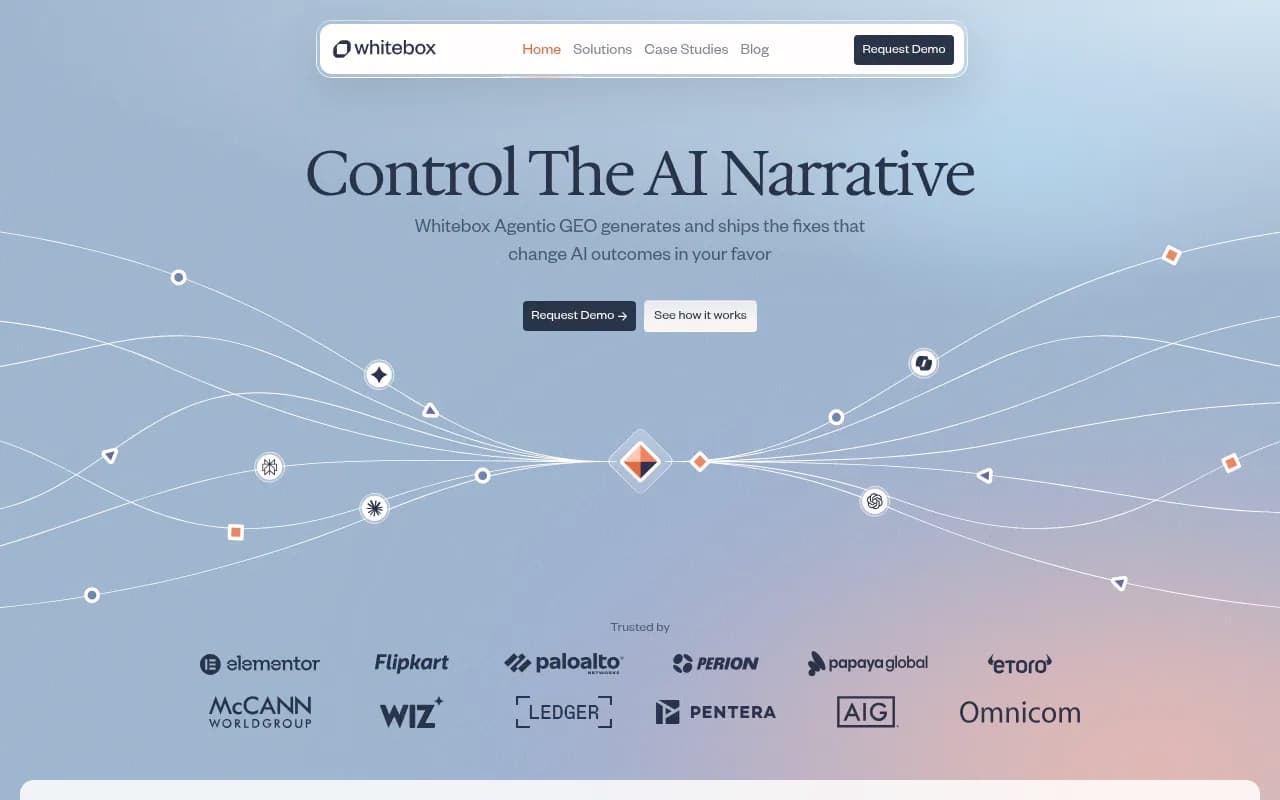
Whitebox describes itself as an agentic GEO platform -- it doesn't just flag gaps, it generates and ships fixes automatically. That's an ambitious claim and the platform is relatively new, but the direction is right. If you want maximum automation in your GEO workflow, it's worth evaluating.
How the tools compare
Here's a direct comparison across the dimensions that actually matter for teams trying to move from monitoring to optimization:
| Tool | AI models tracked | Prompt gap analysis | Content generation | Traffic attribution | AI crawler logs | Price range |
|---|---|---|---|---|---|---|
| Promptwatch | 10+ | Yes | Yes (AI writing agent) | Yes (GSC, snippet, logs) | Yes | $99-$579/mo |
| Profound | Multiple | Partial | No | No | No | Higher |
| AthenaHQ | 8+ | Limited | No | No | No | Mid |
| Ranksmith | Multiple | Yes | Limited | No | No | Mid |
| Otterly.AI | Multiple | No | No | No | No | Low |
| Peec AI | Multiple | No | No | No | No | Low-mid |
| Relixir | Multiple | Yes | Yes (automated) | Limited | No | Mid-high |
| Whitebox | Multiple | Yes | Yes (agentic) | No | No | Mid |
The pattern is clear. Most tools cluster in the monitoring column. The ones that extend into gap analysis and content generation are a much shorter list.
What "winning visibility" actually requires in 2026
AI search has moved past the point where just having a website is enough. According to Search Engine Land's roundup of SEO predictions for 2026, AI search now handles discovery, decisioning, and in some cases transactions. The implication for brands is that being cited by AI models isn't a nice-to-have metric -- it's increasingly where the top of the funnel lives.
What that means practically:
Content coverage matters more than content quality alone. AI models cite sources that answer specific questions. If your site doesn't have a page that addresses a question, you won't be cited for it -- no matter how good your other content is. Gap analysis tools that show you exactly which questions you're not covering are the most direct path to fixing this.
Prompt volume and difficulty scoring changes how you prioritize. Not all AI prompts are equal. Some are asked millions of times; others are niche. Some are dominated by established brands with years of citations behind them; others are genuinely winnable. Tools that give you volume estimates and difficulty scores let you focus effort on prompts where you can actually move the needle.
Reddit and YouTube influence AI citations more than most teams realize. AI models don't just cite official brand websites -- they cite Reddit threads, YouTube videos, and forum discussions. Understanding which third-party sources AI models are pulling from in your category tells you where to publish and what to optimize beyond your own site.
Crawler logs are an underused diagnostic. Most teams don't know which pages AI crawlers are actually visiting, how often they return, or whether they're hitting errors. This is foundational information for understanding why your content isn't getting cited.
The honest verdict
The monitoring-only tools aren't bad. They're just incomplete. If you're starting from zero, knowing you have an AI visibility problem is the first step. But if you've been staring at dashboards for a few months and still don't have a clear action plan, the tool isn't going to give you one -- you need a platform that's built around the next step.
The short list of tools that can actually tell you what to do next is small. Promptwatch is the most complete end-to-end option, covering gap analysis, content generation, crawler logs, and traffic attribution in one platform. Relixir and Whitebox are worth watching for teams that want more automation. Profound and AthenaHQ are solid if you need deep monitoring and can handle optimization separately.
The question to ask any vendor: "After I see that I'm invisible for a prompt, what does your tool help me do about it?" If the answer is "you can export the data," that's a monitoring tool. If the answer involves content recommendations, gap analysis, and attribution, you're looking at something more useful.