Summary
- Wikipedia presence matters more than you think: Analysis of 1 billion+ citations shows Wikipedia accounts for 7.8% of all ChatGPT citations, making it the single most-referenced source. Companies with Wikipedia articles gain systematic advantages.
- Reddit and community platforms drive AI recommendations: Your competitors are getting mentioned in Reddit threads, Quora discussions, and niche forums where real users recommend solutions. AI models treat these as authentic social proof.
- Entity clarity determines whether AI understands what you do: If ChatGPT can't clearly categorize your business (SaaS? Agency? Product?), it won't cite you. Competitors with clean entity definitions in knowledge graphs win by default.
- Technical barriers block AI crawlers from reading your content: Robots.txt rules, JavaScript rendering issues, and authentication walls prevent AI systems from accessing your pages—even if the content is excellent.
- Brand mentions across the web create citation momentum: The more your brand appears in authoritative contexts (news coverage, industry reports, case studies), the more likely AI models will reference you.
- Content format gaps leave you invisible for specific queries: Competitors publish comparison pages, how-to guides, and tool directories that directly answer the questions users ask AI. You don't.
The AI visibility problem nobody saw coming
Your potential customers are asking ChatGPT, Claude, and Perplexity for recommendations. They're typing queries like "best project management tools for remote teams" or "which CRM should a 50-person startup use?" The AI responds with a thoughtful answer citing three or four companies.
Your competitors are in that list. You're not.
This isn't a hypothetical scenario. Research from Profound tracking over 1 billion ChatGPT citations from August 2024 through June 2025 reveals consistent patterns in which brands achieve AI visibility. Multiple independent studies—including analysis from Ahrefs, Zenith, and Status Labs covering 9+ million citations—point to the same conclusion: AI visibility isn't random, and it's not just about content quality.
Six specific gaps determine whether ChatGPT mentions your brand or skips it entirely. Understanding these gaps is the first step toward fixing them.
Gap 1: Missing or weak Wikipedia presence
Wikipedia dominance in AI citations isn't speculation. Profound's analysis found that Wikipedia accounts for 7.8% of all ChatGPT citations, making it the single most-referenced source. During citation surges in March 2025, Wikipedia's share reached 14% before stabilizing around 11-13%.
Your competitors with Wikipedia articles gain systematic advantages. When ChatGPT needs to verify basic facts about a company—founding date, headquarters location, product categories, key executives—it pulls from Wikipedia first. This creates a foundation of trust that extends to other citations.
The problem: Wikipedia's notability guidelines are strict. You can't just create a page about your company. You need multiple independent, reliable sources (news articles, industry publications, academic papers) covering your business in depth. Many companies that deserve Wikipedia articles don't have them because they haven't invested in the PR and media coverage required to meet notability standards.
How to close this gap: Start by auditing whether you meet Wikipedia's notability criteria. Do you have coverage in at least three independent, reliable sources (not press releases or sponsored content)? If yes, consider working with an experienced Wikipedia editor who understands the platform's guidelines. If no, focus on earning legitimate media coverage first—guest articles in industry publications, case studies in trade journals, speaking engagements covered by news outlets.
Gap 2: Invisible in community discussions where real recommendations happen
AI models treat Reddit threads, Quora discussions, and niche community forums as authentic social proof. When multiple real users recommend a solution in response to someone's question, AI systems interpret that as a genuine endorsement.
Your competitors are showing up in these discussions. They're either participating directly (employees answering questions, founders sharing insights) or being recommended by satisfied customers who mention them organically.
You're not there. When someone asks "What's the best alternative to [competitor]?" on Reddit, your brand doesn't appear in the thread. When a Quora user posts "Which tool should I use for [use case]?", nobody mentions you.
This creates a compounding problem. AI models trained on web data absorb these community discussions. The more often your competitors appear in recommendation contexts, the stronger the signal that they're relevant solutions. Your absence sends the opposite signal.
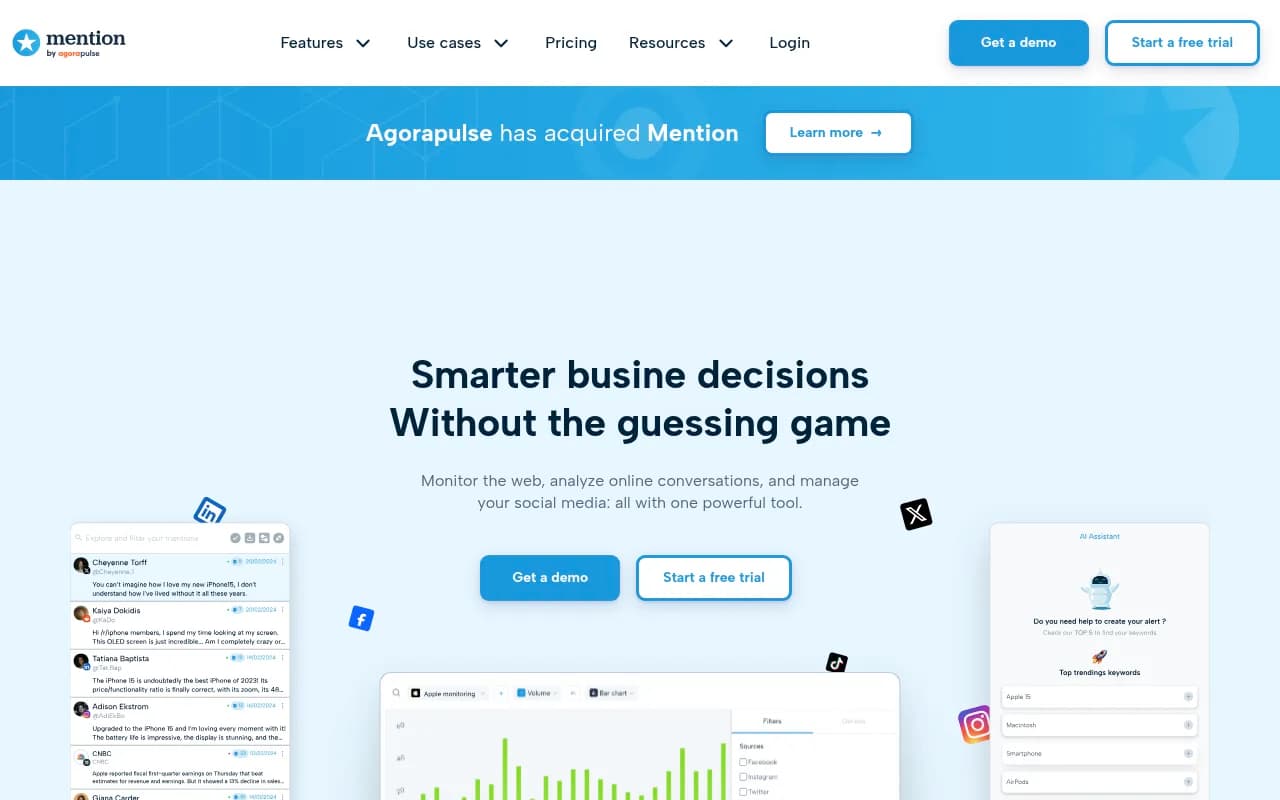
How to close this gap: Start monitoring relevant subreddits, Quora topics, and niche forums where your target customers ask questions. Use tools like Mention to track when competitors are mentioned in these spaces.
Participate authentically—not with spam or self-promotion, but by genuinely helping people solve problems. When your product is a good fit, mention it naturally in context. Encourage satisfied customers to share their experiences in these communities. The goal is building a presence in the places where real recommendations happen, so AI models absorb those signals during training and retrieval.
Gap 3: Unclear entity definition and category confusion
ChatGPT needs to understand what your business is before it can recommend you. This sounds obvious, but many companies fail at entity clarity.
If your website says you're a "platform" without specifying what kind, or describes your offering with vague terms like "solutions" or "ecosystem," AI models struggle to categorize you. Are you a SaaS product? A consulting agency? A marketplace? A data provider?
Competitors with clean entity definitions in knowledge graphs win by default. When ChatGPT processes a query like "project management software for agencies," it filters by entities tagged as "software" and "project management." If your entity isn't clearly defined in that category, you're excluded from consideration—even if your product is excellent.
This problem compounds when you serve multiple markets or offer multiple product lines without clear hierarchy. AI models prefer simple, unambiguous categorization.
How to close this gap: Audit your schema markup and structured data. Are you using Organization schema with clear @type definitions? Do you have Product schema for your offerings with specific categories? Check how Google's Knowledge Graph represents your business—search for your brand name and see what information appears in the knowledge panel.
Simplify your homepage messaging to lead with a clear category statement: "[Your Company] is a [specific category] that helps [specific audience] [specific outcome]." Update your LinkedIn company page, Crunchbase profile, and other directory listings to use consistent category tags. The goal is making it impossible for AI models to misunderstand what you do.
Gap 4: Technical barriers blocking AI crawler access
AI systems can't cite content they can't read. Multiple technical barriers prevent AI crawlers from accessing your pages:
- Robots.txt blocks: Some companies accidentally block AI crawlers (GPTBot, Claude-Web, PerplexityBot) in their robots.txt file, either explicitly or through overly broad rules.
- JavaScript rendering issues: If your content only appears after JavaScript execution, some AI crawlers may not wait for it to load.
- Authentication walls: Gating content behind login requirements makes it invisible to AI systems.
- Slow page load times: Crawlers have timeout limits. If your pages take too long to load, they move on.
- Broken internal linking: If important pages aren't linked from your main navigation or sitemap, crawlers may never discover them.
Your competitors have clean, crawlable sites. AI systems can access their content easily, index it quickly, and reference it when relevant. Your technical barriers create friction that competitors don't have.
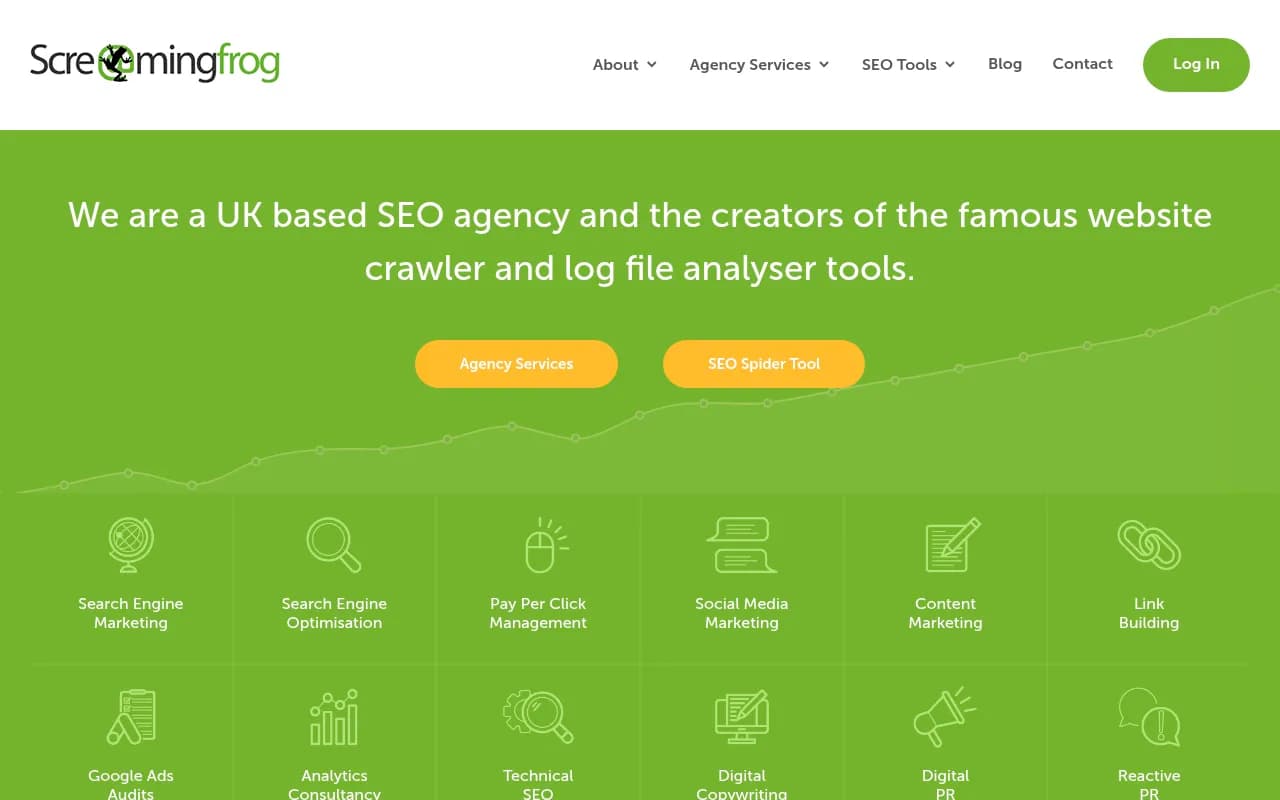
How to close this gap: Start by checking your robots.txt file. Make sure you're not blocking AI crawlers unless you have a specific reason. Use tools like Screaming Frog to audit your site's crawlability—identify orphaned pages, slow-loading resources, and JavaScript rendering issues.
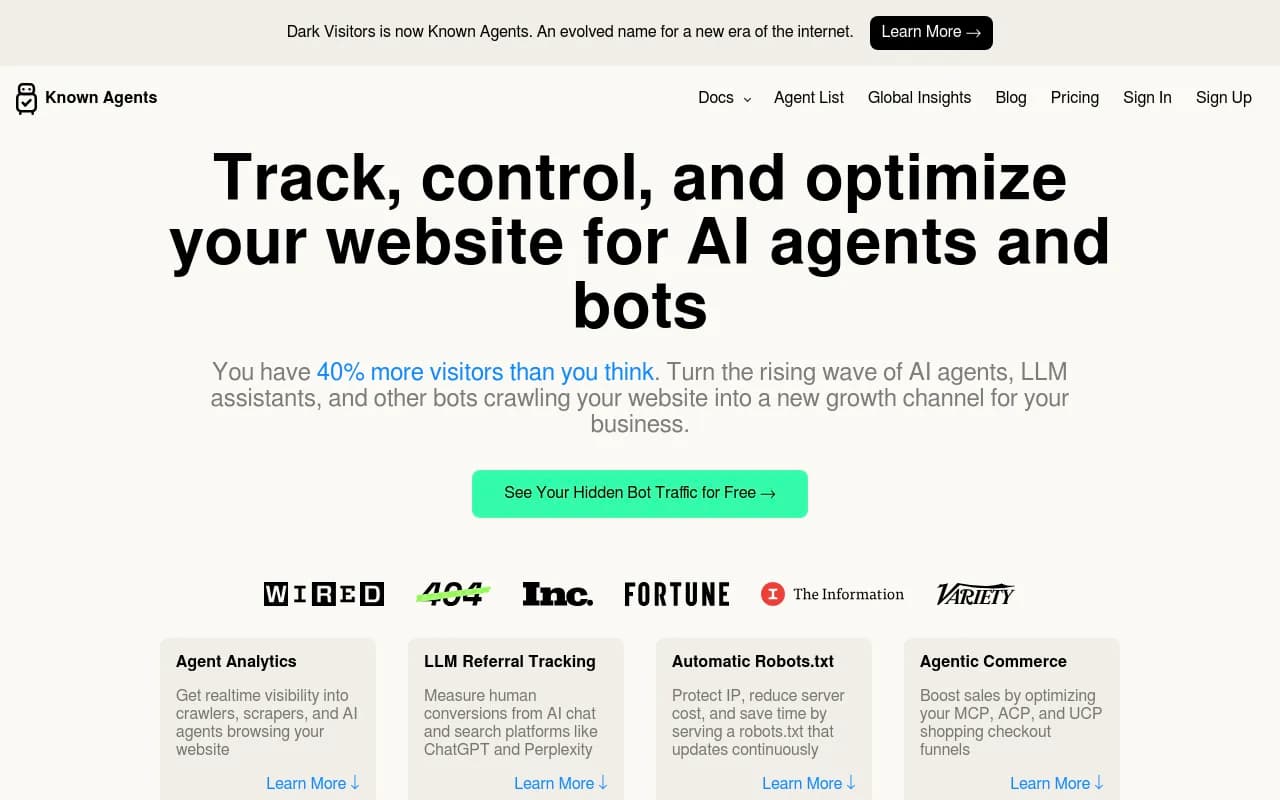
Consider using DarkVisitors to track which AI agents are actually visiting your site and which pages they're accessing.
If you have gated content, create public-facing summaries or excerpts that AI crawlers can access. Optimize your XML sitemap to include all important pages. The goal is removing every technical barrier between AI systems and your content.
Gap 5: Insufficient brand mentions across authoritative sources
AI citation patterns follow a power law: brands with more mentions in authoritative contexts get cited exponentially more often. This creates momentum that's hard to reverse.
Your competitors appear in:
- Industry analyst reports (Gartner, Forrester, IDC)
- News coverage in trade publications
- Case studies published by partners or customers
- Conference speaker lineups and event coverage
- Academic papers citing their research or data
- Podcast interviews and video content
Each mention reinforces their relevance. AI models trained on this data learn that these brands are important in their category. When generating responses, the models retrieve and cite sources that mention these brands.
You have fewer mentions, or your mentions appear in less authoritative contexts. This creates a visibility gap that compounds over time.
How to close this gap: Build a systematic brand mention strategy. Pitch guest articles to industry publications where your target customers read. Publish original research or data that journalists and analysts will cite. Speak at conferences and make sure the coverage mentions your company. Partner with complementary brands on co-marketing initiatives that generate shared press coverage.
Use tools like Brand24 to monitor where competitors are being mentioned, then target those same outlets.
The goal isn't vanity metrics—it's creating a dense network of authoritative mentions that AI models will encounter during training and retrieval.
Gap 6: Content format gaps for high-intent queries
AI models cite content that directly answers the questions users ask. Your competitors publish specific content formats that map to common queries:
- Comparison pages: "[Tool A] vs [Tool B]" pages that rank for comparison queries
- Alternative pages: "Best [competitor] alternatives" pages that capture users researching switches
- How-to guides: Step-by-step tutorials that answer "how do I [task]?" queries
- Tool directories and listicles: "Best [category] tools in 2026" roundups
- Use case pages: Industry-specific or role-specific landing pages
When someone asks ChatGPT "What are the best alternatives to [competitor]?", the AI retrieves pages that explicitly answer that question. If your competitor has published a "Best [their product] alternatives" page that mentions your product, they might get cited. If you haven't published your own alternative page, you're invisible for that query.
This gap is particularly painful because these are high-intent queries—people actively researching solutions and ready to evaluate options.
How to close this gap: Audit the content formats your competitors publish. Use tools like Ahrefs to see which of their pages rank for comparison and alternative keywords.
Create your own versions:
- Publish "[Your Product] vs [Competitor]" comparison pages for your top 5-10 competitors
- Create "Best [Competitor] alternatives" pages that position your product as an option
- Write comprehensive how-to guides for the core tasks your product helps with
- Build tool directories or listicles in your category (even if they include competitors)
The goal is ensuring that when AI models search for content answering specific queries, your pages appear in the results.
How to track whether you're closing the gaps
Fixing these gaps takes months, not weeks. You need a way to measure progress.
The most direct approach: track your brand's visibility across AI search engines. Tools like Promptwatch let you monitor when your brand appears in ChatGPT, Claude, Perplexity, and other AI models' responses.

Set up tracking for:
- Brand mention queries: "What is [your company]?" and "Tell me about [your product]"
- Category queries: "Best [your category] tools" and "Top [your category] platforms in 2026"
- Comparison queries: "[Your product] vs [competitor]" and "[Competitor] alternatives"
- Use case queries: "Best [category] for [specific use case]"
Track your visibility score over time. Are you appearing more often? Are you being cited in more contexts? Are you moving up in the ranking when AI models list multiple options?
Other platforms that help with AI visibility tracking:
| Tool | Best for | Key feature |
|---|---|---|
| Promptwatch | End-to-end AI visibility optimization | Content gap analysis + AI writing agent |
| Profound | Multi-model tracking | Tracks 8+ AI search engines |
| Otterly.AI | Budget-conscious monitoring | Affordable entry point |
| AthenaHQ | Competitor benchmarking | Heatmaps comparing your visibility vs competitors |



Complement AI visibility tracking with traditional metrics:
- Referral traffic from AI sources: Check Google Analytics for referrals from chatgpt.com, perplexity.ai, and other AI platforms
- Brand search volume: Use Google Trends to track whether more people are searching for your brand name
- Backlink growth: Monitor new backlinks from authoritative sources using Ahrefs or Semrush
- Wikipedia page views: If you have a Wikipedia article, track its view count over time
The realistic timeline for results
Closing these gaps isn't instant. Based on analysis of Status Labs clients over 18 months, here's what to expect:
Months 1-3: Technical fixes and foundation building. Clean up robots.txt issues, improve site crawlability, publish initial comparison and alternative pages. You probably won't see significant AI visibility improvements yet.
Months 4-6: Content momentum builds. Your new pages start ranking in Google, which increases the likelihood AI models will retrieve them. You begin appearing in AI responses for long-tail queries.
Months 7-12: Compounding effects kick in. Brand mentions accumulate, community presence grows, and AI models start citing you more consistently. You appear in responses for broader category queries.
12+ months: Sustained visibility. You're cited alongside competitors for most relevant queries. AI models treat your brand as an established player in your category.
The companies that succeed treat AI visibility as a long-term investment, not a quick win. They systematically close each gap while continuing to improve their core product and customer experience.
When AI visibility doesn't matter (yet)
Before investing heavily in AI visibility optimization, ask whether it's actually a priority for your business right now.
AI visibility matters most when:
- Your target customers use AI search engines to research solutions in your category
- You're in a competitive market where being excluded from AI recommendations means losing deals
- You have a strong product and customer base—AI visibility amplifies what's already working
- You're playing the long game and can wait 6-12 months for results
AI visibility matters less when:
- Your customers find you through direct relationships, referrals, or channel partners
- You're in a niche market where AI models don't have enough training data to make good recommendations
- Your product is still early and you're focused on product-market fit, not distribution
- You need short-term results and can't invest in a 6-12 month optimization cycle
If you're in the second category, focus on the fundamentals first. Build a great product, earn satisfied customers, and create content that helps people solve real problems. AI visibility will follow naturally as you build authority in your space.
The path forward
Your competitors appear in ChatGPT responses because they've systematically closed the six gaps outlined above. They have Wikipedia presence, community visibility, clear entity definitions, crawlable sites, authoritative brand mentions, and content formats that answer high-intent queries.
You can close these same gaps. Start with the easiest wins:
- This week: Audit your robots.txt file and fix any blocks on AI crawlers. Check your schema markup for clear entity definitions.
- This month: Publish your first comparison and alternative pages. Start monitoring relevant Reddit and Quora discussions.
- This quarter: Build a brand mention strategy targeting industry publications. Create a content calendar focused on formats AI models cite most often.
- This year: Work toward Wikipedia notability if you meet the criteria. Build sustained community presence. Track your AI visibility improvements over time.
The companies winning AI visibility in 2026 aren't doing anything magical. They're systematically closing gaps that most competitors ignore. Now you know what those gaps are.