Key takeaways
- Pricing models vary more than headline prices. Pooled responses, per-client workspaces, flat client caps and per-brand fees give very different bills at 5, 10 and 20 clients.
- A logo swap is not a white-label portal. Check custom domains, read-only client logins, role permissions, branded emails and export rights before you sign.
- Report per AI engine and per prompt type. Engines hand out different numbers of citation slots, and brand-specific prompts behave differently from organic ones.
- Enterprise agencies usually outgrow reporting-only tools. The platforms that also trace sources, track crawlers and help fix gaps give you something to bill for beyond a dashboard.
- Portal adoption and retention-lift statistics are mostly unverified. Treat any vendor claiming a precise retention number with suspicion.
What white-label GEO actually means for an agency
Most AI visibility tools were built for one brand and then bolted on a team seat. That breaks the moment you run twenty clients, each with its own competitors, report cadence and a stakeholder who wants to see their logo, not the vendor's.
A white-label GEO platform lets you present AI visibility data (mentions, citations, share of voice, sentiment) under your own brand. The depth of that branding varies a lot, and it is where enterprise buyers get burned. A useful way to think about it is three layers:
- Branded reports. PDFs or scheduled emails with your logo and colors.
- Branded dashboards or share links. Clients can look at live data without a vendor login.
- A true client portal. Your domain, your authentication, role-based access, read-only client users, and ideally your billing.
One portal guide from WebinOne makes the point well: agencies treat logos as the product, but a portal becomes real infrastructure only when you control authentication, tenant access, notifications, billing, support, auditability and data location. Cosmetic branding helps a sales demo. Operational ownership is what protects renewals and margins.
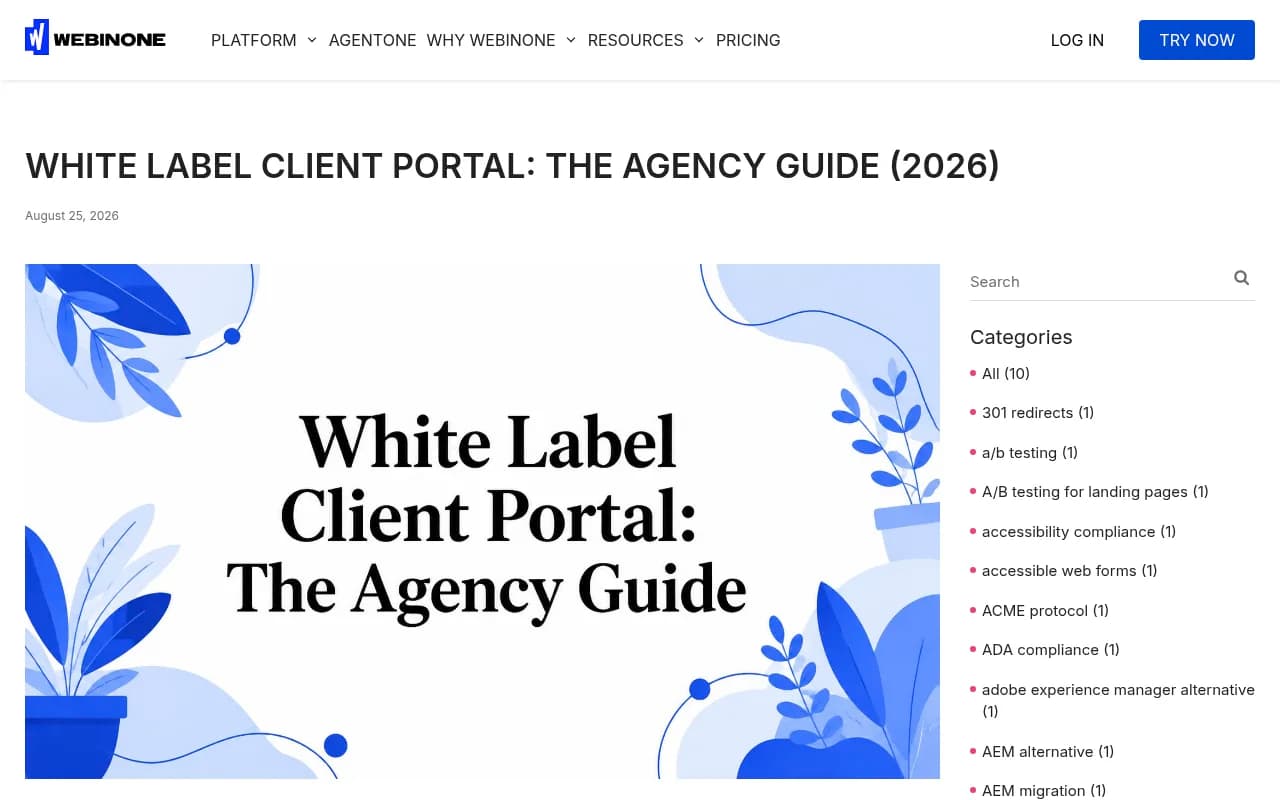
One caution from that same guide: it states that portal adoption rates and retention lift are "not established in the verified data". I would not put a retention-lift number in a client proposal just because a vendor blog offered one.
What enterprise agencies should evaluate
Small agencies mostly care about price per client. Enterprise agencies add governance, security and execution to the list. Here is the checklist I would run every shortlisted vendor through.
Multi-client structure
Can each client live in its own project, with its own competitors, prompts, markets and languages? Can you set one up in an afternoon? Can a client's data stay separate from every other client's, including in exports and API keys?
Branding depth
Ask specifically about custom domain support, branded email notifications, branded PDFs, and whether the vendor's name appears anywhere a client can see. A Moxo pricing guide lists the usual hidden charges: custom domain, email or mobile branding fees, paid integrations, data migration and export fees, and premium support and training. Ask for each one by name.
Permissions and access
Role-based access matters once clients bring their own stakeholders. You want owner, editor and viewer roles, project-level access, and a read-only client login. ReachLLM's own agency comparison tells readers to confirm advanced role requirements in a demo, which is honest advice for any vendor. Also look for an audit log that shows whether a change came from the dashboard, the API or an automation.
Security and procurement
Enterprise clients will send your vendor stack through a security review. ISO/IEC 27001 certification, GDPR compliance, EU data handling and SSO are the things that shorten that review. Ask early, because it is painful to discover a gap after onboarding.
API and reporting stack
If you already run a client reporting layer (Looker Studio, a BI tool, your own portal), you want API access and data exports so GEO data flows into it. Check the request limits, the date range per request, and whether write actions are available, not only reads.
Execution, not just monitoring
This is the criterion that separates platforms in practice. A dashboard tells a client they are invisible. A retainer needs you to fix it. Look for content gap analysis, citation source tracing, AI crawler logs and a way to publish. More on that below.
Pricing models: compare at 5, 10 and 20 clients
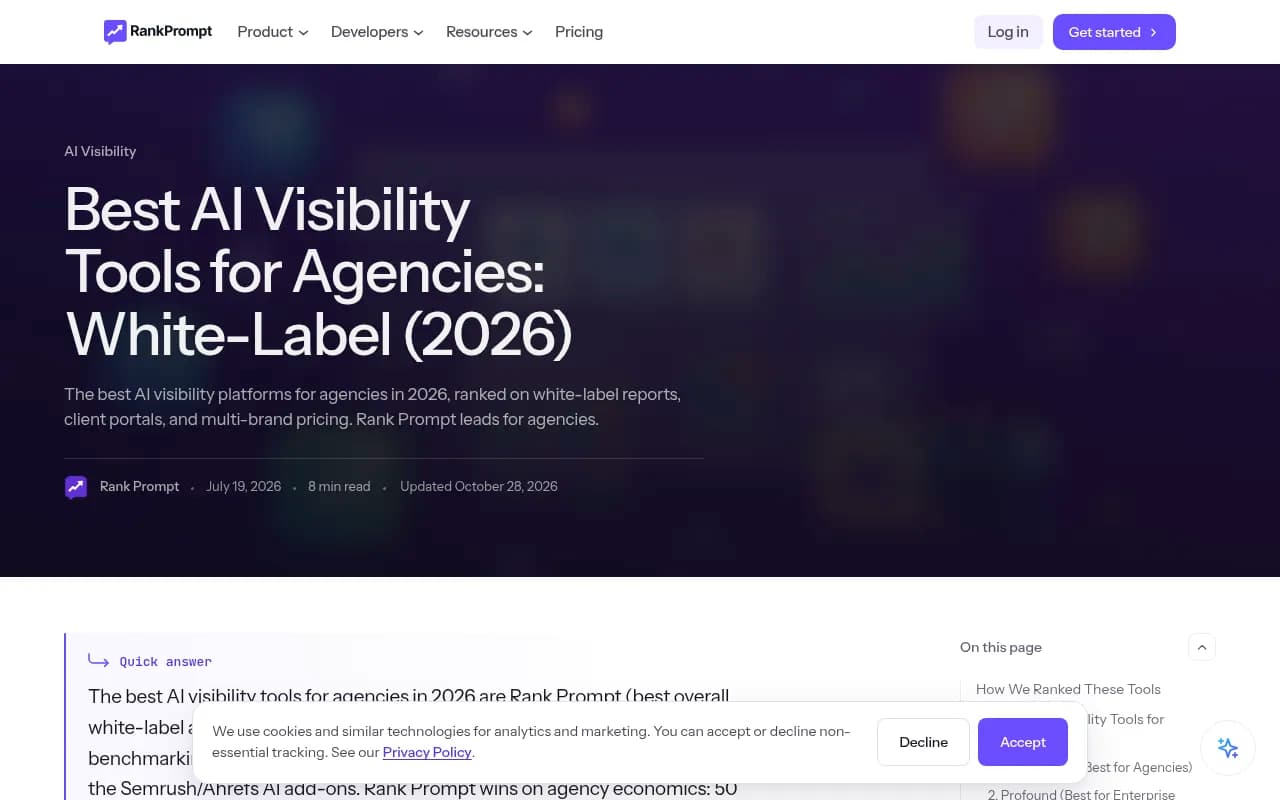
Headline prices are close to useless for agencies. The model underneath is what matters. Third-party comparison data (checked September 2026) shows list prices ranging from about $9 to about $404 per client per month at 20 clients, a 45x spread. Note that the source for that spread, Prefer, sells a competing product, and Rank Prompt's guide ranks Rank Prompt first, so treat vendor-authored comparisons as vendor-biased and confirm everything on the vendor's own pricing page.
| Platform | Pricing model | Reported agency pricing | White-label notes |
|---|---|---|---|
| Promptwatch | Metered by AI responses, unlimited client projects | Kick-off $199, Growth $399, Scale $799 per month | Unlimited seats on every plan; white-label dashboard and client portal on Enterprise |
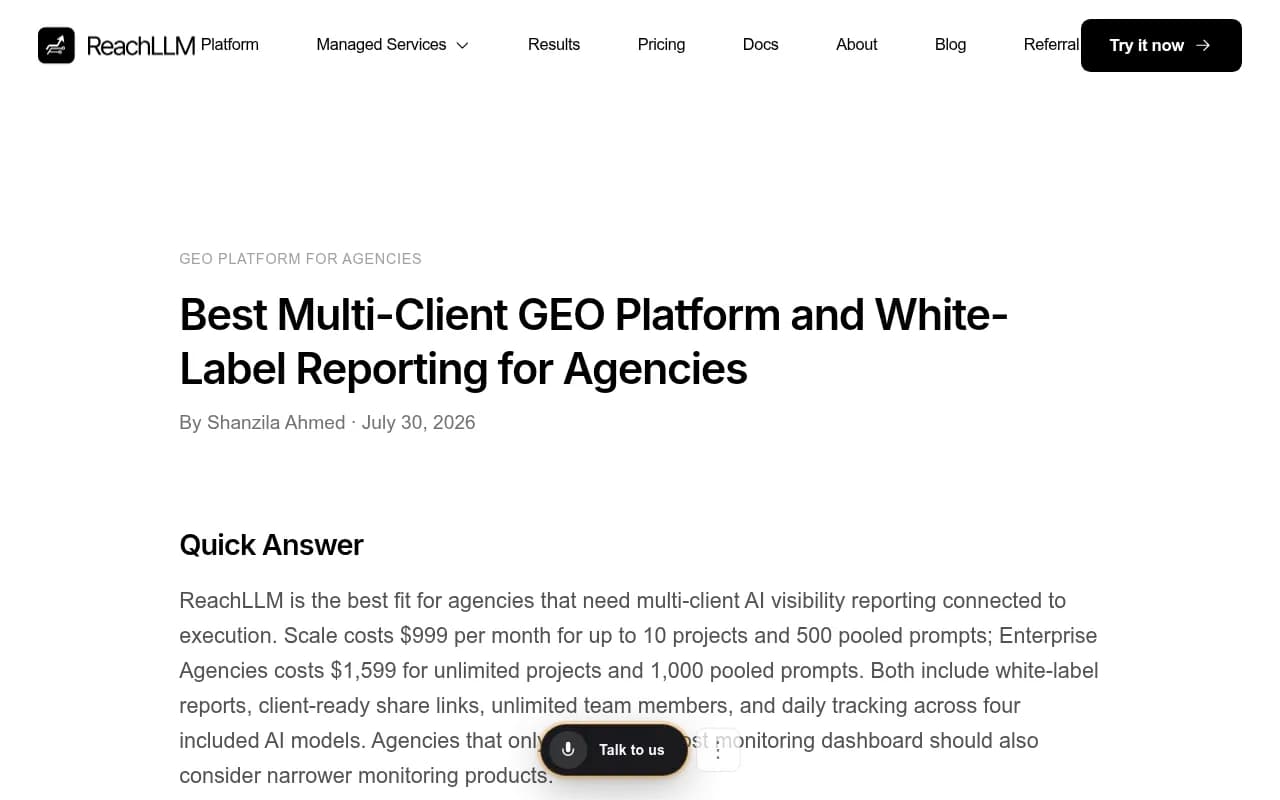
| ReachLLM | Project caps with pooled prompts | Scale $999 (10 projects, 500 prompts); Enterprise Agencies $1,599 (unlimited projects, 1,000 prompts) | White-label reports and share links included; dashboard branding from three onboarded clients |
| Rank Prompt | Brand caps | Agency $149 (50 brands); Agency Plus $299 (500 brands) | Scheduled white-label reports and portal; client logins on Agency Plus |
| Profound | Per-client workspace (reported) | $99 plus $399 per client workspace | Partner program not verified |
| Peec AI | Tiered with free pitch projects | $245 to $795 per month | Pitch projects can convert to paid clients |
| Otterly.AI | Unlimited workspaces | Standard $189 | Check portal depth in a trial |
| LLM Pulse | Partner plans | From EUR 2,399 per month | Platform sits on the agency's own domain |
| Geoptie | Brand caps | Professional $99 for 10 brands | Budget toolkit for small teams |
Two things to notice. First, the Profound figure conflicts with the older "about $399 a month" number that circulates in review sites; the per-workspace model is the newer detail, and its enterprise and partner terms remain unverified here. Second, I could not verify the Writesonic agency pricing quoted in some comparisons, so confirm it directly if you shortlist it.
How the math plays out
Pooled plans are cheapest for many light clients. Per-client plans cost more because every client gets a full workspace, but they give you cleaner separation and predictable cost per account.
Take the metered approach. On Promptwatch's $199 Kick-off agency plan with 10,000 responses, spreading usage across 20 clients works out to about $10 per client and roughly 500 responses each per month. That is around four prompts on four models daily. Fine for a light retainer, thin for a flagship client, which is exactly when you move that client's volume up a tier. Always confirm current prices at promptwatch.com/pricing.
Compare ReachLLM's flat structure: $99.90 per client at 10 Scale clients, dropping to $79.95 at 20 clients on Enterprise Agencies, with four included AI models.
Whatever you do, build a small spreadsheet with your actual client count at 5, 10 and 20, the prompts and models each client needs, and the markets they cover. Then price every vendor against that, not against its landing page.
What to put in the client report
Platform choice is only half the job. What the client sees decides whether they renew. Promptwatch Data gives two concrete guardrails.
Report per engine, not as one blended score
Engines hand out very different numbers of citation slots. According to Promptwatch's average sources per response data, ChatGPT cites about 5 sources per web-search answer, Google AI Overviews about 10, and Perplexity almost exactly 10 every day. Copilot swung from under 2 to nearly 17 within a few weeks before settling at the low end. Perplexity is a stable benchmark, so a change in a client's pickup there more likely reflects their content than engine noise. Copilot should be judged on monthly trends, not weekly snapshots.
Split results by prompt type and track the competitors in the answer
Promptwatch's data on unique domains per ChatGPT response (Sep 28 to Oct 4, 2026) found 47.6% of citation-bearing responses cite 10 or more different domains, and 66.1% cite at least 8. Organic prompts with no brand named hit 52.5% at 10 or more domains. Brand-specific prompts are different: only 21.3% cite 10 or more, and the most common count is 5 domains.
In practice: a client reporting only "were we cited?" misses most of the story. Show who else is in the answer, and separate organic, brand and comparison prompts. Third-party listicles, reviews and comparison pages are often how a brand gets into an answer at all, which is where the work happens.
The platforms worth shortlisting
Promptwatch
Promptwatch is the option I would look at first when the agency needs execution, not just a reporting skin. It tracks ChatGPT, Gemini, Claude, Perplexity, Google AI Overviews, Google AI Mode, Copilot, Meta AI, Amazon Alexa and more from the real interfaces, then traces which pages and sources get cited, and helps fix the gaps. Agency plans include unlimited projects, pitch projects, unlimited seats, all models, Agent Chat, country, state and city tracking, crawler logs, visitor analytics, site audits, content gap analysis, custom reports, and MCP and API access.
The tiers are Kick-off at $199 per month, Growth at $399 and Scale at $799, billed monthly or annually, with a 7-day free trial on monthly billing. Scale adds hourly-to-12-hour tracking, local GEO/SEO targeting, Fact Check and an audit log. Two caveats to plan around: the white-label dashboard, client portal and SSO sit on Enterprise, and agency plans do not include the Content Agent or AEO articles, so agencies that need content generation go to Enterprise as well. PDF reports with your own branding are available to white-label organizations, and scheduled PDF reports go straight to client inboxes.
For agencies pitching new business, the Promptwatch vs Profound comparison and the agency solutions page are worth reading, and the free AI visibility report works as a prospect baseline. Promptwatch's GEO for agencies guide covers operating a portfolio. Monks, an agency with clients like Netflix and BMW, used it to build content roadmaps from citation gaps (case study).

Profound
Profound is a strong monitoring platform with enterprise reporting. The newer pricing detail reported by Prefer is $99 plus $399 per client workspace, which gets expensive fast at 20 clients. Its partner program terms are unverified in the research I have, so ask for them directly.

Peec AI
Peec AI is attractive for competitor benchmarking and for pitching, since free pitch projects can convert to paid clients. Tiers run $245 to $795 per month. It is a tracker, so budget separately for anything that fixes gaps.

Otterly.AI
Otterly.AI is lightweight monitoring with unlimited workspaces on its $189 Standard plan. Good for many small clients that only need a report, less so for enterprise governance.

Rank Prompt
Rank Prompt is the cheapest way in on paper: $149 for 50 brands with white-label reports and a portal, $299 for 500 brands with client logins and prospecting. Remember that its own guide ranks it first, so run a trial against your real clients.
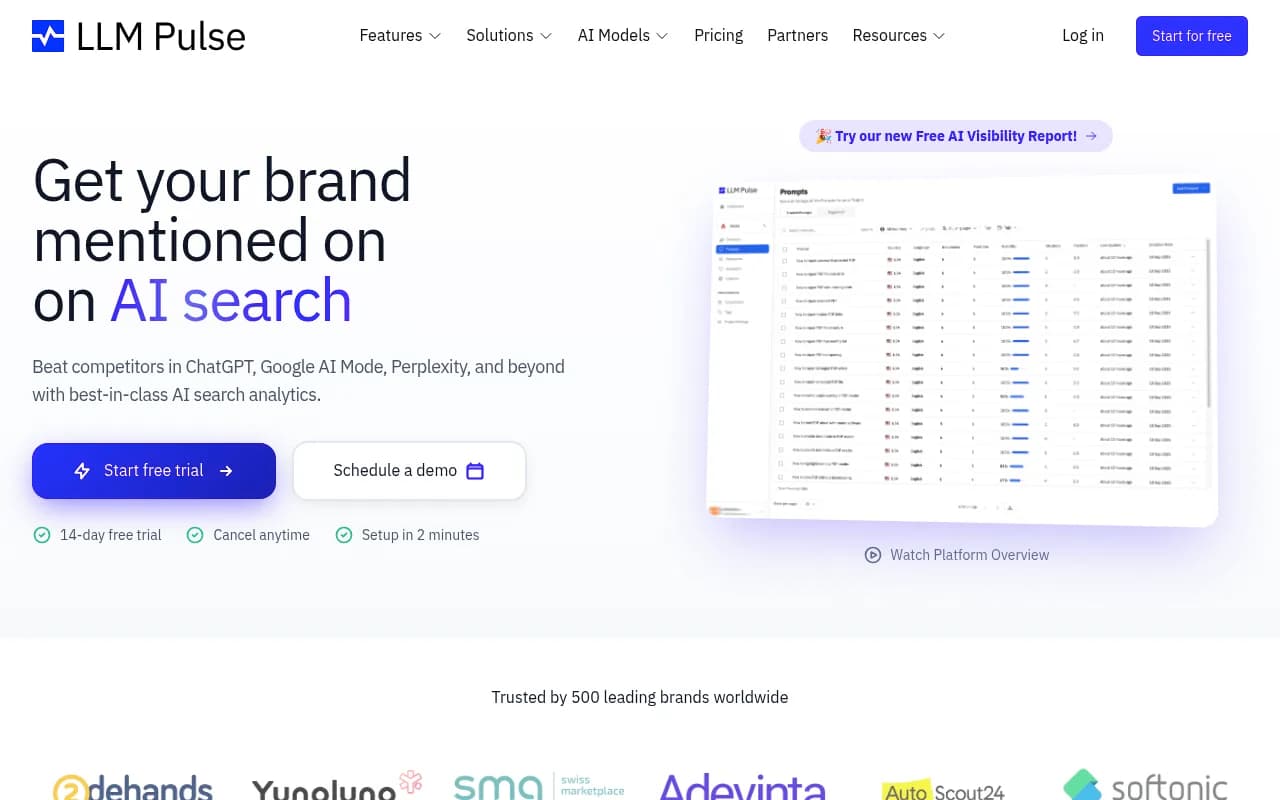
LLM Pulse
LLM Pulse targets agencies that want the whole platform on their own domain, with Partner plans from EUR 2,399 per month. That fits enterprise agencies that care more about full rebranding than price.
Others to test
- Scrunch AI is oriented more toward a brand's own team than agencies, per Rank Prompt's assessment, so test its multi-brand pricing in a trial.
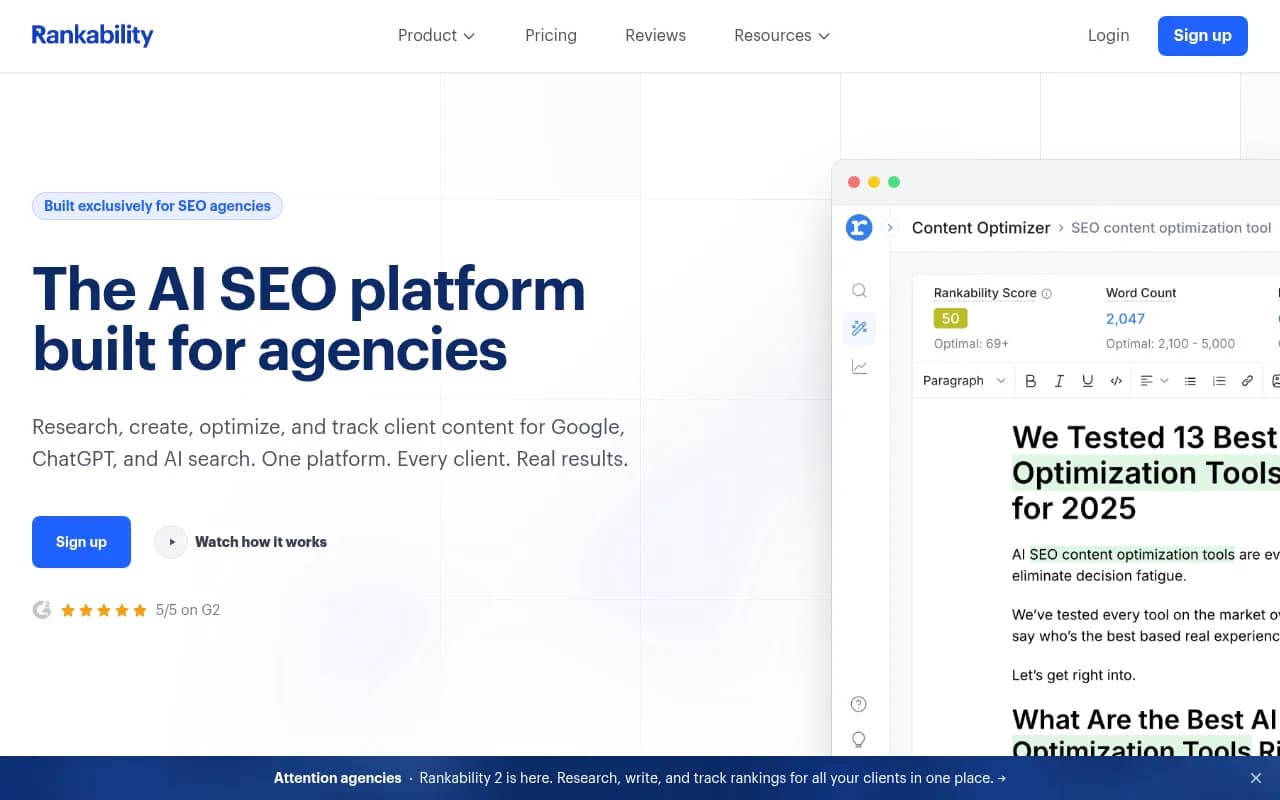
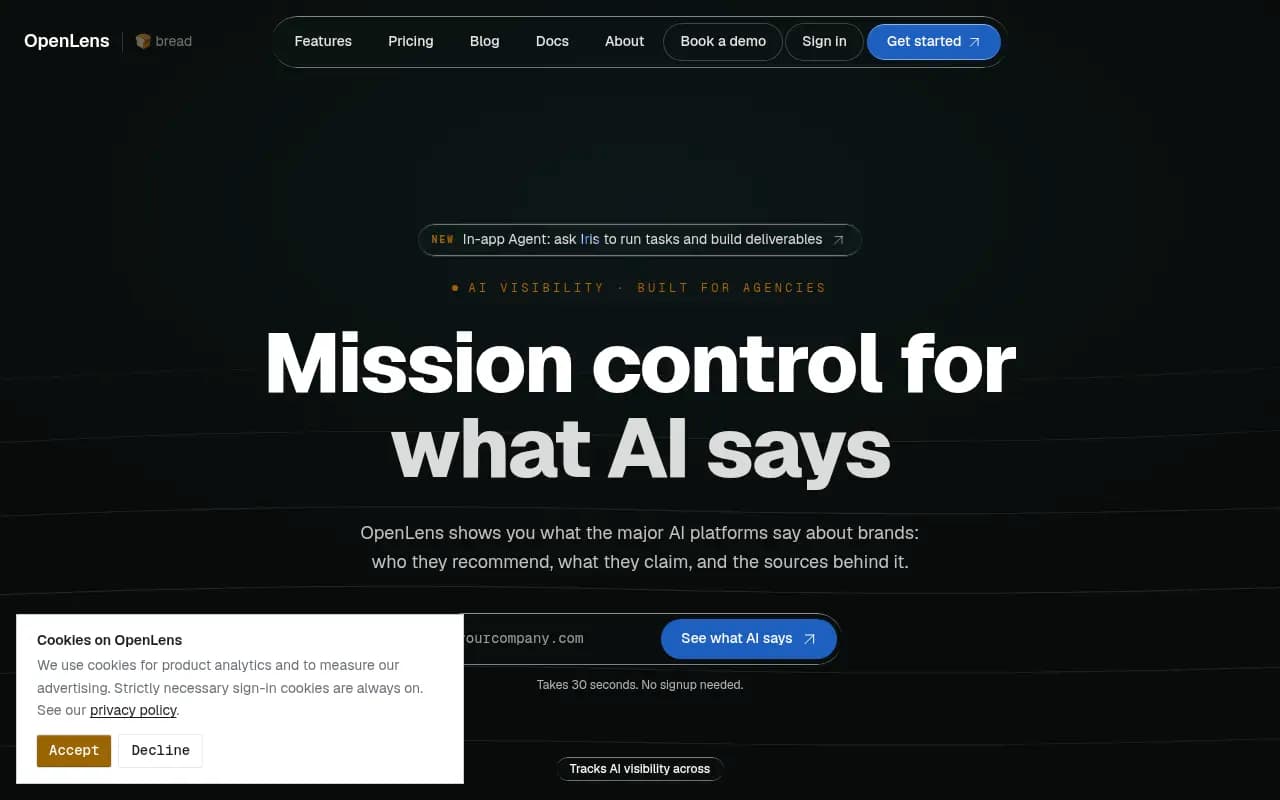
- Rankability, Cairrot, OpenLens and RankZero all position themselves around agencies.
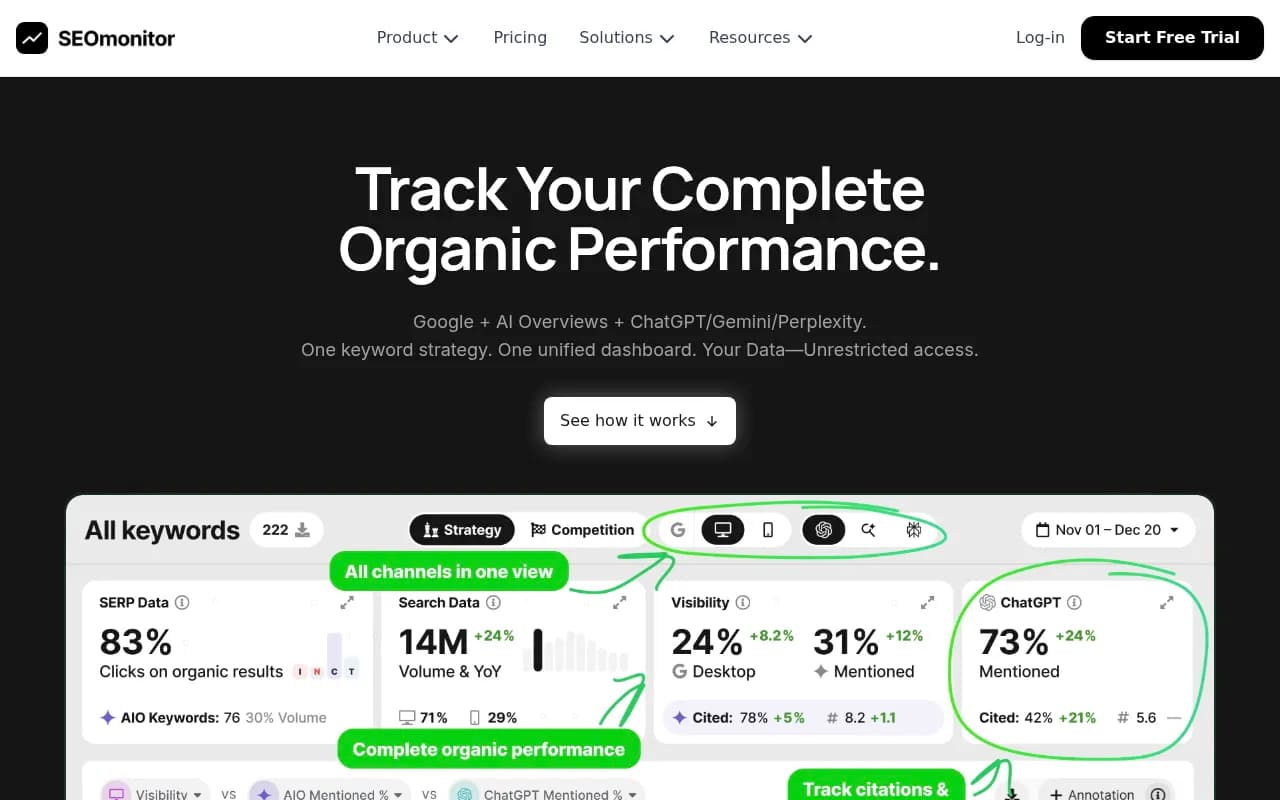
- SEOmonitor and SE Ranking suit agencies that want AI tracking inside an SEO suite.
For a wider list, browse the GEO software directory at bestgeosoftware.com.
A simple selection process
- List your clients and their needs. Count prompts, models and markets per client, and flag the two or three that need hourly or local tracking.
- Model cost at 5, 10 and 20 clients. Include the plan you would need once your biggest client scales.
- Score branding depth. Custom domain, read-only logins, branded email, PDF branding. Ask for each in writing.
- Check governance. Roles, audit log, SSO, ISO/IEC 27001, data location.
- Test the exit. Ask what export and migration look like, and what fees apply.
- Run a two-week trial on three real clients. Judge setup time, report quality and how much work the tool does for you after the data lands.
When the tool is not the whole answer
A platform gives you data and, with the right tool, a path to fixes. It does not give you senior strategists, digital PR or a working content engine. Some agencies solve that by partnering with a specialist. 1001 SEO Media, which publishes this network, is a full-service SEO and GEO agency that works with senior specialists and uses Promptwatch as its AI visibility platform, so it is one option for white-label capacity you can lean on during a busy quarter.
Bottom line
Pick the pricing model that matches your portfolio shape, not the cheapest headline. Pooled and metered plans win for many light clients; per-client workspaces suit fewer, heavier accounts. Make branding depth, permissions and exit terms written requirements. And favor a platform that helps your team act on what it finds, because a branded dashboard of bad news is a short-lived retainer.
Prices and plan details in this guide come from vendor pages and third-party comparisons checked in 2026, and several vendors sell competing products. Confirm everything before you buy.