Key takeaways
- Traditional SEO tools track Google rankings well but are essentially blind to how AI engines like ChatGPT, Perplexity, and Gemini cite your brand.
- A small number of platforms genuinely cover both surfaces; most tools still specialize in one or the other.
- The "one stack or two" question depends on your team size, budget, and how much AI search traffic matters to your business right now.
- For teams serious about AI visibility, monitoring alone isn't enough — you need tools that help you act on the gaps, not just measure them.
- The 9 tools below represent the most practical options across the spectrum, from pure Google-rank trackers to full GEO optimization platforms.
Why this question matters in 2026
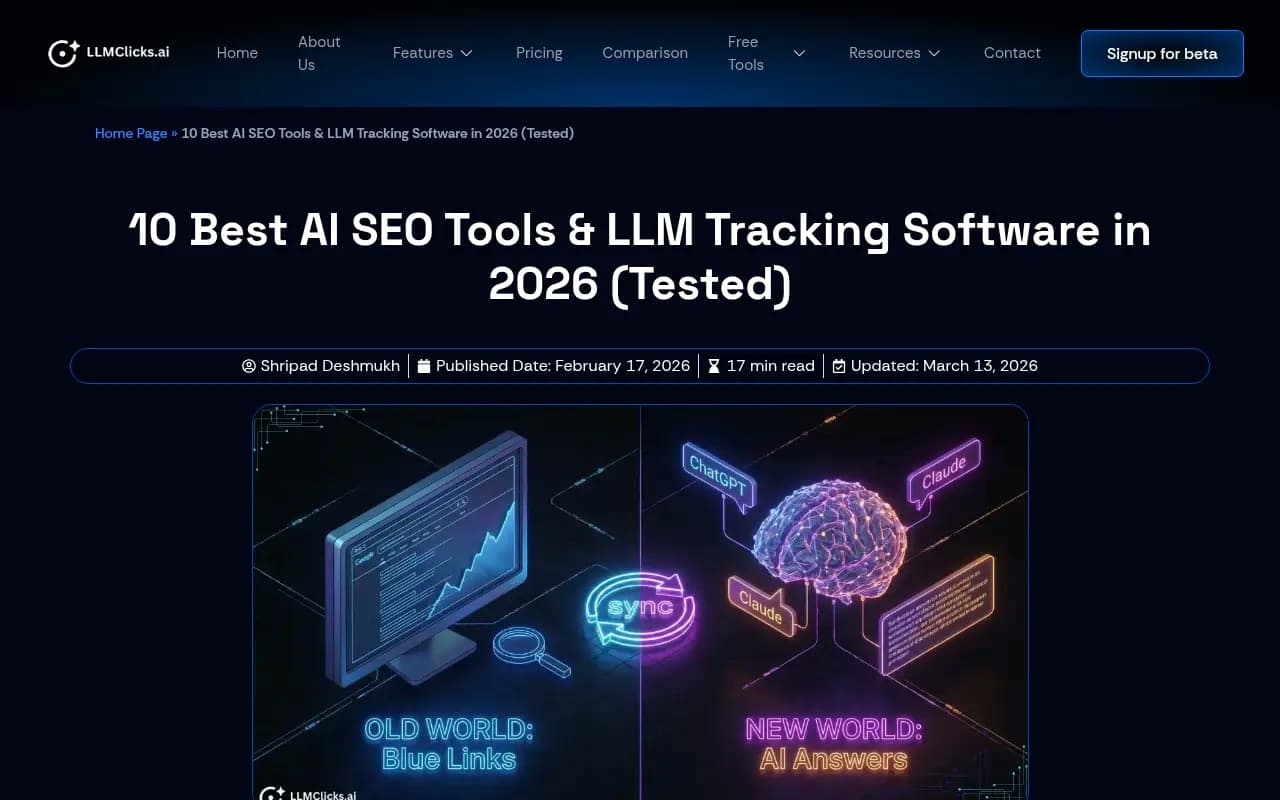
Two years ago, the answer was simple: use Semrush or Ahrefs for SEO, done. Today it's messier. Over 40% of informational queries are resolved directly by AI engines without a click, according to data from Capston.ai's April 2026 analysis. That means a meaningful chunk of your potential customers never see a list of blue links at all. They ask ChatGPT "what's the best project management tool for startups?" and trust whatever the model says.
The problem is that ranking first on Google doesn't guarantee you appear in that AI answer. And not appearing in that AI answer means you've lost the customer before they ever visited your site.
So the real question isn't "should I care about AI citations?" It's "which tools actually help me manage both, and do I need to run two separate stacks to do it?"
The honest answer: it depends on how far along you are. If AI search is already sending you traffic (check your server logs for bots like GPTBot, ClaudeBot, PerplexityBot), you probably need dedicated tooling for it. If you're still mostly Google-dependent, a hybrid tool might be enough to start.
Let's look at the nine tools worth knowing about.
The 9 tools worth considering
1. Promptwatch — best for teams that want to act, not just monitor
Promptwatch is the most complete option on this list for teams that care about AI visibility as an optimization problem, not just a reporting exercise. Most tools in this space show you a dashboard and leave you to figure out what to do next. Promptwatch closes that loop.
The core workflow is: find which prompts your competitors appear for but you don't (Answer Gap Analysis), generate content specifically engineered to get cited by AI models (using data from 880M+ citations analyzed), and then track whether that content actually improves your visibility scores. That cycle — gap, create, measure — is what separates it from monitoring-only tools.
It also covers things most competitors skip entirely: real-time AI crawler logs (so you can see when GPTBot or ClaudeBot visits your pages and what errors they hit), Reddit and YouTube citation tracking, ChatGPT Shopping monitoring, and prompt volume/difficulty scoring so you can prioritize which gaps to close first.
Coverage spans 10 AI models: ChatGPT, Perplexity, Claude, Gemini, Google AI Overviews, Google AI Mode, Grok, DeepSeek, Copilot, and Mistral. Pricing starts at $99/month.

For traditional Google SEO, Promptwatch isn't trying to replace Semrush or Ahrefs. It's purpose-built for the AI layer. So if you need both, you'd pair it with a traditional rank tracker — but for many teams, the AI visibility side is the gap that needs filling most urgently right now.
2. Semrush — best hybrid for teams already in the Semrush ecosystem
Semrush has been adding AI visibility features to its existing suite, which makes it appealing if you're already paying for it. The AI Toolkit tracks brand mentions across some AI engines, and ContentShake AI helps with content creation. The breadth of the traditional SEO feature set (keyword research, backlink analysis, site audits, competitor analysis) is still unmatched.
The limitation is that Semrush's AI monitoring uses fixed prompt sets rather than custom prompts tailored to your actual buyers. That makes it harder to track the specific questions your customers are asking AI engines. It also lacks AI traffic attribution, so you can't close the loop between AI citations and actual revenue.
Still, for teams that want one bill and one login, Semrush is the most practical "good enough on both sides" option.
3. Ahrefs Brand Radar — best for backlink-first teams adding AI monitoring
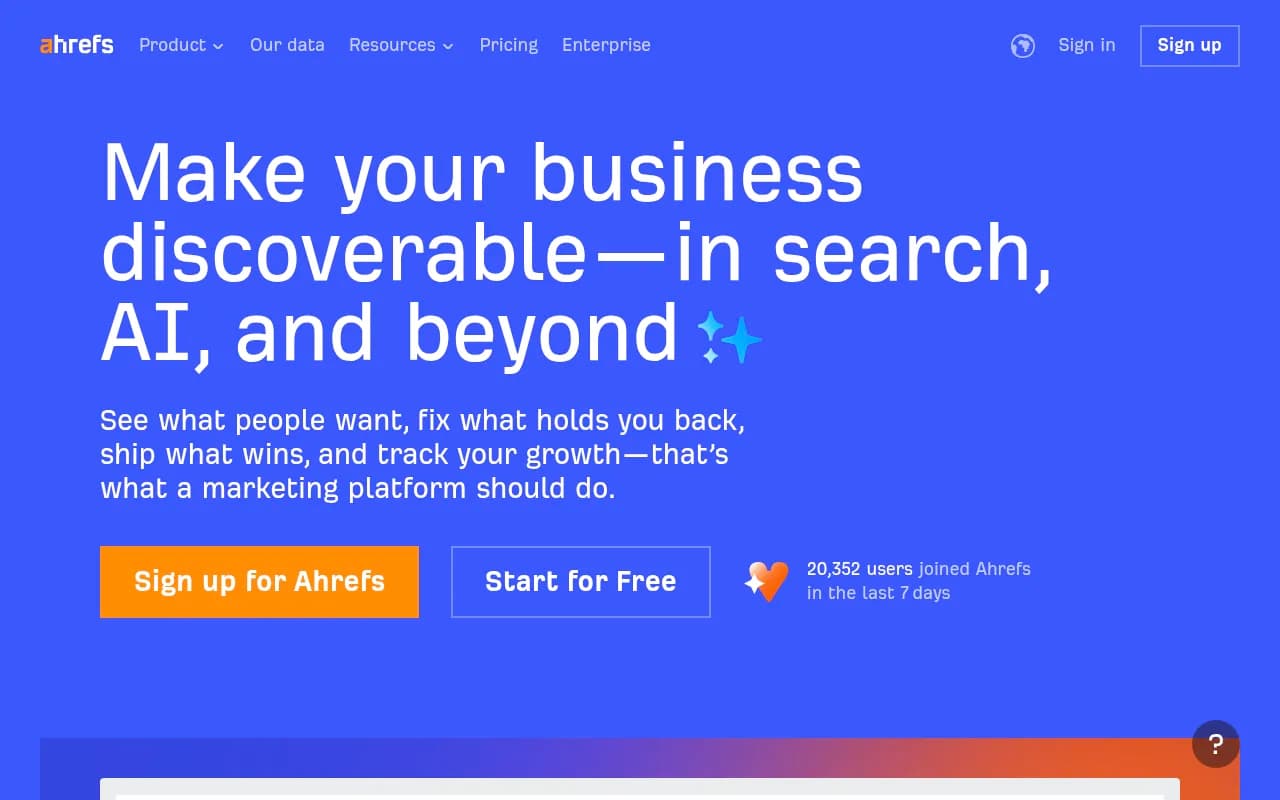
Ahrefs remains the gold standard for backlink analysis and keyword research. Brand Radar, their AI monitoring addition, tracks when your brand gets mentioned in AI-generated responses. It's a reasonable starting point for teams that live in Ahrefs and want to dip a toe into AI visibility without switching tools.
The honest limitation: Brand Radar uses fixed prompts, which means you're tracking a predefined set of queries rather than the actual prompts your customers use. There's also no AI traffic attribution, so you can't connect AI citations to site visits or conversions.
Good for: teams that are primarily Google-focused and want basic AI monitoring as a secondary signal.
4. SE Ranking — best mid-market option with growing AI features
SE Ranking has built a solid AI visibility toolkit on top of its traditional SEO platform. It covers keyword tracking, site audits, and competitor analysis alongside AI Overview monitoring. The pricing is more accessible than Semrush for smaller teams.
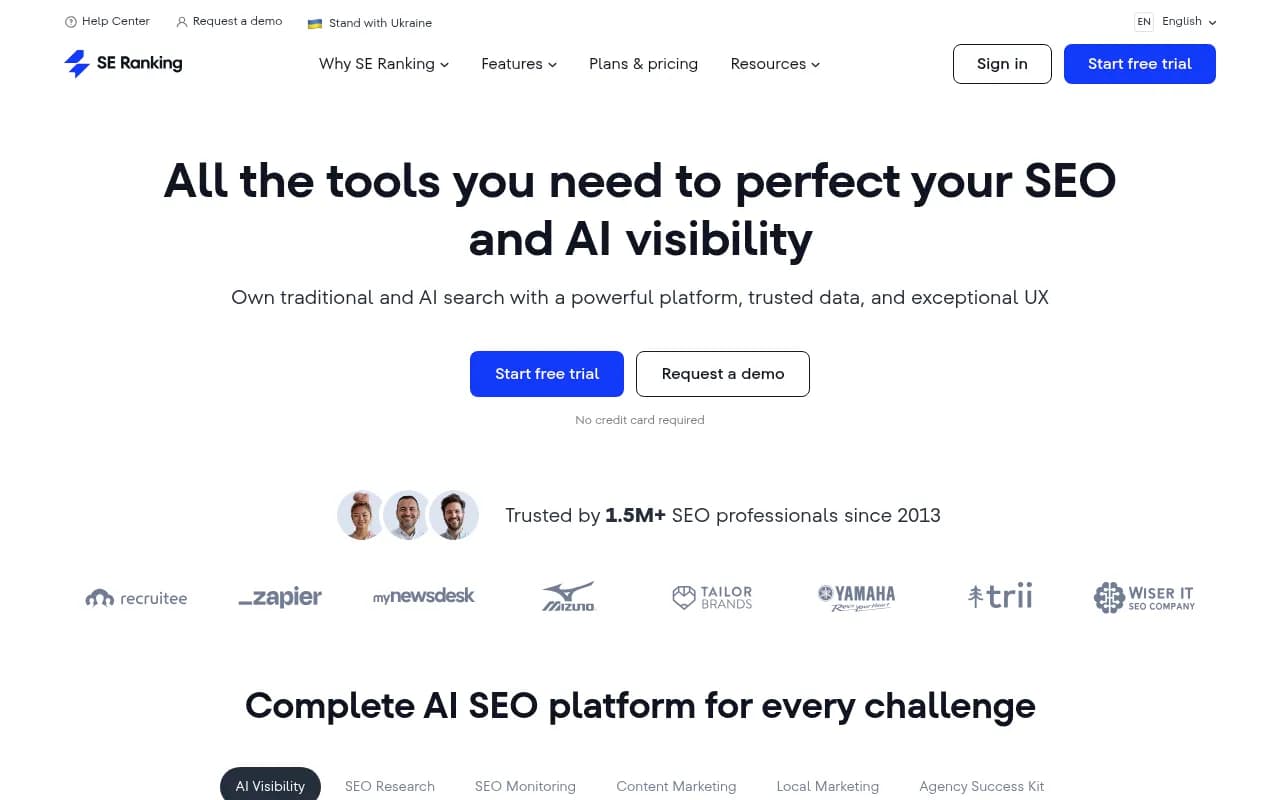
The AI features are improving but still lean toward monitoring rather than optimization. If you're a mid-sized team that wants a single platform and can't justify Semrush pricing, SE Ranking is worth a serious look.
5. Peec AI — best for multi-country AI visibility tracking
Peec AI is purpose-built for AI search monitoring with strong multi-language and multi-country support. If you're running campaigns across different regions and need to know how AI engines respond to queries in German, French, or Spanish, Peec handles this better than most.

The trade-off: it's a monitoring tool. You get good data on where you stand across markets, but the platform doesn't help you create content or close the gaps it surfaces. You'd need to pair it with a content tool or use it alongside something like Promptwatch for the optimization layer.
6. AthenaHQ — best for enterprise teams that want structured workflows
AthenaHQ focuses on mid-market and enterprise use cases, with an emphasis on structured workflows for acting on AI visibility data. It tracks brand visibility across multiple AI engines and has features for content pipeline management.

The pricing reflects the enterprise positioning ($295/month and up), and the platform is more monitoring-focused than optimization-focused. Teams that need governance, approval workflows, and structured reporting will find it useful. Teams that want to quickly generate and test content against AI citation data will find it slower to move.
7. Profound — best for teams that want a large prompt database
Profound's signature feature is its 130M+ prompt database, which gives you a broad view of what people are actually asking AI engines across your category. That's genuinely useful for discovering prompts you hadn't thought to track.

Pricing runs from $99 to $399/month. Like most tools in this space, Profound is stronger on the monitoring and research side than on content generation and optimization. It's a good research tool for understanding the AI search landscape in your category.
8. Surfer SEO — best for content optimization that helps with both Google and AI
Surfer SEO sits in a different part of the stack. It's primarily a content optimization tool that helps you write articles that rank on Google, but its semantic analysis and NLP-based recommendations also make your content more likely to be cited by AI engines. Well-structured, comprehensive content that satisfies search intent tends to perform in both environments.
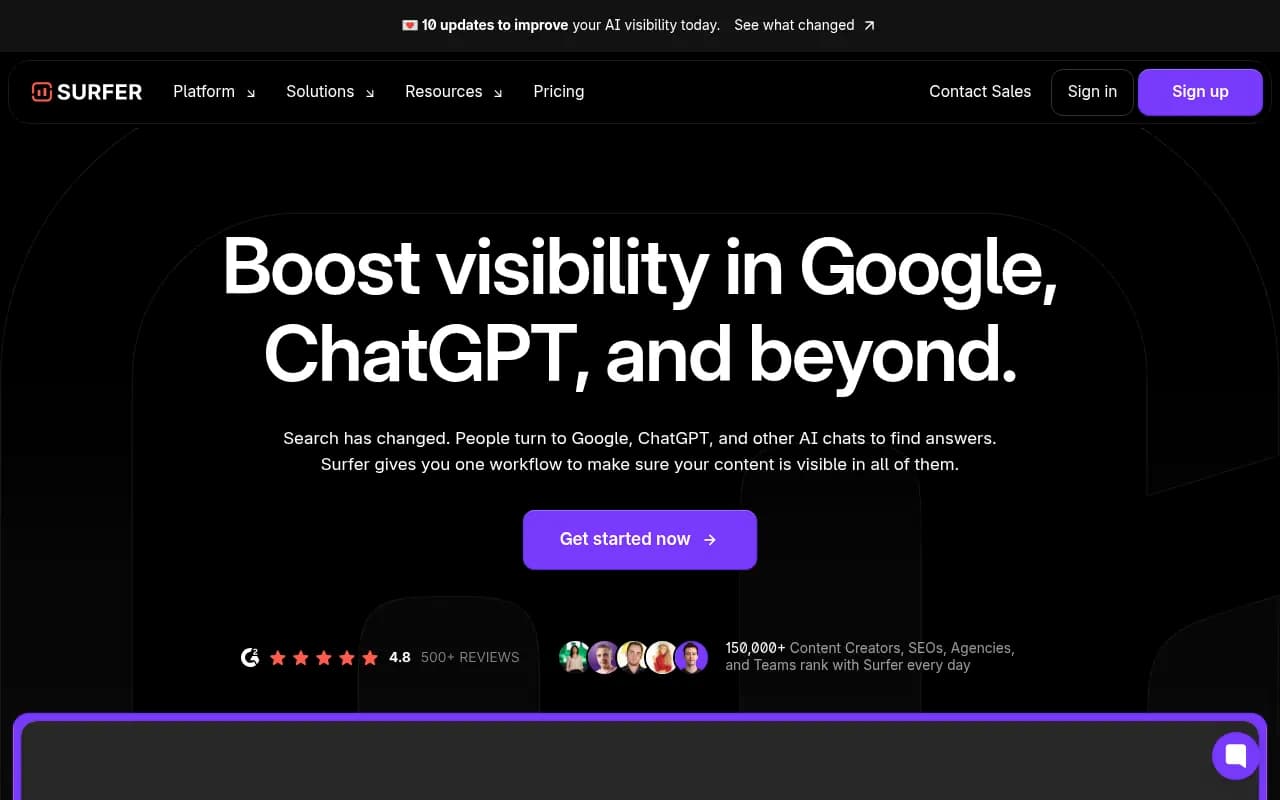
Surfer doesn't track your AI citations directly. But if your content is thin or poorly structured, fixing that with Surfer will help your AI visibility as a side effect. Think of it as the content quality layer that supports everything else.
9. Clearscope — best for content teams focused on semantic relevance
Similar to Surfer, Clearscope helps content teams write more comprehensive, semantically rich articles. The platform grades your content against top-ranking pages and suggests related terms and topics to cover. Content that scores well on Clearscope tends to be the kind of thorough, authoritative writing that AI models prefer to cite.
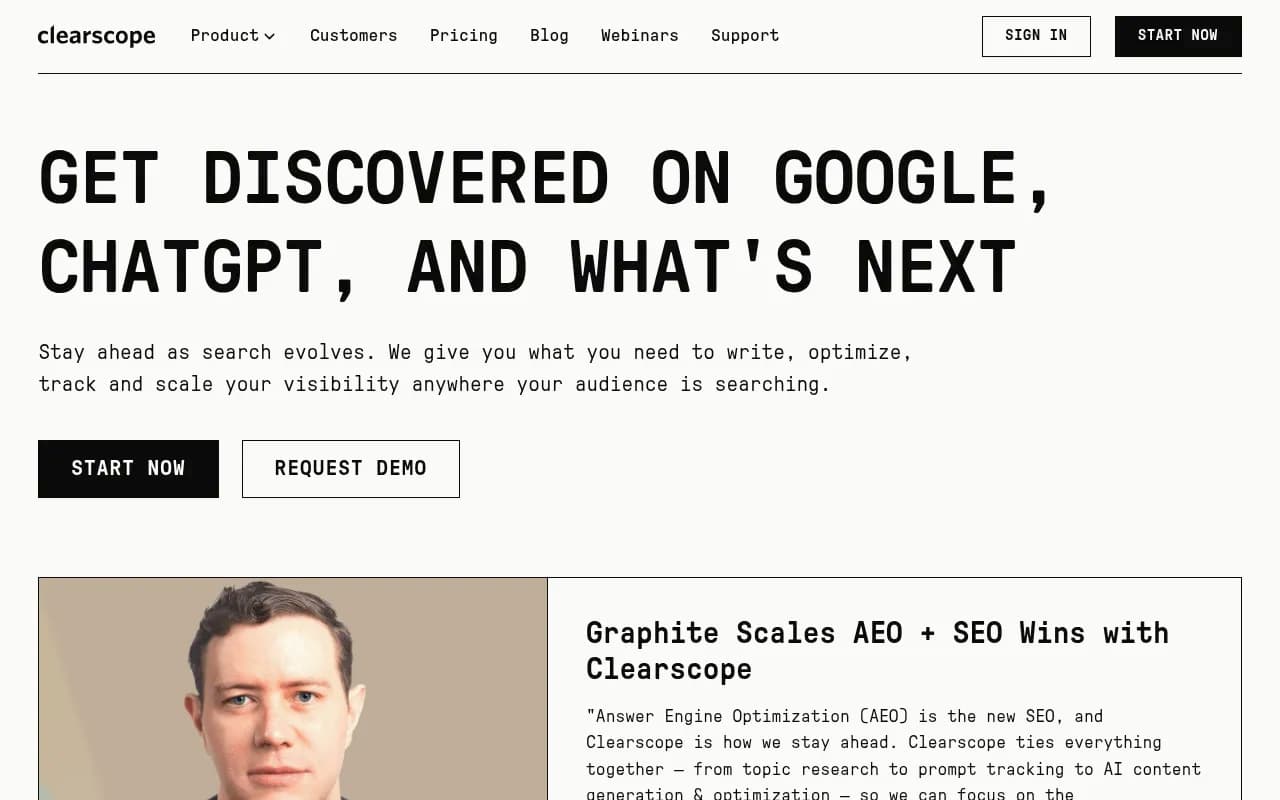
Again, this isn't an AI citation tracker. It's a content quality tool. But it belongs in this list because the path to AI citations runs through content quality, and Clearscope is one of the better tools for getting there.
Comparison table
| Tool | Google SEO | AI citation tracking | Content generation | AI traffic attribution | Pricing from |
|---|---|---|---|---|---|
| Promptwatch | No | Yes (10 models) | Yes (AI writing agent) | Yes | $99/mo |
| Semrush | Yes (full suite) | Partial (fixed prompts) | Yes (ContentShake) | No | $139/mo |
| Ahrefs Brand Radar | Yes (full suite) | Partial (fixed prompts) | No | No | Included in plan |
| SE Ranking | Yes | Yes (growing) | Partial | No | $65/mo |
| Peec AI | No | Yes (multi-country) | No | No | €89/mo |
| AthenaHQ | No | Yes | No | No | $295/mo |
| Profound | No | Yes (large prompt DB) | No | No | $99/mo |
| Surfer SEO | Yes (content layer) | No | Yes | No | $89/mo |
| Clearscope | Yes (content layer) | No | No | No | $170/mo |
One stack or two? Here's how to actually decide
The "one stack" argument is appealing: fewer tools, fewer bills, less context-switching. And if you're just starting to think about AI visibility, a hybrid tool like Semrush or SE Ranking might be enough to get your bearings.
But here's the thing: the tools that do both tend to do one of them well and the other adequately. Semrush is excellent at Google SEO and adequate at AI monitoring. Promptwatch is excellent at AI visibility optimization and doesn't try to replace your rank tracker.
The teams I'd recommend a two-stack approach to:
- You're already seeing meaningful traffic from AI referrals (visible in your server logs or GSC)
- You operate in a category where AI engines are actively recommending products or services (software, finance, travel, health)
- You have competitors who are clearly winning AI citations and you want to close that gap systematically
For those teams, pairing a traditional SEO platform (Semrush or Ahrefs) with a dedicated AI visibility platform (Promptwatch being the most complete option) gives you the best of both. The total cost is higher, but you're not compromising on either surface.
For smaller teams or those earlier in the AI visibility journey, starting with a hybrid tool and adding dedicated AI tooling when the data justifies it is a reasonable approach.
What most tools still get wrong
The biggest gap across this category isn't tracking — it's action. Most platforms are good at showing you a dashboard that says "you appear in 23% of AI responses for your target prompts." What they don't tell you is what to do about the other 77%.
The tools that are actually moving the needle for marketing teams in 2026 are the ones that connect the data to content creation and then close the loop with traffic attribution. That's a short list right now. Most of the market is still in the "monitoring dashboard" phase, which is useful but not sufficient.
The other thing most tools miss: AI crawler behavior. Understanding which pages AI bots are actually reading, how often they return, and what errors they encounter is foundational to AI visibility. If GPTBot can't crawl your key pages, your content won't get cited regardless of how good it is. Very few tools surface this data.
Bottom line
You probably need two stacks if AI search is already a meaningful traffic source for you. You can get away with one stack if you're still primarily Google-dependent and want to start monitoring AI visibility without a major new investment.
Either way, the tools that will matter most over the next 18 months are the ones that go beyond monitoring to help you actually improve your AI citation rate. That's the gap worth closing.