Summary
- Answer gap analysis is the killer feature that separates monitoring tools from optimization platforms -- it shows exactly which prompts competitors rank for but you don't, and what content you need to create to close the gap
- Peec AI and AthenaHQ are solid monitoring tools but lack true answer gap analysis -- they show you where you rank today, not what's missing or how to fix it
- Promptwatch, Profound, and AIclicks lead the pack with actionable gap analysis, content generation, and competitor benchmarking that turn visibility data into revenue
- Most platforms monitor 6-10 AI engines (ChatGPT, Perplexity, Claude, Gemini, etc.) but differ wildly in how they help you actually improve your rankings
- Pricing ranges from $37/month (Wellows) to $500+ for enterprise platforms, with most serious tools landing in the $100-300/month range
What is answer gap analysis and why does it matter?
Answer gap analysis is the process of identifying which prompts and queries your competitors are visible for in AI search results -- but you're not. It's the difference between a dashboard that shows "you ranked #3 for this prompt" and a platform that says "your competitor ranks for 47 prompts you're invisible on, here's what content you need to create."
Think of it like this: traditional rank tracking tells you where you stand. Answer gap analysis tells you where you're losing and exactly how to win.
The best platforms don't just surface gaps -- they prioritize them by search volume, difficulty, and business impact, then help you create the content AI models actually want to cite. This is what separates monitoring tools from optimization platforms.
Why Peec AI and AthenaHQ don't make the cut
Peec AI and AthenaHQ are both legitimate AI visibility platforms with strong monitoring capabilities. But when it comes to answer gap analysis, they fall short in critical ways.
Peec AI tracks your brand mentions across multiple AI engines and offers smart prompt suggestions. It's good at showing you where you rank today. But it doesn't systematically compare your visibility against competitors to surface content gaps. You can see your own rankings, but you're left guessing what's missing. There's no "here are the 50 prompts your competitor owns that you don't" report. No prioritized list of content to create. Just monitoring.
AthenaHQ focuses on narrative tone monitoring and controlling AI crawling. It's built for brands worried about how AI engines talk about them, not for brands trying to dominate more prompts. The platform tracks sentiment and visibility gaps in a general sense, but it doesn't offer the structured, actionable gap analysis that shows you exactly which competitor content is outranking you and why.
Both tools are useful if you just want to know "are we showing up?" But if you want to know "what are we missing and how do we fix it?" -- you need a different platform.
The 10 best AI visibility platforms with real answer gap analysis
1. Promptwatch -- the only platform built around closing gaps
Promptwatch is the market leader in Generative Engine Optimization (GEO) and the only platform rated as a "Leader" across all categories in a 2026 comparison of 12 GEO tools. Used by 6,700+ brands including Booking.com and Center Parcs, it's built around a simple loop: find the gaps, create content that ranks, track the results.

What makes Promptwatch different: Answer Gap Analysis is the core feature. It shows you exactly which prompts competitors are visible for but you're not, then helps you fix it with an AI writing agent that generates articles grounded in 880M+ citations analyzed. You're not just monitoring -- you're optimizing.
Key capabilities:
- Answer Gap Analysis: See which prompts competitors own that you don't, with volume estimates and difficulty scores
- AI Content Generation: Built-in writing agent creates articles engineered to get cited by ChatGPT, Claude, Perplexity
- AI Crawler Logs: Real-time logs of ChatGPT, Claude, Perplexity crawlers hitting your site
- Citation & Source Analysis: See exactly which pages AI models cite and why
- Reddit & YouTube Insights: Surface discussions that influence AI recommendations
- ChatGPT Shopping Tracking: Monitor product recommendation appearances
- Competitor Heatmaps: Compare your visibility vs competitors across all LLMs
Pricing: Essential $99/mo (1 site, 50 prompts, 5 articles), Professional $249/mo (2 sites, 150 prompts, 15 articles, crawler logs), Business $579/mo (5 sites, 350 prompts, 30 articles). Free trial available.
Best for: Marketing teams and agencies that want to actually improve their AI visibility, not just track it.
2. Profound -- enterprise gap analysis with deep competitor intel
Profound is an enterprise-grade platform that combines visibility tracking with robust competitor analysis. It's one of the few tools that systematically compares your brand against competitors to surface content gaps.

Gap analysis approach: Profound shows you which prompts competitors rank for, then breaks down the content types and angles they're using. You get a clear picture of what's working for them and what you need to replicate or counter.
Key features:
- Competitor benchmarking across 8+ AI engines
- Prompt-level gap reports with volume and difficulty
- Citation source analysis
- Multi-language and multi-region tracking
Pricing: Higher price point than most competitors, typically $500+/month for full access. Enterprise custom pricing available.
Best for: Large brands and agencies managing multiple clients who need deep competitive intelligence.
3. AIclicks -- affordable gap analysis for growing brands
AIclicks positions itself as a practical alternative to AthenaHQ with a focus on actionable insights. It's one of the few mid-tier platforms that includes real answer gap analysis.
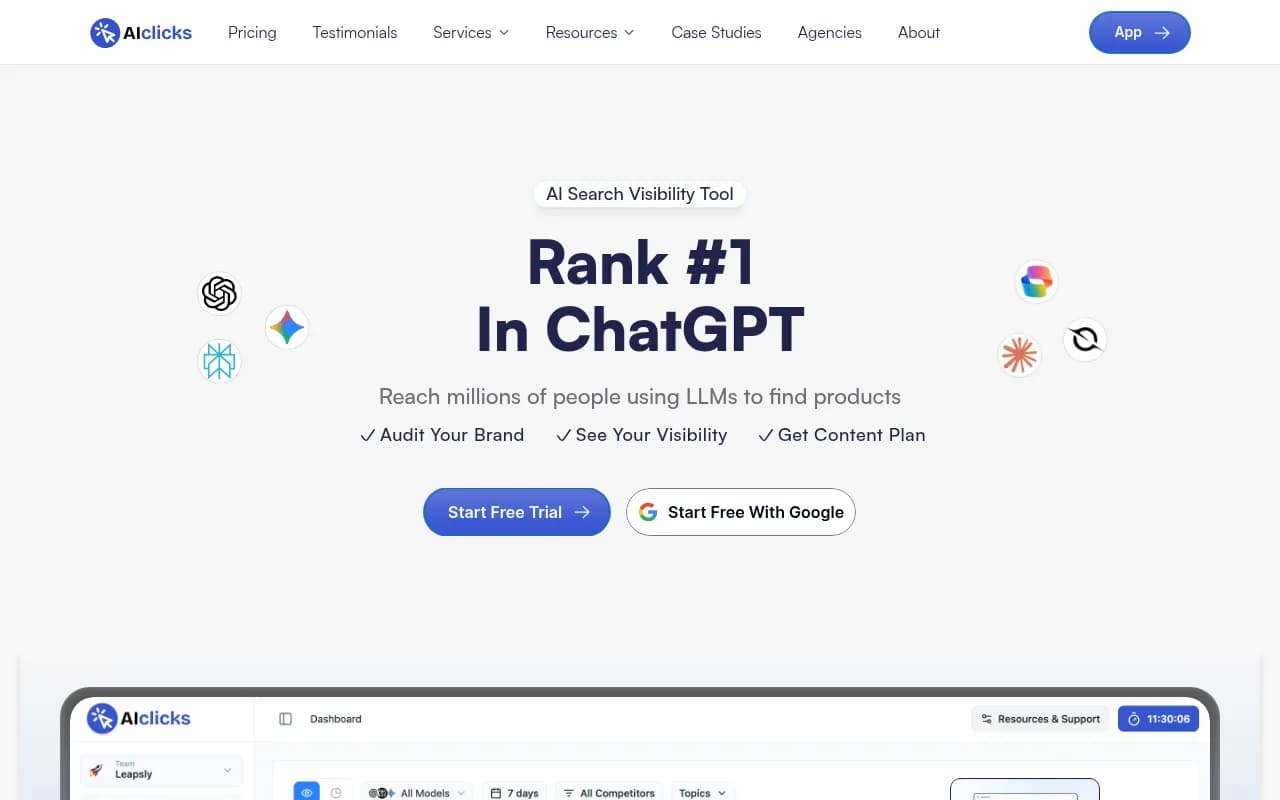
Gap analysis approach: AIclicks identifies which prompts you're missing compared to competitors, then prioritizes them by estimated impact. The interface is cleaner and more intuitive than many enterprise tools.
Key features:
- Competitor visibility comparison
- Missing prompt identification
- Citation tracking across ChatGPT, Perplexity, Claude, Gemini
- Page-level performance tracking
Pricing: Starts around $150/month for core features. More affordable than Profound or Promptwatch Business tier.
Best for: Mid-market brands and small agencies that want gap analysis without enterprise pricing.
4. Wellows -- budget-friendly monitoring with basic gap insights
Wellows is one of the most affordable AI visibility tools on the market. While it doesn't offer the depth of Promptwatch or Profound, it does surface basic content gaps.
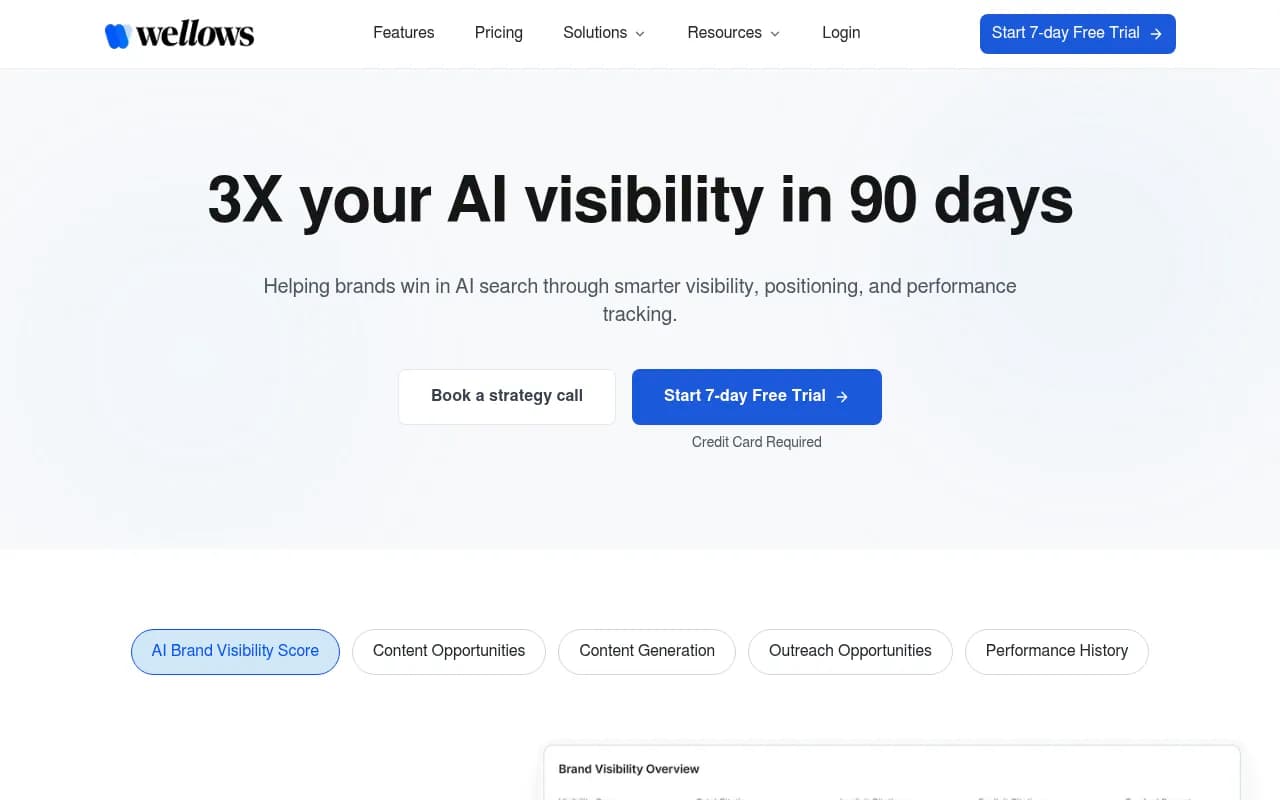
Gap analysis approach: Wellows shows you competitor mentions and prompts they rank for. It's more of a "here's what they're doing" view than a structured gap analysis, but it's a starting point.
Key features:
- Daily visibility tracking across AI platforms
- Competitor mention tracking
- Citation monitoring
- Outreach opportunity identification
Pricing: Starts at $37/month, making it one of the cheapest options.
Best for: Solo marketers and small businesses just getting started with AI visibility.
5. ZipTie -- deep analysis for technical teams
ZipTie is built for teams that want to dig into the data. It offers detailed reporting and analysis capabilities, including competitor gap identification.
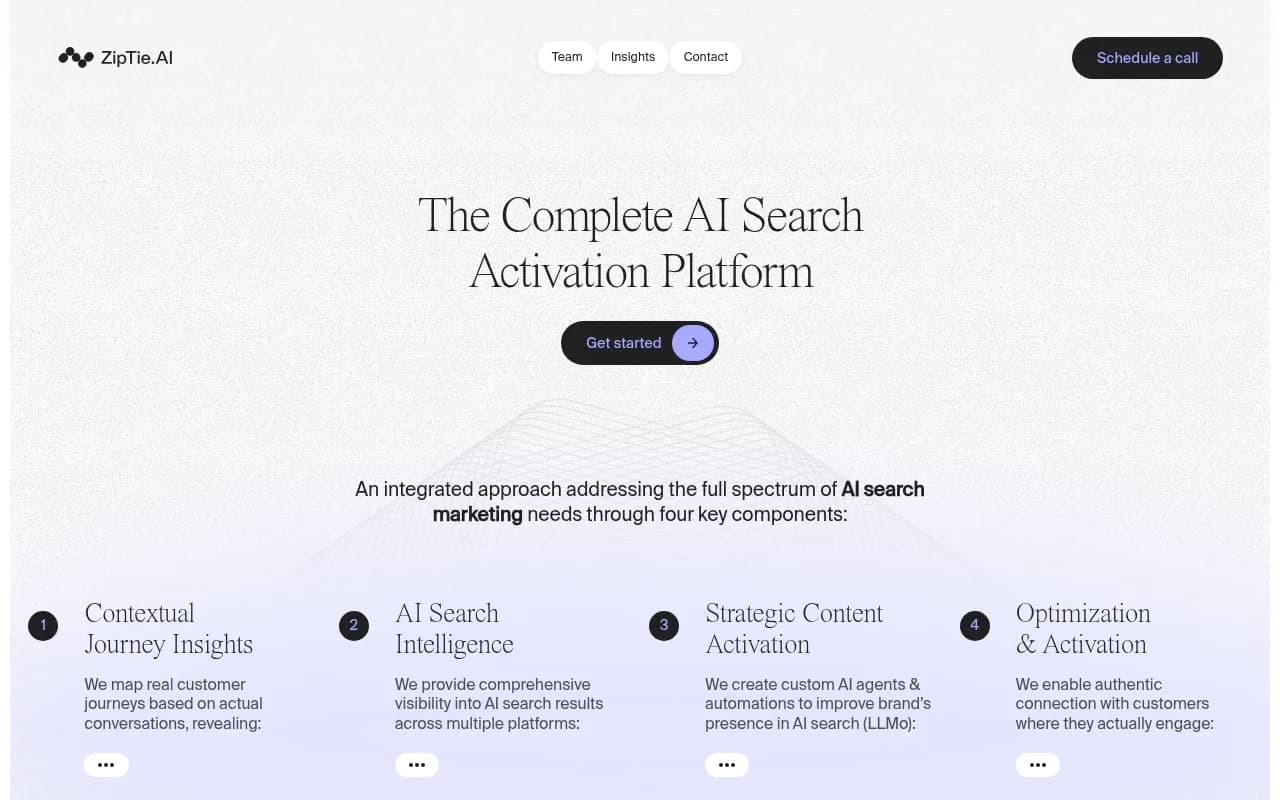
Gap analysis approach: ZipTie's strength is in its reporting -- you can build custom reports that compare your visibility against competitors across specific prompt sets. It's more manual than Promptwatch's automated gap analysis, but more flexible.
Key features:
- Custom reporting and dashboards
- Competitor benchmarking
- Citation source analysis
- Multi-engine tracking
Pricing: Mid-tier pricing, typically $200-400/month depending on features.
Best for: Data-driven teams that want to build custom gap analysis workflows.
6. Searchable -- content optimization with gap identification
Searchable combines AI visibility monitoring with content creation tools. It's one of the few platforms that tries to close the loop from gap identification to content creation.
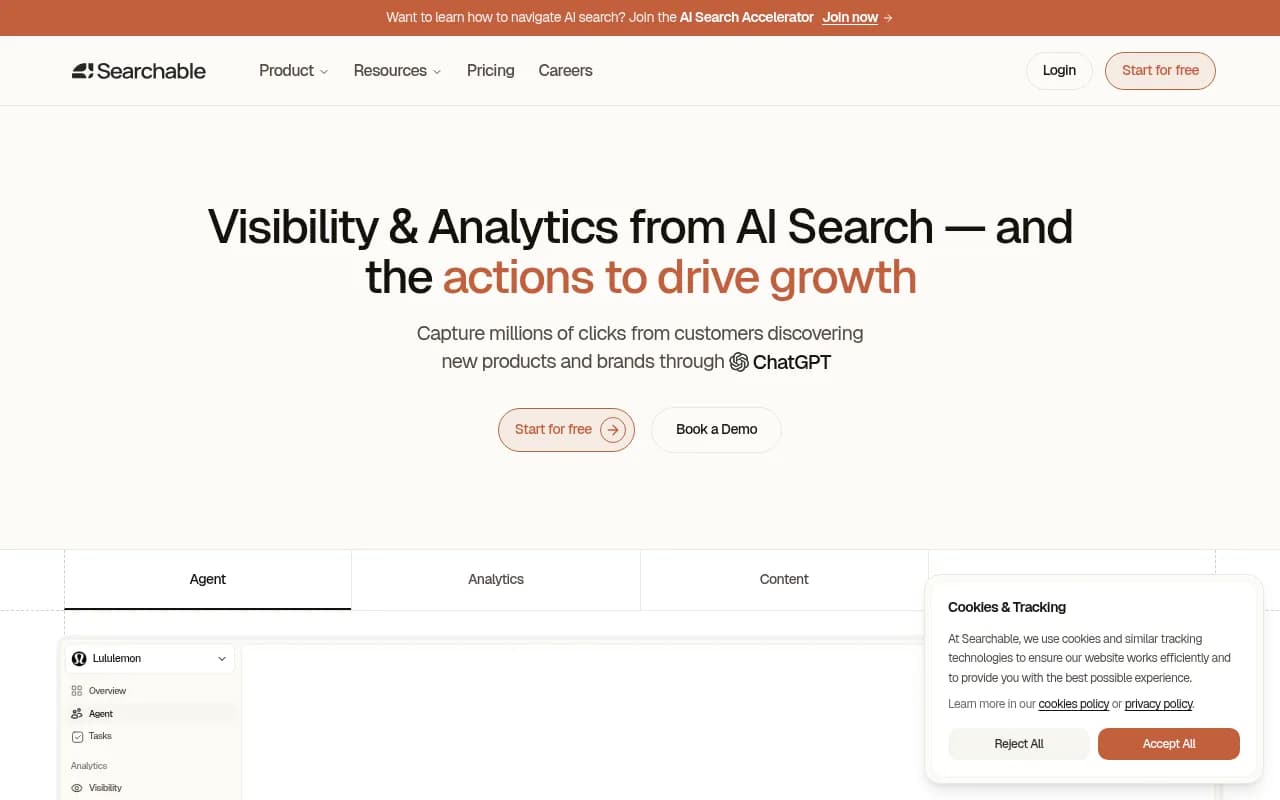
Gap analysis approach: Searchable identifies missing prompts and suggests content topics to cover them. The content tools aren't as sophisticated as Promptwatch's AI writing agent, but they're a step above pure monitoring.
Key features:
- Prompt gap identification
- Content topic suggestions
- Visibility tracking across 6+ AI engines
- Basic competitor analysis
Pricing: Starts around $150/month.
Best for: Content teams that want gap analysis tied to content creation workflows.
7. Bluefish -- enterprise GEO with strategic gap analysis
Bluefish targets Fortune 500 brands with an enterprise-focused platform. It includes strategic gap analysis as part of its broader GEO offering.
Gap analysis approach: Bluefish focuses on high-level strategic gaps -- which categories or topics competitors dominate that you don't. It's less granular than Promptwatch's prompt-level analysis but useful for executive reporting.
Key features:
- Strategic category gap analysis
- Enterprise-grade competitor benchmarking
- Multi-brand tracking
- Custom reporting
Pricing: Enterprise pricing, typically $1,000+/month.
Best for: Enterprise brands with large marketing budgets.
8. Conductor -- persona-driven gap analysis
Conductor brings a unique persona-based approach to AI visibility. Its gap analysis focuses on which personas competitors are winning with.
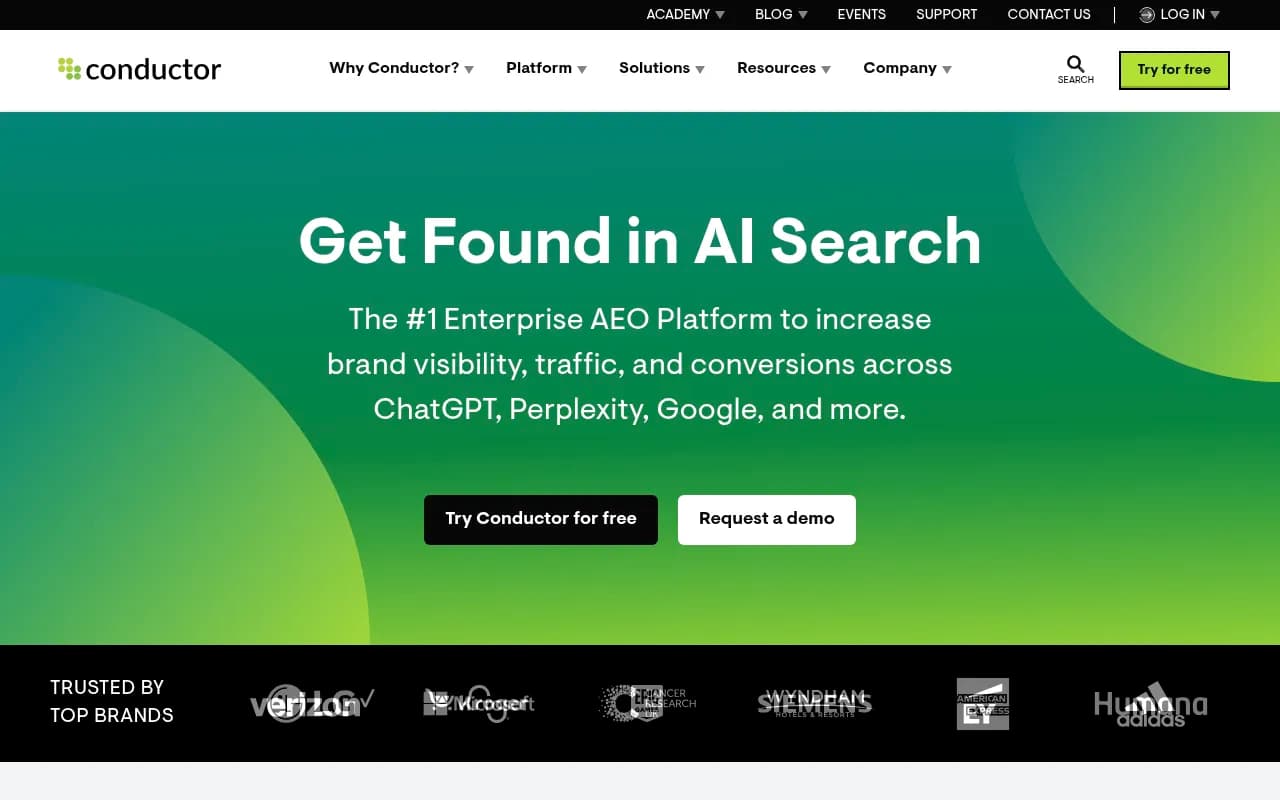
Gap analysis approach: Conductor shows you which customer personas competitors are visible for, then identifies gaps in your coverage. It's a different angle than prompt-level analysis but valuable for brands with distinct audience segments.
Key features:
- Persona-based visibility tracking
- Competitor persona gap analysis
- Multi-engine monitoring
- Custom persona creation
Pricing: Mid-to-high tier, typically $300-600/month.
Best for: Brands with well-defined customer personas and segmented marketing strategies.
9. Otterly.AI -- affordable monitoring with basic competitor comparison
Otterly.AI is a budget-friendly monitoring tool that includes basic competitor comparison. It's not true gap analysis, but it's a step up from pure self-tracking.

Gap analysis approach: Otterly shows you side-by-side rankings against competitors for tracked prompts. You can manually identify gaps, but there's no automated analysis or prioritization.
Key features:
- Affordable monitoring across 6+ AI engines
- Basic competitor comparison
- Citation tracking
- Simple dashboard
Pricing: Starts around $89/month.
Best for: Small businesses that want competitor visibility without paying for full gap analysis.
10. SE Visible -- user-friendly tracking with gap insights
SE Visible (part of SE Ranking) offers AI visibility tracking with a focus on usability. It includes basic gap identification as part of its competitor analysis.
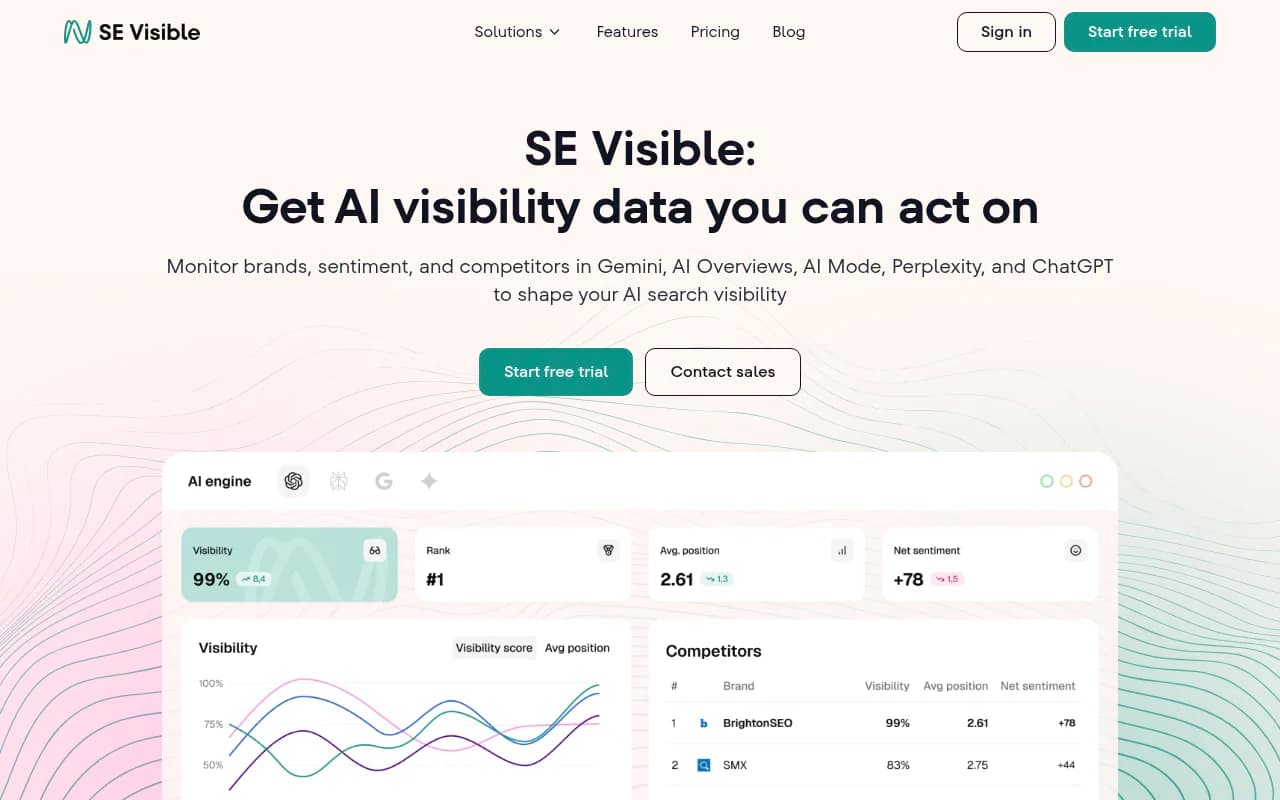
Gap analysis approach: SE Visible shows you which prompts competitors rank for that you don't, with a clean interface that makes it easy to spot gaps. The analysis isn't as deep as Promptwatch or Profound, but it's accessible.
Key features:
- User-friendly gap identification
- Competitor tracking
- Multi-engine monitoring
- Integration with SE Ranking's SEO tools
Pricing: Bundled with SE Ranking plans, typically $100-200/month.
Best for: Existing SE Ranking users who want to add AI visibility tracking.
Comparison table: gap analysis capabilities
| Platform | Answer Gap Analysis | Content Generation | Competitor Benchmarking | Pricing (starting) |
|---|---|---|---|---|
| Promptwatch | ✓ Full automated | ✓ AI writing agent | ✓ Heatmaps & reports | $99/mo |
| Profound | ✓ Deep competitor intel | ✗ | ✓ Enterprise-grade | $500+/mo |
| AIclicks | ✓ Prioritized gaps | ✗ | ✓ Multi-competitor | $150/mo |
| Wellows | ~ Basic insights | ✗ | ~ Limited | $37/mo |
| ZipTie | ✓ Custom reports | ✗ | ✓ Flexible | $200-400/mo |
| Searchable | ✓ With content suggestions | ~ Basic tools | ✓ Standard | $150/mo |
| Bluefish | ✓ Strategic gaps | ✗ | ✓ Enterprise | $1,000+/mo |
| Conductor | ✓ Persona-based | ✗ | ✓ Persona-focused | $300-600/mo |
| Otterly.AI | ~ Manual comparison | ✗ | ~ Side-by-side | $89/mo |
| SE Visible | ✓ Basic gaps | ✗ | ✓ Standard | $100-200/mo |
What to look for in an answer gap analysis platform
Not all gap analysis features are created equal. Here's what separates the useful from the useless:
Automated gap identification: The platform should automatically compare your visibility against competitors and surface gaps -- you shouldn't have to manually cross-reference rankings.
Prioritization by impact: A list of 500 missing prompts is useless. The best platforms score gaps by search volume, difficulty, and business relevance so you know where to focus first.
Actionable next steps: Gap analysis is only valuable if it leads to action. Platforms like Promptwatch that include content generation or at least content recommendations are far more useful than those that just show you the problem.
Prompt-level granularity: Strategic category gaps are interesting, but prompt-level gaps ("your competitor ranks for 'best CRM for small business' but you don't") are what you can actually act on.
Citation source analysis: Understanding which pages, Reddit threads, or YouTube videos AI models cite for competitor-owned prompts helps you reverse-engineer their strategy.
Regular updates: AI search results change fast. Gap analysis needs to be updated at least weekly, ideally daily.
How answer gap analysis drives revenue
Gap analysis isn't just an interesting data point -- it's a direct path to revenue when used correctly.
Discovery: You identify that competitors rank for 50 high-volume prompts in your category that you're invisible on. Each prompt represents potential customers asking questions you're not answering.
Prioritization: You score those 50 prompts by volume, difficulty, and business value. You focus on the 10 that are winnable and high-impact.
Content creation: You create content specifically designed to answer those prompts and get cited by AI models. This isn't generic SEO content -- it's engineered for AI search.
Visibility improvement: AI models start citing your new content. Your visibility scores improve. You start appearing in ChatGPT, Perplexity, and Claude for prompts that previously went to competitors.
Traffic and conversion: Users clicking through from AI search results land on your site. They convert. You track the revenue back to specific prompts and content.
This is the loop that platforms like Promptwatch enable. Monitoring-only tools stop at step one.
Why most platforms don't offer real gap analysis
Building true answer gap analysis is technically hard and expensive. It requires:
- Tracking thousands of prompts across multiple AI engines for multiple brands simultaneously
- Storing and comparing massive amounts of citation and ranking data
- Building algorithms to score and prioritize gaps by business impact
- Creating interfaces that make complex competitive data actionable
Most platforms started as simple monitoring tools and haven't invested in the infrastructure needed for deep gap analysis. It's easier to show you where you rank today than to show you what you're missing and how to fix it.
This is why the market is so fragmented -- there are dozens of monitoring tools but only a handful of true optimization platforms.
The future of answer gap analysis
Answer gap analysis is evolving fast. Here's where it's headed:
Real-time gap alerts: Instead of weekly reports, you'll get instant notifications when a competitor starts ranking for a new high-value prompt.
Automated content generation: Platforms will automatically generate draft content to fill gaps, not just suggest topics. Promptwatch is already doing this.
Predictive gap analysis: AI models will predict which prompts are about to become high-volume based on trend data, letting you create content before competitors.
Cross-channel gap analysis: Platforms will identify gaps not just in AI search but across Reddit, YouTube, and other sources that influence AI citations.
Revenue attribution: Direct tracking from gap-filling content to revenue, closing the loop on ROI.
The platforms investing in these capabilities now will dominate the market in 2027.
Conclusion: monitoring vs optimization
The AI visibility market is splitting into two camps: monitoring tools and optimization platforms.
Monitoring tools (Peec AI, AthenaHQ, Otterly.AI) show you where you rank. They're useful for awareness but leave you stuck when it comes to improvement.
Optimization platforms (Promptwatch, Profound, AIclicks) show you what's missing and help you fix it. They turn visibility data into action.
If you just want to know "are we showing up in ChatGPT?" -- a monitoring tool is fine. If you want to dominate AI search results and drive revenue -- you need a platform with real answer gap analysis.
The choice isn't about features or price. It's about whether you want a dashboard or a growth engine.