Key takeaways
- Visibility scores and citation counts are useful starting points, but they don't predict revenue on their own -- you need metrics that connect AI presence to actual business outcomes
- The metrics that matter most are: AI-referred conversion rate, share of voice on high-intent prompts, sentiment in cited responses, answer position quality, and traffic attribution from LLM referrals
- Most GEO platforms stop at monitoring; the ones worth paying for help you close the loop between what AI says about you and what happens in your CRM
- AI search visitors convert at roughly 4.4x the rate of traditional organic visitors, which means even small visibility gains can have outsized revenue impact
- Attribution is the hardest part -- LLM traffic is routinely misattributed as "direct" in standard analytics setups
There's a pattern playing out across marketing teams right now. Someone sets up a GEO monitoring tool, watches their "AI Visibility Score" tick up from 23 to 41 over three months, puts it in the monthly report, and calls it a win. Then the CFO asks what that number is worth in dollars. Silence.
The problem isn't that visibility scores are useless. It's that they were designed to measure presence, not performance. And in 2026, with AI search eating into traditional organic traffic at a pace most teams underestimated, the gap between "we appear in AI answers" and "AI answers drive revenue" is where most GEO strategies fall apart.
This guide is about closing that gap. Not by dismissing visibility metrics, but by understanding which signals actually connect to pipeline and revenue -- and which ones are just dashboard decoration.
Why the standard metrics aren't enough
Citation count tells you how often an AI model linked to or mentioned your domain. Brand visibility score tells you what percentage of tracked prompts included your brand in the response. Share of voice tells you your slice relative to competitors. These are all real signals. They're just incomplete.
Here's the issue: a brand can have a high citation count and still be losing. If you're cited in informational responses ("here's a general overview of X") but your competitors are cited in decision-stage responses ("which tool should I use for X"), your citations aren't doing the commercial work you need them to do.
Similarly, a visibility score that averages across all prompt types obscures what's actually happening. Being visible for "what is project management software" is very different from being visible for "best project management software for remote teams under $50/user."
The metrics that predict revenue are the ones that capture where in the buyer journey you're showing up, how you're being framed, and whether that presence is driving people to your site and converting them.
The metrics that actually connect to revenue
1. AI-referred conversion rate
This is the most direct revenue signal, and also the hardest to measure accurately. When a visitor arrives from an AI platform (ChatGPT, Perplexity, Claude, Gemini, etc.) and converts, that's the clearest evidence that your AI visibility is doing commercial work.
The challenge: most analytics setups misattribute LLM traffic. When someone reads a ChatGPT response, clicks a citation link, and lands on your site, that session often shows up as "direct" in GA4 because the referrer header is stripped or absent. You need to actively instrument this.
Practical approaches include UTM parameters on any links you can control (like your own content syndicated elsewhere), server log analysis to catch LLM crawler visits, and referrer-based filtering for known AI platform domains (perplexity.ai, chat.openai.com, claude.ai, etc.). Some platforms now offer JavaScript snippet tracking specifically designed to catch LLM referrals that standard analytics miss.
Once you have clean LLM traffic data, segment it by source (which AI model), by prompt type if you can infer it, and by landing page. Then compare conversion rates against organic and paid benchmarks. The 4.4x conversion rate figure from Semrush's 2025 study suggests this traffic is highly qualified -- people who've already been pre-sold by an AI recommendation before they arrive.
2. Share of voice on high-intent prompts
Generic share of voice averages your visibility across all prompts in your tracking set. That's fine for a headline number, but it hides the signal you actually care about.
High-intent prompts are the ones that precede purchase decisions. "Best [category] tool for [use case]," "alternatives to [competitor]," "[category] software comparison," "[your brand] vs [competitor]." These are the prompts where being cited or mentioned translates most directly into consideration and pipeline.
Segment your prompt set by intent stage -- awareness, consideration, decision -- and track share of voice separately for each tier. A brand that appears in 60% of decision-stage prompts but only 20% of awareness prompts is in a very different position than one with the reverse profile. The first brand has a conversion problem; the second has a visibility problem. They require completely different fixes.
Tools like Promptwatch let you organize prompts by category and track visibility at that granular level, which is what makes this kind of segmentation practical at scale rather than a manual spreadsheet exercise.

3. Sentiment and framing in AI responses
Being mentioned isn't the same as being recommended. AI models don't just cite brands -- they characterize them. "Tool X is popular but has a steep learning curve" is a citation. "Tool X is the go-to choice for teams that need Y" is a recommendation. The difference in commercial impact is enormous.
Sentiment analysis in GEO context isn't just positive/negative/neutral. It's about the frame the AI uses when it mentions you. Are you described as a leader, a budget option, a niche player, a legacy tool? Are you mentioned first or fourth in a list? Are you recommended for the use case your best customers actually have?
This requires reading the actual AI responses, not just counting mentions. Some platforms do this automatically with NLP scoring; others require manual review of sampled responses. Either way, tracking sentiment trends over time tells you whether your content strategy is shifting how AI models characterize your brand -- which is ultimately what GEO content work is trying to accomplish.
4. Answer position and recommendation strength
Position matters in AI responses, even though there's no "rank 1" in the traditional sense. When an AI lists multiple tools or options, appearing first in that list carries more weight than appearing fifth. When an AI gives a direct recommendation ("I'd suggest X for this use case") versus a passing mention ("X is one option you could consider"), the commercial impact differs significantly.
Track not just whether you appear, but where and how. Some teams score responses on a 1-5 scale: 1 = not mentioned, 2 = mentioned in passing, 3 = listed as an option, 4 = recommended for specific use cases, 5 = top recommendation. Averaging this score across your tracked prompts gives you a "recommendation quality" metric that's more predictive of revenue than raw citation count.
5. Prompt coverage on your answer gaps
This is a forward-looking metric rather than a current-state one. Answer gap analysis shows you the prompts where competitors are being cited and you're not. The revenue implication is straightforward: every prompt where a competitor is recommended and you're absent is a potential customer who heard about them and not you.
Quantifying the gap in revenue terms requires some estimation -- prompt volume data, average deal size, conversion rate assumptions -- but even rough math is useful for prioritization. A prompt with 50,000 monthly searches where your top competitor appears and you don't is worth more attention than a prompt with 500 monthly searches where you're already winning.
Attribution: the hardest problem in GEO measurement
Let's be direct about something: clean attribution from AI search to revenue is genuinely hard in 2026. Harder than traditional SEO attribution, and harder than most GEO vendors will admit in their sales decks.
The core issues are:
Referrer stripping. Many AI platforms don't pass referrer data when users click through to external sites. This means LLM-referred sessions appear as direct traffic in standard setups.
Zero-click influence. A user might read a ChatGPT response that mentions your brand, close the chat, and then search for you directly on Google. That conversion gets attributed to branded search or direct, not to AI. The AI response influenced the decision but gets no credit.
Multi-session journeys. B2B buyers especially might encounter your brand in an AI response, visit your site weeks later, and convert after multiple touchpoints. Last-click attribution misses the AI influence entirely.
The practical response to this isn't to give up on attribution -- it's to use multiple measurement approaches simultaneously. Server log analysis catches AI crawler activity. Referrer filtering in analytics catches the sessions that do pass referrer data. Brand search volume trends can serve as a proxy for AI-driven awareness. And direct surveys of new customers ("how did you first hear about us?") increasingly surface AI recommendations as a channel.
Some teams are finding that the most reliable signal is the simplest: track brand search volume alongside AI visibility scores. When visibility goes up, does branded search follow? That correlation, even if imperfect, is evidence that AI presence is driving real-world consideration.
A practical measurement framework
Here's a framework that connects GEO metrics to business outcomes without requiring perfect attribution data:
| Metric tier | What to measure | Why it matters |
|---|---|---|
| Presence | Brand visibility score, citation count, share of voice | Baseline -- are you in the game? |
| Quality | Sentiment score, answer position, recommendation strength | Are you winning or just showing up? |
| Intent alignment | Share of voice on decision-stage prompts, answer gap coverage | Are you visible when it counts? |
| Traffic | LLM-referred sessions, referral source breakdown | Is visibility driving visits? |
| Revenue | LLM-referred conversion rate, pipeline from AI-referred leads | Is visibility driving money? |
Most teams currently measure tier 1 well, tier 2 partially, and tiers 3-5 barely at all. The opportunity is in moving down the table.
Tools that go beyond basic monitoring
The GEO tool landscape has expanded fast. Most tools cover tier 1 (presence metrics) competently. Fewer handle tier 2 and 3. Almost none make tier 4 and 5 easy out of the box.
Here's a comparison of what different tool types offer:
| Tool type | Presence metrics | Quality/sentiment | Intent segmentation | Traffic attribution |
|---|---|---|---|---|
| Basic monitors (Otterly.AI, Peec AI) | Yes | Limited | No | No |
| Mid-tier trackers (Profound, AthenaHQ) | Yes | Partial | Limited | No |
| Full-stack platforms (Promptwatch) | Yes | Yes | Yes | Yes |
| Enterprise SEO (Semrush, BrightEdge) | Partial | No | No | Partial |



For teams that want to move from monitoring to optimization, the key features to look for are: answer gap analysis (which prompts are you missing?), content generation tied to citation data (what should you create to win those prompts?), and traffic attribution (is it working?). That full loop is what separates a GEO optimization platform from a GEO monitoring dashboard.
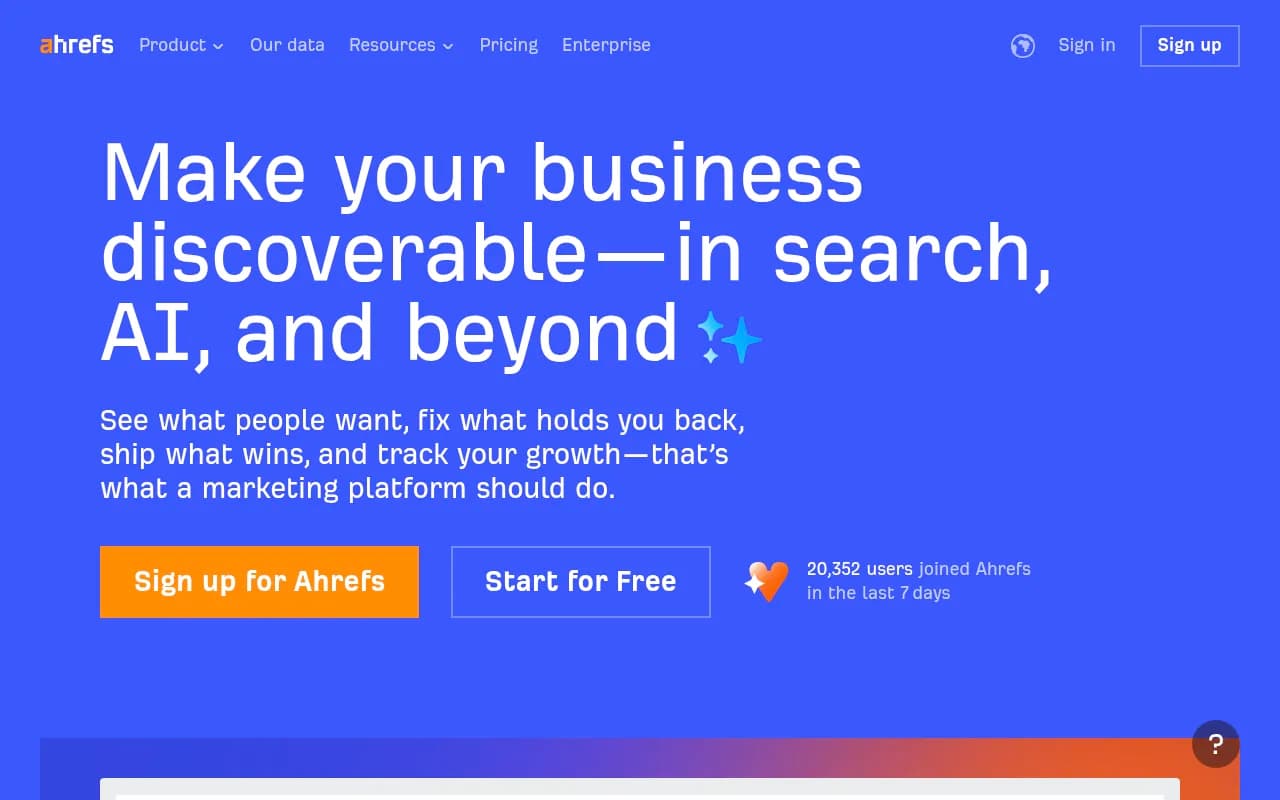
A few other tools worth knowing about depending on your specific needs:
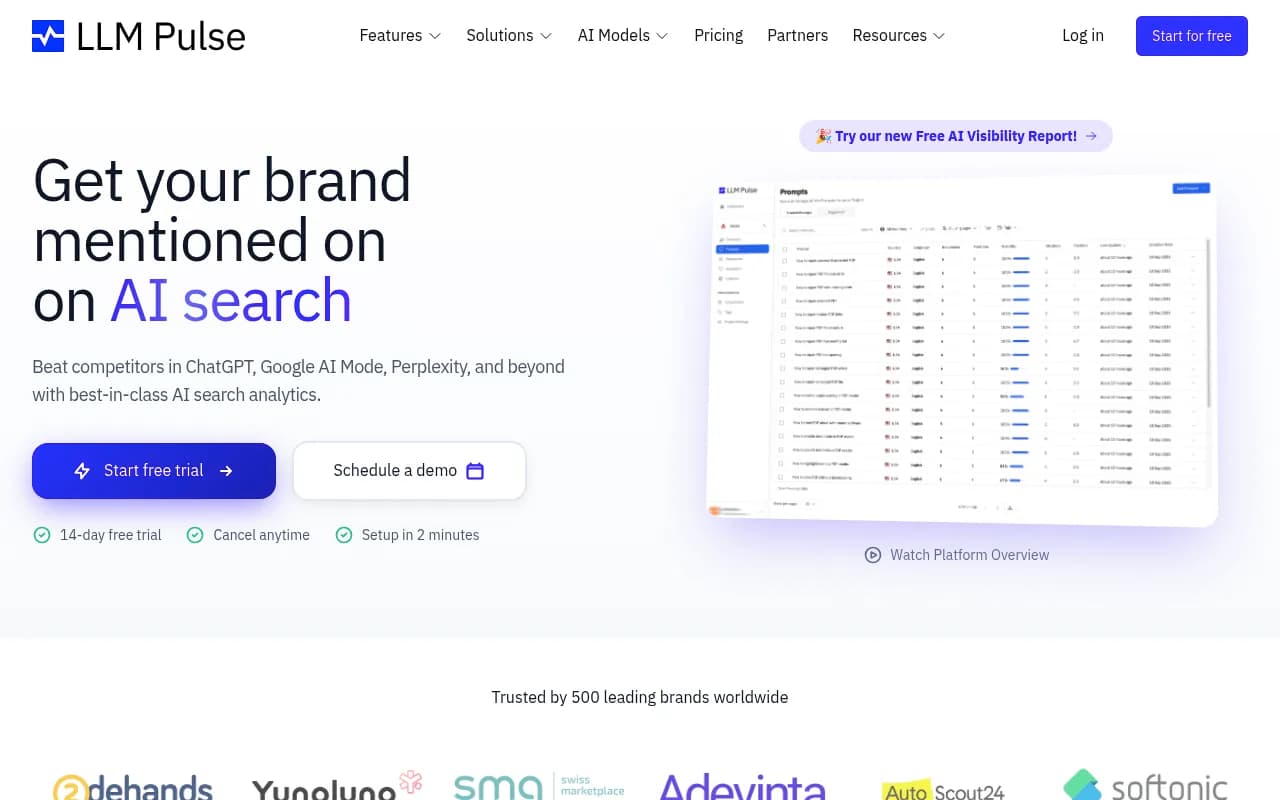
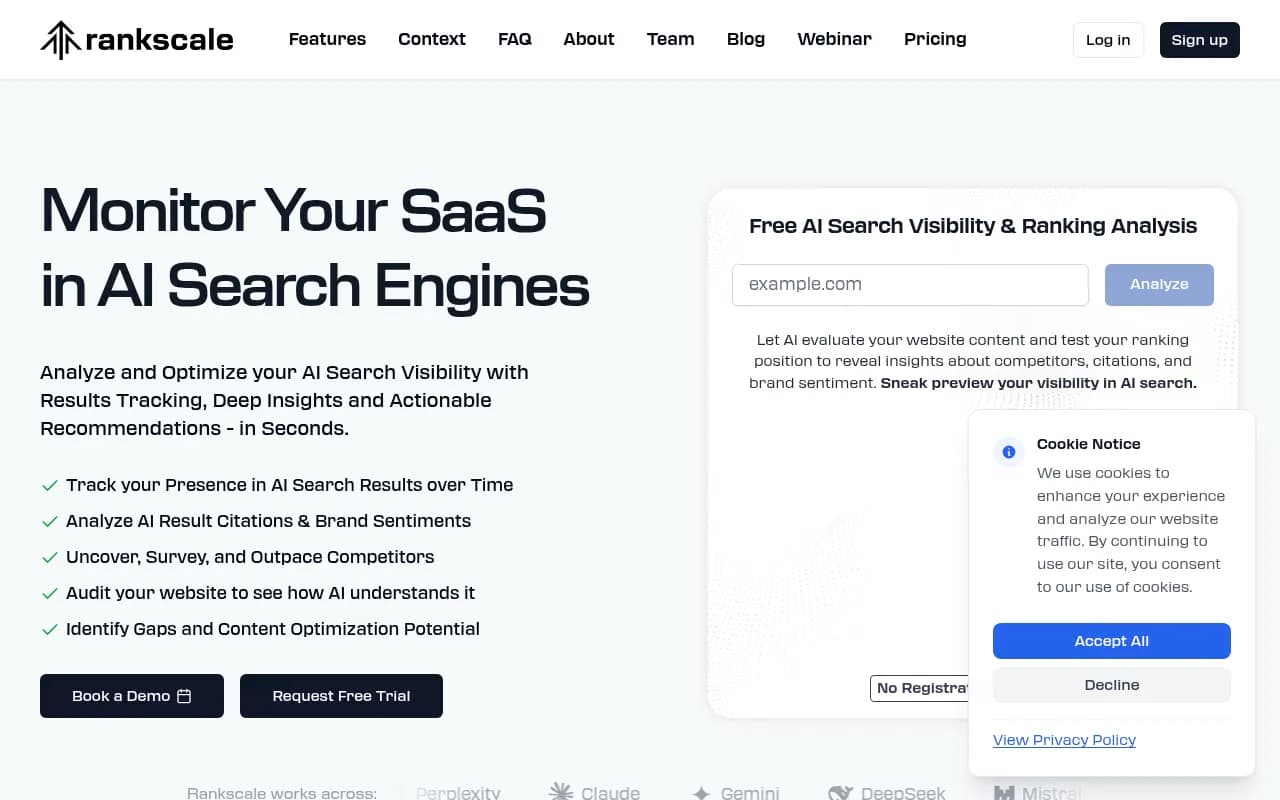
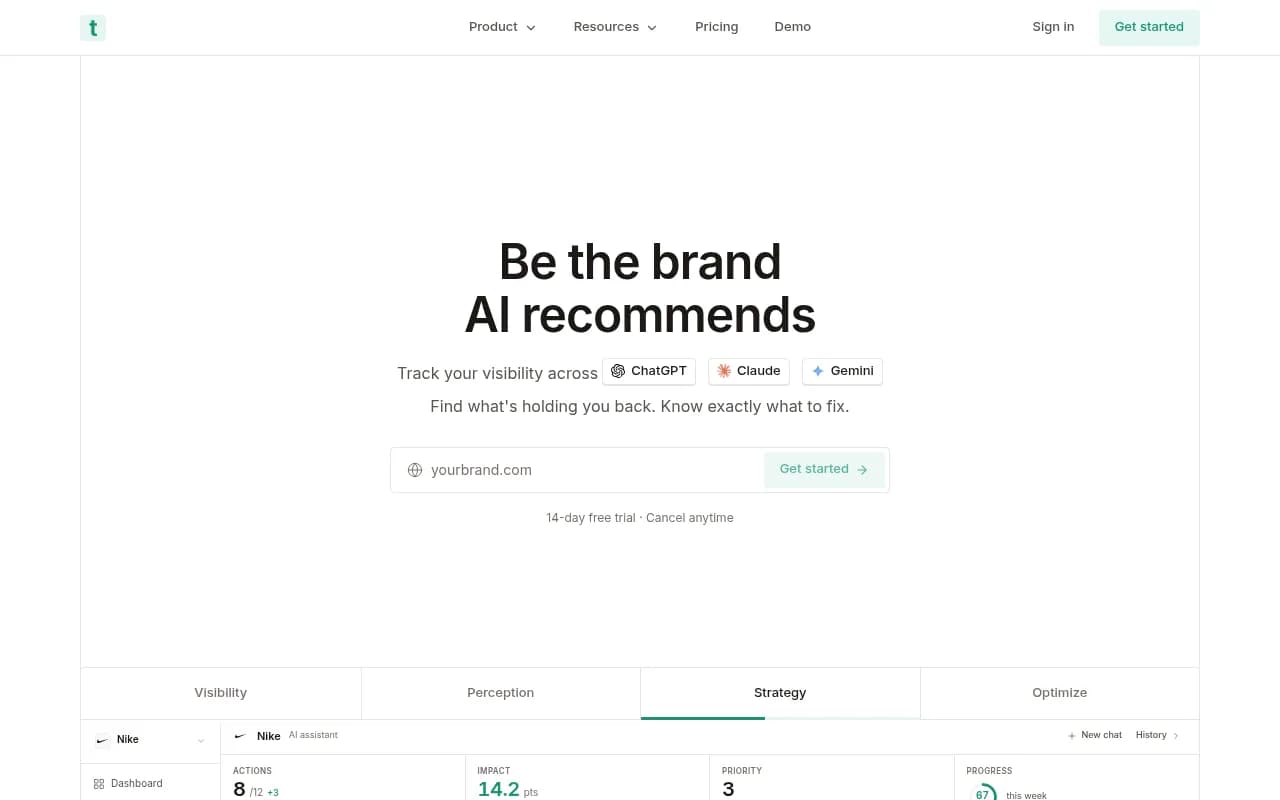
What good GEO reporting looks like in practice
A monthly GEO report that actually informs decisions should include:
Visibility summary -- overall brand visibility score and share of voice, with trend vs. prior period. This is the headline number for stakeholders who need a quick read.
Intent-segmented performance -- separate visibility scores for awareness, consideration, and decision-stage prompts. This tells you whether your visibility is commercially relevant.
Sentiment trend -- are AI models characterizing you more or less favorably than last month? Which specific responses changed?
Top answer gaps -- the highest-volume prompts where competitors are visible and you're not. This is the action item section.
Traffic attribution -- LLM-referred sessions, broken down by AI platform, with conversion rate vs. other channels.
Content performance -- which pages are being cited most frequently, by which models, and whether that citation frequency correlates with traffic.
That last point connects to something most teams miss: page-level citation tracking. Your domain might have strong overall visibility, but if 80% of your citations come from one blog post from 2023, that's a fragile position. Distributing citations across more pages and more content types makes your AI visibility more durable.
The revenue case for taking GEO seriously
Here's the math that should be in every GEO budget conversation. If AI-referred visitors convert at 4.4x the rate of standard organic visitors, and your organic conversion rate is 2%, then AI-referred visitors convert at roughly 8.8%. If you're currently getting 1,000 LLM-referred sessions per month and that grows to 5,000 as you improve your AI visibility, that's 440 additional conversions per month at your average order value or deal size.
That math is rough and depends heavily on your specific numbers. But the directional point holds: the conversion rate premium on AI-referred traffic means that relatively modest visibility gains can produce disproportionate revenue impact. Which is exactly why the measurement work matters -- if you can't see the traffic and conversions, you can't make the case for the investment.
The teams that will win in AI search over the next two years aren't necessarily the ones with the highest visibility scores today. They're the ones that build the measurement infrastructure to understand what their visibility is actually worth, and then systematically close the gaps between where they are and where they need to be.
Start with the metrics that connect to money. Everything else is context.